Devalok ← All gods
Also calledAdi ParashaktiAdi ShaktiDevithe Great GoddessMahamayaBhuvaneshvariBhagavatiJagadambaParameshvariMulaprakriti

In short

Who is Mahadevi?
The Great Goddess of the Shakta tradition, the first and highest power, of whom Durga, Kali, Lalita, Parvati, Lakshmi, Saraswati and the ten Mahavidyas are forms.
Is Mahadevi the same as Durga?
For her devotees, yes and more: Durga is the form she took against the buffalo demon, and the same Goddess is also the sleep on Vishnu's eyes, Kali on the battlefield and the queen of the island of gems.
Where does Mahadevi live?
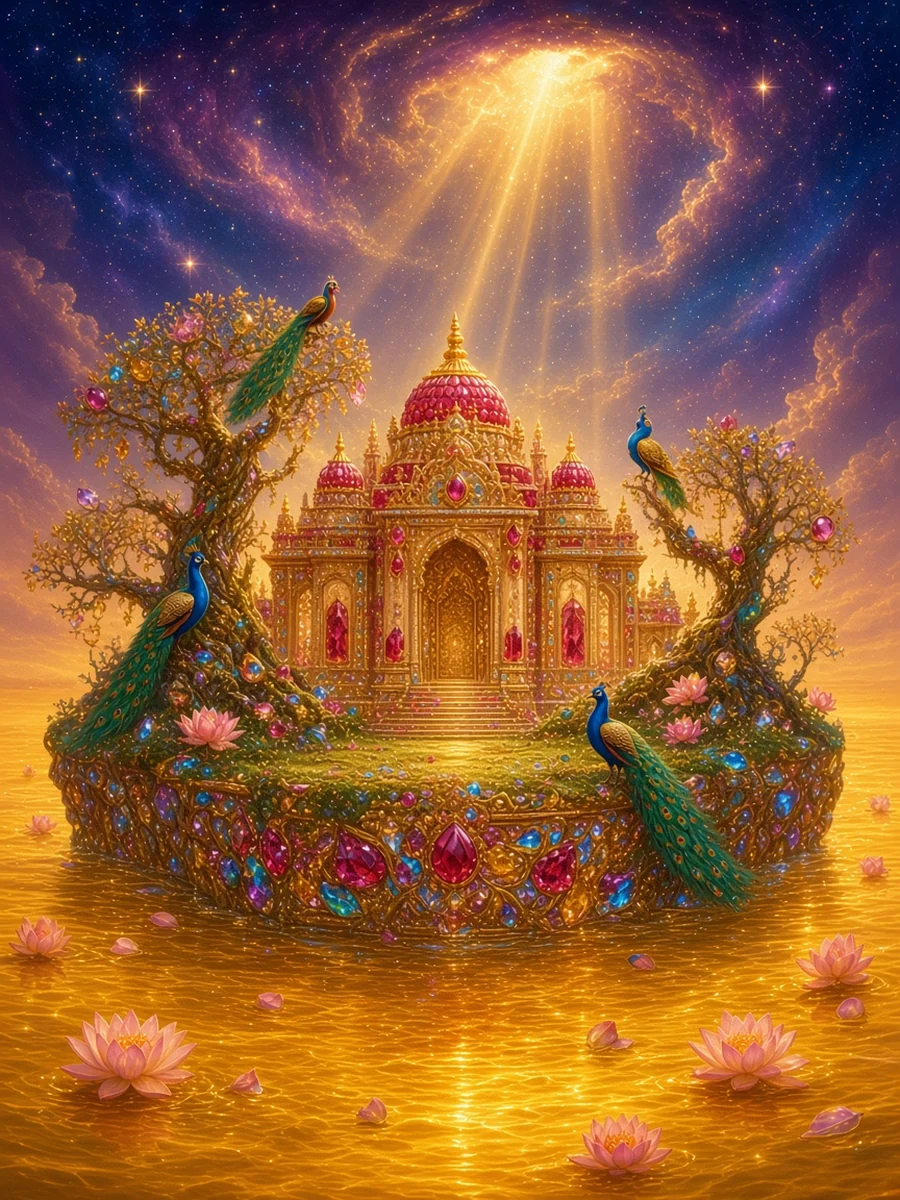
On Manidvipa, the island of gems in an ocean of nectar, which the Devi Bhagavata places above Vaikuntha, Kailasa and Brahma's world.
Which texts are hers?
The Devi Mahatmya, the Devi Bhagavata Purana with its Devi Gita, the Lalita Sahasranama and the Saundarya Lahari. Her Vedic root is the Devi Sukta, Rigveda 10.125.

Artwork ›

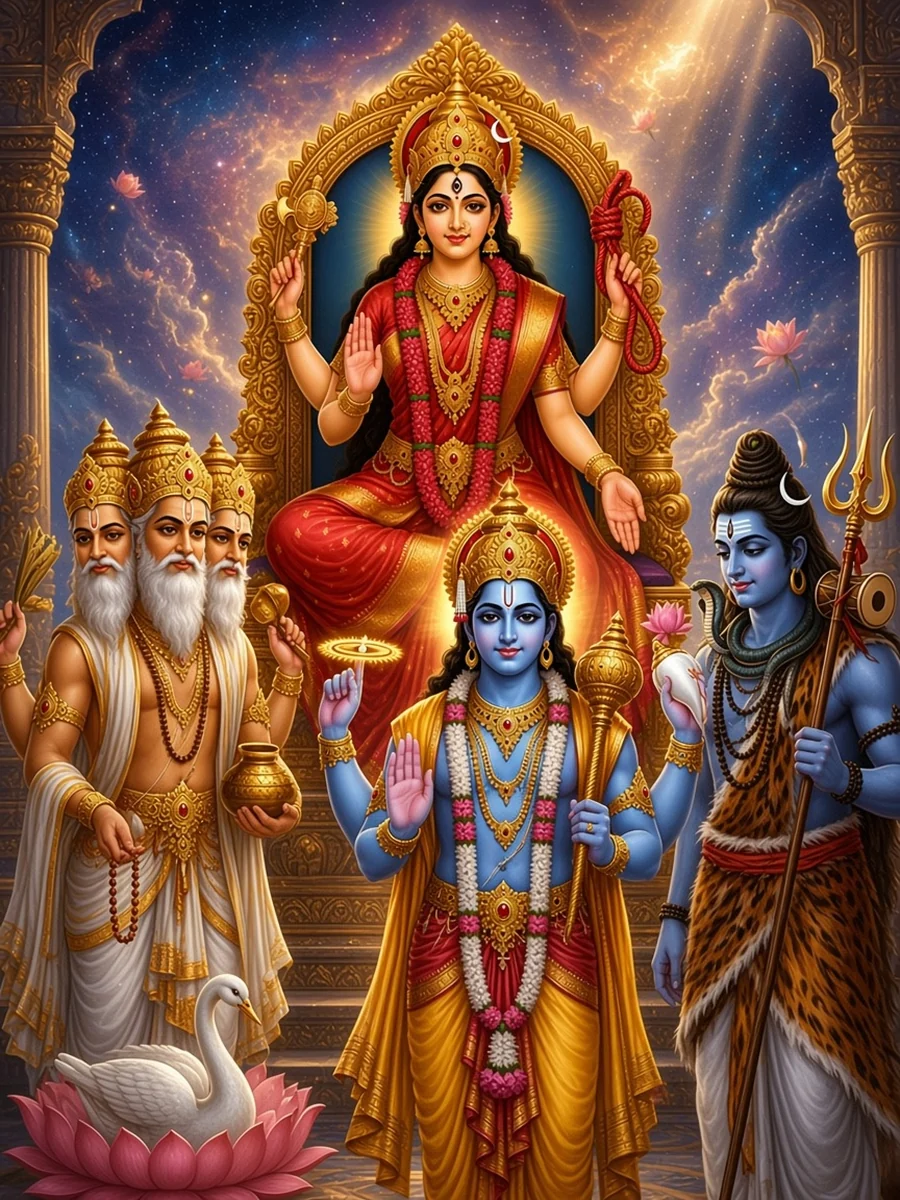
Manidvipa, her island of gems Brahma, Vishnu and Shiva bow before her

For kids

Hello, everyone, all of you
Got you, little worry

At a glance

TraditionShakta
NameMahadevi

the Great Goddess; Adi Parashakti, the first and highest power; or simply Devi, the Goddess

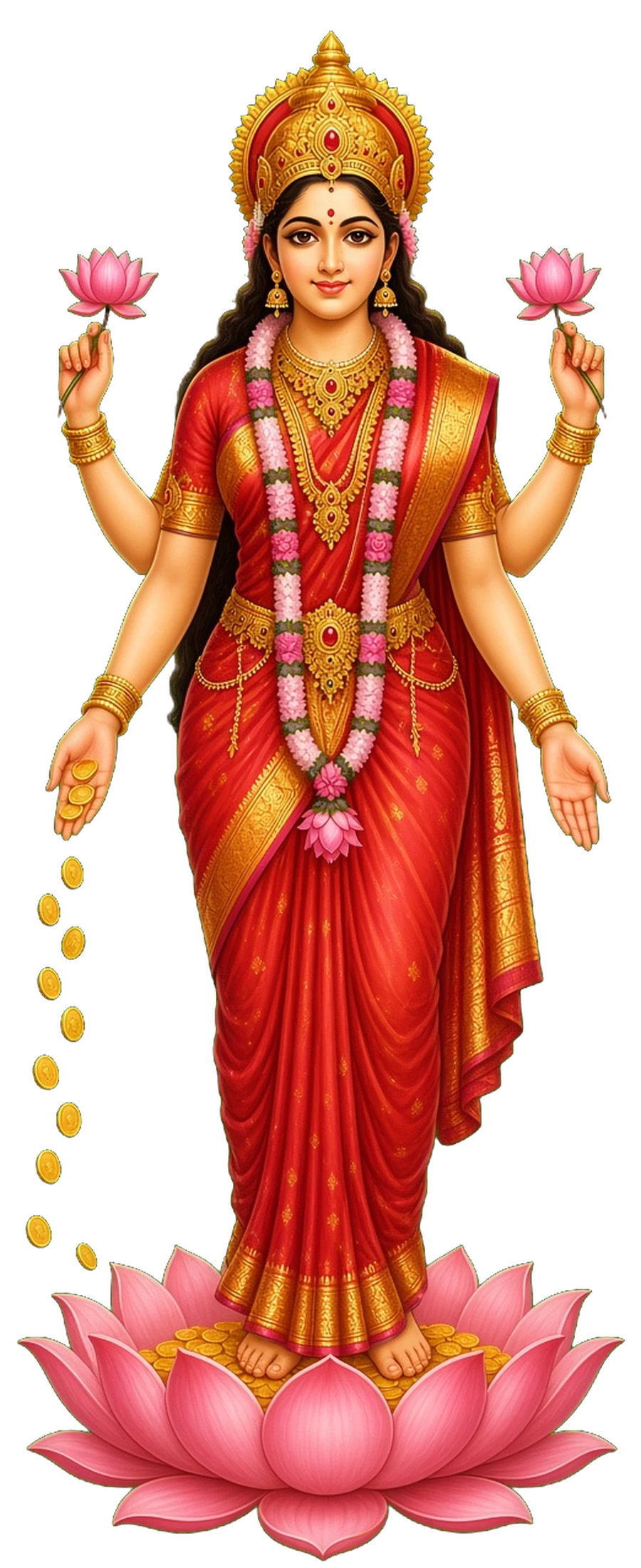
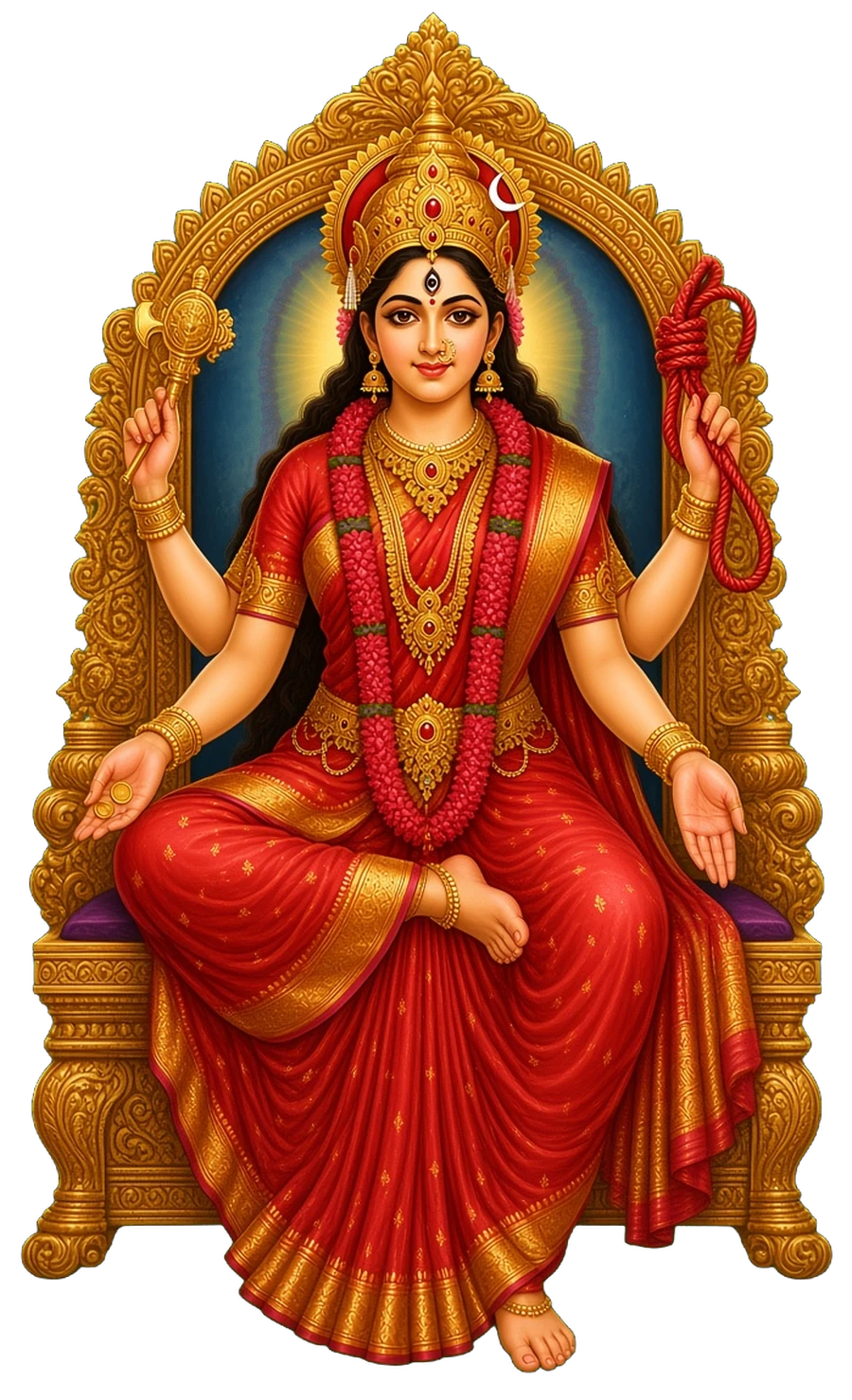
As BhuvaneshvariDressed in red

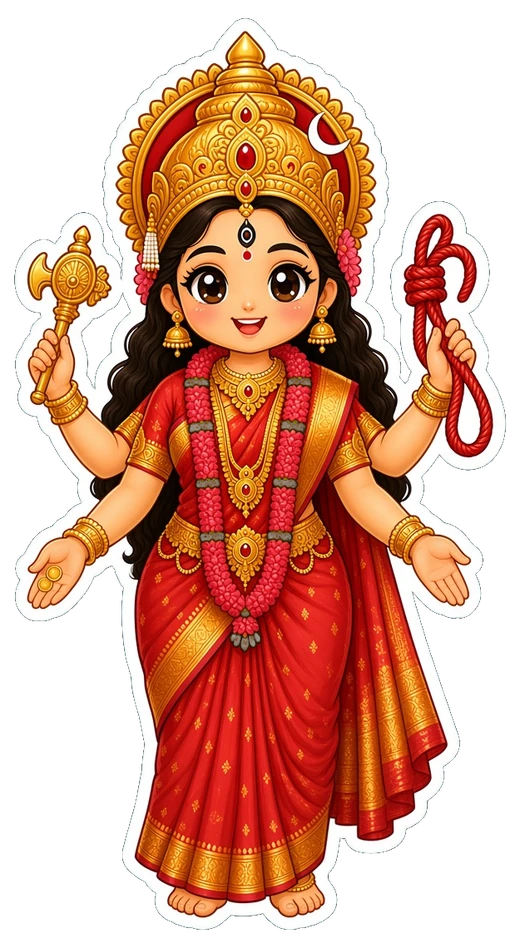
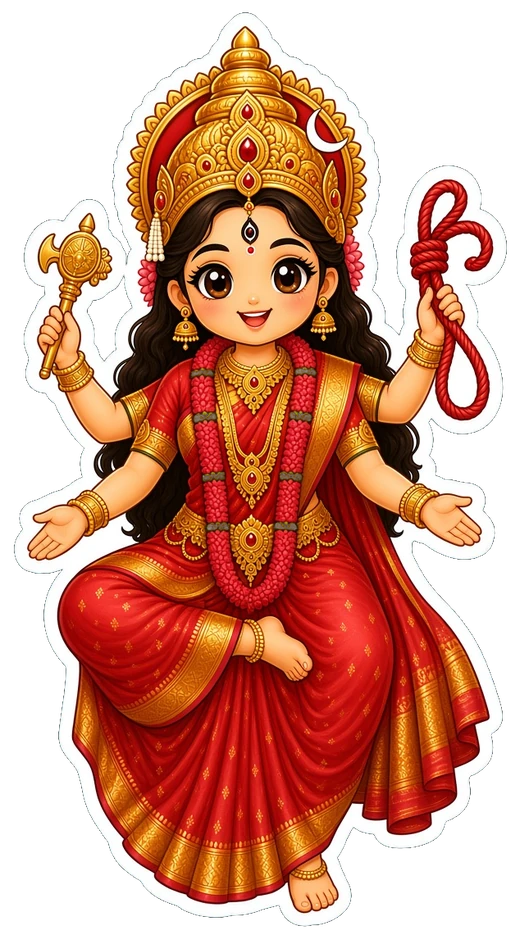
smiling, with four arms holding a noose and a goad, the other two hands granting boons and saying do not fear

Who Mahadevi is

Mahadevi means the Great Goddess. For the Shakta tradition she is not one goddess among many but the one reality itself, the power without which no god can move. Her devotees also call her Adi Parashakti, the first and highest power, or simply Devi, the Goddess.

Every goddess on this site is, in the Shakta view, one of her faces. When the gods' anger blazed up against the buffalo demon, she was the light that became Durga (The Light That Became a Woman). When two demon generals came to seize her, Kali sprang from her forehead (The Night Kali Was Called). She would not marry Shumbha (The Goddess Who Would Not Be Married), she wept from a hundred eyes until a dry world's rivers ran again (The Goddess of a Hundred Eyes), she rose from the fire as Lalita (The Goddess Who Rose from the Fire) and stood round Shiva in ten forms as the Mahavidyas (The Goddess in Every Direction). Saraswati comes from her tongue in the Devi Bhagavata (Born from the Tongue). Her life as Sati, Shiva's first wife, has its own page.

Two texts made her supreme. The Devi Mahatmya, a part of the Markandeya Purana, opens with Vishnu asleep and helpless until she lets him wake (The Thieves of the Vedas), and its frame is a king and a merchant who learn her stories in a forest (The King and the Merchant). The Devi Bhagavata Purana goes further. In it she makes Brahma, Vishnu and Shiva, carries them to her island and turns them into women at her gate (The Island of Gems). She whispers the seed of the Purana to the child Vishnu on a banyan leaf (The Half Verse on the Banyan Leaf), and shows the mountain king her body made of the universe (The Mountain Who Asked to See Her).

Sarvam khalvidam evaham, nanyad asti sanatanam: All this is I alone, and there is nothing else that lasts for ever.

That is the half verse she speaks to Vishnu, and the Devi Bhagavata calls it the whole of its teaching.

She is worshipped above all at the two Navaratris, the nine nights of spring and of autumn, when the Devi Mahatmya is read through. In the Devi Bhagavata she most often shows herself as Bhuvaneshvari, the queen of the worlds, smiling, in red, with the noose that binds and the goad that urges on.
Before the Puranas

The Vedic roots of Mahadevi

The Vedas have no single Great Goddess, but they have the voice she would later be given. In Rigveda 10.125 a goddess speaks in her own person: she walks with all the gods, holds them up, calls herself the queen who gathers treasures, says that all who eat, see and breathe do so through her, and that she is greater than heaven and earth. By tradition the speaker is Vac, Speech. Shaktas call it the Devi Sukta, the hymn of the Goddess, and chant it with the Devi Mahatmya to this day.

Other Vedic goddesses fed the same stream. Ratri, Night, has her own hymn, Rigveda 10.127, which is recited before the Devi Mahatmya, and Brahma's hymn to the Goddess as Vishnu's sleep in its first chapter is still called the Ratri Sukta. Aditi, the boundless mother of the gods, was another. In the Kena Upanishad a woman named Uma Haimavati appears to Indra and tells him what the gods could not grasp (The Spirit and the Blade of Grass). The Devi Bhagavata retells that scene with the Goddess herself in the place of the mystery.

The Devi Mahatmya is the first text to make one Goddess supreme over all the gods. Scholars usually date it between 400 and 600 CE, and an inscription of 608 already quotes it. Thomas Coburn named his study of it after the crystallization of the Goddess tradition, and C. Mackenzie Brown has used the same phrase: many goddesses gathered into one.

The Devi Bhagavata Purana, which R. C. Hazra placed in the eleventh or twelfth century, made her the maker of the three great gods and gave her a heaven above all of theirs. Its Devi Gita, which Brown dates no earlier than the thirteenth century, answers the Bhagavad Gita with the Goddess as teacher. Its devotees call it the true Bhagavata Purana, a claim Hazra rejected. The Saundarya Lahari, a hymn ascribed to Shankara, sings the same island and the same couch of four gods.

See how the Vedic gods became the Puranic ones →

Related gods