As the temple tells it
Kerala · Thrissur, the hill where the banyan stood · 3 min read
Parashurama had a country now. He had thrown his weapon into the sea, and the water had gone back and left a long green coast between the mountains and the waves; the Lore tells that in The Land the Sea Gave Back. He had brought people to it and given them villages. But he walked its new shore and was not content.
"There are fields," he said to himself, "and houses, and rivers. There is no god here."
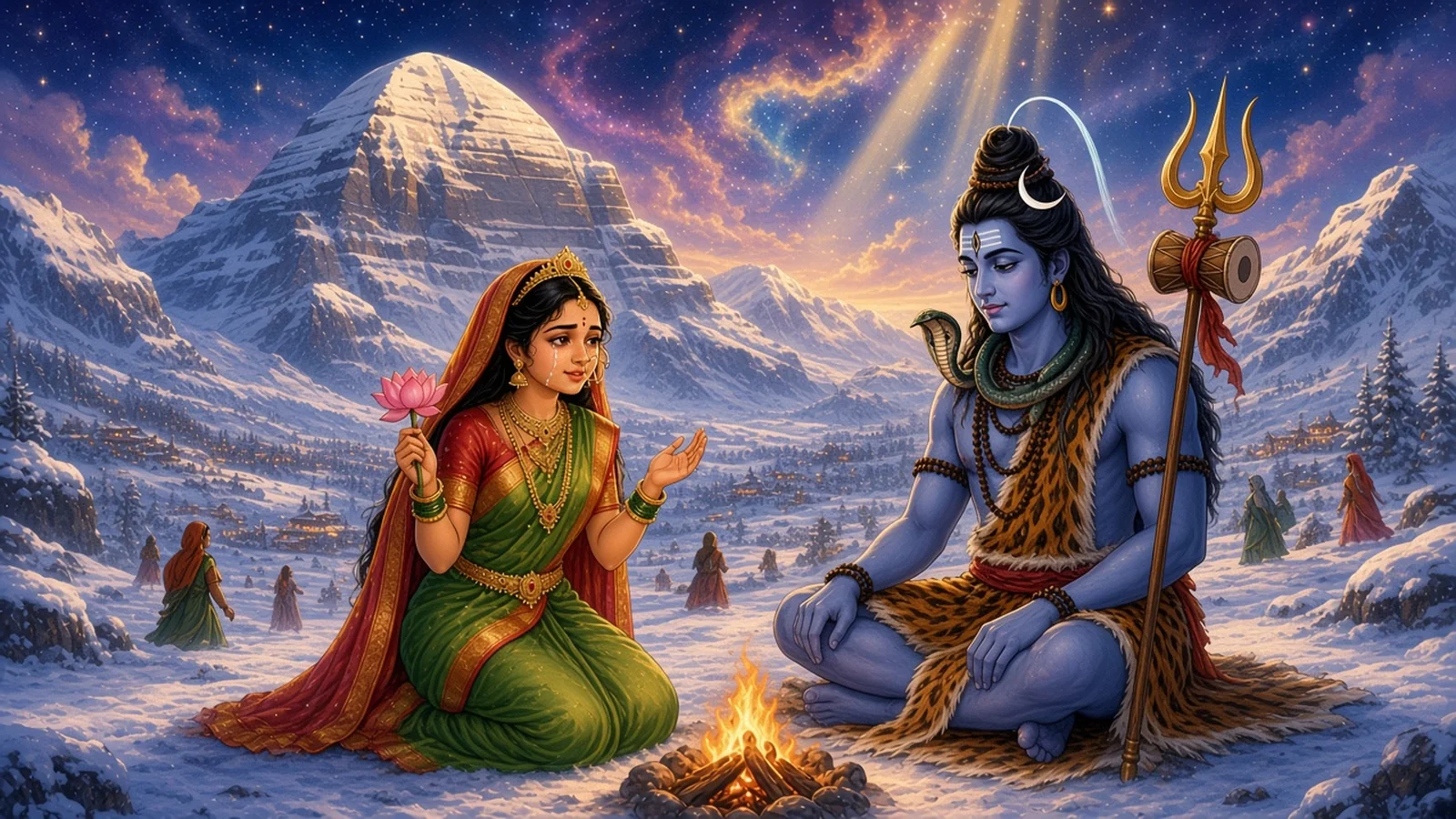
So he went north, all the way to Kailash, to the one who had taught him.
Shiva was sitting on the mountain with Parvati beside him. He knew his pupil's step, and he looked up before Parashurama had bowed.
"You have made a land," he said. "I heard the sea go back."
"I have made a land," said Parashurama. "I gave the old earth away, and this one I took from the water, and it is good land. But it is new, and nothing in it is holy yet. Come and live in it. Bless it, so that the people I have brought there are not alone."
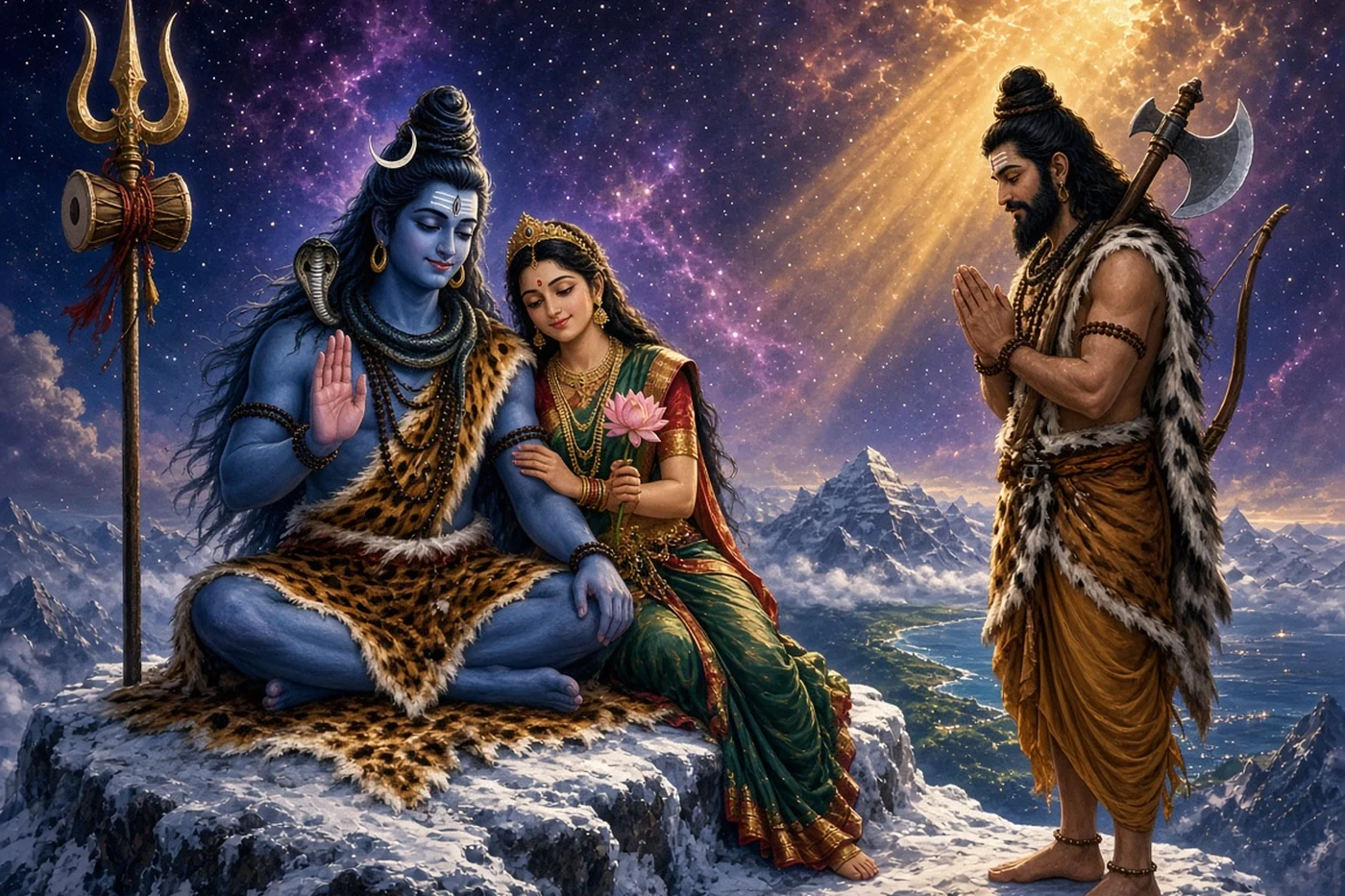
Parvati looked at her husband, and he smiled.
"We will come," he said.
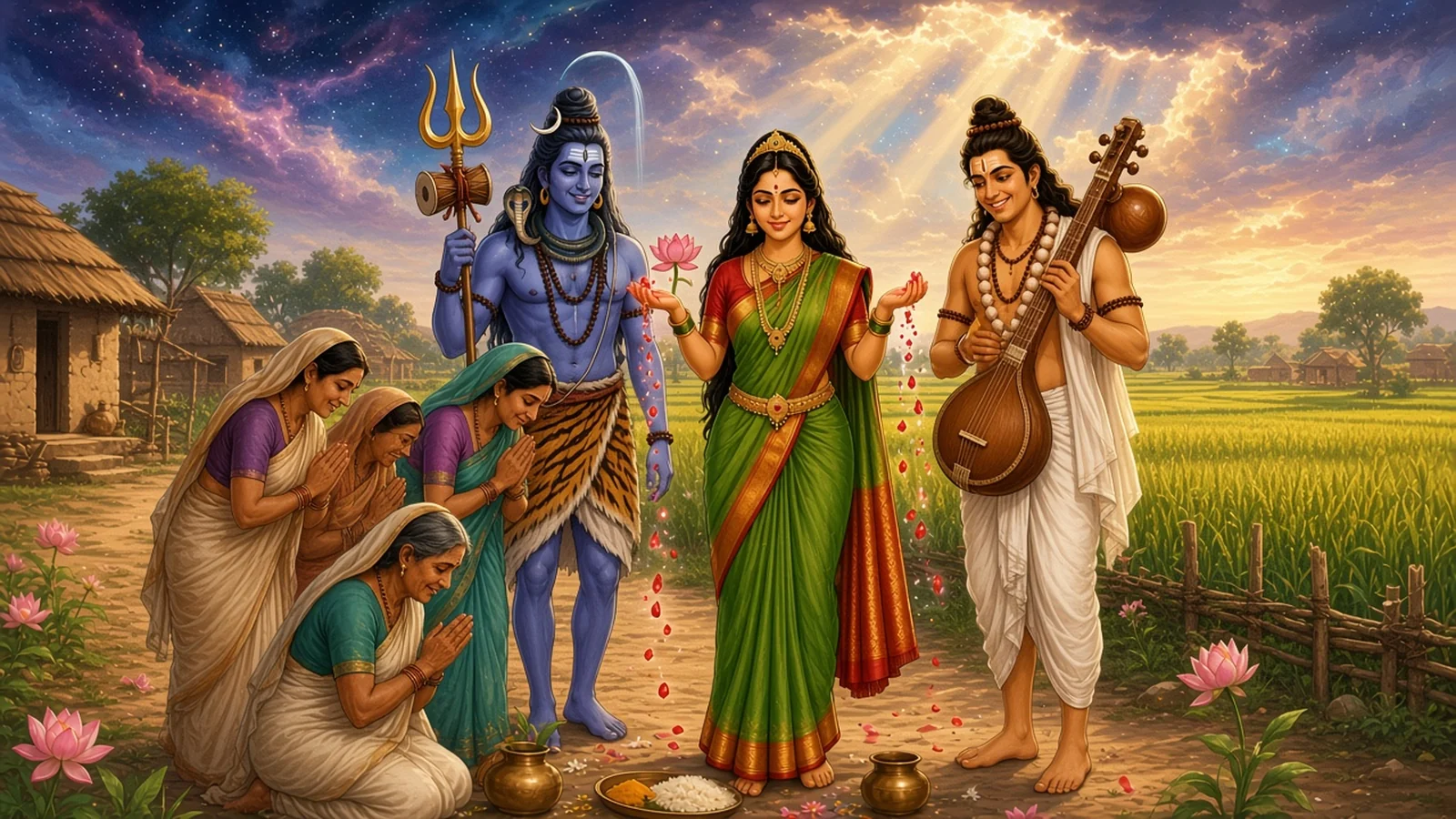
They did not come alone. Parvati came, and Ganesha and Subrahmanya, and all Shiva's host behind them, his ganas and his bull, and they came down out of the north and along the new coast with Parashurama walking in front. Some say Shiva sent Nandi and Simhodara ahead to choose the place. They passed rivers and paddy and the dark woods of the coast, and they came at last to a low hill with a banyan on it, so big that its hanging roots made a hall of their own.
There the company stopped.
Parashurama turned to speak to his teacher, and his teacher was not there. Parvati was gone, and the host was gone, and the hill was quiet.
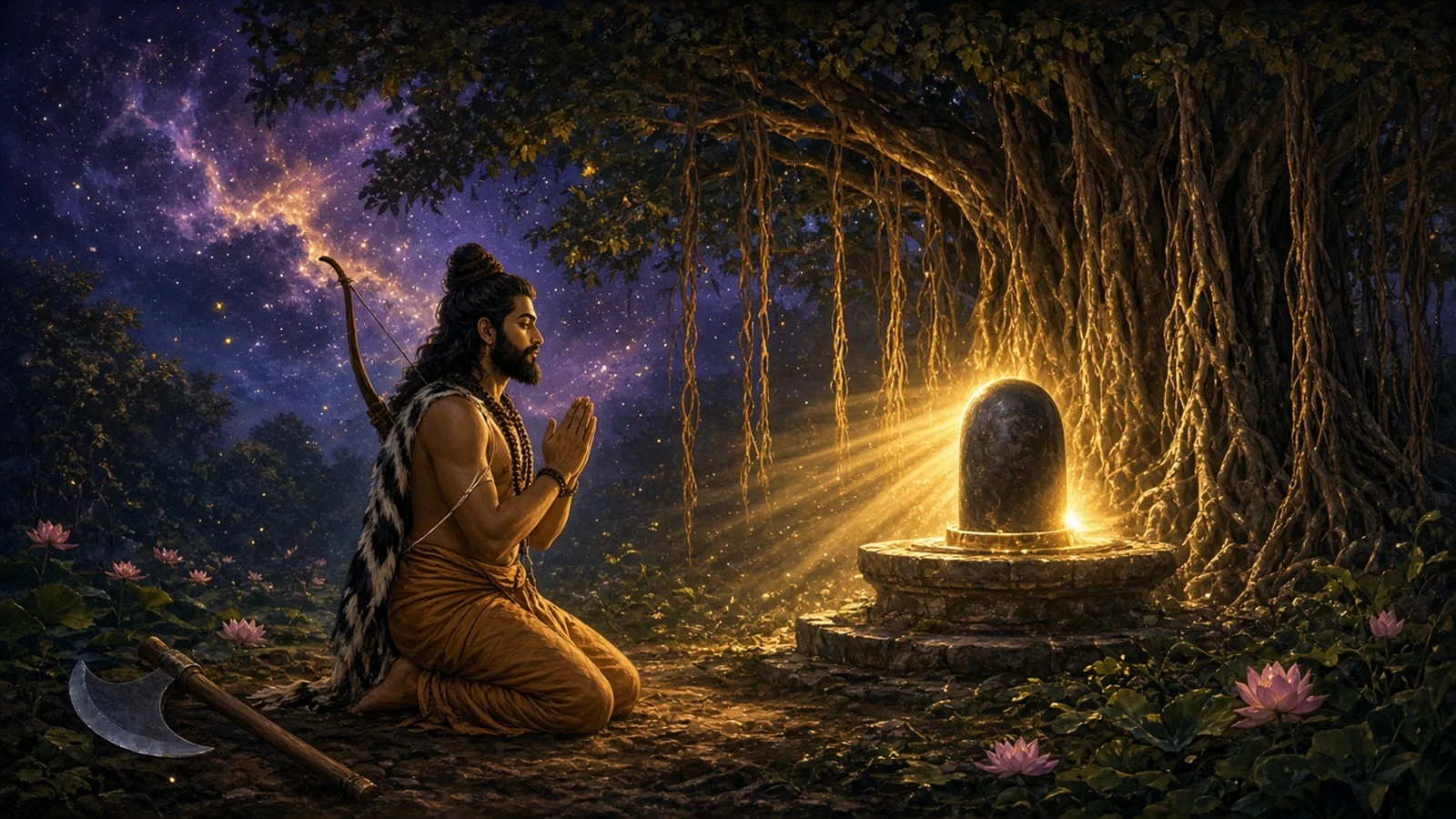
He went up to the banyan. At the foot of the great tree, among the roots, there was a linga, and it was shining.
He knelt before it for a long time. Then he made the first worship there, and that spot is still called the Sri Moolasthana, the first place.
Many lifetimes later a ruler of Cochin decided that the linga should have a proper temple, a little way from the tree. But the banyan had grown around it, and to free the stone the branches had to come down, and a falling branch could break it.
The woodcutters stood with their axes and would not begin.
Then the Yogatiripad, the old head of the temple's council, walked in among the roots and lay down on top of the linga, covering it with his own body.
"Cut," he said. "If anything falls, it will fall on me."
They cut. The great branches came down all round, and not one of them fell anywhere near the god. The linga was carried to the sanctum where it stands today, and the town that grew up round the hill took his name: Thiru-Shiva-Perur, Shiva's holy town, Thrissur.
As pilgrims see it, and as Kalady remembers
Thrissur and Kalady, Kerala · 2 min read
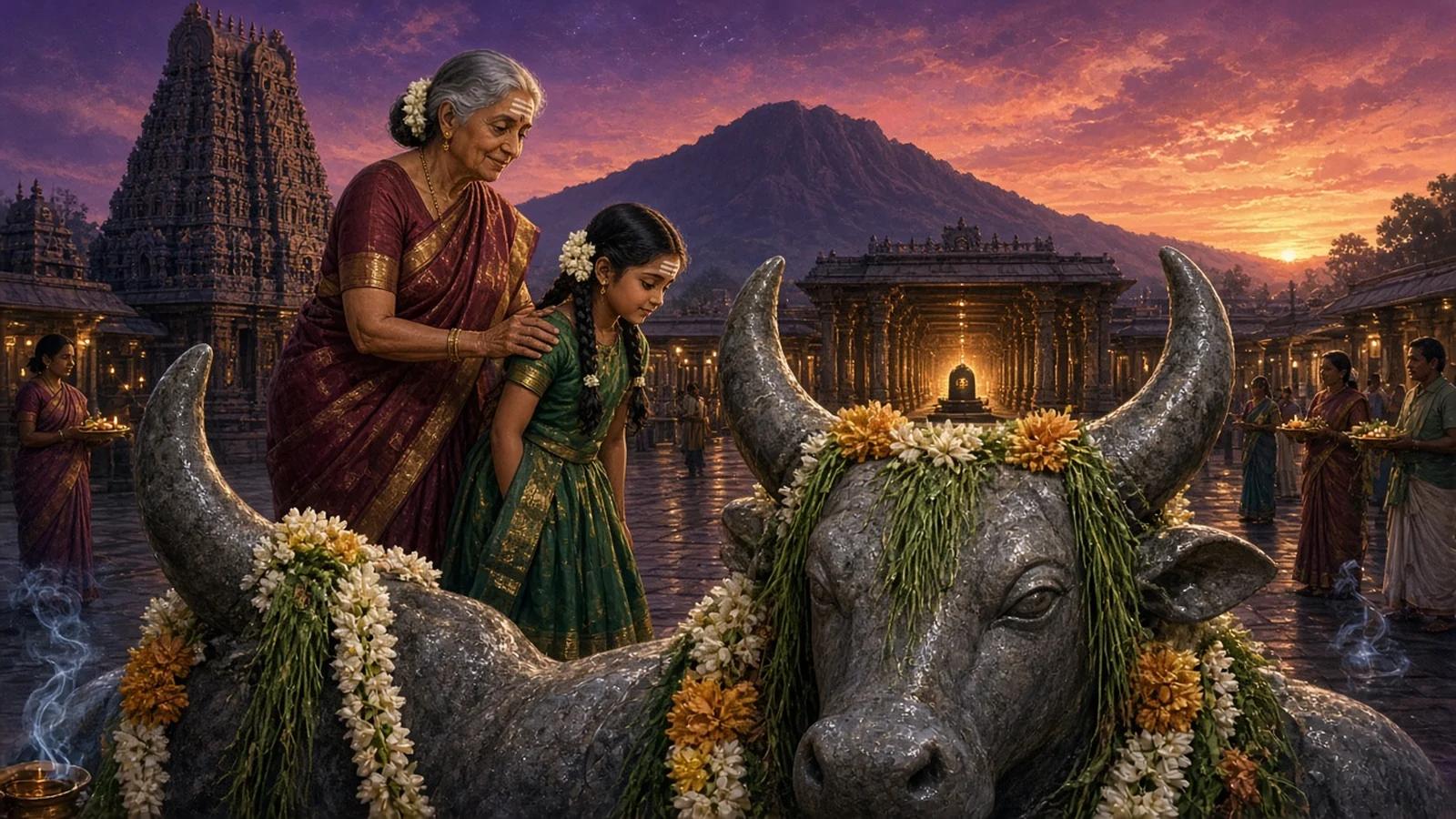
Pilgrims who come to Vadakkunnathan today do not see the linga at all. In the round sanctum, where Shiva faces west and Parvati sits behind him facing east, there is only a pale mound some sixteen feet high, with gold crescents and serpent hoods set on its top. It is ghee. For centuries the god has been bathed in ghee every day, and the ghee has stayed, layer over layer, until the stone is buried.
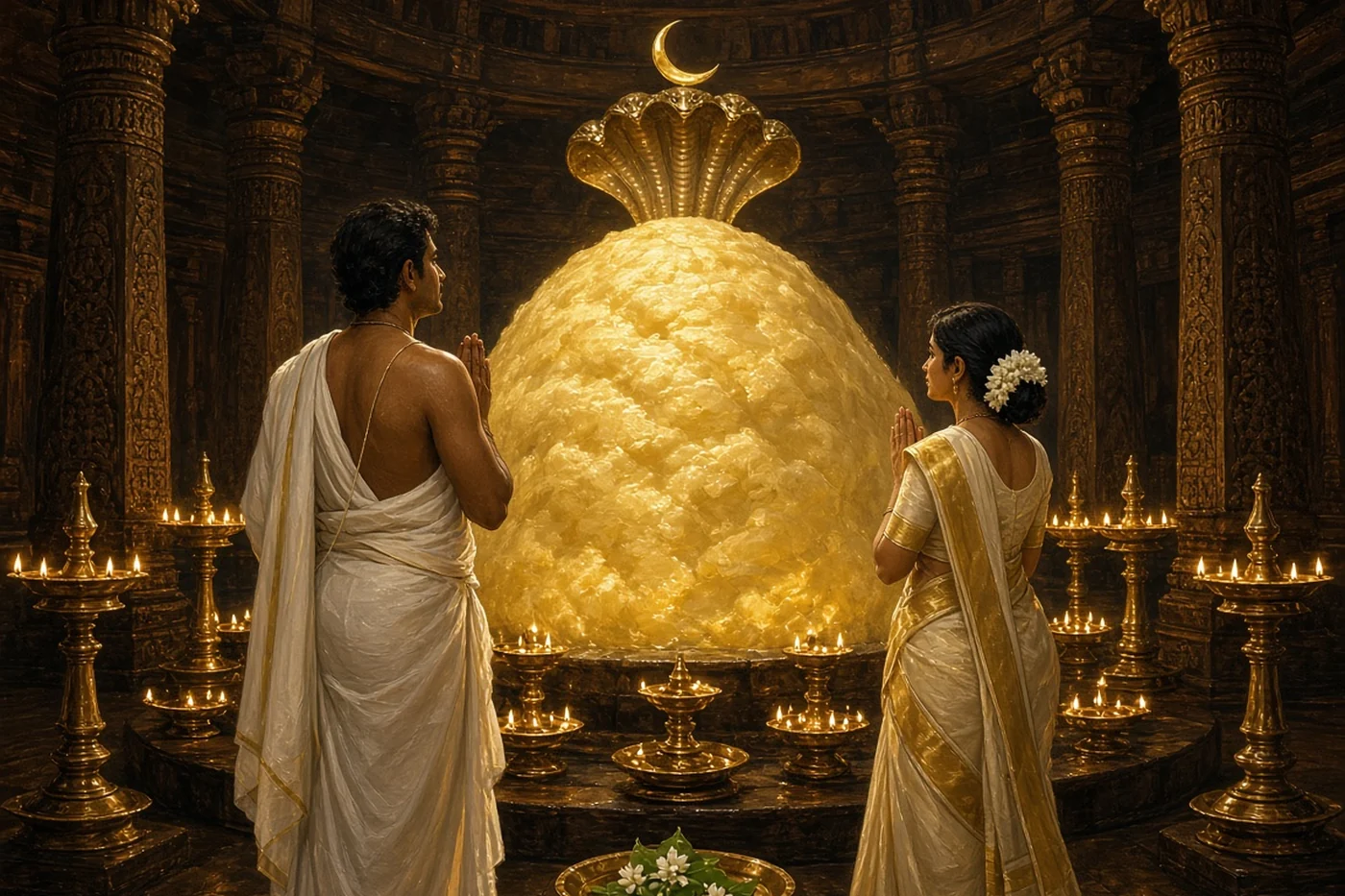
The devotees say it never melts, even in the heat of a Kerala summer, and never goes bad. They say the white mound is Kailash itself under its snow, brought south, and the old name of the place is Then Kailasam, the Kailash of the south. When a piece breaks away, the priests read it as a sign, good or bad by where it fell, and a little of the old ghee is given out as medicine. One telling says the god here is Shiva as the hunter who fought Arjuna and gave him the Pashupata weapon, and that the ghee first went on to soothe the wound from that fight.
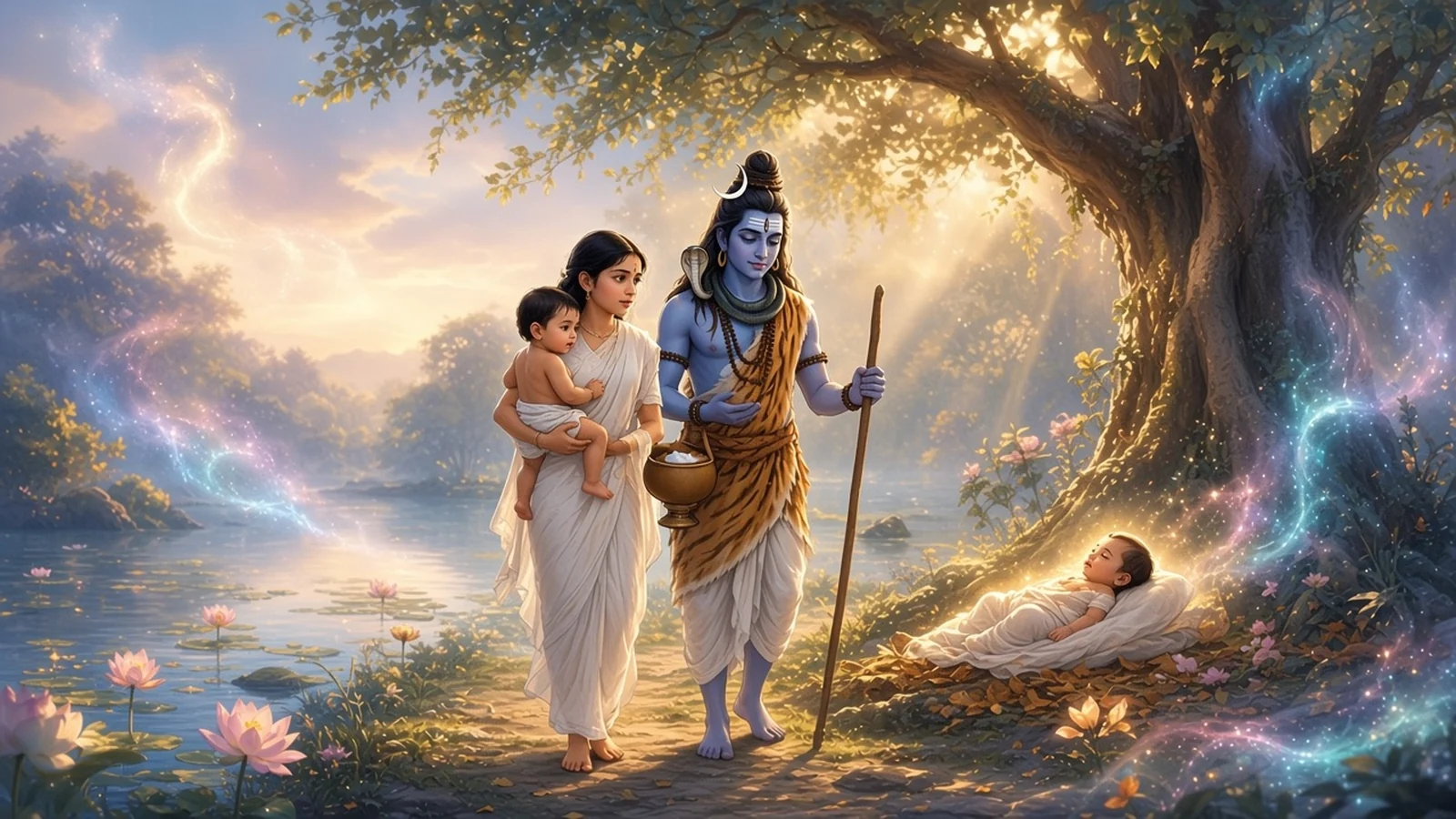
The temple remembers a childless couple from Kalady, Shivaguru and Aryamba, who came here and prayed for forty-one days. Shiva came to them in a dream and gave them a choice: an ordinary son who would live long, or an extraordinary son who would not. They chose the second, and when the boy was born they named him Shankara, after the god. The Shankara Digvijaya, the old life of the teacher, begins its second canto with Shiva living as a linga that made itself on Vrishadri, the bull's hill in Kerala, and has the couple pray to him there.
On one day a year the hill is full from end to end. On Thrissur Pooram the ten goddesses and Sasthas of the town come to Vadakkunnathan on their elephants. The god himself does not go out. They come to him.