As the Peetha lists and the old pilgrim road tell it
Hinglaj, Balochistan · the Peetha Nirnaya and the walk from Karachi · 3 min read
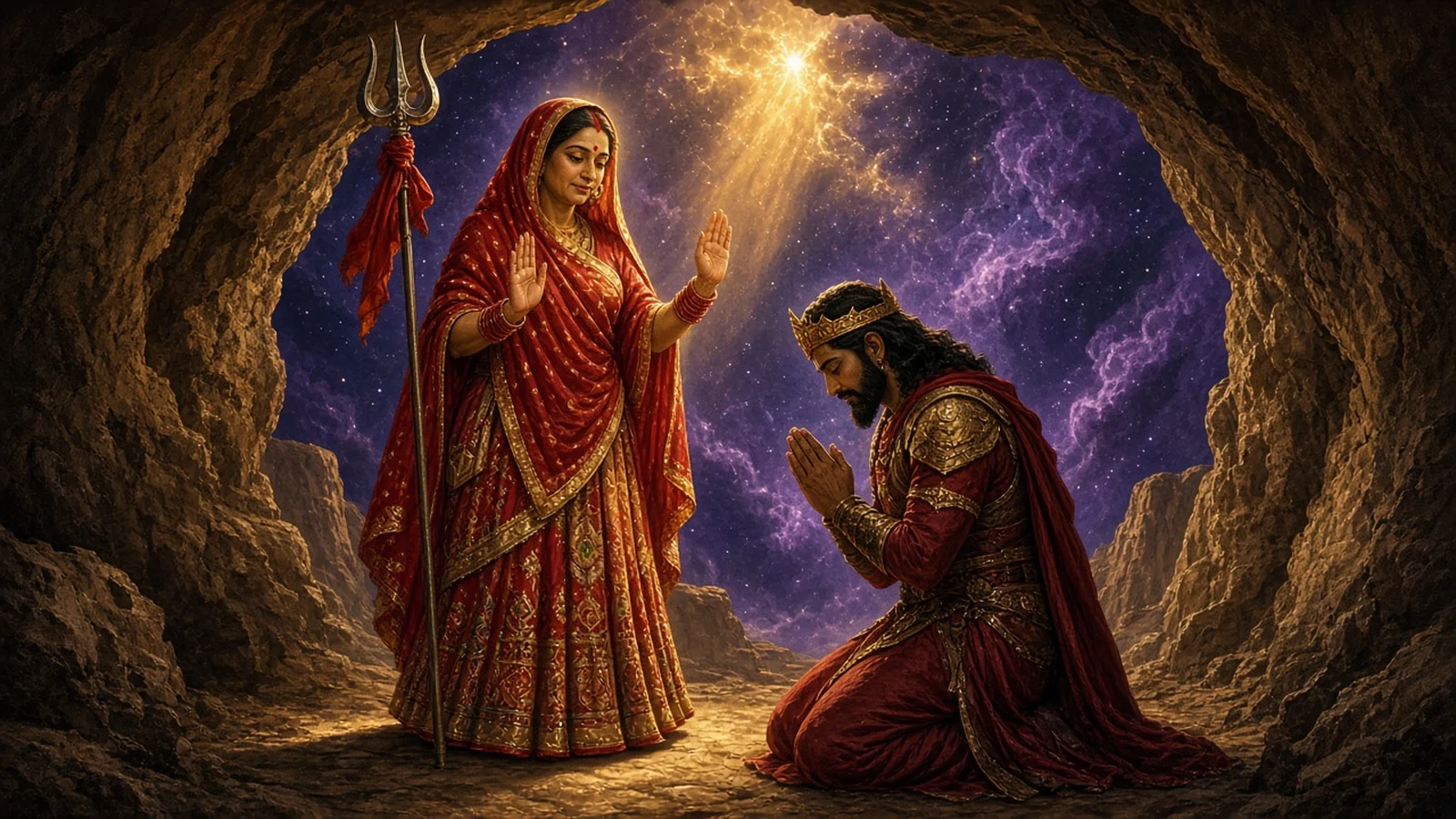
How Sati gave up her body at her father's sacrifice is told in Sati and the Sacrifice. This is what came after, as Hinglaj remembers it.
Shiva walked across the earth with her body in his arms and would not put it down. The worlds could not go on while he grieved. So Vishnu followed him and, with his discus, cut the body away a piece at a time, and wherever a piece came to rest, the goddess stayed.
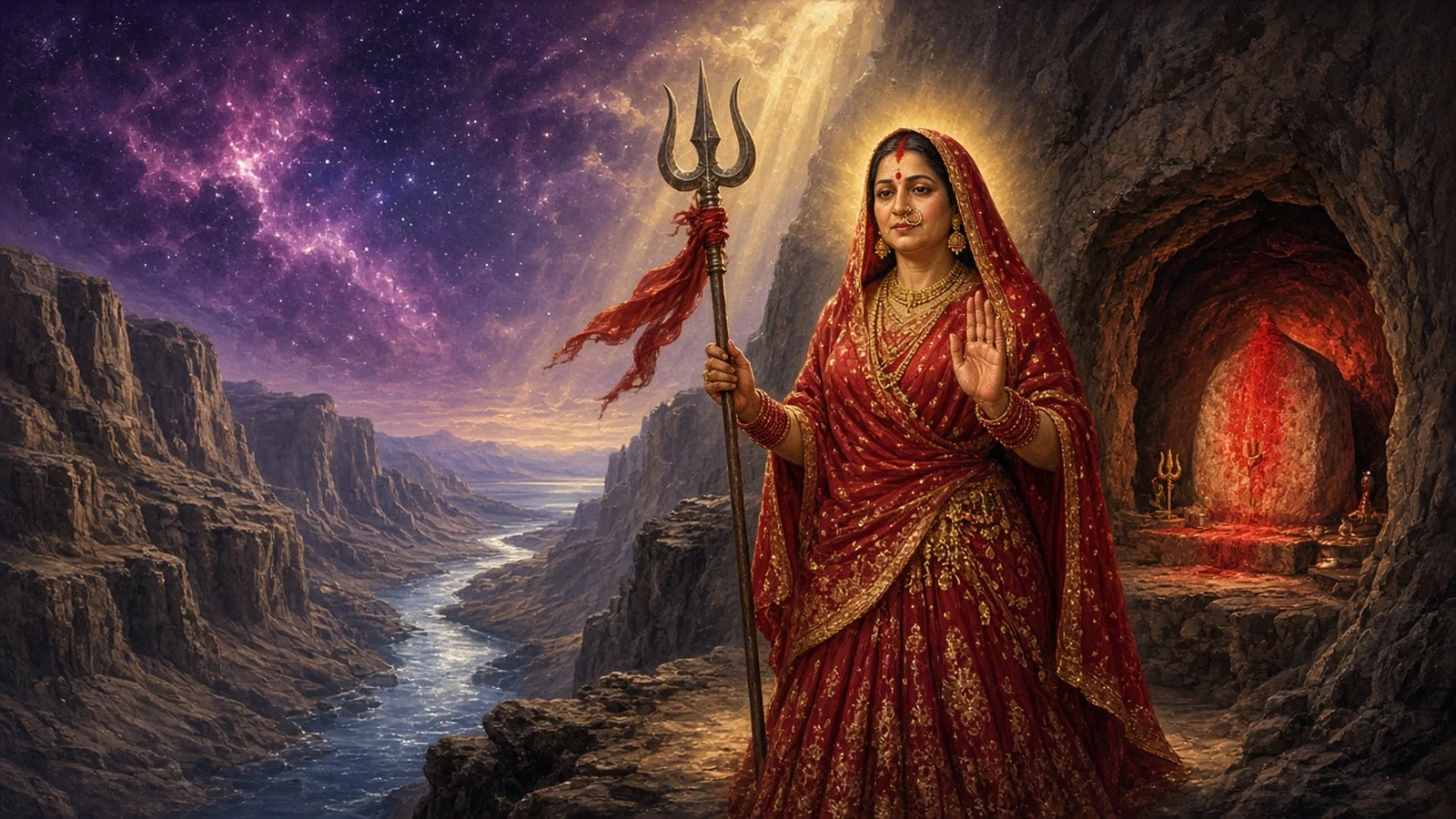
The crown of her head went farthest west of all. It fell beyond the Indus and the plains of Sindh, into a narrow gorge at the end of the Kirthar hills, where the Hingol river runs down through bare rock to the Arabian Sea. The book called the Peetha Nirnaya counts fifty-one seats of the goddess and names this one first. Here she is Kottari, it says, and Shiva keeps watch beside her as Bhimalochana, the one with fearful eyes.
She took no statue. In the cave there is only her seat, a trident and a stone so thick with vermilion that it glows red, and on the rock two round marks that pilgrims call the sun and the moon.
For centuries the road to her began at an akhada of the sadhus in Karachi. A band of pilgrims gathered there behind the chharidar, the man who carries the staff, and set out on foot across the desert. It took weeks. Some never came back.
"Nobody goes to the Mother without Baba's leave," the chharidar told every new band.
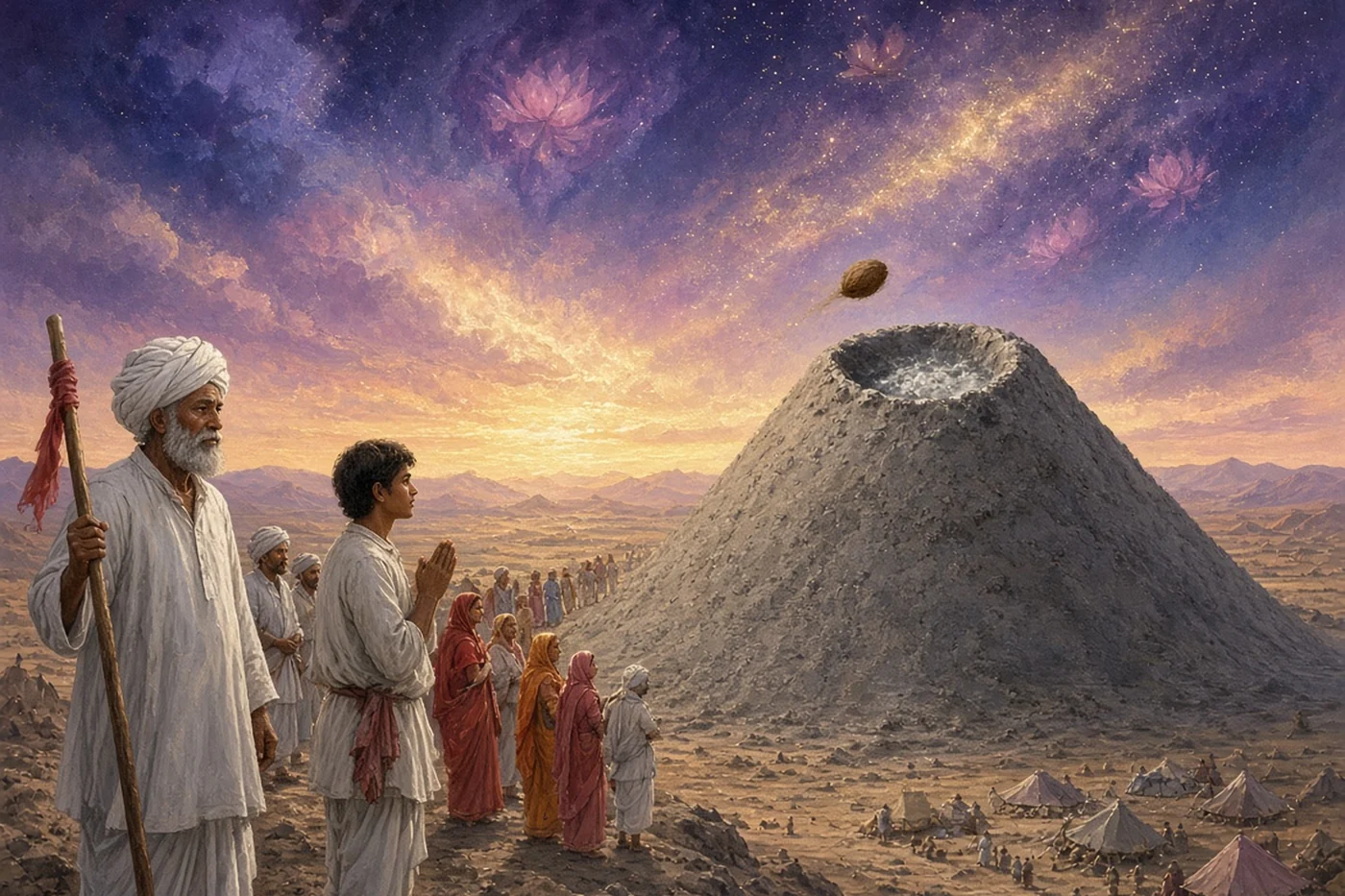
Baba was the hill called Chandragup, a cone of grey mud that bubbles at the top, and the pilgrims honour it as Shiva himself. They camped below it, and nobody slept that night. They fasted, and each of them sat with the wrongs they had done and turned them over in the dark. Each one gave a share of flour, and from all of it together they baked the roti they would carry up the hill.
At first light they climbed. On the rim, with the mud heaving below, each pilgrim stood in front of all the others.
"I am the son of my father, from my village in Thar," said one, and gave his full name, "and these are my sins." Then he called them out, one by one, where everyone could hear.
The chharidar watched the mud and felt the wind on his face.
"Baba has heard you," he said at last. "Throw your coconut."
The coconut went down into the crater. If it sank, the old pilgrims said, the goddess would let them in.
Below, they bathed in the Hingol and went up the gorge. The last stretch to the Mother is a narrow passage through the cave, and those who squeeze through it, the Charans say, come out the far side born a second time, with nothing left against them.
"Jai Hinglaj Mata!" the band cried when they saw the red stone.
The ones who had walked the whole way home were not treated as ordinary people again. When they died they were not burned but buried, like holy men, as souls made divine.
As the yatra goes today
Hingol National Park, Lasbela · from reporters' accounts, 2011 to 2025 · 2 min read
Every spring, in April, the road out of Karachi fills up. Since the Makran Coastal Highway opened in 2004 the journey that once took weeks takes about four hours, and the pilgrims come by bus and car and pickup truck, a few on bicycles. Since Partition the shrine has stood in Pakistan, and most of its pilgrims are Pakistani Hindus from Sindh; the few hundred from India and further away need visas.
Some still walk. In 2019 a woman of sixty-five walked 448 kilometres from Matli in Sindh, sure that the longer road brings the greater blessing, and the walkers are still thought the purest pilgrims of all.
The festival lasts three or four days. Dawn counted about two hundred thousand pilgrims in 2025, many of them barefoot to keep a vow, where National Geographic had counted forty thousand six years before. At Chandragup the climb is still the first rite. Families toss coconuts and rose petals into the crater, smear the grey clay on their faces and shape small mud houses at the foot of the hill, each a wish for a home or a marriage. Baloch boys stand on the rim to catch the coconuts.
Then comes the bath in the Hingol, relatives pouring water over one another's heads, and the line up the steps to the cave, where a priest blesses each pilgrim and gives coconuts back as prasad. Kitchens run day and night, and doctors from the coast guard keep a free camp.

The valley belongs to its Muslim neighbours too. They call the shrine Nani Mandir, the temple of the grandmother, and some call the pilgrimage Nani ki Haj. The Zikri Baloch of the coast call her Nanima, and when one of their vows is answered they bring her sweet bread with the whole family. During the yatra the local Muslim tribes take in the pilgrims and help them on their way.