As the Padayani villages tell it: the painted bark
Central Travancore, Kerala · told at Kadammanitta and the Bhadrakali temples around it · 3 min read
Darika had run as far as anything can run, down into Patala, and the goddess had gone down after him and taken his head. When she came up again she was red from her hair to her feet, and the head swung from her hand.
The fight was over. Her anger was not.
She walked toward Kailasa, and the gods watched her come and saw what that anger would do to the world if it came home with her and stayed.
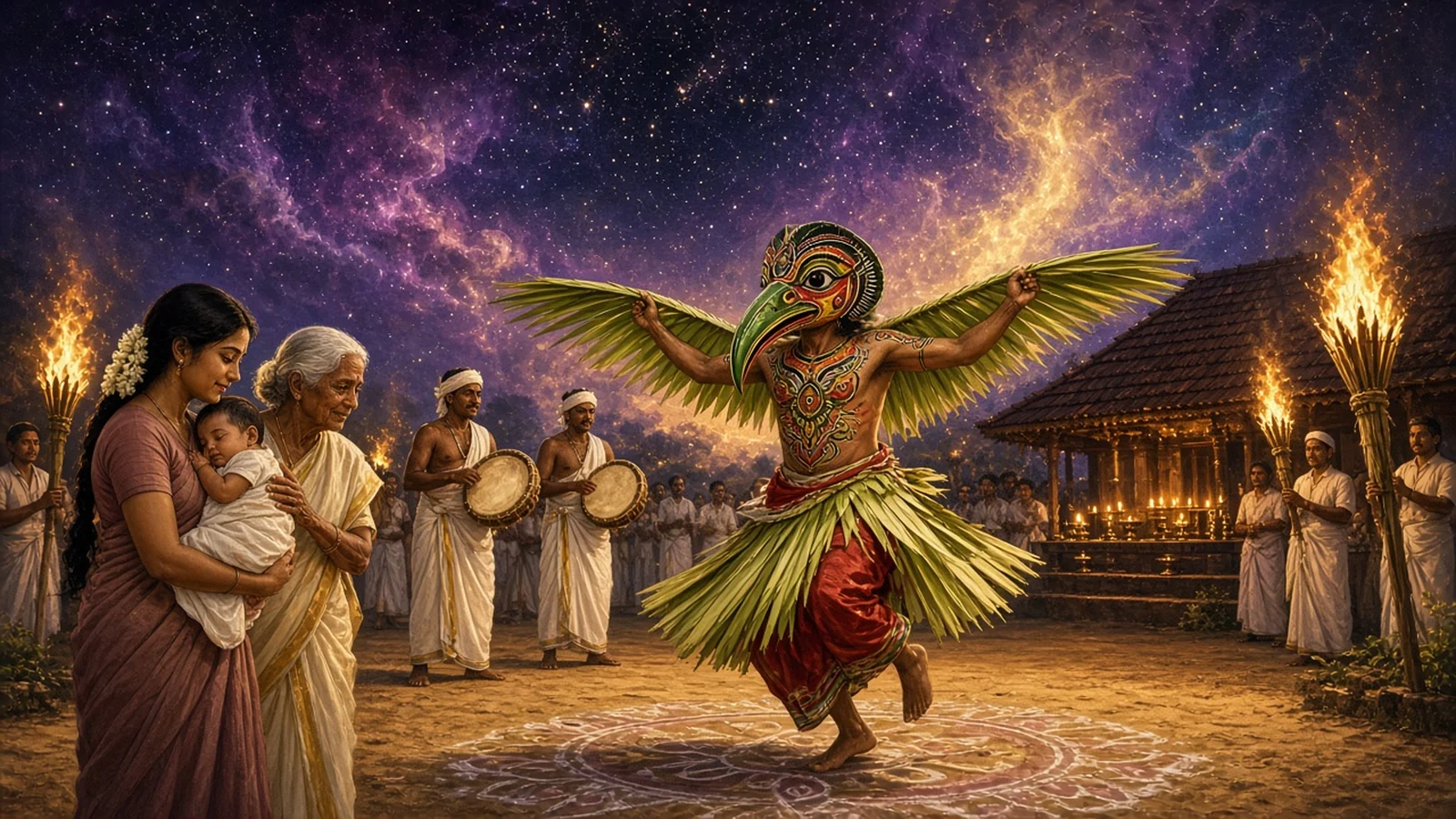
Shiva's ganas went out to meet her first, the little crooked ones who keep his door. They beat their drums for her. They leapt and stamped. They told the oldest jokes they knew and argued with each other in silly voices.
She did not look at them.
"It is no use," one of them said, setting down his drum. "She cannot hear us. She cannot hear anything."
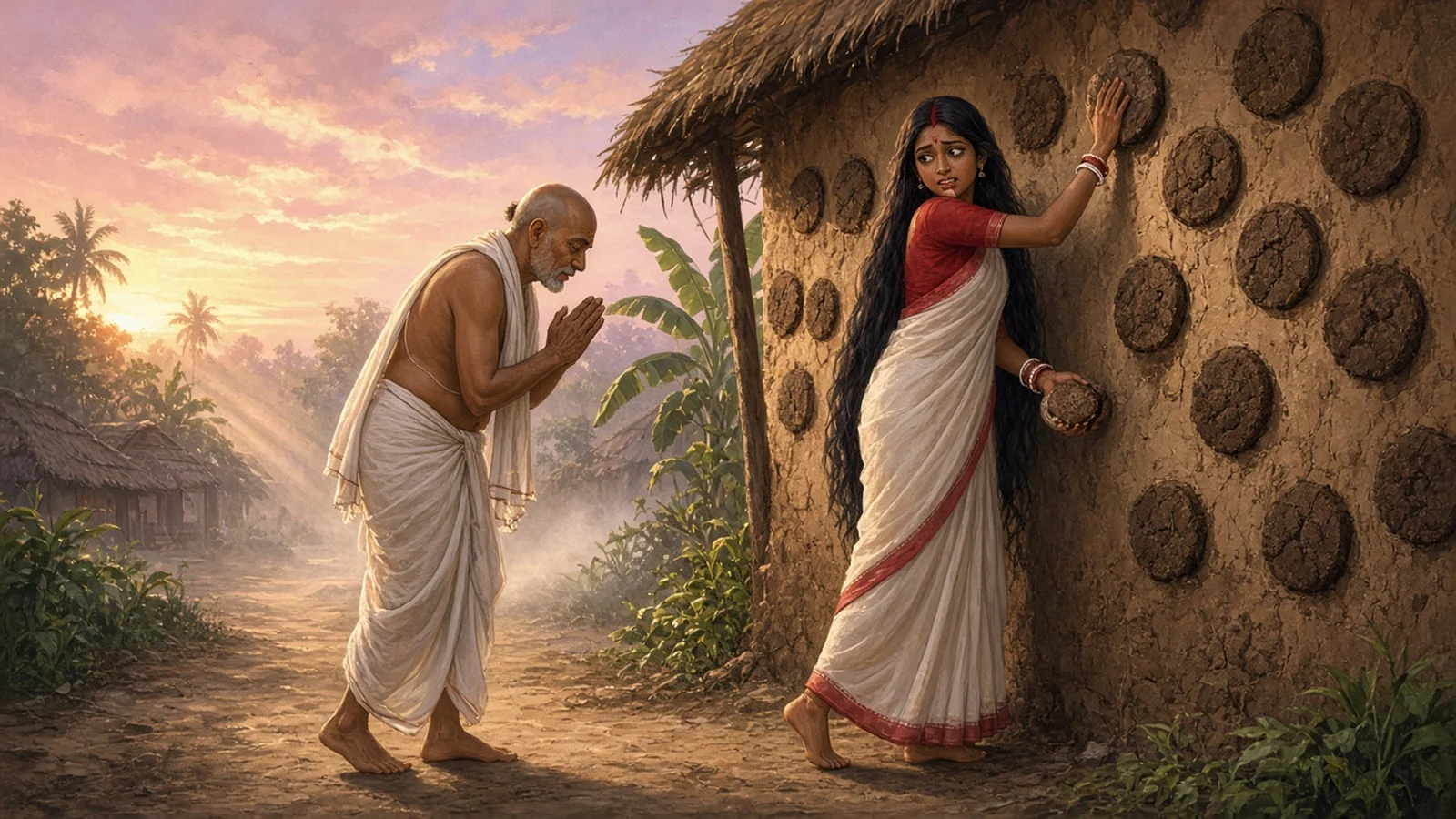
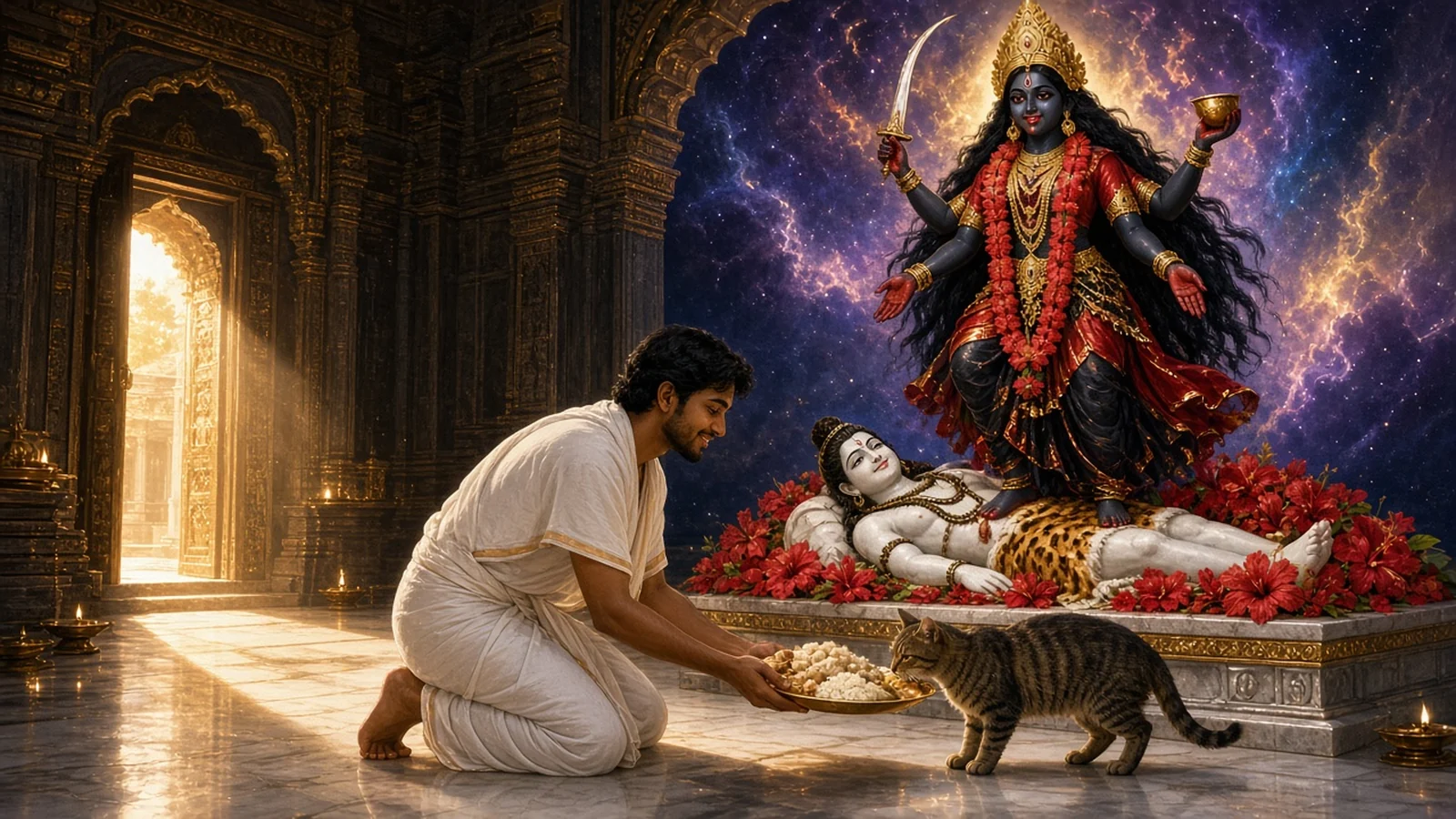
So Shiva went himself. He lay down across her road, the whole length of him, where she could not miss him. That did not stop her either.
Then Shiva called his son.
"Murugan," he said. "She will not listen to me, and she will not laugh at them. Go."
Murugan went, and tried what the others had tried, and it did no better for him. He sat down at the edge of the trees with nothing in his hands.
Then a thing came to him that nobody had taught him and that he had never learned anywhere. He looked at what lay within reach.
He crushed leaves for green. He pressed out a red juice, took turmeric for yellow and lumps of charcoal for black, and gathered soft lime stones of several colours. He ground each one into a paste. Then he picked up the fallen sheaths of the areca palm, broad and smooth, and painted faces on them, wide eyes and curling teeth, faces no one had seen before.
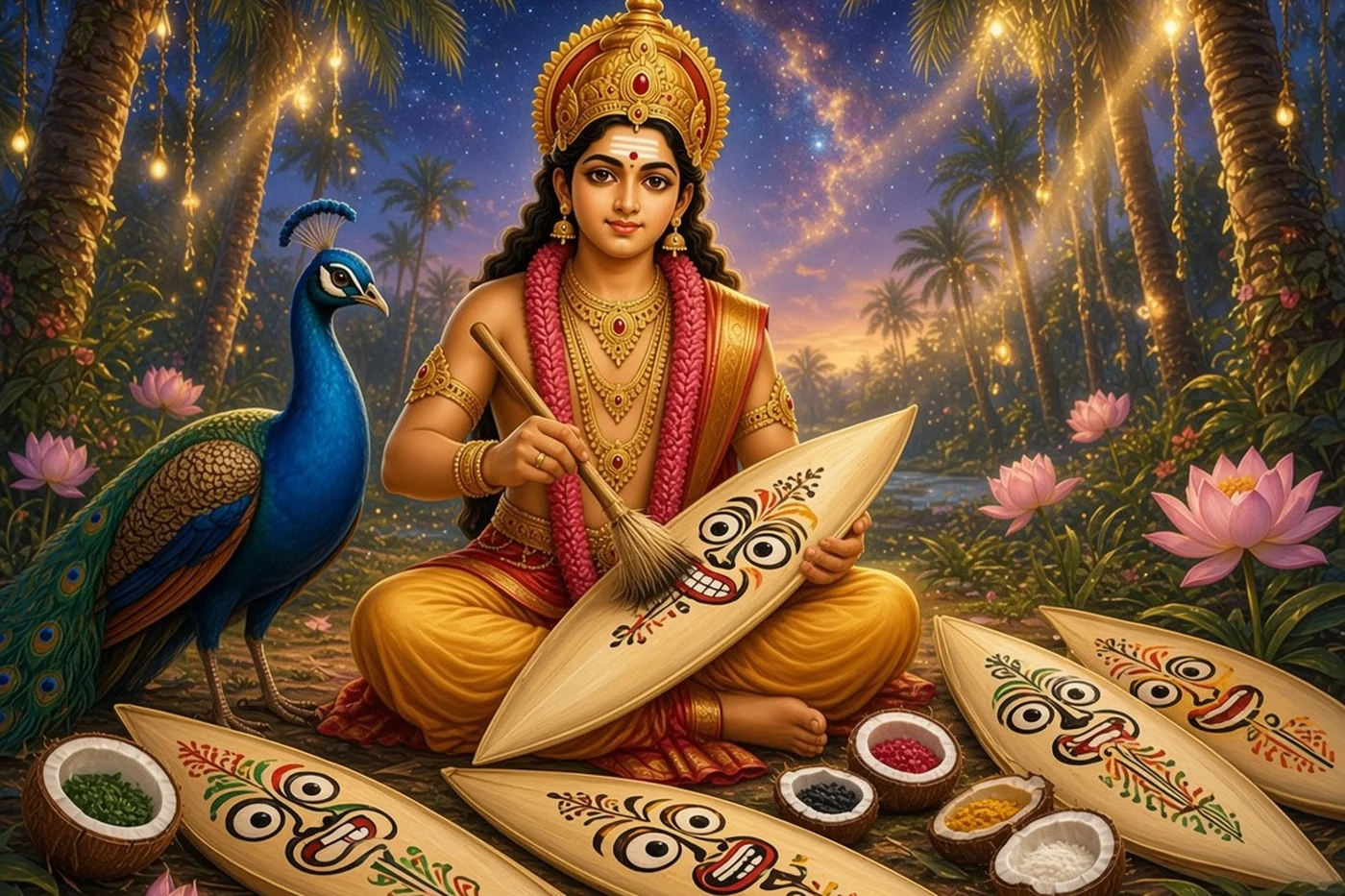
He tied them over his body and over his head until there was no Murugan left to see.
Shiva's little ones stared at him, and then they wanted faces too. Marutha took one, and Pishachu, and Yakshi, and each of them turned into something new.
"Now," said Murugan. "Now we dance."
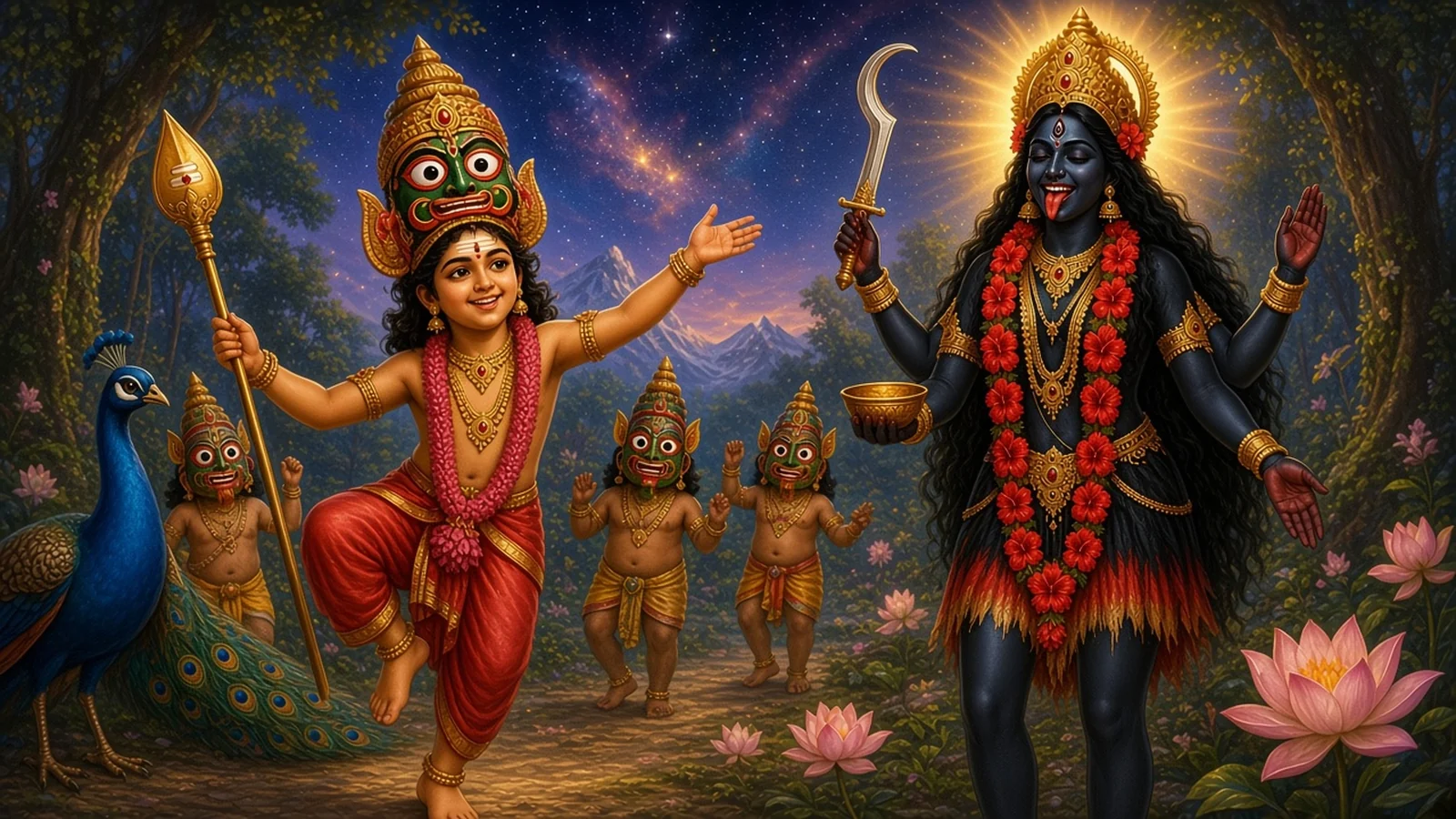
They came out onto her road in their painted bark and danced in front of her.
Kali stopped.
She looked at the faces on his chest and the faces on his head. She looked at the little ones jigging behind him in their new masks. Her eyes went from one face to the next, and the longer she looked, the less room was left in her for anything else.
"What are you?" she said.
Nobody answered. They only went on dancing.
Last of all came the biggest face, built up from sheath upon sheath, with lions and elephants painted at its ears. It was her own face, Bhairavi, the goddess as she had looked coming up out of Patala.
And Bhadrakali laughed.
It came out of her all at once, and after it the anger went the way heat goes out of a stone after sunset, slowly, and then it was gone.
That is why, the villages say, the kolams are cut and painted again every year, and why the last of them to come into the kalam, as the night turns grey, is Bhairavi.
As the kalam tells it: who drew this?
Central Travancore · the kalamezhuthu of the Bhadrakali kavus · 1 min read
Another telling keeps the same journey home and gives it a different ending.
She came back to Kailasa with Darika's head in her hand and the rage still on her. The devas did everything they could think of. They danced. They mimicked one another. They made speeches and played the fool. Nothing reached her.
Then she passed in under the gopura, the great gateway, and on it she saw a painting. It was Kali, and Kali angry, exactly as she was at that moment.
She stopped, and for the first time since the battle, she smiled.
"Father," she said, "who drew this?"
"Kurup drew it," Shiva said.
She looked at the painting once more and burst out laughing.
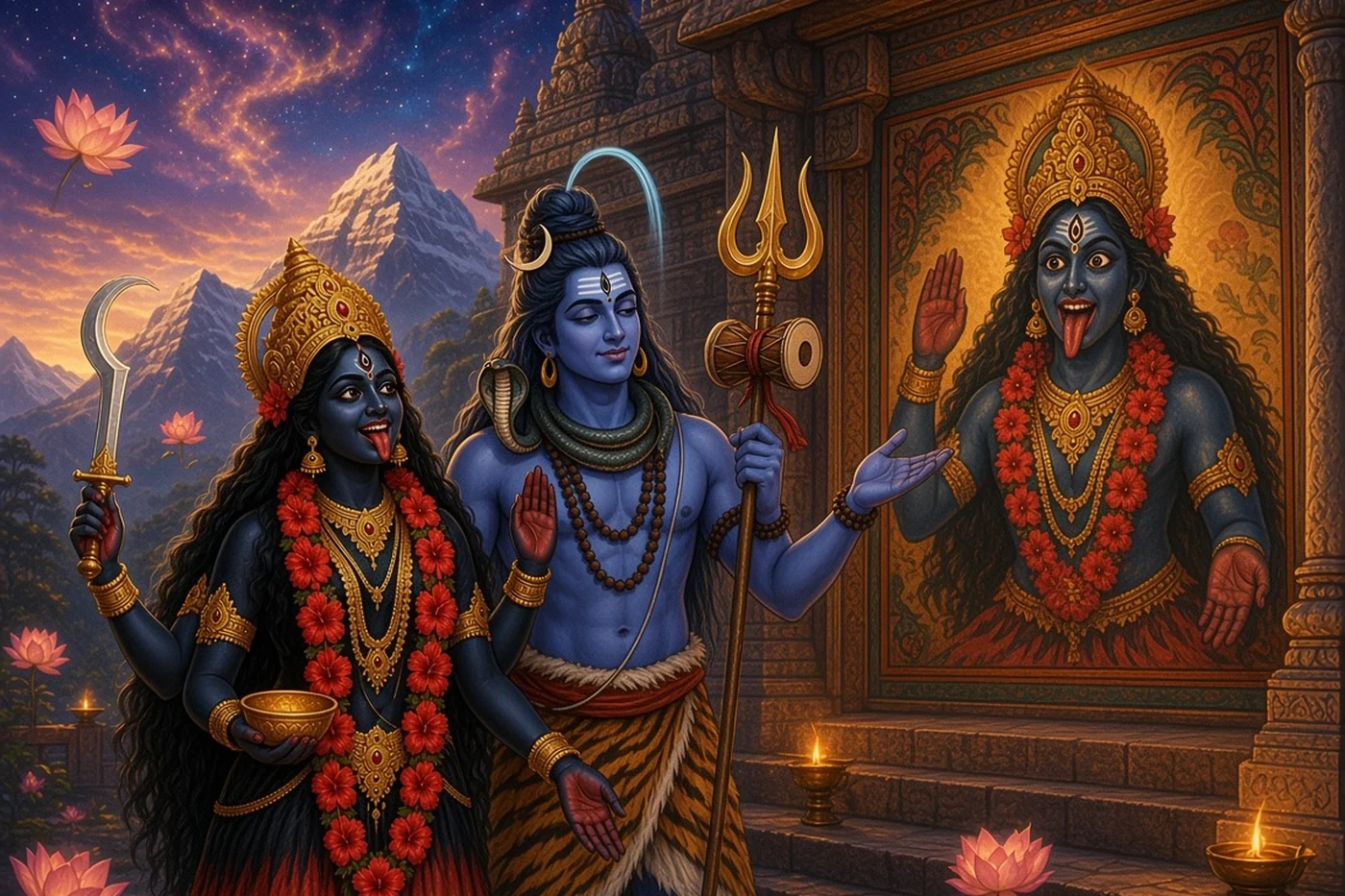
Some say it was Subrahmanya who first drew her most fearful form, and that Shiva gave the painter's name when she asked. At Kunnamthanam they add that he did not stop at the drawing: he took on the shape he had drawn on the ground and danced it for her, and she was pleased.
Even the laughing was not quite the end. She still wanted what she had come home wanting, and it was the people who settled it. They promised her their own blood, and at that she grew quiet and glad.
So the drawing is still made in the Kali temples, and men of the Kurup community still make it, dropping five colours of powder between thumb and forefinger onto the floor until the goddess lies there with her sword and bow and her many hands. A song is sung over her. In the kuruthy that follows, a red water of lime and turmeric is poured out where, it is said, blood was poured in older days.