As Nabadwip tells it: the woman at the wall
Bengal · Nabadwip, Nadia, the tradition of Agameshvari Kali · 3 min read
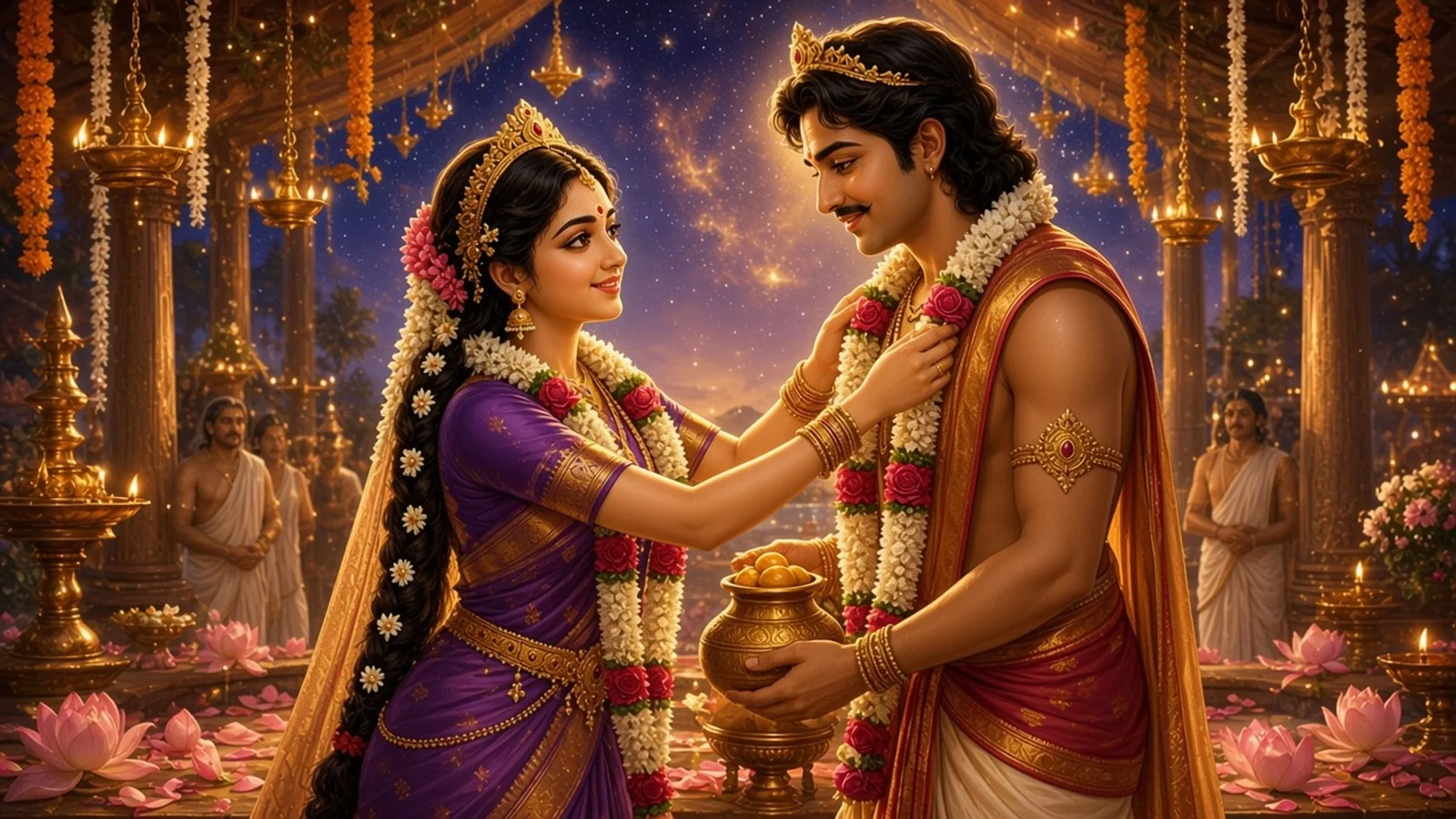
In Nabadwip, where the scholars of Bengal argued logic and law on the banks of the Ganga, there lived a Tantric named Krishnananda, whom the town called Agamavagisha, the master of the Agamas. He had read every Tantra he could find and gathered them into one great book, the Tantrasara, and every night he sat before the goddess he loved best and worshipped her.
He worshipped her in a pot. A clay ghata stood for her, as it had stood for her in Bengal for generations. That was all Kali had in his house.
"Why not an image, brother?" asked Sahasraksha, who loved Krishna and kept a little Gopala of his own in the next room. "Your Mother has no face?"
"She has a hundred names in the books," said Krishnananda, "and not one of them tells me how she stands. Which foot goes forward? Which hand blesses, which hand holds the sword? If I make her wrong I insult her. So she stays in the pot."
He prayed about it for many nights. On the last of them he sat in worship until late and saw nothing, and lay down with the question still in him, and in his sleep a voice spoke.
"Go out at first light. The first one your eyes fall on, that is my form. Make me so."
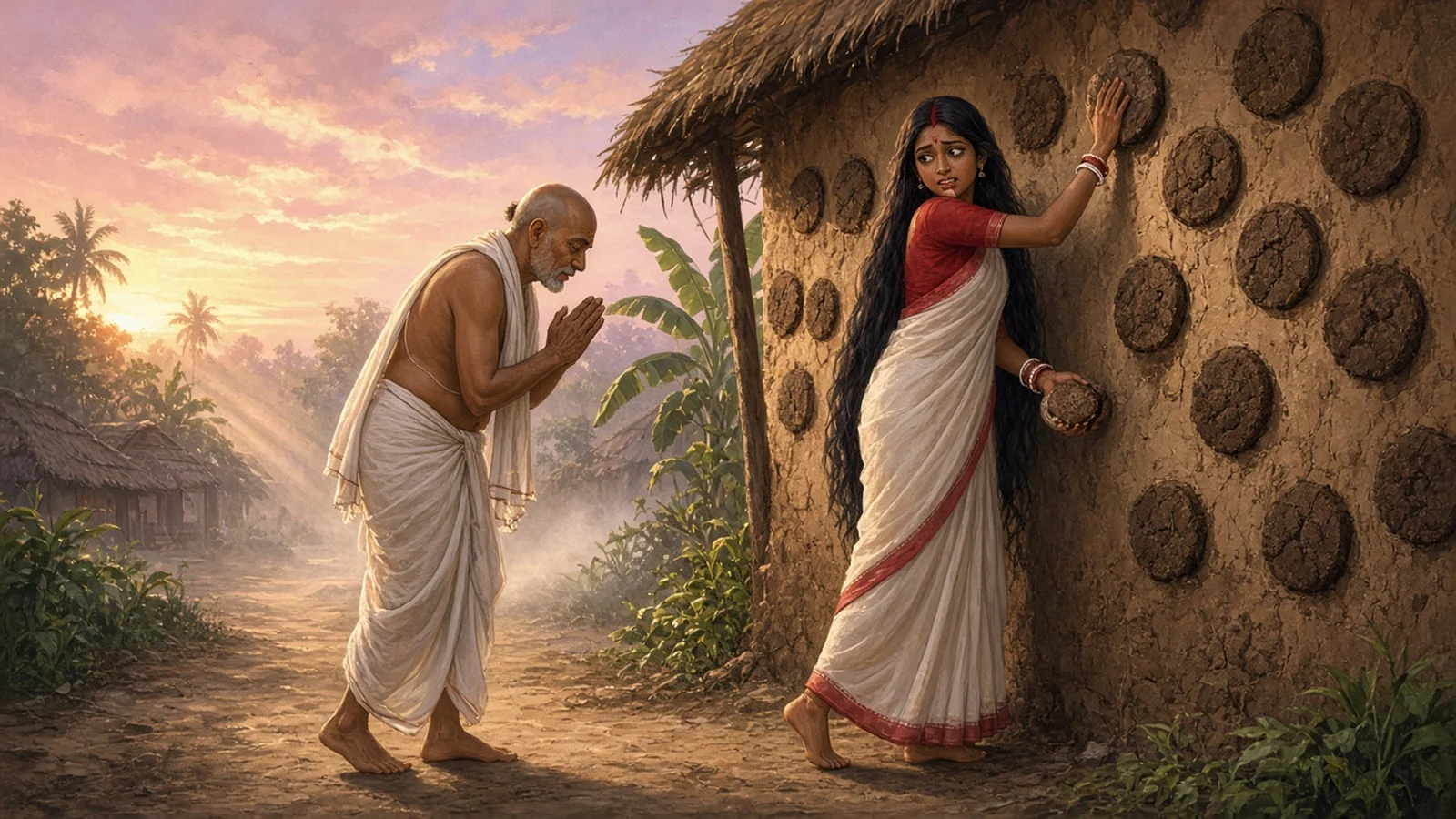
He was out at the first streaks of dawn, on the path to the river. The lanes were empty. At the edge of the cowherds' quarter, against the mud wall of a hut, a young woman was at work, a new bride by the sindoor in her parting, slapping cakes of cow dung onto the wall to dry before the rest of the house was up.
He stopped and looked.
Her right foot was forward, her left bent behind her. Her hair had come undone and hung down her back, almost to her knees. In her left hand was a ball of dung; her right was raised high to press a cake flat on the wall. She was dark, and sweating, and when she wiped her forehead with the back of her wrist the sindoor smeared up into her brows like a streak of red.
Then she turned, and saw a strange man standing in the lane watching her, a Brahmin, a scholar, at that hour. She did what a modest young wife of Bengal did. She bit her tongue, hard, between her teeth, and stood very still with it showing, ashamed.
Krishnananda put his palms together and bowed to her, down to the ground.
"Ma," he said. That was all.
He went home and called for clay.
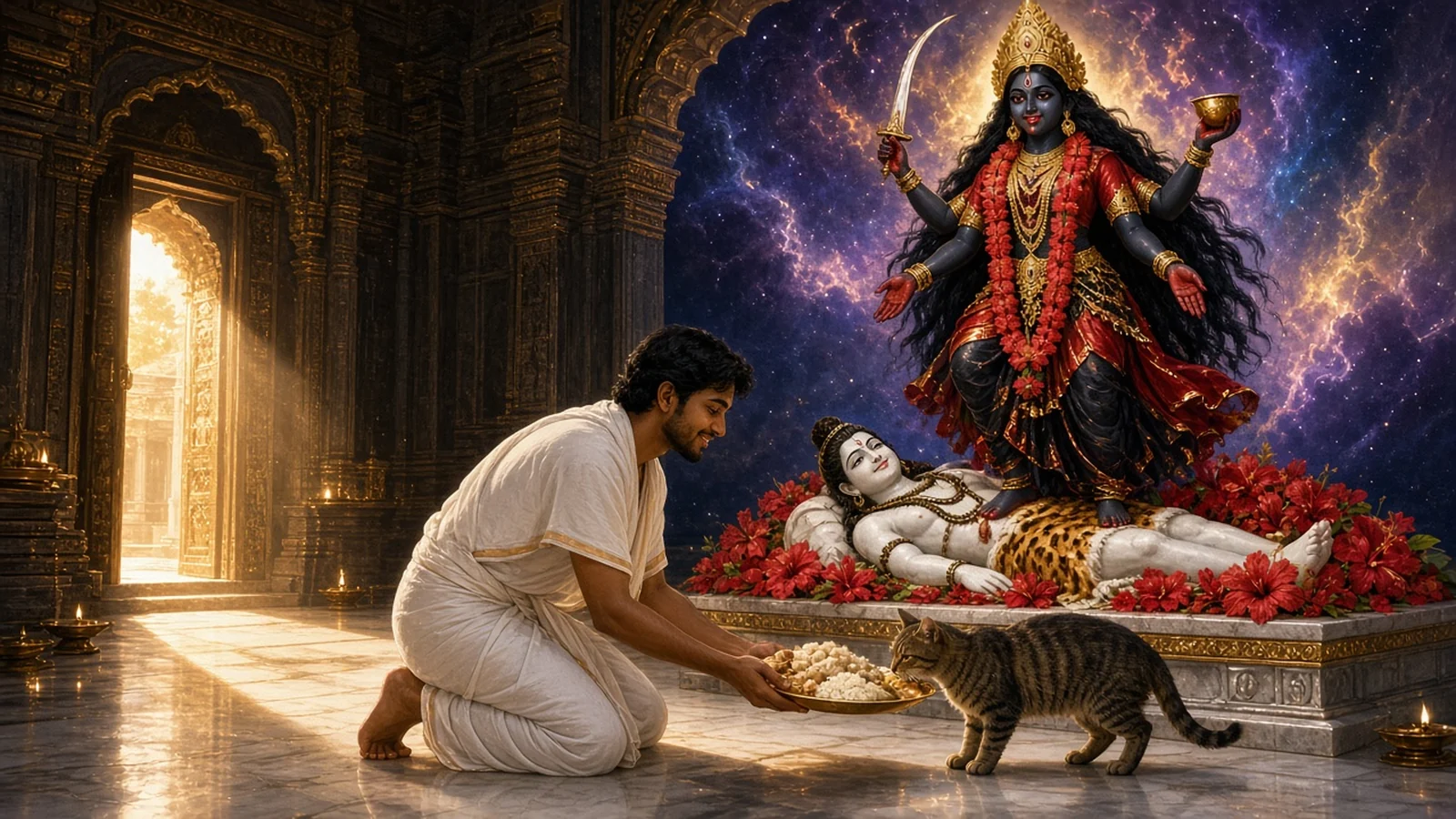
"What is this?" Sahasraksha asked that evening, looking at the figure that was drying in the courtyard. "Her tongue is out. Her hair is all over the place. She is standing on her husband."
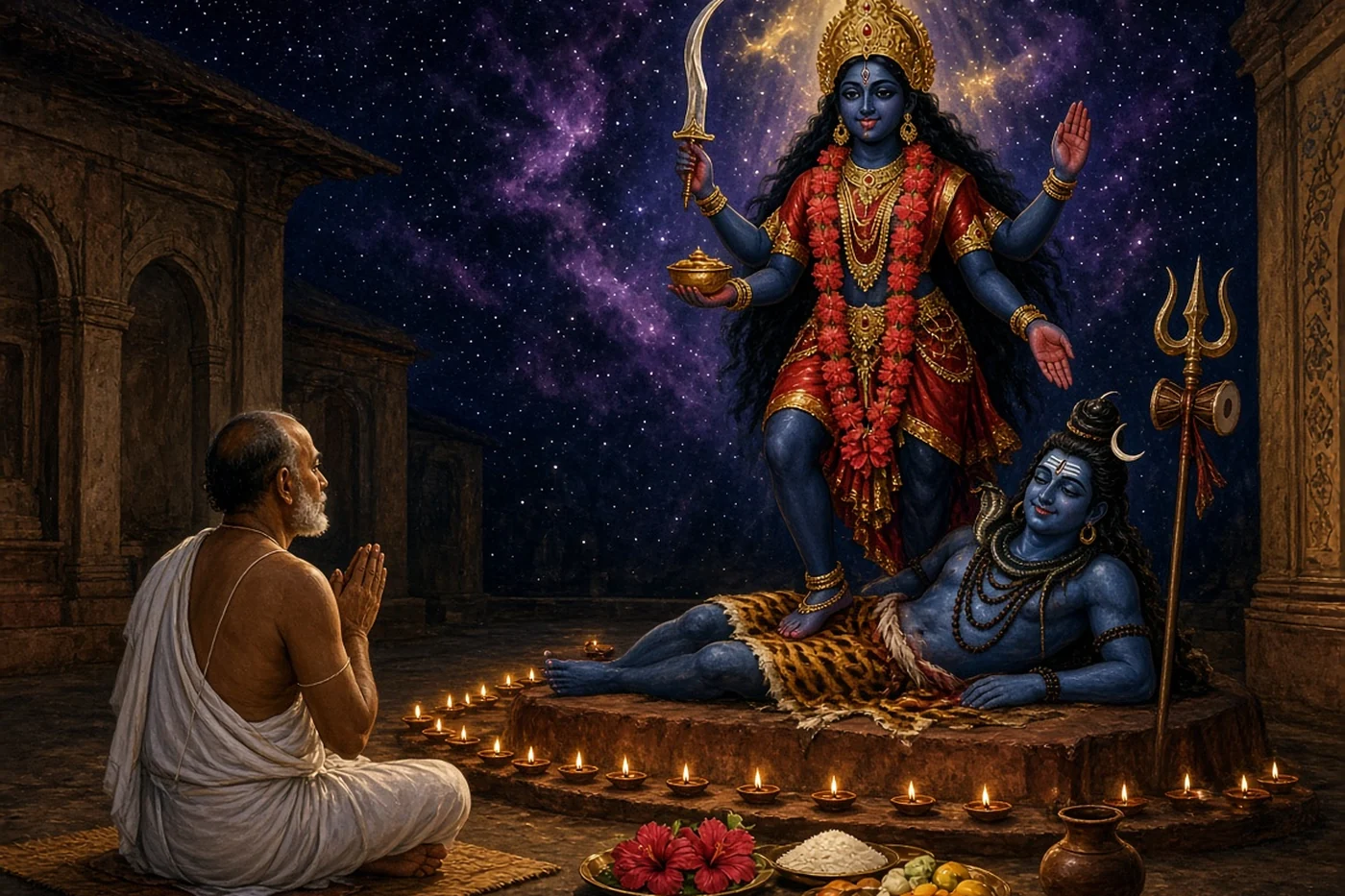
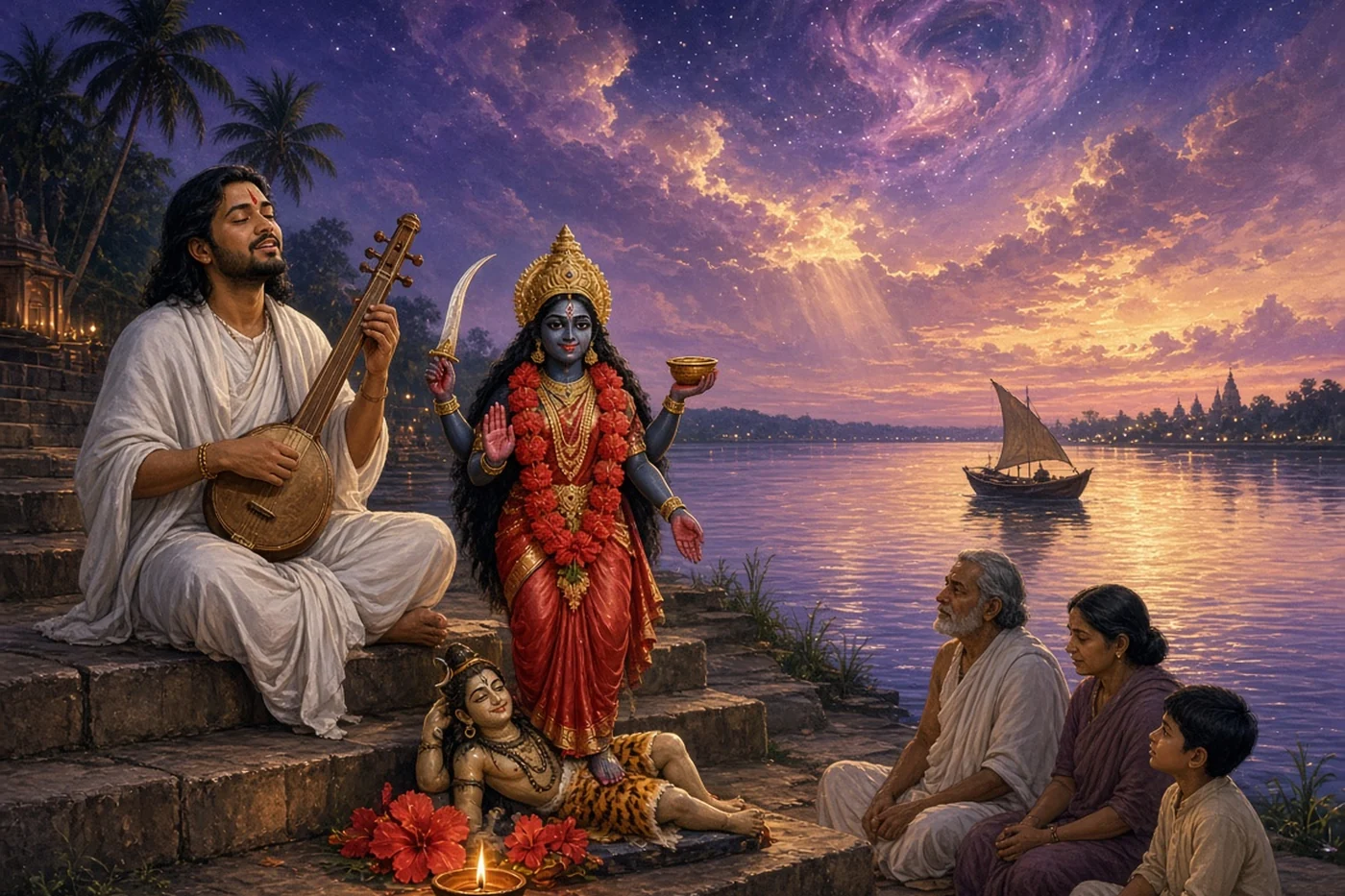
"She is standing the way I saw her," said Krishnananda. "Right foot forward. One hand raised to bless, one to say do not fear. The other two hold what Kali holds. And the tongue is the tongue of a woman who has been seen."
He worshipped her on the darkest night of Kartik, the new moon that the rest of India was filling with lamps, and kept vigil until morning. Nabadwip still worships her, and calls her Agameshvari, Agamavagisha's Kali. And when the potters of Bengal make Kali today, for a temple or a street corner, most of them make her his way: the right foot on Shiva, the hand raised in blessing, the tongue between the teeth. Dakshina Kali, the Kali of the right.
As the historians and the towns tell it: how the image spread
Bengal · Nadia, Halisahar, Kalighat and Naihati, the sixteenth century to today · 2 min read
Nobody can say quite when Krishnananda lived. Banglapedia puts him in the fifteenth or sixteenth century, the Wikipedia articles in the sixteenth or seventeenth, and the story of the woman at the wall is a tradition that no early document records. What the historians agree on is what came after him.
For two centuries Kali was a goddess of the Tantric adept, of the burning ground, and of the dacoits who are said to have built her some of the oldest temples in the Bengal countryside. A worship manual of the eighteenth century, Kashinath's, still treats her yearly puja as something not yet everywhere. Then a king took her up. Krishnachandra Roy of Nadia, raja at Krishnanagar from 1728, a patron of poets and a devotee of Kali, set up Kali pujas in Nabadwip on the new moon of Kartik, among them the Alaniya Kali and the Baro Shyama, and the English missionary William Ward, writing in 1817, believed that Krishnachandra had begun the festival.
One of his poets made it sing. Ramprasad Sen of Halisahar had been a clerk in Calcutta who wrote songs to Kali in the margins of the account book; his employer read them and sent him home on full pay to write more. Krishnachandra gave him land and the title Kaviranjana. His songs speak to Kali as a child speaks to a hard mother, and Bengal has sung them every Kali Puja since. Bengal tells that on one Kali Puja night he walked into the Ganga behind the image, singing, and did not come out.
Kalighat had its own reason. It is the place, the Puranas say, where the toes of Sati's right foot fell, and its present temple was finished in 1809. On the night of Kali Puja its Kali is worshipped as Lakshmi.
By the nineteenth century the landlords of Calcutta were building pandals for her, and the twentieth gave her to the neighbourhoods. In 1923 a jute mill worker of Naihati named Bhavesh Chakraborty came back from the great images of Nabadwip's Rash festival and built a Kali twenty-one or twenty-two feet tall. His family kept her for nearly ninety years and gave her to the town in 2011, and Naihati renamed her Boro Ma, the Big Mother. Lakhs come to see her, and there is no jackal at her feet, because her worship follows the Vaishnava way.