As the Mahabharata tells it, and the Vishnudharmottara ends it
Drona Parva 50 to 52 · the Vishnudharmottara Purana · 3 min read
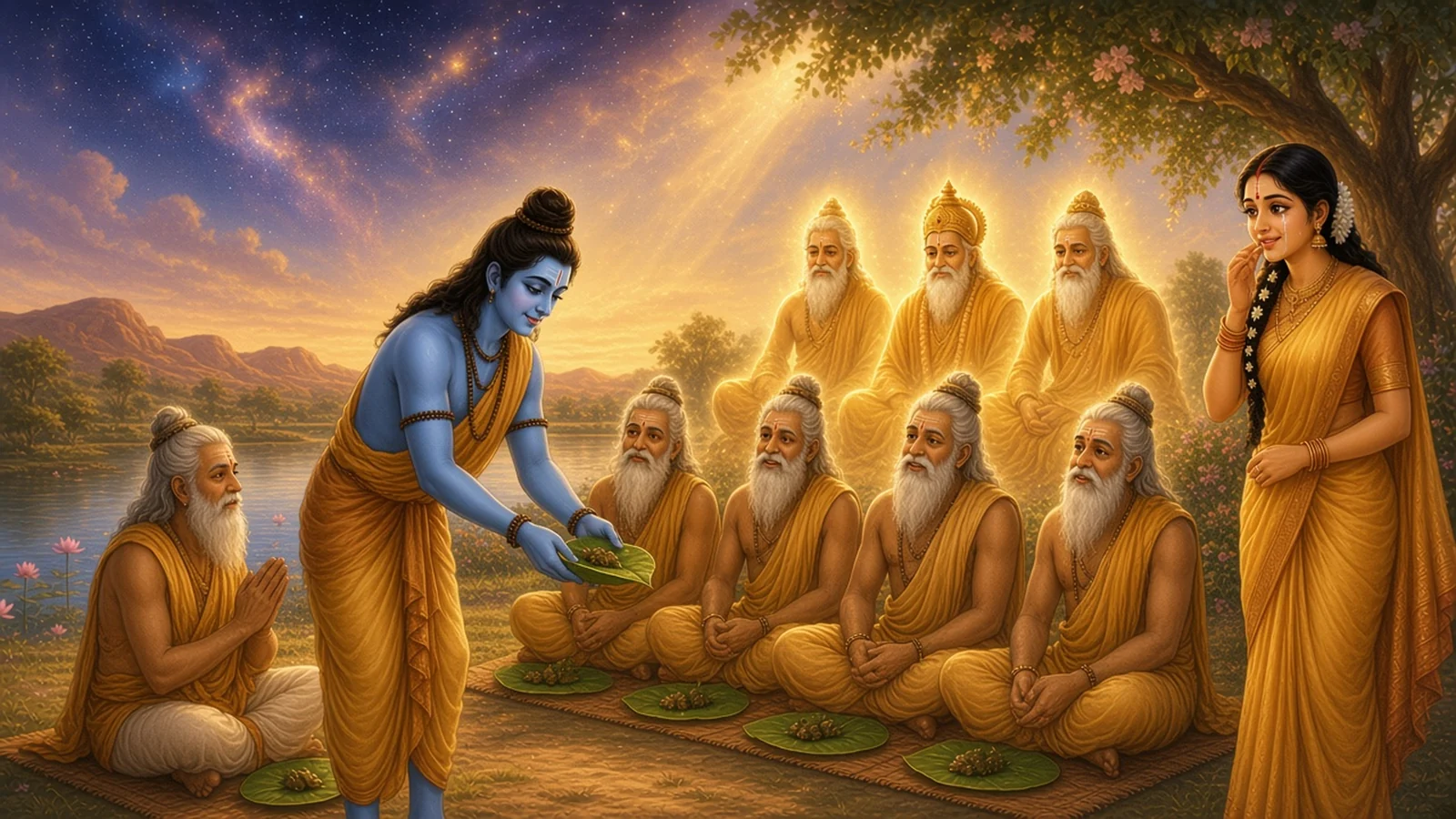
When Abhimanyu fell, Yudhishthira could not stop grieving, and the sage Vyasa came to him with a story. There was once a king called Akampana, he said, whose son Hari was killed in battle. The king asked the sage Narada the question every mourner asks: what is Death? Narada told him.
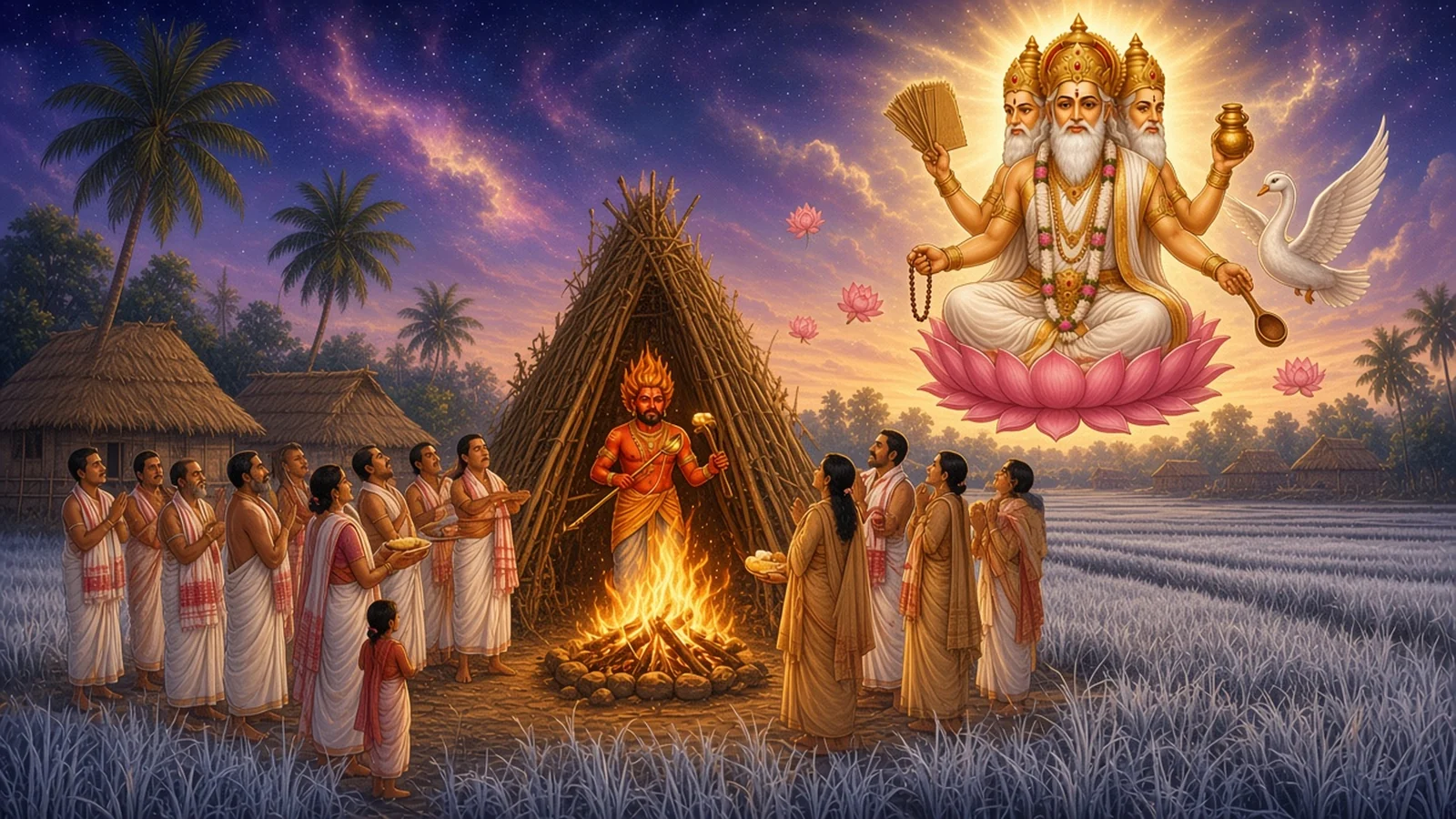
In the beginning Brahma made all creatures, and they grew and multiplied, and not one of them ever died. The Earth sank under their weight and begged him to lighten it. Brahma could find no way to do it, and his helplessness turned to anger. Out of that anger a fire broke from the sky and began to burn rocks and rivers, trees and grass, everything that moved and everything that did not.
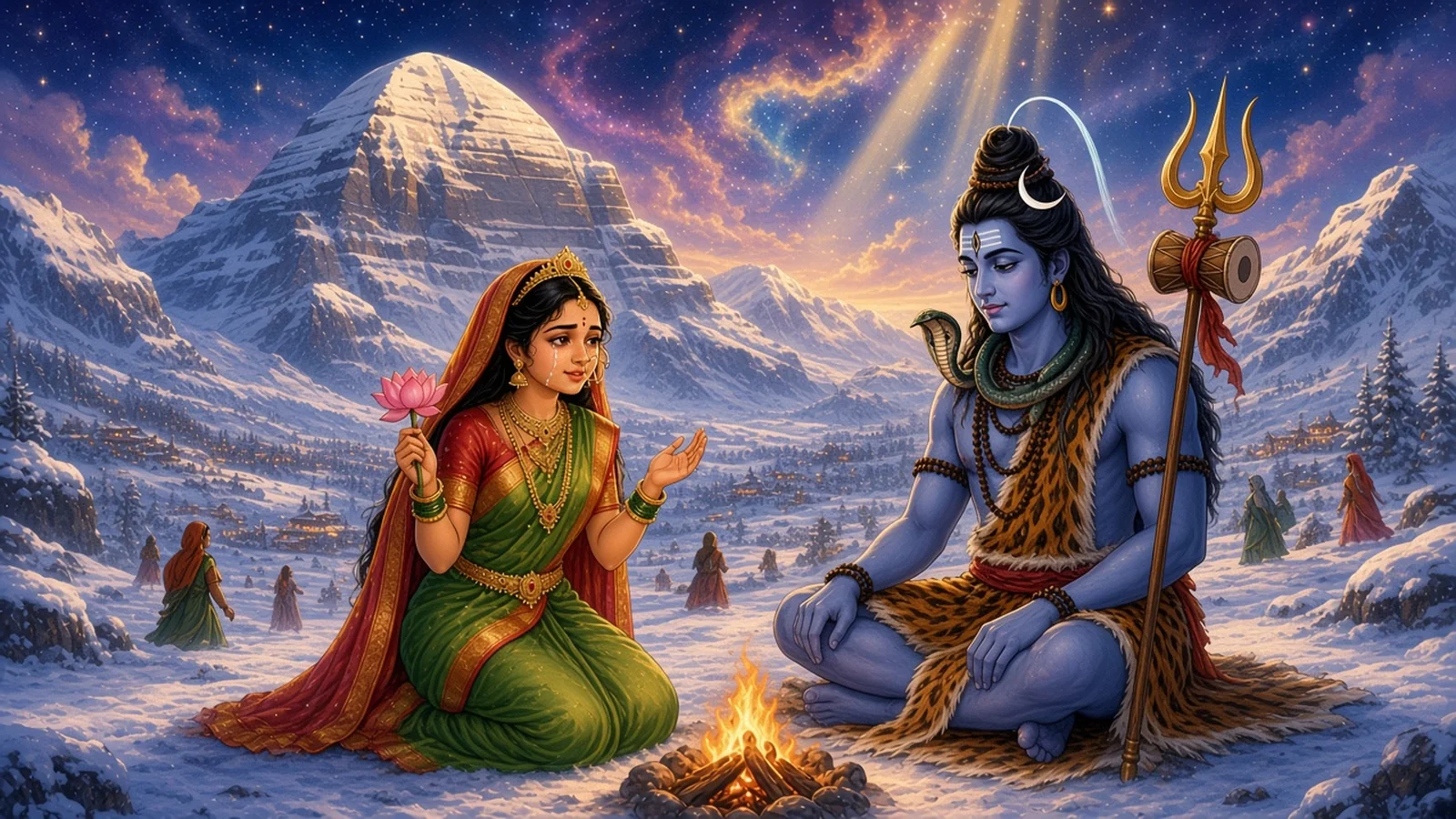
Then Sthanu, who is Shiva, came to him.
"Do not give way to anger," he said. "Draw the fire back into yourself, and let the creatures live."
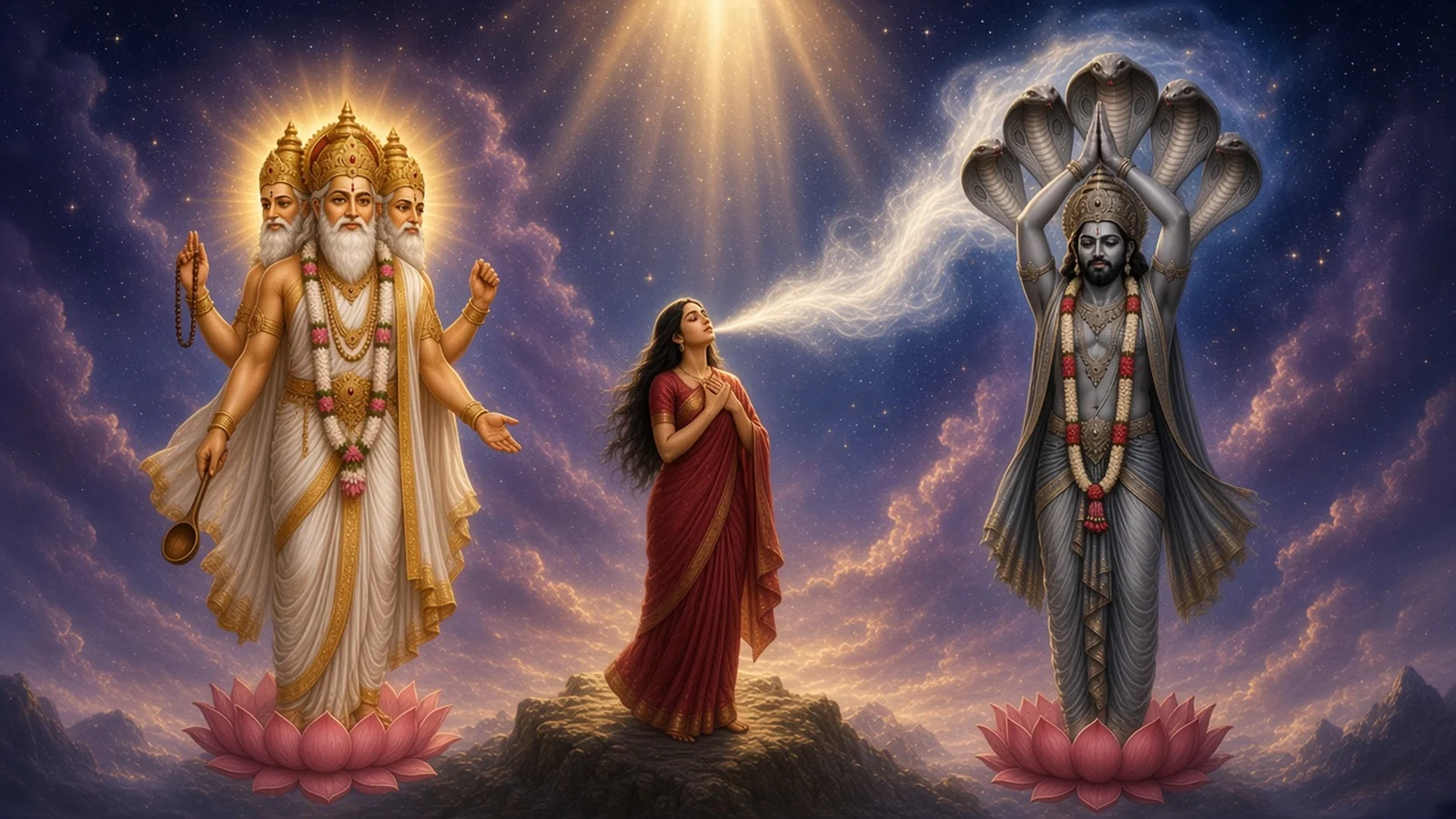
Brahma drew it back. As he held it in, a woman came out of him through the doors of his senses. She was dark, with red and tawny in her colour, red in the face, the tongue and the eyes, and she wore two bright earrings. She smiled at the two gods and turned away towards the south.
"Death," Brahma called her. "Go and kill these creatures of mine, the foolish and the wise alike."
She began to cry. She wept aloud, and her voice was sweet even in weeping, and Brahma caught her tears in his two hands before they could fall.
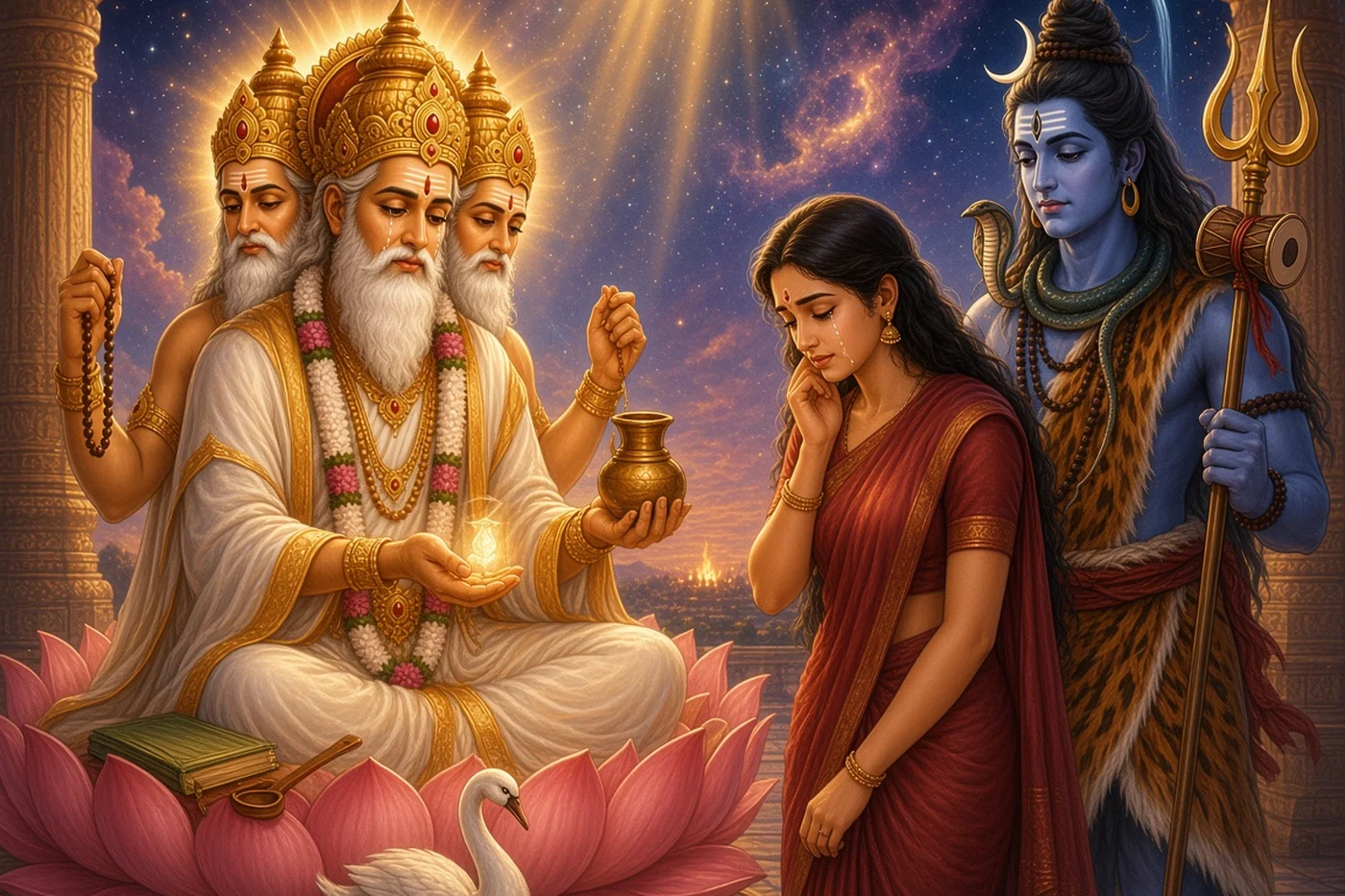
"How can I do something so cruel?" she said. "Those I take will be mourned. I am afraid of what their grief will do to me. Let me go and do penance instead."
She went, and she did not come back for ages. She stood on one leg at Dhenuka until the years ran past counting. She stood eight thousand years in the waters of the Nanda. She went to the Kaushiki and the Ganga, and on Meru she stood without moving, like a stone. On the peak of the Himalaya she stood on the toes of one foot. She kept her penance at Pushkara, at Gokarna, at Naimisha and in the Malaya hills.
Brahma came to her again and gave the same command.
"Then let no sin fall on me," she said.
"None will," said Brahma. "The tears in my hands will become diseases, and greed and anger and envy will do the rest."
So Death took up her work. Creatures bring their own ends on themselves, Narada told the king, and Akampana stopped grieving for his son. That is where the Mahabharata leaves her.
The Vishnudharmottara Purana, as Vettam Mani's encyclopedia sums it up, tells the same beginning and ends it another way. Its Brahma, too, sees the earth crowded past bearing and makes a girl called Death to thin it. She, too, weeps, and every tear becomes a disease. But here she sees the diseases come out of her own eyes, and it is that sight which sends her into penance.
When Brahma comes to her at the end of it, he does not tell her she will be free of sin. He tells her that no one will die because of her.
Death heard it and let out a great breath of relief. From that sigh a new being was born. It was Ketu, the Purana says, whom people call Dhumaketu, the one whose banner is smoke.
As the star-readers count the Ketus
the Atharvaveda and Varahamihira's Brihat Samhita, chapter 11 · 2 min read
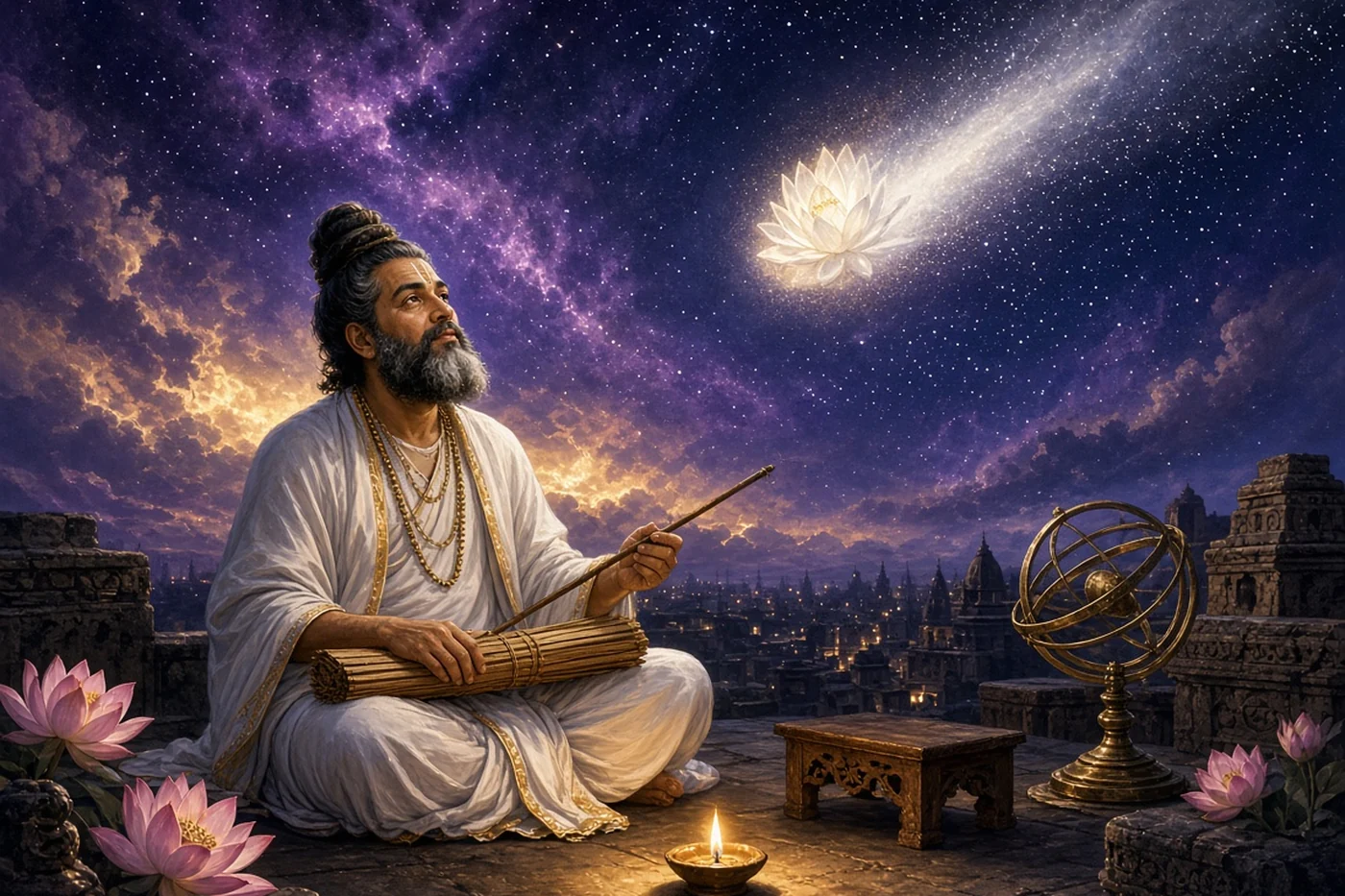
The oldest place Death and the comet stand together is a prayer. In the Atharvaveda's hymn for peace, the singer asks the seizers of the Moon to be kind, and the Adityas, and Rahu, and then, in one breath, Death and the comet. The hymn does not say how the two are related. It only puts them side by side.
Centuries later the astronomer Varahamihira, in his chapter on the ketus, set down that his teachers disagreed. Parashara counted a hundred and one of them. Garga counted a thousand. The sage Narada said there was only ever one Ketu, who showed himself in a different shape each time he came.
Varahamihira gave them all families. Twenty-five were sons of the Sun and brought quarrels among princes. Twenty-five were sons of Fire and brought fear. Twenty-five rose in the south and were sons of Yama, the lord of the dead, and where they shone people died. The Moon's sons in the north brought happiness. One alone, the Brahmadanda, the staff of Brahma, had three tails and three colours, and was born of the Creator himself; when it appears, he wrote, the world is ending.
Then came the rest of the thousand: the sons of Venus and Saturn, of Jupiter, Mercury and Mars, of the Wind and of Varuna, and Rahu's own sons, the dark spots that cross the faces of the Sun and the Moon. Among them were ninety-six more sons of Yama, called the Kabandhas. A kabandha is a body without a head.
Not every ketu was a terror. A white one the colour of a water lily, seen for a single night, promised ten years of gladness. Another, white as the stem of a lotus, promised seven. Whatever a ketu foretold, Varahamihira wrote, it would last as many months as the ketu had been seen for days.