Devalok ← All gods
Also calledKetu BhagavanDhumaketuShikhithe south nodethe headless one

In short

Who is Ketu?
The ninth of the nine planets, the south node of the Moon, always standing opposite Rahu. In the usual telling he is the body of the Asura whose head became Rahu.
Did the body not die?
The Bhagavata says it did, and counts the Ketus instead as Rahu's hundred younger brothers. The Tamil temples say it lived, was given a serpent's head, and prayed until Shiva forgave it.
What does the name mean?
A ketu is a banner or a bright sign in the sky. A comet is a dhumaketu, a banner of smoke, and the old star books count the ketus by the hundred.
Where is he worshipped?
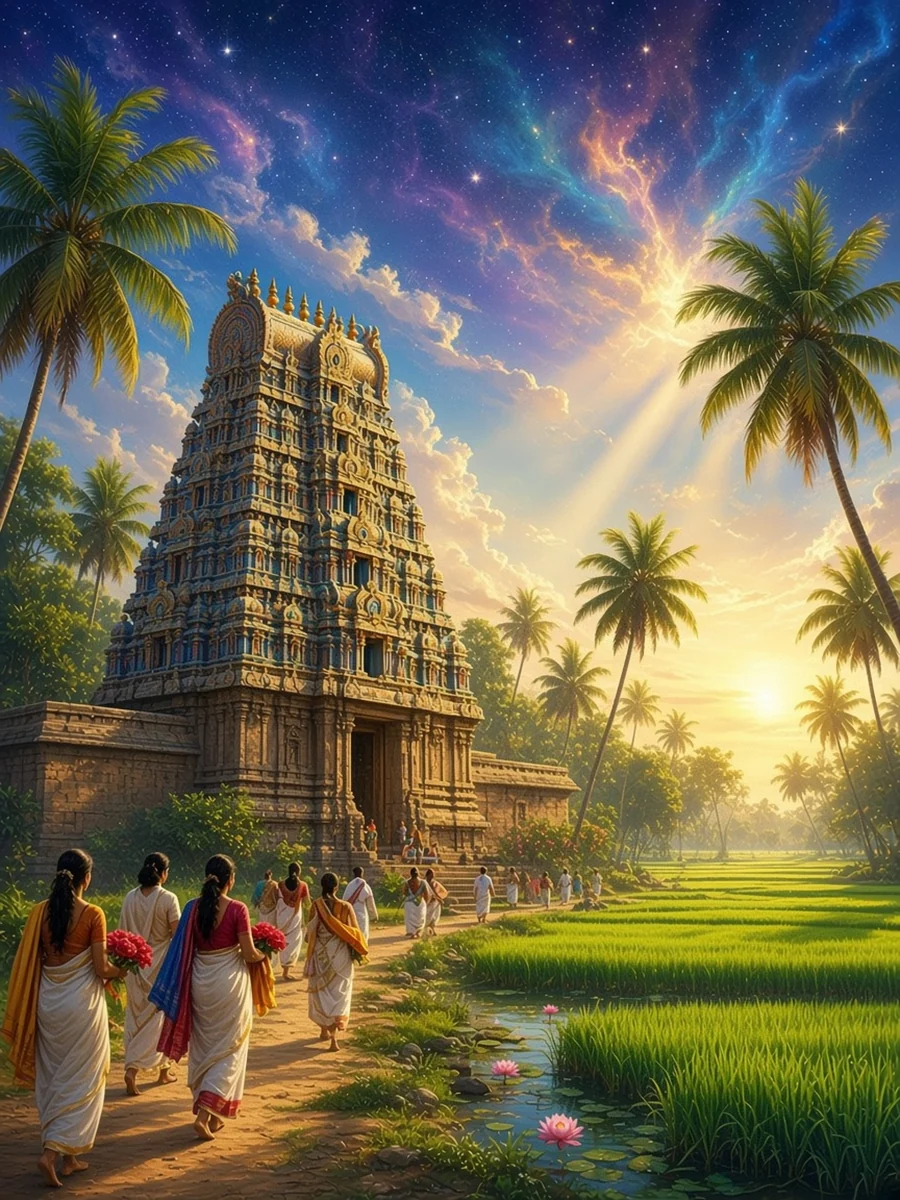
At Keezhaperumpallam near Poompuhar in Tamil Nadu, his seat among the nine planet temples of the Kaveri delta, and with Rahu at Srikalahasti.

Artwork ›

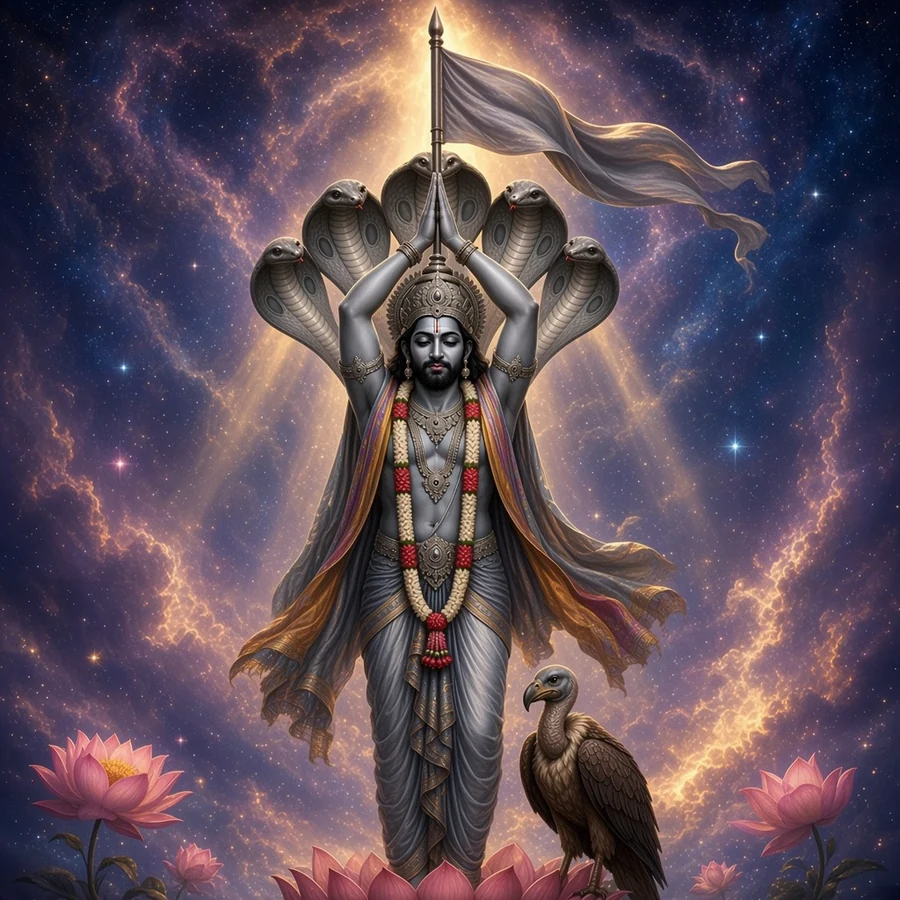
Ketu, the south node, among the stars His temple at Keezhaperumpallam

For kids

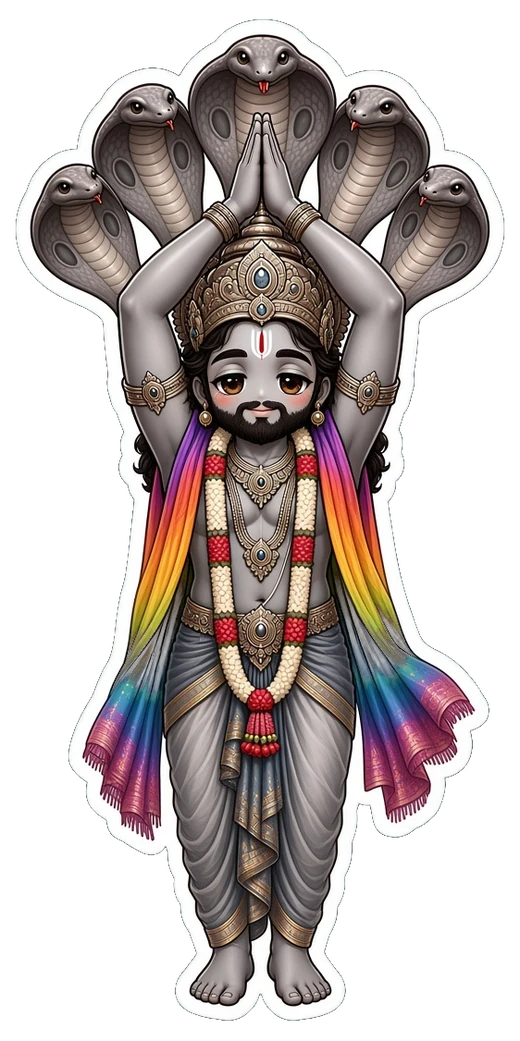
Letting go
Letting go
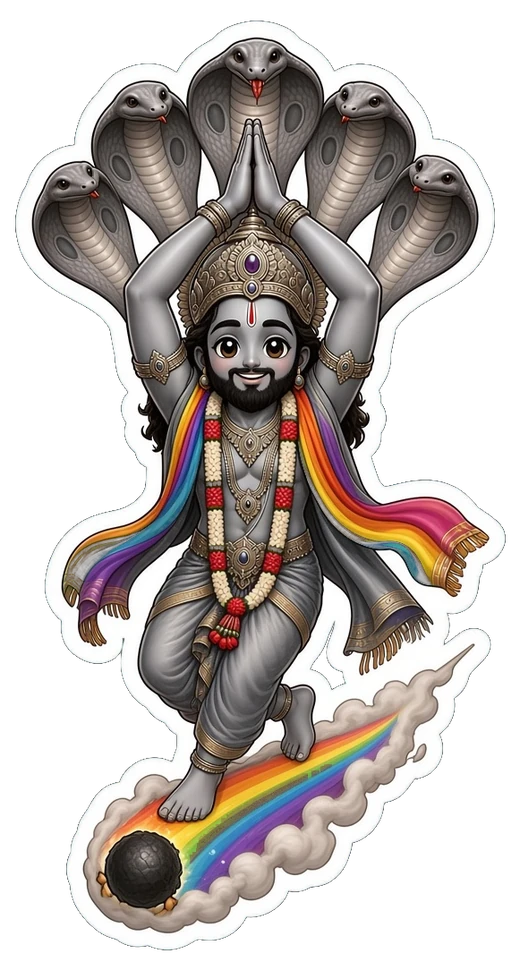
Comet rider
Comet rider

At a glance

TraditionPan-Hindu
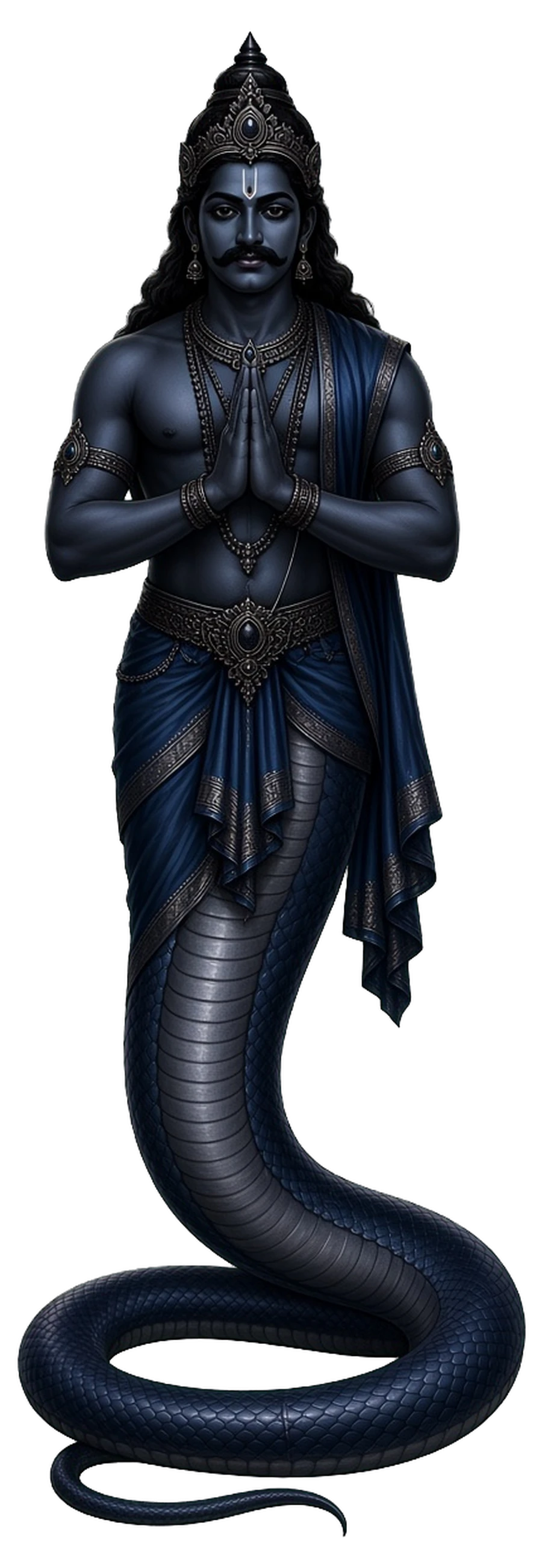
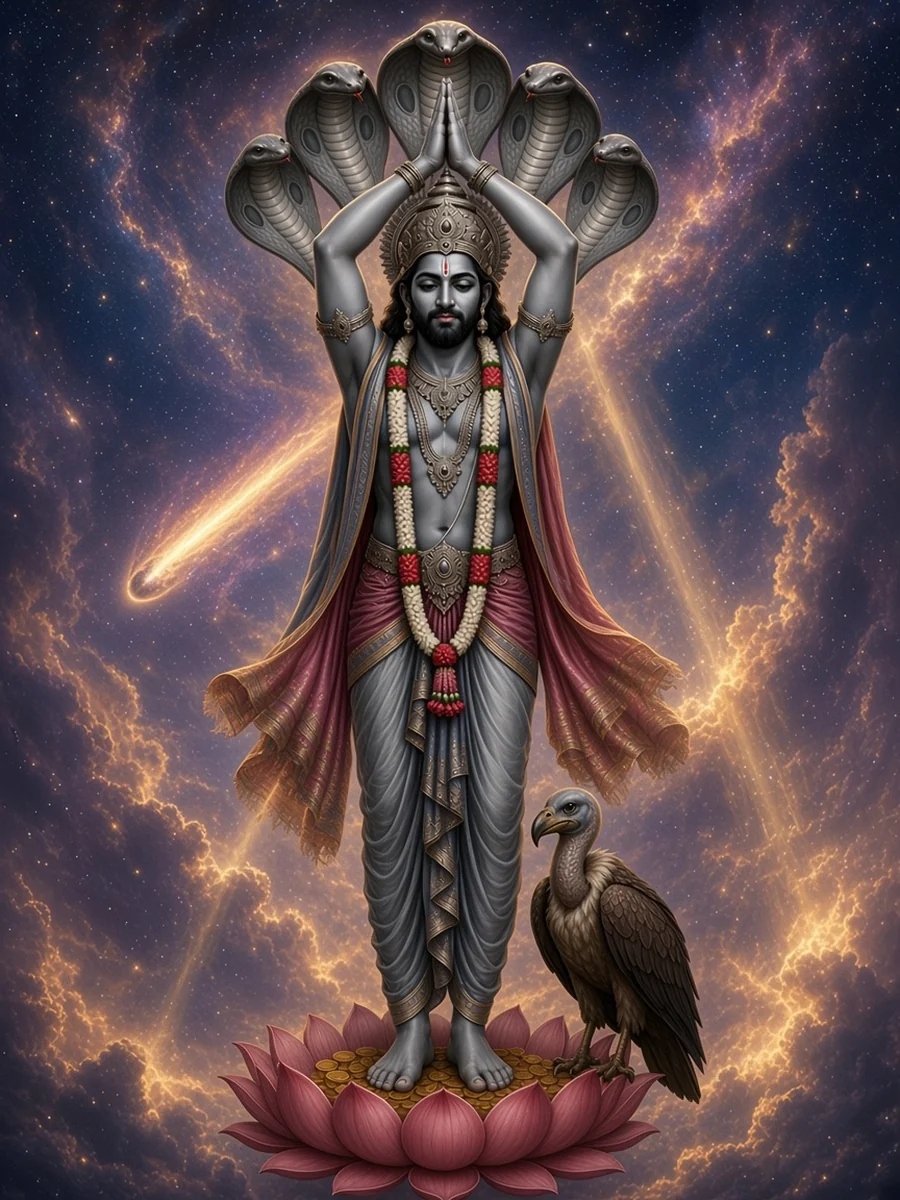
FormA body without a head

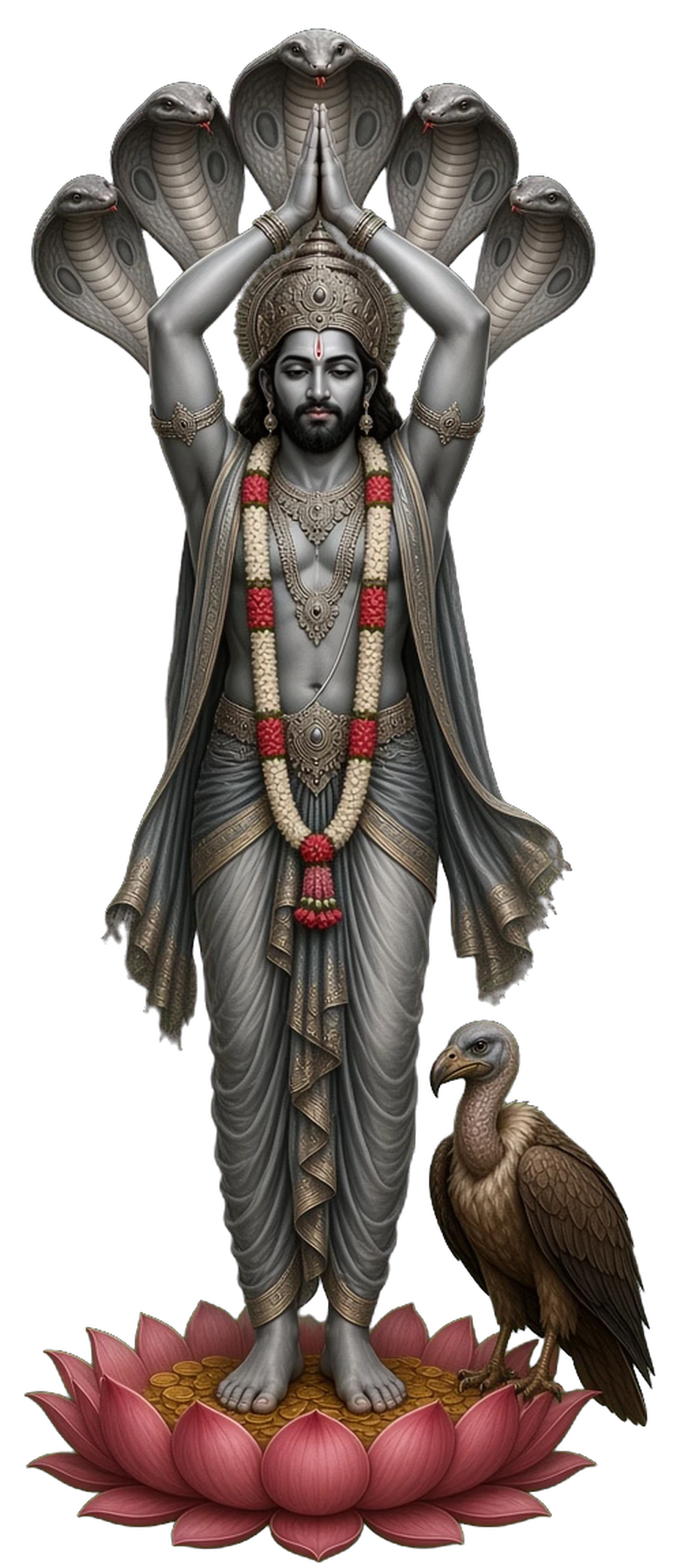
or a man's body under a serpent's hood; at Keezhaperumpallam five hoods, and both hands folded high in worship

ColourSmoke

the Skanda Purana compares him to the smoke of burning straw, the hymn to the red palasha flower

Who Ketu is

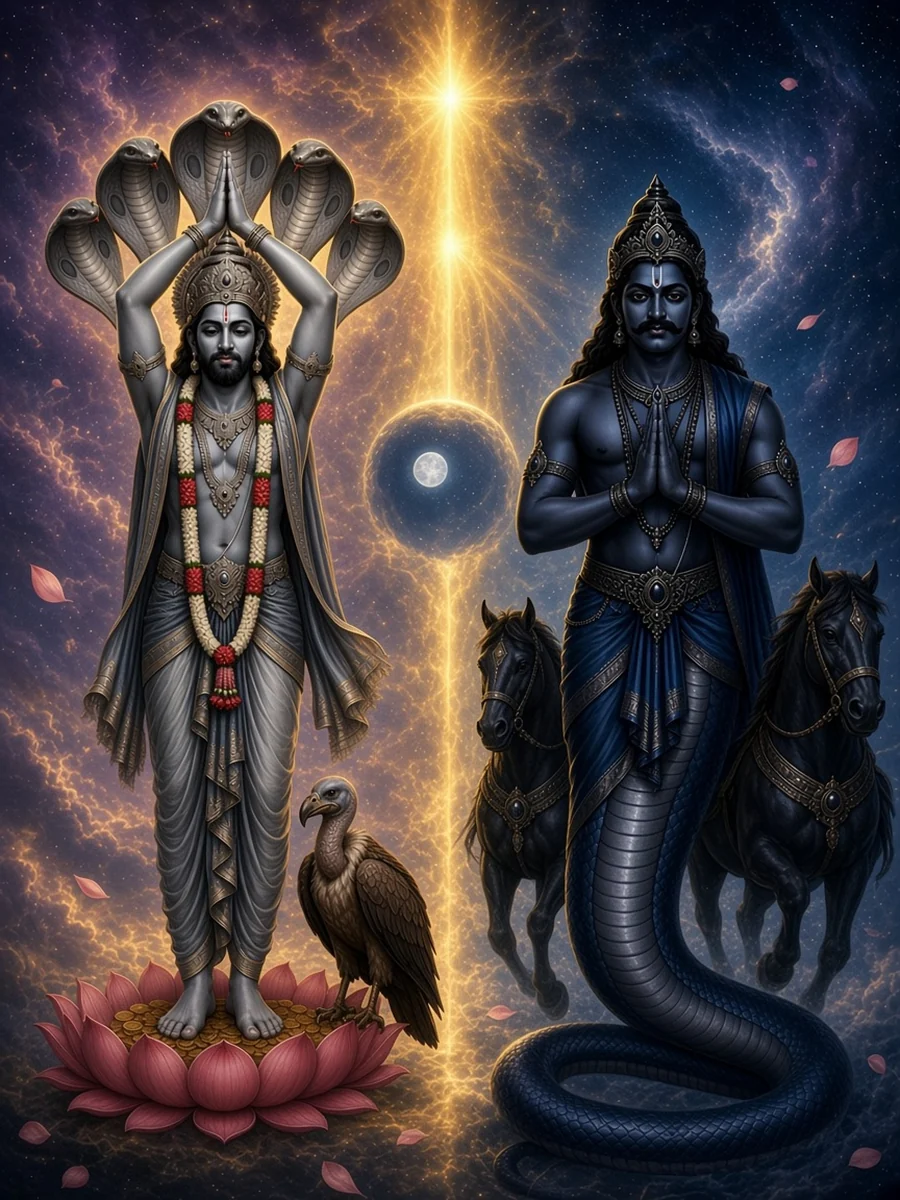
Ketu is the planet nobody sees. He is the south node of the Moon, the point where her path drops below the Sun's, and he always stands exactly opposite Rahu across the sky. In the story most people know, the two of them were once one Asura who drank the nectar of deathlessness in a god's disguise. Vishnu's discus took off the head, and the head became Rahu. Ketu is what was left: the body.

What happened to that body is told in more than one way. The Bhagavata says it died, and makes the Ketus a hundred younger brothers of Rahu, all given places among the planets. The temples of Tamil Nadu say it lived. It fell in the southern hills, was given a serpent's head, and came to a bamboo forest by the sea to beg Shiva's forgiveness. At Keezhaperumpallam, near Poompuhar, he still stands with his hands folded above his five hoods.

The word ketu is older than the planet. It means a banner, a ray, a bright sign, and a comet is a dhumaketu, a banner of smoke. The astronomers counted the ketus by the hundred, and one Purana says the first of them came from the sigh of Death herself. Perhaps that is why the hymn to the nine planets greets a headless god as the head of all the stars:

Palasha pushpa sankasham tarakagraha mastakam, raudram raudratmakam ghoram tam ketum pranamamyaham: Red as the palasha flower, the head of the stars and the planets, fierce, fierce of nature, terrible, Ketu, I bow to you.

He is feared like Rahu, and people whose charts show him badly placed come to his temples about lost property, fear and trouble with children. But Ketu is also the planet of letting go. Astrologers tie him to wisdom, renunciation and moksha, the freedom that comes when nothing more is held.

His stories on this site: The Body in the Bamboo Forest, where he finds his place at Keezhaperumpallam and at Prabhasa, and What Death Breathed Out, about the comet born of a sigh. His family is in The Head That Became a Planet, his temple with Rahu's in The Milk That Turns Blue, and his white star over Kurukshetra in The Sky Before the War.
Before the Puranas

The Vedic roots of Ketu

The Vedas know the word ketu but not the god. In the Rigveda a ketu is a banner, a ray of light, a sign by which something is known; one hymn (1.6.3) praises Indra, rising with the dawns, for giving a ketu to what had none. The Atharvaveda comes closest to the later figure. Its prayer for peace (19.9.10) asks the seizers of the Moon, Rahu, Death and the comet to be kind, all in one verse, but it tells no story of any of them.

In the Mahabharata Ketu is still a sign in the sky. Before the war at Kurukshetra the white planet Ketu stands beyond the star Chitra, blazing like fire mixed with smoke, while a fierce comet presses on Pushya. It is an omen, not a person, and it has no body yet.

The Puranas give him a family. The Bhagavata makes the Ketus the hundred sons of Viprachitti and Simhika who came after Rahu, all placed among the planets. The Vishnu Purana gives Ketu a chariot of eight horses the colour of lac or of smoke. Its translator H. H. Wilson noticed that its list of Simhika's sons leaves out both Rahu and Ketu. The Matsya Purana seats him on a vulture for the rite of the nine planets, and the Skanda Purana has him win his place among them by a hundred years of penance at Prabhasa.

The astronomers kept both meanings side by side. In the sixth century Varahamihira's Brihat Samhita gave a whole chapter to the ketus as comets: Parashara counted a hundred and one, Garga a thousand, and the sage Narada said there was only one ketu, appearing in many shapes. In the same tradition Ketu the planet became a point, the descending node of the Moon. The law book of Yajnavalkya names him ninth and last of the planets to be worshipped, and as that point, opposite Rahu, he keeps his seat in every Navagraha shrine.

See how the Vedic gods became the Puranic ones →

Related gods