Devalok ← All gods
Also calledNavagrahasthe nine planetsnine grahasNavagraham

In short

Who are the Navagraha?
The nine planets of Hindu worship, the Sun, the Moon, Mars, Mercury, Jupiter, Venus and Saturn, with the two shadow planets Rahu and Ketu. Graha means the one who seizes, the power that takes hold of a life.
Why do the nine never face each other in a temple?
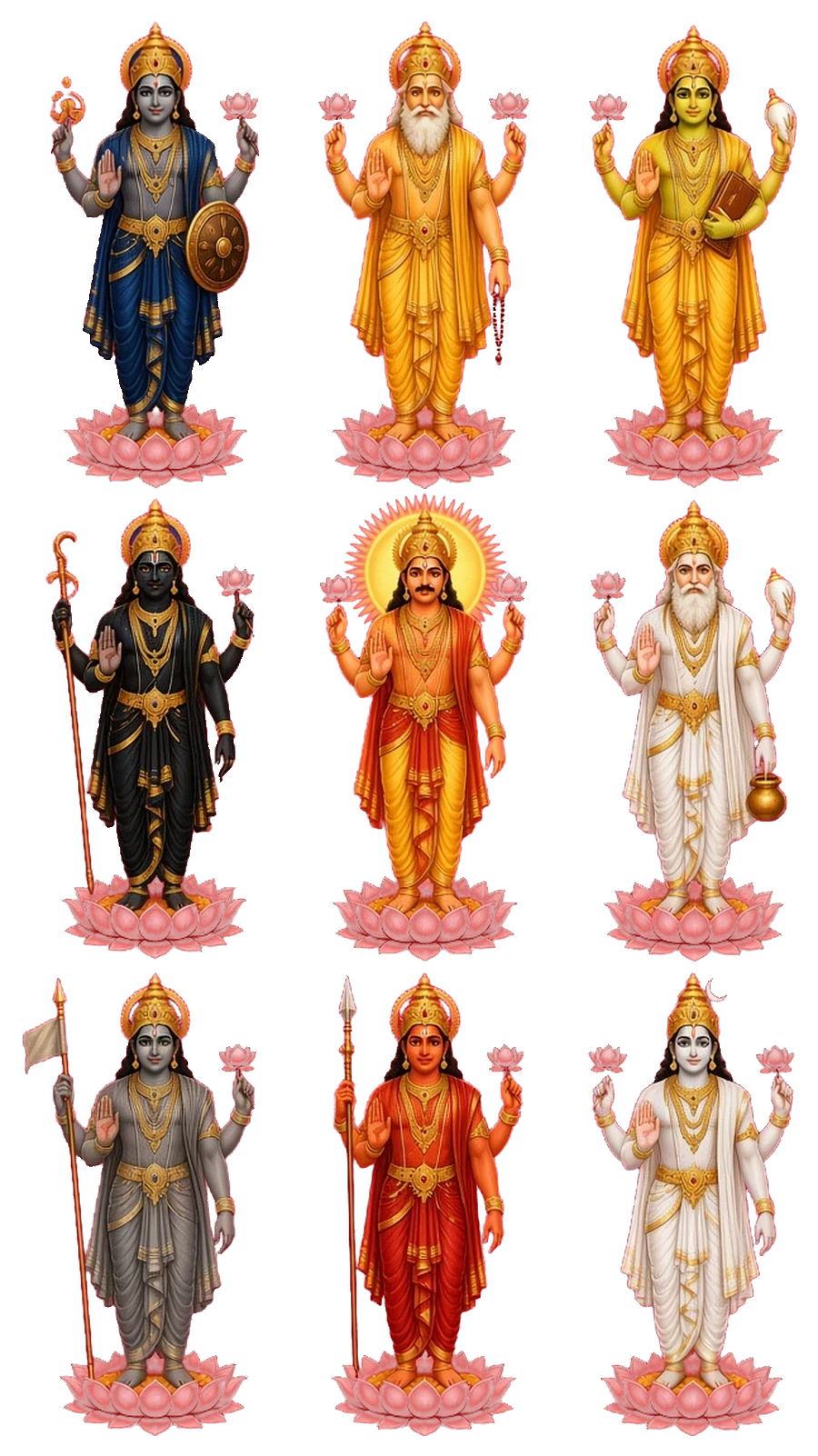
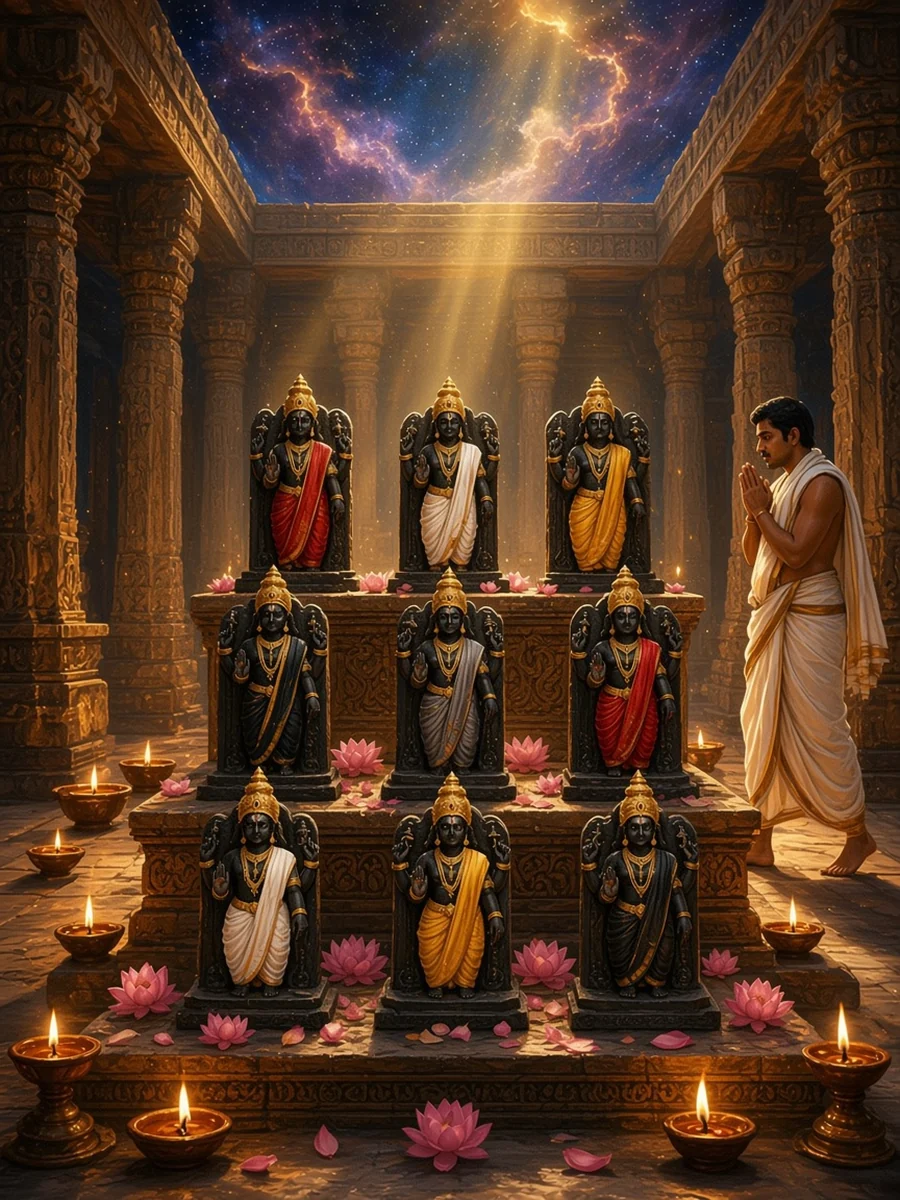
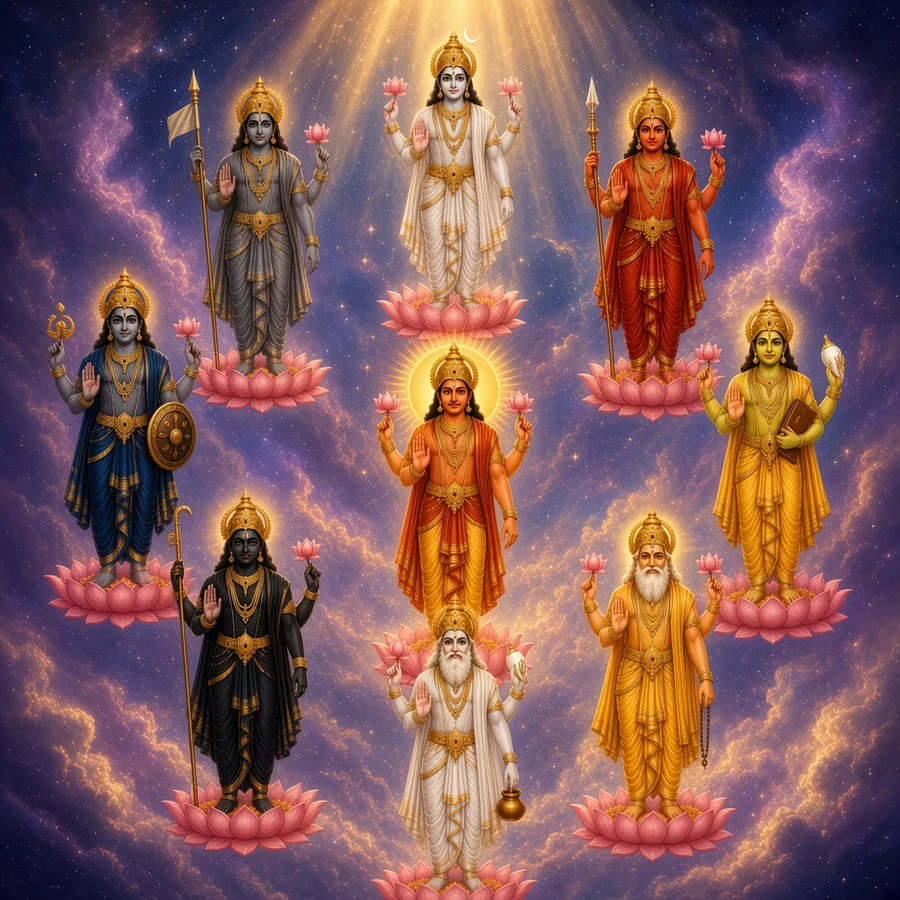
In the shrine of nine the Sun stands in the middle and the other eight stand round him in the eight directions, set so that no two of them face one another. Devotees walk round them all.
Are Rahu and Ketu real planets?
They have no body anyone can see. They are the two points where the moon's path crosses the sun's, where eclipses happen, and Hindu astrology counts them as shadow planets.
Where are the nine worshipped together?
In many temples of south India, and above all in the nine temples round Kumbakonam in Tamil Nadu, where Suryanar Kovil holds all nine round the Sun.

Artwork ›

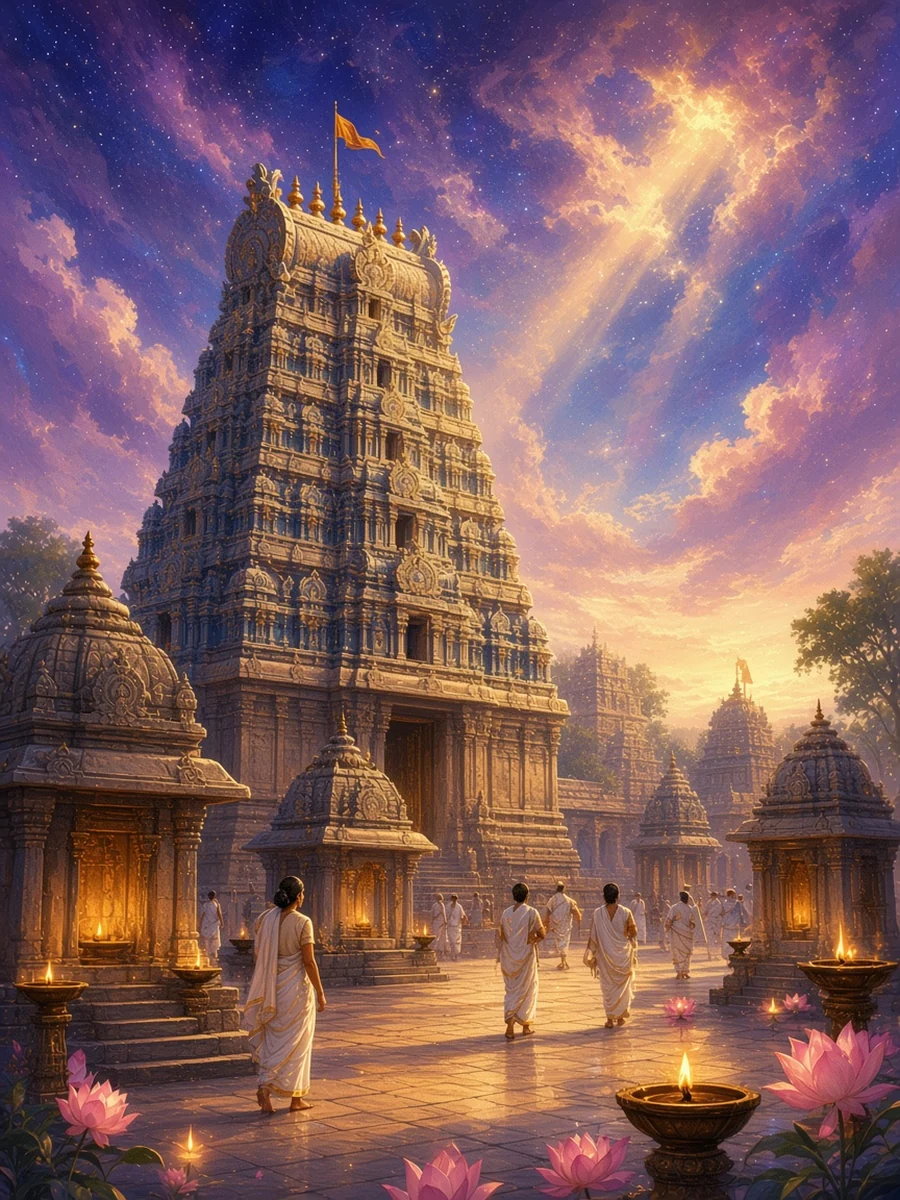
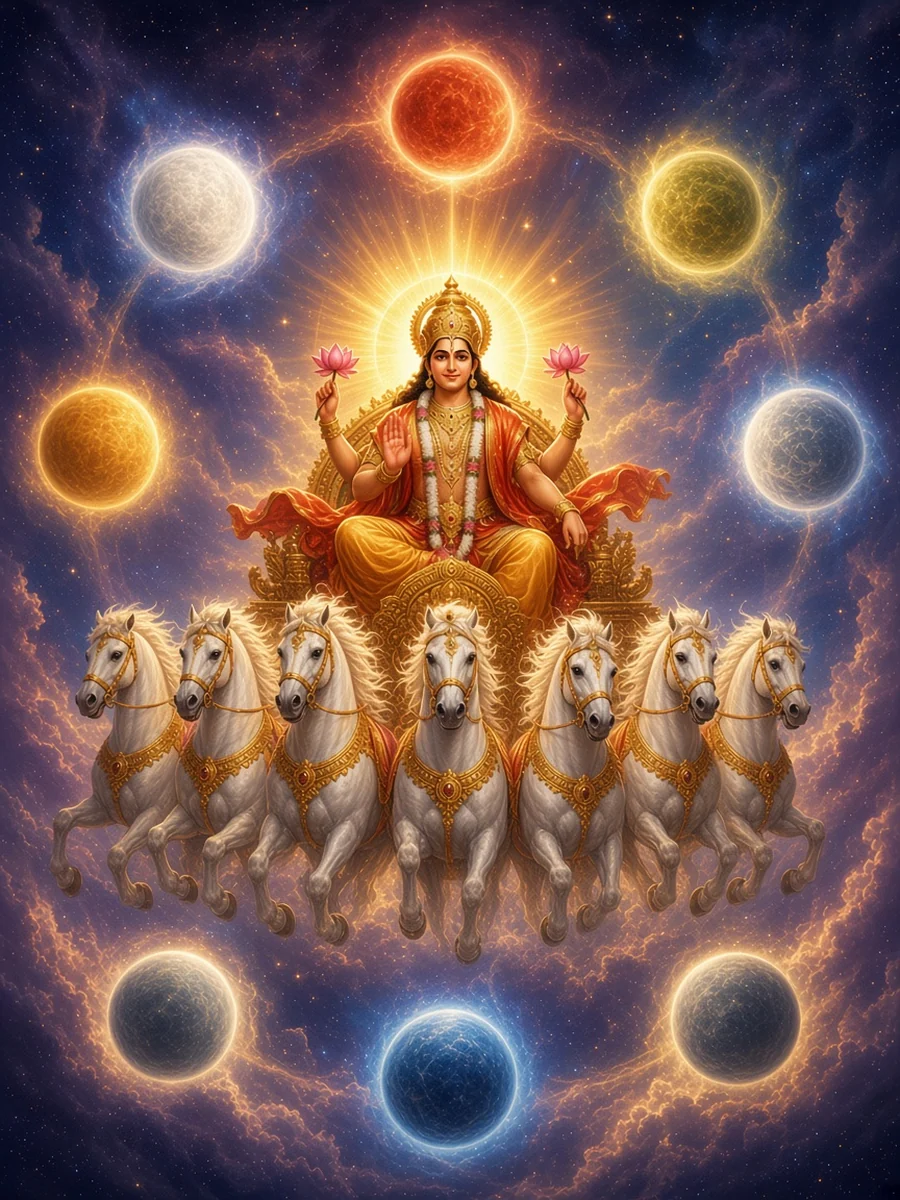
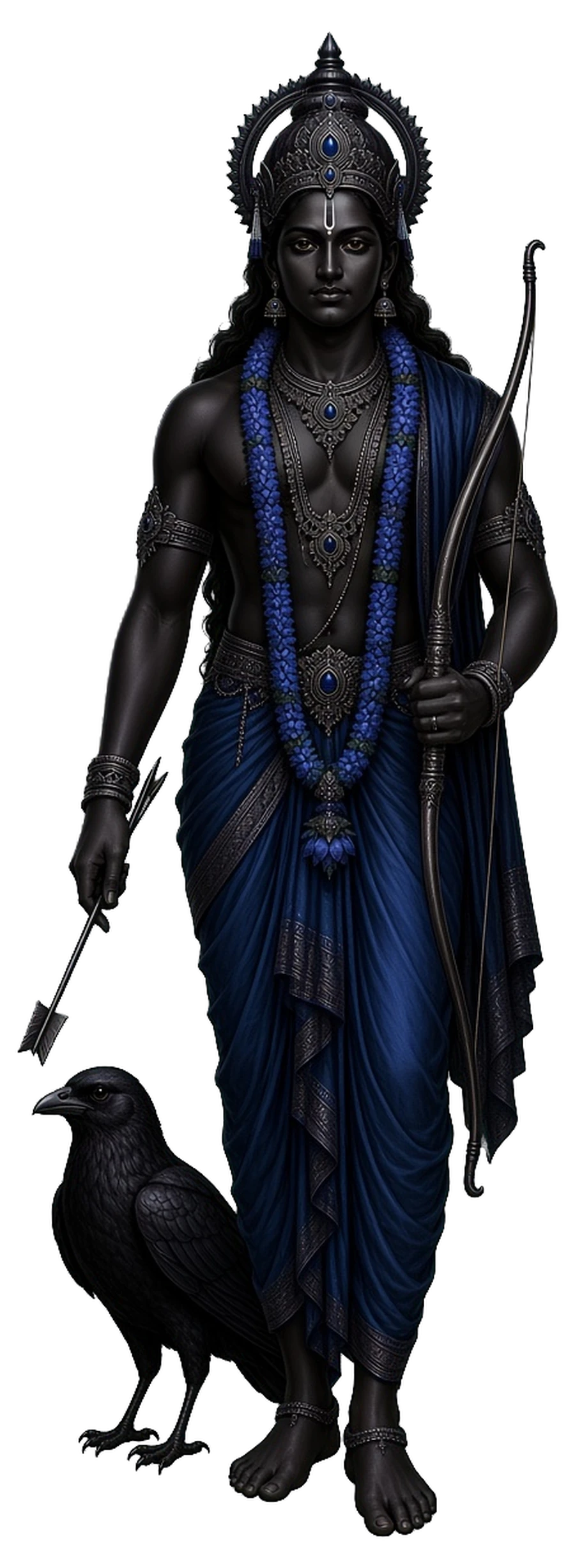
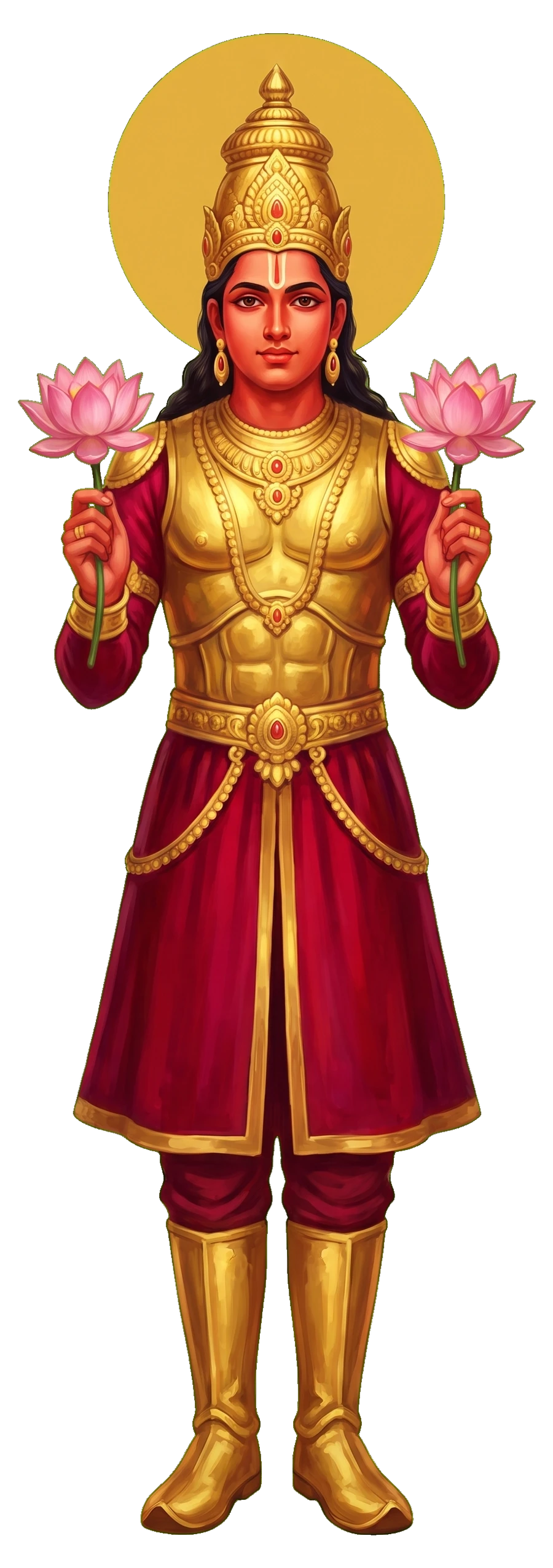
Suryanar Kovil, where the nine stand round the Sun The planets on their chariots of light

For kids

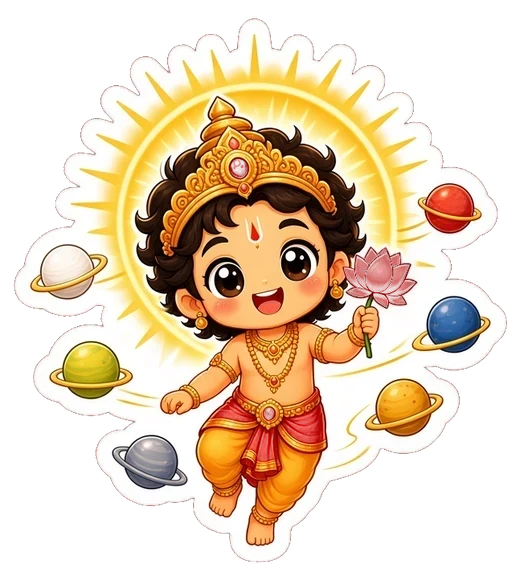
Everything revolves around me
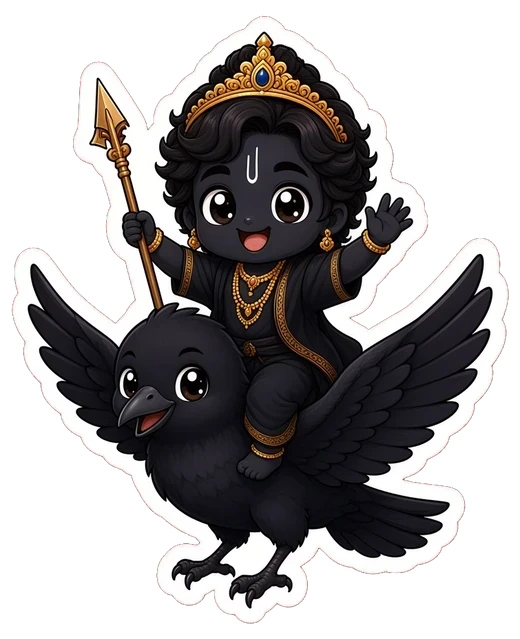
Slow and steady
Slow and steady

At a glance

TraditionPan-Hindu
The nineSurya

Chandra, Mangala, Budha, Brihaspati, Shukra, Shani, Rahu and Ketu, in the order of the Yajnavalkya Smriti

The nameGraha

the seizer, the power that takes hold of a life

Who The Navagraha is

The Navagraha are the nine planets of Hindu worship: the Sun, the Moon, Mars, Mercury, Jupiter, Venus and Saturn, and the two shadow planets Rahu and Ketu, which no one sees except when they seize the sun or the moon. Graha means the one who seizes. The nine are the powers that take hold of a life, and the law book of Yajnavalkya says that the rise and fall of kings, and the being and not-being of the world, rest with them.

Suryah somo mahiputrah somaputro brihaspatih, shukrah shanaishcharo rahuh ketush cheti grahah smritah: The Sun, the Moon, the son of the Earth, the son of the Moon, Brihaspati, Shukra, the slow one, Rahu and Ketu, these are remembered as the planets (Yajnavalkya Smriti 1.296).

That verse fixes the order still used today. The same book lays down their rite. Whoever wants fortune or peace, rain or a long life should worship the nine, each with his own metal, his own wood for the fire and his own food for the Brahmins afterwards. Whichever planet stands badly for a person, it says, is the one to worship with the most care, because Brahma gave the planets a boon: worshipped, they honour their worshippers in turn.

So the nine are worshipped together. In the temples of the south they stand on one platform, the Sun in the middle and the eight round him, turned so that no two face each other, and devotees walk round them all. In the north they often stand in a row of nine above a temple door. Around Kumbakonam in Tamil Nadu nine temples each keep one planet, and pilgrims go round all nine; at Suryanar Kovil, the Sun's own temple, the whole set stands round the Sun.

Each planet also has his own stories and his own page: Surya, Chandra and Soma, Brihaspati, Shukra, Shani and Rahu. Mangala, Budha and Ketu wait for theirs.

Their stories together on this site: The Forest of White Flowers, The Sky Before the War and The Road Past the Planets. The nine as Ravana's prisoners are in The Prisoner Under Ravana's Feet, and how Rahu came to be one of them is told in The Head That Became a Planet.
Before the Puranas

The Vedic roots of The Navagraha

The Vedas know no set of nine. The Rigveda praises Surya the sun, and Soma, whom later ages made the moon, and it knows Brihaspati as the priest of the gods, not yet as a planet. A hymn of the Atharvaveda (19.9) asks the planets wandering in heaven, the powers that seize the moon, and Rahu with the sun to be kind. The nine as a group belong to the law books, the epics and the Puranas, and they took shape as India met Greek astrology.

In the Mahabharata the planets are signs. Before Kurukshetra Vyasa reads Saturn pressing on Rohini, Mars, Jupiter and Venus against the stars, Rahu near the sun and a white Ketu beyond Chitra. The scholar Michio Yano, as Wikipedia reports him, finds the word graha first used in this sense for the shadow planets in the epics.

The five visible planets entered Indian astrology, and the seven-day week was adopted, through contact with Hellenistic and Babylonian astronomy, as Britannica puts it. The historian David Pingree read the Yavanajataka as a Sanskrit version of a Greek book on horoscopes, made in western India in 149 or 150 CE and put into verse in 269; Bill Mak has since argued for a later date. In the sixth century Varahamihira of Ujjain praised the Greeks as well trained in the sciences. In his Brihat Samhita he reports the old story of Rahu's severed head, and explains eclipses himself by the earth's shadow and the moon.

Rahu and Ketu were counted as shadow planets only slowly, and were firmly among the nine by the eighth or ninth century. The Yajnavalkya Smriti lists all nine and gives their rite, which Yano studied beside the household sutras and the Puranas. The Matsya Purana (93 and 94) sets out the same rite with the Sun in the middle of the altar and the others round him, and describes each planet's image. The Puranas also give each planet a chariot (the Vishnu Purana), a height above the earth (the Bhagavata) and, in the Kashi Khanda of the Skanda Purana, a world won by penance at Kashi.

Temples followed. Suryanar Kovil near Kumbakonam was built in the reign of the Chola king Kulottunga I (1060 to 1118), and it still keeps the nine round the Sun.

See how the Vedic gods became the Puranic ones →

Related gods