As Vyasa tells it
Mahabharata, Bhishma Parva 2 and 3 · Hastinapura, on the eve of the battle · 3 min read
The two armies stood facing each other on the plain of Kurukshetra, and in Hastinapura the blind king Dhritarashtra sat alone with his grief. His sons were on one side of that field and his brother's sons on the other.
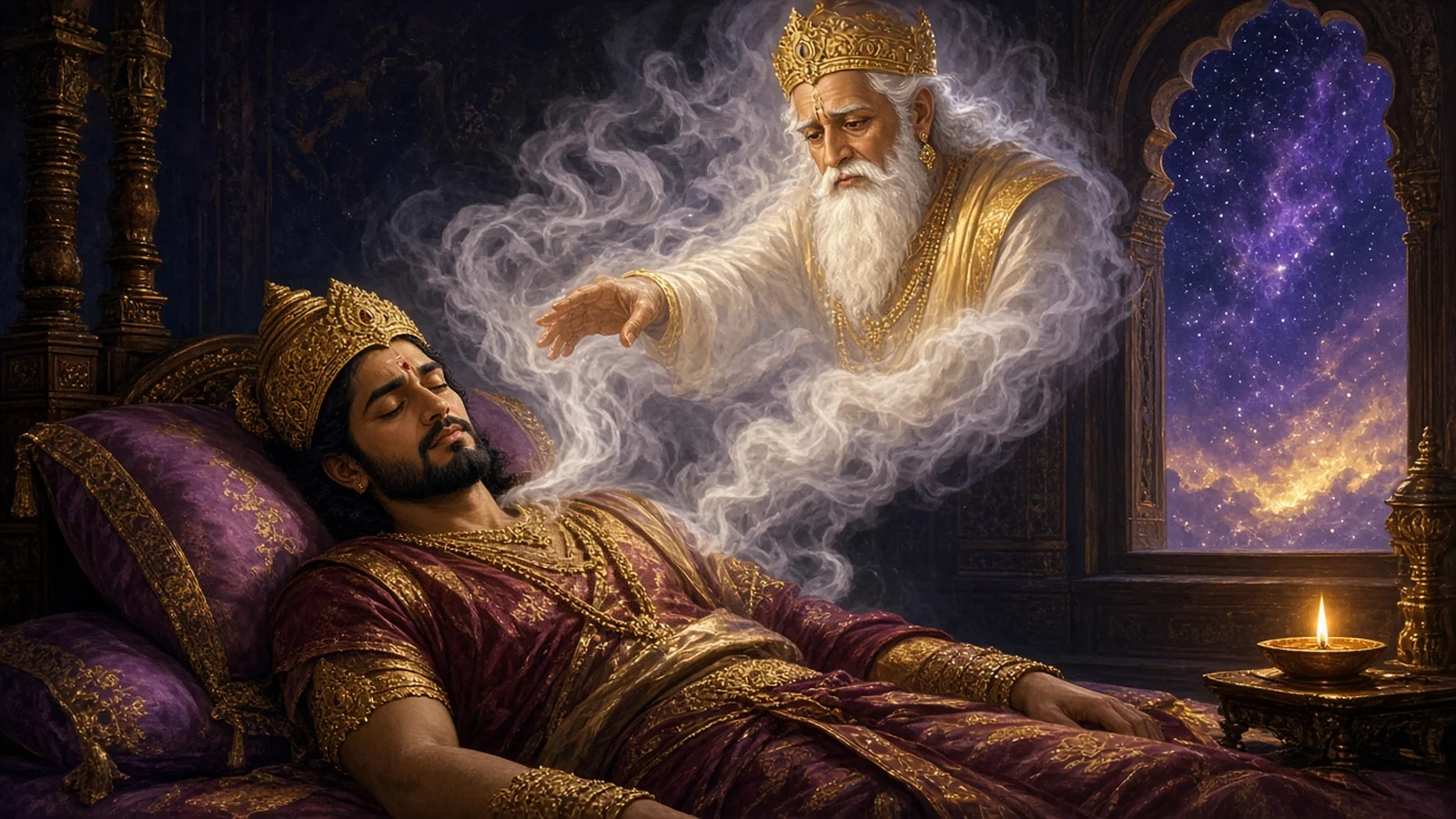
The sage Vyasa came to him. Vyasa sees what has been and what is to come, and he did not soften it.
"Your sons and all those kings have come to the end of their time," he said. "They will kill one another. Do not grieve; time turns everything. But if you wish to see the battle, I will give you eyes."
"I do not want to watch my own family die," said the king. "But I would hear of it."
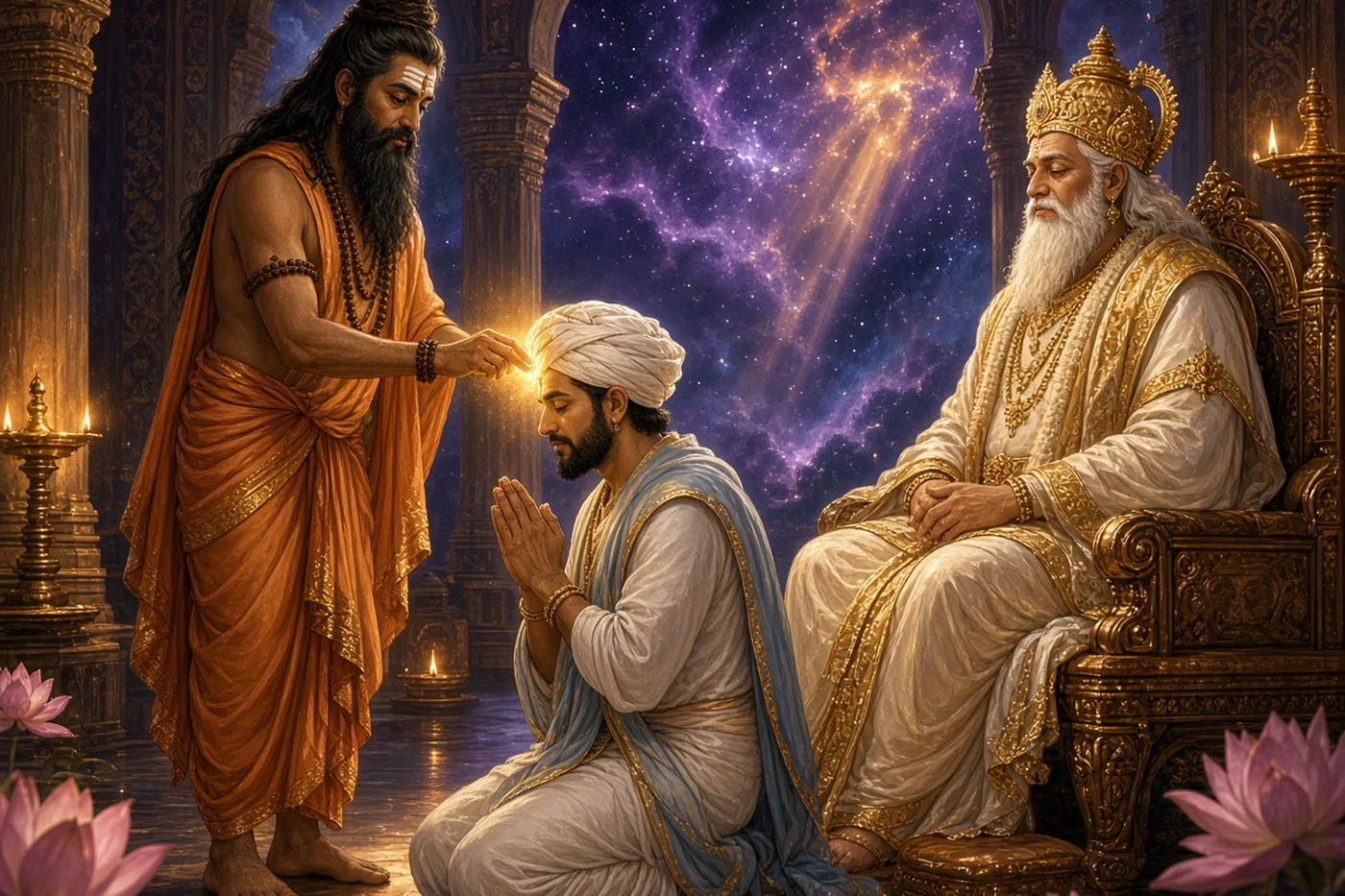
So Vyasa gave the sight to Sanjaya, who served the king. Sanjaya would see the whole battle, by day and by night, even what men thought in their hearts. No weapon would wound him and no weariness would touch him, and he would come through it alive.
Then Vyasa told the king what he had seen in the world and in the sky.
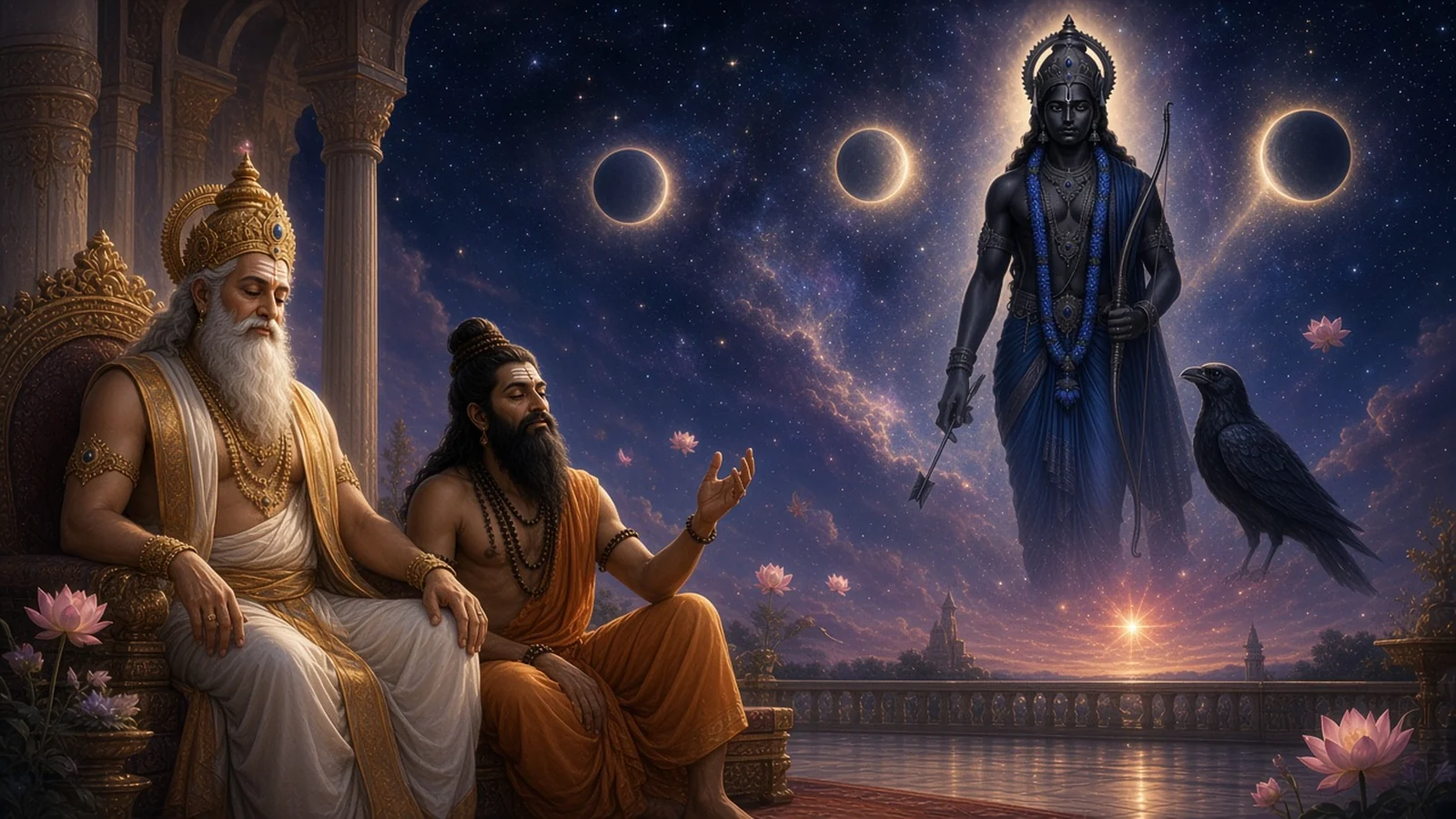
The birds of prey were gathering in the trees round the camps. At dawn and dusk the sun seemed hidden behind headless trunks. On the full moon of Kartika the moon had gone dim and the colour of fire, and the mark of the deer in the moon had slipped from its place. The images of the gods laughed and trembled, sweated and bled.
"Hear what the planets are doing," said Vyasa. "Saturn, the Sun's son, presses on Rohini and bears down on Bhaga. Mars has turned toward Magha and Jupiter toward Shravana. Venus has risen toward Purva Bhadrapada. Rahu has come close to the sun, and the white planet Ketu stands beyond Chitra, and a fierce comet sits on Pushya. The seven sages have grown dim. Jupiter and Saturn have stood a whole year at Vishakha."
The king listened in the dark.
"And there is this," said Vyasa. "A fortnight has come that is two days short, only thirteen days long, and both the moon and the sun are eclipsed within it. I have never known such a thing. It means slaughter."
"Then it was ordained," said Dhritarashtra slowly. "It must come. Kings who fall in battle doing a warrior's duty go to heaven and leave a great name."
Vyasa sat in meditation for a while before he answered.
"Time makes and unmakes everything," he said. "But killing your own kin is not praised anywhere in the Veda. You can still turn this. Show your sons the right way. Let the Pandavas have their kingdom, and the Kauravas will have peace."
"My sons do not listen to me," said the king. "My own heart does not want this wrong. But they do not listen." He was quiet, and then he asked, "Tell me the signs of the side that wins."
Vyasa told him: a sacrificial fire that burns clear and leans to the right, conches that sound deep, a sun and moon that shine clean, birds that call sweetly and circle to the right, soldiers who are cheerful and whose garlands stay fresh. And then he told him that victory comes by chance, and that even the winner loses much.
As Karna tells it
Mahabharata, Udyoga Parva 143 · in Krishna's chariot · 1 min read
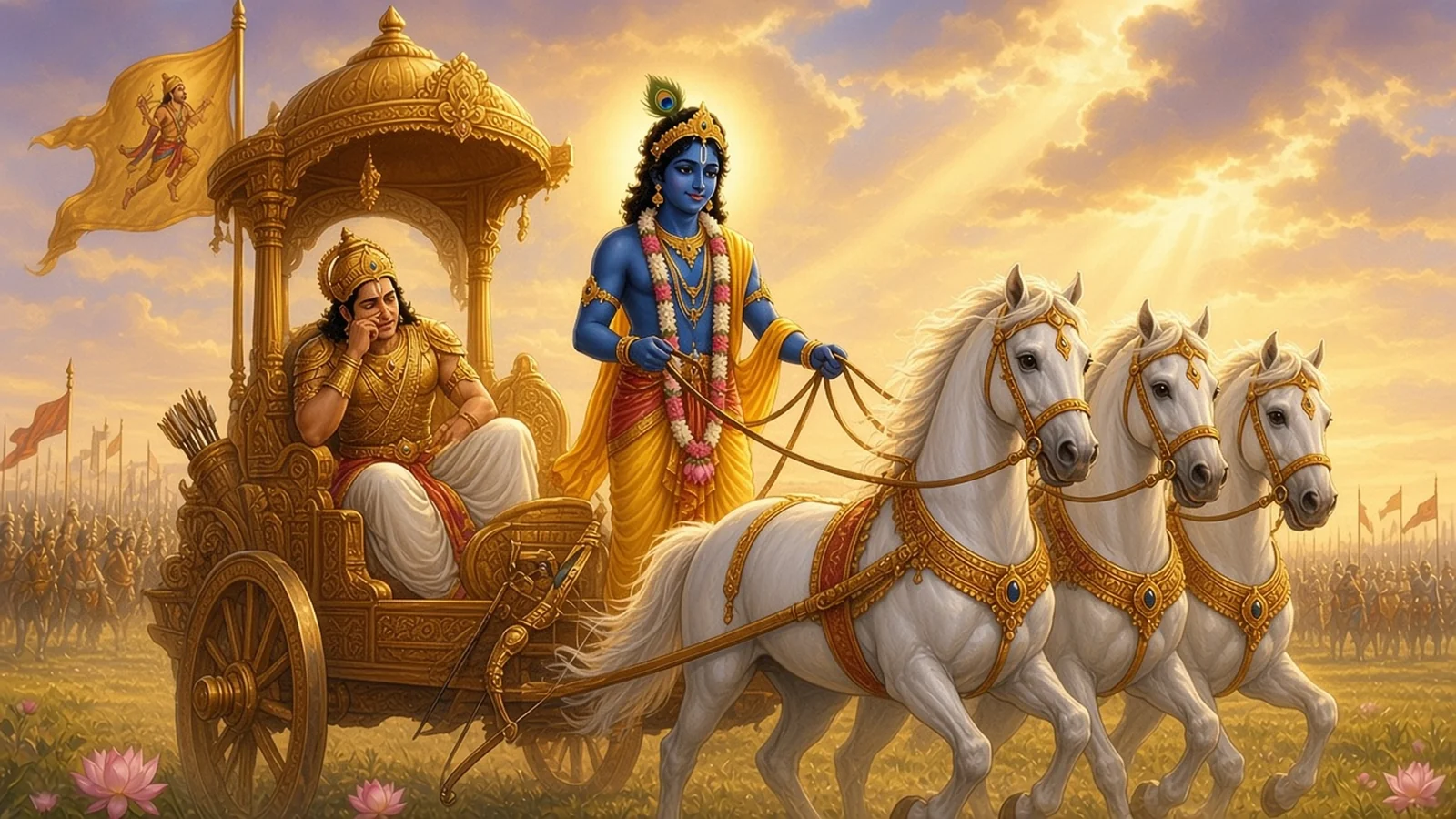
Earlier, while there was still talk of peace, Krishna had taken Karna up into his own chariot as he left the Kuru city. He told him that he was Kunti's son, born before Yudhishthira, and offered him the Pandavas' side and the throne. Karna would not come. And then, sitting beside Krishna, he read the sky as Vyasa would read it later.
"Saturn, the Sun's son, is pressing on Rohini," Karna said. "That brings harm to every creature. Mars has wheeled toward Jyeshtha and comes to Anuradha, and that means friends killing friends. Another great planet of ill omen is pressing on Chitra, and that is calamity for the Kurus. The mark on the moon has moved, and Rahu is closing on the sun."
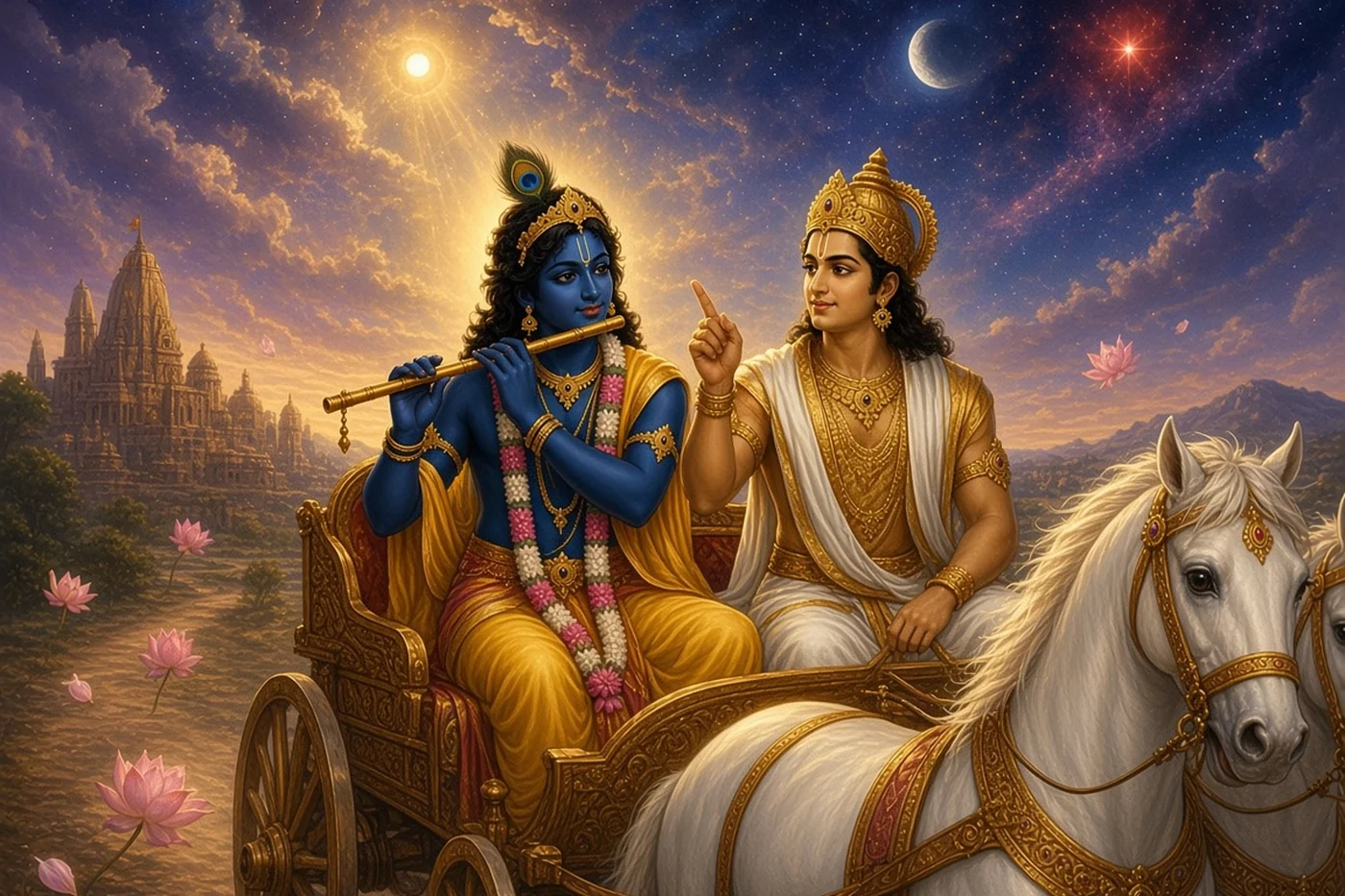
He went on: meteors falling with a roar, horses weeping and leaving their fodder, wells in Duryodhana's camp bellowing like bulls, a dark ring round the sun. He told Krishna his dream. He had seen Yudhishthira in white on a palace of a thousand pillars, eating rice and milk from a golden bowl; Bhima on a mountain top with his mace; Arjuna shining on a white elephant beside Krishna. And he had seen himself, with Bhishma, Drona and Duryodhana, riding a cart drawn by camels toward the south, which is the road to Yama.
"When ruin is near," Krishna said, "wrong looks like right, and it will not leave the mind."
"If we live through the battle we will meet again," said Karna. "If not, we will surely meet in heaven." He held Krishna close, climbed down, and went back to his own chariot, heavy at heart.