As Keezhaperumpallam tells it
South India · the Pothigai hills and Keezhaperumpallam, Tamil Nadu · 3 min read
Everyone remembers the head. It flew up roaring from the line of the gods with the nectar still in its throat, and the site tells where it went in The Head That Became a Planet. The temples of the Tamil country also remember the body.
The temple's telling is short about the churning. An Asura sat down among the gods, the Sun and the Moon gave him away, and Mohini struck at him with the ladle she was serving from. The nectar was already inside him. So the head did not die, and neither did the body.
The body fell a long way south, into the Pothigai hills. It lay there without eyes to see where it was, and without a mouth to call for help.
A Brahmin found it.
"This one is still alive," he said, and did not leave it. He took the body and kept it safe.
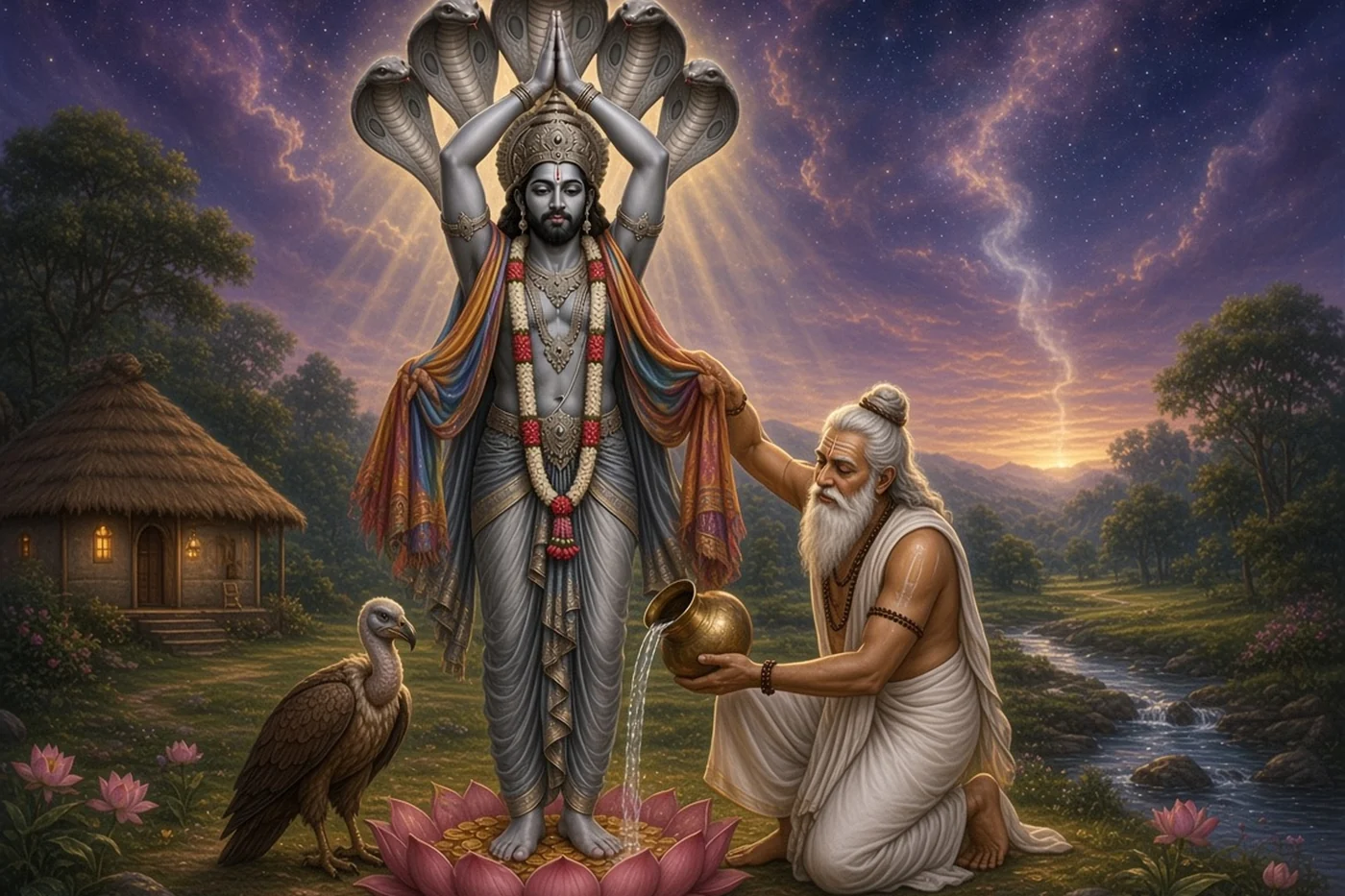
A body cannot live forever without a head, and in time a head was given to it: the head of a serpent. With that, the body was whole in its own way, and it had a name. It was Ketu.
The head had become Rahu and gone up to chase the Sun and the Moon. Ketu did not go after anyone. He carried what the theft had made of him, and he went looking for a place to put it down.
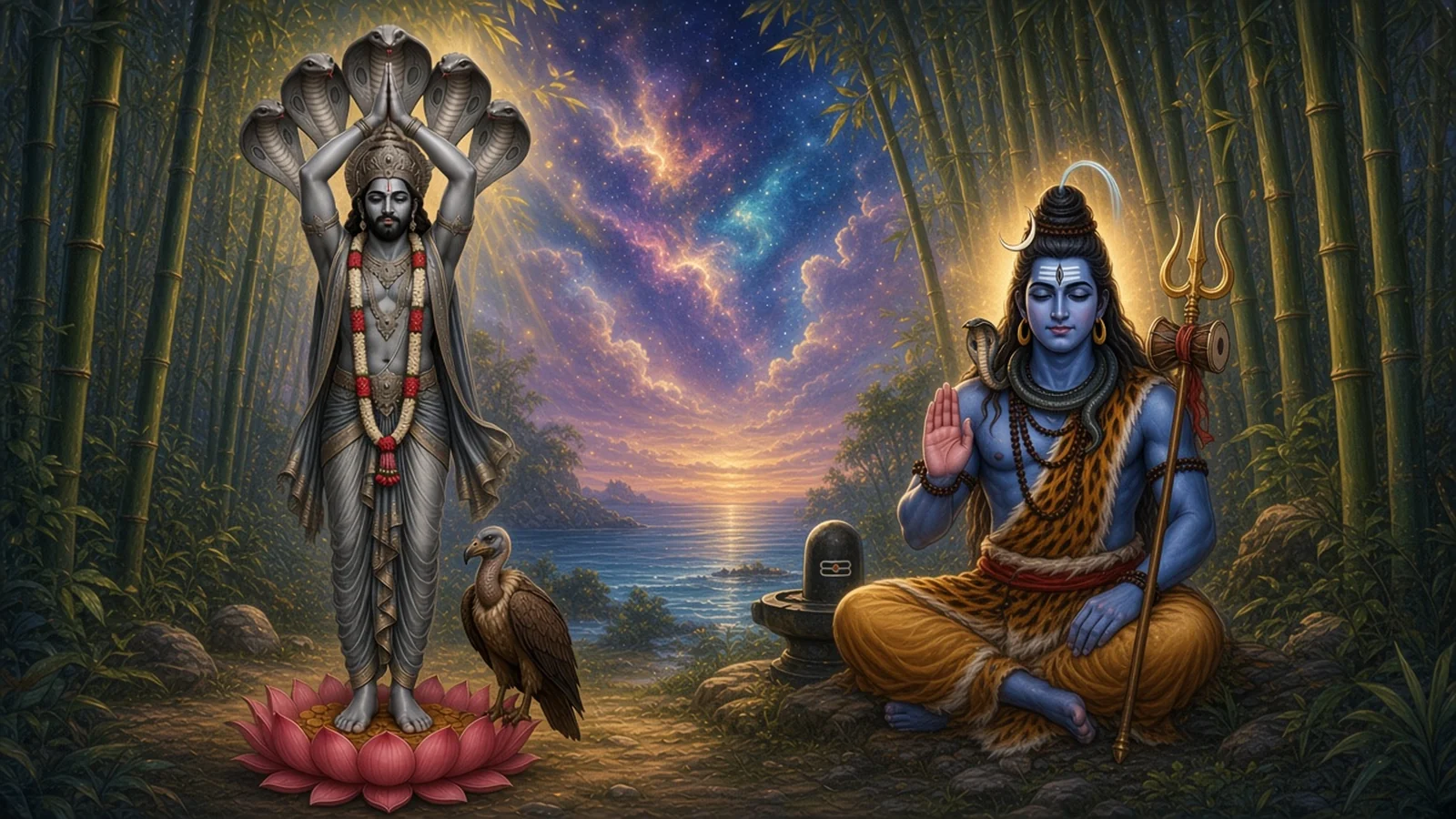
He came at last to the coast where the Kaveri meets the sea, near Poompuhar, to a forest of bamboo. The temple says he was not the first serpent to come there in sorrow. After the churning the gods and the Asuras had thrown away Vasuki, the great snake who had been their rope, and Vasuki had fallen in this very forest. He had prayed there to be forgiven for the poison he spat out, the poison Shiva had to drink, and Shiva had stayed in that place as Naganathar, the lord of the serpents.
Ketu stood before the same lord and raised both hands above his hoods.
"I drank what was not mine to drink," he said. "I have no head of my own to bow. Take the sin from me."
He prayed there for a long time. And Shiva, who had already forgiven one serpent in that forest, forgave a second.
"Your sin is gone," Shiva said. "Stay here, in this forest, near me."
So Ketu stayed. In the Tamil count of the nine planet temples round the Kaveri delta, Keezhaperumpallam is his. The place was called Vanagiri once, the temple guides say.
You will find him in the first courtyard, in black stone, facing west. He has a man's body and five serpent's hoods for a head, he sits on a lion seat, and his hands are folded high, still praying to Naganathar. Devotees whose charts show Ketu against them come with what he likes best: horse gram, red lilies and a cloth of many colours. The food blessed in the temple is eaten inside it and never carried home.
Every day the temple holds special worship in Rahu Kalam and Yamagandam, the hours most people keep free of anything new. Ketu, people say there, tests a life hard, and then he gives it wisdom.
As the Skanda Purana tells it
West India · Prabhasa, on the coast of Gujarat · 2 min read
The Skanda Purana knows another coast. In its book of Prabhasa, the holy shore where Somnath stands, Shiva tells the goddess about the shrines of the place one by one, and among them are the lingas of the nine planets.
"Go next to the linga Rahu set up," he tells her. "Svarbhanu, the son of Simhika, the Asura who fought by trickery, stood in penance there for a thousand years, and he pleased me so well that I came down into the stone."
Whoever sees that linga, Shiva says, will never be blind or deaf or dumb, never sick and never poor.
"A few bow-lengths to the north of it," he goes on, "is the linga of Ketu."
He describes Ketu without softening him. Ketu is a fierce planet, terrible to look at, with great round eyes, and his colour is the colour of smoke from burning straw. But he has been made holy by his devotion to Shiva, and he takes away the harm that the other planets do.
Ketu came to that shore and did hard penance for a hundred years, counted in the years of the gods. Shiva was pleased with him. He made him a planet, and he gave him something more: lordship over eleven hundred grahas, eleven hundred seizers in the sky.
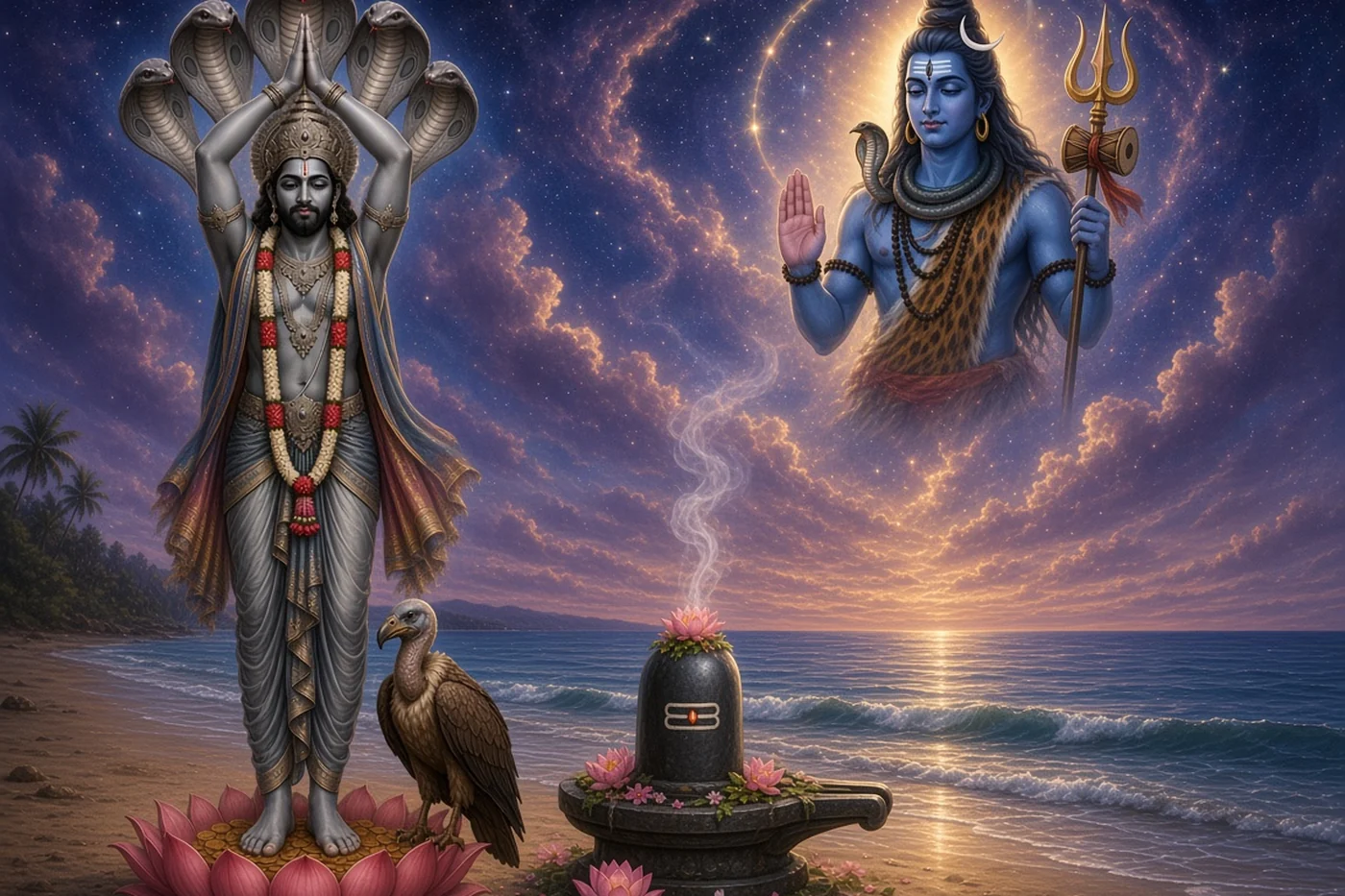
"When Ketu rises and is seen," says Shiva, "and when the planets press on a life, let him be worshipped as the rules say, with flowers and scents and incense and food."
Then he counts the lingas of all nine, from the Sun's to Ketu's, and makes a promise. Whoever looks on them every day need fear no planet. No misery will come into his family and no sick child will be born to it, because the planets will guard that house as if it were their own son.