Devalok ← All gods
Also calledKamakshi AmmanKanchi KamakshiKamakotiKameshvariBangaru KamakshiElavarkuzhaliTapas Kamakshi

In short

Who is Kamakshi?
The goddess of Kanchipuram in Tamil Nadu. Kanchi worships her as Parvati, the wife of Shiva, and as Lalita Tripura Sundari, the queen of the Shri Vidya tradition, in one.
What does her name mean?
It joins kama, love or wish, with akshi, eye. The Brahmanda Purana reads it another way too, as the goddess whose two eyes are Ka and Ma, speech and fortune.
What is in front of her in the temple?
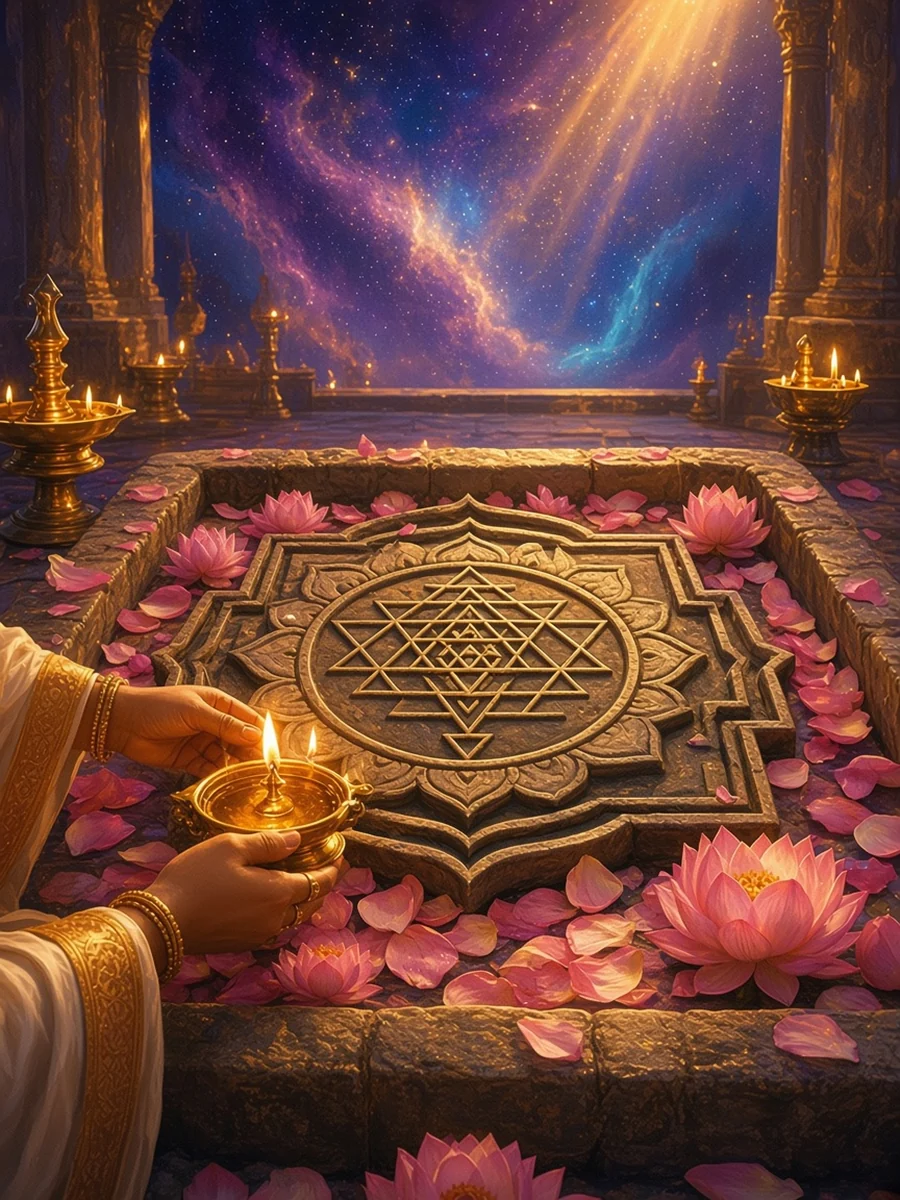
A Shri Chakra cut in stone and covered in pink lotuses. Kanchi says the teacher Shankara set it there and that it made the fierce goddess gentle; another tradition gives it to the sage Durvasa.
Where is the golden Kamakshi?
At Thanjavur. Her priests carried a golden image of her out of Kanchi after 1565, and the composer Syama Sastri was born into that family.

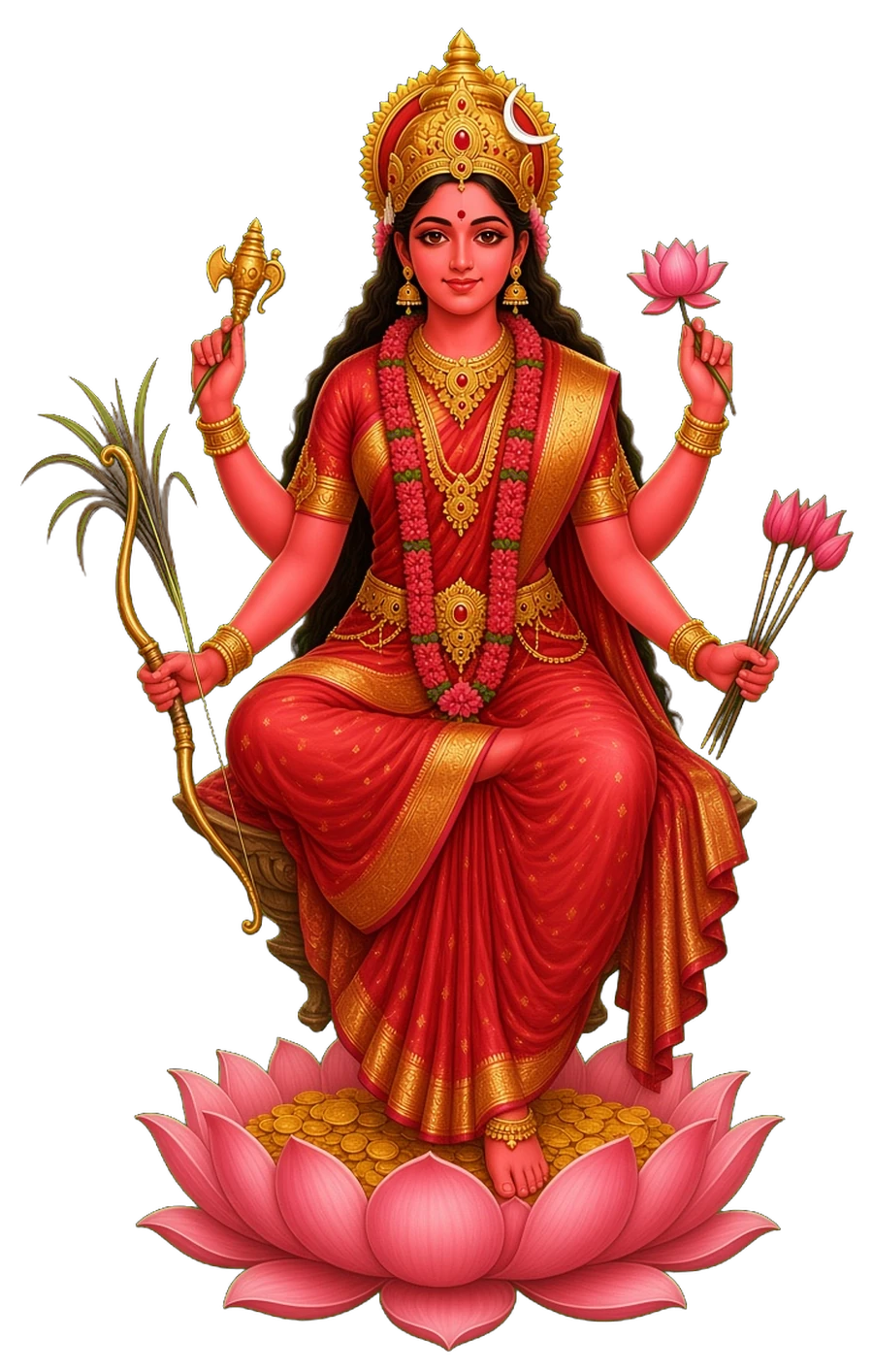
Artwork ›

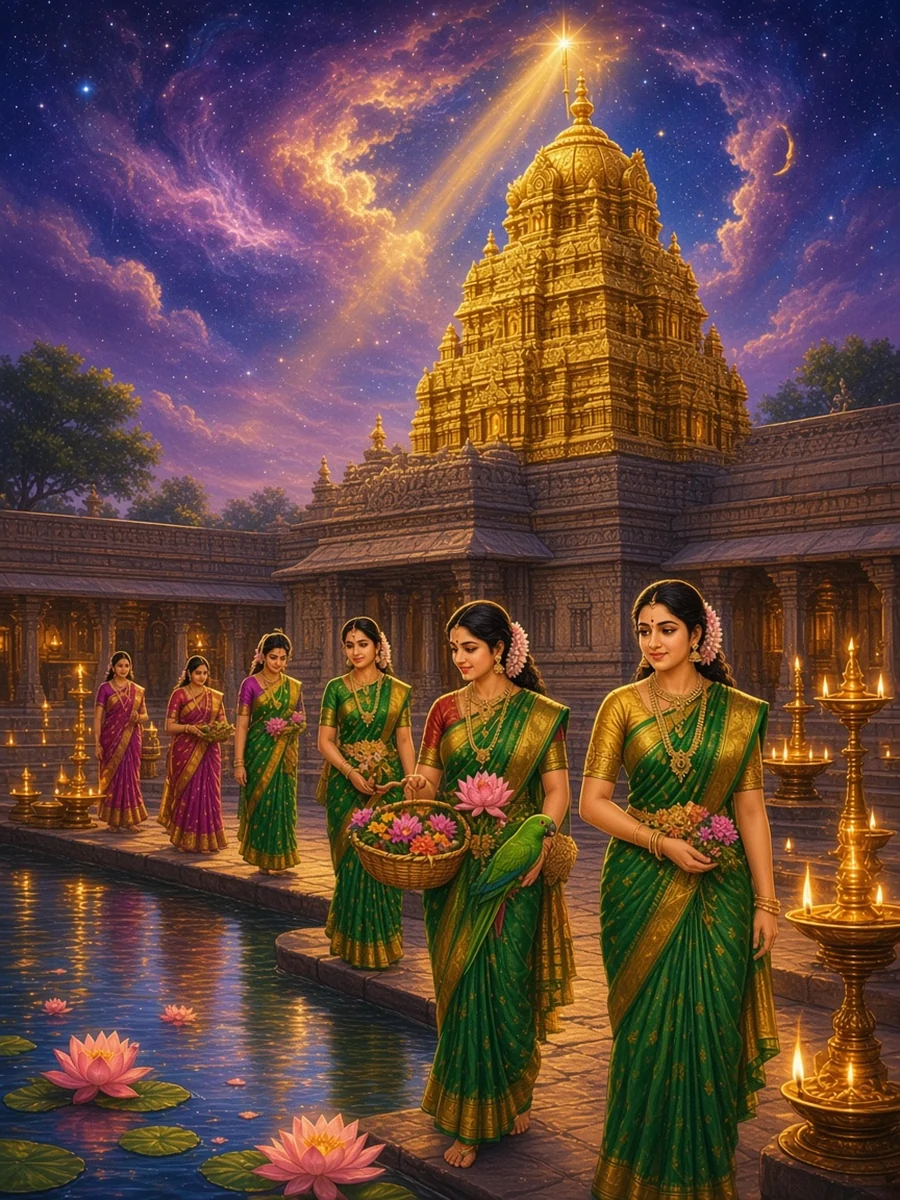
The Kamakshi Amman temple at Kanchipuram The queen of Kanchi

For kids

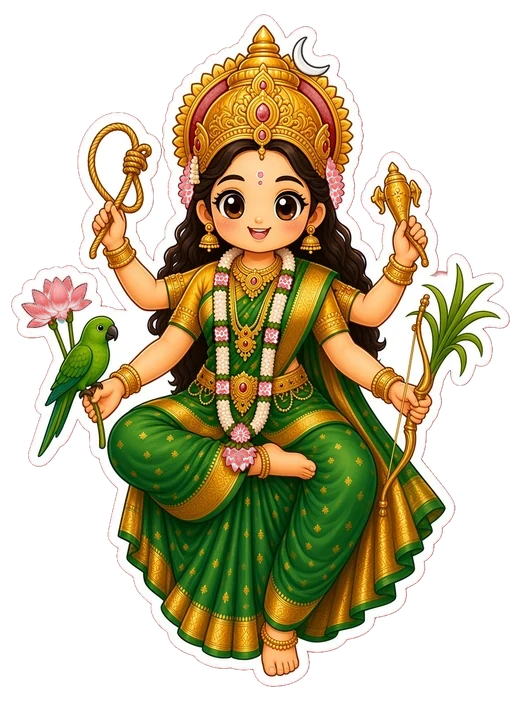
Aim with love
Aim with love
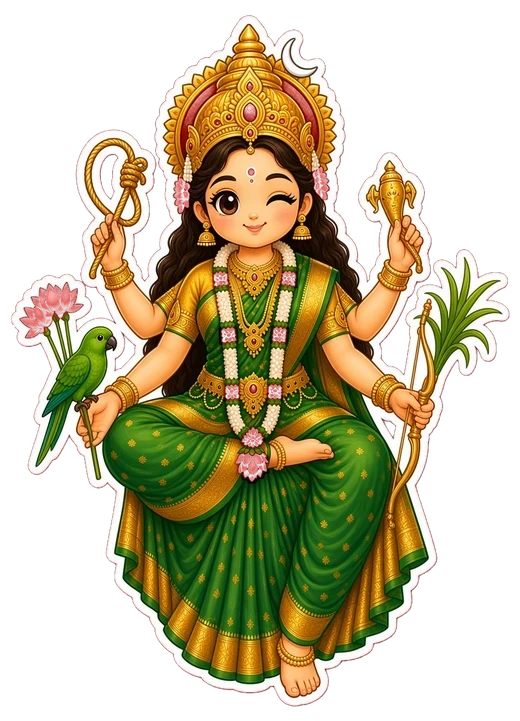
Eyes full of love
Eyes full of love

At a glance

TraditionShakta
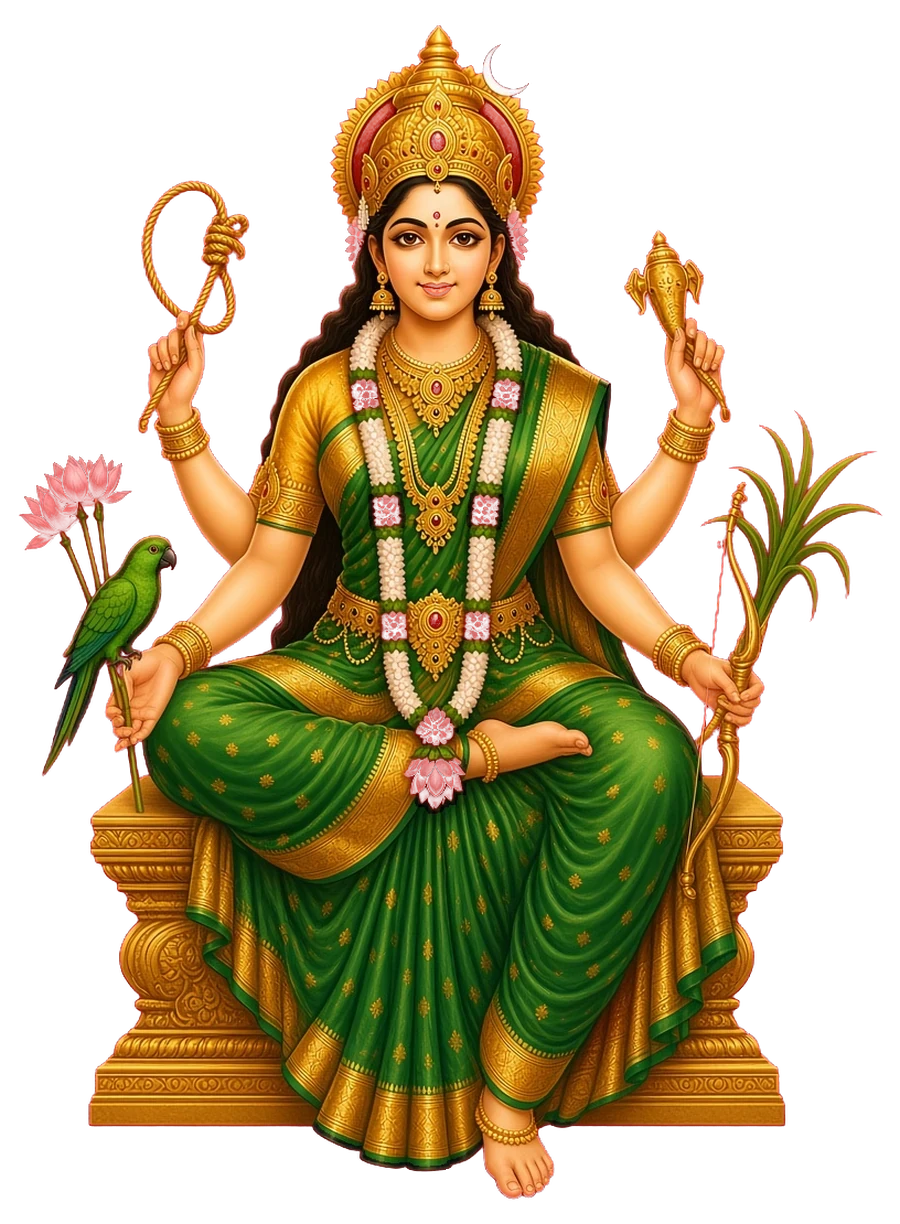
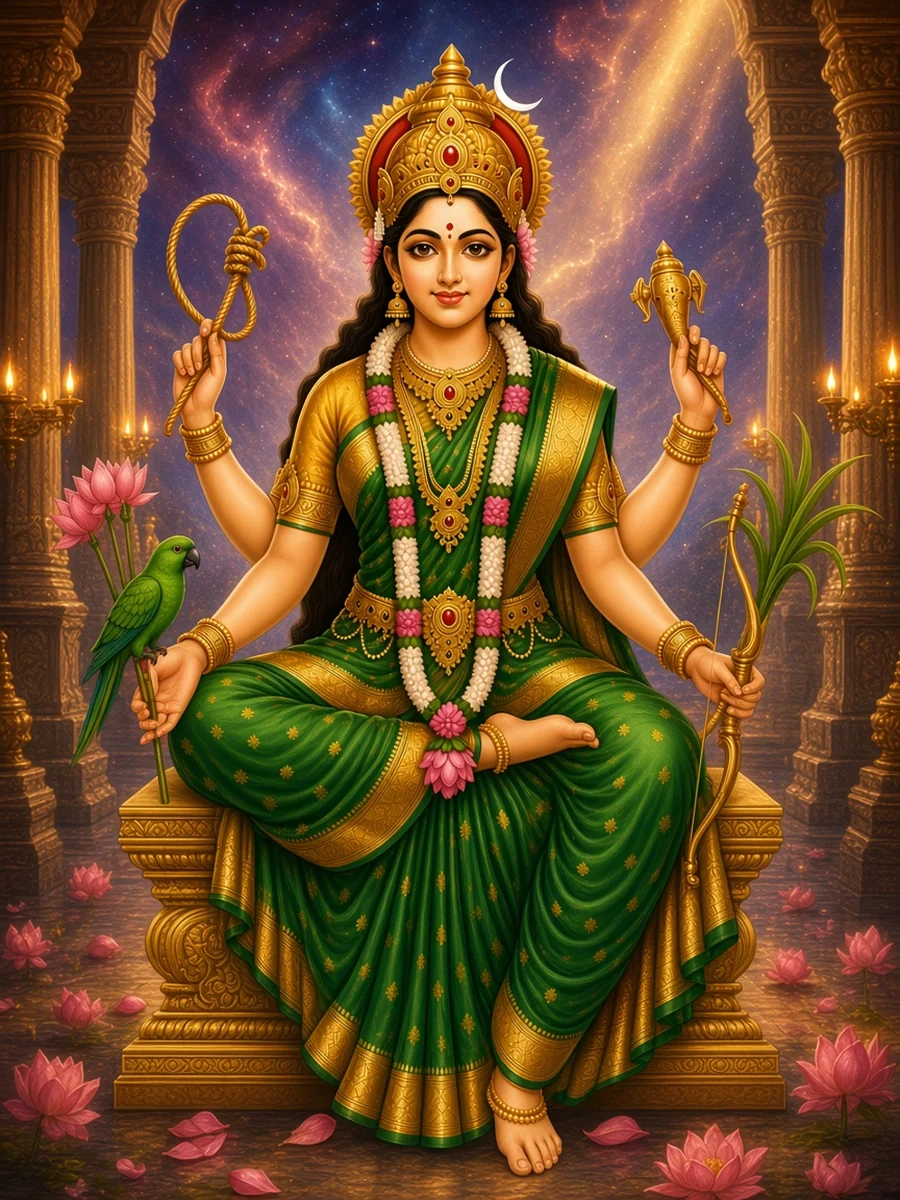
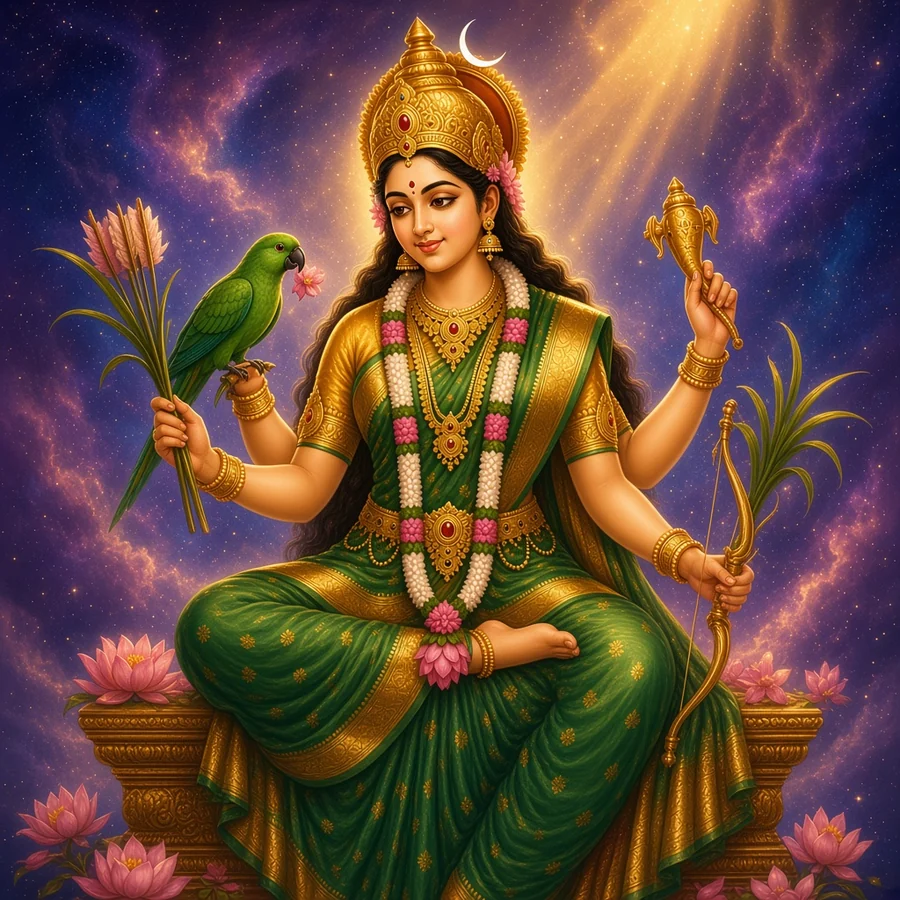
FormA young queen seated cross-legged on a throne of five Brahmas, a crescent moon on her brow
In her four handsA noose

a goad, a bow of sugarcane and an arrow of flowers; a parrot near her right hand

Who Kamakshi is

Kamakshi is the goddess of Kanchipuram, the old temple city of Tamil Nadu. She sits cross-legged in the Gayatri Mandapam of her temple, holding a noose, a goad, a bow of sugarcane and an arrow of flowers, with a Shri Chakra cut in stone before her feet. Kanchi sees no line between her and the other great goddesses: she is Parvati, the wife of Shiva, and she is Lalita Tripura Sundari, the queen of the Shri Vidya tradition.

Her city tells several stories of how she came to it. In the Brahmanda Purana, Brahma does penance at Kanchi until she appears, and then asks her to stay; Vishnu and Shiva stay with her, and the speech and fortune that are born from her two eyes give her the name. In the Skanda Purana, Parvati does penance at Kanchi under the single mango tree, holds a linga of sand through a flood, and tells the gods that she is called Kamakshi and grants what is wished to whoever bows to her by that name. The temple itself tells of gods who prayed to her as parrots and of a demon killed.

Mahapadmatavisamstha kadambavanavasini, sudhasagaramadhyastha kamakshi kamadayini: She who dwells in the great lotus forest and lives in the kadamba grove, who sits in the middle of the ocean of nectar, Kamakshi, the giver of what is wished for (Lalita Sahasranama).

Her temple may go back to the Pallava kings, whose capital Kanchi was. Kanchi says the teacher Shankara set the Shri Chakra before her when she was fierce and made her gentle, and his shrine stands inside her walls. A golden image of her left Kanchi after the fall of Vijayanagara in 1565 and lives now at Thanjavur, and Syama Sastri, the eldest of the three great composers of Carnatic music, was born into the family of priests who carried it.

Her stories on this site: The Goddess Who Was Asked to Stay, The Wheel at Her Feet and The Golden Goddess on the Road. Her penance at Kanchi belongs to Parvati's story The Hill of Fire. Lalita's rising, her war and her thousand names are told in The Goddess Who Rose from the Fire, The Queen's War with Bhanda and The Names Agastya Was Not Told, which begins at Kanchi, and Kanchi's bangles for her on Aadi Pooram are in The Bangles for the Goddess.
Before the Puranas

The Vedic roots of Kamakshi

The Vedas do not know Kamakshi. No hymn names her or her city, and her name, the goddess of the loving eyes, belongs to a far later language of devotion. The Vedas do praise speech and fortune, Vac in the Rigveda's hymn 10.125 and Shri in the later Shri Sukta, and when the Brahmanda Purana explains her name it reaches back to exactly those two: Ka for speech and Ma for wealth, born from her two eyes. Kamakshi is the goddess of one city, and she grew up with it.

Kanchi was the capital of the Pallava kings, and the encyclopedias date the first temple to them, between the fifth and eighth centuries, with changes in the fourteenth and seventeenth; one historian credits the Cholas instead. The Vaishnava poet-saints sang the shrine of Vishnu that stands inside her temple, one of the hundred and eight holy places of Vishnu.

The Puranas give her the city twice. The Skanda Purana's book of Arunachala makes Kanchi a stage of Parvati's penance, where she takes the name Kamakshi before going on to the red hill. The Lalitopakhyana, the closing book of the Brahmanda Purana, gives Kanchi three chapters near its end: how Brahma brought her there and why she is called Kamakshi, how she gave King Dasharatha his four sons and freed Bhairava of Brahma's skull, and how her Shri Chakra is worshipped. The Lalita Sahasranama counts Kamakshi among Lalita's thousand names. So the one goddess is at once Parvati and Lalita.

The last layer is Shankara's. The Shankara Digvijaya credited to Madhava says he built a temple at Kanchi and set the goddess's worship on Vedic lines, without naming her. The Kanchi Kamakoti Peetham counts him as its founder, which the Sringeri matha does not accept. The scholar Vidyasankar Sundaresan reads the worship these lives call Vedic as what modern scholars would call Shri Vidya, and takes it as a sign of the Smarta Brahmins' lasting tie to the goddess traditions.

See how the Vedic gods became the Puranic ones →

Related gods