Devalok ← All gods
Also calledLalitaTripura SundariShodashiRajarajeshwariKameshvariKamakshiLalitambikaShri LalitaShri MataMahatripurasundari

Artwork ›

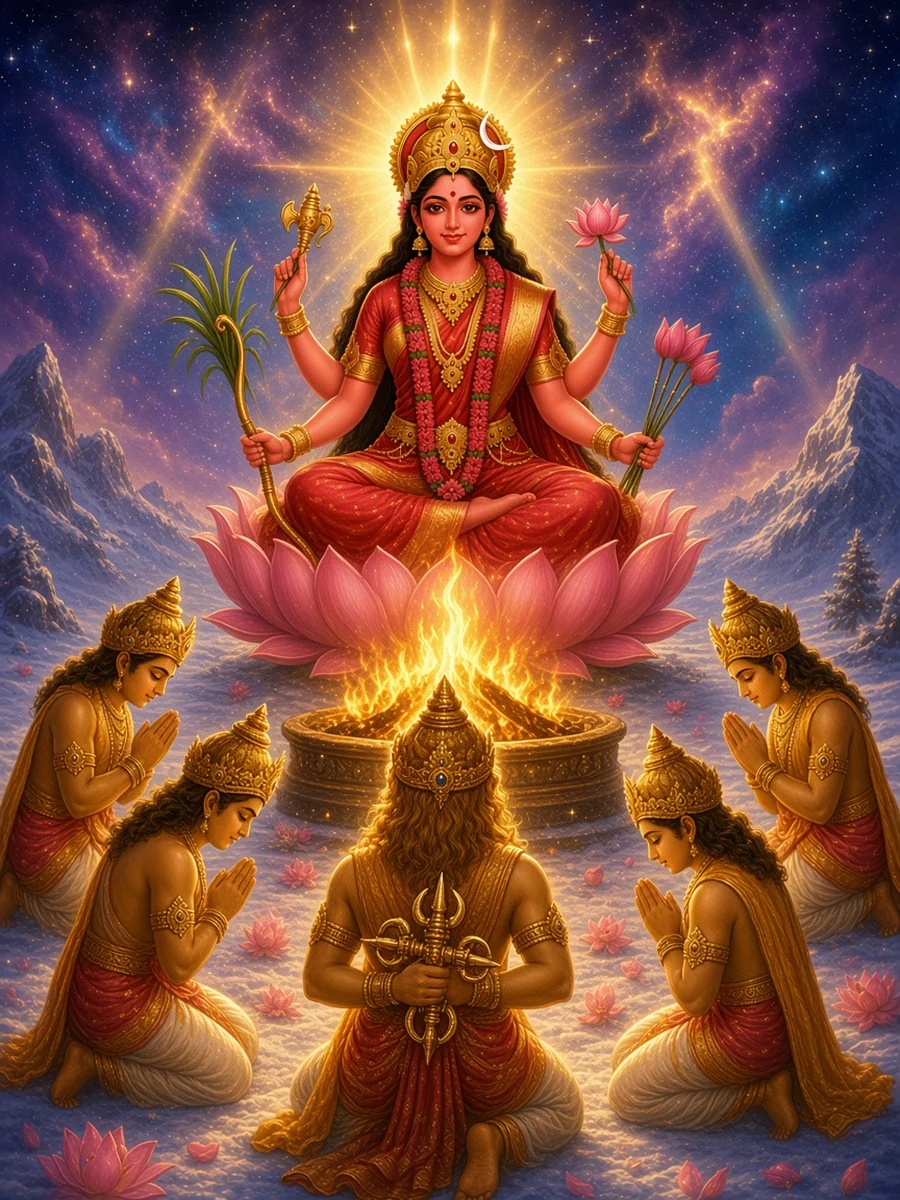
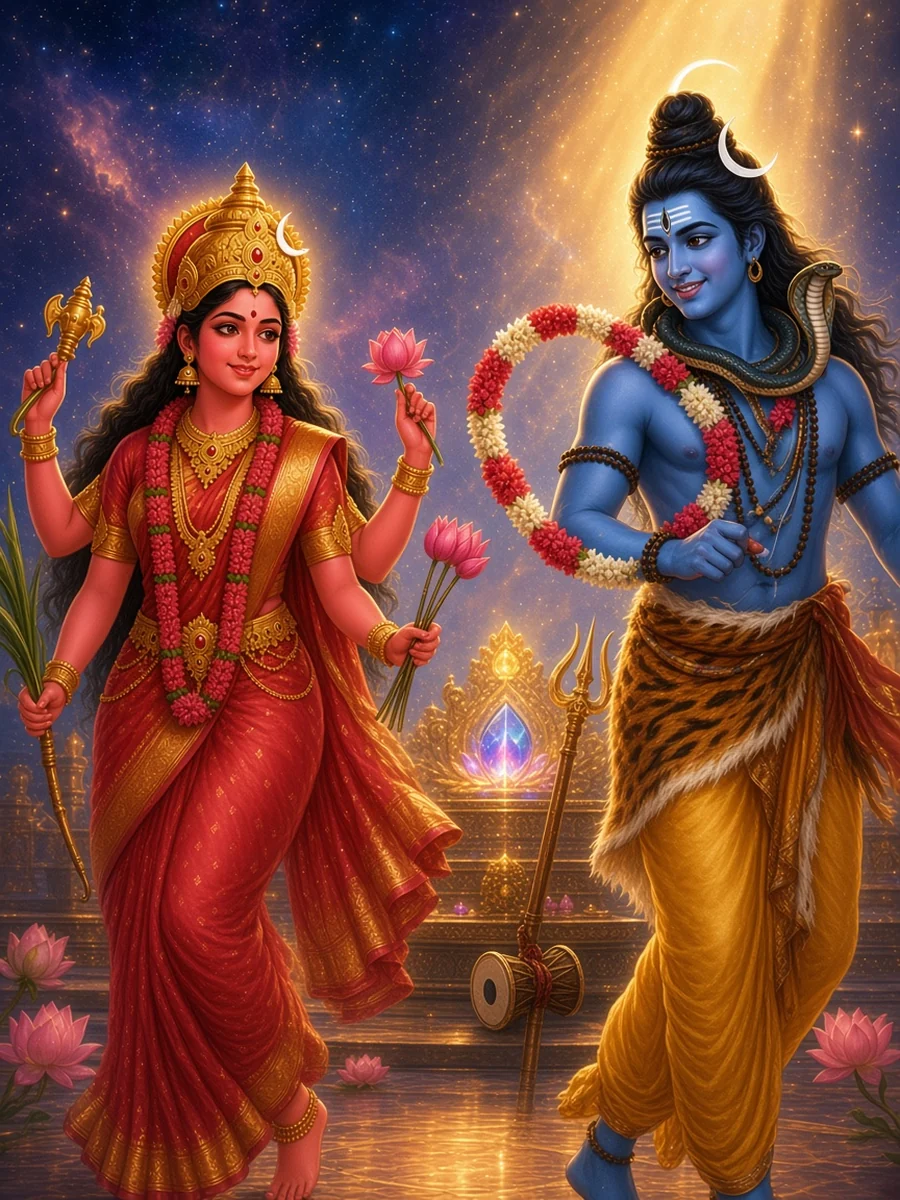
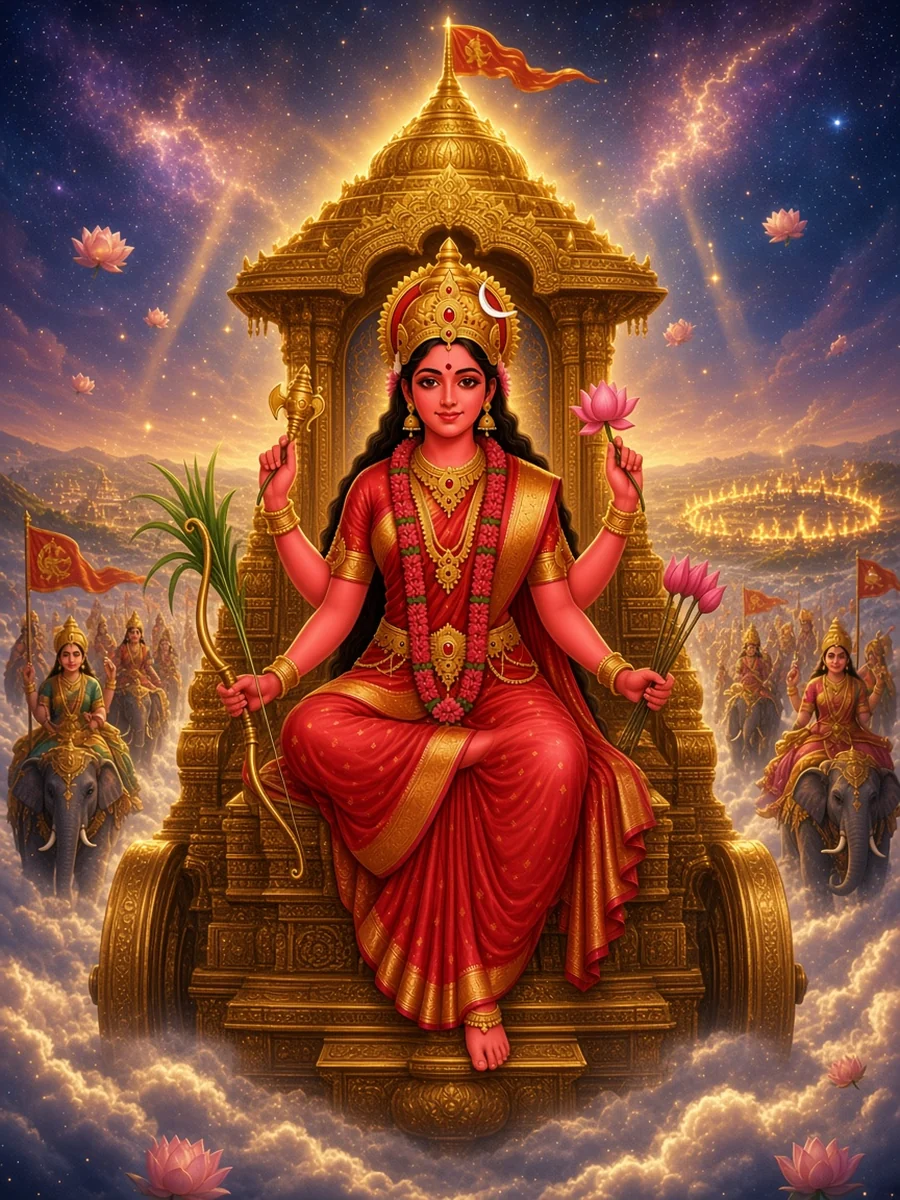
Lalita rises in a wheel of light above the gods' fire as Indra and the gods bow Lalita's garland falls round the neck of Kameshvara, Shiva as the lord of love

For kids

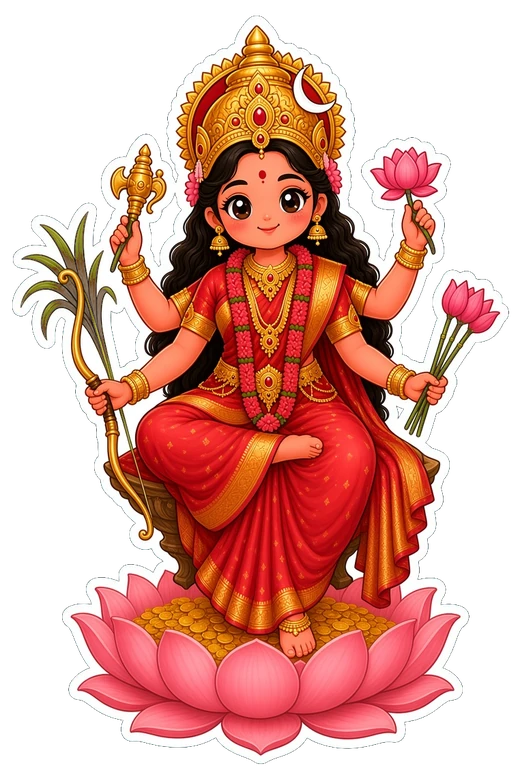
A tiny Lalita sits on her pink lotus and waves with a sweet smile
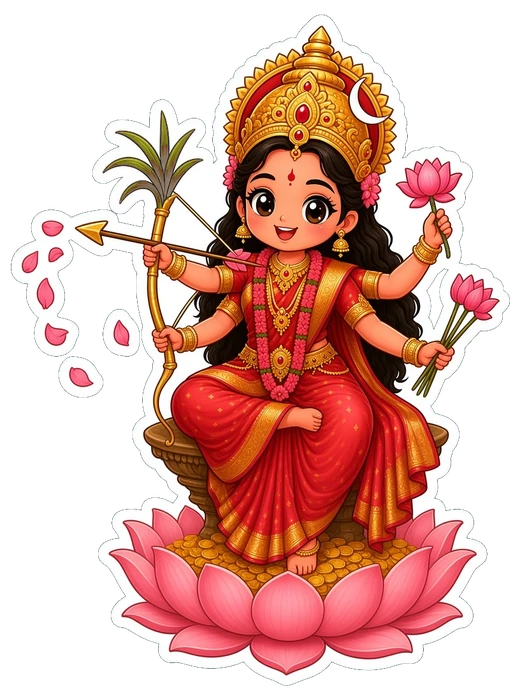
A tiny Lalita draws her sugarcane bow and lets fly a flower arrow

At a glance

TraditionShakta (Shri Vidya)
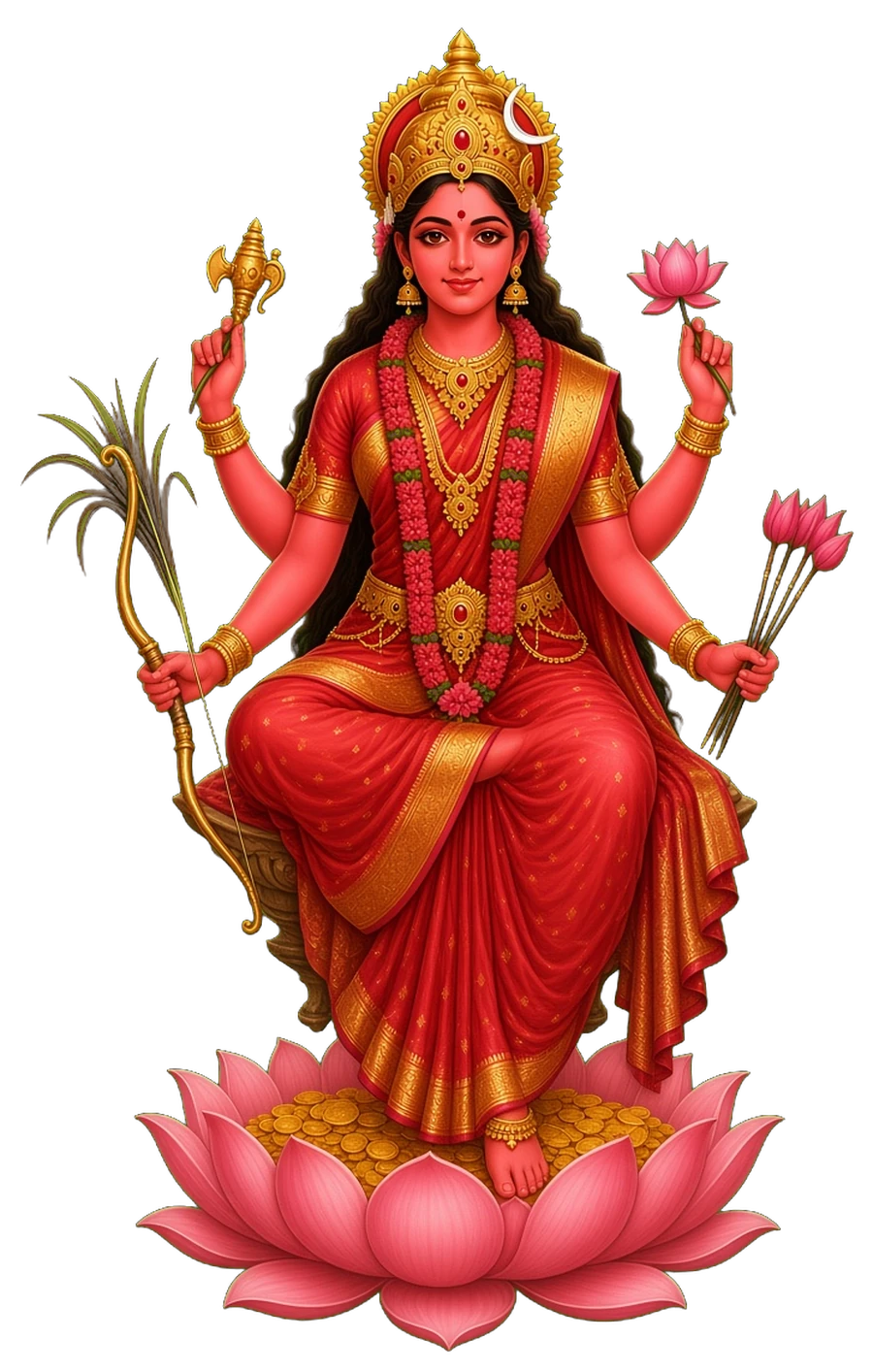
FormA young queen

red as the china rose, in silk the colour of pomegranate flowers, shining like the rising sun, with a crescent moon in her crown

In her four handsA noose

a goad, a bow of sugarcane and five flower arrows

Who Lalita Tripura Sundari is

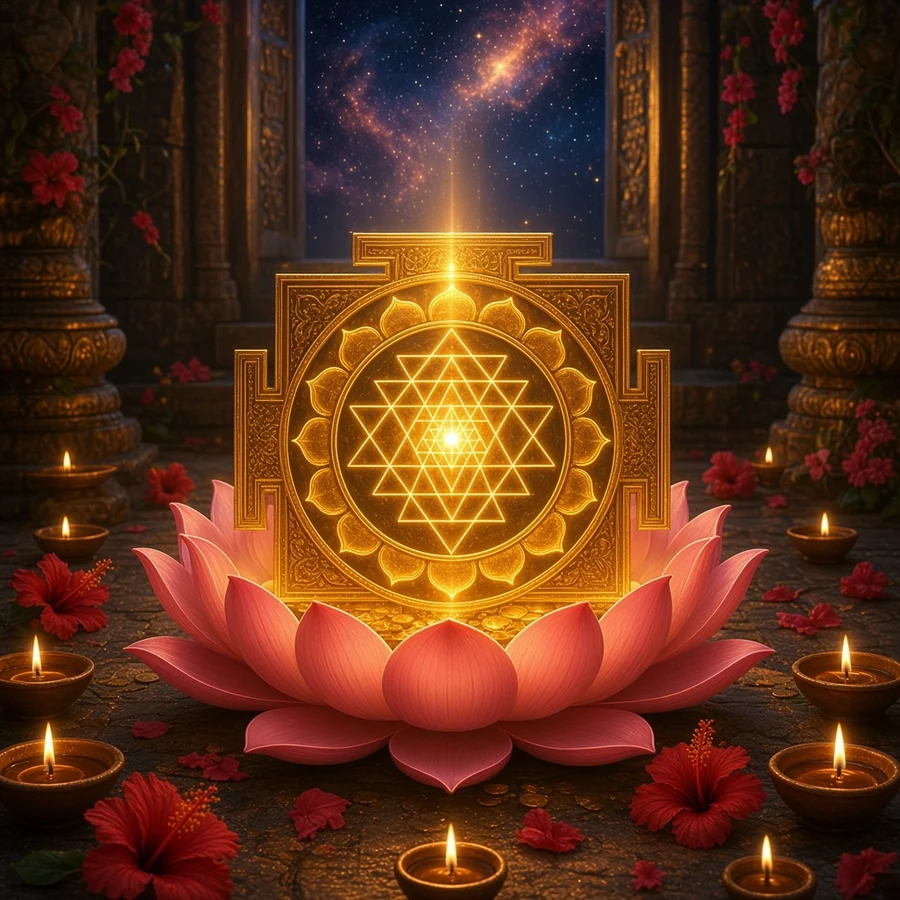
Lalita is the Goddess as a queen. Her name means the one who plays, and her full name, Tripura Sundari, is read as the most beautiful one in the three worlds, or in the three cities. She is the great goddess of the Shri Vidya tradition, worshipped through a fifteen-syllable mantra and the Shri Chakra, a diagram of nine interlocking triangles.

Her story is told in the Lalitopakhyana, the last book of the Brahmanda Purana, as a teaching given by the horse-headed Hayagriva to the sage Agastya. When Shiva burned Kama, the god of love, a demon named Bhanda was made from the ashes, and he ruled the three worlds. The gods lit a great fire and gave it everything they had, and Lalita rose from the light, holding a noose, a goad, a sugarcane bow and five arrows. She married Shiva in his most beautiful form, Kameshvara, the lord of love, and rode out with an army of goddesses. Her nine-year-old daughter Bala killed Bhanda's thirty sons, Ganesha was born from her smile to break the demon's charm, and Lalita ended Bhanda herself. Then, with one look, she brought Kama back to life.

Her hymn is the Lalita Sahasranama, a thousand names that tell her story and her worship in order. It begins:

Shrimata shri maharajni shrimat simhasaneshvari, chidagni kunda sambhuta deva karya samudyata: the holy Mother, the great queen, the empress on the lion throne, born from the fire altar of consciousness, risen for the work of the gods.

The names are sung every day in homes and temples, above all in the south, and many people know them by heart.

She is also Shodashi, the girl of sixteen, the third of the ten Mahavidyas, and Rajarajeshwari, the queen of kings. At Kanchipuram she is Kamakshi, the one with eyes of love. In the far northeast, at Udaipur, she is Tripura Sundari, the goddess the state of Tripura is named after.
Before the Puranas

The Vedic roots of Lalita Tripura Sundari

The Vedas do not know Lalita. There is no hymn to her and no goddess of that name. The Shri Vidya teachers find her there all the same: the eighteenth-century scholar Bhaskararaya reads a verse of the Rigveda (5.47.4) as hiding her sixteen-syllable mantra. That is their reading. What the texts show is a goddess who comes into view late, in Tantric and Puranic works of the second half of the first millennium and after, and who gathers into herself the power, Shakti, that the Vedic hymns to Vac and Aditi had begun to praise.

Her story belongs to the Lalitopakhyana, the closing book of the Brahmanda Purana, translated into English by G. V. Tagare in 1958. Ludo Rocher reckons that the Purana reached its present shape about 1000 CE and was revised after that; the Lalitopakhyana has no firmer date of its own. It names Kanchi as the place where Agastya met his teacher, and it closes with chapters on the glory of Kamakshi there.

The Lalita Sahasranama, which tradition places in the same Purana, was explained by Bhaskararaya, a Shri Vidya scholar born in Hyderabad who settled in Tamil Nadu. He finished his commentary, the Saubhagya Bhaskara, in 1728. Douglas Renfrew Brooks, the modern scholar of Shri Vidya, calls him an encyclopedic writer.

The Saundarya Lahari, a hundred verses on the beauty of Tripura Sundari, is attributed to Adi Shankara. It has more than thirty-six Sanskrit commentaries, Lakshmidhara's of the sixteenth century the best known, and W. Norman Brown translated it for the Harvard Oriental Series in 1958.

In stone, the Kamakshi temple at Kanchipuram may go back to the Pallava kings and was rebuilt in the fourteenth and seventeenth centuries; tradition says Adi Shankara set up the Shri Chakra before her. At Udaipur in Tripura, Maharaja Dhanya Manikya built her shrine about 1501, on a hill shaped like a tortoise's back, and it is counted among the fifty-one Shakti Pithas, where the right foot of Sati fell.

See how the Vedic gods became the Puranic ones →

Related gods
