Devalok ← All gods
Also calledAbjaAdi DhanvantariDivodasa DhanvantariSankha DhanvantariSankur

In short

Who is Dhanvantari?
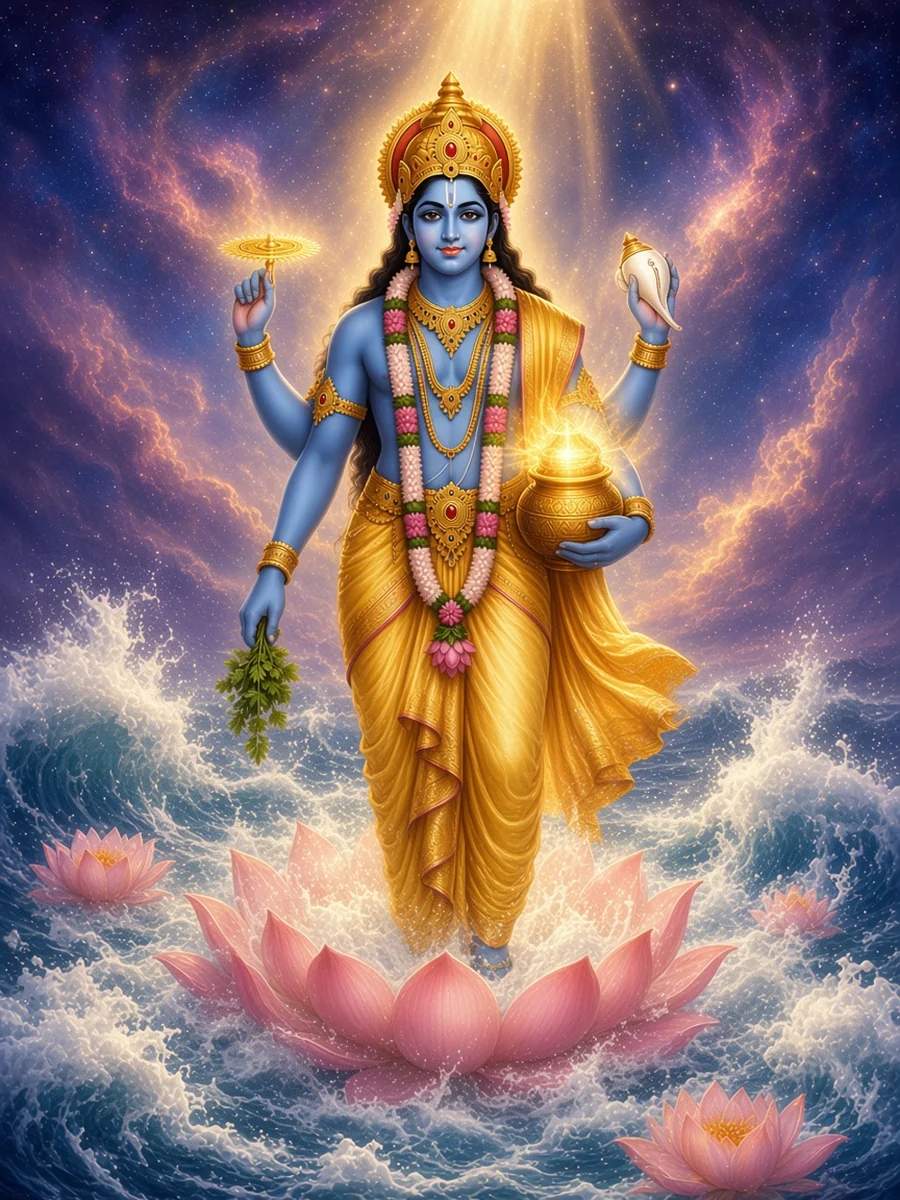
The physician of the gods, who rose out of the churned ocean of milk carrying the pot of amrita. The Bhagavata counts him among Vishnu's appearances and calls him the master of Ayurveda, the science of life.
Was Dhanvantari a king?
The Harivamsha and the Vishnu Purana say he was born again as the son of a childless king of Kashi and divided medicine into eight branches. The old book of surgery that bears Sushruta's name opens with its pupils at the feet of Divodasa Dhanvantari, king of Kashi.
Why is he worshipped on Dhanteras?
The thirteenth day before Diwali is kept as his birthday, Dhanvantari Jayanti, and people pray to him for health. No Purana gives that date; it belongs to the festival.
Is he in the snake stories too?
Yes. The Brahmavaivarta Purana has him fight the snake goddess Manasa, and in the Bengali Manasa poems he is the snake doctor no bite could kill, until Manasa found his weak spot.

Artwork ›

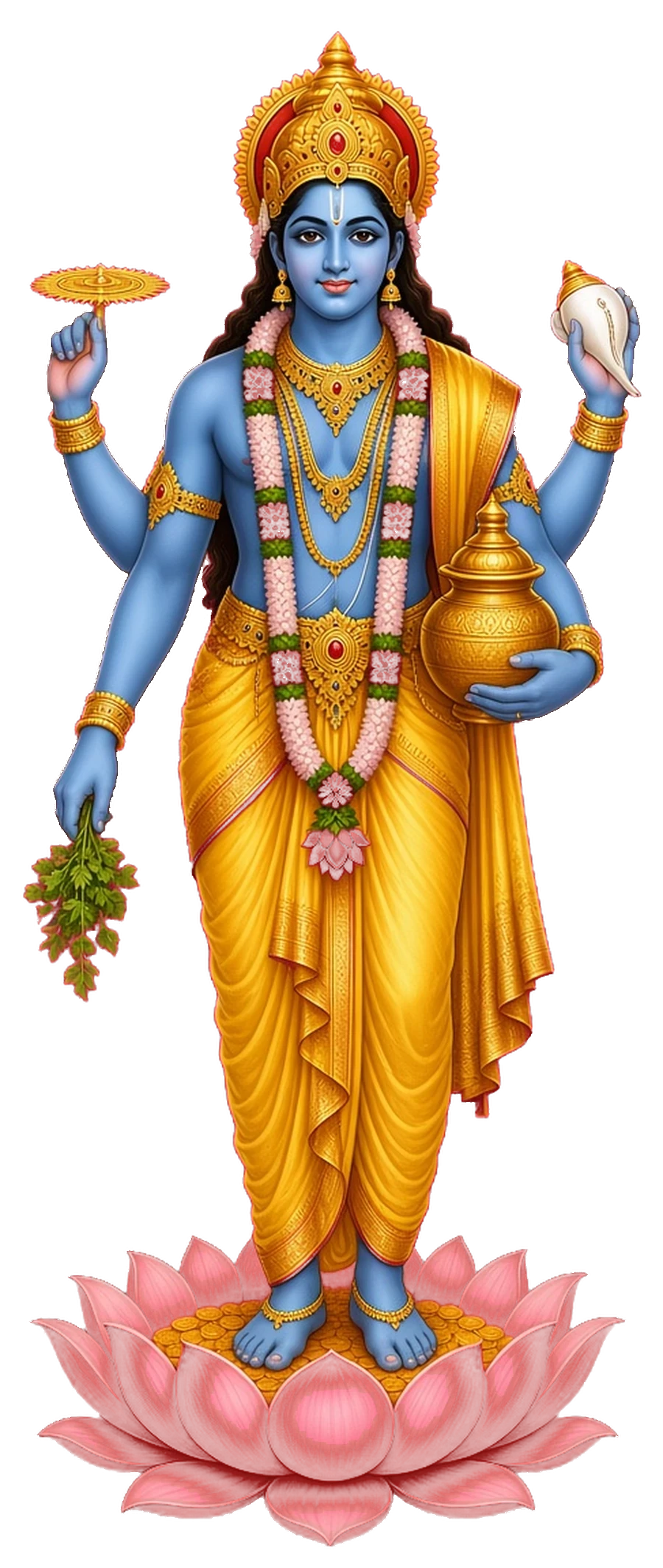
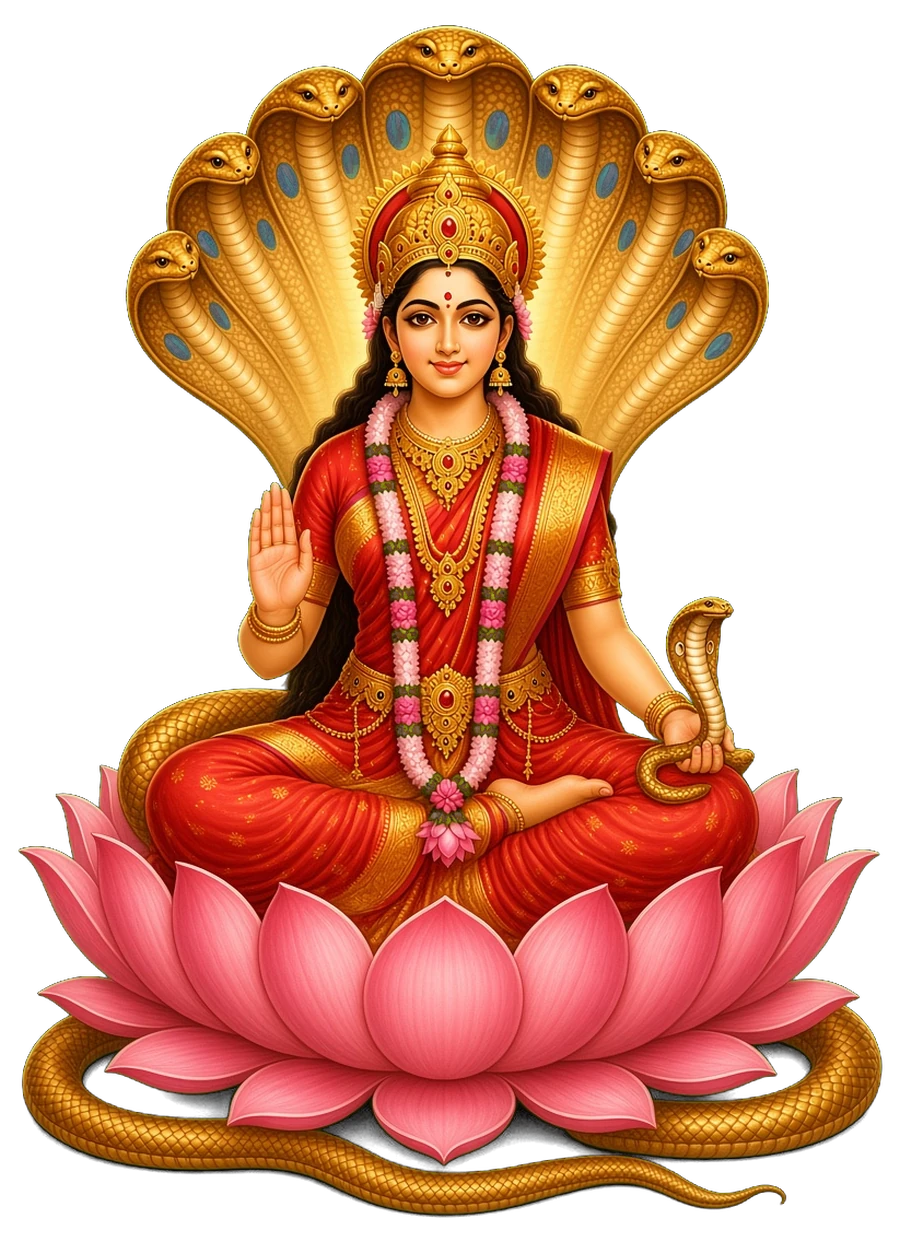
Dhanvantari rises from the ocean of milk The physician of the gods

For kids

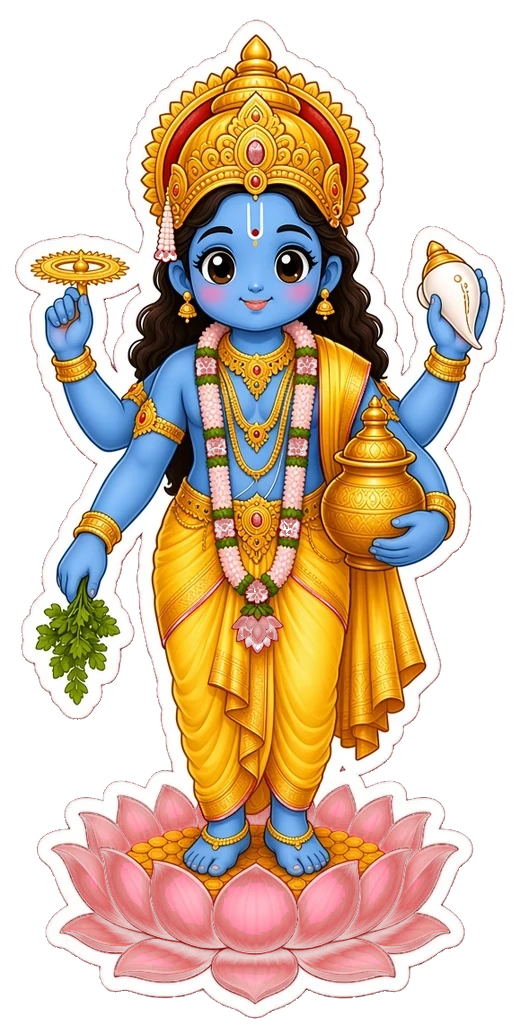
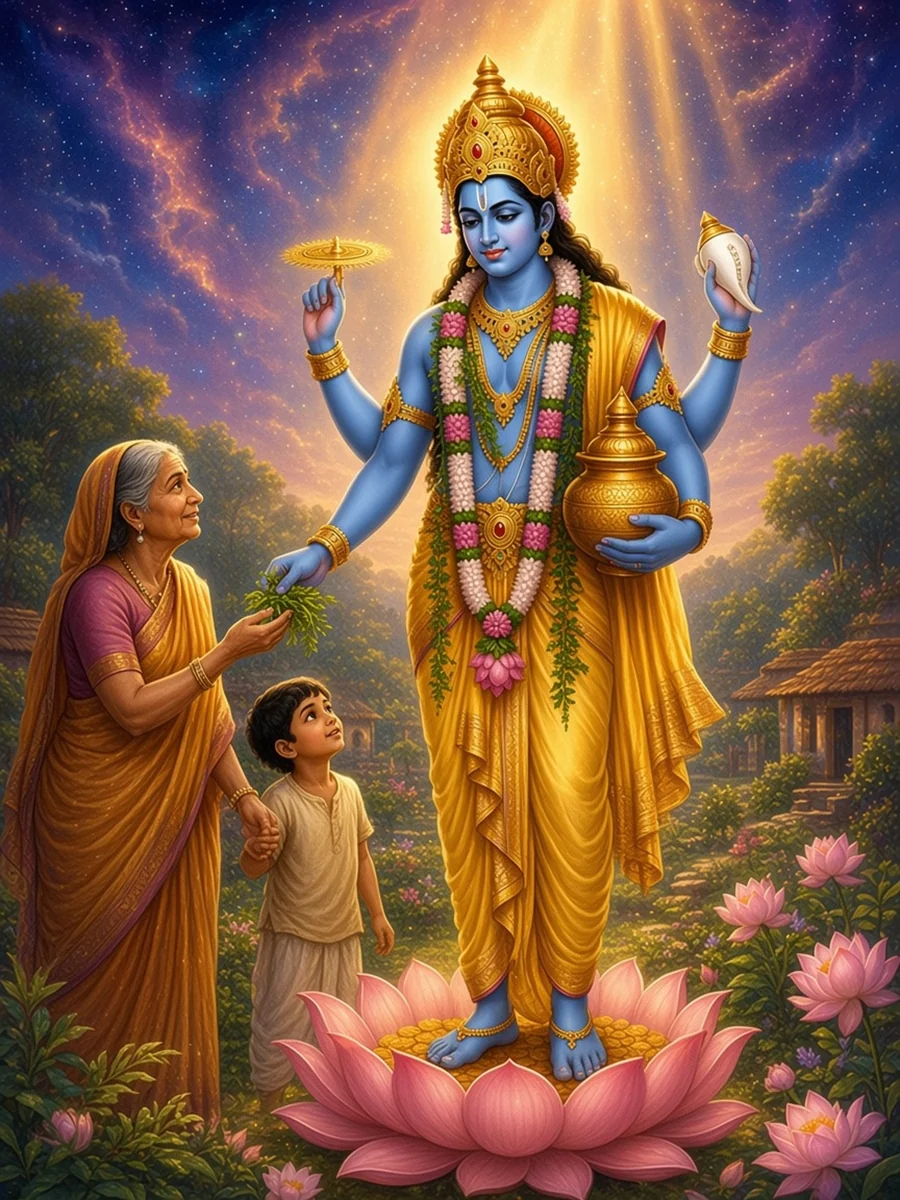
Nectar of health
Nectar of health
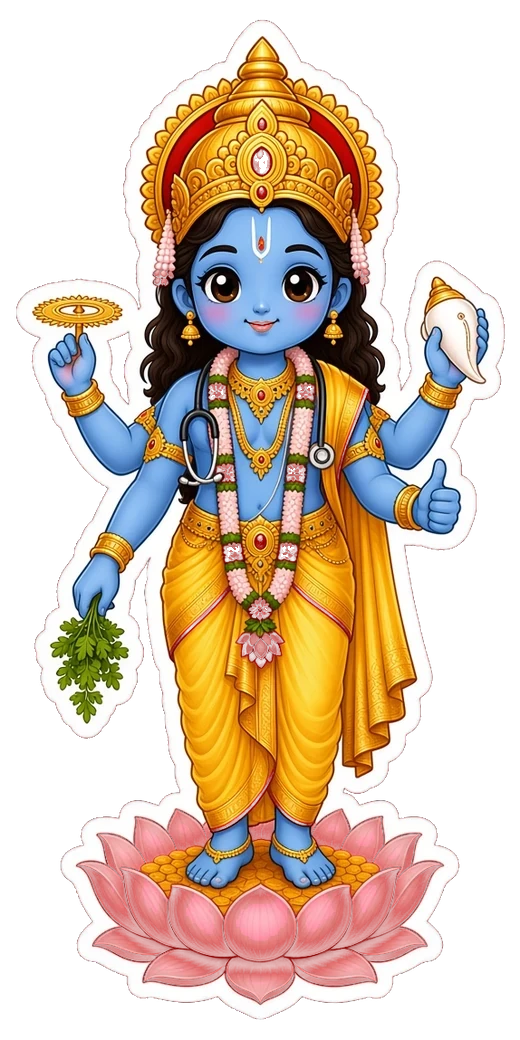
Doctor of the gods
Doctor of the gods

At a glance

TraditionVaishnava
FormA young

dark man in yellow silk with long arms, a broad chest and a neck lined like a conch, garlanded and wearing pearl earrings

In his handsThe pot of amrita

with four arms, the conch and the discus as well, and a leech or a bundle of herbs

Who Dhanvantari is

Dhanvantari is the physician of the gods, the god of Ayurveda, the old Indian science of life. The Puranas give him two births. In the first he rises out of the ocean of milk at the end of the churning, a dark young man in yellow silk with the pot of amrita in his hands. In the second he is born to a childless king of Kashi, learns medicine from the sage Bharadvaja, and divides it into the eight branches that physicians still name.

The Bhagavata says who he is in a single line:

Sa vai bhagavatah sakshad vishnor amshamsha-sambhavah, dhanvantarir iti khyata ayur-veda-drg ijya-bhak: he was born of a portion of a portion of Vishnu himself, known as Dhanvantari, the seer of the science of life, who has a share of the sacrifice (Bhagavata Purana 8.8.34).

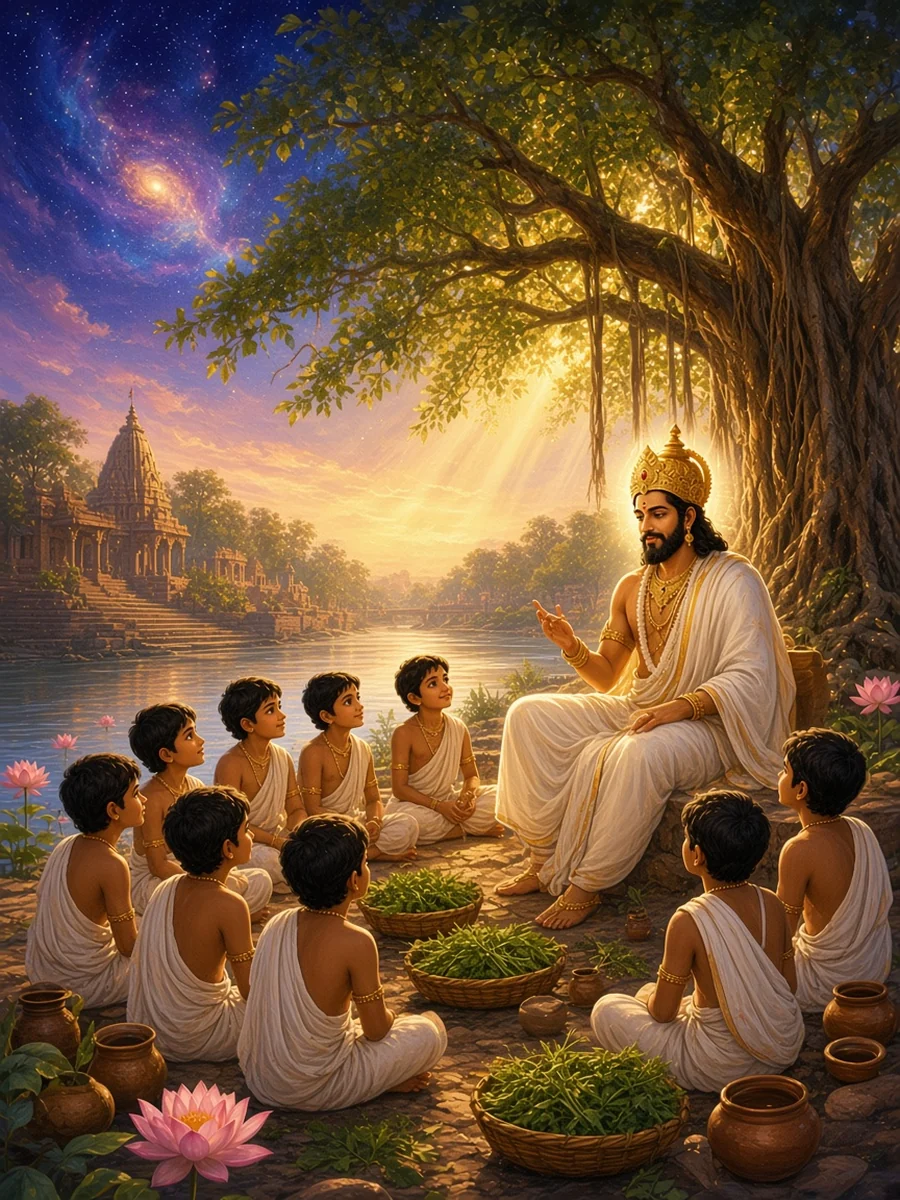
That share was what he asked for, and the Harivamsha says Vishnu could not give it to one born after the gods; he was promised fame and a second birth instead. The book of surgery that carries Sushruta's name opens in his ashram at Kashi, where seven pupils ask him to teach them and, at their asking, he begins with surgery.

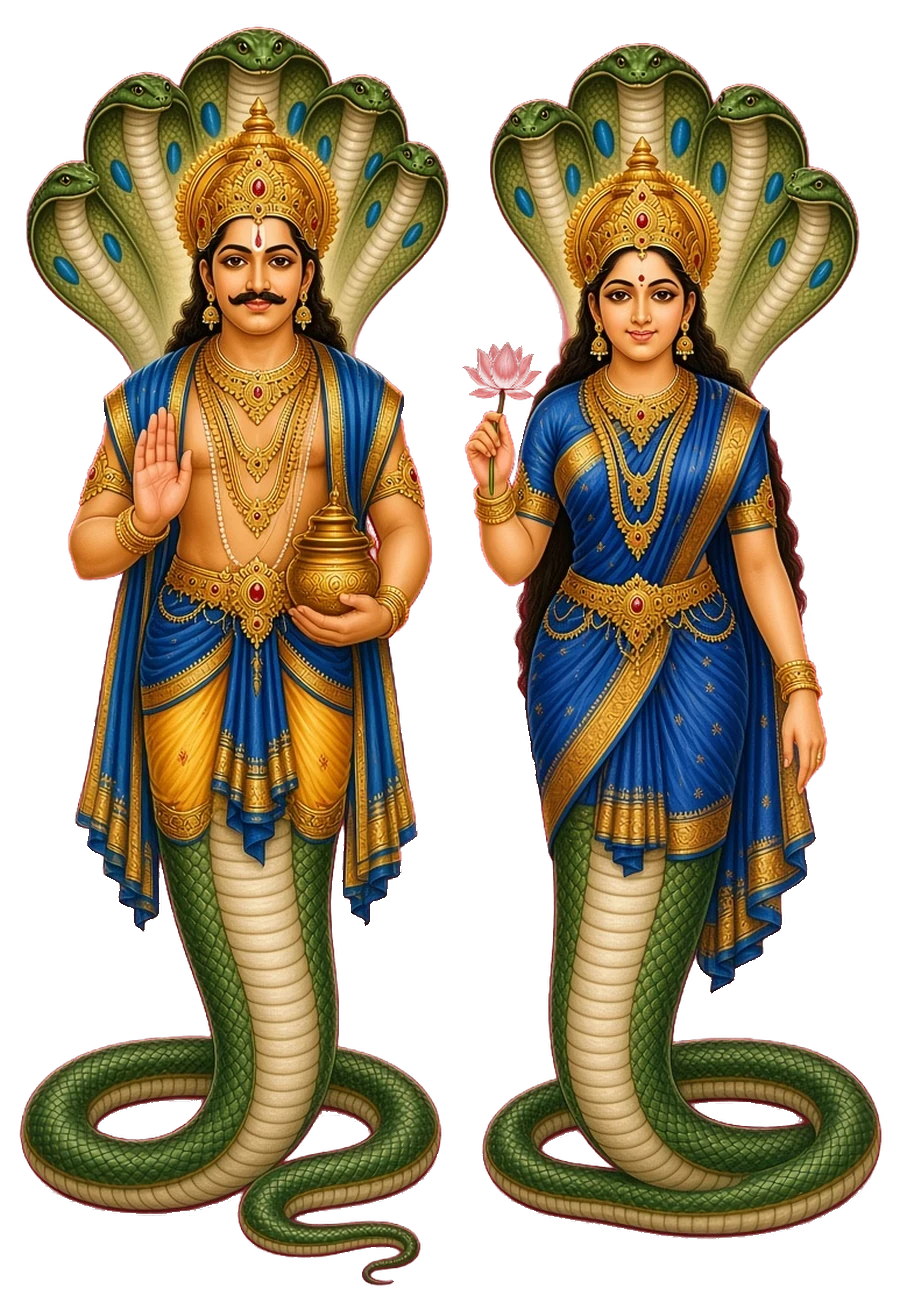
The Brahmavaivarta Purana and the Bengali poets add a stranger career. On the road to Kailasa his pupils fight the serpent king Takshaka, and the goddess Manasa comes to settle it. In the Manasamangal poems he is the snake doctor who keeps undoing Manasa's work for the merchant Chand, and every poet has to explain how a man no bite could kill was killed. The Brahmavaivarta and the poet Bipradas also make him the healer who set out to save King Parikshit from Takshaka and was turned back on the road.

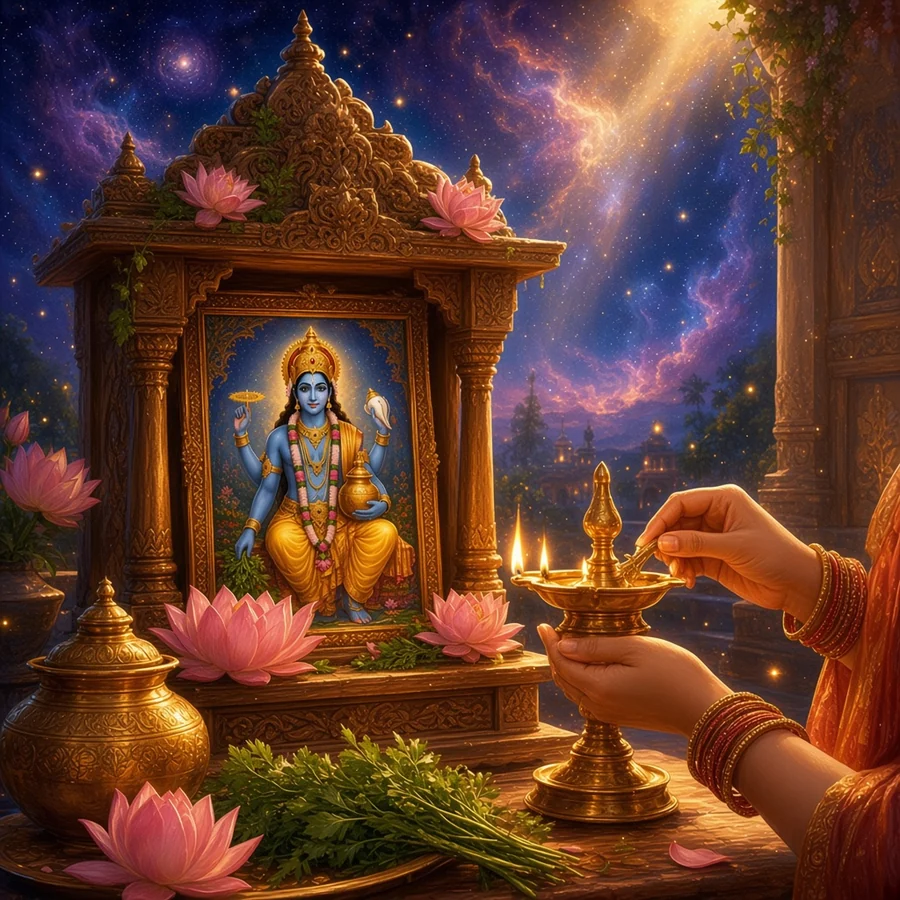
He is worshipped on Dhanteras, before Diwali, and in Kerala, where Ayurveda is a living practice, he has temples of his own at Thottuva and Nelluvai.

His stories on this site: The Jewel on the Serpent's Head, The Banyan That Grew Back and The Grain Under the Plate; with Vishnu, The Physician Who Rose from the Sea and Mohini and the Pot of Nectar; and at the churning, The Twelve Days of the Pot and The Garland in the Dust.
Before the Puranas

The Vedic roots of Dhanvantari

The Vedas do not know Dhanvantari. The physicians of the Rigveda are the Ashvins, the twin horsemen who heal the blind and the lame, and Rudra, whom a hymn calls the best of physicians. No hymn names a god who rises from the sea with medicine. Dhanvantari first appears in the household rite: the Laws of Manu (3.85) list him after Agni, Soma and the All-gods among those who receive the daily offering.

The Puranas gave him a story. The epics and the Puranas set him at the churning of the ocean, among the last treasures to rise, carrying the amrita itself; the Ramayana's first book and the Bhagavata (8.8) both tell it, and the Bhagavata counts him as the twelfth of Vishnu's appearances (1.3.17). The Harivamsha (29) adds his name Abja, the water-born, and his disappointed request for a share of the sacrifice, and it and the Vishnu Purana (4.8) give him the second birth in the line of the kings of Kashi, with Divodasa as his great-grandson.

The medical tradition took the king and made him its teacher. The Sushruta Samhita opens with Divodasa Dhanvantari of Kashi receiving the pupils, and tells them that the science came down from Brahma through Prajapati, the Ashvins and Indra to him. Whether that teacher is the god, his descendant or a king who took the god's title, the texts leave open.

The snake doctor came last. The Brahmavaivarta Purana has him fight Manasa, and the Bengali Manasamangal poems, from Bipradas in 1495 on, make him the merchant Chand's ally against her, each with its own secret of his death. The Brahmavaivarta and Bipradas also put him in the Mahabharata's story of Parikshit, in the place the epic gives a Brahmin called Kashyapa. Today his day is Dhanteras, which India kept as National Ayurveda Day from 2016 to 2024.

See how the Vedic gods became the Puranic ones →

Related gods