As the Mahabharata tells it
Mahabharata, Adi Parva 42, 43 and 50 · the road to Hastinapura · 3 min read
A sage's son had cursed King Parikshit: in seven days the serpent Takshaka would bite him and he would die. The king did not wait for it in the open. He had a house built on a single pillar and set guards round it day and night, and inside it he kept physicians, medicines and Brahmins who knew the mantras against poison. Not even the wind could get in.
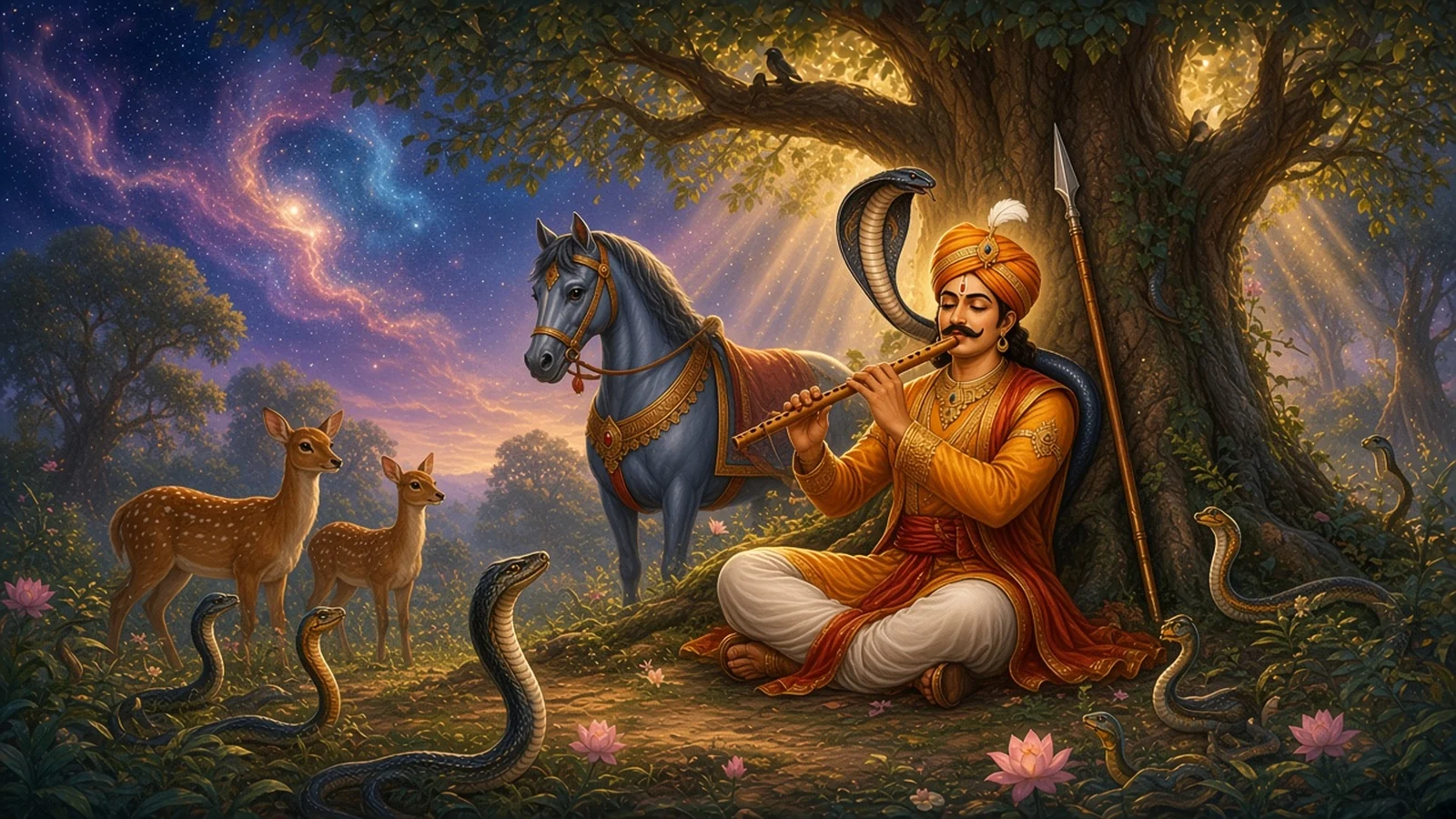
On the seventh day a learned Brahmin named Kashyapa was on the road to the king's house, walking fast. He had heard what was coming, and he had made up his mind. "When the snake has bitten him," he thought, "I will cure him. There will be wealth in it, and merit too."
An old Brahmin stepped into his path. "Where are you going in such a hurry?"
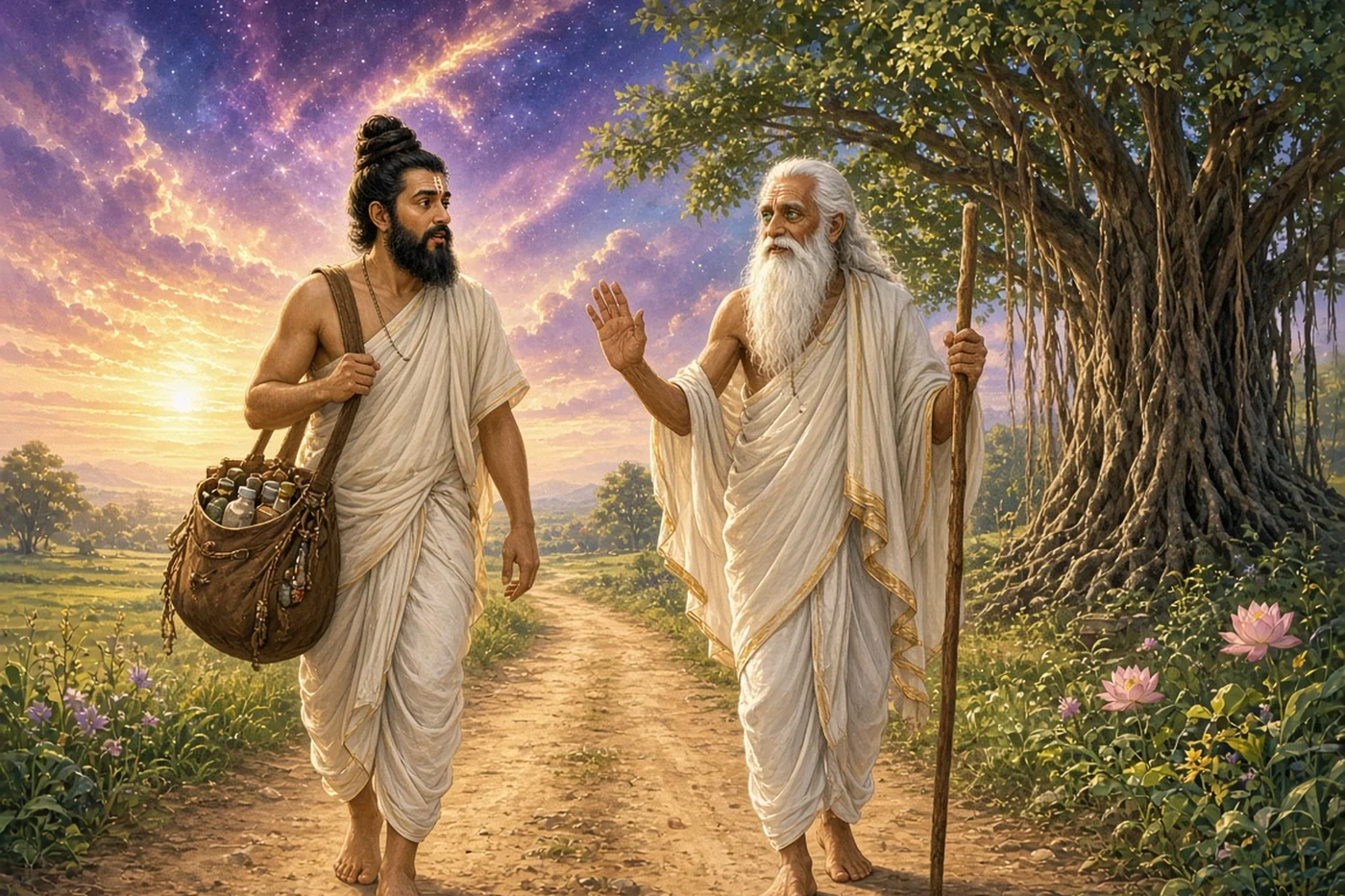
"To King Parikshit," said Kashyapa. "Today Takshaka will burn him with his poison. I mean to be there to cure him the moment he is bitten."
"I am Takshaka," said the old man. "I am the one who will bite the king. Turn back. No one I bite can be cured."
"I can cure him," said Kashyapa. "I have the learning for it."
There was a great banyan beside the road. Unseen by either of them, a man had climbed into its branches to break off dry wood for a sacrificial fire.
"Then show me," said Takshaka. "I will bite this tree. Bring it back, if your mantras are as good as you say."
"Bite it," said Kashyapa.
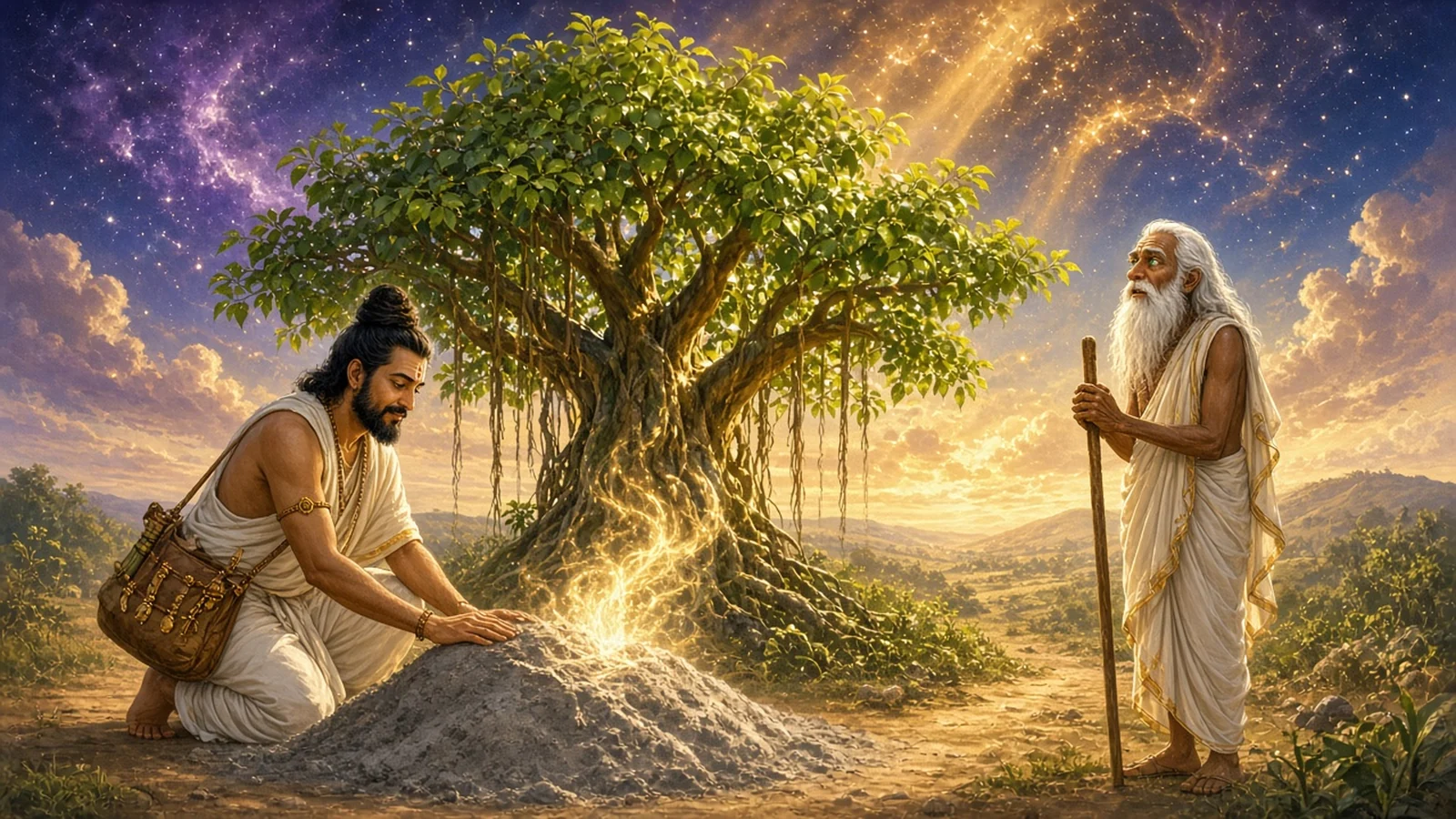
The serpent bit the banyan. The poison ran into it and the whole tree blazed up, trunk, branches, leaves and the man hidden in them, until nothing was left but a heap of ashes.
Kashyapa knelt and gathered up the ashes. "Watch," he said, "what my knowledge can do with a lord of the forest."
First there was a sprout. Then the sprout put out two leaves. Then a stem rose, and branches spread from it, and in a little while the banyan stood over the road again with all its leaves, as if nothing had happened. The man in its branches was alive in it too.
Takshaka looked at the tree for a long moment.
"It is no wonder that you can undo my poison," he said. "But tell me, what are you hoping to be paid? I will give you more than the king would. And think. That king is under a Brahmin's curse, and his life has been cut short. If you go and fail, all the fame you have will go dark, like the sun in an eclipse."
"I am going for wealth," said Kashyapa. "Give it to me, and I will turn back."
Before he took it, he sat down by the road and turned his mind on the king. In that stillness he saw that Parikshit's life had truly run out. Then he took as much as he wanted from Takshaka and walked home.
Takshaka went on to Hastinapura. How he got past the guards, inside a fruit, is another story.
Years later Parikshit's son Janamejaya was king, and he asked his ministers how they knew what had passed on that empty road.
"A man was in the tree," they said. "He was burnt with it, and the Brahmin's knowledge brought him back with it. He came to us and told us every word."
Janamejaya wept. "If that Brahmin had reached the gate, my father would have lived," he said. "Takshaka turned him back out of spite."
As the Brahmavaivarta and the Bengali poets tell it
Brahmavaivarta Purana, Prakriti Khanda 46 · Bipradas's Manasa Vijaya, Bengal · 1 min read
In the Brahmavaivarta Purana the healer on the road has another name. The young sage Shringi touched the water of the Kaushiki river and spoke the curse, and King Parikshit went down to Gangadvara, where the Ganga leaves the hills, and spent his seven days listening to the teachings of dharma.
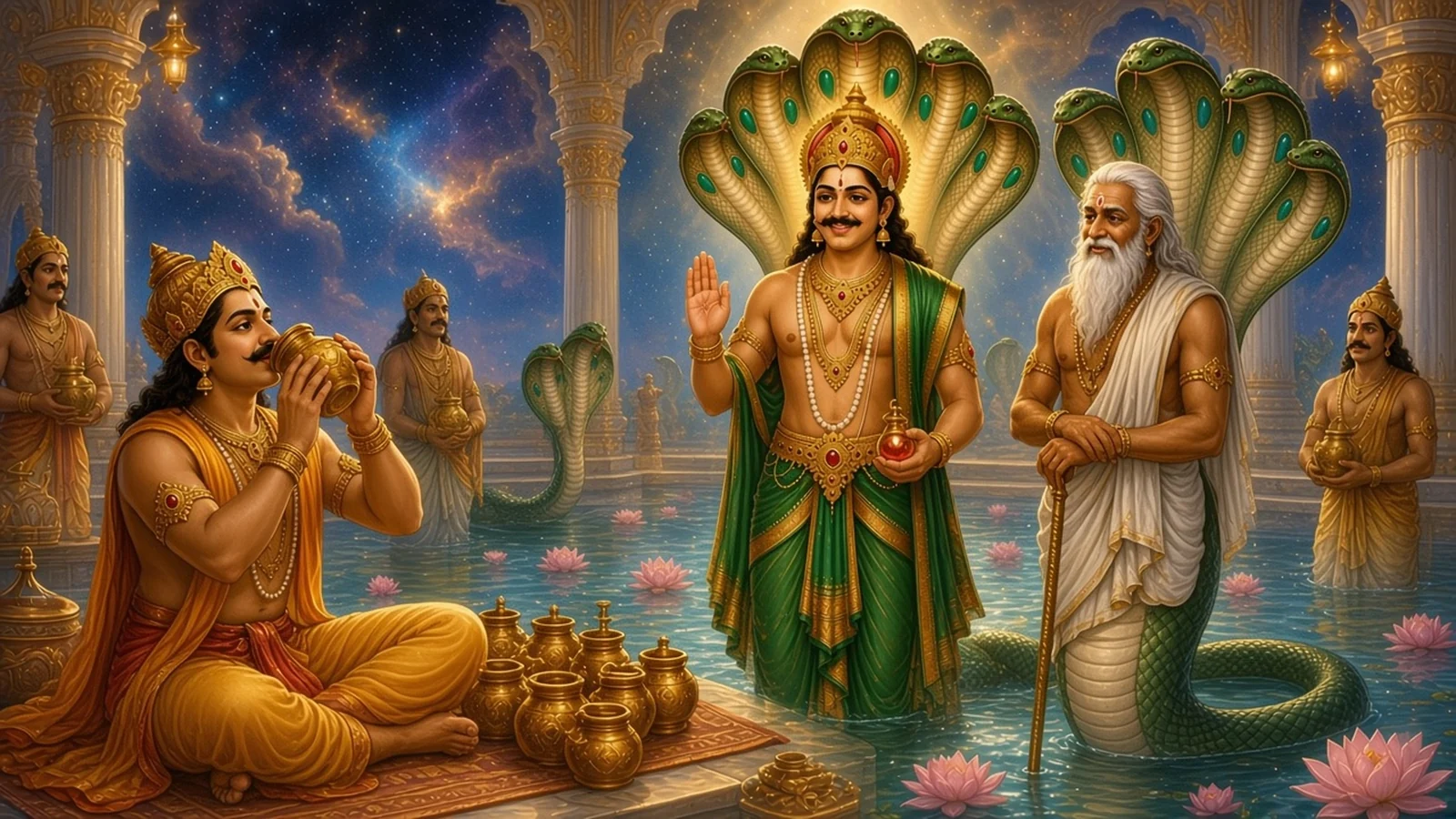
When the seven days were over, Dhanvantari was on his way to set the king free, and on the road he saw Takshaka coming. The two of them stopped and talked. There was no fight in it. They liked each other, the Purana says, and Takshaka, of his own free will, gave Dhanvantari a fine jewel. The physician took it and went home well pleased. Takshaka went on and found the king lying on his couch, and Parikshit died with his mind on Hari and went to Vaikuntha.
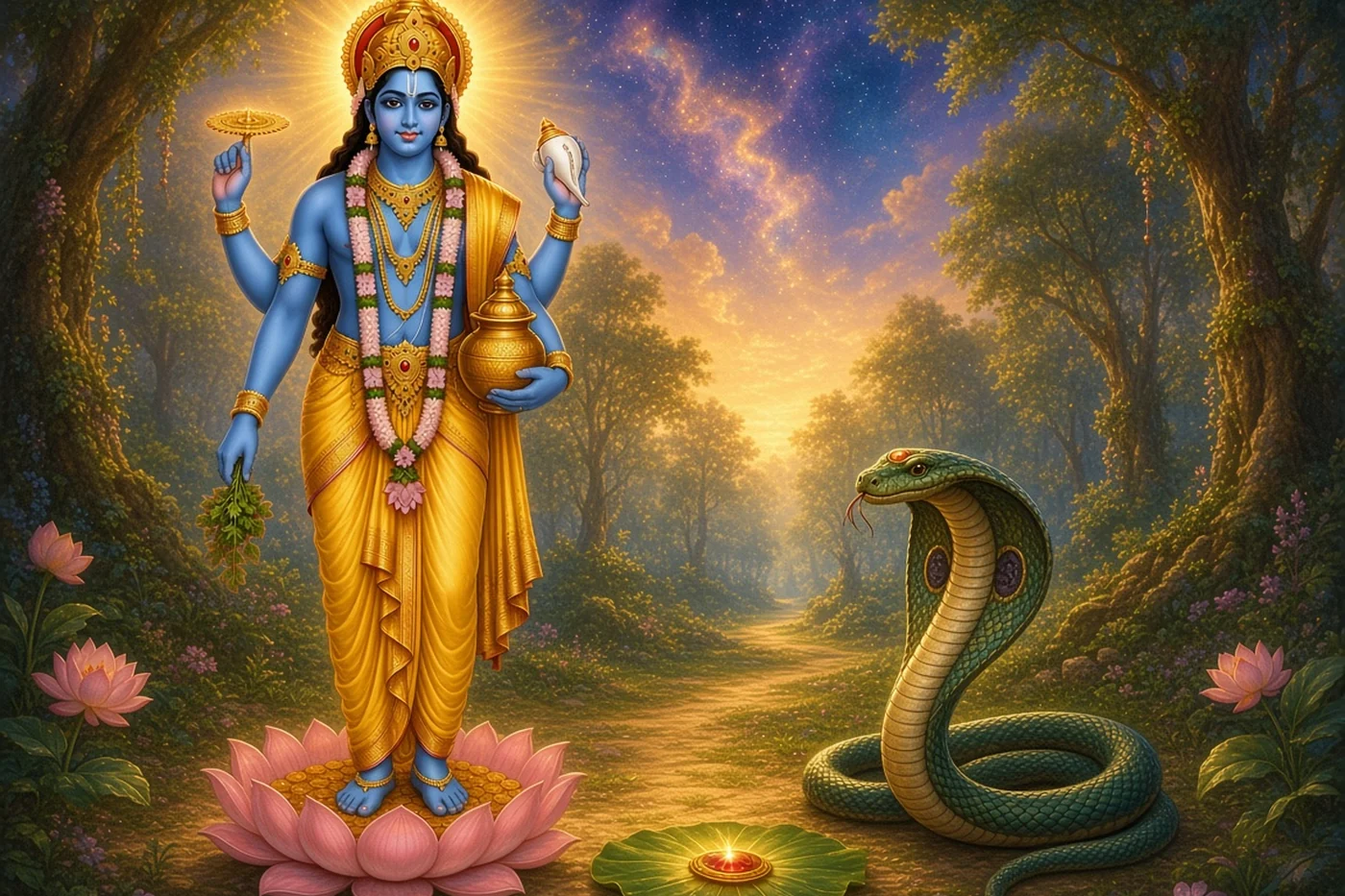
The Bengali poet Bipradas, writing in 1495, also sends Dhanvantari, but in his telling the king has six days, and it is his ministers who think of the doctor.
"Send for the ojha Dhanvantari," they tell him. "He beat the great ojha Sanka of the Dhaval mountain, and that is why they call him Sanka Dhanvantari."
The king sends for him, and on the way the doctor meets Takshaka, whom the sage has sent. This time there is a contest, and the serpent loses it. Beaten, Takshaka has only one thing left to try. He pays Dhanvantari to stay away, and the king is bitten with no one there to help him.