As the Mahabharata tells it
Mahabharata, Adi Parva 20 and 37 to 39 · Told across India · 3 min read
Kadru had a thousand sons, and every one of them was a serpent. Once she made a wager with her sister Vinata over the colour of a horse's tail, and she wanted her sons to cheat for her. They would not. So their own mother cursed them.
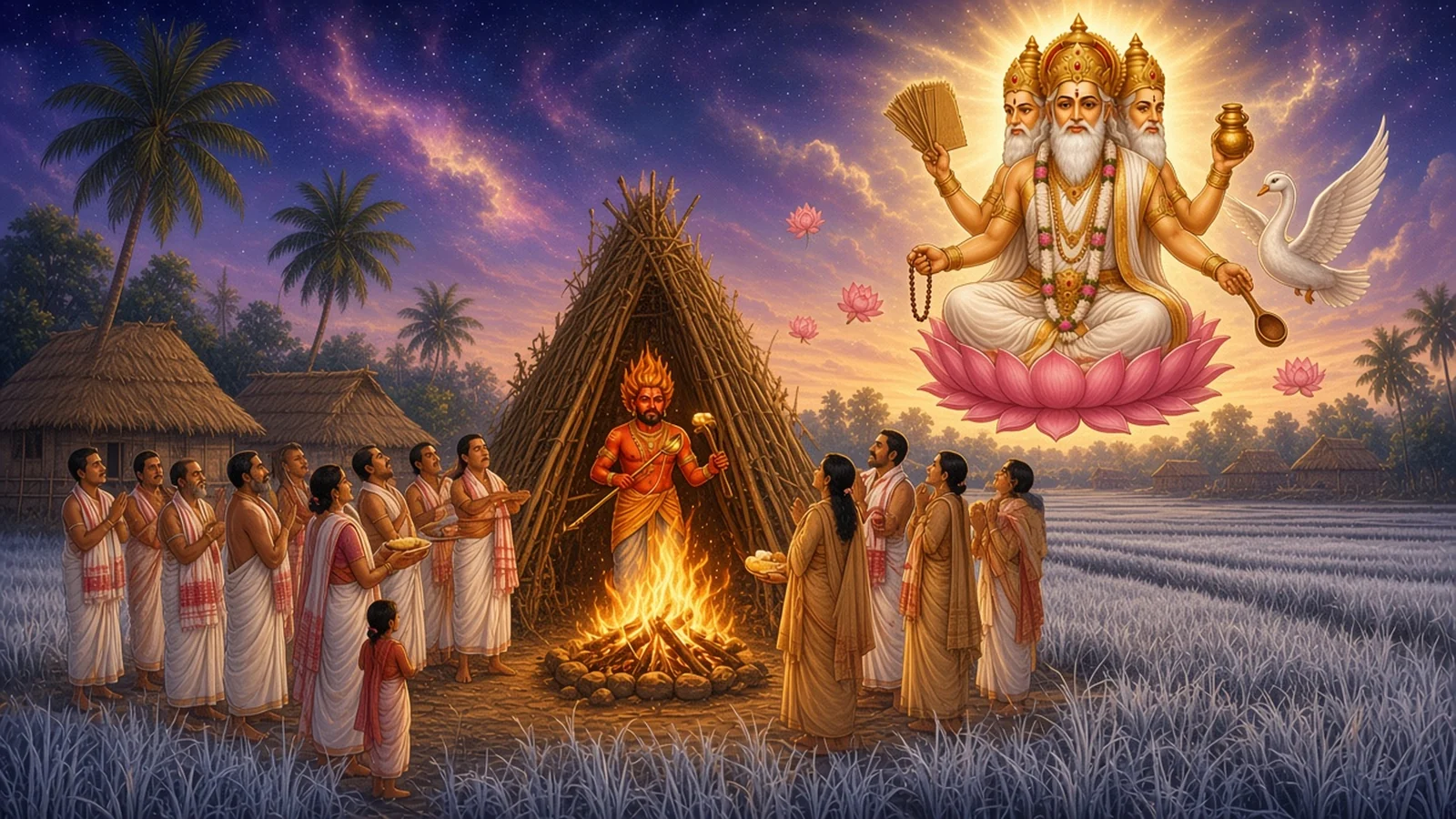
"Agni will eat you all," she said, "in the snake sacrifice of King Janamejaya."
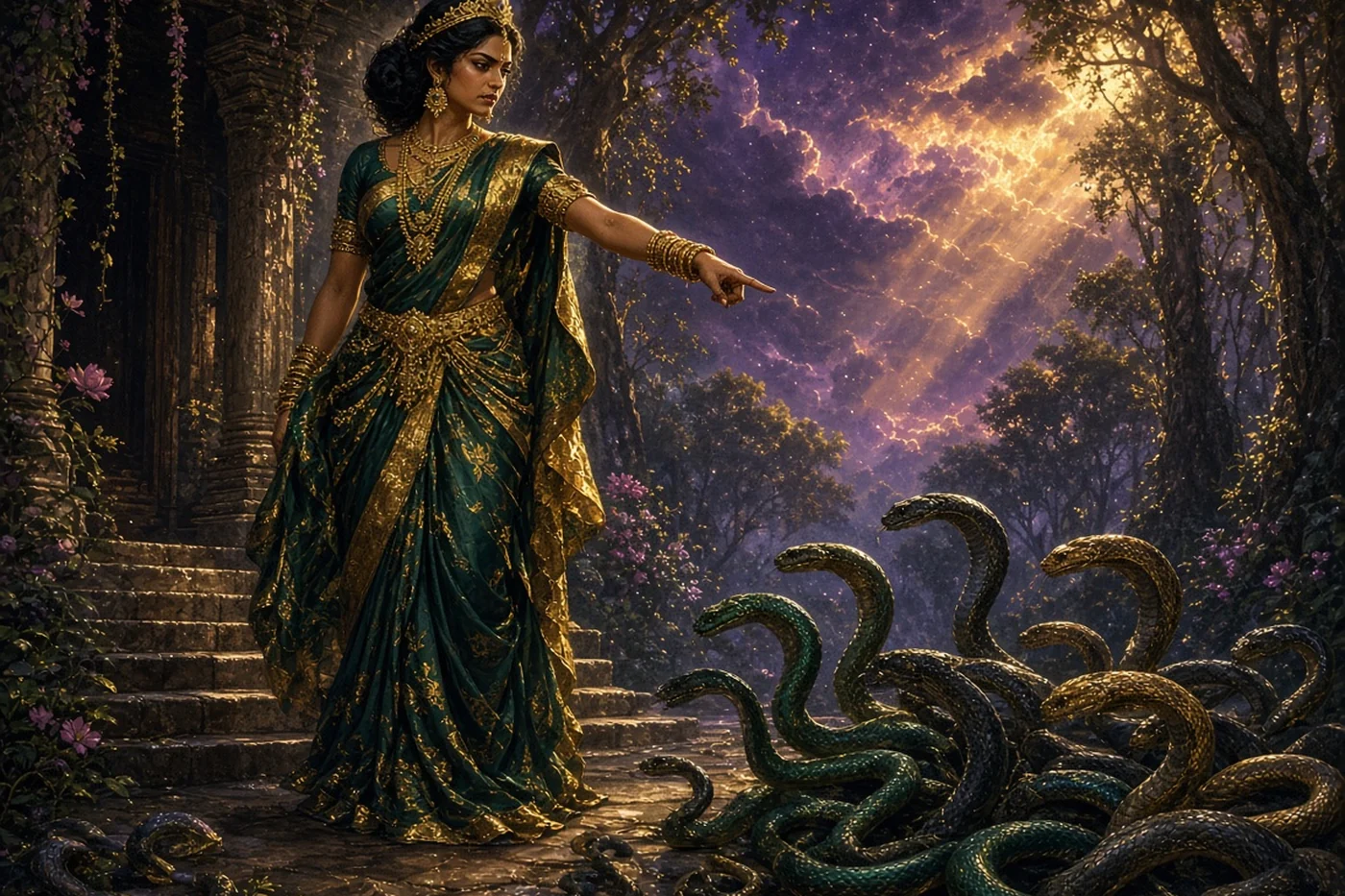
Brahma heard it and let it stand. There were too many snakes in the world, he said, and too many of them were cruel.
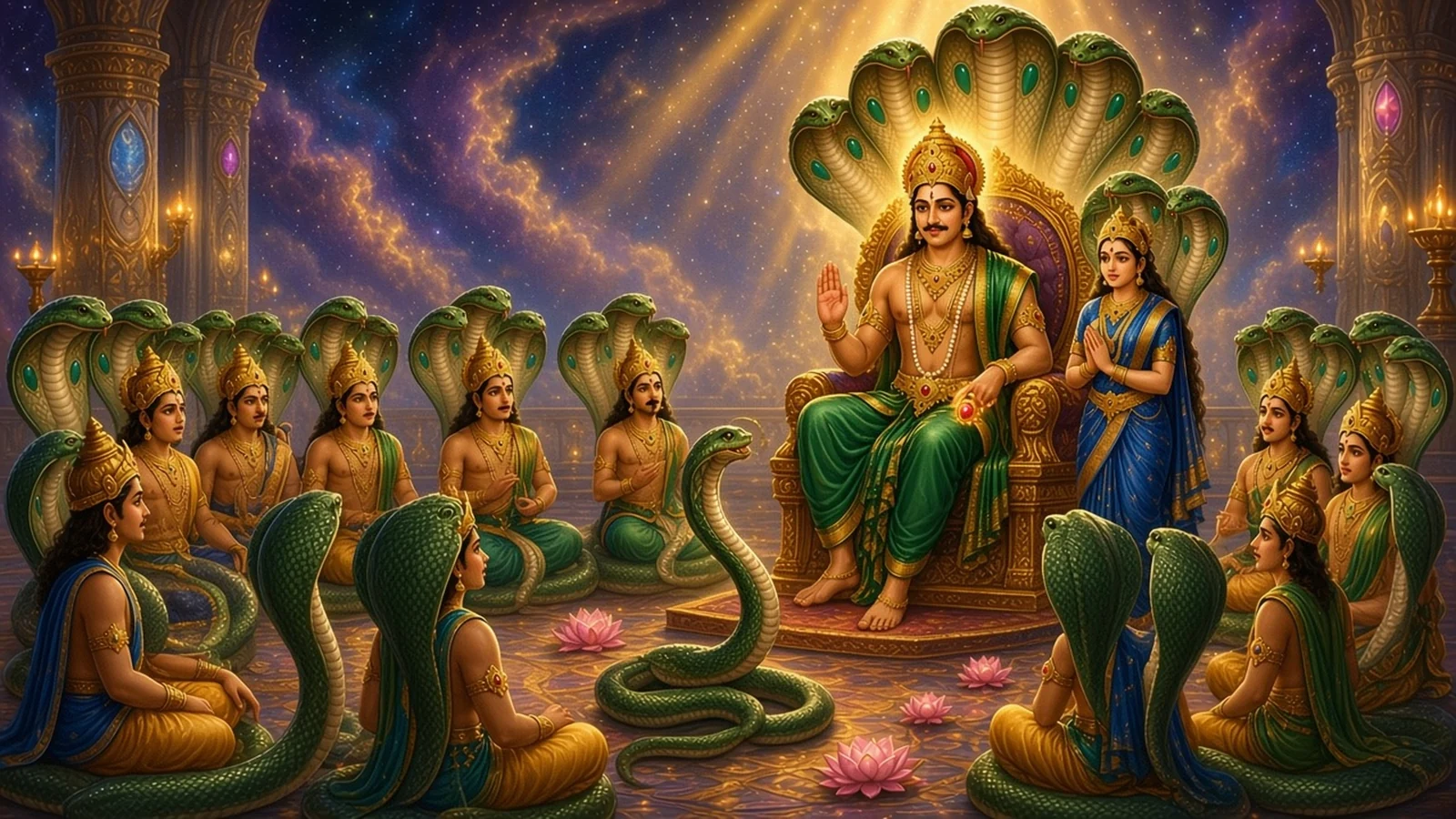
Vasuki, the king of the snakes, could not put the curse out of his mind. He called his brothers together, Airavata and all the rest, and laid the trouble before them.
"There is a cure for every curse," he said, "except a mother's. And this one was spoken in front of Brahma himself, and he did not stop it. I think our end has come. But the gods once found Agni when he hid in a cave, and we may yet find a way out. Think, all of you. How do we put out that king's fire before it is lit?"
The snakes were clever and they were frightened, and they all began to talk at once.
"We go to the king as learned Brahmins," said some, "and beg him not to hold the sacrifice."
"Better," said others, "we become his ministers. He will ask our advice, and we will tell him no."
"Bite the chief priest. No priest, no rite."
"Bite every priest who knows how to do it."
"Turn into clouds full of lightning and rain the fire out."
"Steal the soma in the night."
"Bite the crowd, hundreds of us, thousands, until they all run."
"Spoil the food. Seize the king while he bathes and keep him tied up at home. Or simply bite the king, and the tree falls with its root."
Then the gentler snakes spoke. "Killing Brahmins is wrong," they said. "A wrong done to get out of danger only brings more ruin. In trouble we may do only what good people would do."
At last they all turned and looked at Vasuki.
He was quiet a long while. "None of this sits well with me," he said. "I think only our father Kashyapa's grace can save us. I do not know what is best for my people or for myself. But whatever I choose, the praise or the blame will be mine alone."
Then a serpent named Elapatra spoke up.
"The king cannot be stopped," he said. "This fear comes from fate, and fate is the only shelter left to us. But listen. When our mother spoke the curse, I was very small. I was curled in my own mother's lap, too frightened to move, and I heard the gods ask Brahma why he had let a mother curse her children. I heard his answer too. The cruel ones will burn, he said, but not the good. A sage named Jaratkaru will marry a wife who bears his own name, and their son Astika will stop the fire."
He turned toward Vasuki's sister, whose name was Jaratkaru.
"There she is," he said. "When that sage comes asking for a bride, give her to him. That is our way out."
"Well said!" cried the snakes. "Well said!"
From that day Vasuki looked after his sister with the greatest care.
Not long after, the gods and the asuras churned the ocean, and Vasuki was their rope. When it was over the gods went with him to Brahma.
"He has helped us," they said. "Take the weight of his mother's curse off him."
"Let him do what Elapatra said," Brahma answered. "The time has come. The sage is born and is doing his penance. Give him the girl when he asks."
So Vasuki set snakes to follow Jaratkaru wherever he went, and told them to come to him the moment the sage spoke the word wife.
As the Devi Bhagavata tells it
Devi Bhagavata Purana 2.12 · Told across India · 2 min read
In the Devi Bhagavata the curse comes in the story of how Astika was born, and the serpents hold no council at all.
Kadru and Vinata, two wives of the sage Kashyapa, saw the horse of the Sun and could not agree on its colour. Vinata said it was white. Kadru said it was black. Whoever was wrong, they agreed, would be the other's slave.
Kadru went to her sons. "Go and wind yourselves round that horse," she said, "so that it looks black."
Some of them would not. Their mother turned on them.
"Then fall into the fire of Janamejaya's sacrifice," she said.
The others did as they were told and coiled round the horse, and it looked black, and Vinata became her sister's slave until her son Garuda bought her freedom with the nectar of heaven. Even then the snakes never tasted it. Indra took the jar back while they were bathing, and when they licked the kusha grass where it had stood, the sharp blades split their tongues in two.
Vasuki was one of the sons his mother had cursed. He did not gather his brothers or weigh any plans. He and the other cursed snakes went straight to Brahma and asked for shelter.
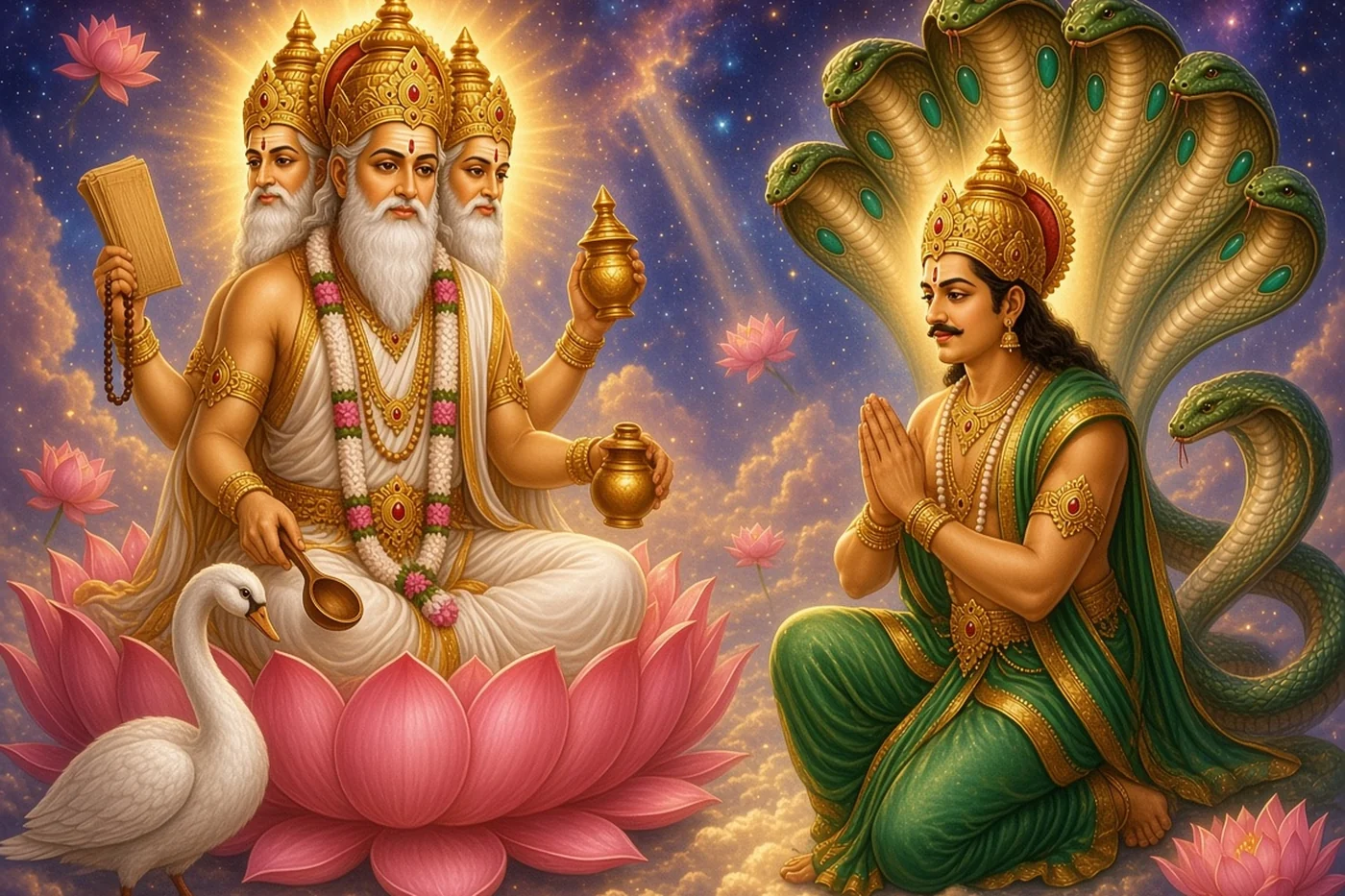
"Give Vasuki's sister Jaratkaru in marriage to the sage Jaratkaru," Brahma told them. "A son named Astika will be born to her, and he will surely save you."
So Vasuki went into the forest himself. He found the sage and humbly asked him to take his sister for his wife.
"I will," said the sage. "But if she ever goes against my wishes, I will leave her at once."
Vasuki agreed. The Devi Bhagavata goes on only a little further. When the sage had gone, his wife came home to her brother carrying his child, and Vasuki, who trusted the sage's word, gave her a home until the boy was born.