Devalok ← All gods
Also calledManasa DeviVishahariBishahariPadmaPadmavatiJagadgauriNageshvariJaratkaru

In short

Who is Manasa?
The snake goddess of eastern India, worshipped in Bengal, Bihar, Jharkhand and Assam to keep snakes away and to cure their bite. The poets of Bengal make her Shiva's daughter; the Puranas make her the mind-born daughter of the sage Kashyapa.
Why is she called the one-eyed goddess?
In the Bengali poems Shiva's wife Chandi takes her for a rival and wounds one of her eyes. The glance of the other eye can strike even a goddess down.
How is she worshipped?
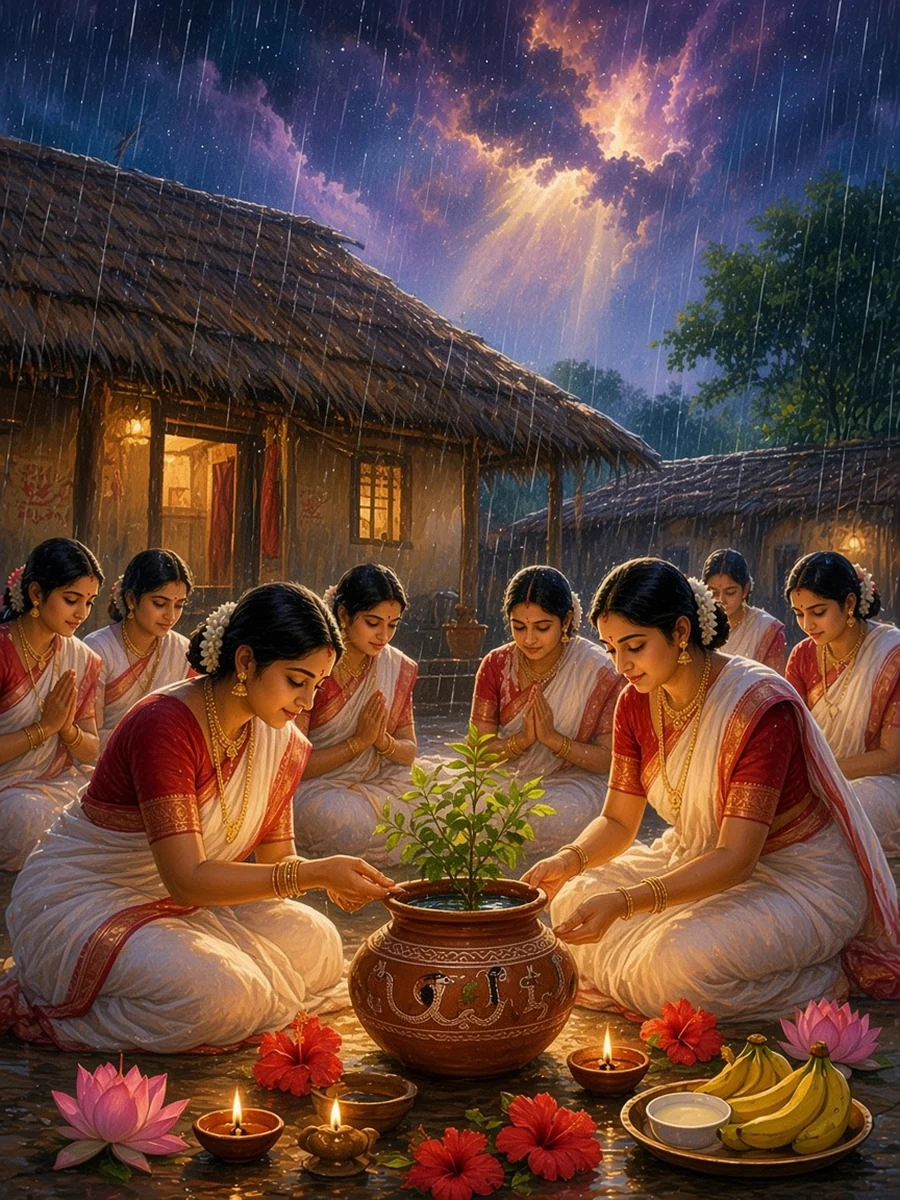
Often without an image. A twig of the spiny sij plant or a pot of water stands for her, and her days fall in the rains, when snakes are flooded out of their holes.
Who is her son?
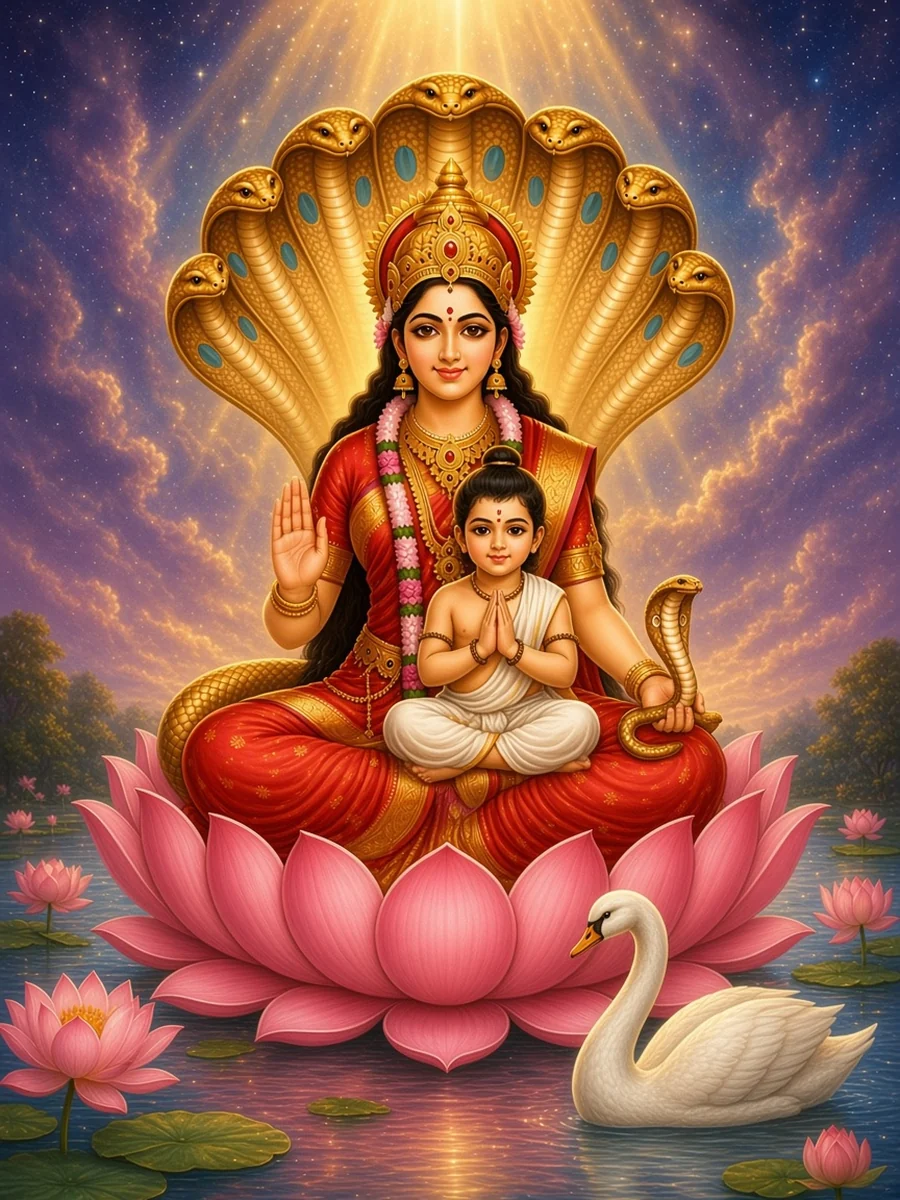
Astika, the boy who stopped King Janamejaya's snake sacrifice. His father, the sage Jaratkaru, left before he was born with the words "There is", and the boy was named for them.

Artwork ›

A pot of water and a twig of sij in a Bengal courtyard With her son Astika, who saved the serpents

For kids

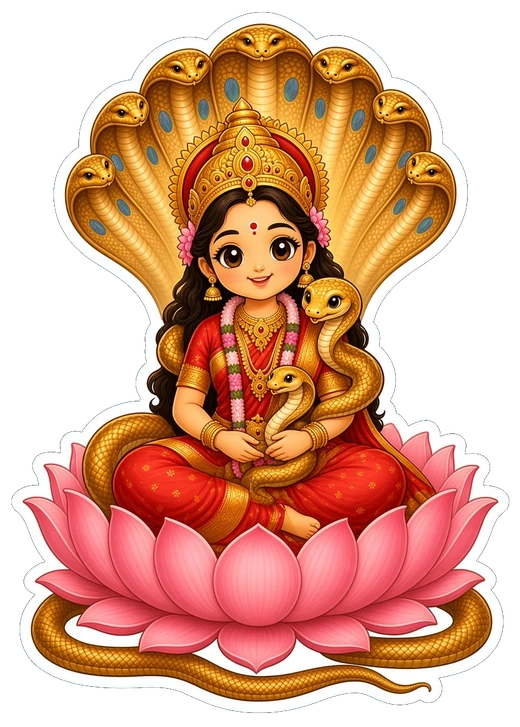
Totally harmless, promise
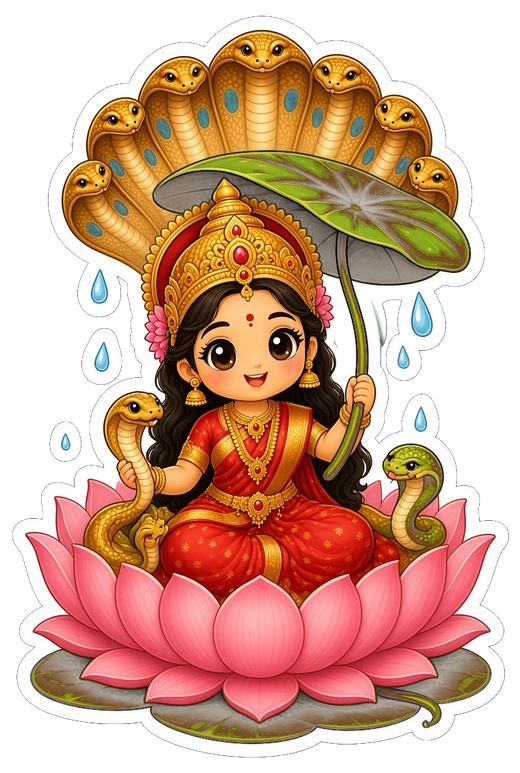
Monsoon is my season

At a glance

TraditionShakta and folk
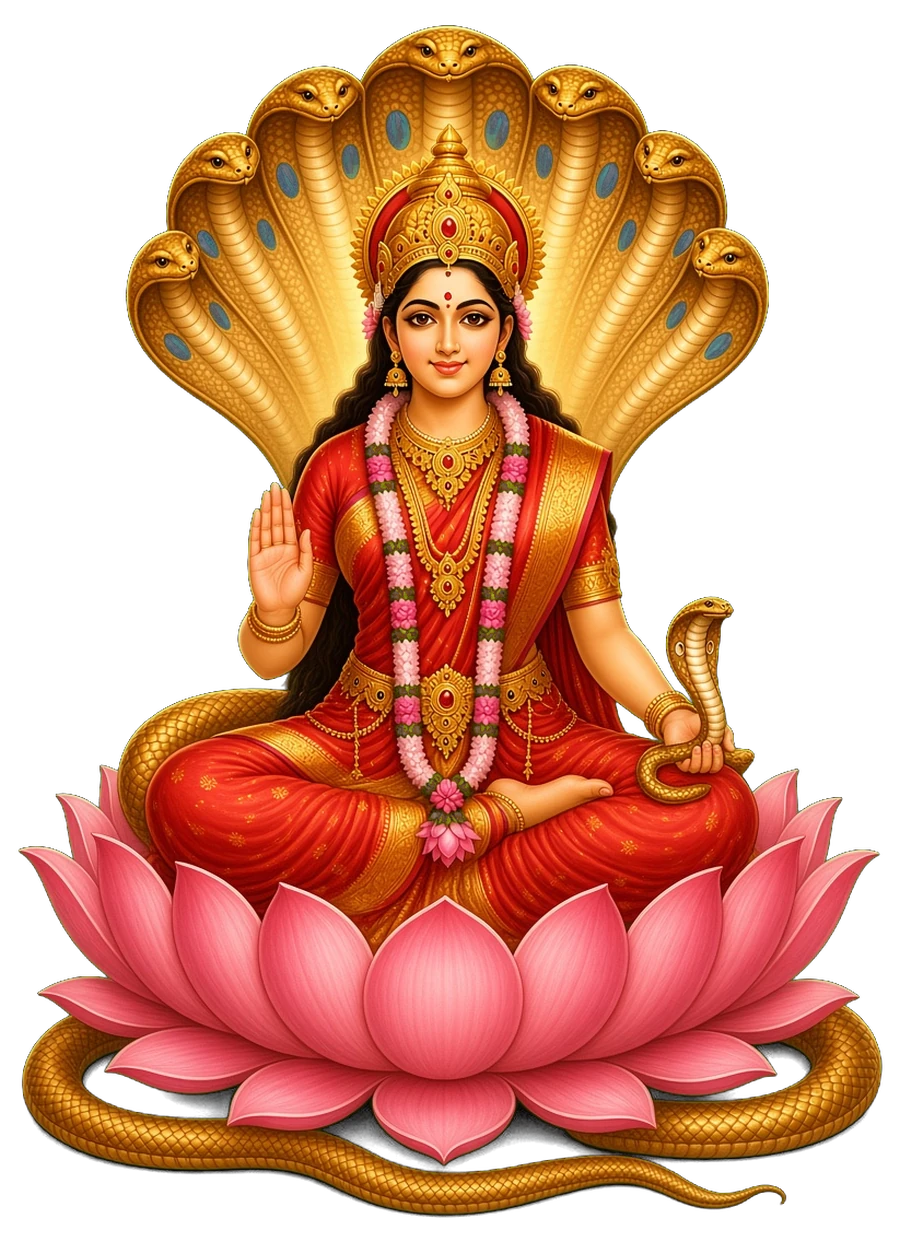
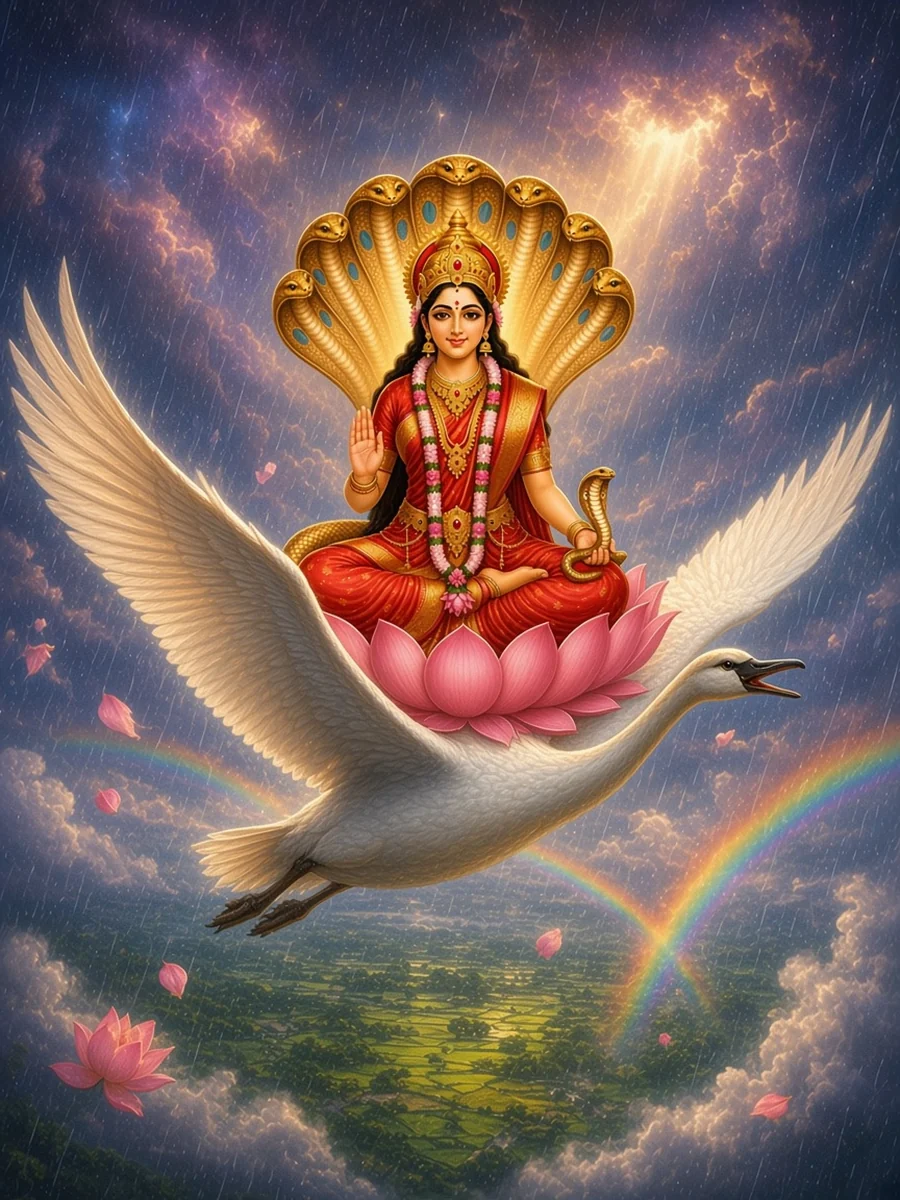
FormA golden woman in red

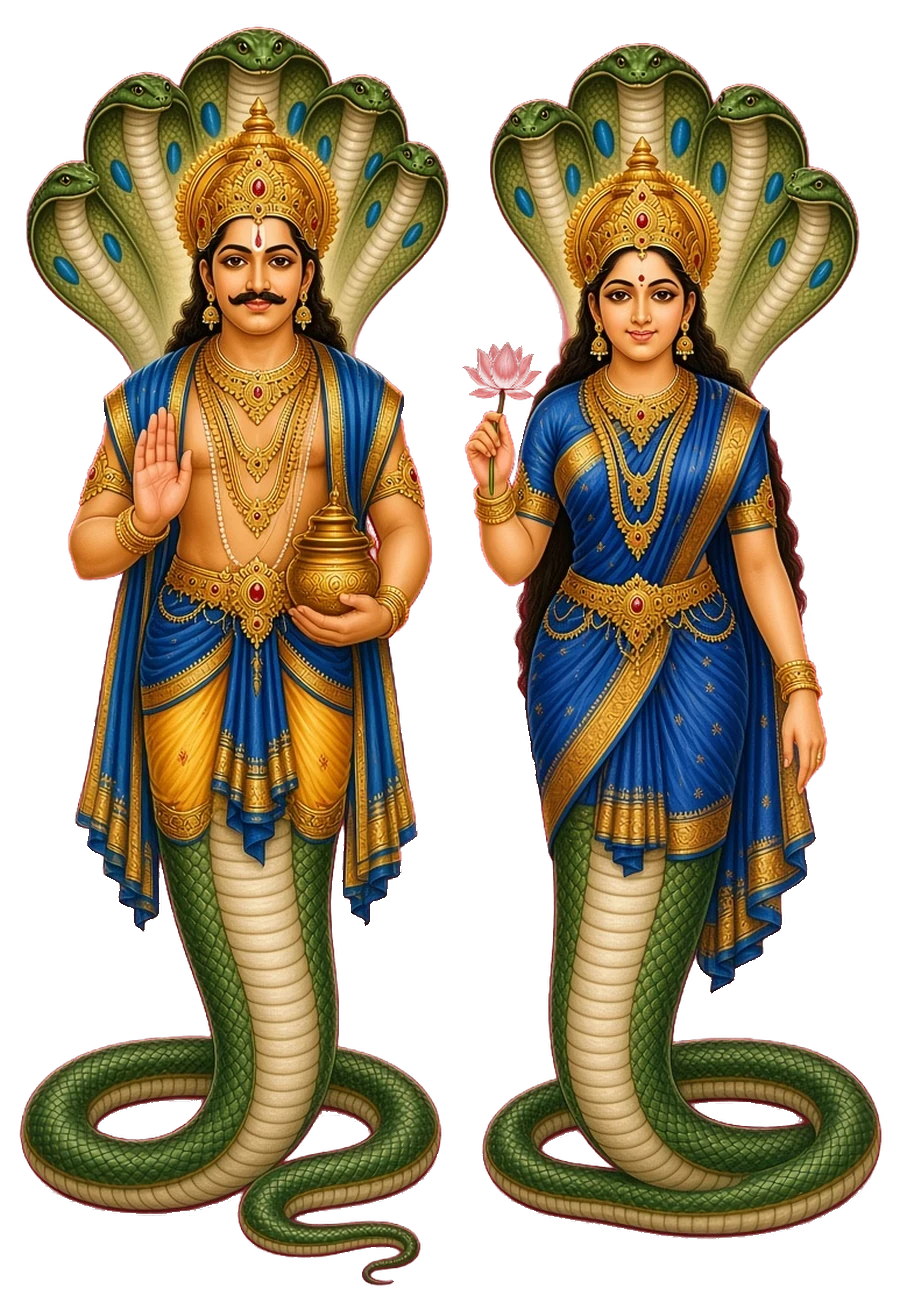
smiling, seated on a lotus or on a coiled snake under a canopy of seven cobra hoods

ArmsTwo or four

with a snake, a lotus, a conch and the hand that says do not fear

Who Manasa is

Manasa is the snake goddess of the east. In Bengal, Bihar, Jharkhand and Assam the rains drive the snakes out of their flooded holes and into the houses, and for as long as anyone remembers, the people of those plains have asked her to keep the snakes away and to take the poison out of a bite. Her name Vishahari means just that, the taker of poison.

Two very different stories tell where she came from. The poets of Bengal, who sang her in the long poems called the Manasamangal, say she was born from a drop of Shiva's power that fell through a lotus stalk into the world of the serpents, and that the serpent king Vasuki took her for his sister. When she found her father, his wife Chandi wounded her eye, and so the poems call her the one-eyed. The Devi Bhagavata and Brahma Vaivarta Puranas say instead that she came out of the mind of the sage Kashyapa, studied with Shiva and won Krishna's blessing by long penance. Both agree that she married the sage Jaratkaru and was the mother of Astika, who saved the serpents from King Janamejaya's fire.

The Puranas give her twelve names, and say that whoever repeats them need never fear a snake.

Jaratkarur Jagadgauri Manasa Siddhayogini, Vaishnavi Nagabhagini Shaivi Nageshvari tatha: Jaratkaru, the fairest in the world, Manasa, the perfected yogini, Vishnu's devotee, sister of the serpents, Shiva's pupil, queen of the serpents (the names of Manasa, Devi Bhagavata Purana 9.47).

What marks her above all is that she had to win her worship. In the poems no one honours her at first. Cowherd boys throw dust at her, and the merchant Chand Sadagar, who bows to Shiva alone, holds out against her through the loss of his ships and his sons. She wins them all in the end, and to this day a pot of water or a twig of sij in a courtyard is enough to stand for her.

Her stories on this site: The Daughter in the Flower Basket, The Bride Who Had His Name and The Old Woman Who Asked for Milk, then The Merchant Who Would Not Bow, Chand Sadagar's long war with her and Behula's voyage. Her son's great day is told in The Boy Who Stopped the Fire.
Before the Puranas

The Vedic roots of Manasa

The Vedas do not know Manasa. They know serpents, the dragon Ahi whom Indra kills, and charms against snakebite in the Atharvaveda, and the household sutras lay down an offering to the serpents, the sarpabali, mostly on the full moon of Shravana. But no Vedic hymn names a goddess of the snakes. Manasa belongs to Bengal and the east, and her story was written down first in Bengali.

The oldest poet known to have sung her, Hari Datta, lived in Mymensingh in the twelfth or thirteenth century, and only twenty of his lines survive. The great Manasamangal poems came after him: Vijay Gupta's of 1484, Bipradas Pipilai's Manasa Vijaya of 1495, Narayan Deb's, which Assam sings as the Padma Purana, and Ketaka Das's. The historian D. C. Sen counted about sixty of them. In these poems she is Shiva's daughter, and her long quarrel with the merchant Chand, a devotee of Shiva, was read by Sen as the memory of a time when the followers of Shiva resisted the worship of the local goddesses.

The Sanskrit Puranas took her in later. The Brahma Vaivarta and the Devi Bhagavata make her Kashyapa's mind-born daughter, Shiva's pupil and Krishna's devotee, and fold in the Mahabharata's old tale of the sage Jaratkaru, who married the serpent king's sister, also called Jaratkaru. The historian P. K. Maity, who dated these Puranas no earlier than the fifteenth century, thought their explanations of her name were written to give her a Sanskrit pedigree, and read her birth from Shiva in the poems as the poets' way of bringing a goddess of the villages into his family.

Scholars have looked for her further back. B. Bhattacharya proposed that she is the Buddhist snake goddess Janguli under another name. Maity found a goddess called Manasa, worshipped on a lunar day with no snakes about her, in the Rajamartanda, an eleventh-century work ascribed to King Bhoja, and an image from the Pala period of a goddess under seven hoods with a child on her lap. He concluded that no snake goddess like her was known elsewhere in India, and that she grew up in Bengal from the time of the Palas onward.

See how the Vedic gods became the Puranic ones →

Related gods