As Bipradas sings it in the Manasa Vijaya
West Bengal · Kalidaha, Kailash and Sijuya hill · 3 min read
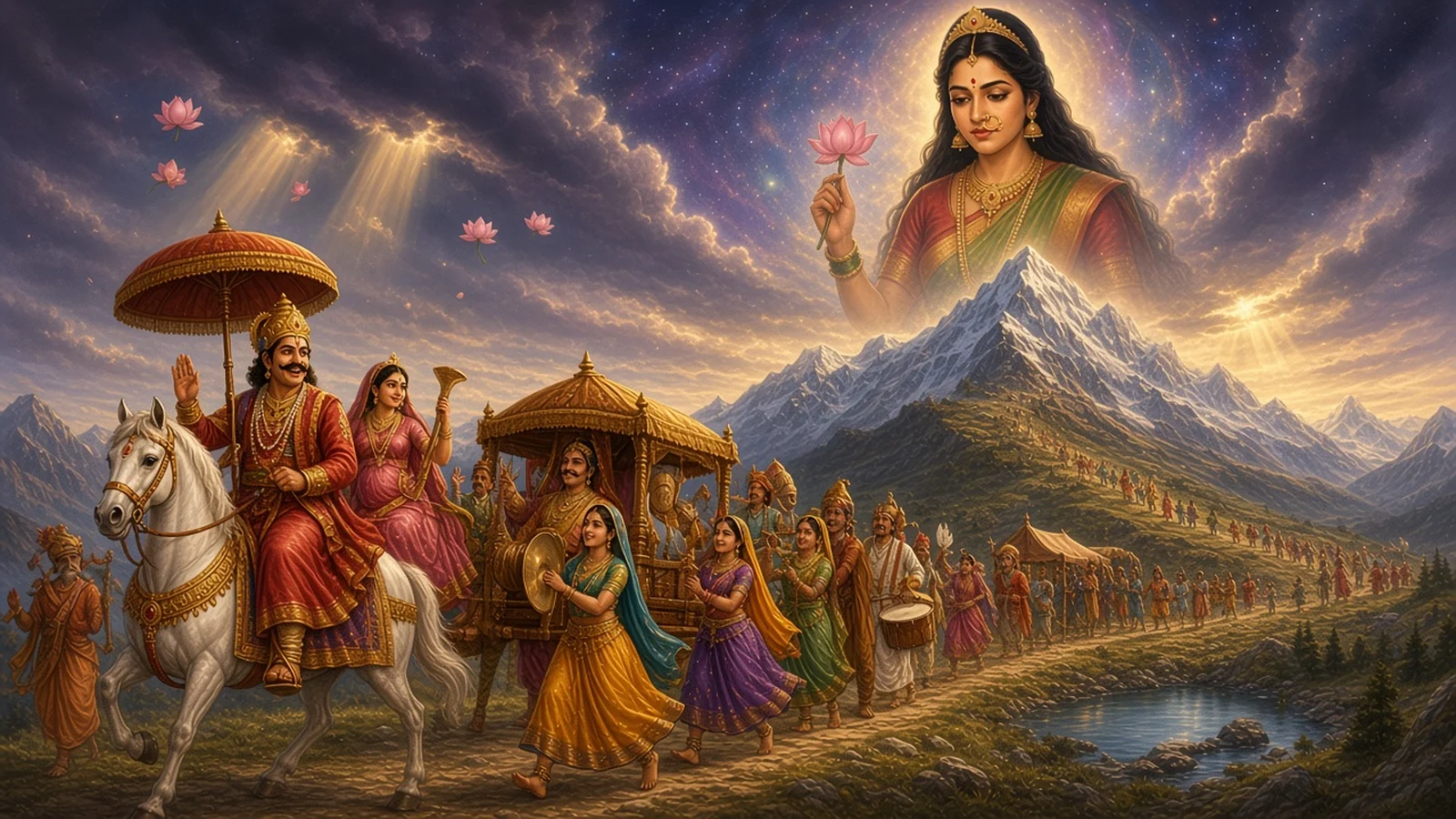
Shiva used to gather his flowers at a lake called Kalidaha. One day a drop of his seed fell on a lotus leaf. A crow swooped down and swallowed it, and could not keep it down. His wife told him to put it back where he had found it, so he laid it again on the same leaf. It slid down the lotus stalk, through the water and the mud, into Patala, the world of the serpents, and struck Vasuki, the serpent king, on the head like a thunderbolt.
Vasuki's mother was a sculptor among the Nagas, and she knew at once whose it was. She shaped the image of a girl, and when the drop touched it, the girl breathed. They named her Manasa.
"She is my sister," said Vasuki, and he gave her the keeping of all the poison in the world, the poison that rose when King Prithu milked the earth like a cow.
So Manasa came to live at Kalidaha among her snakes. She played in the lake all day long, and the poison in her play killed every flower in it. Shiva came for his flowers and found none.
"Clear that water of snakes," he told Garuda, the eagle who hunts them.
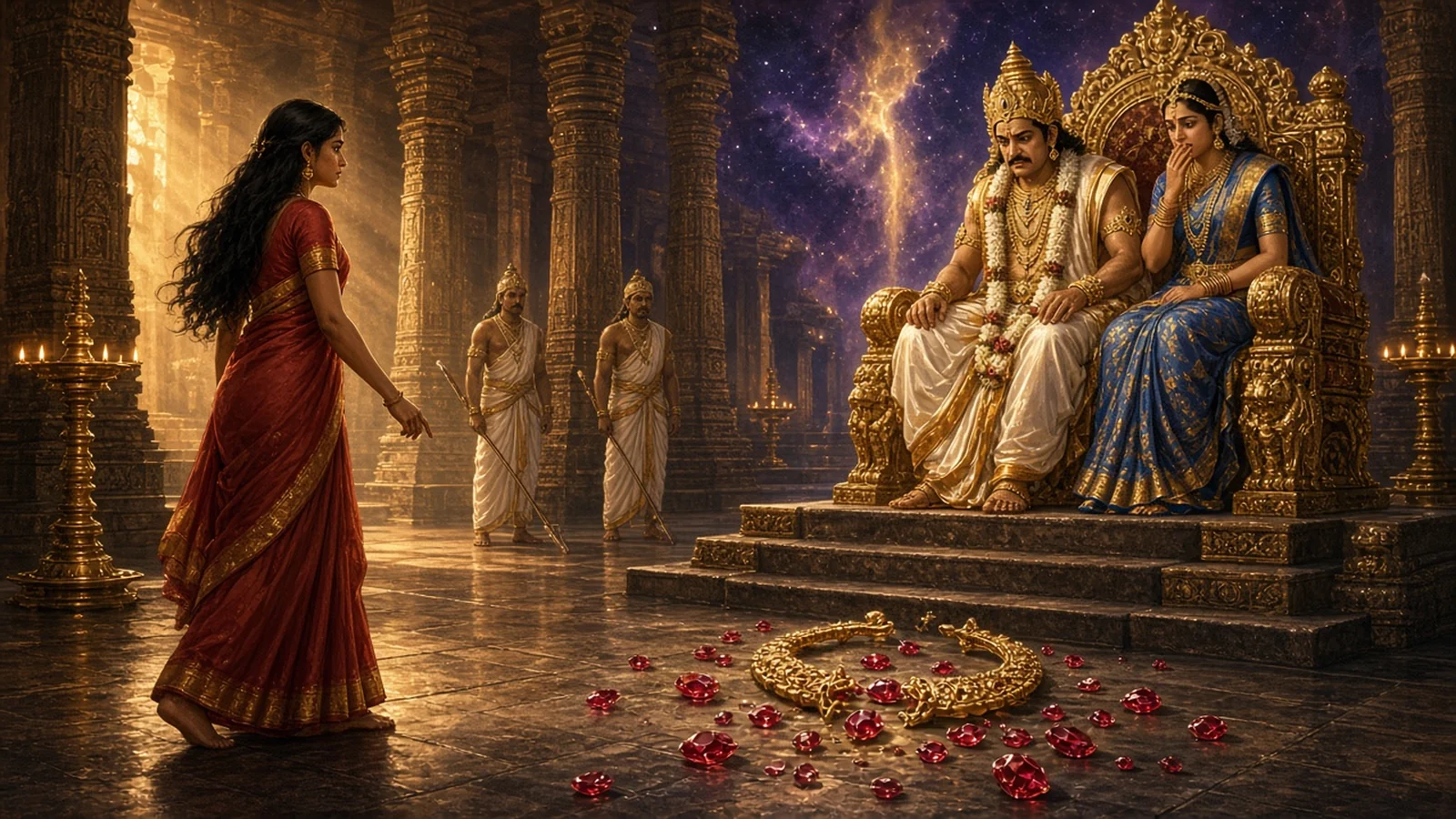
The snake Kali slid away to Manasa with the news, and Manasa went straight to Shiva to make him call the bird off. Shiva did not know her. He looked at her in a way that frightened her, and she spoke quickly.
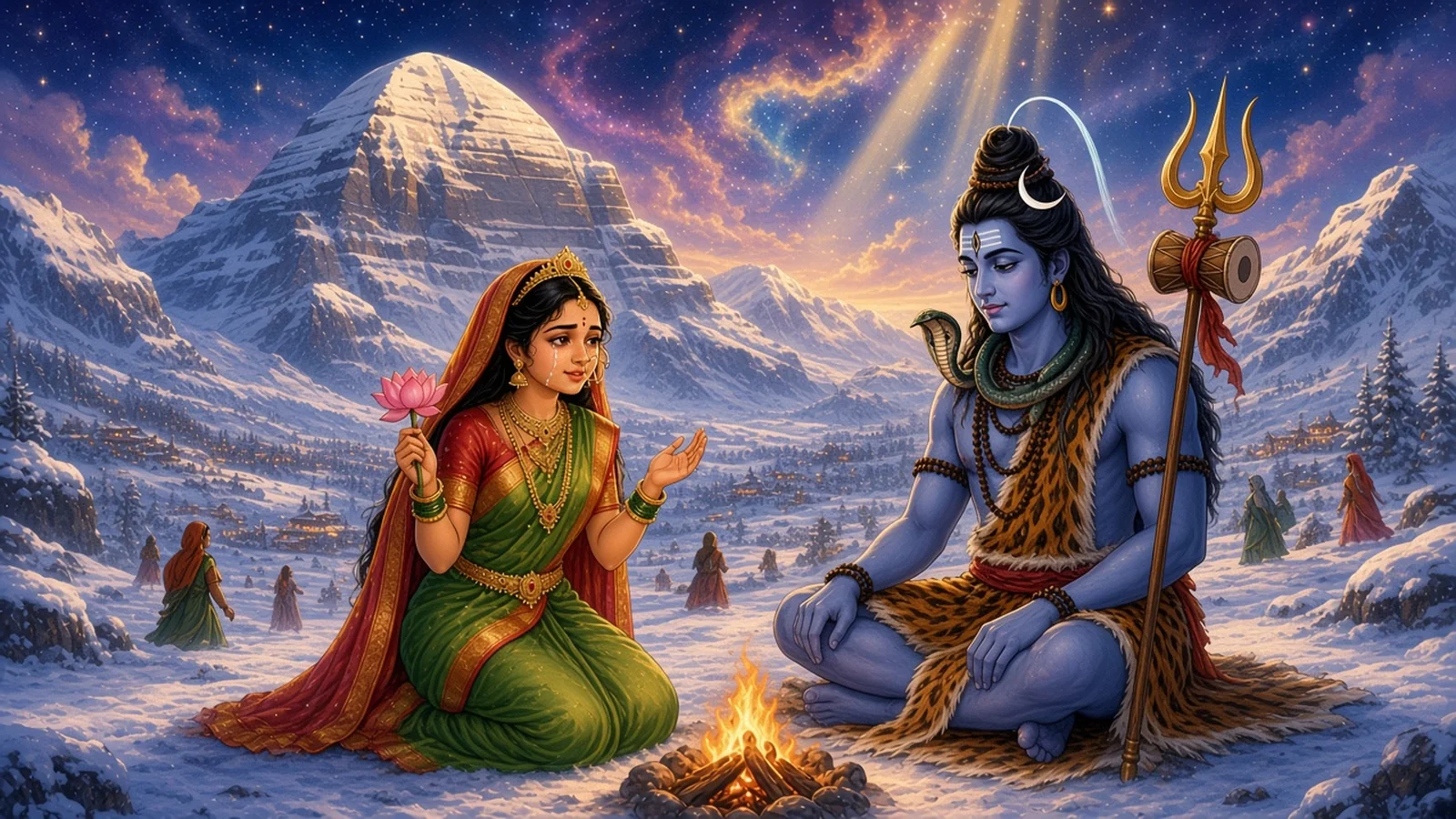
"I am your daughter," she said, and she told him how she was born, until he could not doubt it. "Let me come home with you."
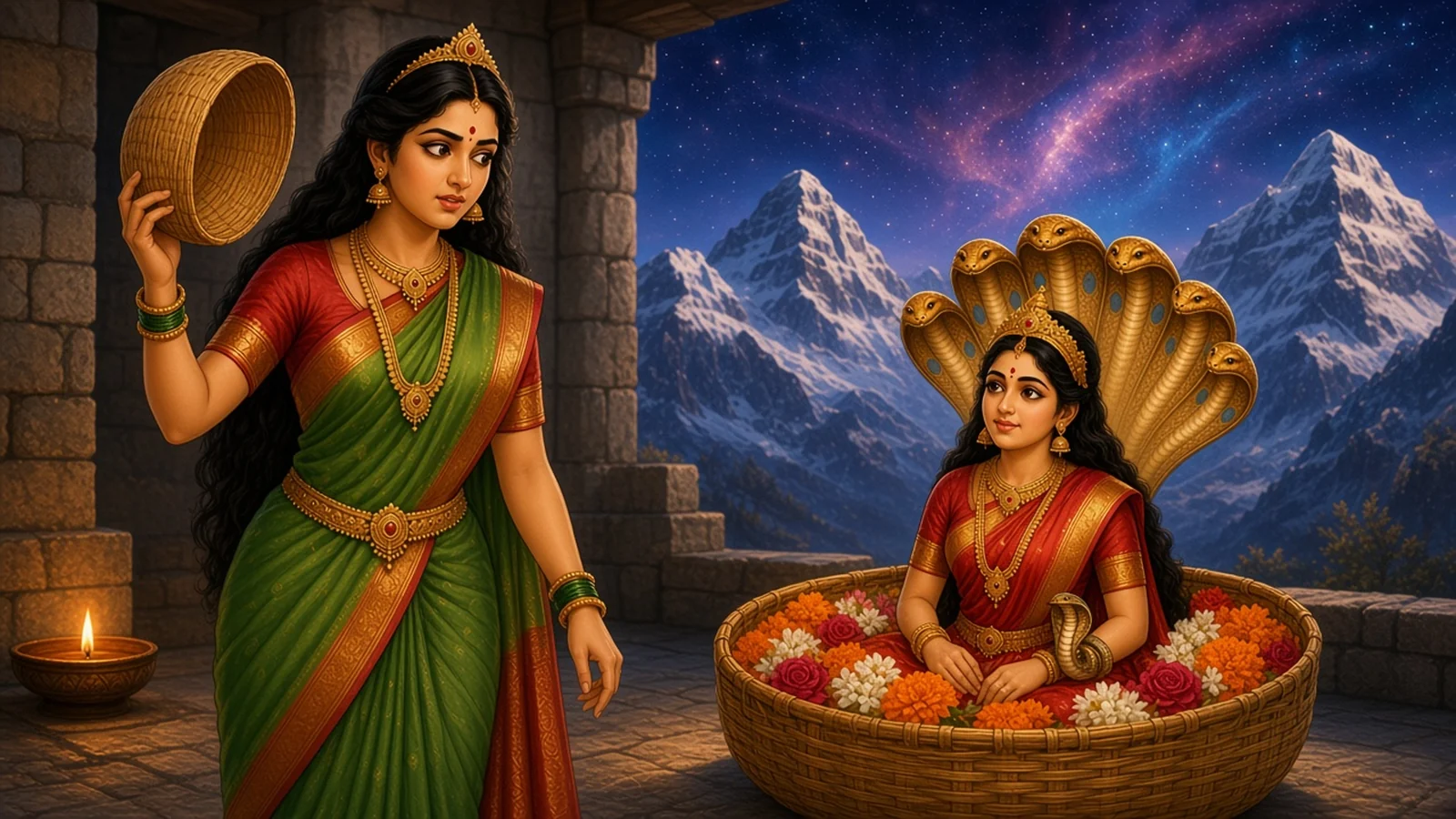
Shiva thought of his wife Chandi and said no. Manasa begged until he gave in. He hid her in his flower basket and carried her up to Kailash, set the basket down in a corner and went out again.
Chandi had seen him come in with it. She lifted the lid and found a young woman inside.
"Who are you, hiding in my husband's basket?"
"His daughter," said Manasa. "Your stepdaughter, Mother."
Chandi did not believe a word of it. Hot words went back and forth, and in her anger Chandi drove a sharp blade of kusha grass into Manasa's eye. Manasa turned her other eye on Chandi, and the goddess dropped to the floor as if dead.
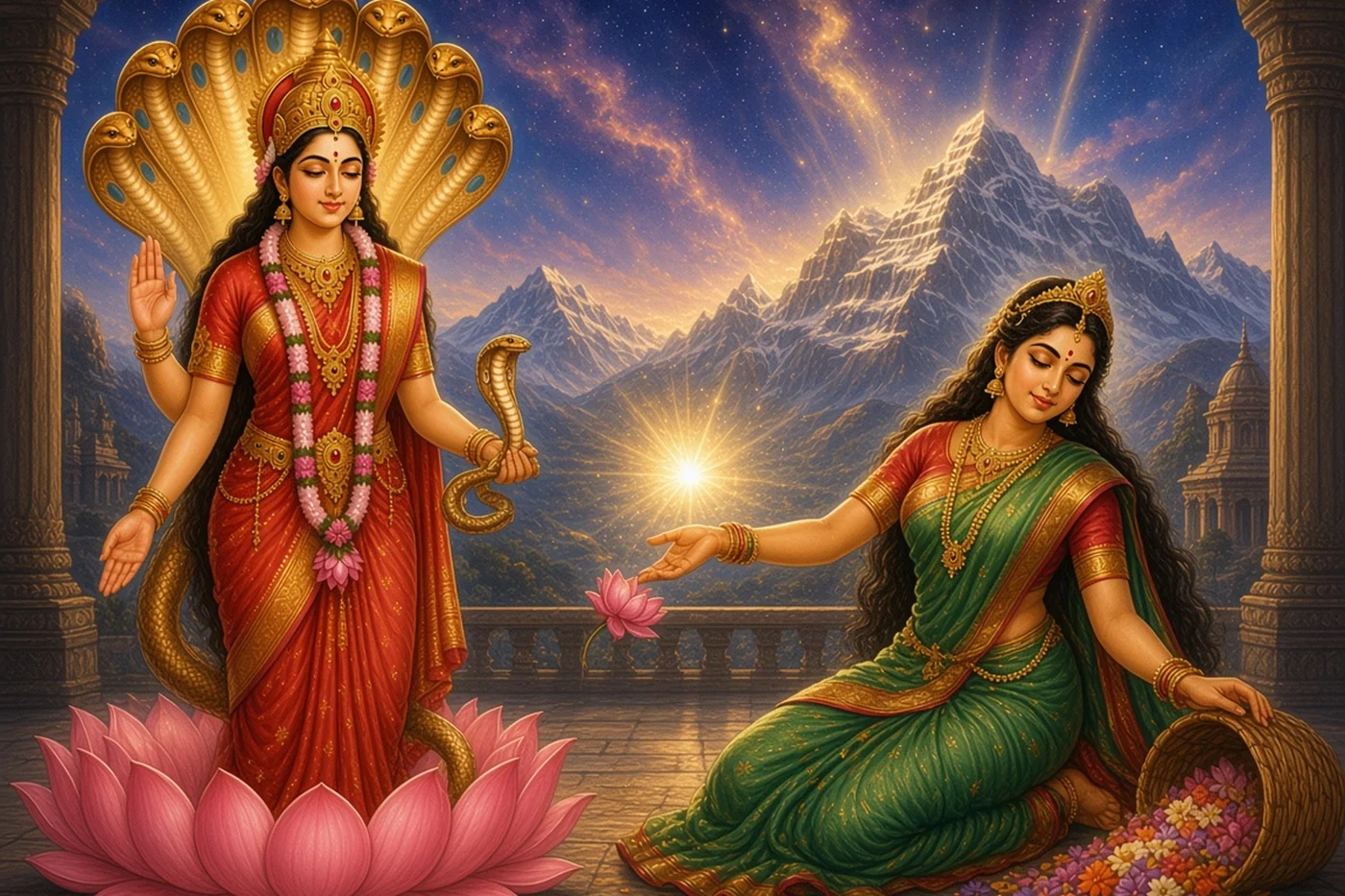
Ganesha and Kartikeya ran to fetch their father. Shiva came and asked Manasa to look again, and at her second glance Chandi sat up. But she would not have the girl under her roof.
Before she went, Manasa gave Chandi her signet ring, set with five jewels.
"If ever my father is in danger," she said, "send for me."
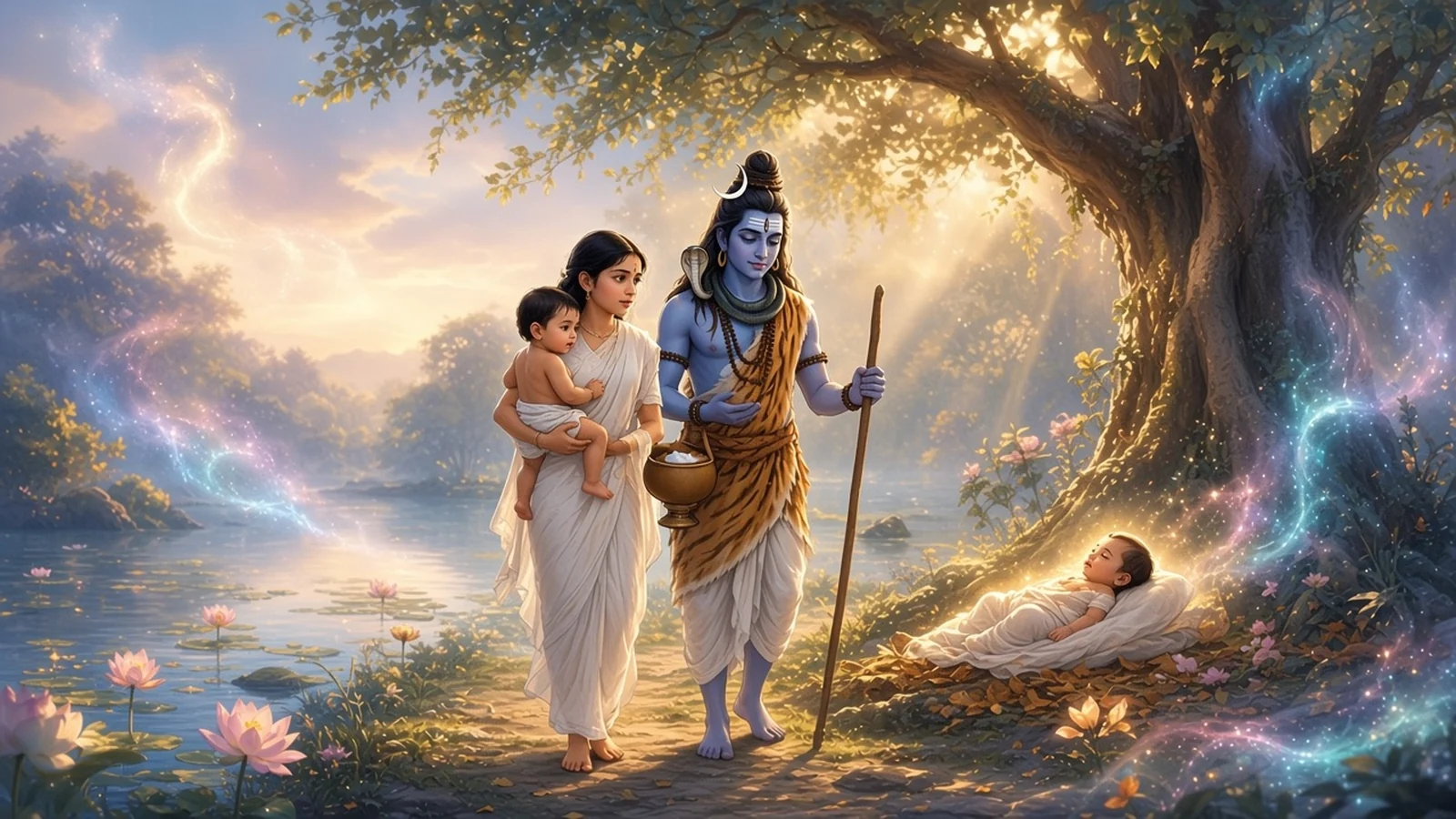
Shiva led her away until they came to a hill grown thick with sij, the spiny plant, and Manasa, worn out, fell asleep in the shade of one. Shiva saw his chance to leave, and he wept before he went. From his tears a girl was born.
"Do not go," said the girl.
He named her Neta. He taught her the great knowledge that can bring the dead back to life, and told her to stay with Manasa always. A little way off he stopped. It was wrong, he thought, to leave two girls alone in a forest, and the worry broke out as sweat on his forehead. From the sweat he made Dhamai, to guard them both.
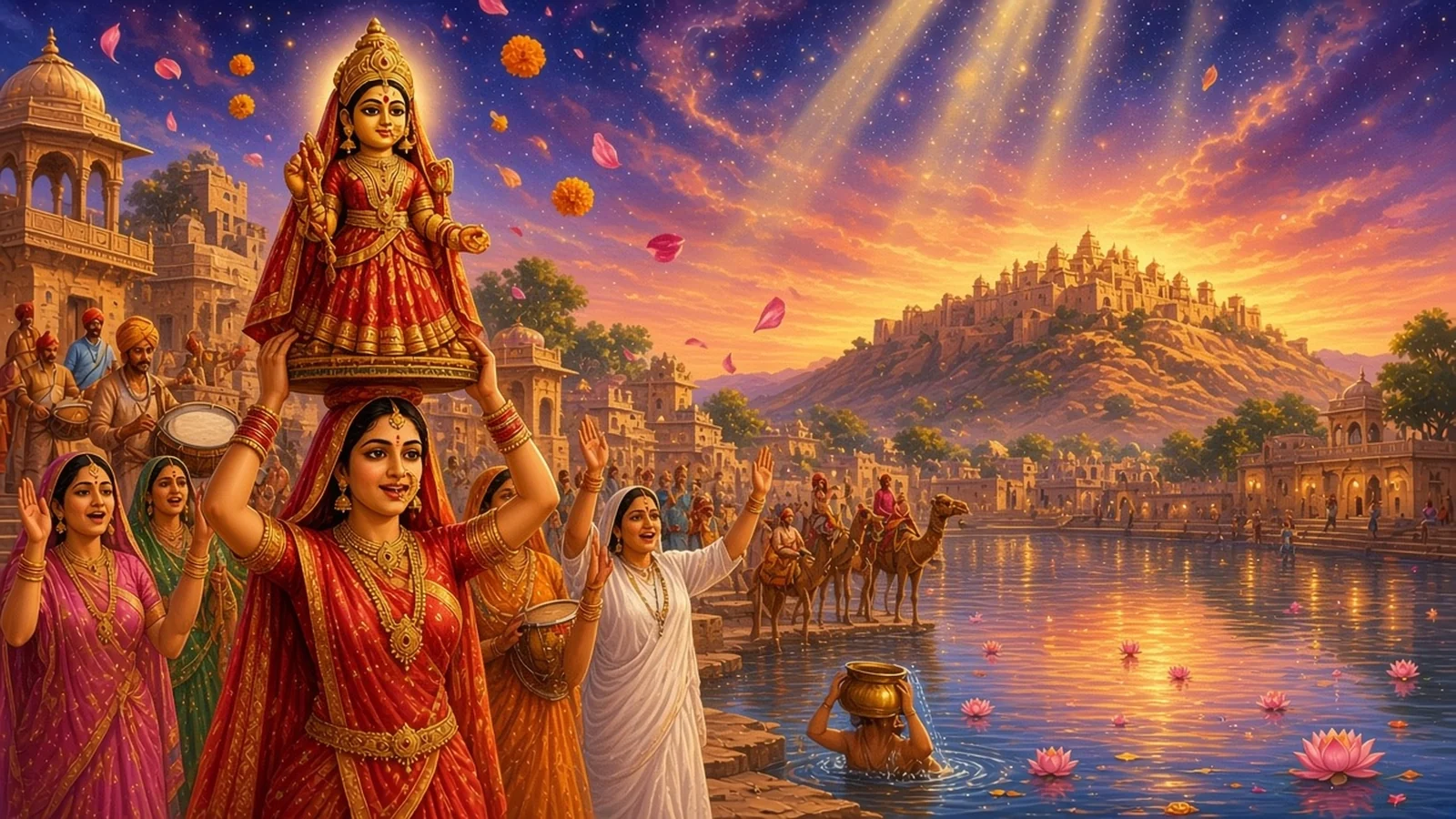
When Manasa woke and found her father gone, she cried. Neta and Dhamai told her who they were and why they were there, and she dried her eyes. She called Vishvakarma, the builder of the gods, to raise her a palace on Sijuya hill, and people of thirty-six castes, from the Brahmins to the fishermen, came to live in her kingdom.
As the Devi Bhagavata tells it
Devi Bhagavata Purana 9.47 and 9.48 · Kailash and Pushkara · 2 min read
The Devi Bhagavata gives her a quieter beginning. The sage Kashyapa was composing mantras, deep in thought, and a goddess came out of his mind. Because she was born of the mind, manas, she was called Manasa. The Purana adds that the name fits her twice over, for she plays with the mind and she meditates on God within it.
She went up to Kailash and served Shiva for a thousand years of the gods. Here he is her teacher, not her father. He taught her the Sama Veda and gave her the eight-syllable mantra of Krishna, an amulet, and the rules for repeating the mantra. Then, at his word, she went down to Pushkara and sat in penance to Krishna for three ages of the world.
At last Krishna stood before her. She had grown so thin that he named her for it, Jaratkaru, the one worn away.
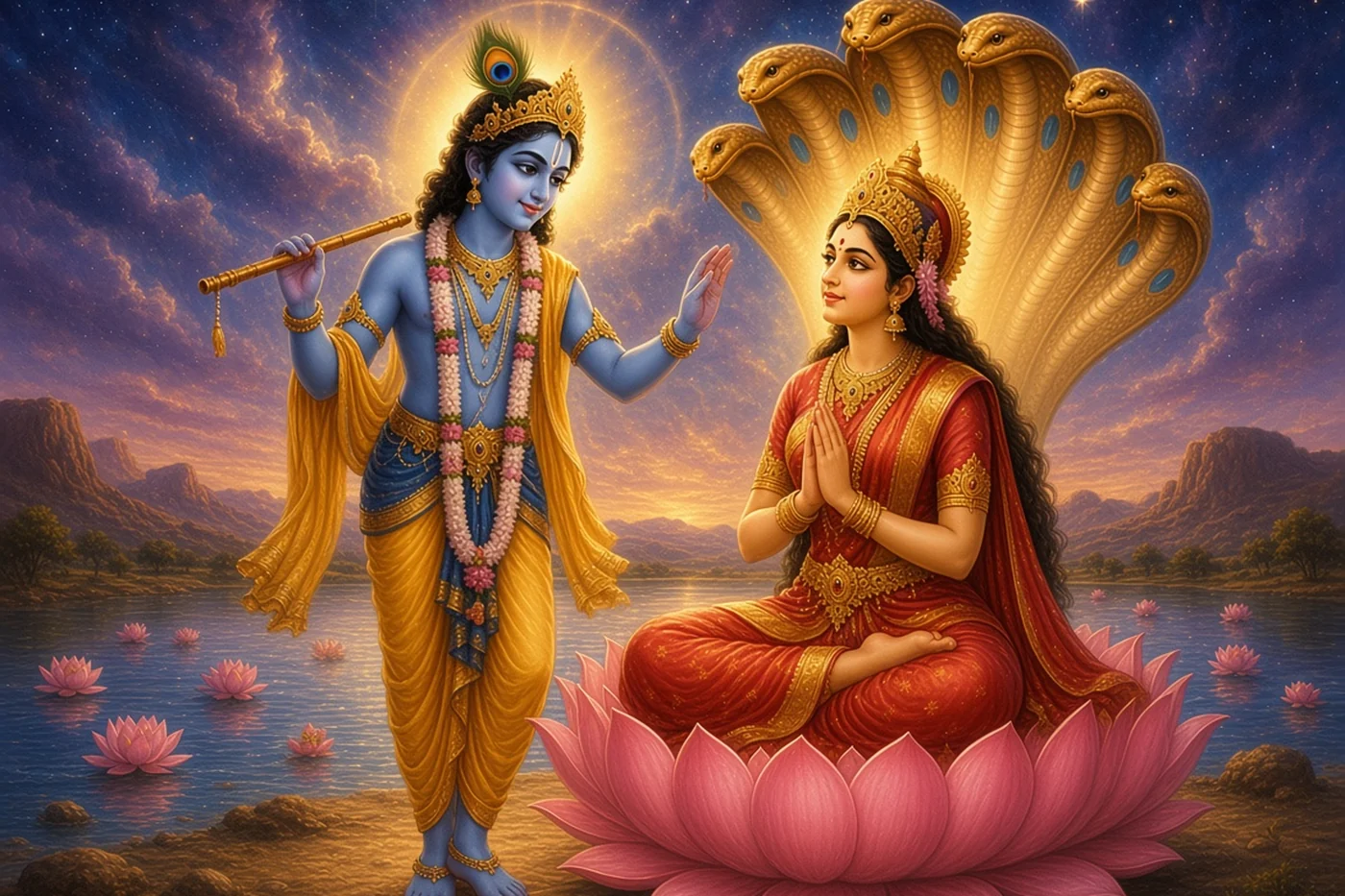
"You will be worshipped in every world," he told her, and he worshipped her first himself. After him came Shiva, then her father Kashyapa and the gods, then the sages and the Manus, the Nagas, and human beings.
The Purana then gives her names and their reasons. She is Jagadgauri, the fairest in the world. She is Shaivi because she was Shiva's pupil, and Siddhayogini and Mahajnanayuta because he gave her his yoga and his great knowledge. She is Vaishnavi for her love of Vishnu. She is Vishahari because she takes away the power of poison, and Mritasanjivani because she can bring back the dead. She is Nageshvari, queen of the serpents, because she saved them from the fire of the snake sacrifice. Whoever says her twelve names while worshipping her, the Purana promises, need never fear a snake, in bed, in the house or on a dangerous road.
In this telling nobody wounds her eye and there is no jealous stepmother. She is a sage's daughter, Shiva's pupil and Krishna's devotee, and the gods themselves bring her offerings.