As Bipradas sings it
West Bengal · the pastures below Sijuya hill · 2 min read
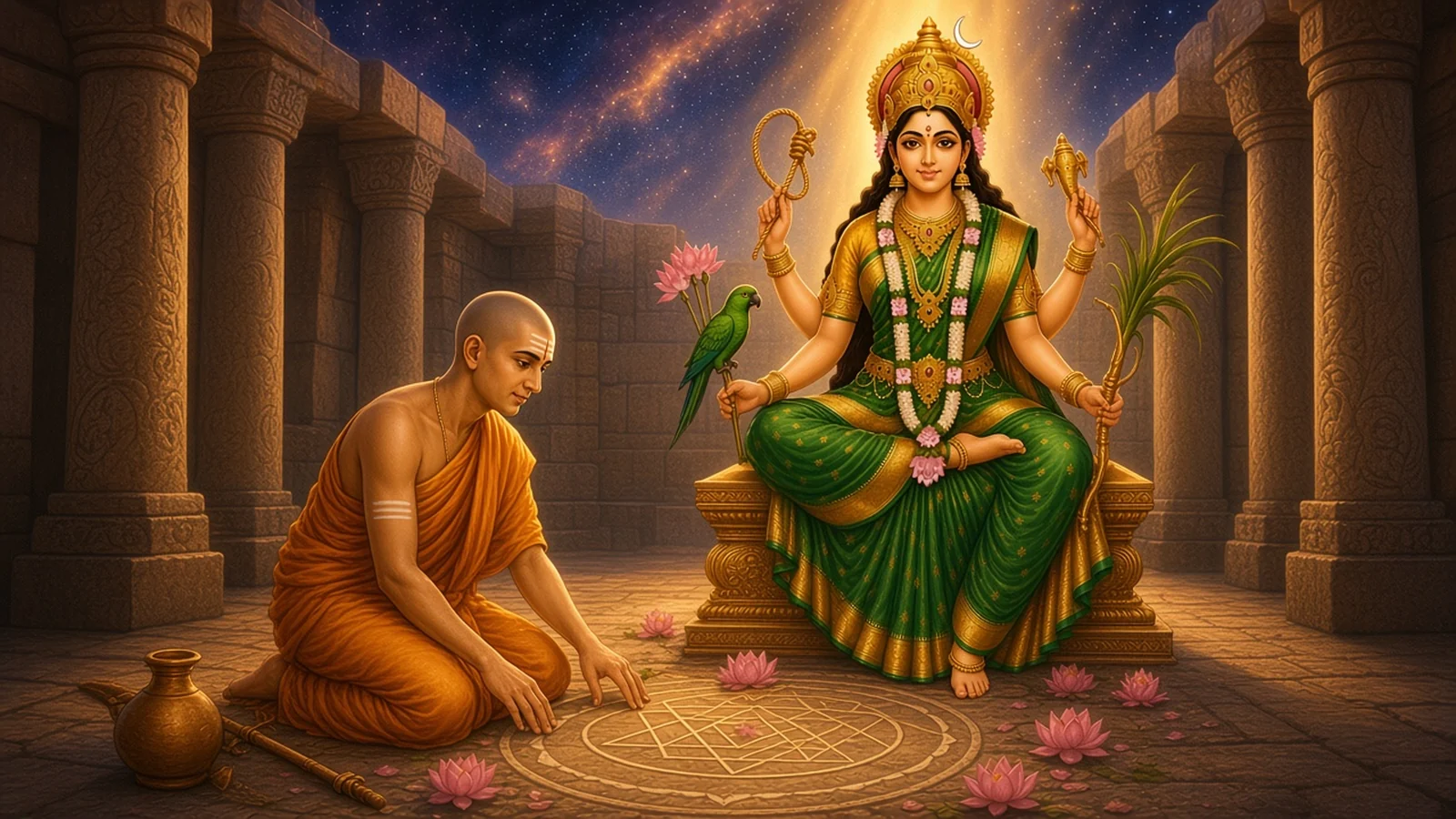
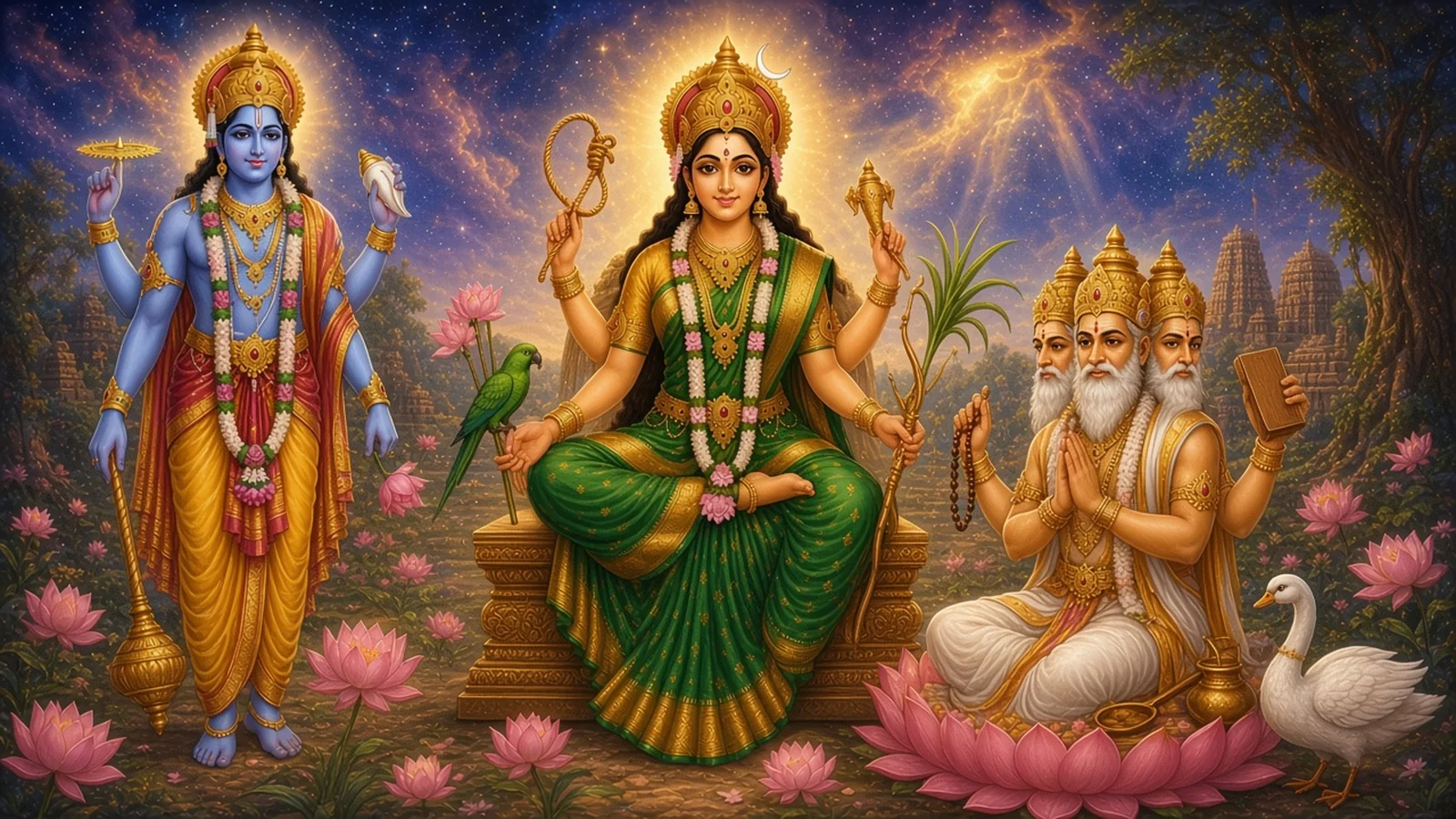
Manasa had a palace, a kingdom and all the snakes of the world, but no human being had ever brought her an offering, and she wanted one. So she came down to earth in her chariot with Neta beside her, and the first people she met were cowherds.
She did not come as a goddess. She came as an old Brahmin woman with grey hair and a basket on her arm.
"I have been fasting," she said. "Give me a little milk to break my fast, and one day I will help you."
The boys laughed at her. They called her a bloodthirsty witch and threw dust at her, and some of them hit her.
"I am Manasa," she said, "the daughter of Shiva, the goddess of the snakes."
"Prove it," they said.
She called, and the snakes came and gathered all round the boys. The cowherds raised their sticks to beat them, and in that moment the old woman and every snake were gone.
Later the boys drove the cows down to drink, and the cows walked into a marsh and sank in it, every one. Nothing the cowherds did could free them. Then they saw the old woman standing at the edge of the marsh, laughing.
They fell at her feet. "Mother, forgive us. We will worship you from today."
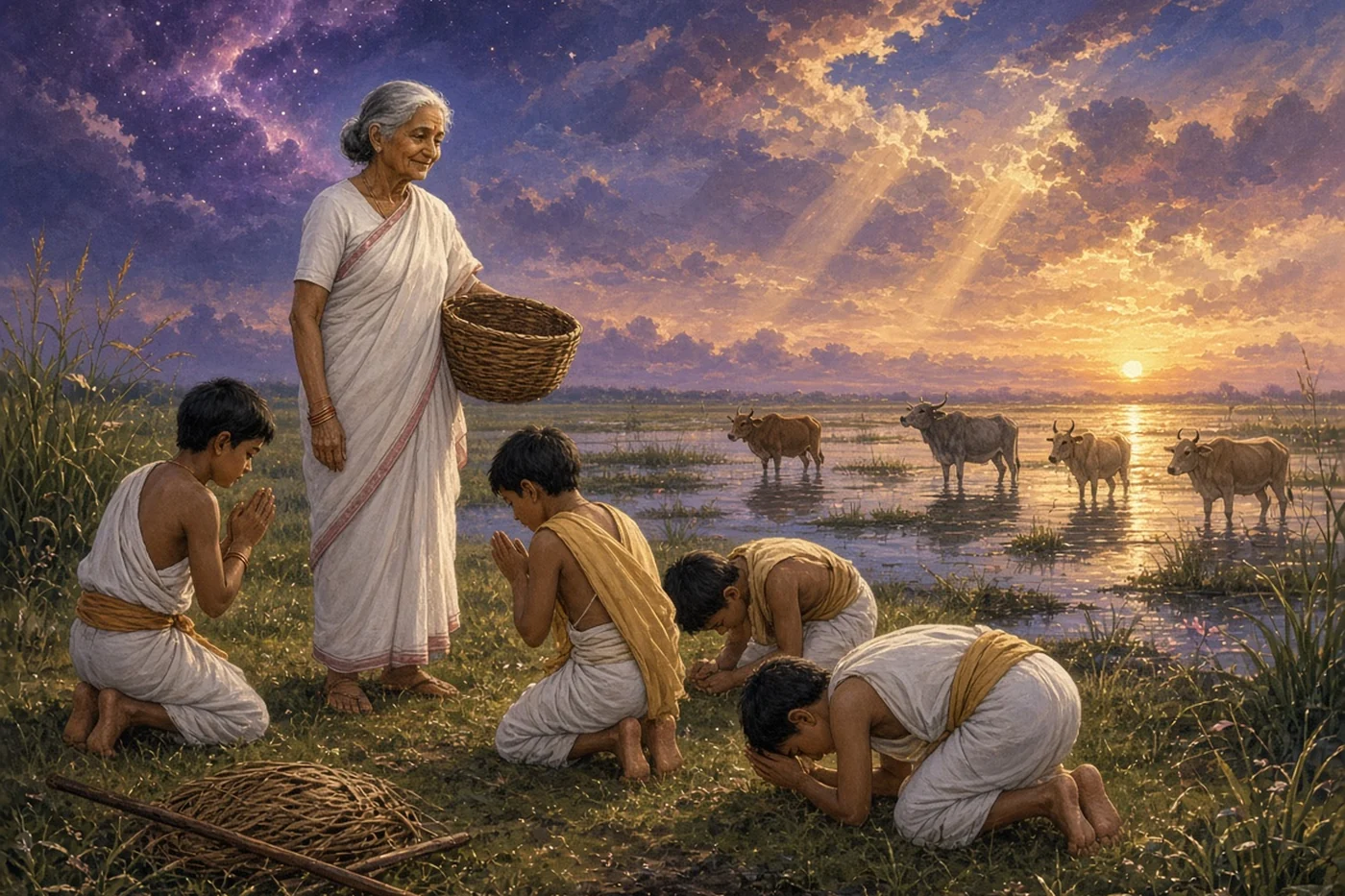
She drew the cows out of the mud. Then, to show them what else she could do, she took a cow that had never given milk, milked her into the wicker basket, turned the basket upside down and drank from it, and not a drop fell.
She sat with Neta under a tree and taught the boys how she was to be worshipped.
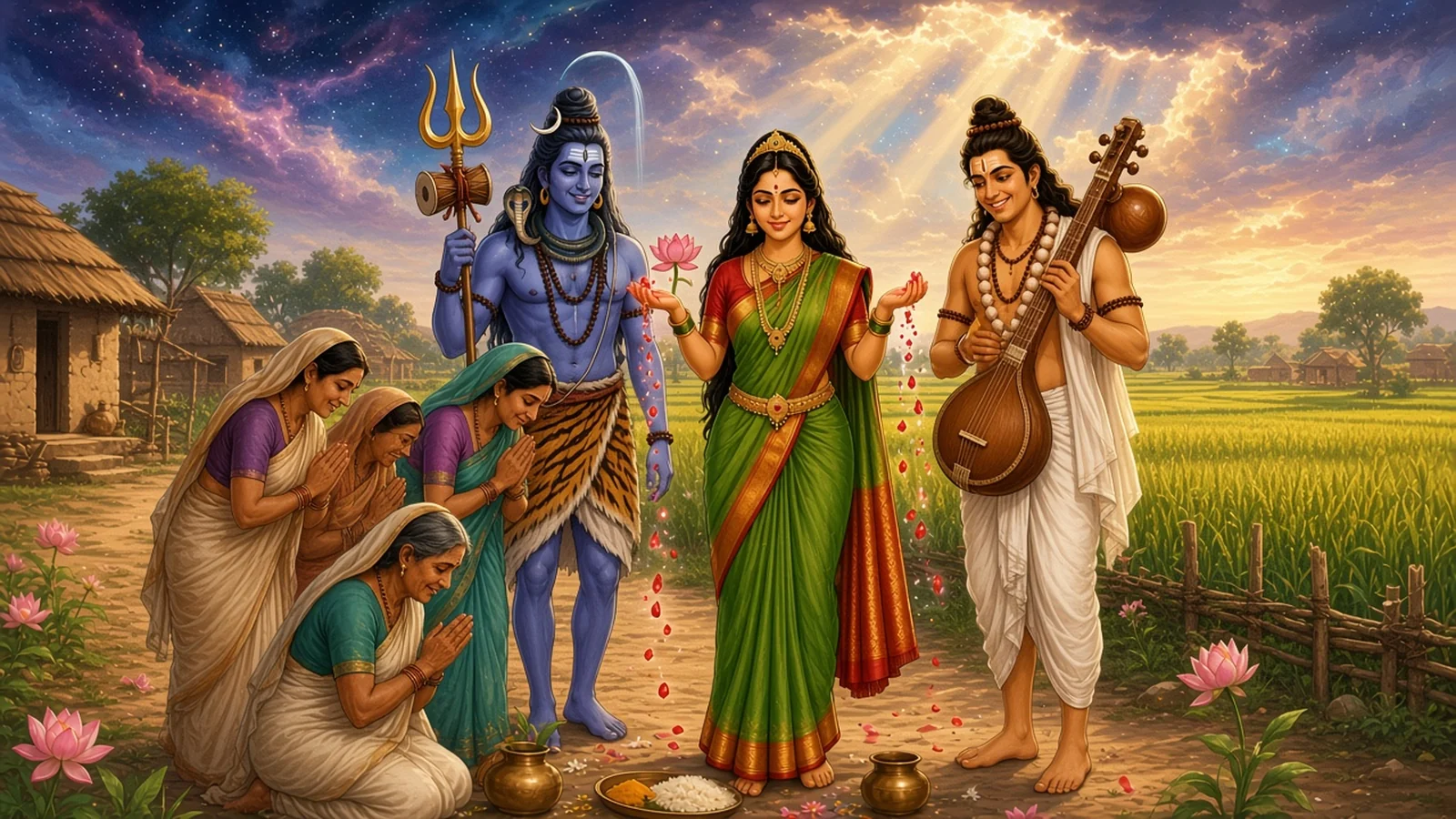
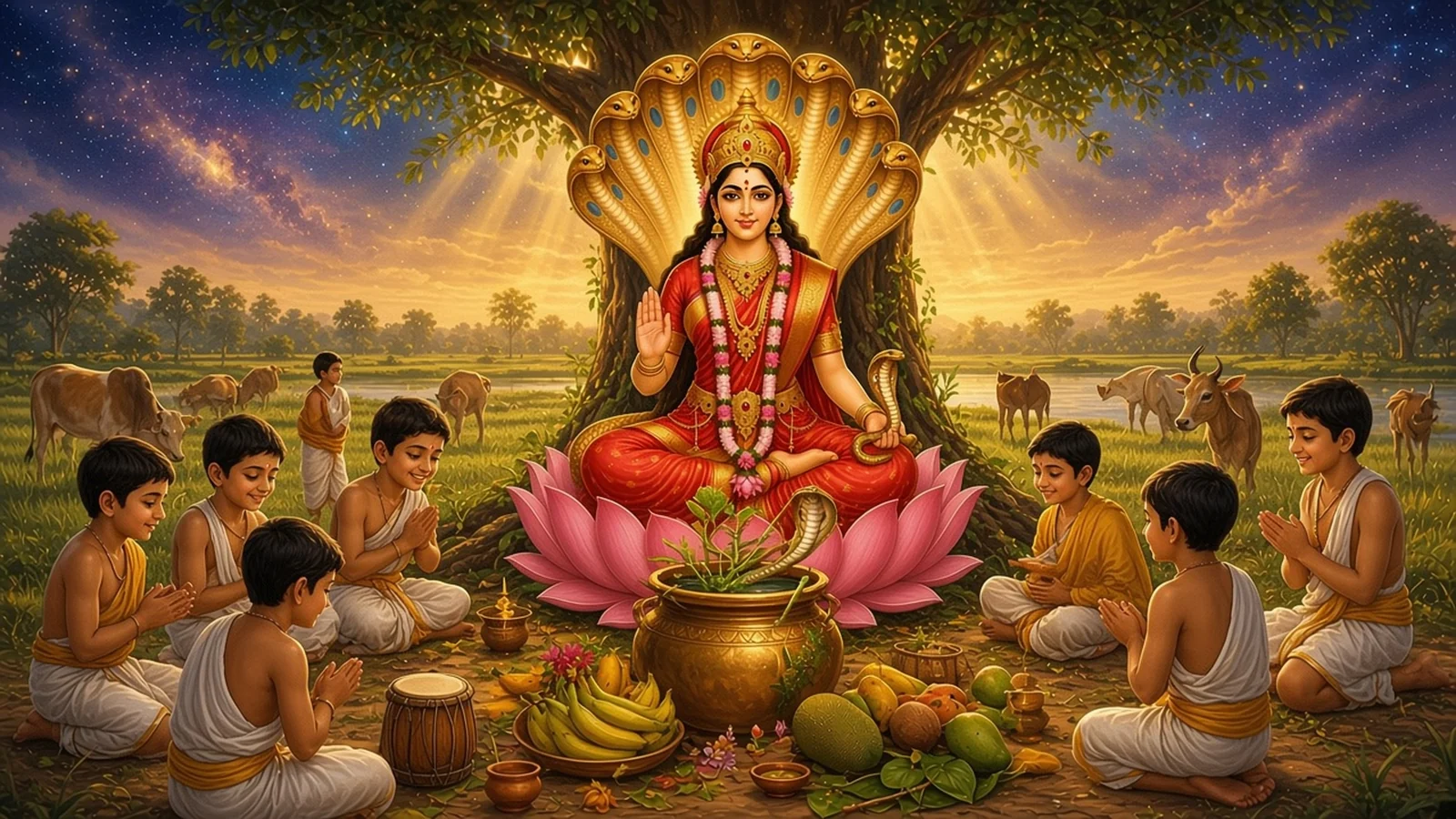
"On the tenth day of the bright half of Jyaishtha," she said, "bring sweets, and ten good fruits: plantains and cucumbers, coconuts and phuti melons, betel nuts and dates, jackfruit and mangoes, jamuns and palm fruit. Bring betel leaves, flowers and incense, lamps and sandal, and play your drums with glad hearts. Fill a golden pot with water and lay a twig of sij across its mouth. I will be there, inside the pot, and I will give you wealth, children and a good name."
Then she rode away to Sijuya hill.
When the day came, the cowherds did everything as she had told them. The pot of water stood under the tree with the sij twig across its mouth, the fruits were heaped round it, and the drums played. Manasa was pleased. She gave them plenty in everything, and one gift more: no snake would ever bite them.
After that they worshipped her whenever they could, by the side of a tank under a tree beside the road.
As Vijay Gupta sings it
East Bengal · the pasture where the cowherds played · 1 min read
In Vijay Gupta's poem Manasa does not go down to the cowherds herself. She sat in her palace and told Neta that nobody on earth worshipped her, and Neta told her to go to Shiva, who alone could help.
"Bless me," Manasa asked her father, "so that men will worship me."
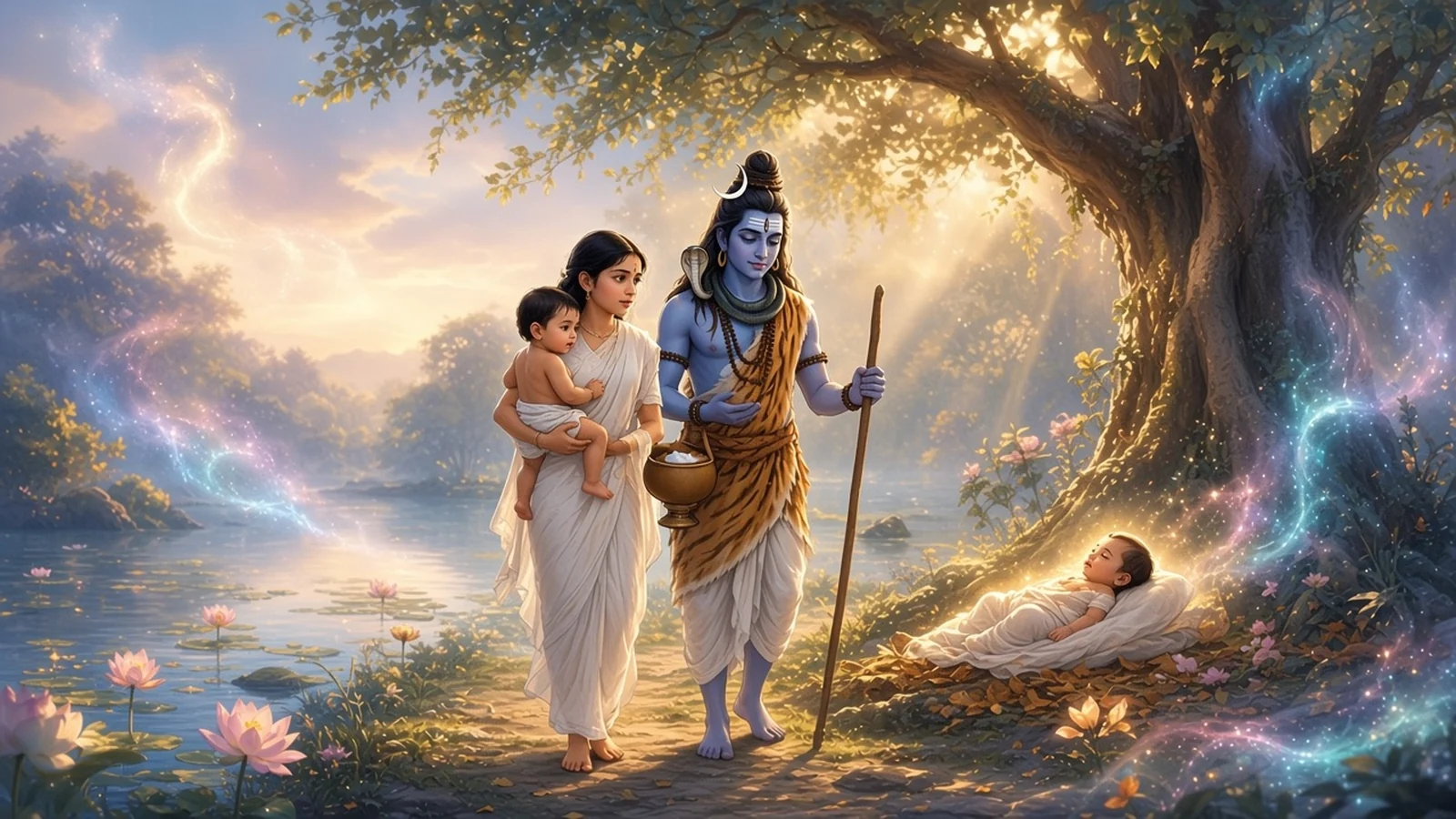
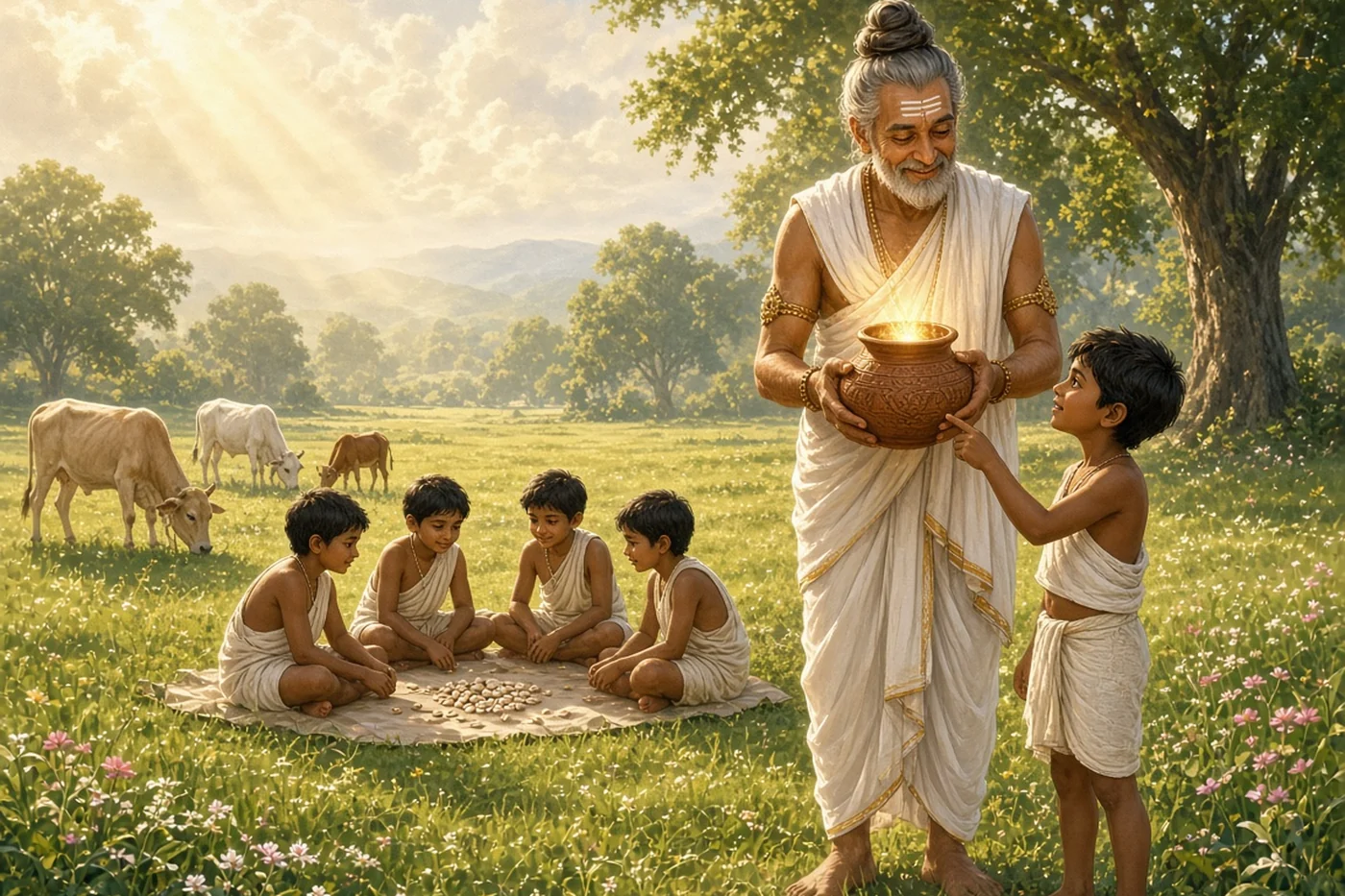
Shiva promised he would see to it. He had Vishvakarma make him an earthen pot, set it on his head and went down to earth dressed as a Brahmin. He came to a pasture where the cowherd boys were gambling. One of them, a boy named Latik, lost every day, and he came up to the stranger.
"Where are you from? And what is in that pot?"
"This pot is the goddess Manasa," said Shiva. "Whoever worships her with his whole heart succeeds in everything he does."
"Would she let me win?"
"She would."
So Latik said Manasa's name as he played, and he won. That was enough for him. He asked the Brahmin how she was to be worshipped, and Shiva taught him and vanished, leaving the pot behind. Latik and the other cowherds built a pavilion out on the pasture, set the pot in it and worshipped the goddess with every offering they could find. Manasa appeared to them and gave each boy the boon he asked for, and after that they worshipped her every day.
She showed the cowherds of Srabantipur her power another way. She hid all their cows, and while they searched in a panic, a wandering ascetic came by, begging. It was the goddess. They worshipped her as Latik's friends had done, and their cows came home.