As the Mahabharata tells it
Mahabharata, Adi Parva 13 to 15 and 45 to 48 · the forest and the house of Vasuki · 4 min read
Jaratkaru was a sage who owned nothing and wanted nothing. He wandered the earth, bathed at every holy water and slept wherever the evening found him, until he gave up sleep altogether and lived on air. He grew thinner every day.
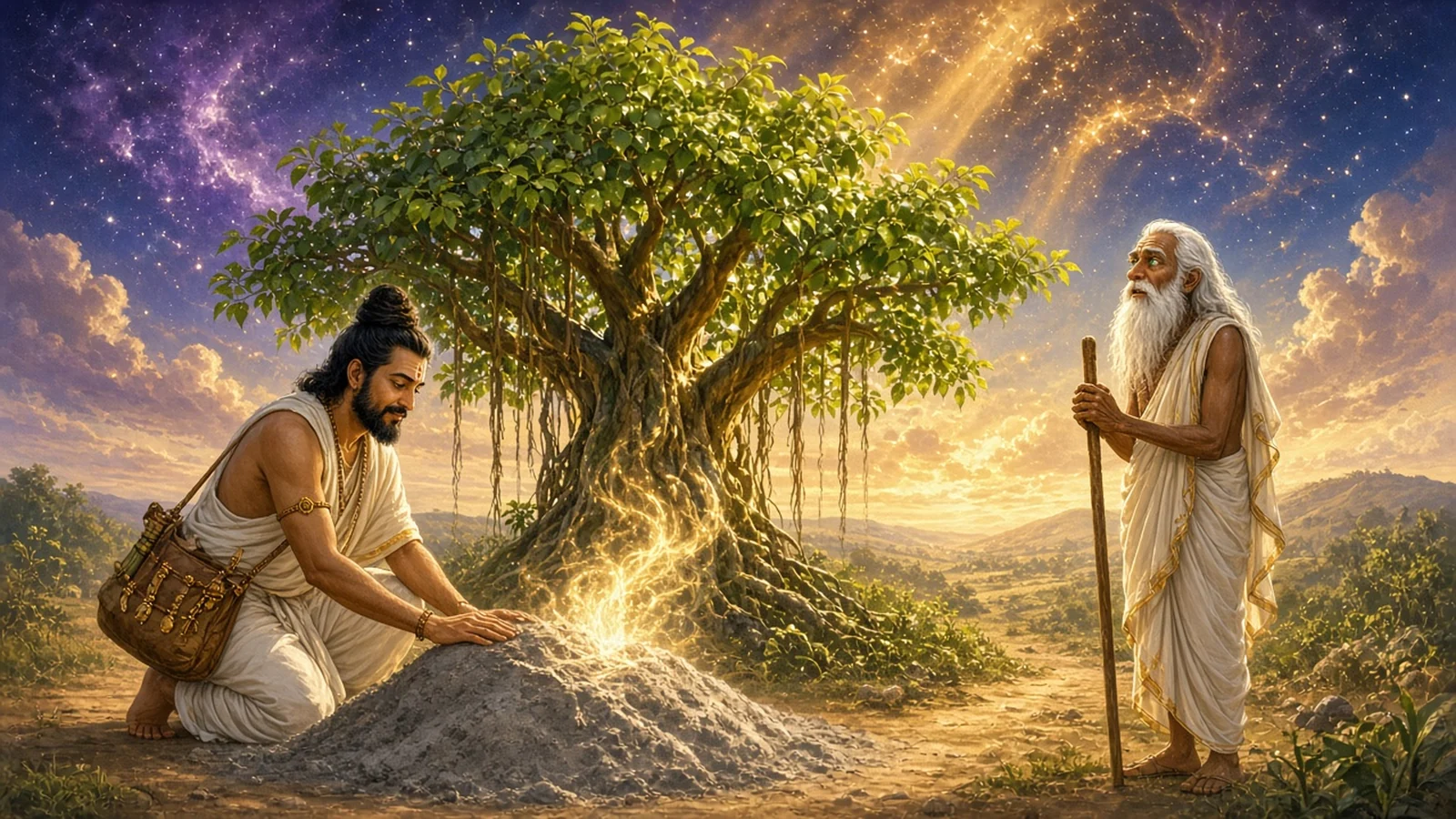
One day he came on a pit, and in it a row of old men hanging head down from a rope of grass roots. Only one strand of the rope was still whole, and a rat was gnawing at that.
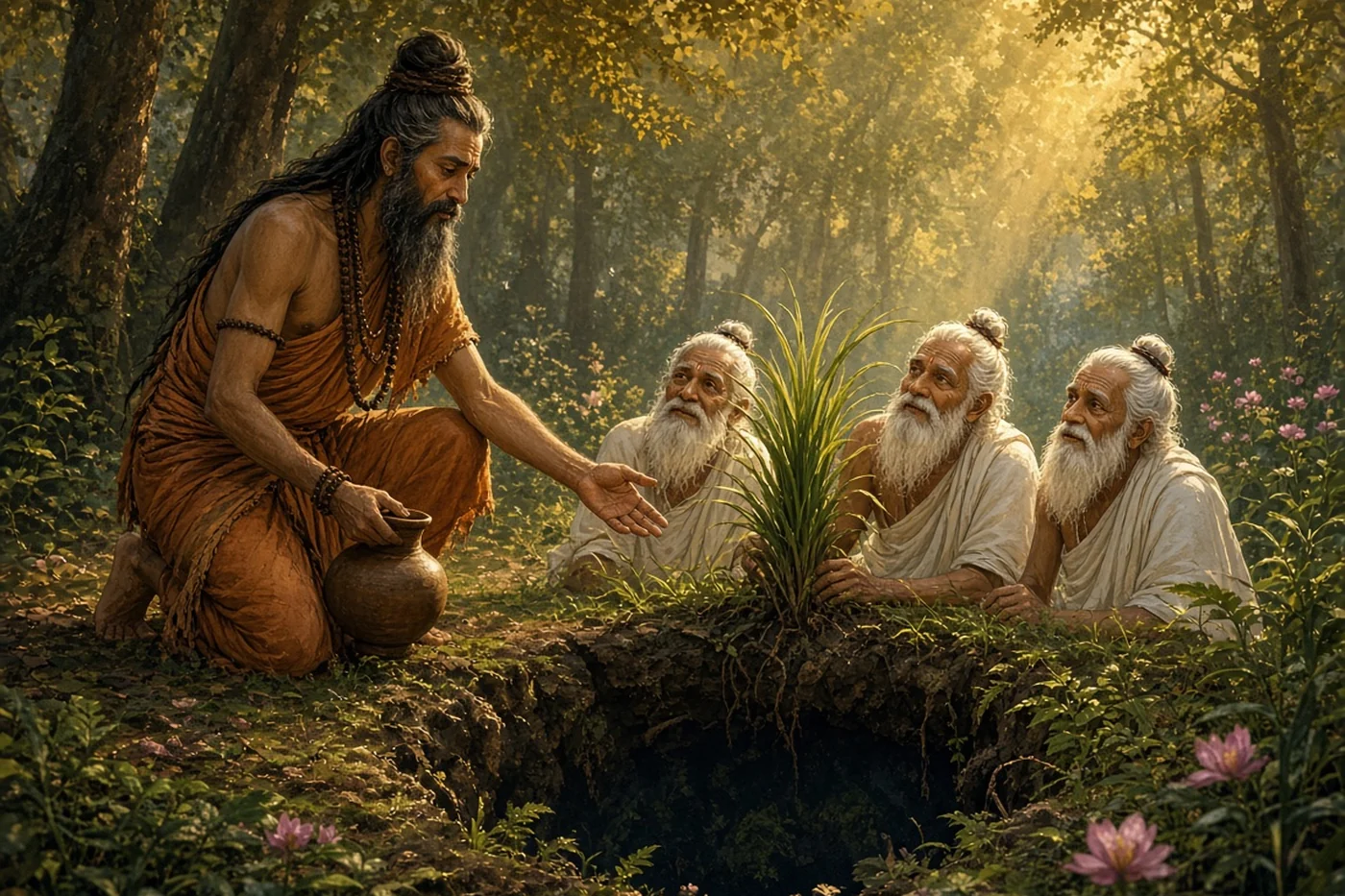
"Who are you?" he asked. "Take my penance, a quarter of it, a half, all of it, if it will save you."
"Penance cannot save us," said the old men. "We are sages of the Yayavara line, and we are falling because our line is ending. The rope is our family. The strands the rat has eaten are those of us that time has taken, and the rat is time. The last strand is our one descendant, a man called Jaratkaru, who cares for nothing but his austerities. When it goes, we fall, and he falls with us. If you meet him, tell him to marry and have a son."
Jaratkaru wept. "I am that Jaratkaru," he said. "I meant never to marry. But I will, for your sake, on these terms. She must have my own name. She must be given to me freely, as alms. And I will not have to keep her."
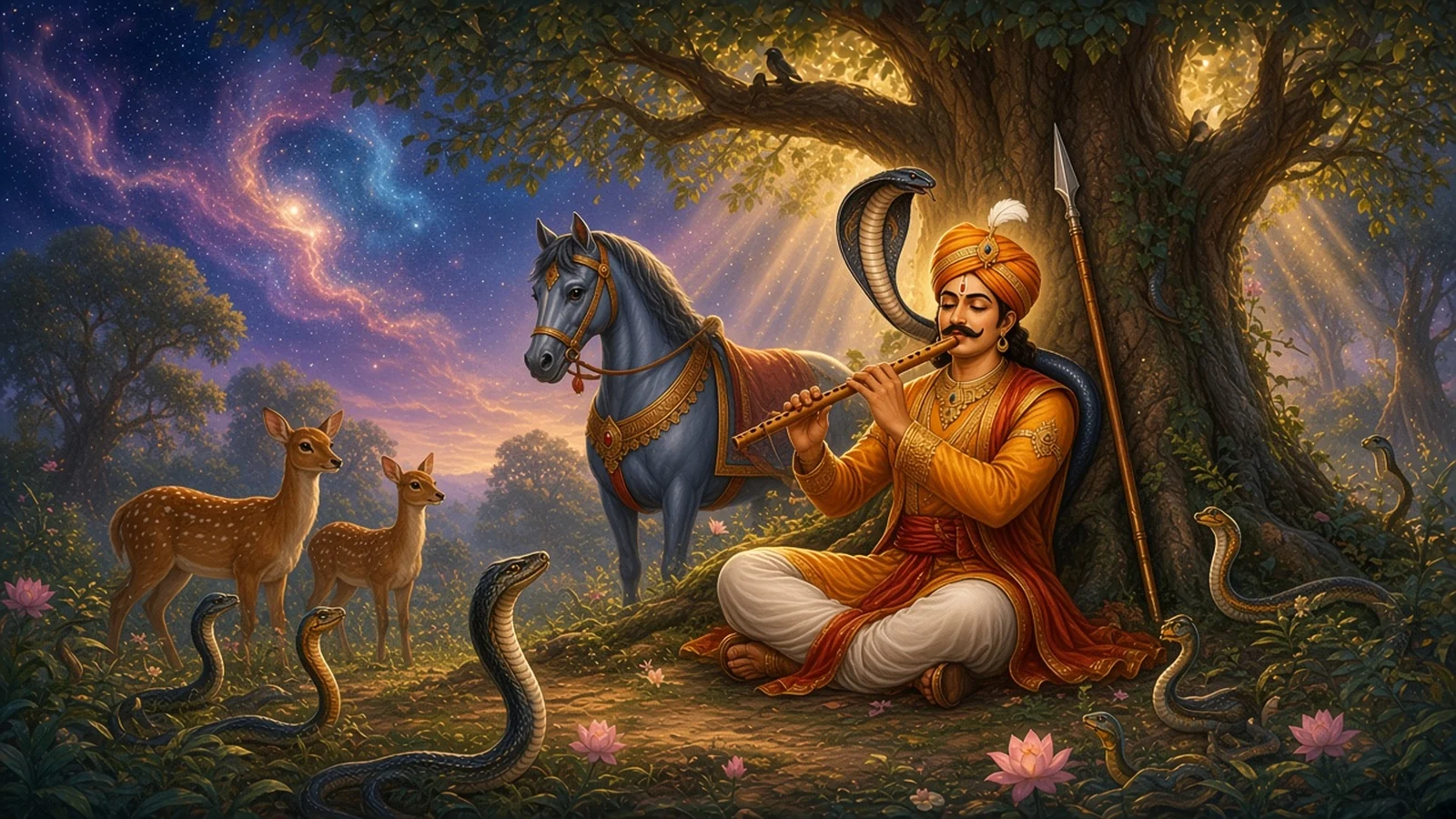
He searched for years and found no such bride, and he was old now as well as poor. At last he went into the forest and called out three times, to everything that lived there, seen and unseen.
"My fathers have told me to marry. Whoever has a daughter of my name, to be given as alms and not kept by me, give her to me!"
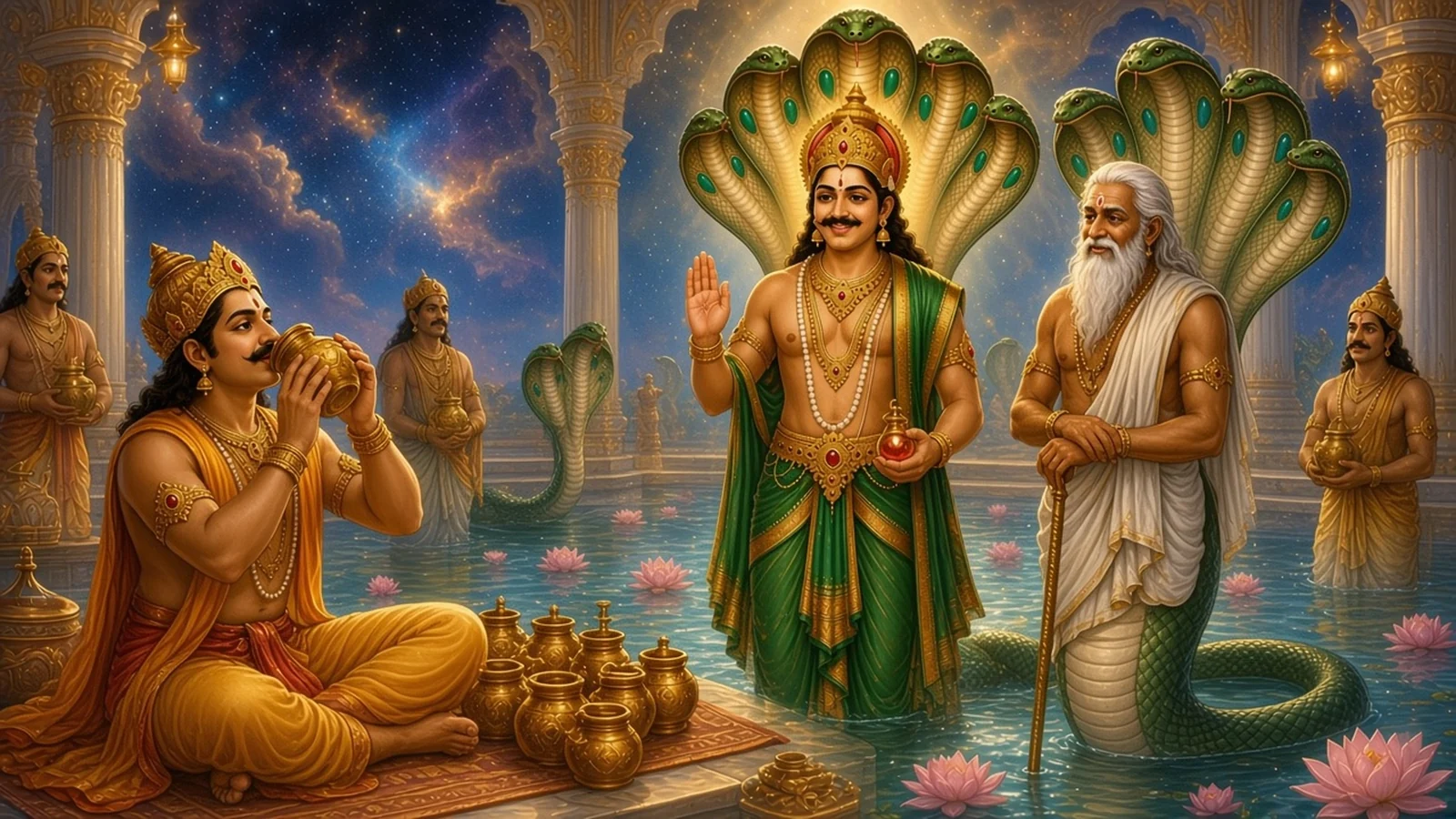
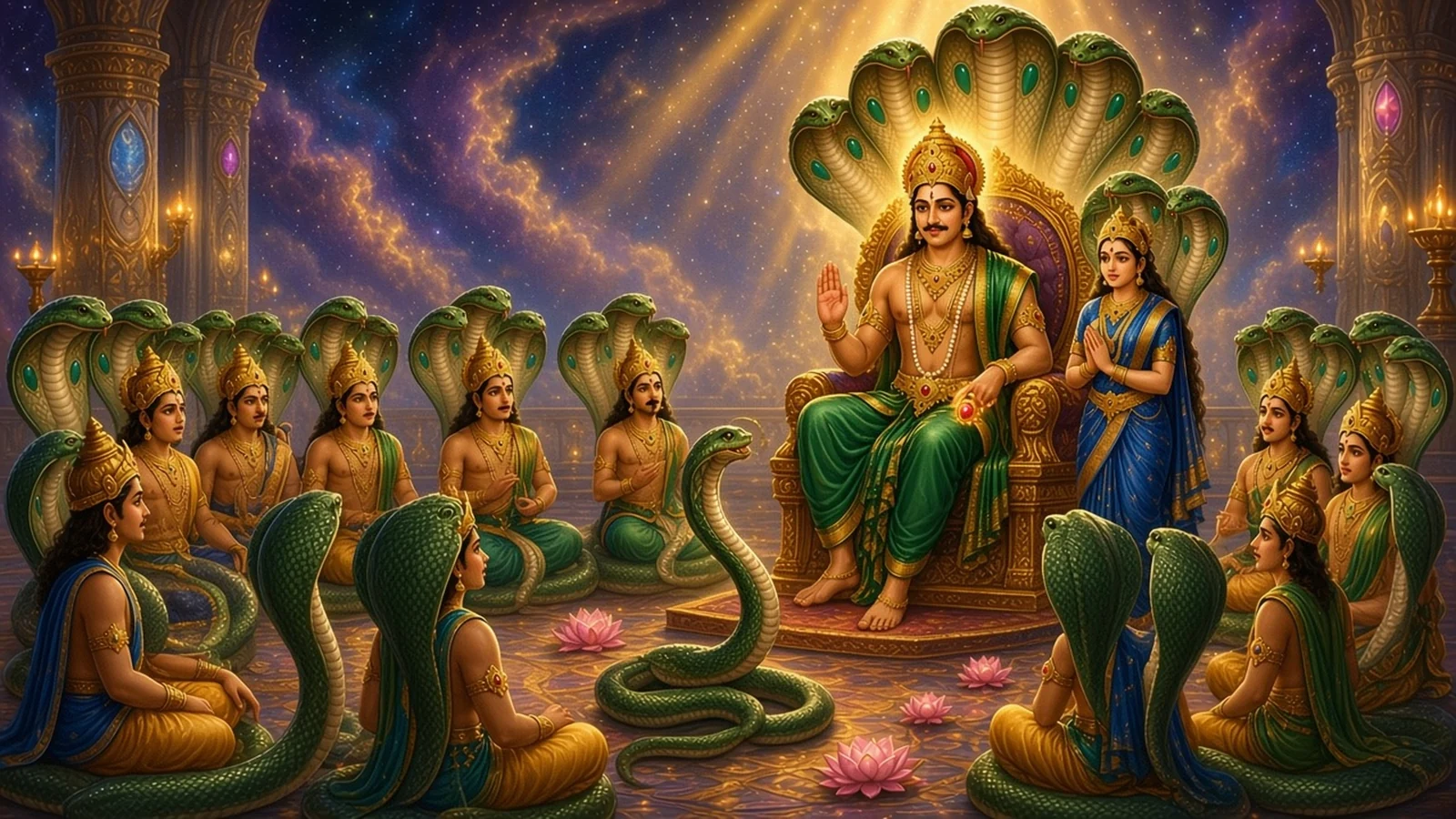
The snakes had been watching him. They took the word to Vasuki, king of the serpents, and Vasuki had been waiting for it. Long ago their mother Kadru had cursed the snakes to burn in a king's fire, and Brahma had said that a son of this sage would save them. So Vasuki dressed his sister in her jewels and brought her into the forest.
Jaratkaru looked at her and did not move. "What is her name?" he asked. "And know that I will not keep her."
"Her name is Jaratkaru," said Vasuki. "She is my sister. I will keep her and guard her with all I have. I raised her for you."
"Then this is our agreement," said the sage. "If she ever does a thing I do not like, I leave."
They were married in Vasuki's house. She served him with the greatest care, and in time she was carrying a child that shone like fire.
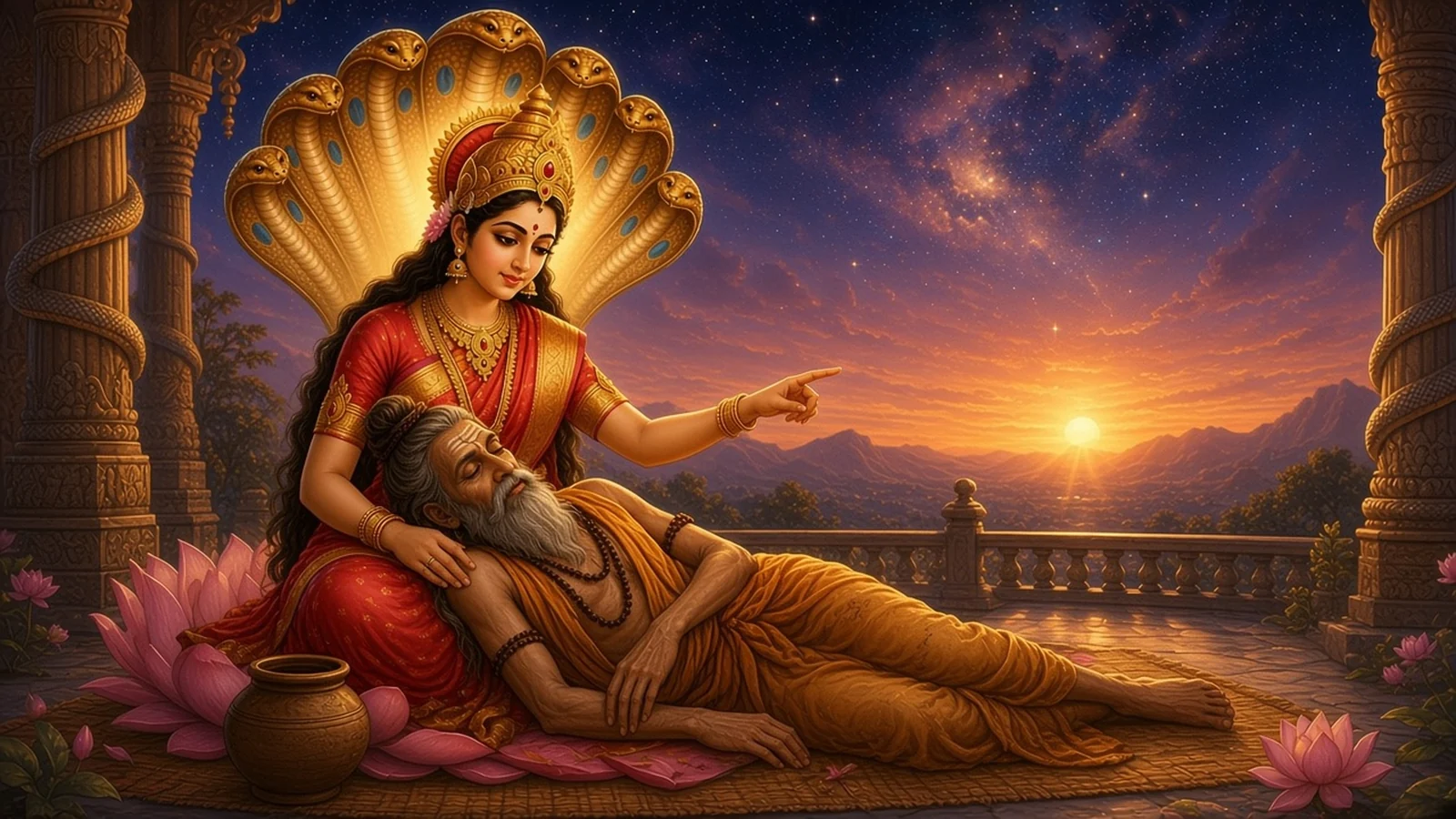
One evening Jaratkaru fell asleep with his head in her lap. The sun sank toward the western mountain. She sat very still, weighing it. If she let him sleep, the hour of his evening prayer would pass and he would lose the merit of his vows. If she woke him, he would be angry. At last she decided that his virtue mattered more than his temper.
"Wake, my lord," she said softly. "The sun is setting. It is time for your evening prayer."
His lip trembled with anger. "You have insulted me. Would the sun dare to set while I slept? I am going back where I came from."
"I woke you for your virtue's sake," she said, shaking, "not to insult you. And the son my people need is not born yet. What will my brother say?"
"There is," said the sage. "A son is within you, bright as fire, who will know all the Vedas. Do not grieve." And he went back to his penances.
She went to Vasuki and told him everything, and he asked her, anxiously, whether there would be a child.
"He said 'There is,'" she answered. "And he has never told a lie."
The boy was born in the palace of the snakes, and every snake there loved him. He learned the Vedas from the sage Chyavana. Because his father had gone away saying asti, there is, they called him Astika.
As the Devi Bhagavata tells it
Devi Bhagavata Purana 9.48 · Kashyapa's hermitage, Pushkara and Kailash · 2 min read
In the Devi Bhagavata the bride is Manasa, and it is her father Kashyapa who gives her to the sage. There are no ancestors in a pit and no plan of the snakes. But the evening is the same. Jaratkaru sleeps in her lap, the sun goes down, and she wakes him so that he will not miss his prayer.
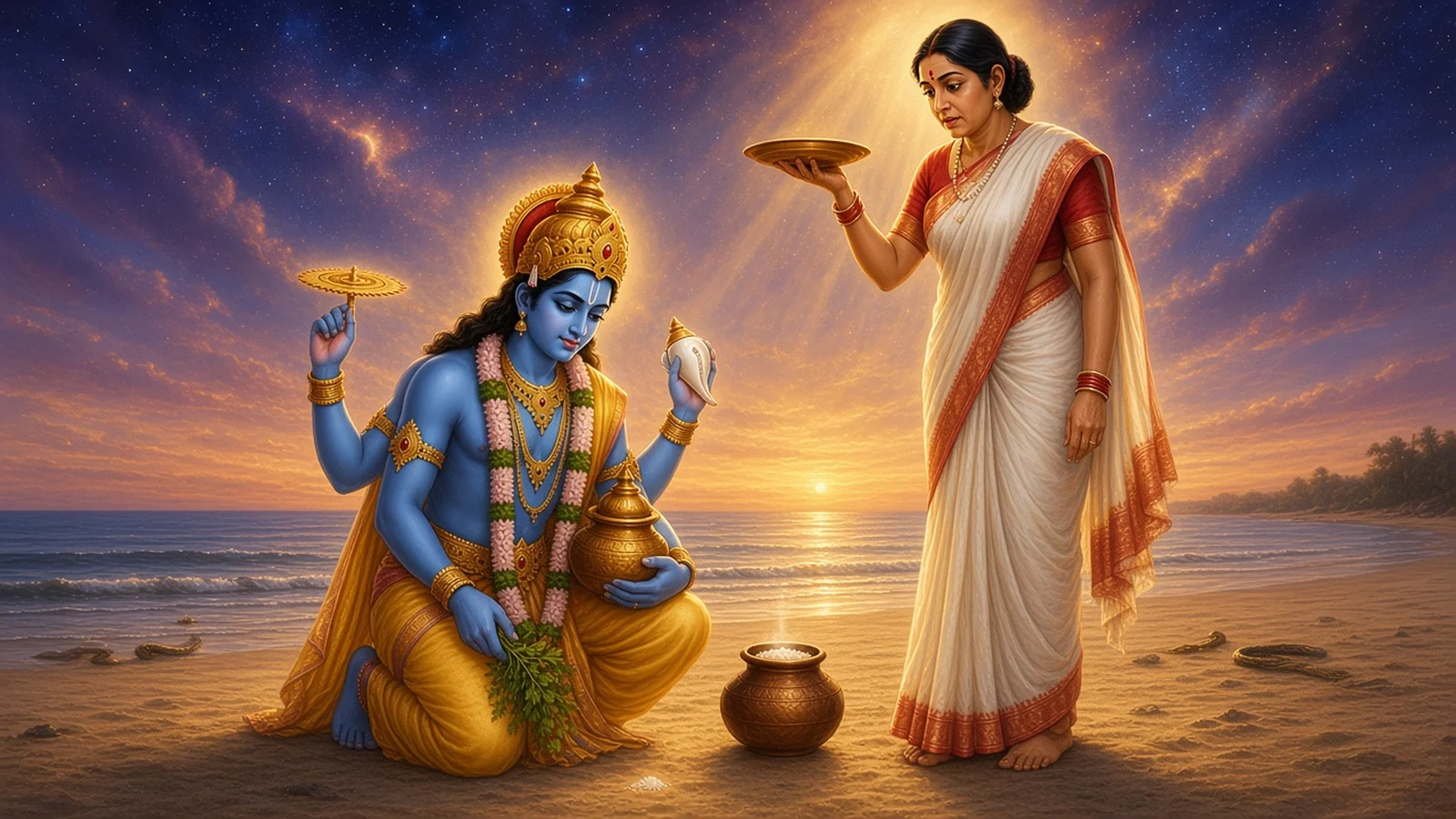
He scolds her. A wife who breaks her husband's rest, he says, loses all the merit of her vows. She falls at his feet in tears. Then the Sun himself comes down, with Sandhya, the goddess of the twilight, to plead for her, and tells the sage that a Brahmin's anger should be short. Jaratkaru is calmed and blesses the Sun. But he has given his word, and he will go.
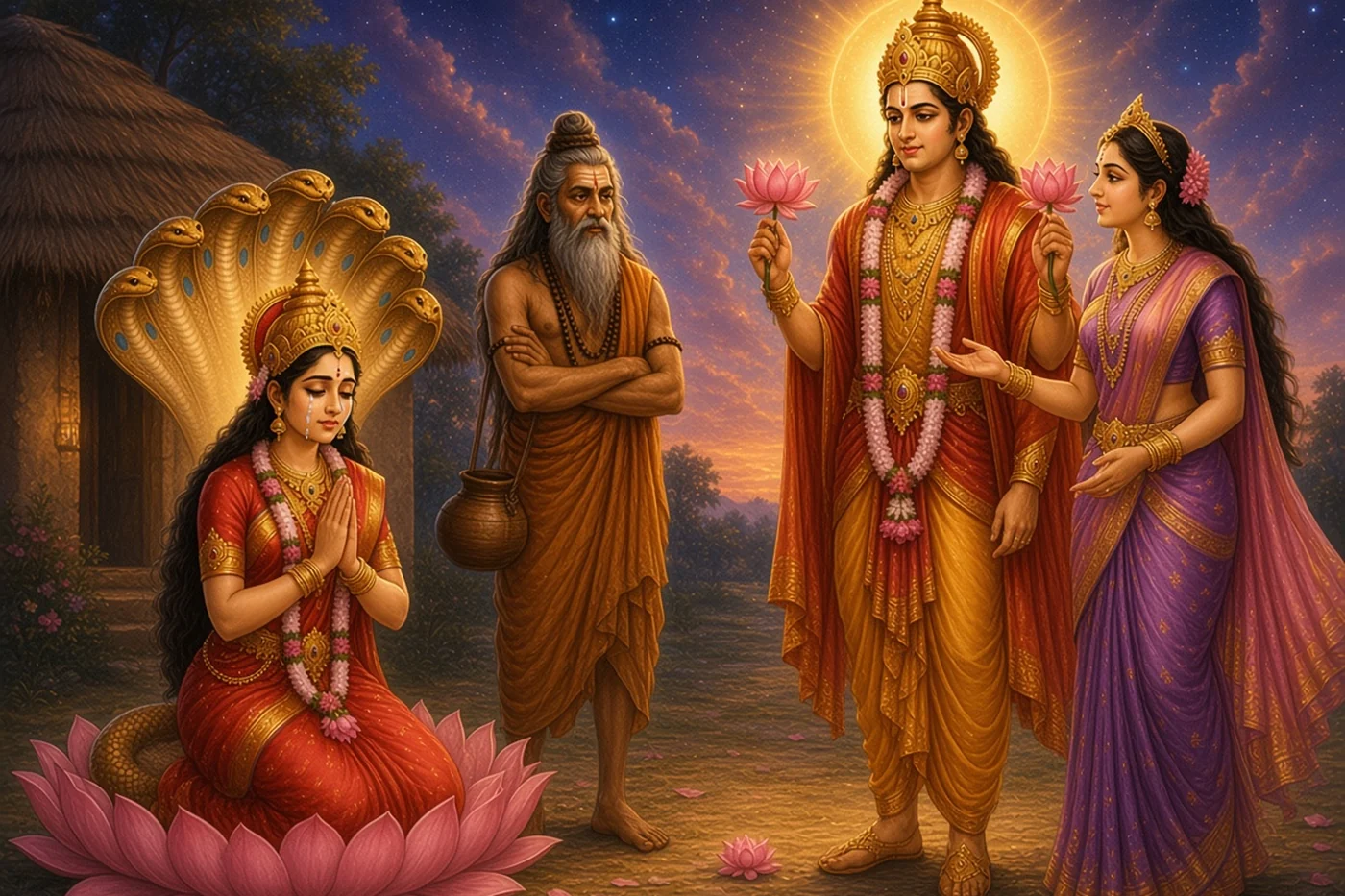
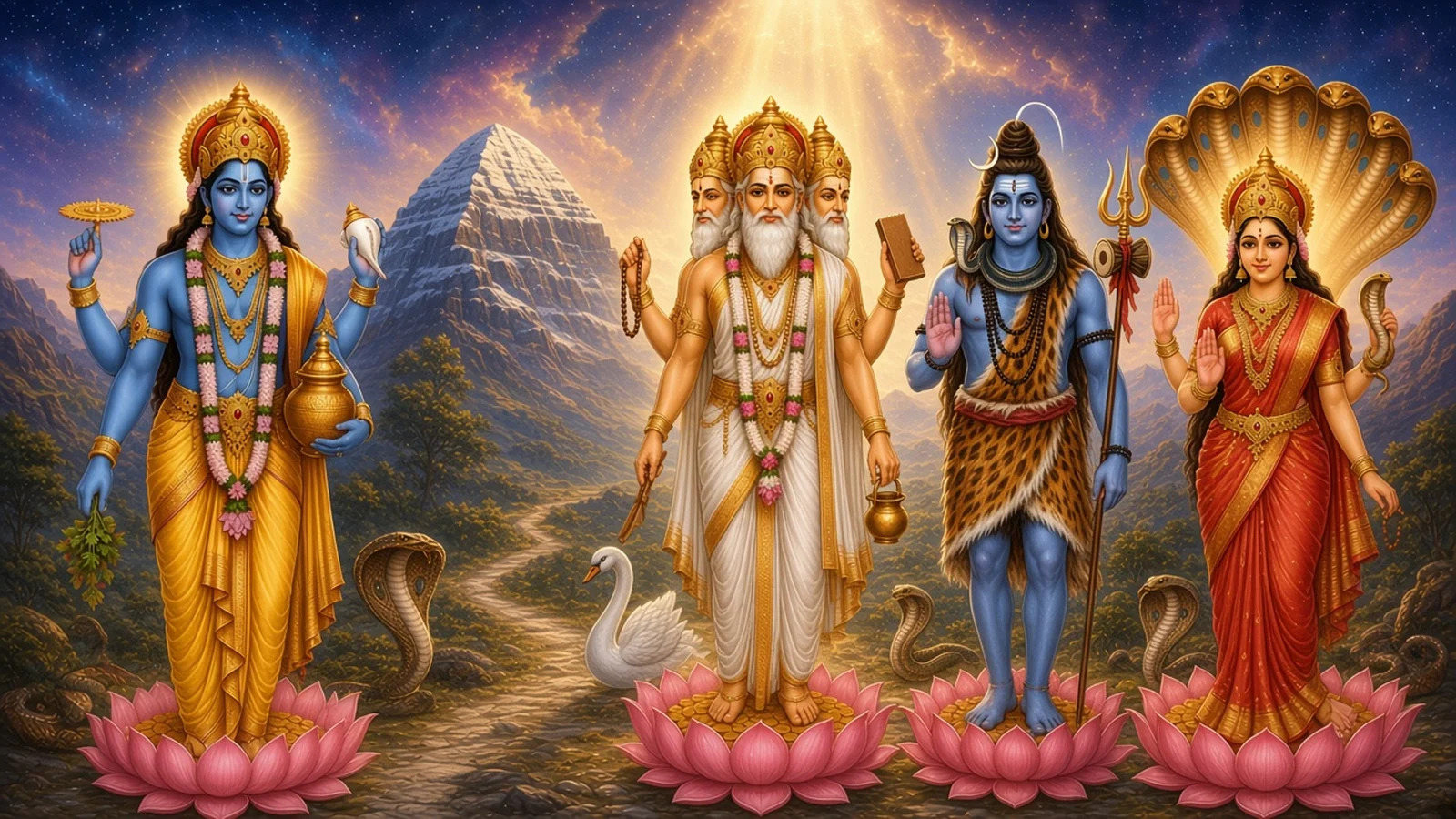
Manasa calls on the gods, and Krishna, Shiva, Brahma and Kashyapa come. Brahma tells the sage that he may not leave until he has given his wife a son, or his penance will come to nothing. So Jaratkaru touches her, speaks a mantra and promises her a son who will be self-controlled and devoted to God. Then he talks with her a long while about what makes a true son, a true wife, a true friend or teacher: whoever brings one nearer to Hari.
No bond, Manasa answers, is as strong as a wife's. The two of them hold each other and weep, and as they weep the fear goes out of them and a clear knowledge comes to both. He tells her to keep Krishna in her mind, and goes to Pushkara to do penance.
She goes up to Kailash, where Shiva and Parvati comfort her. Her son Astika is born there, and Shiva performs his birth rites and teaches him the Vedas and the mantra that conquers death. When the boy has done his own penance at Pushkara, mother and son go down to visit Kashyapa, who feeds the Brahmins for joy.