As Vijay Gupta's Manasamangal tells it
Bengali Manasamangal · Champaknagar and the seashore · 3 min read
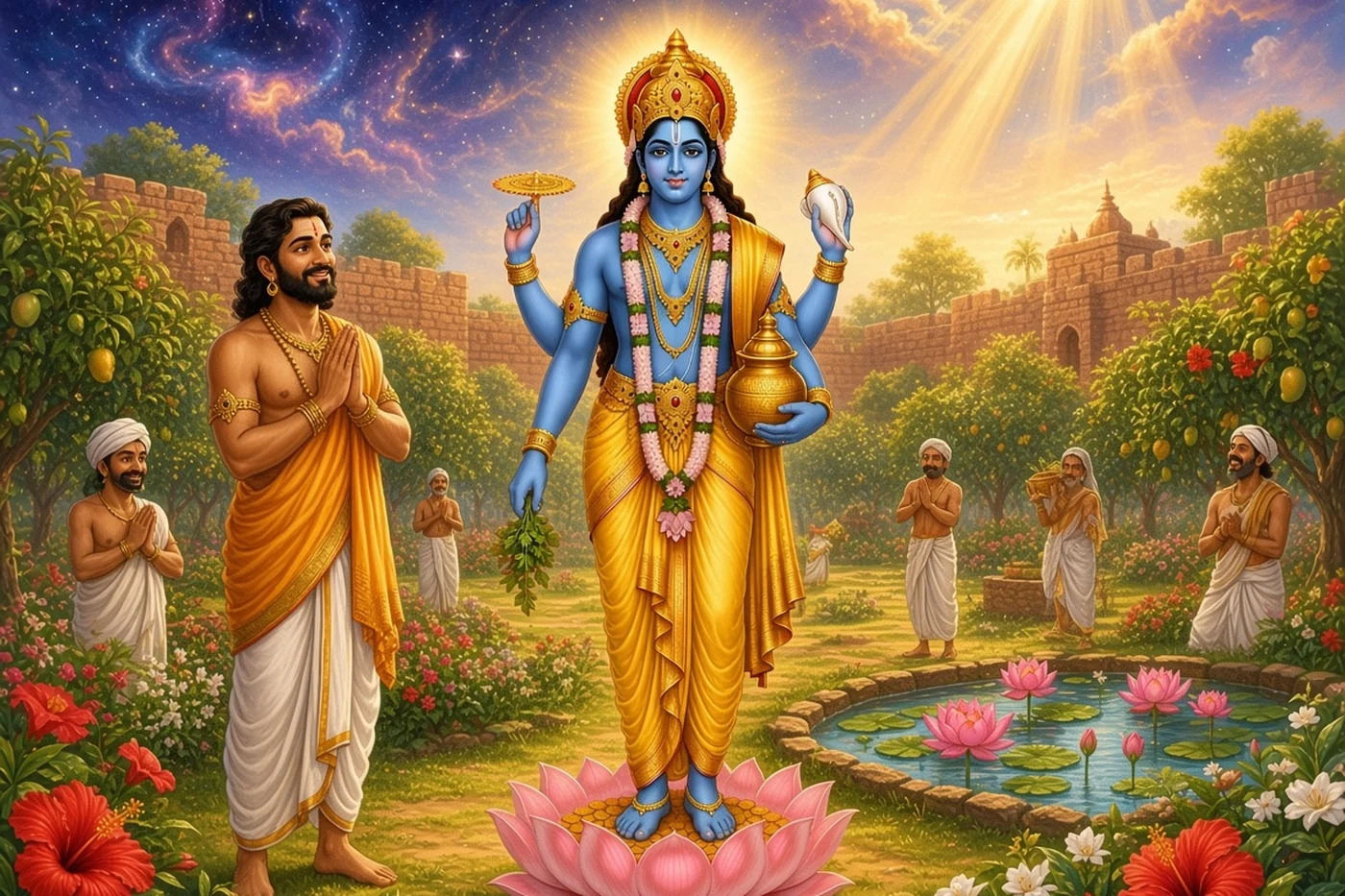
Manasa had ruined the merchant Chand's garden and struck down the men who kept it, and Chand had sent for his friend. Dhanvantari came, the snake doctor people called Sankur, and with his great knowledge he made the garden green again and raised the gardeners from the ground.
Manasa went to Neta, her companion and her counsellor, to ask how this man could be beaten.
"Do not ask me," said Neta. "He is my own pupil, and the best I ever had."
That night, in the doctor's house, his wife Kamala could not leave it alone.
"Every day you put your hands on snakes," she said, "and every day you come home. Where did this power come from? Who gave it to you?"
So Dhanvantari told her.
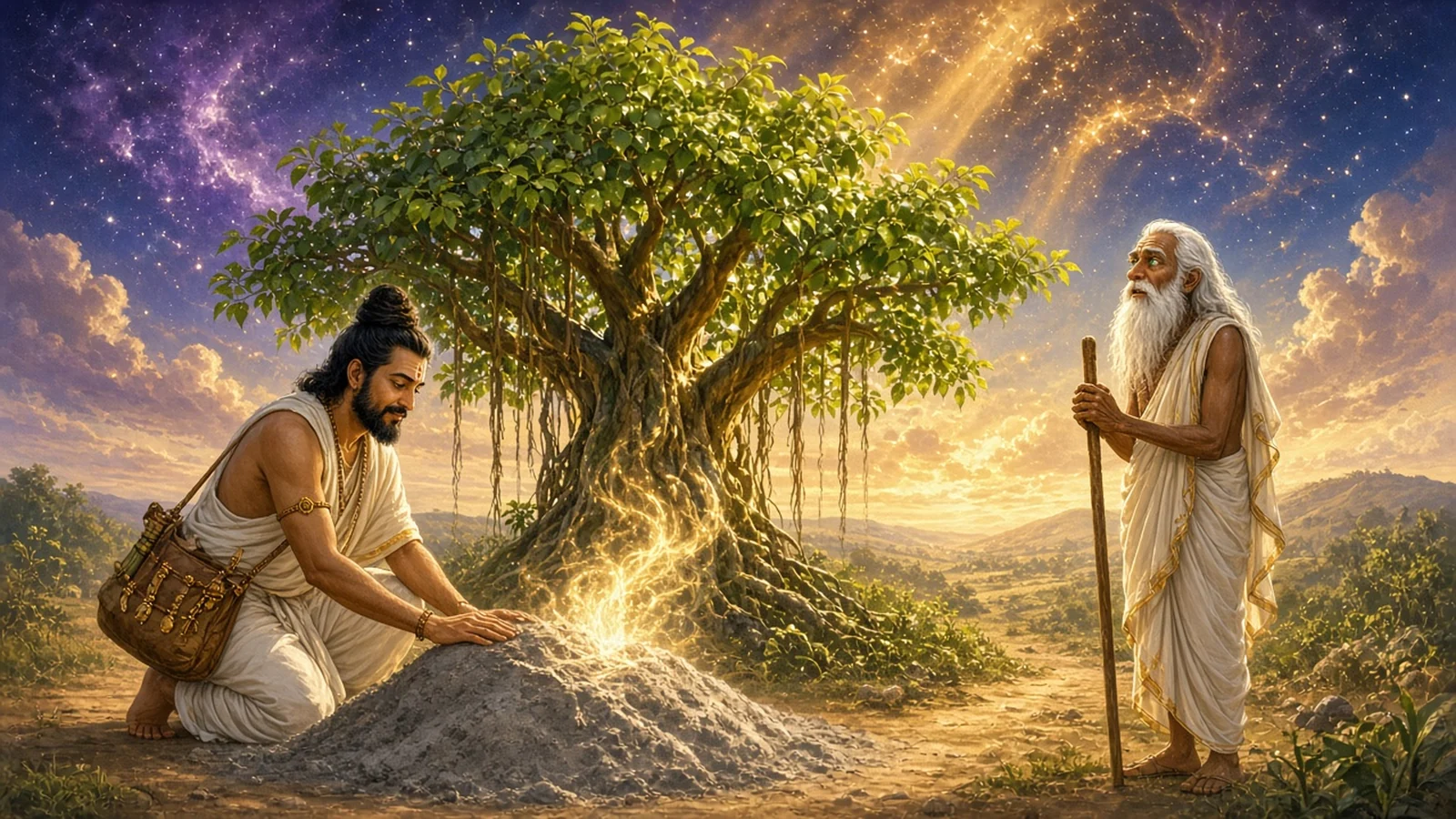
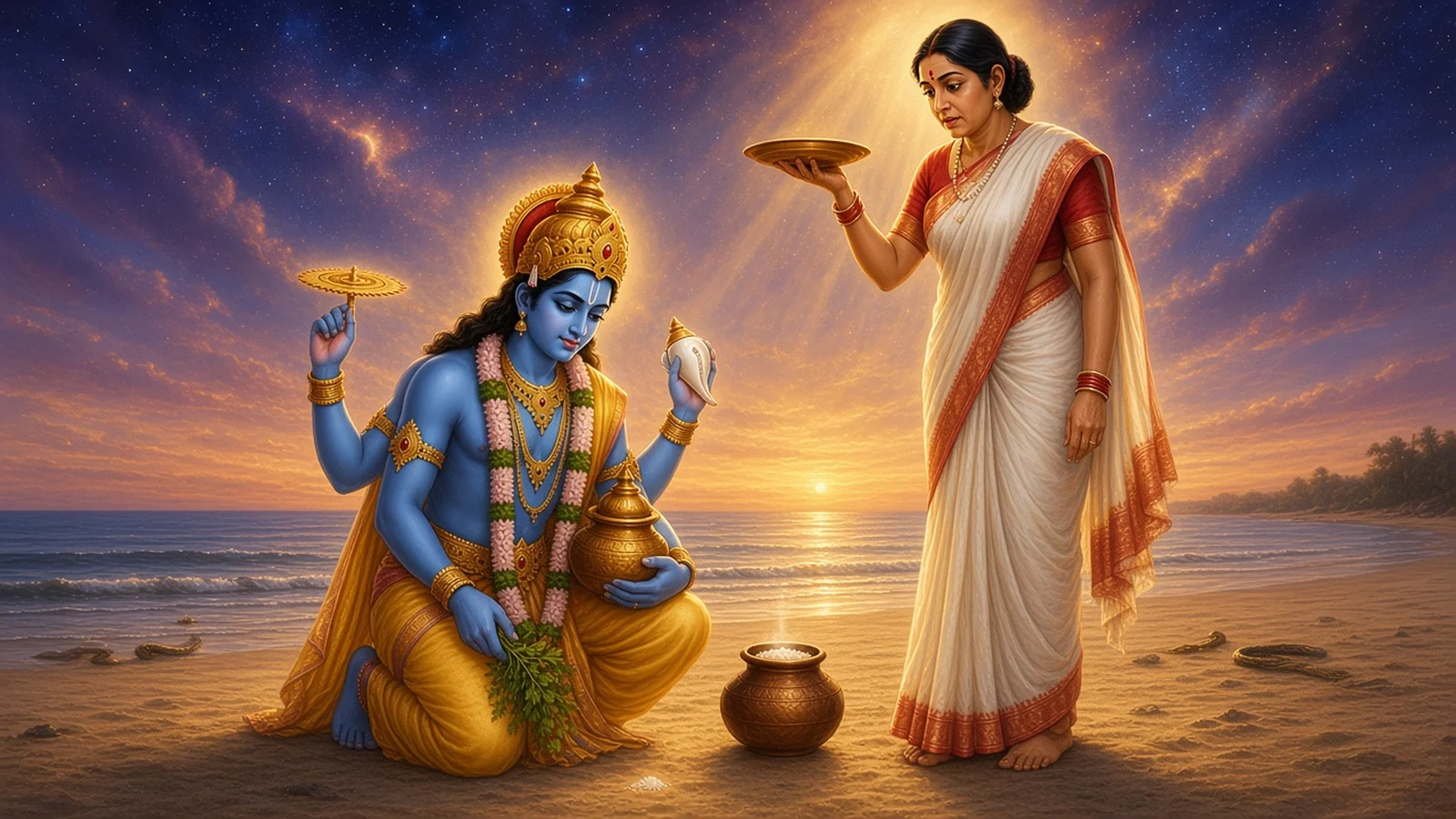
"Ever since I was a boy," he said, "I have worshipped the goddess Neta. I worshipped her all those years, and in the end she was pleased with me. She said she would give me the great knowledge, and she took me down to the seashore to do it."
On the sand Neta set down a pot with rice in it. There was no water in the pot and no fire under it, and the rice began to boil. While it boiled, snakes came out of every side of the shore and slid down towards the pot. Neta reached out, took one of them in her hands and dropped it into the rice.
When the rice was cooked she heaped it on a plate and set it in front of the boy.
"Eat it," she said. "All of it. Do not waste a single grain."
He ate. He ate until the plate was clean.
"Have you eaten it all?" she asked.
"All of it," he said.
Then she lifted the plate, and under it lay one grain of rice.
Neta's face changed. She thought the boy had tried to cheat her, and she was angry.
"Listen to me," she said. "The boon is yours. No snake's bite will kill you. But that grain has left a gap in it, and you will not forget the gap. Never grow careless of snakes because of this boon. If Takshaka bites you on the forehead while you are asleep beside your wife, on a Tuesday, at the new moon of Bhadra, you will die. At that hour you will not remember a single mantra. Medicine can still save you, but only if it is given within ten dandas. After that, nothing will."
Then she went home and left him on the shore.
"From that day," Dhanvantari told his wife, "the snakes have been afraid of me."
It was true. He was the terror of every snake in the country, and as long as he lived Manasa could not break the merchant who trusted him.
But a secret that has once been spoken aloud can be learned. Manasa learned it. She found the day, the hour and the snake that the boon had left open, and the great doctor died of it, as Neta had said he would.
His body was given to the Ganga. It was not the end of him. Long afterwards, at the asking of Behula, the young widow whose voyage is the heart of the poem, Manasa brought him back to life.
As Bamsidas's Padmapuran tells it
Bengali Manasamangal of Bamsidas · Kashi · 1 min read
The poet Bamsidas knows who Dhanvantari was before he came to Bengal. He was the physician who rose from the ocean at the churning, and afterwards he was born again in the royal house of Kashi, where he became famous as Sankha Garuri, the poison doctor.
In this poem the doctor is not the only one born to fight snakes. The merchant Chand himself, Bamsidas says, had been a hermit called Pasusakha in his last life, who raised two fledglings he had saved from the river and lost them to Manasa's snakes, and died wishing to be the terror of snakes in his next birth.
He had a way with snakes, and he liked to show it. Once he had an Udayakala snake that he kept at his tricks, day after day, until the snake was worn out. It went to a sage and begged for help.
The sage came to the doctor. "Let this one go," he said. "You have other snakes. Do your tricks with them."
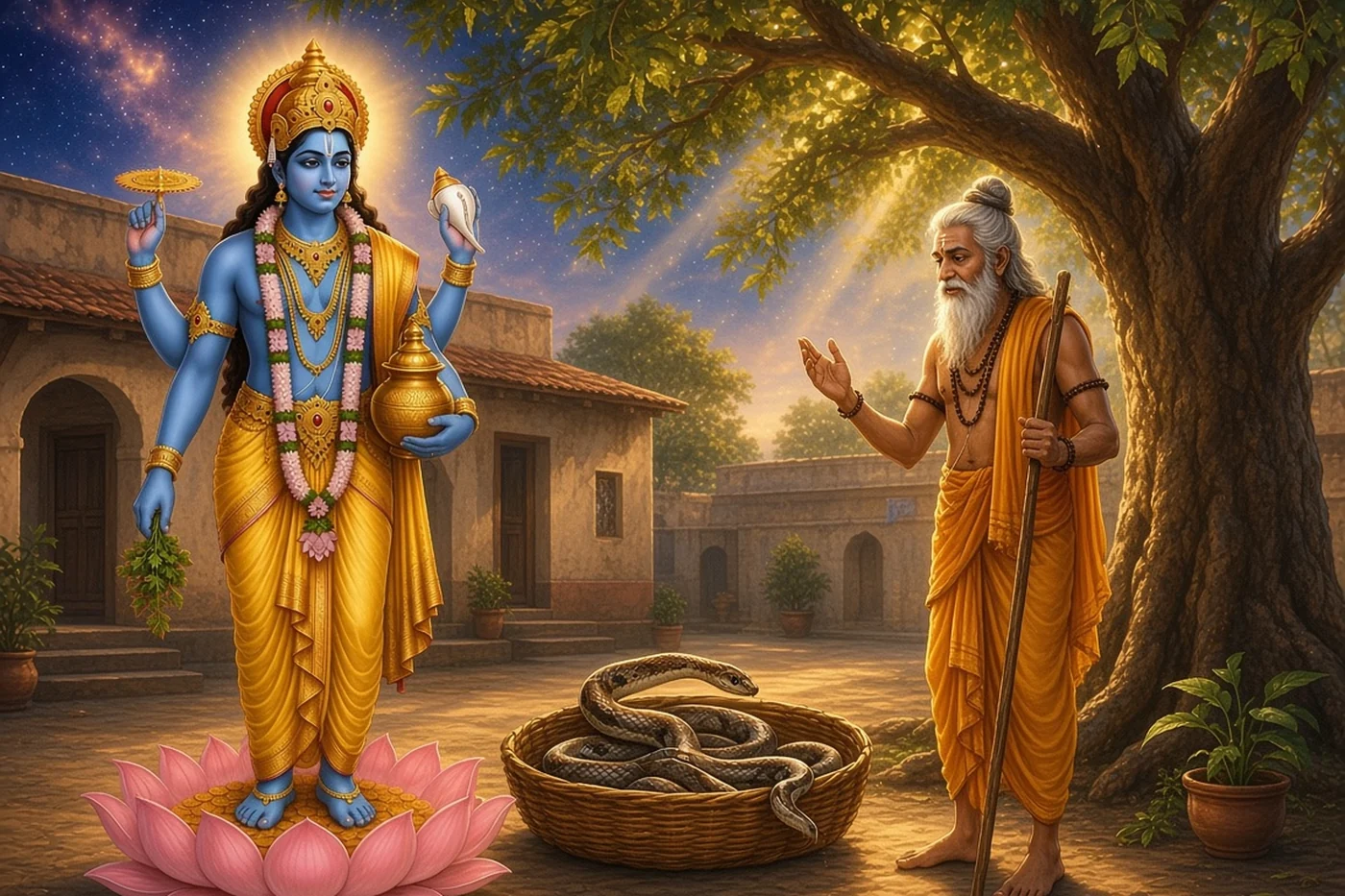
"No," said Dhanvantari. "This one is mine."
The sage's patience broke. "Then hear me. One day a snake like this one will bite you, and you will die of it."
Dhanvantari begged the sage to be calm and to take it back. The sage would not unsay it, but he softened it.
"You will die," he said, "but not for ever. You will be dead for twelve years. Then you will live again."
So when Manasa, in her war with Chand, at last killed the snake doctor who stood in her way, it was only for a time. Twelve years later Dhanvantari came back to life.