As the Mahabharata tells it
Mahabharata, Adi Parva 128 and 129 · Pramanakoti on the Ganga · 3 min read
When the Pandavas and the Kauravas were boys together in Hastinapura, Bhima was the strongest of them, and he never let his cousins forget it. In their games he dragged them about by the hair and held them under the water until they were half drowned. He meant no harm by it, says the epic, but Duryodhana burned with it.
"I will have to get rid of him by a trick," thought Duryodhana. "Then I can rule alone."
So he had a pleasure house built on the bank of the Ganga at a place called Pramanakoti, hung it with bright cloth, filled it with good things to eat, and invited his cousins there to play in the water. When they sat down to eat, Duryodhana got up and, as friendly as could be, piled Bhima's plate with food he had mixed with a strong poison.
All afternoon the boys played in the river. In the evening Bhima, worn out, lay down on the bank, and in the cool air the poison spread through him until he could not move. Duryodhana tied him with cords of creeper and rolled him into the river.
Bhima sank down and down until he came to the kingdom of the Nagas. The snakes fell on him and bit him, thousands of times, though their fangs could not get through the skin of his chest. But their venom fought the poison in his blood, and drove it out, and Bhima woke.
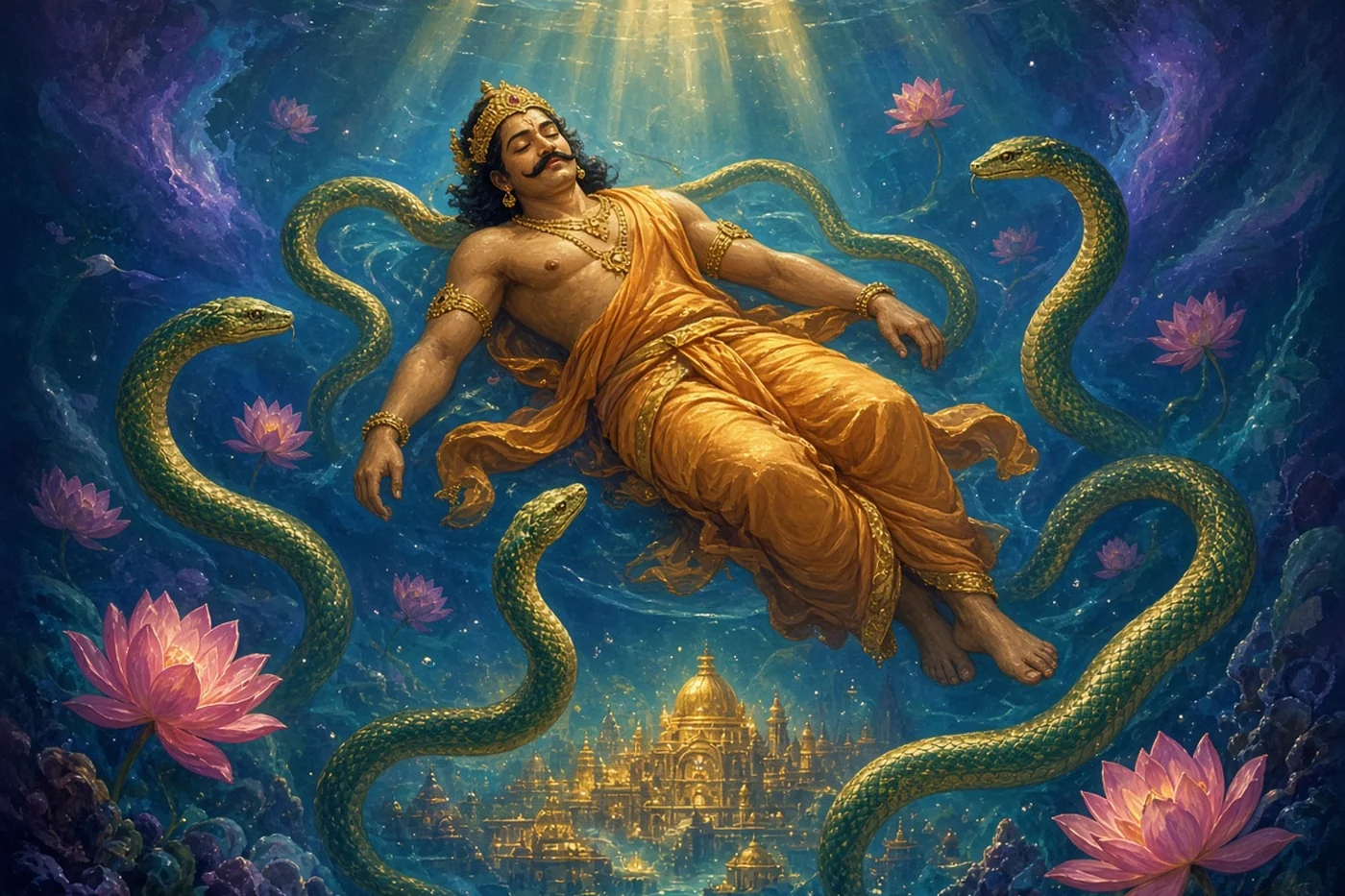
He snapped the cords, seized the snakes and pressed them into the ground. The rest fled to their king.
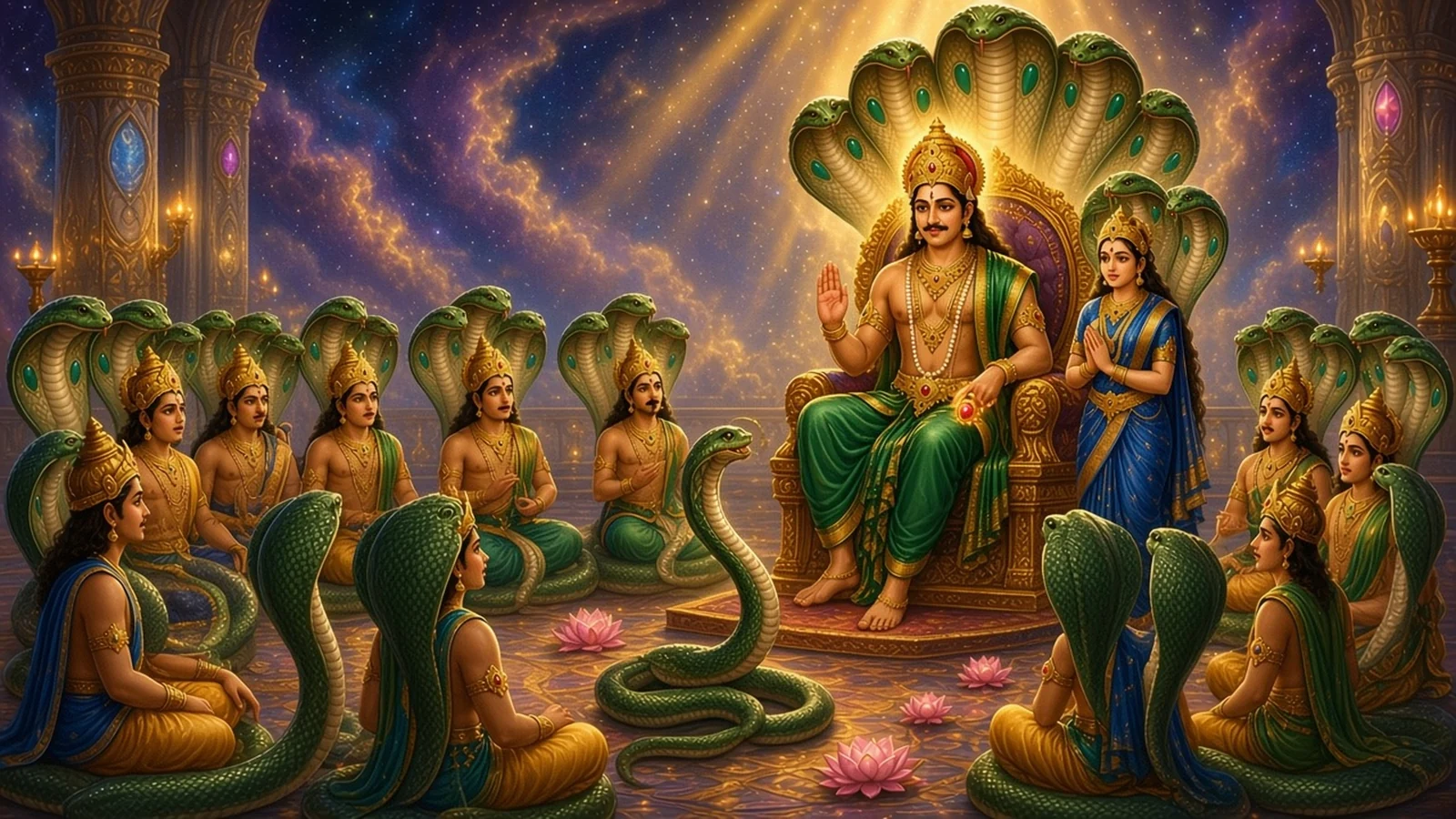
"Vasuki," they cried, "there is a man down here, drowned and tied up with creepers. We think he had drunk poison. And now he is awake and killing us!"
Vasuki went to see. With him came an old serpent named Aryaka, and Aryaka knew the young man at once. Aryaka was the grandfather of Kunti's father, and this was Kunti's son.
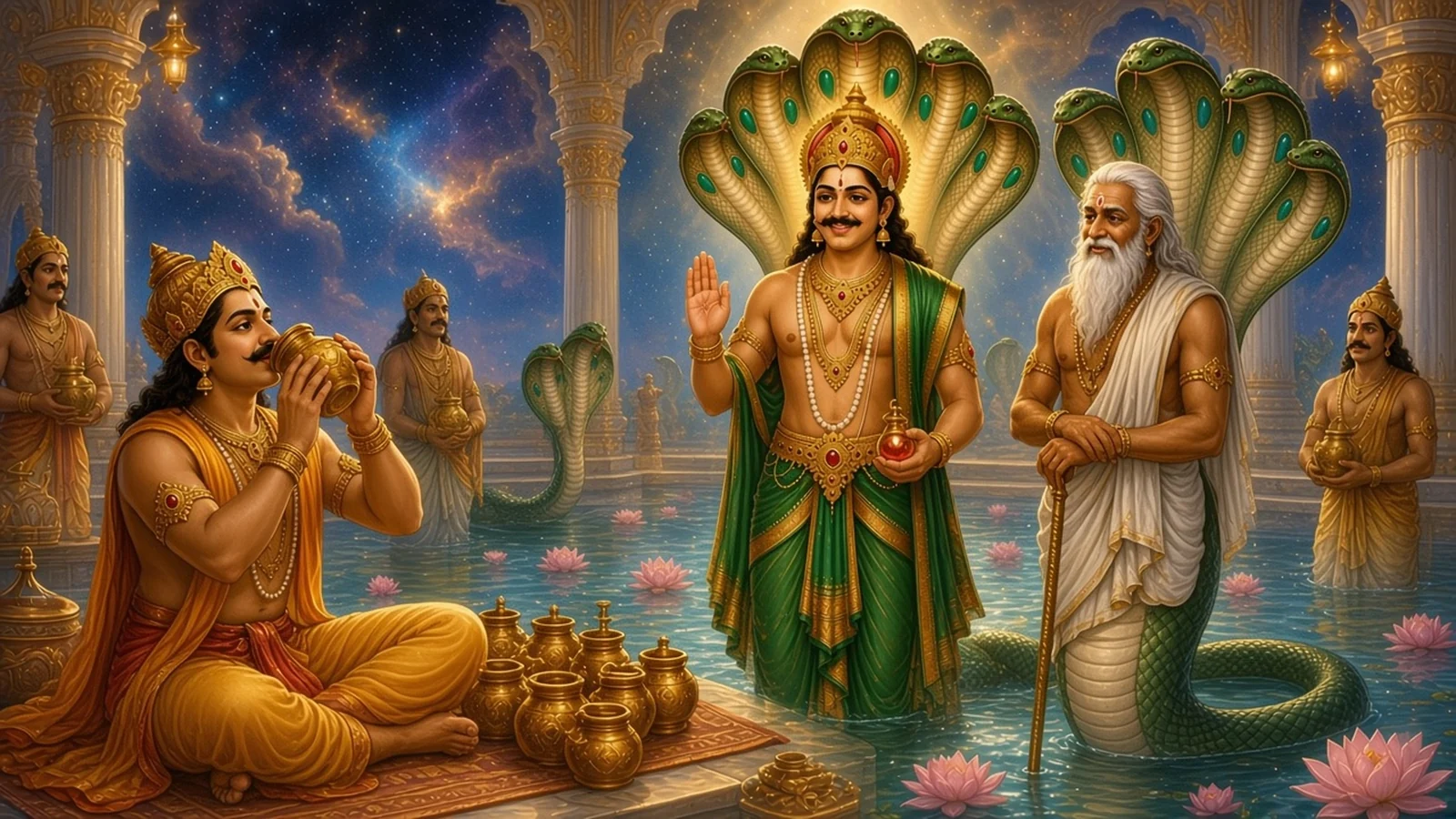
Vasuki was delighted. "How shall we please him?" he said. "Give him gold and gems, as much as he can carry."
"He has no need of wealth," said Aryaka. "Let him drink from our jars of nectar instead. Every jar holds the strength of a thousand elephants."
"Let him drink," said Vasuki.
They brought the jars. Bhima washed, sat down facing the east and drank the first jar in a single breath. Then he drank another, and another, until he had emptied eight. The serpents made him a bed, and he lay down on it and slept.
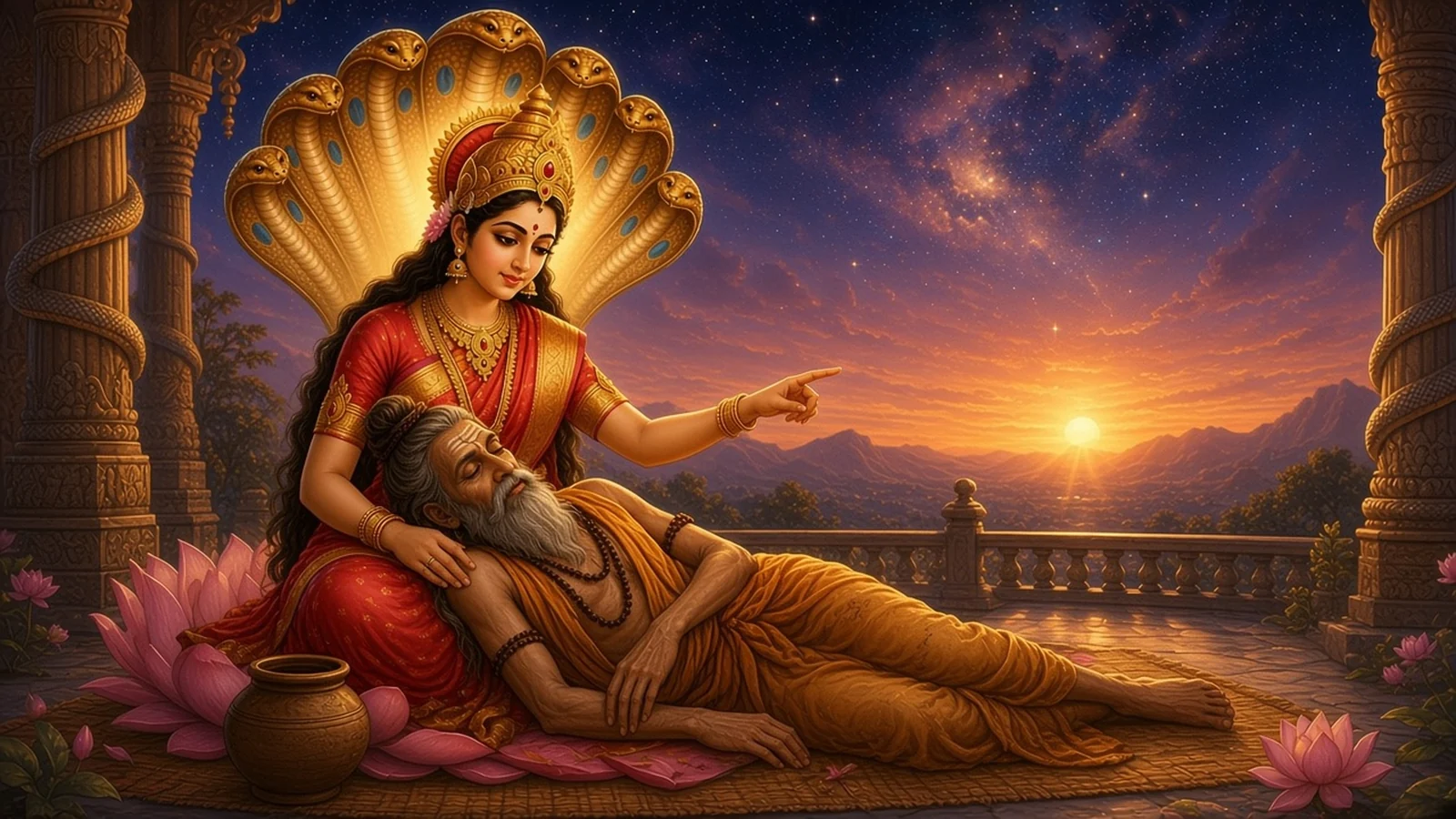
Up in Hastinapura the cousins had come home without him, each thinking he had gone on ahead, and Duryodhana was glad. Yudhishthira went to his mother.
"Has Bhima come home?" he asked. "We have looked through every garden and wood, and he is nowhere."
Kunti cried out. She sent her sons back to search and called for Vidura.
"I am afraid Duryodhana has killed him," she said.
"Do not say that aloud," said Vidura. "You have four other sons to keep safe. A sage once told you all your sons would live long. Bhima will come back."
Under the river Bhima slept for seven days. On the eighth he woke, with the nectar all through him.
"You have drunk the strength of ten thousand elephants," the Nagas told him. "No one will beat you in battle now. Bathe in our waters and go home. Your brothers are grieving for you."
He bathed, put on white clothes and garlands, and ate the rice and sugar pudding they gave him. Then they carried him up and set him down in the same garden by the river, and were gone.
Bhima ran all the way home. His mother and his brothers held him, and he told them everything, Duryodhana's poison and the kingdom under the river.
"Tell no one," said Yudhishthira. "And from now on we watch over each other."
As Draupadi remembers it
Mahabharata, Vana Parva 12 and Adi Parva 61 · the forest of the exile · 1 min read
Years later the Pandavas had lost everything at dice and were living in the forest. Krishna came to see them with the Vrishnis and the Panchalas, and Draupadi, sitting among those heroes, began to count up the wrongs Duryodhana had done them. One of the first was the day by the river.
She told it to Krishna as one wrong among many, and there was no kingdom under the water in it.
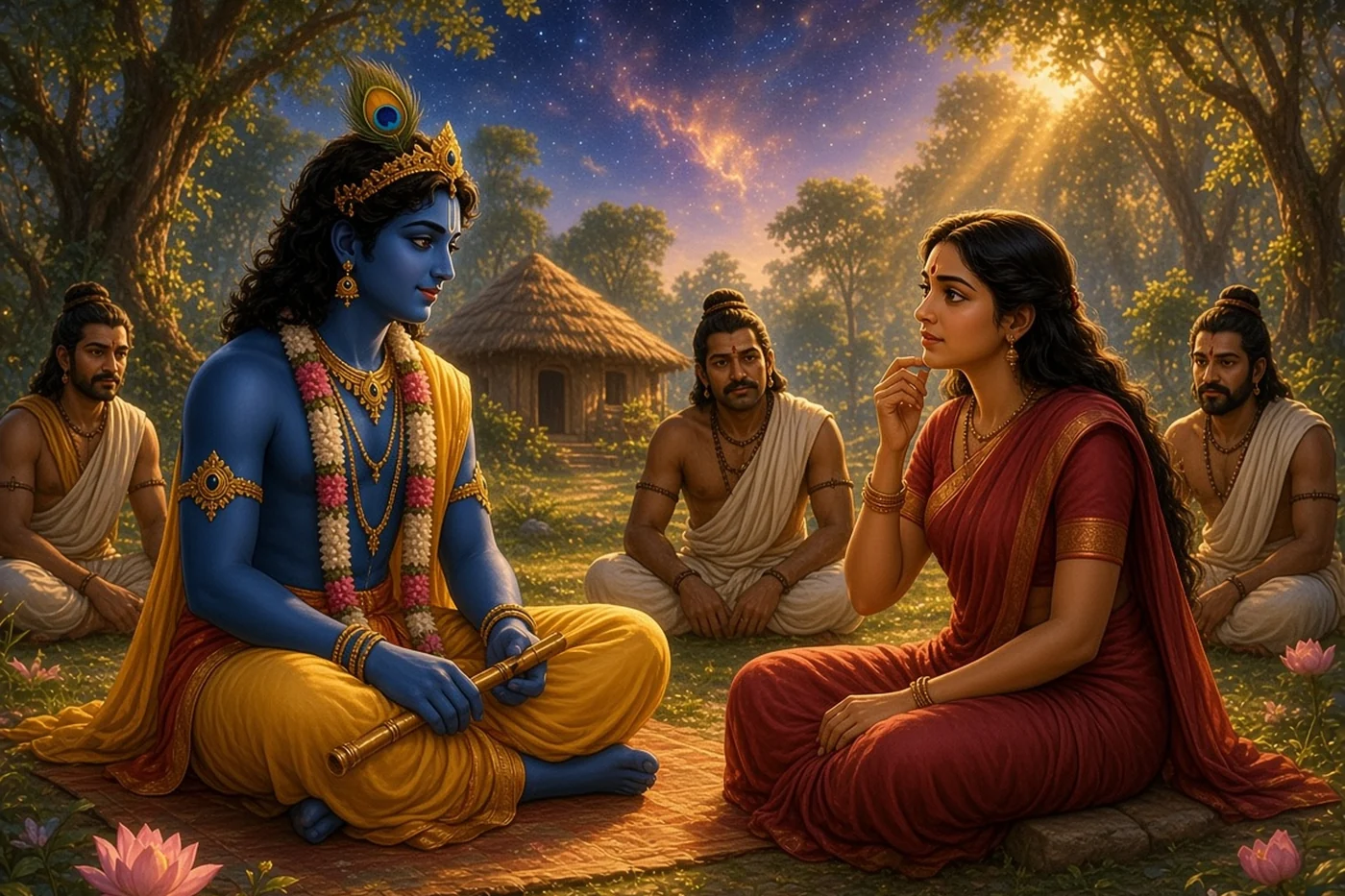
Duryodhana, she said, had mixed a fresh and deadly poison into Bhima's food, a full dose of it. But Bhima's days were not yet over. He digested the poison with his food and came to no harm.
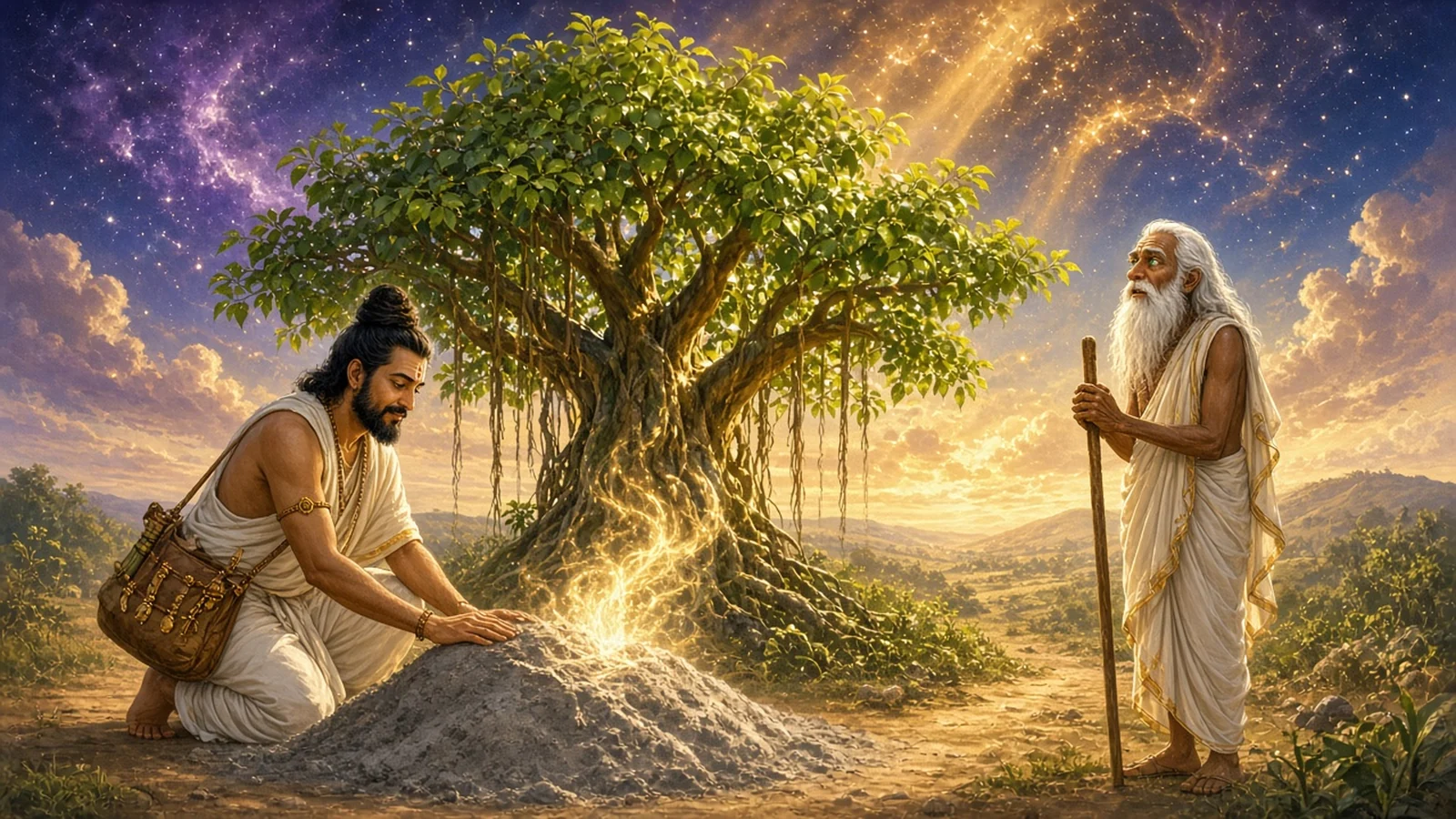
Then, at the house by the great banyan they called Pramana, Duryodhana had tied Bhima up while he slept, thrown him into the Ganga and gone back to the city. Bhima woke in the water, broke his bonds and came up out of the river.
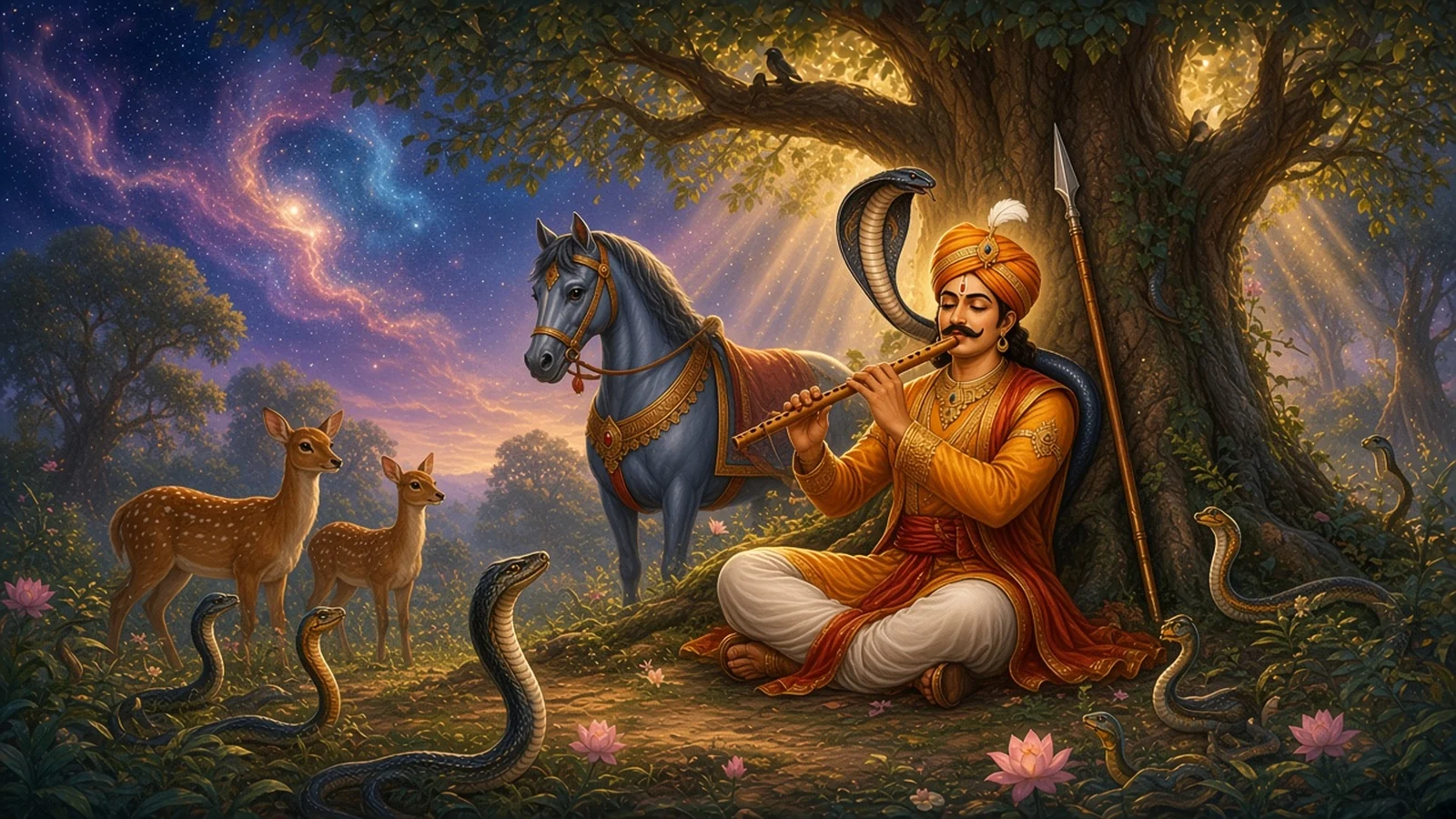
And then, she said, Duryodhana had black cobras set on him, to bite him all over. Bhima did not die. He woke and crushed the serpents, and with his left hand he struck down Duryodhana's favourite charioteer.
There is no Vasuki in her story, no Aryaka, no jars, no eight days asleep. The snakes do not save Bhima; they are one more weapon turned against him, and he beats them as he beats everything else.
The epic's own short account of the Pandavas' youth, which the bard gives before the long one, tells it nearly as she does. Bhima eats the poison and digests it. He is thrown into the Ganga, wakes, tears the strings and comes up with all his pains gone. Black snakes bite him while he sleeps, and he does not die.