Devalok ← All gods
Also calledVasuki NagNagarajaSarparajaking of the serpents

In short

Who is Vasuki?
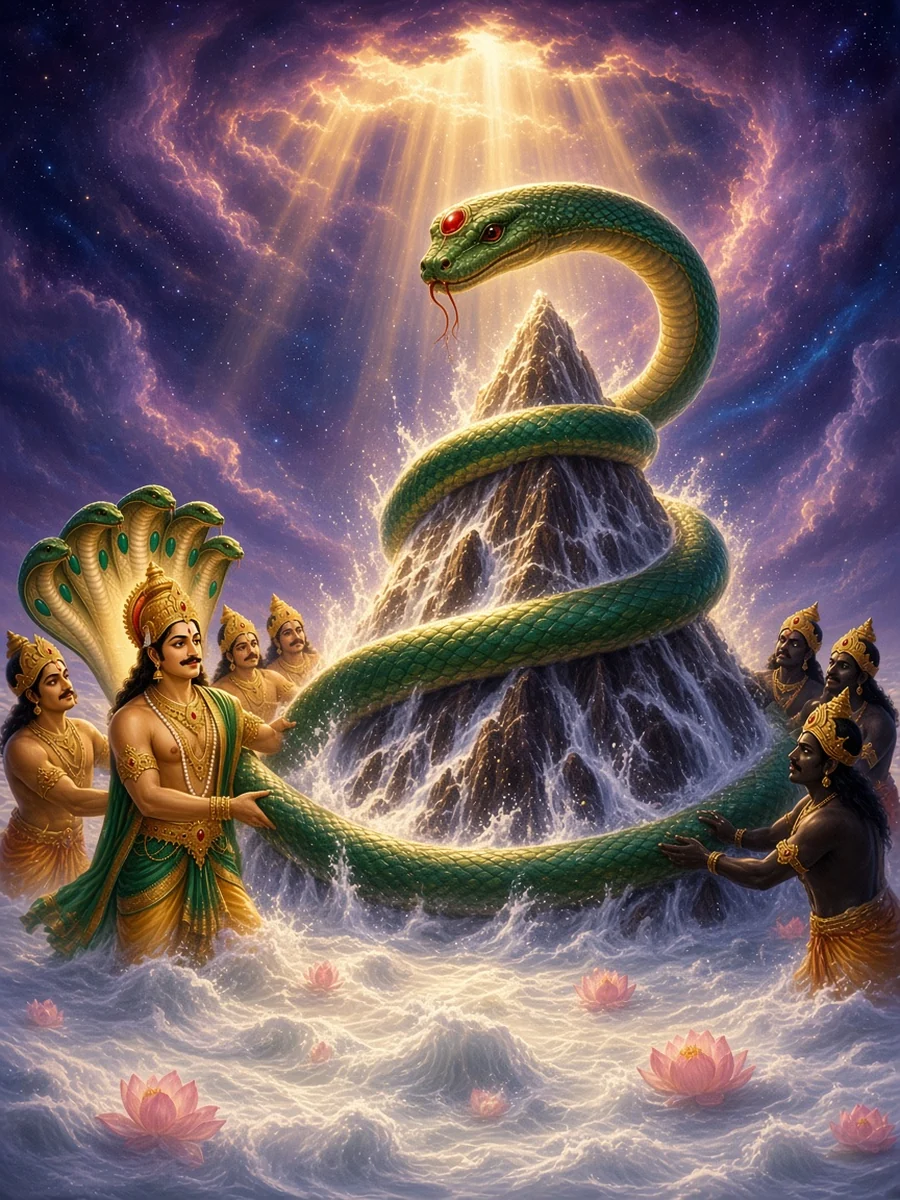
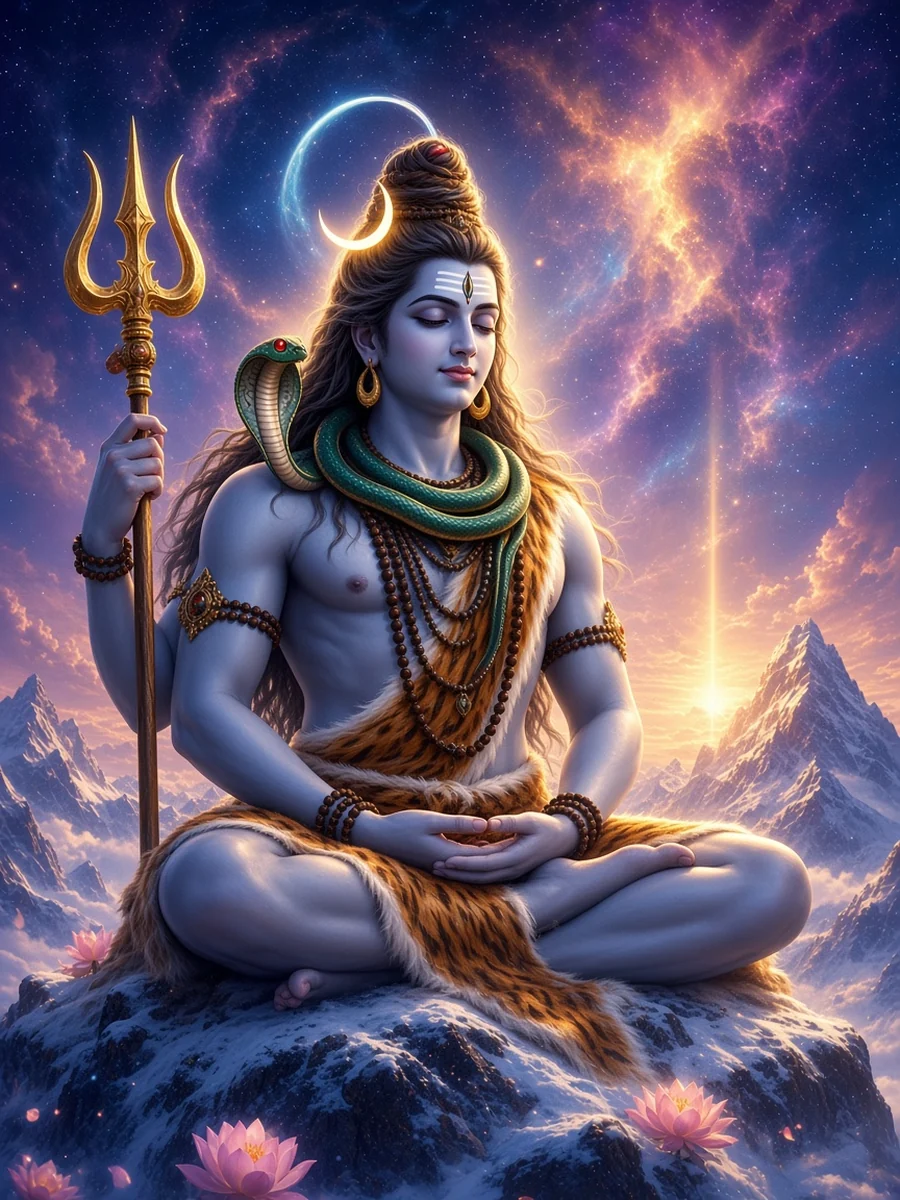
The king of the serpents, a son of the sage Kashyapa and Kadru and the younger brother of Shesha. He was the rope the gods and asuras wound round the mountain to churn the ocean, and in pictures of Shiva he is the snake coiled at the throat.
Why does Shiva wear Vasuki?
No old text tells one story for it. Devotees say Shiva blessed the serpent king and wears him as an ornament, and the Shiva Purana also makes him the string of Shiva's bow.
Who is Vasuki's sister?
Jaratkaru, whom he gave to the sage of the same name so that their son Astika could save the serpents from a king's fire. In eastern India she is worshipped as the goddess Manasa.
Where is Vasuki worshipped?
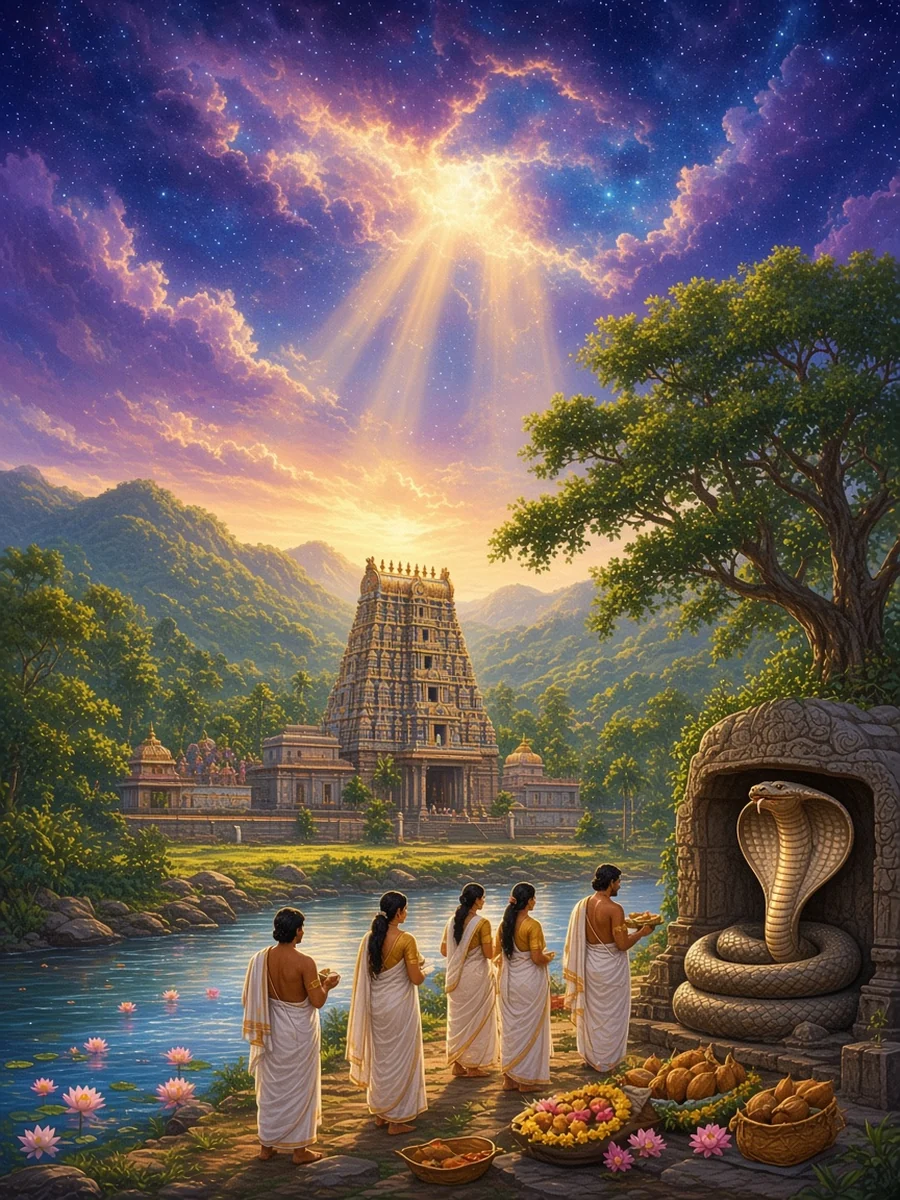
At Kukke Subramanya in Karnataka beside Subrahmanya, at Bhaderwah in Jammu and the high lake of Kailash Kund above it, and at the Nagvasuki temple by the Sangam at Prayagraj. On Nag Panchami he is among the serpents every house remembers.

Artwork ›

The rope that churned the ocean Coiled round Shiva's throat

For kids

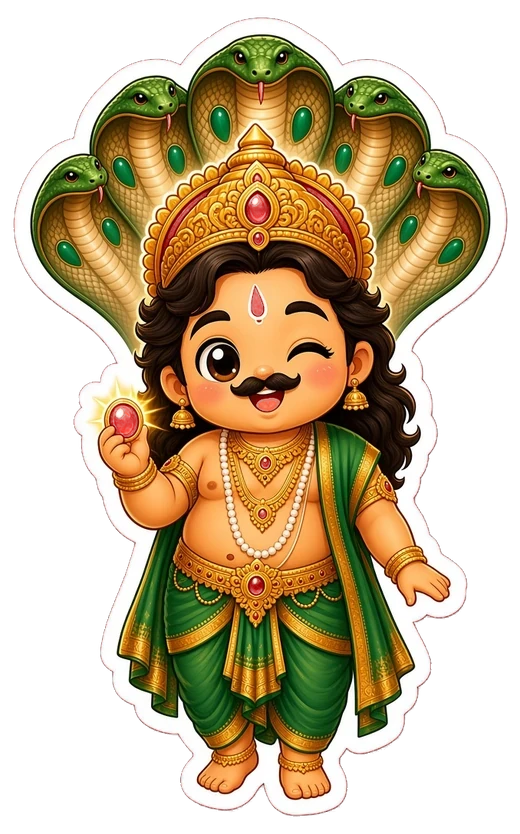
Seven heads are better than one
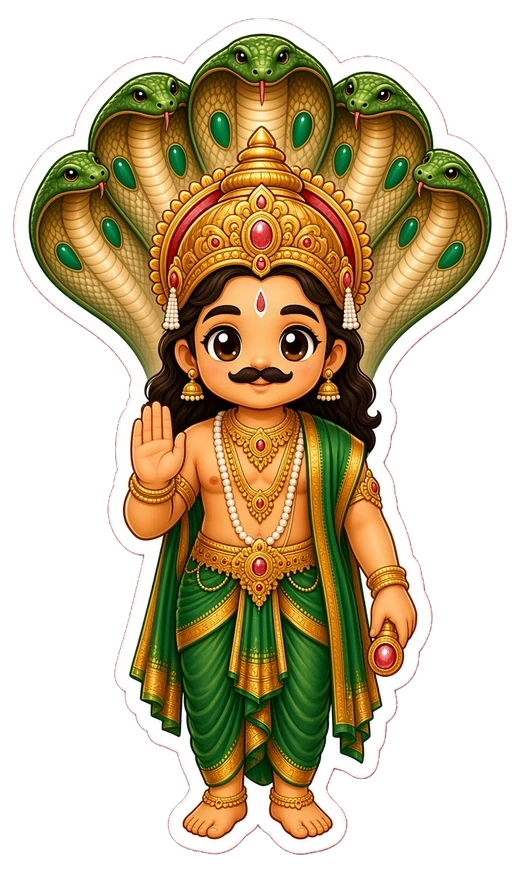
Serpent king, at your service

At a glance

TraditionPan-Hindu; Shaiva at his shrines
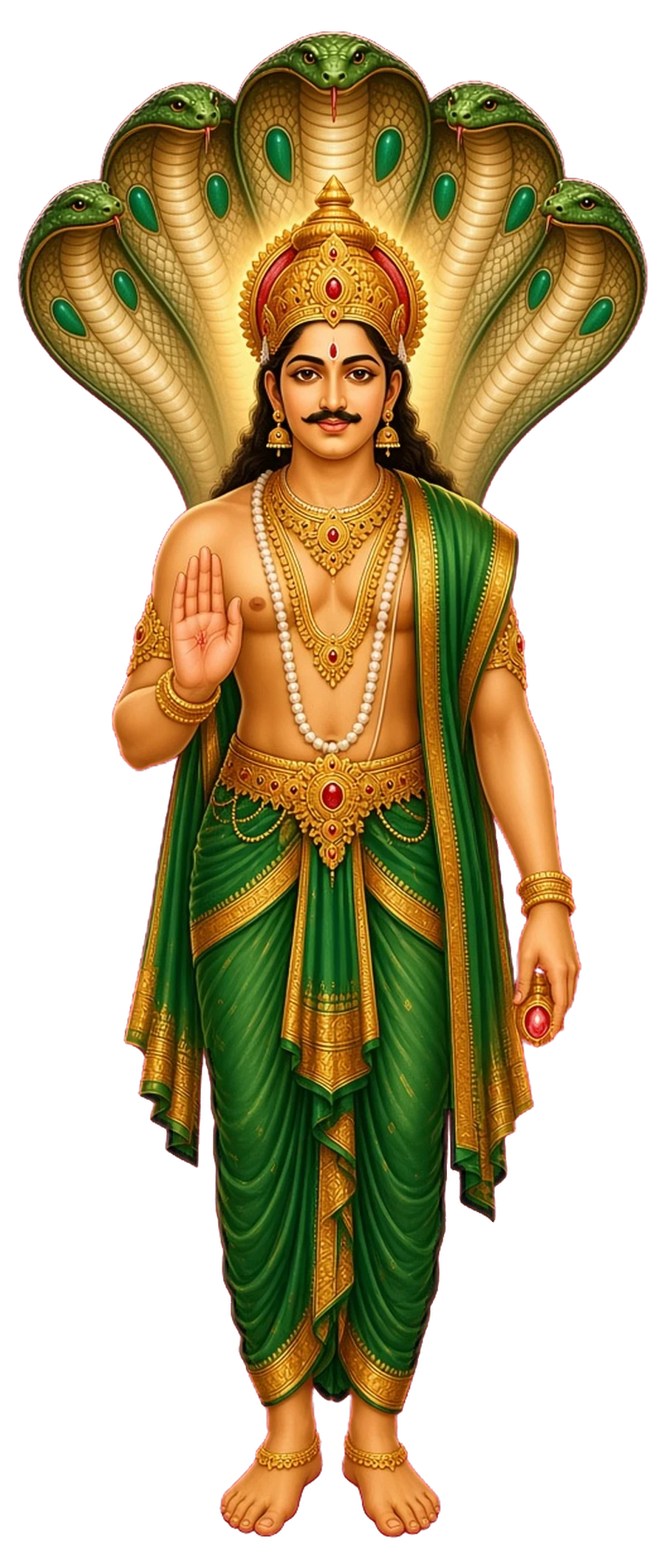
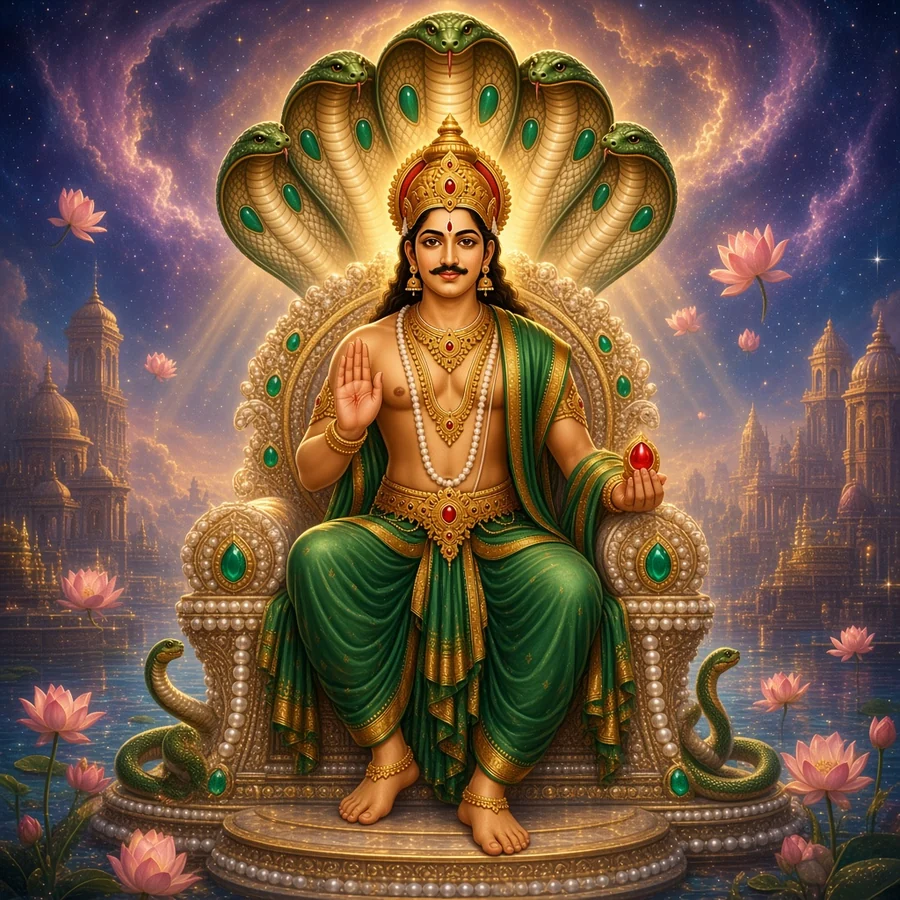
FormA great serpent with many hoods

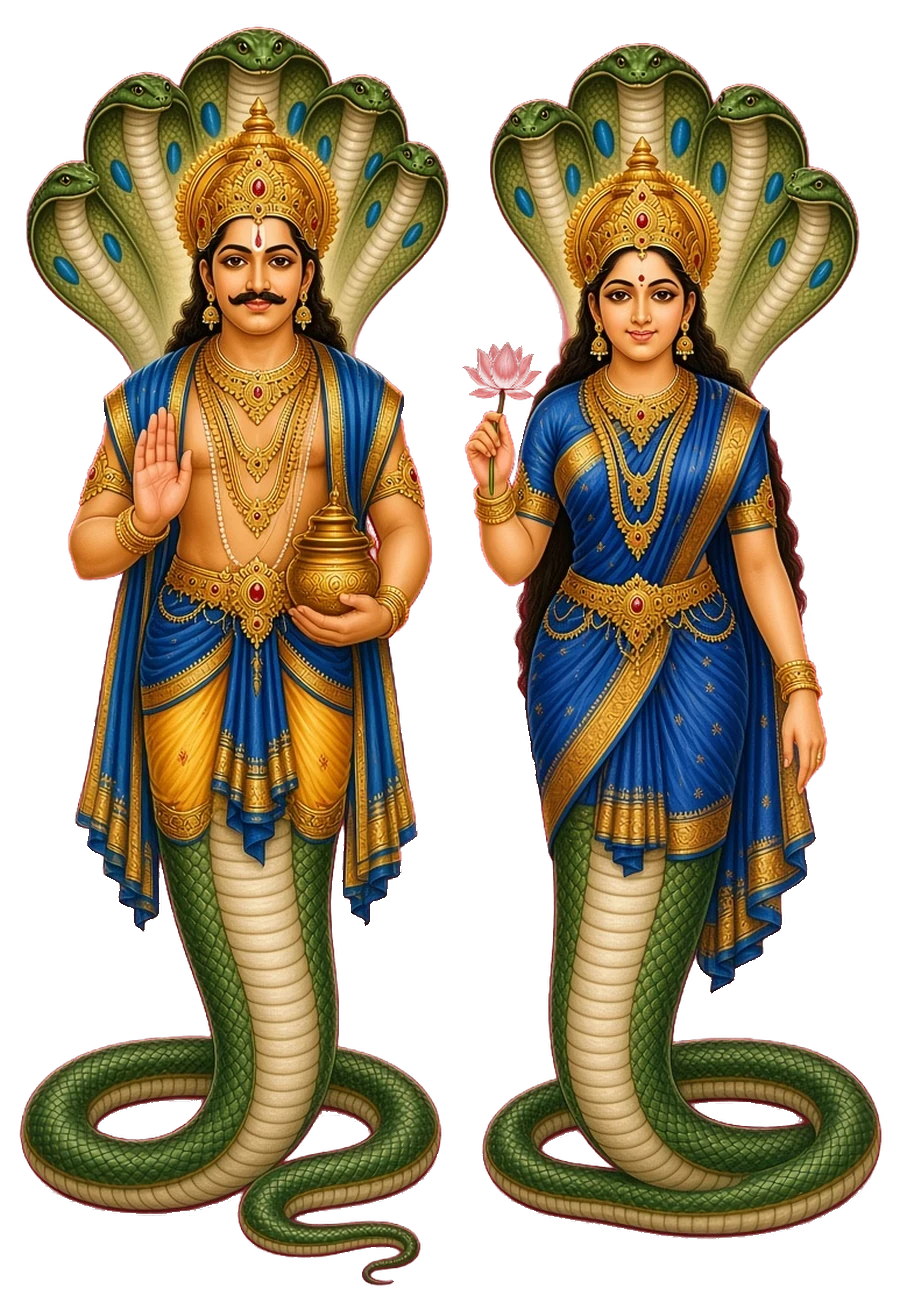
a jewel shining on his head; in human form a crowned king with a canopy of hoods

Best known asCoiled round Shiva's throat

his hood raised beside the god's face

Who Vasuki is

Vasuki is the king of the serpents. He is a son of the sage Kashyapa and of Kadru, the mother of the thousand snakes, and in the Mahabharata he is born second, after Shesha, the serpent who holds up the earth. Shesha went away to do penance and carry the world on his head; Vasuki is the one the texts call the serpents' king. His city is Bhogavati in Patala, under the earth, where the jewels in the serpents' hoods light up the dark.

He is best known for two jobs. At the churning of the ocean of milk the gods and the asuras wound him round Mount Mandara and pulled, and in Valmiki's Ramayana it is his tired heads, biting the rock, that pour out the poison Shiva has to drink. And Shiva wears him. In almost every picture of the god the serpent lies coiled round his throat; devotees say Shiva blessed him and took him for an ornament, and the Shiva Purana stretches him across a mountain to be the string of Shiva's bow.

Above all he is a king with a people to save. His own mother cursed her sons to burn in King Janamejaya's fire, and Vasuki spent years on the cure: he raised his sister for a wandering sage, married her to him, and sent their son Astika to stop the sacrifice. In Bengal that sister is the goddess Manasa.

Krishna, listing the things in which he is most himself, names him among the serpents:

Ayudhanam aham vajram, dhenunam asmi kamadhuk, prajanash chasmi kandarpah, sarpanam asmi Vasukih: of weapons I am the thunderbolt, of cows the cow that gives every wish; of those who beget I am Kandarpa, the god of love, and of serpents I am Vasuki (Bhagavad Gita 10.28).

He has shrines of his own. The Mahabharata already knows a holy pool of Vasuki at Prayaga, and a temple to him stands there by the Sangam. In the hills of Jammu, Bhaderwah keeps his temple and walks every year to the high lake Shiva gave him; at Kukke in Karnataka he sheltered under Shiva's son.

His stories on this site: What Elapatra Overheard, Eight Jars Under the River and The Lake Shiva Gave Away. At the churning he is the rope in Mohini and the Pot of Nectar, The Garland in the Dust and The Twelve Days of the Pot, and the poison is drunk in The Blue Throat. With his sister and her son: The Bride Who Had His Name, The Daughter in the Flower Basket and The Boy Who Stopped the Fire. He is Shiva's bowstring in The Three Cities and the Single Arrow, rules Bhogavati in The Weight of One Arm, quarrels with the Wind in The Wind and the Serpent, and ties the flood boat to the fish's horn in The Fish That Outgrew the Sea.
Before the Puranas

The Vedic roots of Vasuki

The Vedas do not know Vasuki. Their hymns have serpents, and the Atharvaveda names some of them, but as the scholar Rajendra Nanavati notes, the names it gives are Takshaka, Dhritarashtra and Airavata, and when the Tandya Brahmana describes a sacrifice performed by serpents, Vasuki is not among the priests. He enters with the epics, where the old serpent families are joined by his, and from then on he is their king.

The Mahabharata gives him most of his story. Its first book counts him second of Kadru's sons, after Shesha; it has him call the serpents to council after their mother's curse, serve as the rope at the churning, give his sister to the sage Jaratkaru and raise their son Astika, who ends Janamejaya's sacrifice. It has him welcome the young Bhima to the Nagas' kingdom, and in the Book of Effort Bhogavati is the city he rules. Its pilgrimage book places a pool of Vasuki at Prayaga. Valmiki's Ramayana makes the churning poison come from his own heads, and the Bhagavad Gita, inside the Mahabharata, has Krishna name himself Vasuki among serpents.

The Puranas made him a fixture. Every telling of the churning winds him round Mandara; the Bhagavata names him the chief of the serpents in Patala; the Shiva Purana bends Mount Meru into Shiva's bow and strings it with Vasuki for the burning of the three cities. The Devi Bhagavata retells the curse and the marriage without the council. In the east the poets of the Manasamangal made him the brother of Manasa, the snake goddess, and in the temples Shiva wears him at the throat.

He travelled with the Buddhists too. The Lotus Sutra seats him among the Naga kings who come to hear the Buddha, and East Asia counts him one of the eight great dragon kings. His own shrines belong to the later centuries and the hills: Kukke in Karnataka, where a temple tradition shelters him under Subrahmanya, and Bhaderwah in Jammu, where a local Vasuki Purana is quoted for the lake Shiva gave away.

See how the Vedic gods became the Puranic ones →

Related gods