As Tiruvahindrapuram tells it
The Devanatha temple and Oushadagiri hill · near Cuddalore, Tamil Nadu · 3 min read
Tiruvahindrapuram is an old temple town a few miles west of Cuddalore, and it has two stories about water and one about a hill before it has any about Vedanta Desika.
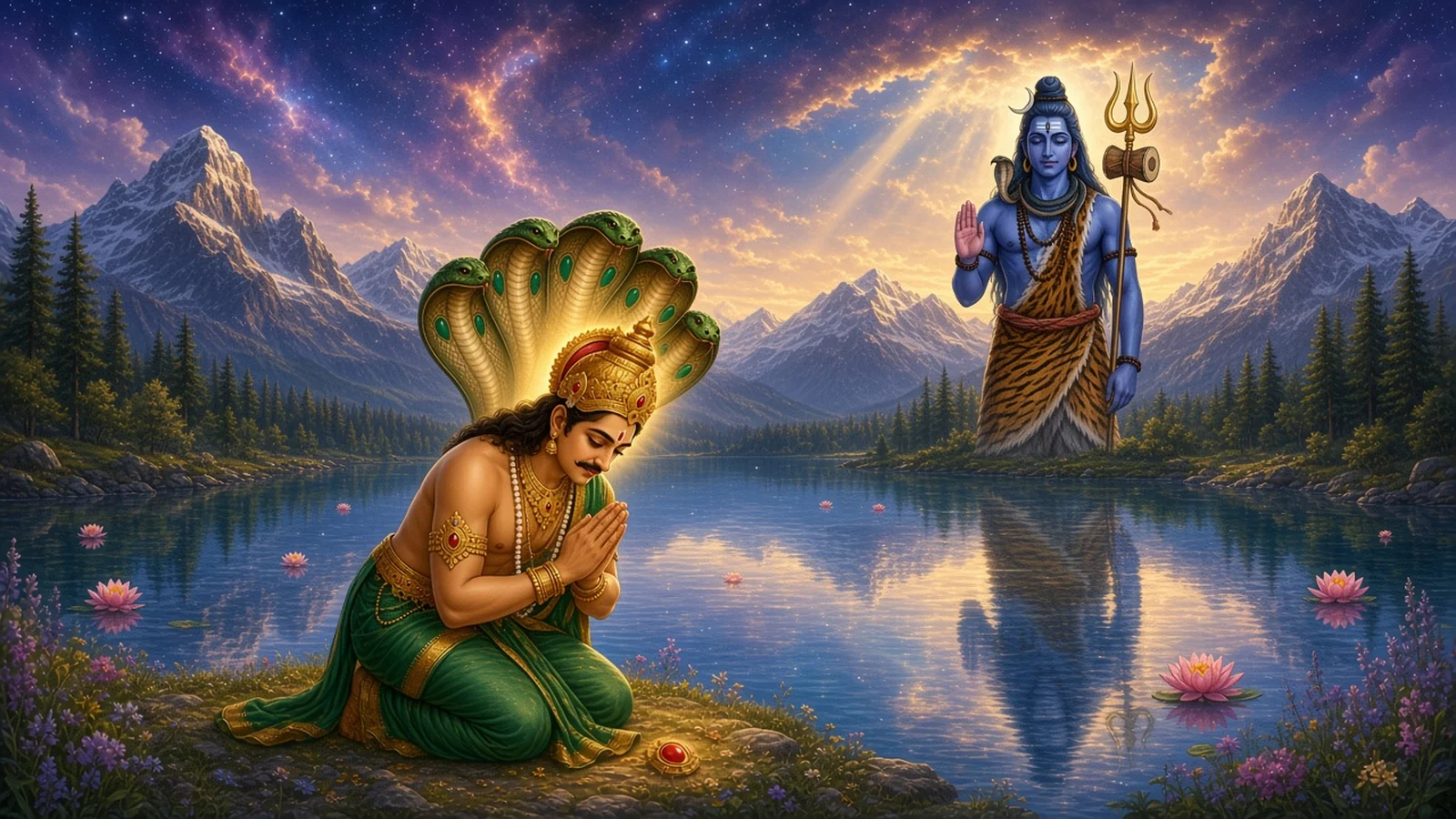
The Lord of the temple, Devanatha, was thirsty once and asked for water. Garuda, his eagle, tore the earth open with his beak to find it, and the river that came out is still called the Garuda river. But the serpent Adisesha struck the ground with his tail, and his spring reached the Lord first. Garuda was downcast.
"Do not be sad," the Lord told him. "Your river will bathe me every day. His spring will be the water of my offerings."
The hill beside the temple is small and green with herbs. The town says it is a crumb of the healing mountain that Hanuman carried through the sky to Lanka, and that it fell here as he flew. They call it Oushadagiri, the hill of medicines.
To this town, some seven hundred years ago, came a young man named Venkatanatha. He had been born at Thoopul near Kanchi in about 1268, he had already learned all that his teachers could give him, and he was in his early twenties. The temple's people say that Devanatha himself drew him there.
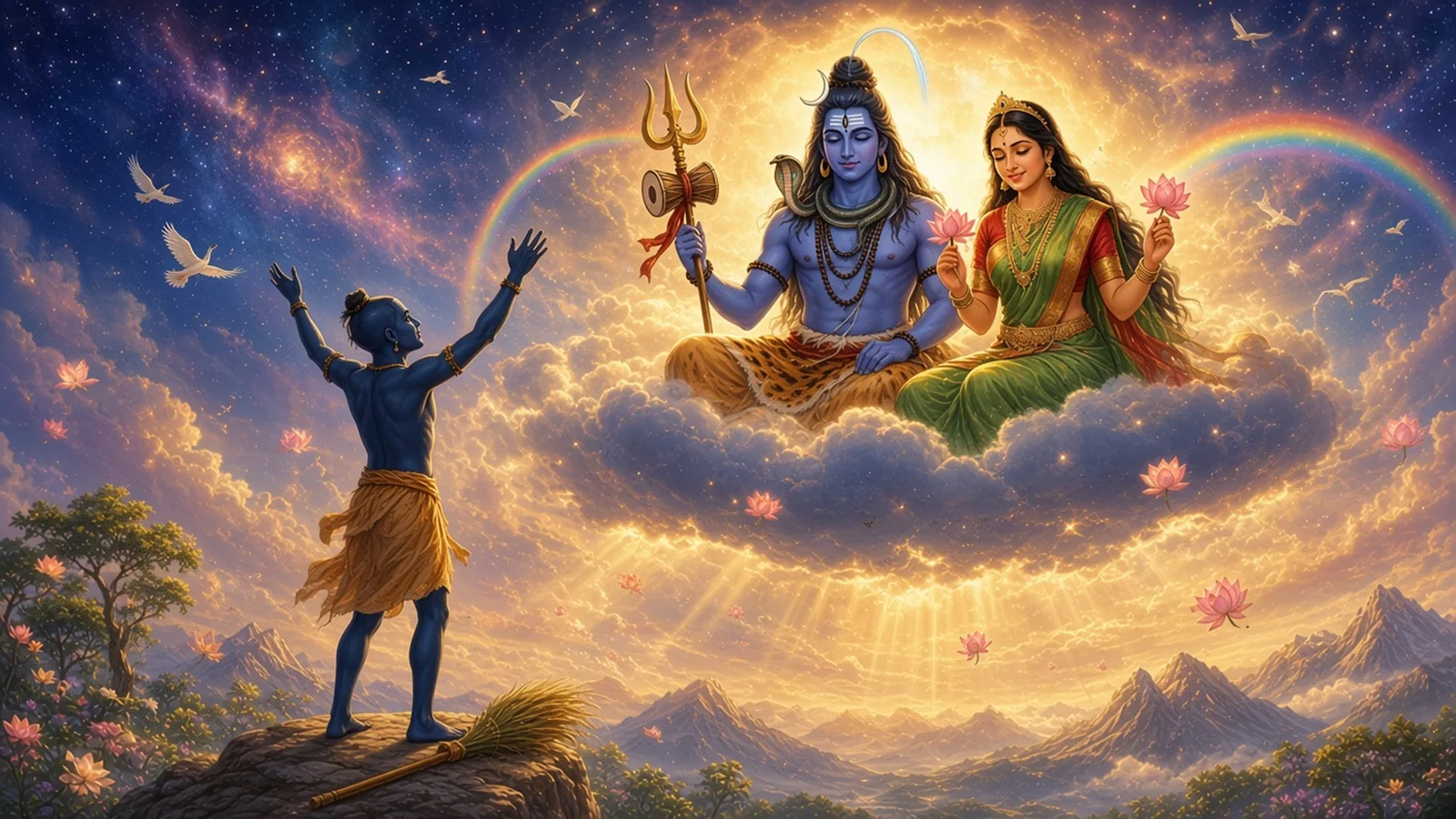
He climbed the hill of medicines and sat down to pray. The prayer he chose was the mantra of Garuda.
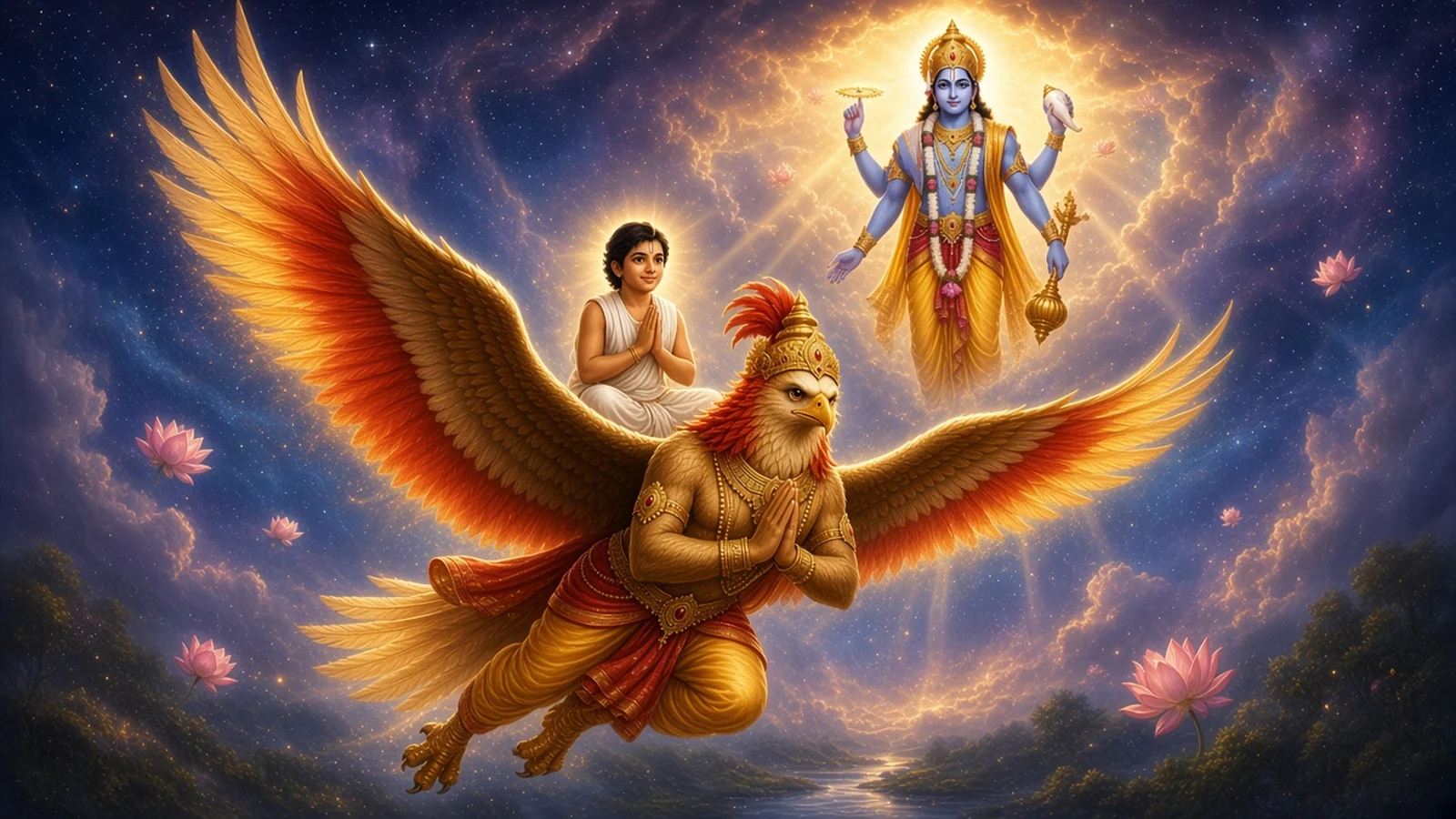
He prayed for a long time. Then the air moved over the hill, and the eagle who carries Vishnu stood before him.
"You have called me," said Garuda. "What do you want?"
"Only what you think fit to give me," the young man said.
"Then I will give you the mantra of Hayagriva," said Garuda, "Vishnu with the horse's head, who brought back the Vedas when they were lost and who holds all learning. Sit here and meditate on him."
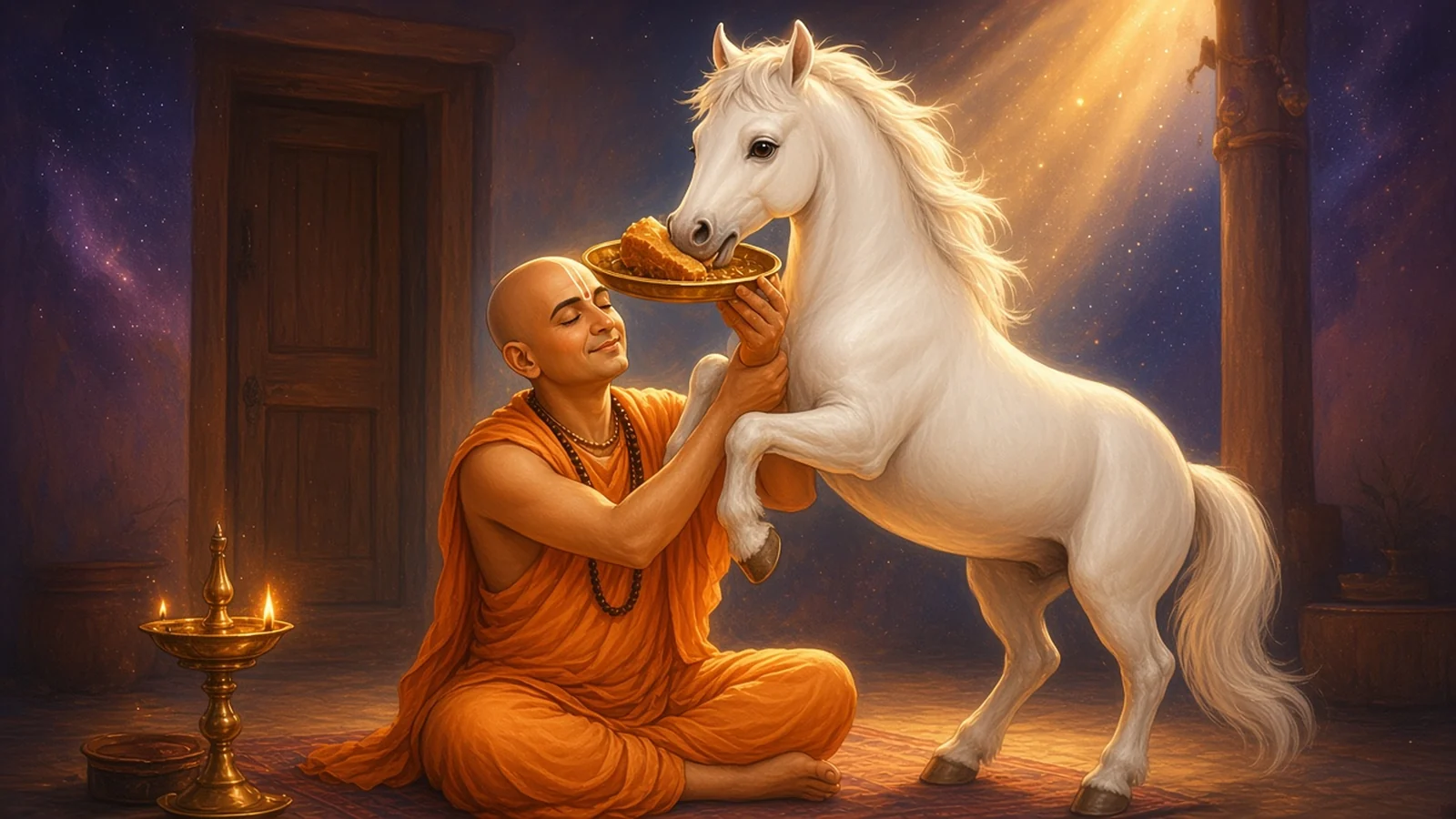
And, the Sri Vaishnavas say, Garuda put into his hands a small image of the horse-headed Lord, so that he would have something to worship while he prayed.
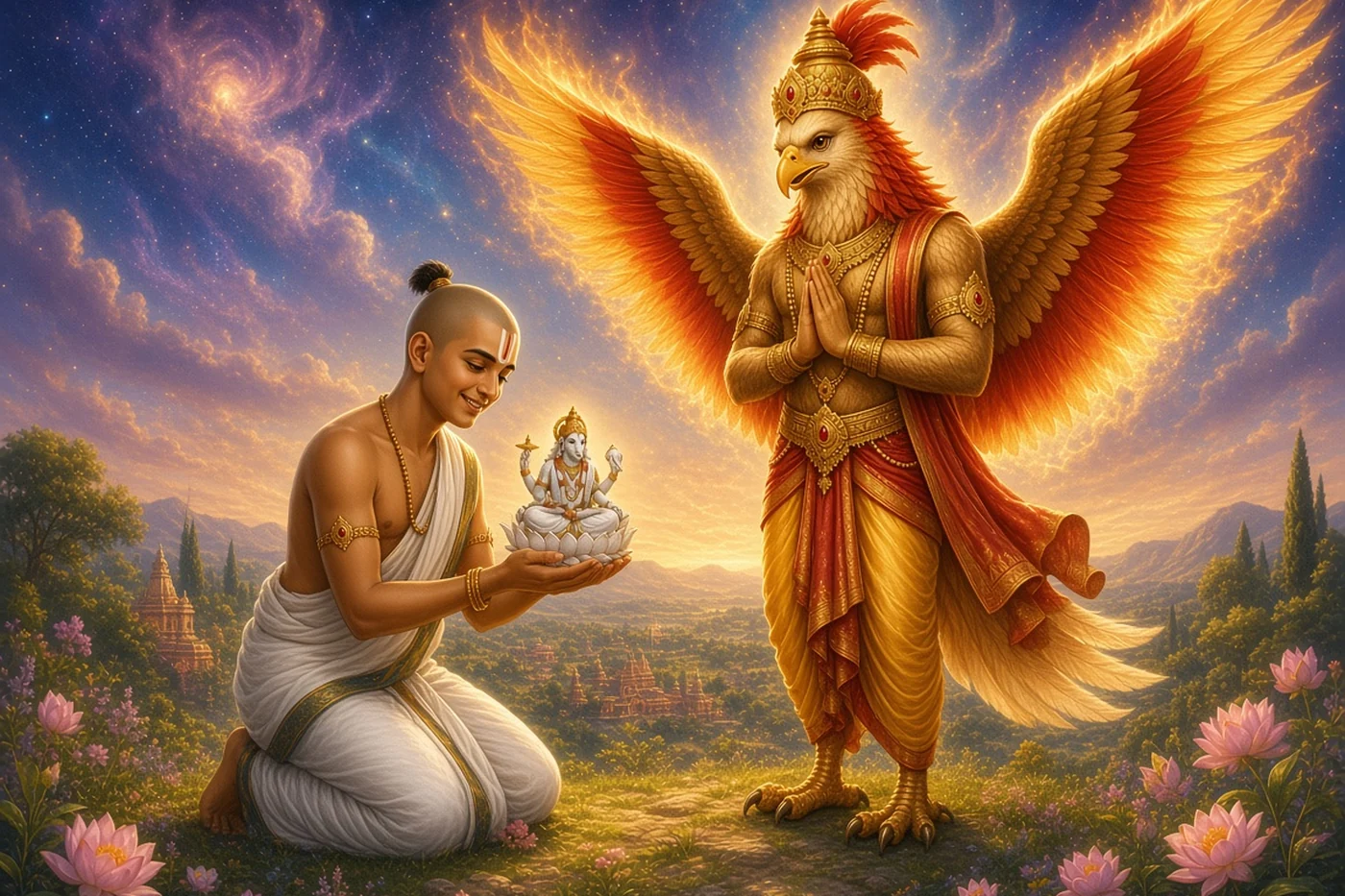
So Venkatanatha sat on the hill and repeated the new mantra, day after day.
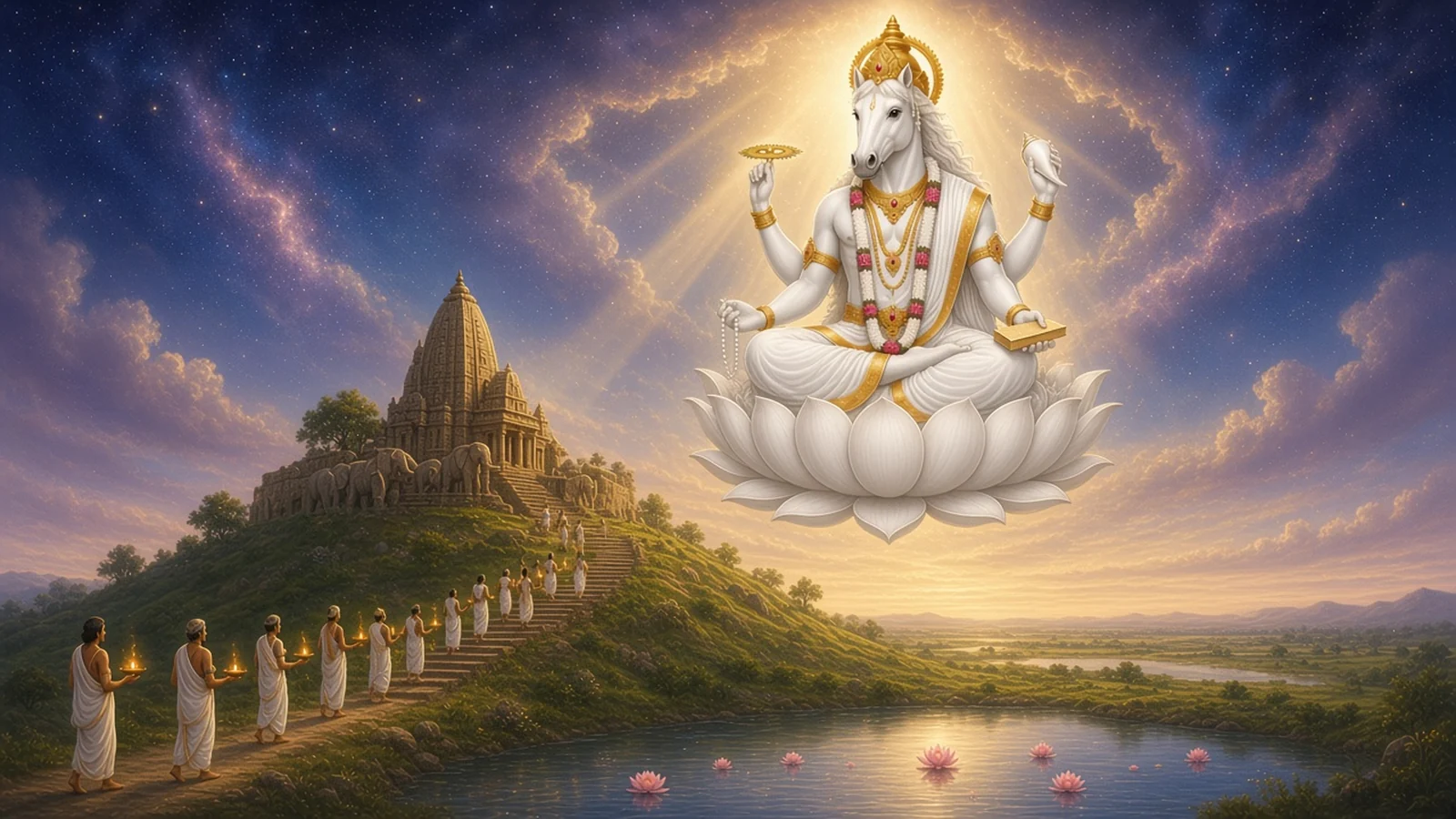
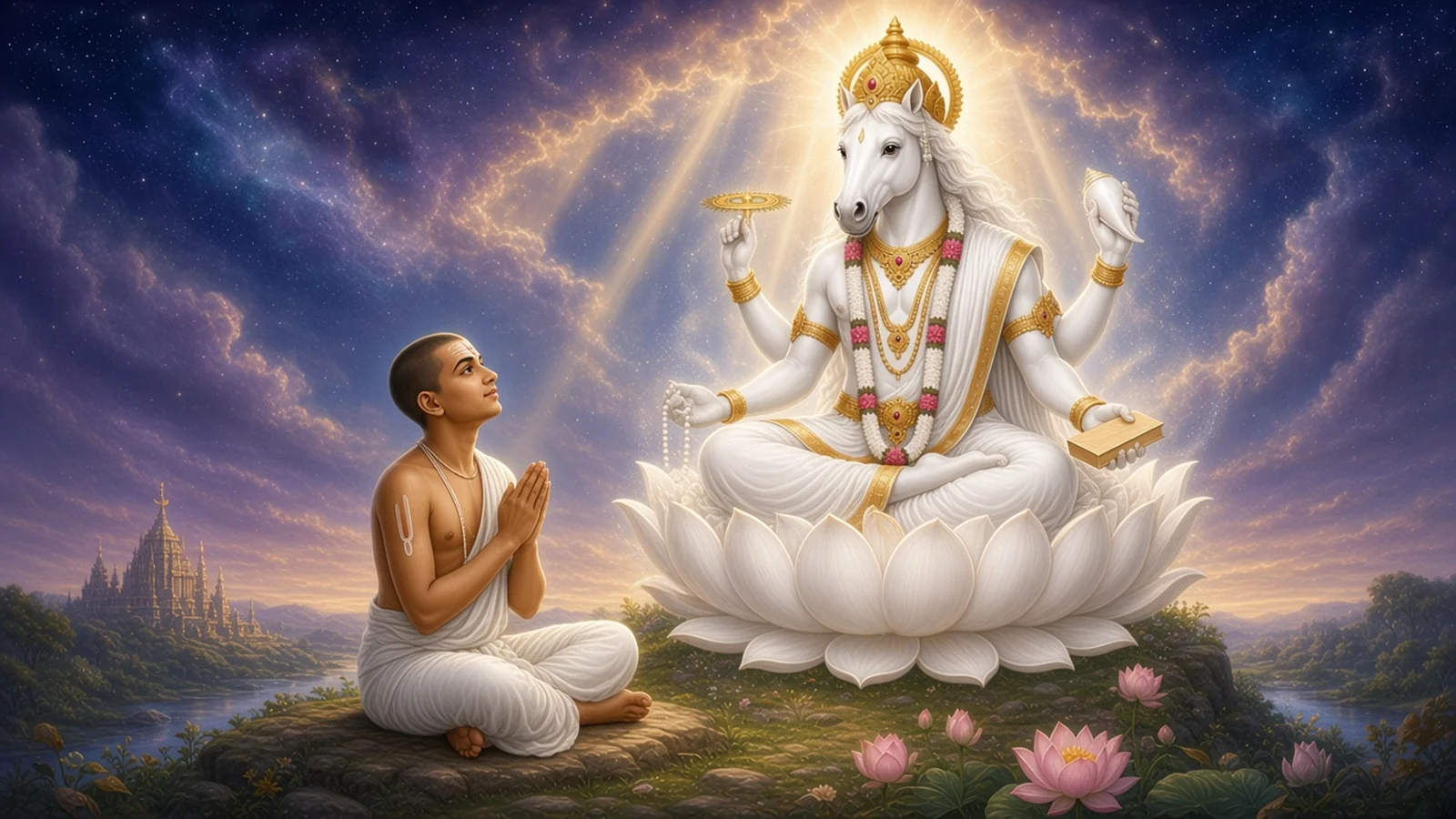
Then Hayagriva showed himself. The lives of Desika call the vision effulgent, and his hymn sees the Lord as white as clear crystal. They say the Lord blessed him with every kind of knowledge and with the gift of poetry.
What came out of the young man was a hymn, the first he ever made. It begins with its best-known verse: we worship Hayagriva, made of knowledge and joy, clear as crystal, the ground of all learning. Later it asks for one thing above all.
"Sit on the tip of my tongue," he prayed, "and let my words be what you make them."
The hymn is the Hayagriva Stotra, and the young man is the one the tradition calls Vedanta Desika, the teacher of the Vedanta. He stayed in that town for some forty years. He wrote hymns to Garuda and to Devanatha and much else there, dug a well with his own hands, and made his own image, which is still kept in the house where he lived.
On the hill of medicines a small temple to Lakshmi and Hayagriva stands where he prayed, and the town calls it the first shrine ever raised to that form of the Lord.
As Experiencing Swami Desika tells it: under the fig tree
SriPedia, Experiencing Swami Desika 66, and the SriRangaSri reading of the hymn · 1 min read
In this telling the Garuda mantra was not something Venkatanatha found for himself. His teacher Appullar, his mother's brother, had given it to him and had told him to meditate on Garuda.
So the young man went to Aindai, as the Tamil name of Tiruvahindrapuram runs, the town made holy by Garuda's river and by the hill of herbs. He did not climb the hill. He sat at the foot of an ashvattha, the sacred fig, and fixed his mind on Garuda, whom the telling calls the deity who is the Veda in a body.
Garuda was pleased, and he did not keep the young man waiting long. He came, taught him the mantra of Hayagriva, and told him to meditate on Hayagriva from then on. Venkatanatha did, and the horse-headed Lord showed himself to him.
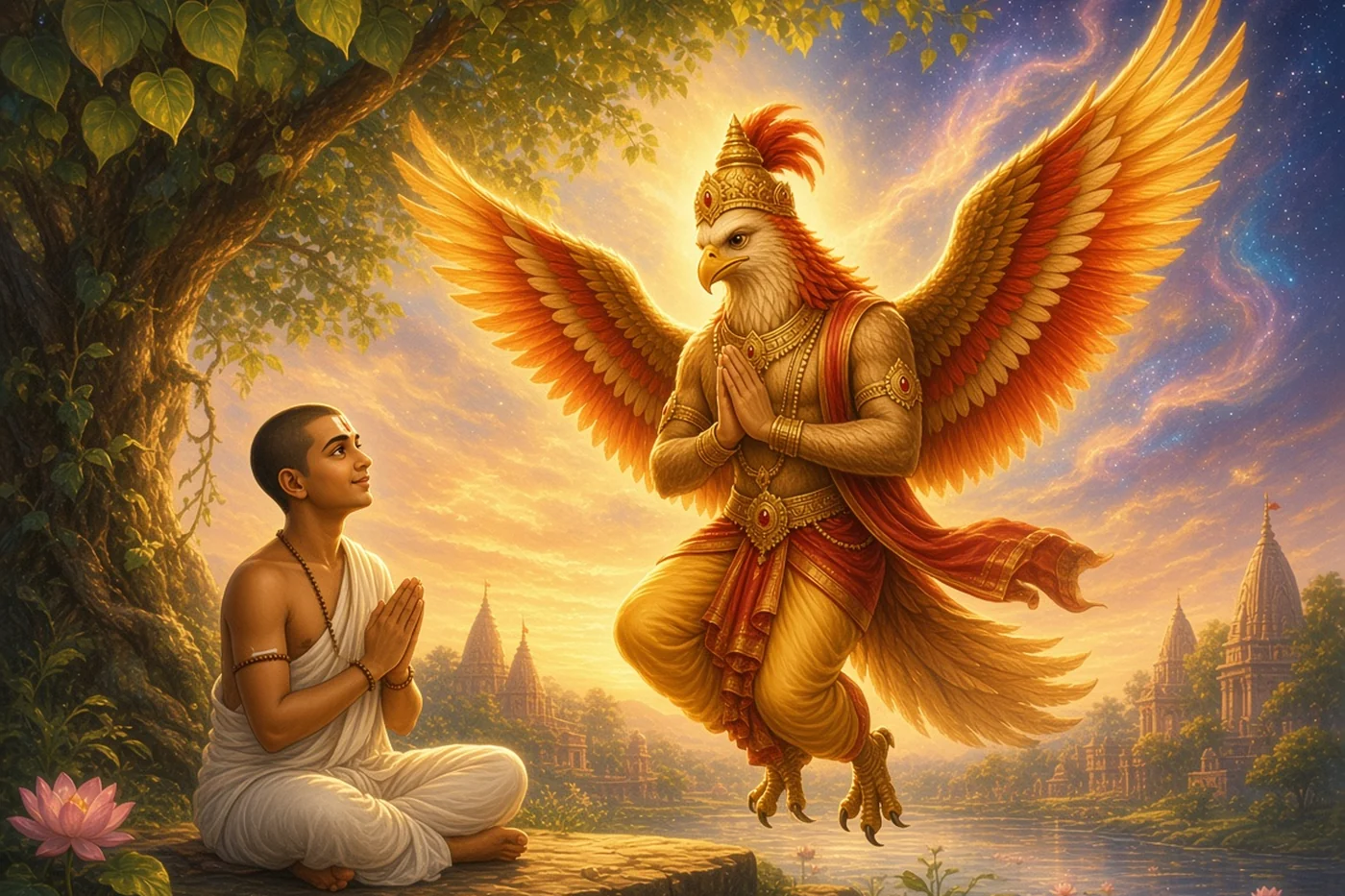
The point of this telling is what came after. Desika never forgot the bird who had brought him to his Lord. Out of gratitude he wrote two hymns to Garuda: a short one, the Garuda Dandakam, and a long one, the Garuda Panchasat, fifty verses, each of which calls Garuda by a different name and asks him for protection.
The SriRangaSri reading of the Hayagriva Stotra describes the Lord as Desika saw him. He sits on a white lotus that shines like new-cut marble. His upper hands hold the discus and the conch. His lower left hand holds a book, the Vedas he brought back. His lower right hand makes the sign of teaching and holds a string of beads, which Desika likens to a well wheel, lifting knowledge up out of the deep. From that Lord, the reading says, Saraswati herself and the sage Vyasa have their learning.