As the Bhagavata tells it
Bhagavata Purana 10.52 to 10.54 · Kundina and Dvaraka · 4 min read
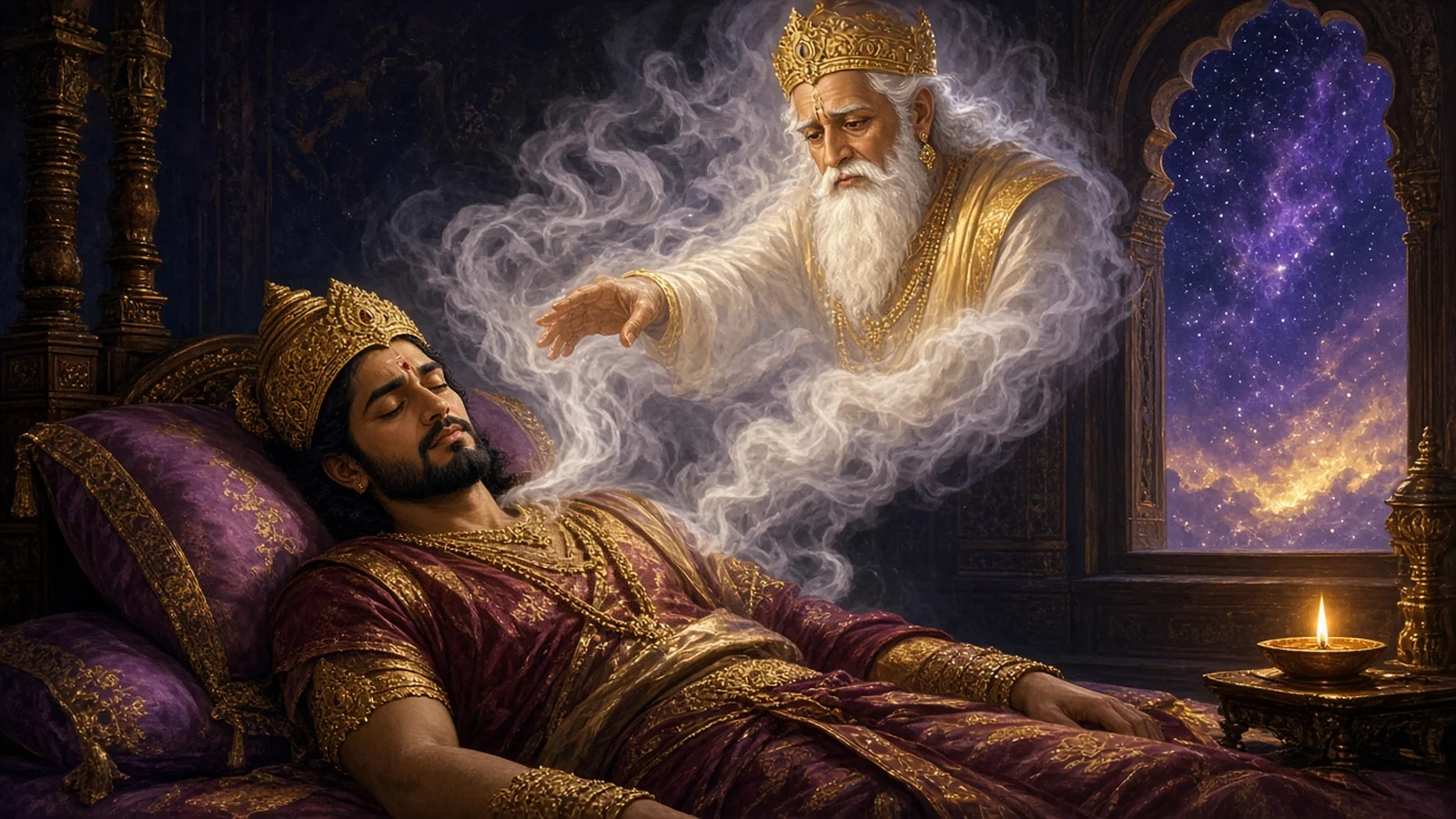
King Bhishmaka of Vidarbha had five sons and one daughter, Rukmini. The guests at her father's court talked about Krishna: his strength, his kindness, his beauty. Rukmini listened, and decided. She would marry no one else.
Her eldest brother Rukmi hated Krishna. "Not that cowherd," he said, and he promised her instead to his friend Shishupala, the king of Chedi. Their father let it be.
Rukmini did not weep for long. She called a Brahmin she trusted, gave him a letter, and sent him to Dvaraka.
At Dvaraka Krishna came down from his golden seat, fed the Brahmin and pressed his tired feet, and only then asked why he had come. The Brahmin unfolded the letter and read it out.
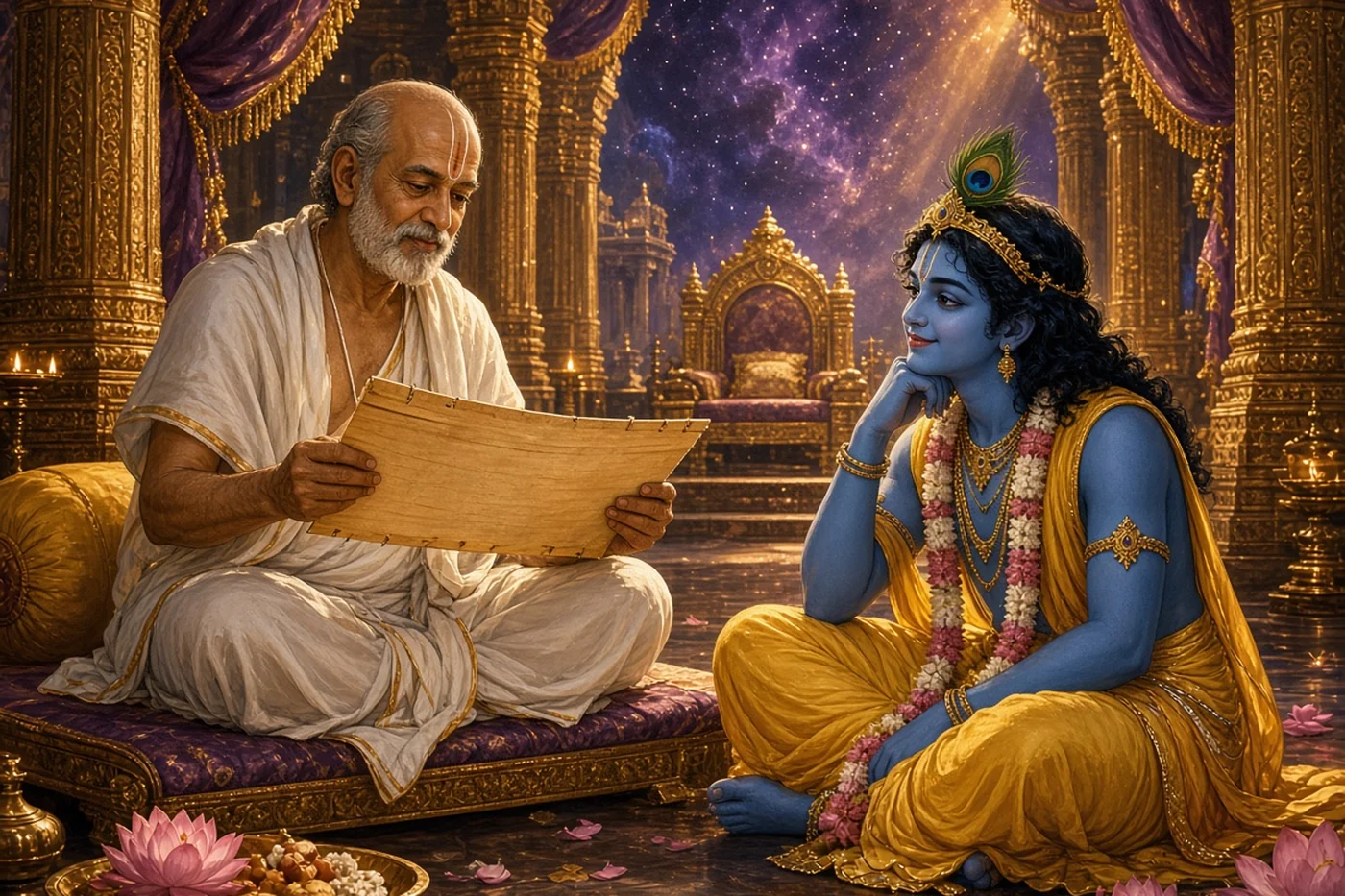
"I have heard of you," Rukmini had written, "and I have given you my mind, and I am not ashamed of it. I have chosen you. Do not let the king of Chedi take what belongs to a hero, as a jackal takes the lion's share. Come to Vidarbha tomorrow, unseen, with your captains, and take me."
Then she answered the question before he could ask it. "You will wonder how to carry me out of the women's rooms without killing my kinsmen. On the day before the wedding the bride goes out of the city to the shrine of the goddess. Come then. And if you do not come, I will give up this life, and try again in the next, and the one after that, until I have you."
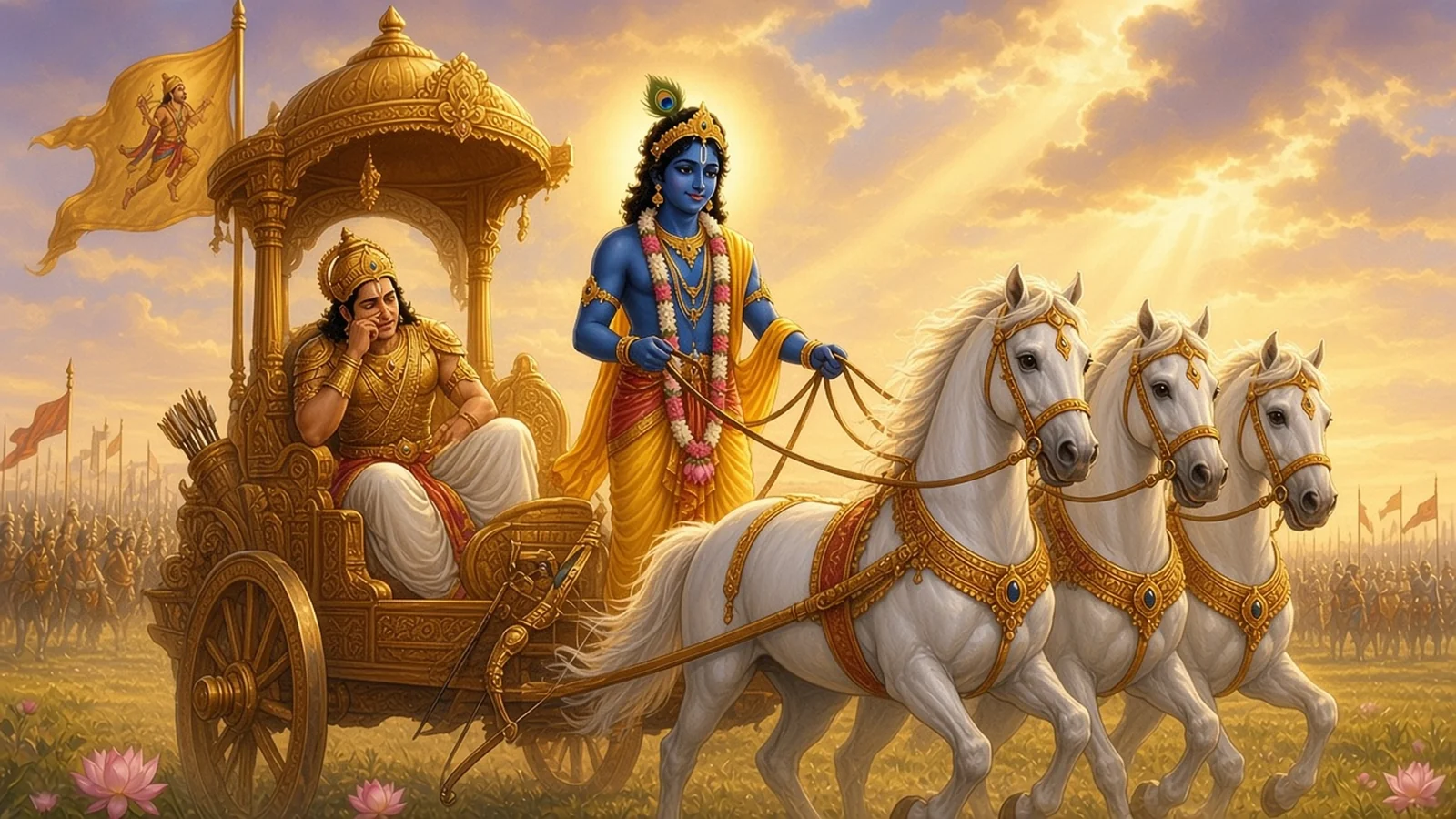
Krishna smiled. "My mind is on her," he said, "as hers is on me. I cannot sleep for it. I will bring her out, as fire is drawn from wood." He sent for Daruka, his charioteer, and the four horses carried him and the Brahmin to Vidarbha in a single night.
In Kundina the streets were sprinkled and hung with flags. Shishupala had come with his army, and with him Jarasandha and Shalva and a crowd of kings who had agreed to fight if Krishna showed his face. Balarama heard of it and followed with an army of his own.
Rukmini knew none of this. The night was ending and the Brahmin had not come back. "Has he found some fault in me?" she wondered. "Is the goddess herself against me?" She shut her eyes, and they were wet. Then the Brahmin was at her door, smiling. "He has come," he said. She had nothing good enough to give him, so she bowed to the ground.
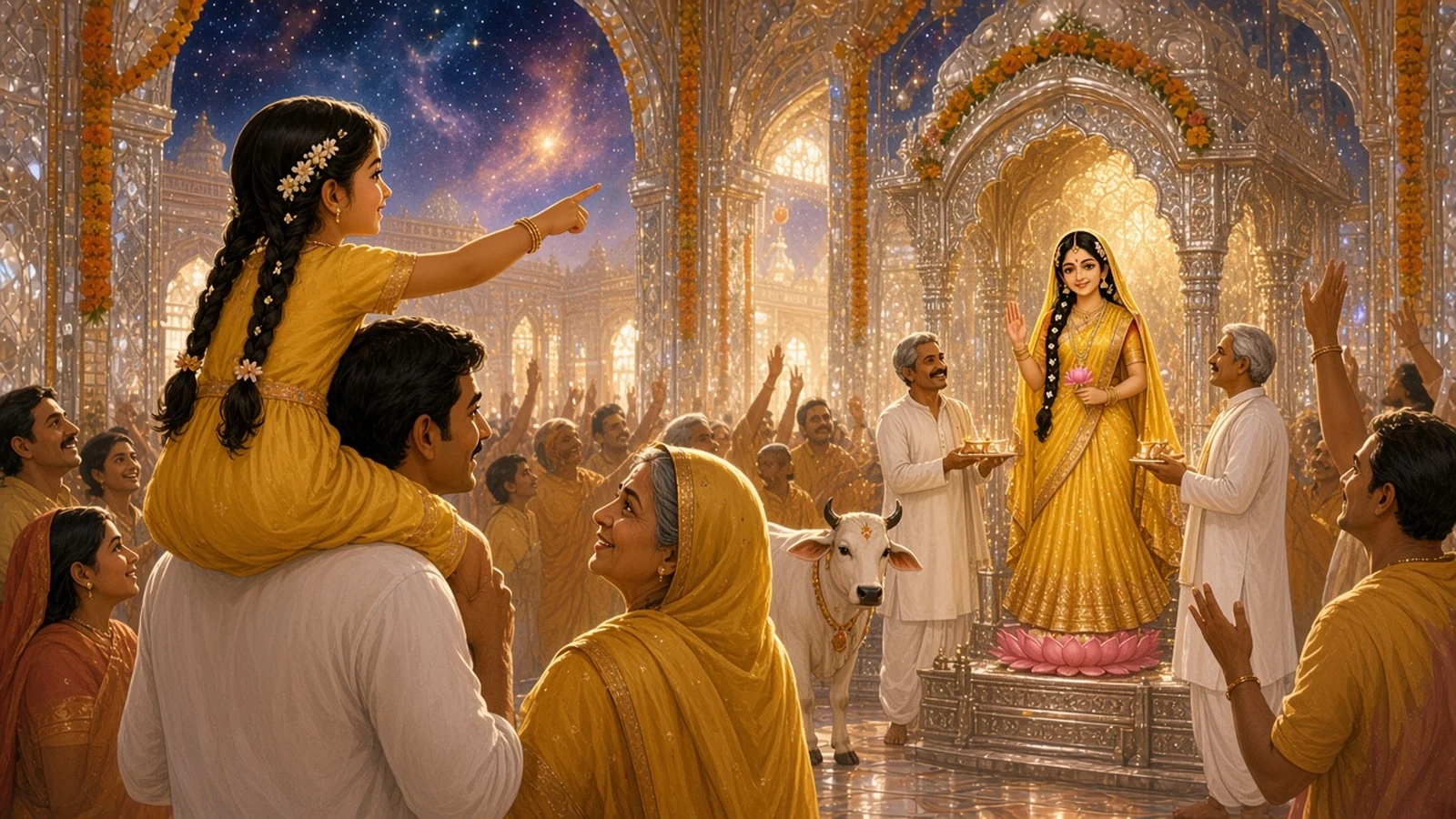
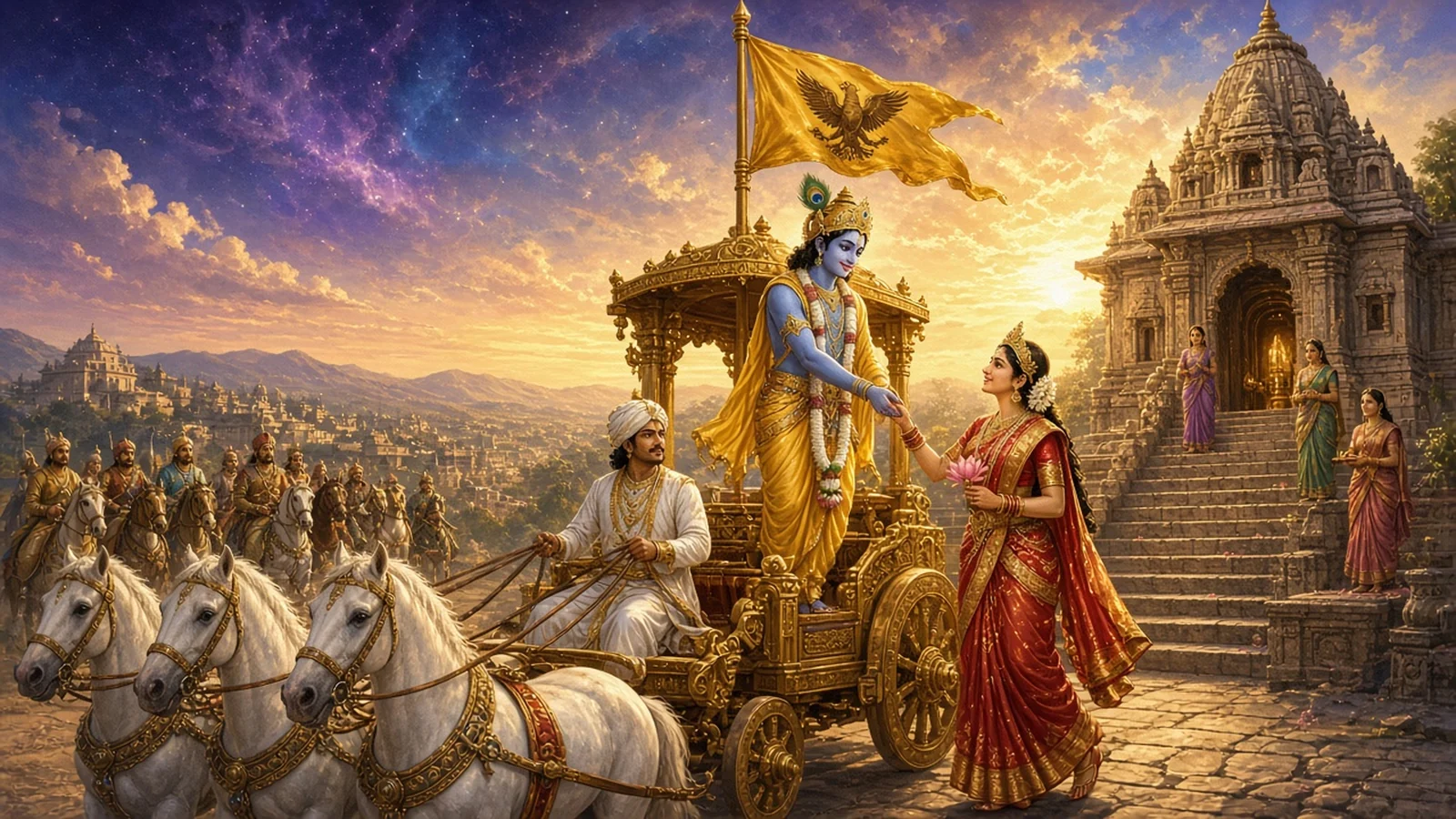
She walked to the shrine of Ambika in silence, with her mothers and friends around her and soldiers on every side. Inside she bowed to the goddess and to Shiva beside her, and asked for one thing: that Krishna be her husband. Then she came out, holding a maid's hand.
The kings saw her on the steps and forgot their weapons. Some of them slid from their horses. Rukmini did not look at them. She was looking for one chariot, and when she saw the Garuda banner she went towards it, and Krishna lifted her up beside him, in front of them all.
The kings came after them, and the Yadavas turned and drove them back. Only Rukmi would not give up. He had sworn before everyone that he would not enter Kundina again until he had killed Krishna. He came on alone, and Krishna broke every weapon he picked up, until Rukmi leapt down with a sword and Krishna drew his own.
Rukmini threw herself at Krishna's feet. "He is my brother," she said, trembling so that her gold necklace slipped and fell. "Do not kill him."
So Krishna tied Rukmi up with a strip of cloth and shaved his head in tufts instead.
Balarama came up and untied him. "That was wrong," he told his brother. "To shame a kinsman like this is as bad as killing him." To Rukmini he spoke gently. "Do not grieve. Each of us reaps what he has sown."
Rukmi could not go home. He built a city where he had been beaten, Bhojakata, and lived there. At Dvaraka Krishna married Rukmini with every rite, and the whole city came out with gifts.
As the Vishnu Purana and the Mahabharata tell it
Vishnu Purana 5.26; Mahabharata, Udyoga Parva 159 · Kundina · 2 min read
The Vishnu Purana tells it in a few lines, and in its telling the first move is Krishna's. He loved Bhishmaka's daughter and asked for her hand. Her brother Rukmin, who hated him, refused. Then Jarasandha advised the old king, Rukmin agreed, and Rukmini was promised to Shishupala. There is no letter here and no Brahmin, and no shrine of the goddess.
Jarasandha and his allies gathered in Kundina for the wedding. Krishna came too, with Balarama and the Yadavas, and on the day before the marriage he simply took the princess and drove off, leaving his brother to face the kings. Balarama beat them back.
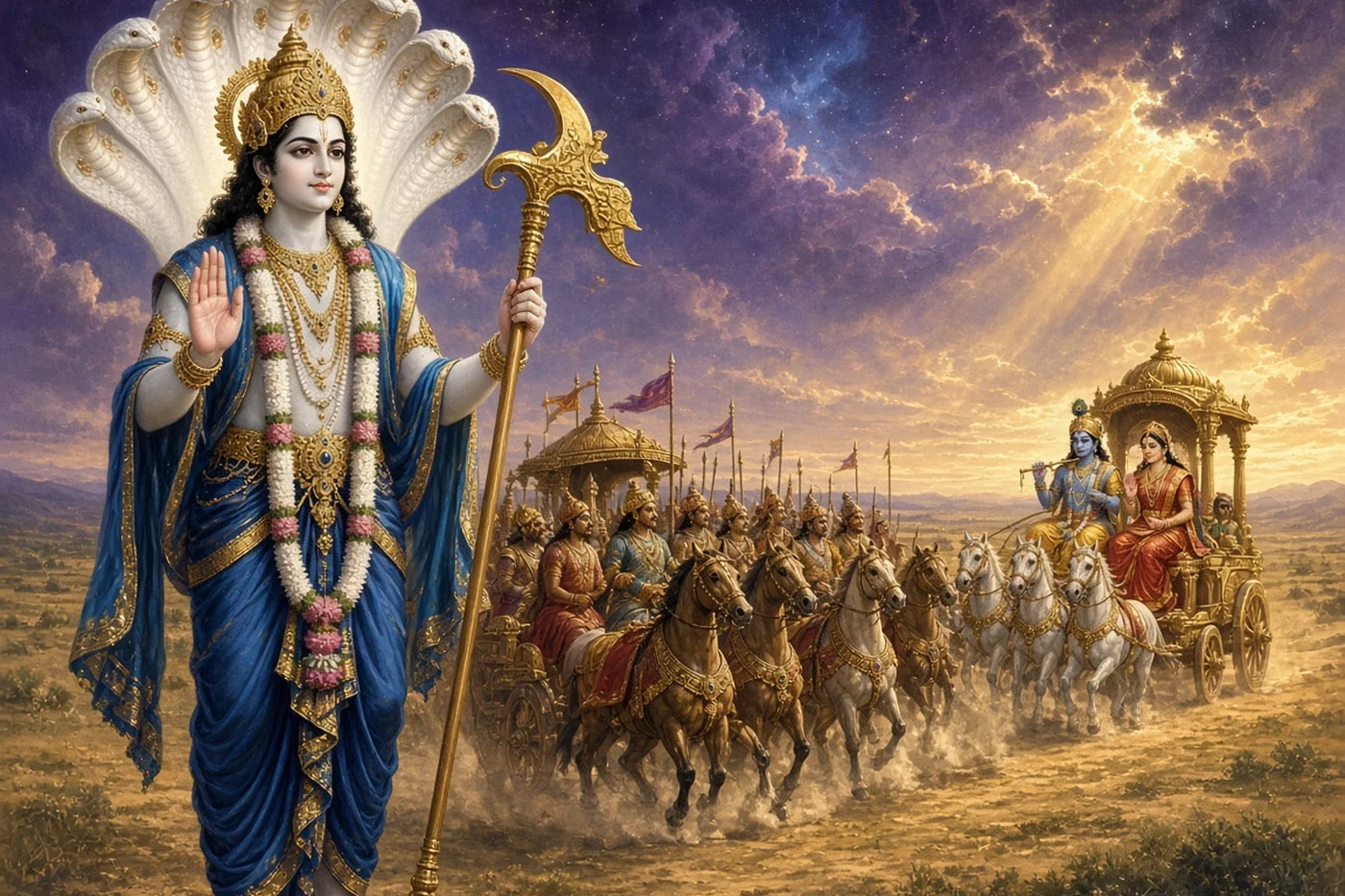
Rukmin swore he would not set foot in Kundina again until Keshava was dead. He went after him, and Krishna's discus cut down his horses and elephants and men as if it were a game. Krishna threw Rukmin to the ground and stood over him. Rukmini begged for him. He was her only brother, she said, and she asked for his life as a gift. Krishna let him live. No head is shaved in this telling, and Balarama scolds nobody.
The Mahabharata, in the days before its great war, remembers the same man from his own side. Rukmin was a great archer, it says, the holder of the bow Vijaya, one of the three bows of heaven. When Krishna carried off his sister he was furious, and swore, and was beaten, and too proud to go home, he built Bhojakata on the field where he fell. Years later he came to the Pandavas' camp with an army and offered it to Arjuna. Arjuna laughed and said he needed no help, and Duryodhana sent him away as well.
In the Vishnu Purana Krishna married Rukmini in due form at last, and their first son was Pradyumna, a part of the god of love.