Devalok ← All gods
Also calledRakhumaiRukmabaiVaidarbhiBhaishmiShrithe Queen of Dwarka

In short

Who is Rukmini?
The princess of Vidarbha who chose Krishna, wrote to him, and became his chief queen at Dwarka. The Puranas say she was Lakshmi born again beside him.
Why did Rukmini write to Krishna?
Her brother Rukmi had promised her to Shishupala. In the Bhagavata she sends a Brahmin to Dvaraka with a letter asking Krishna to carry her off from the goddess's shrine on the day before the wedding, and he does.
Why is her temple at Dwarka outside the town?
Dwarka says the sage Durvasa cursed her to live apart from Krishna when she drank water before offering him any, so her temple stands about two kilometres from his.
Who is Rakhumai?
Rukmini as Maharashtra calls her, mother Rukmini, the consort of Vithoba at Pandharpur, who has her own shrine in his temple.

Artwork ›

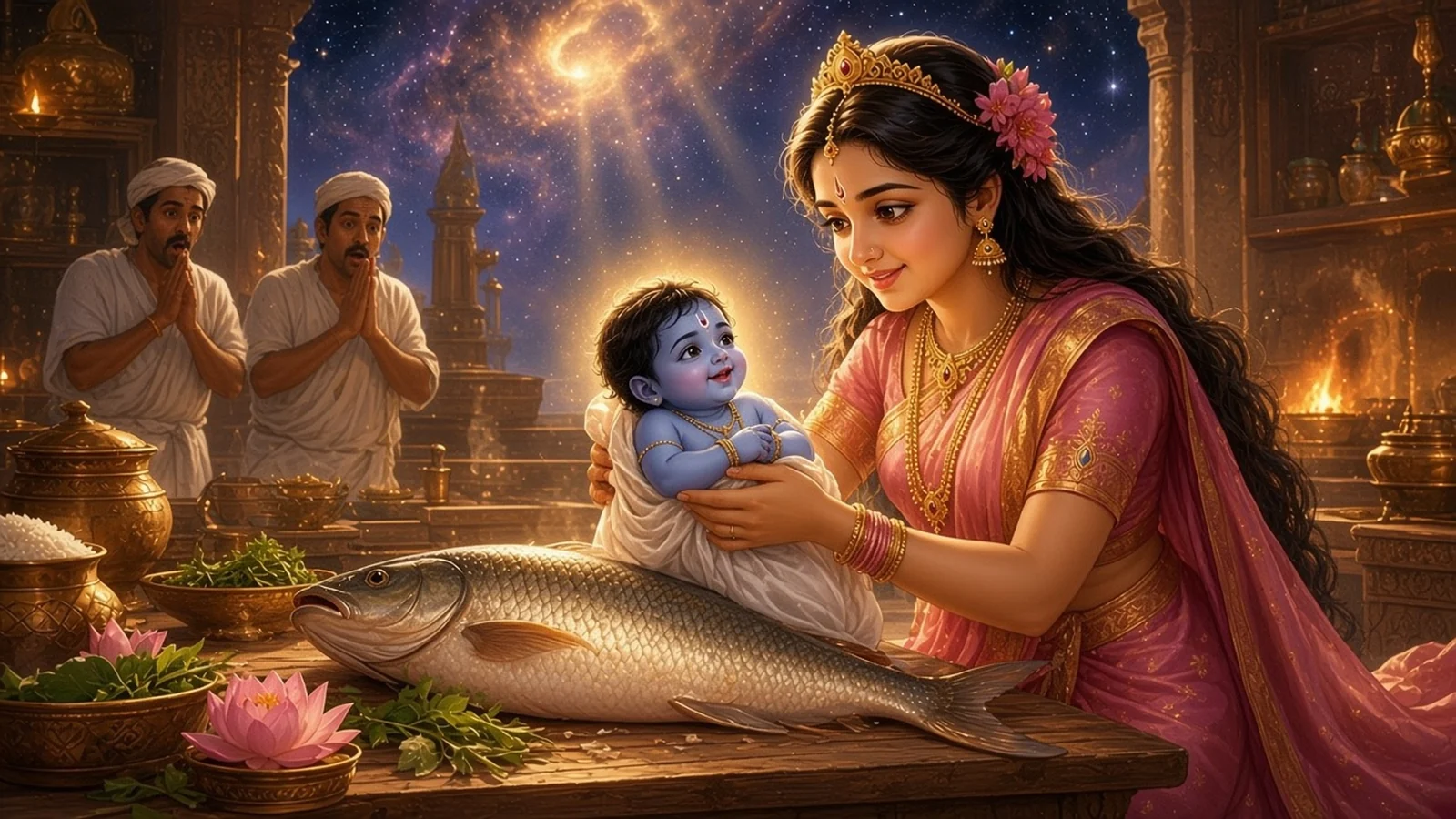
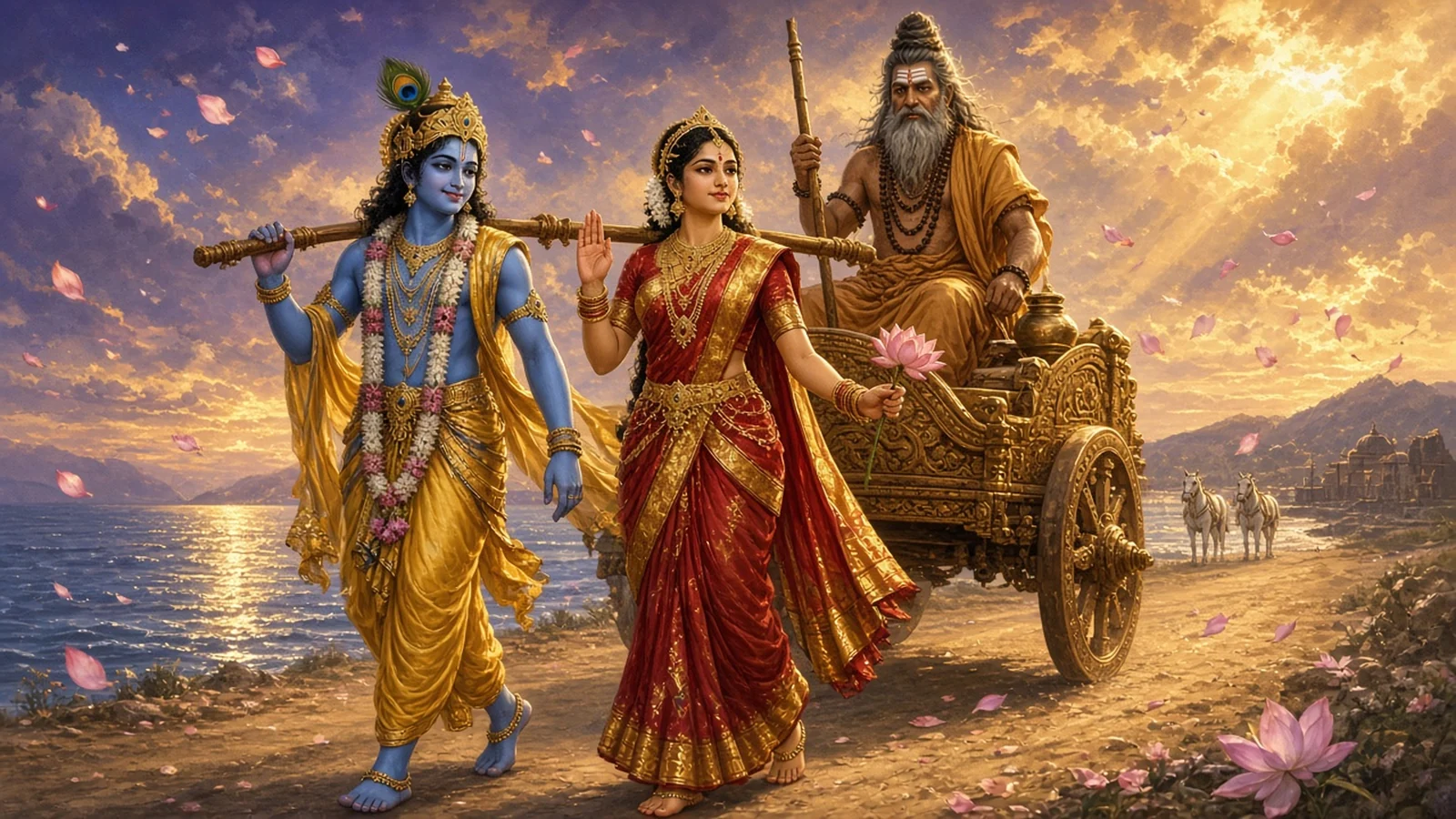
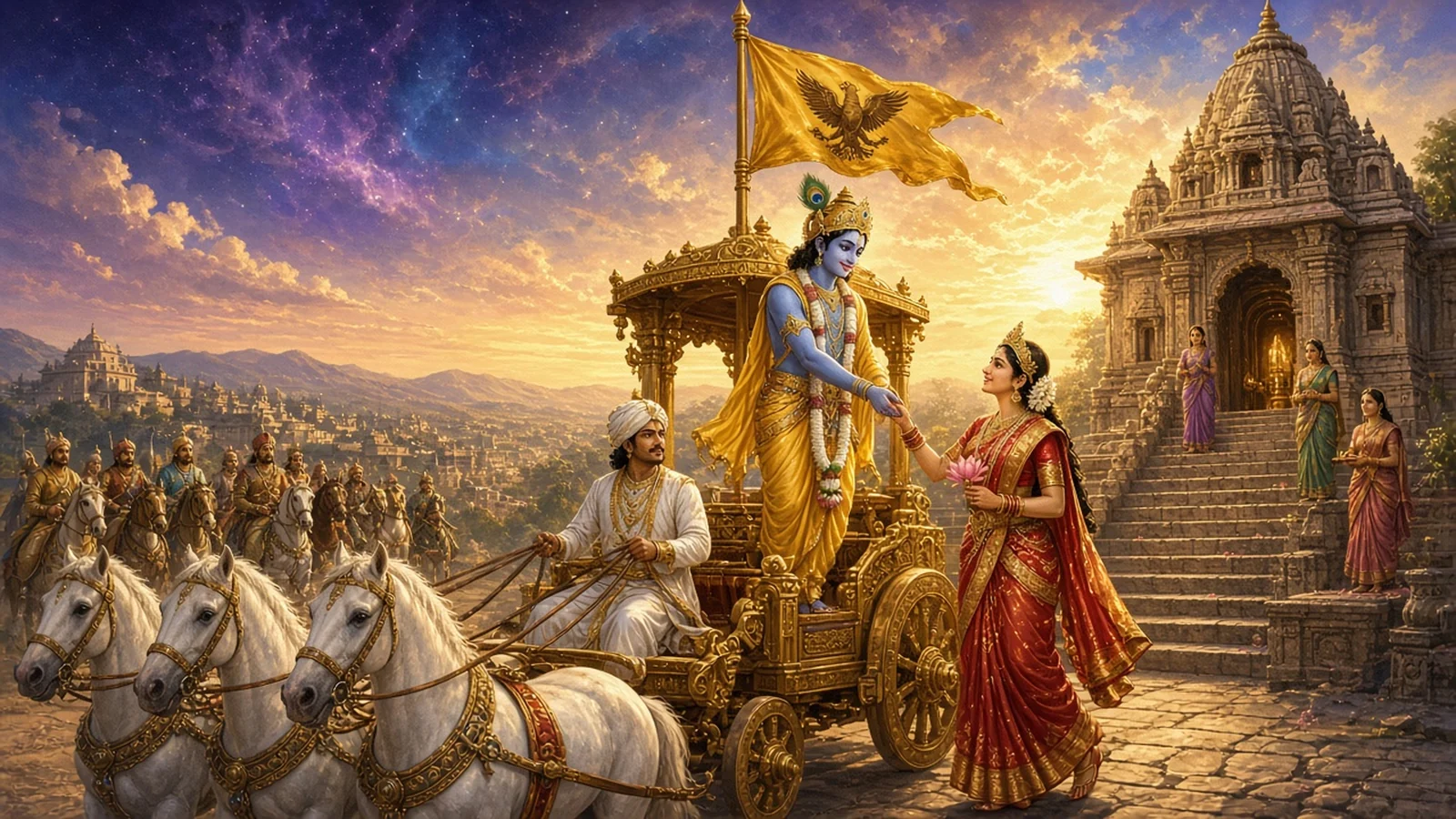
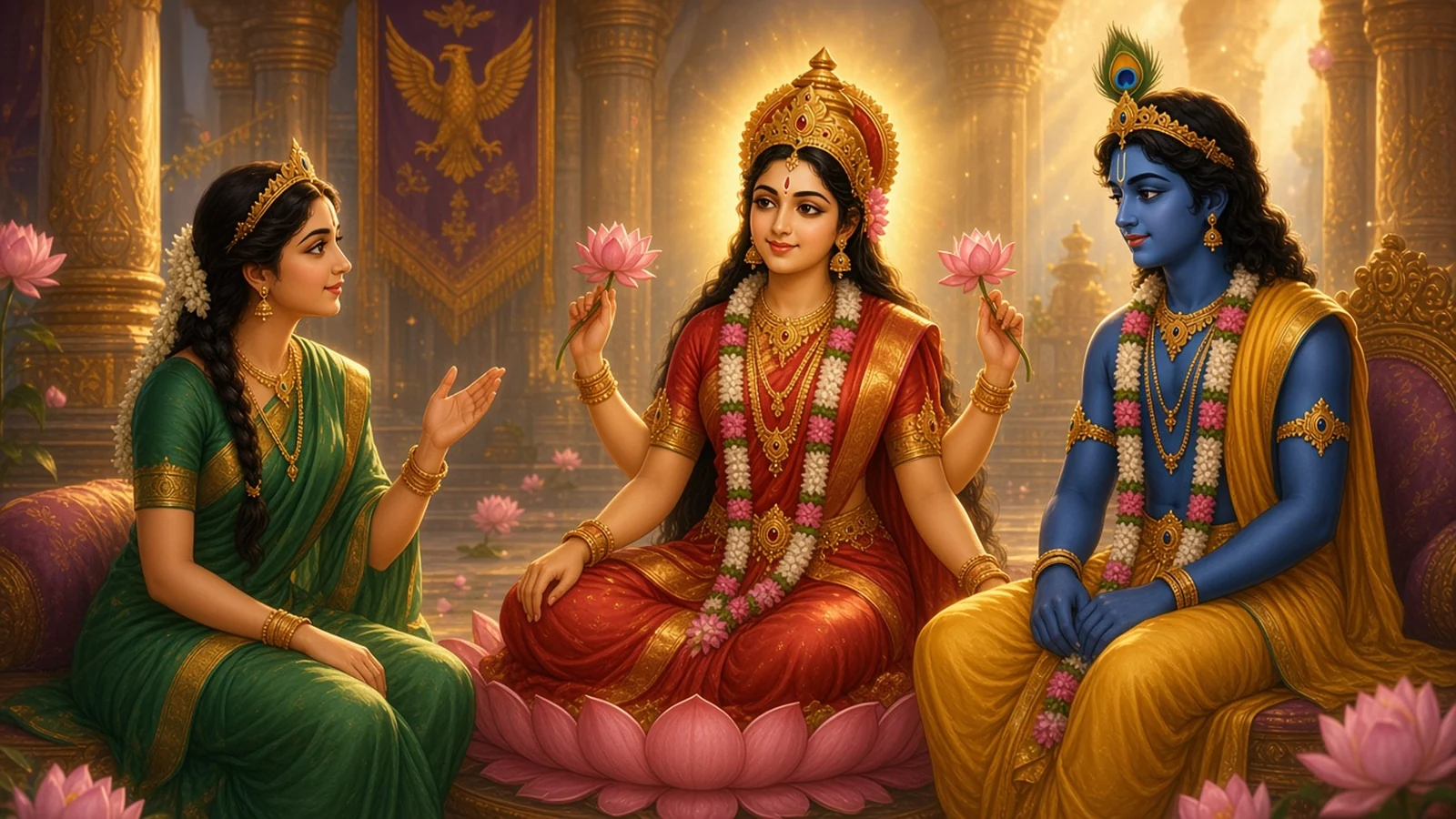
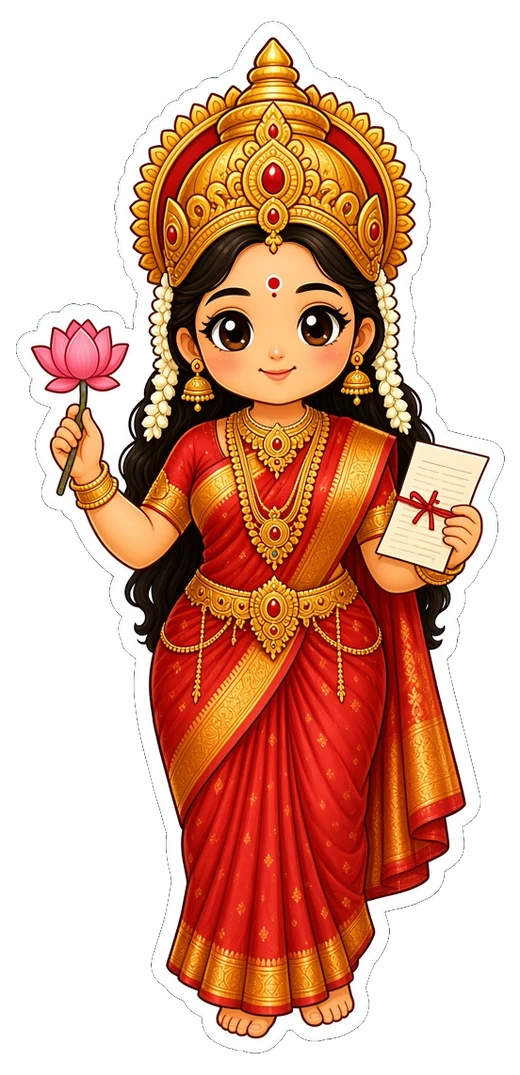
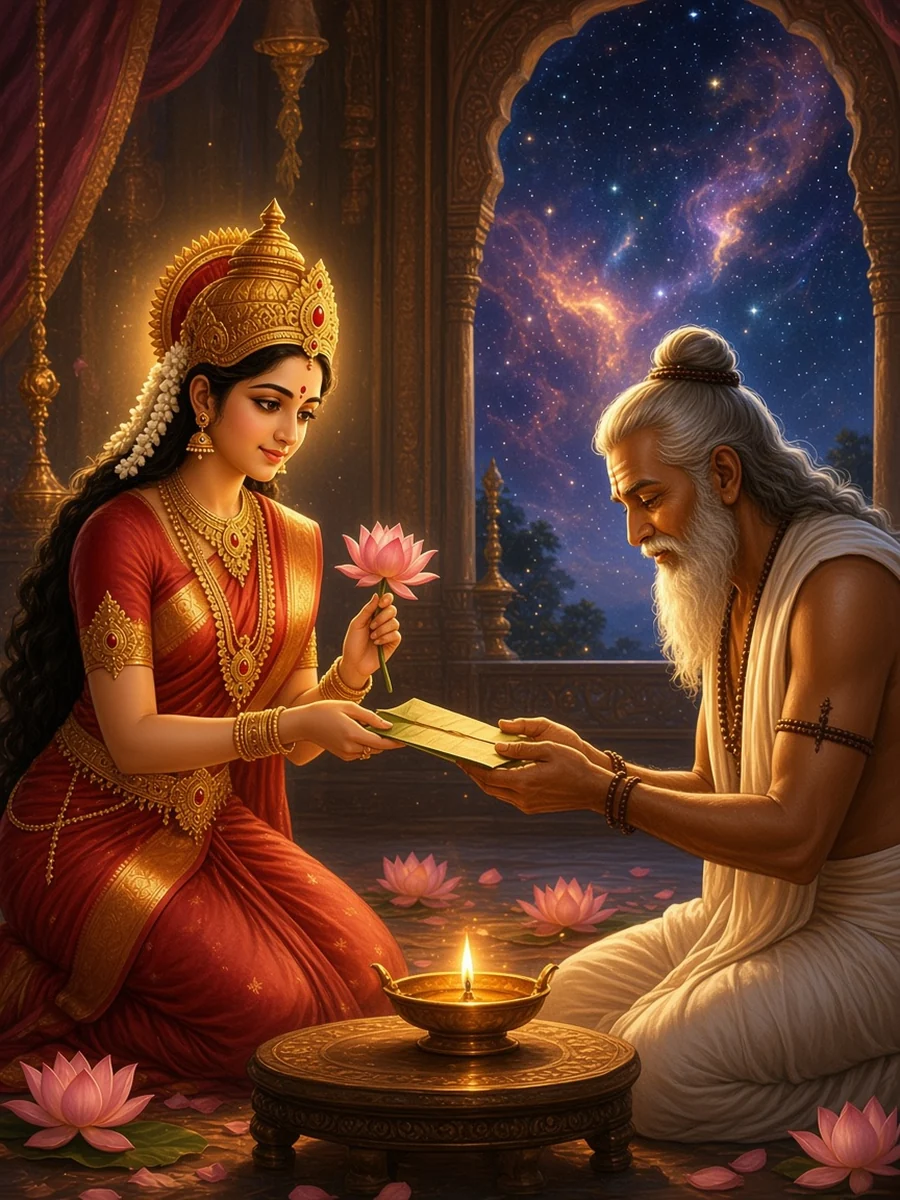
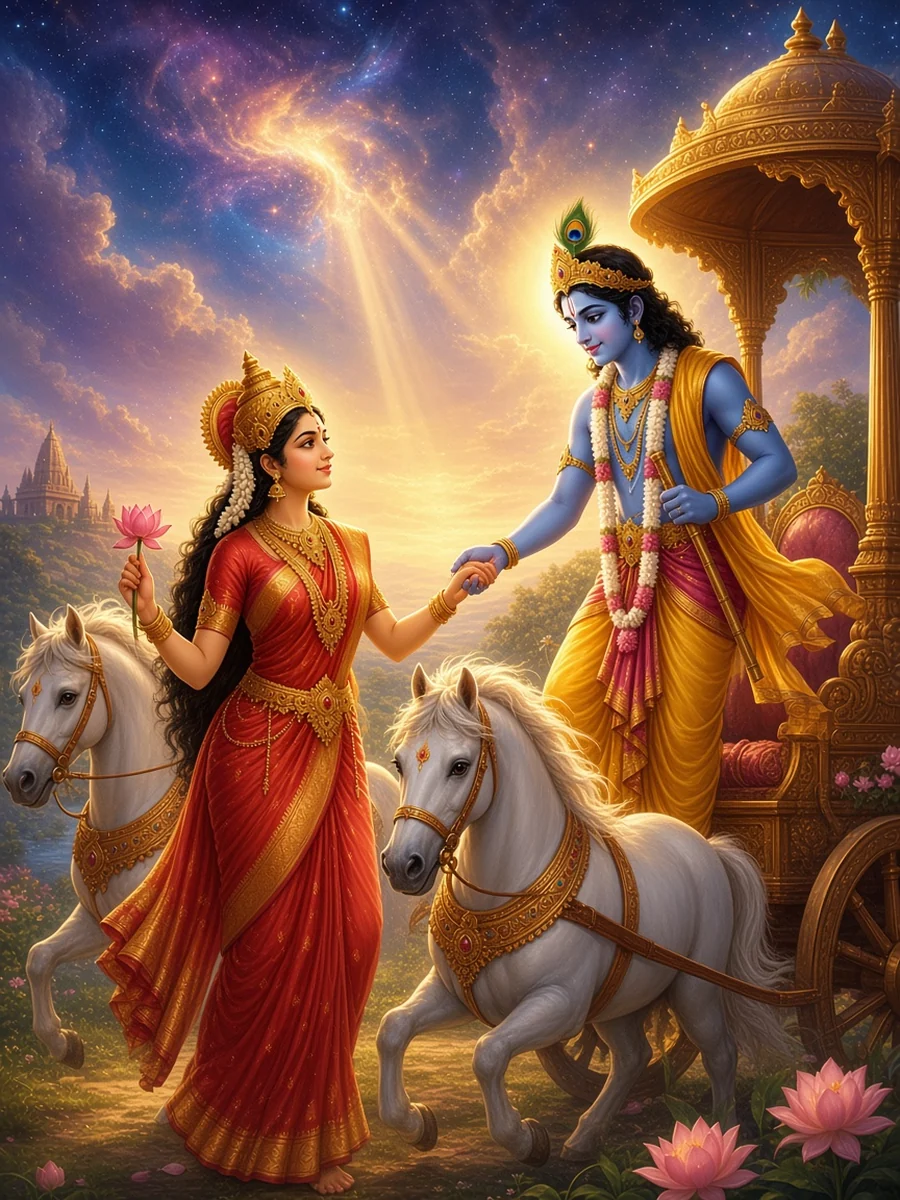
She wrote to Krishna herself, and sent a Brahmin with the letter At the goddess's shrine she took his hand and climbed in

For kids

Sent. No going back now
Welcome to Dwarka
Welcome to Dwarka

At a glance

TraditionVaishnava
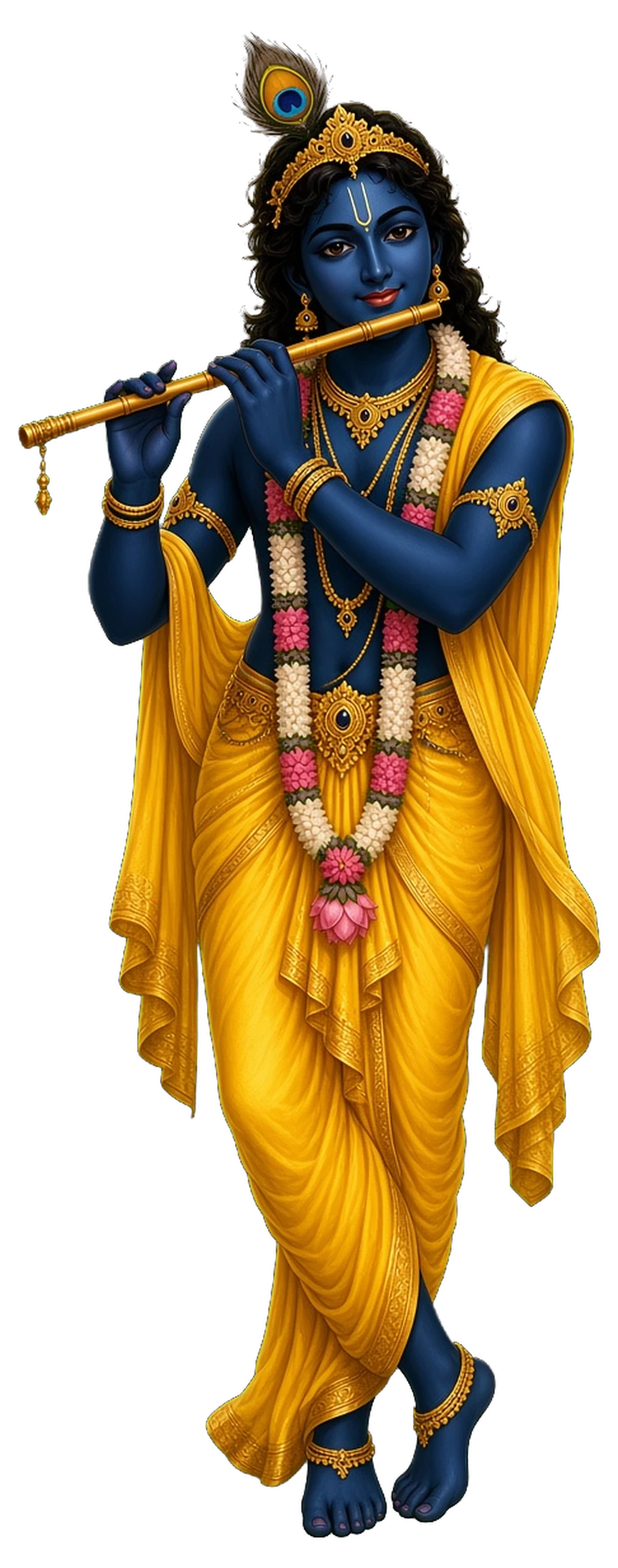
FormA queen at Krishna's side

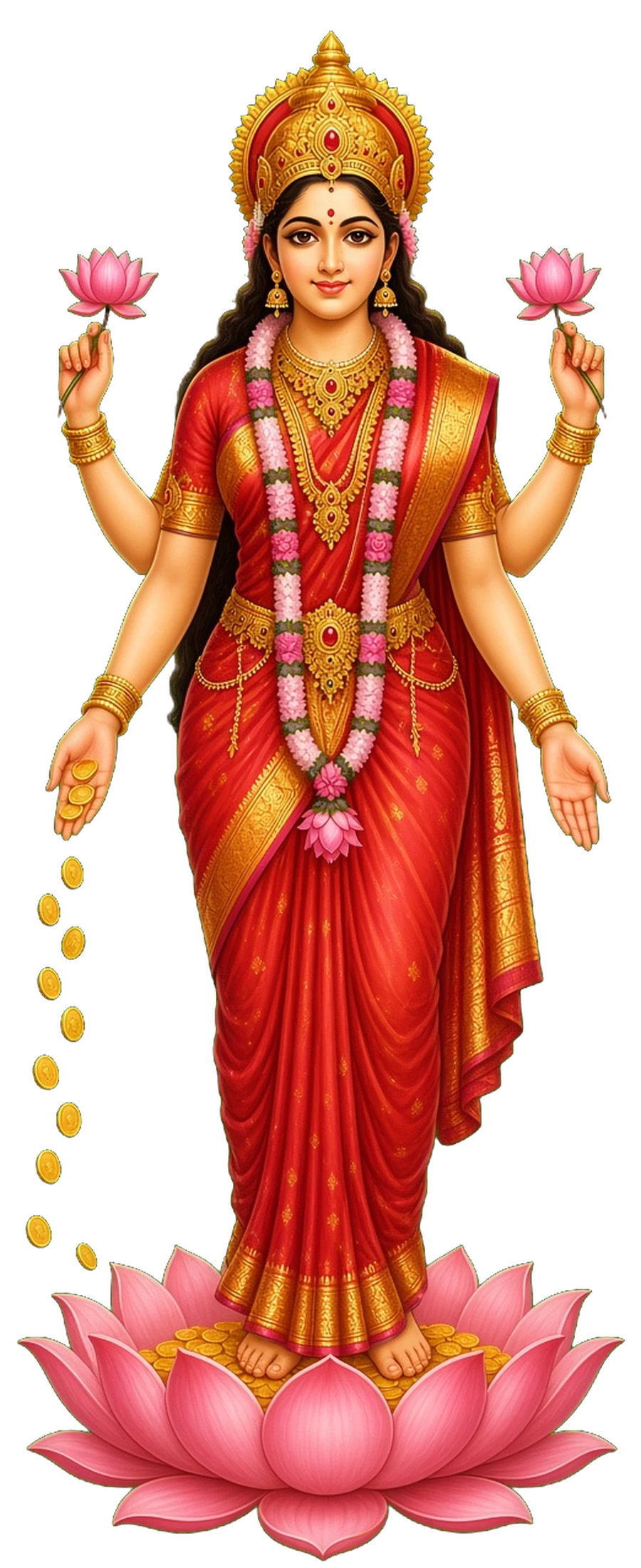
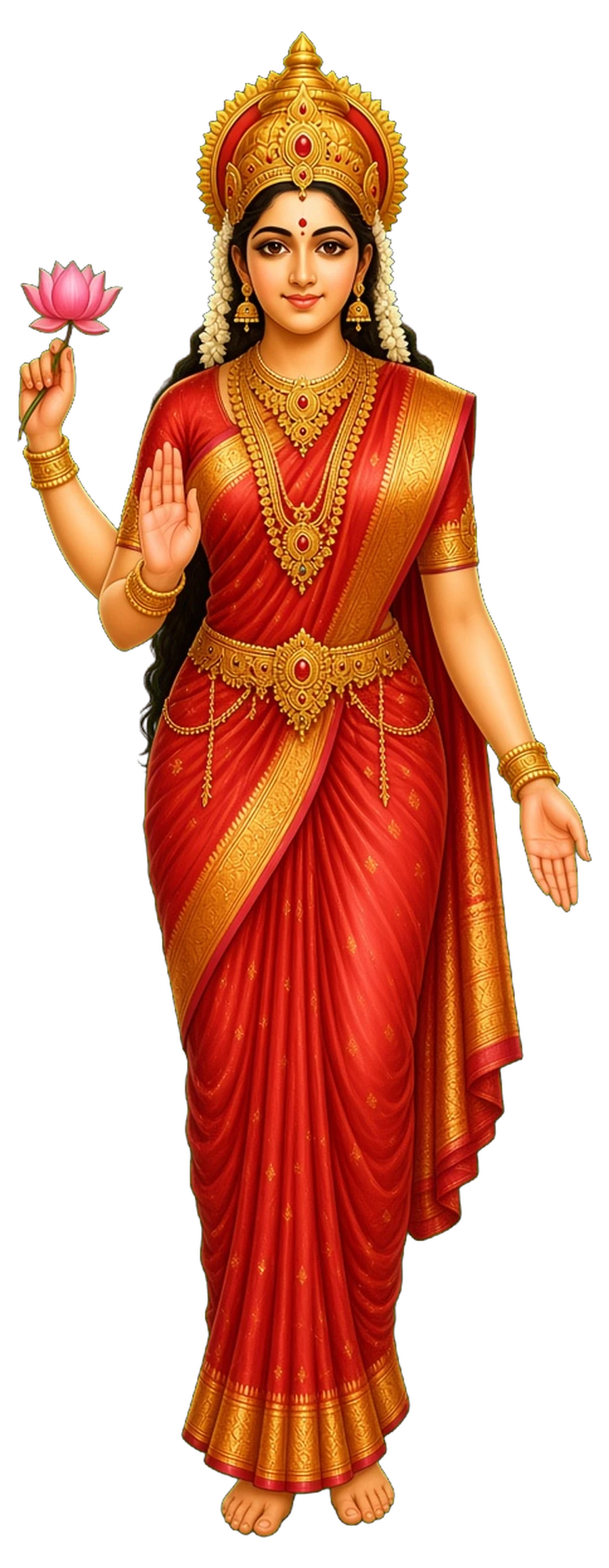
golden-skinned, her hair knotted with flowers, a lotus in her hand

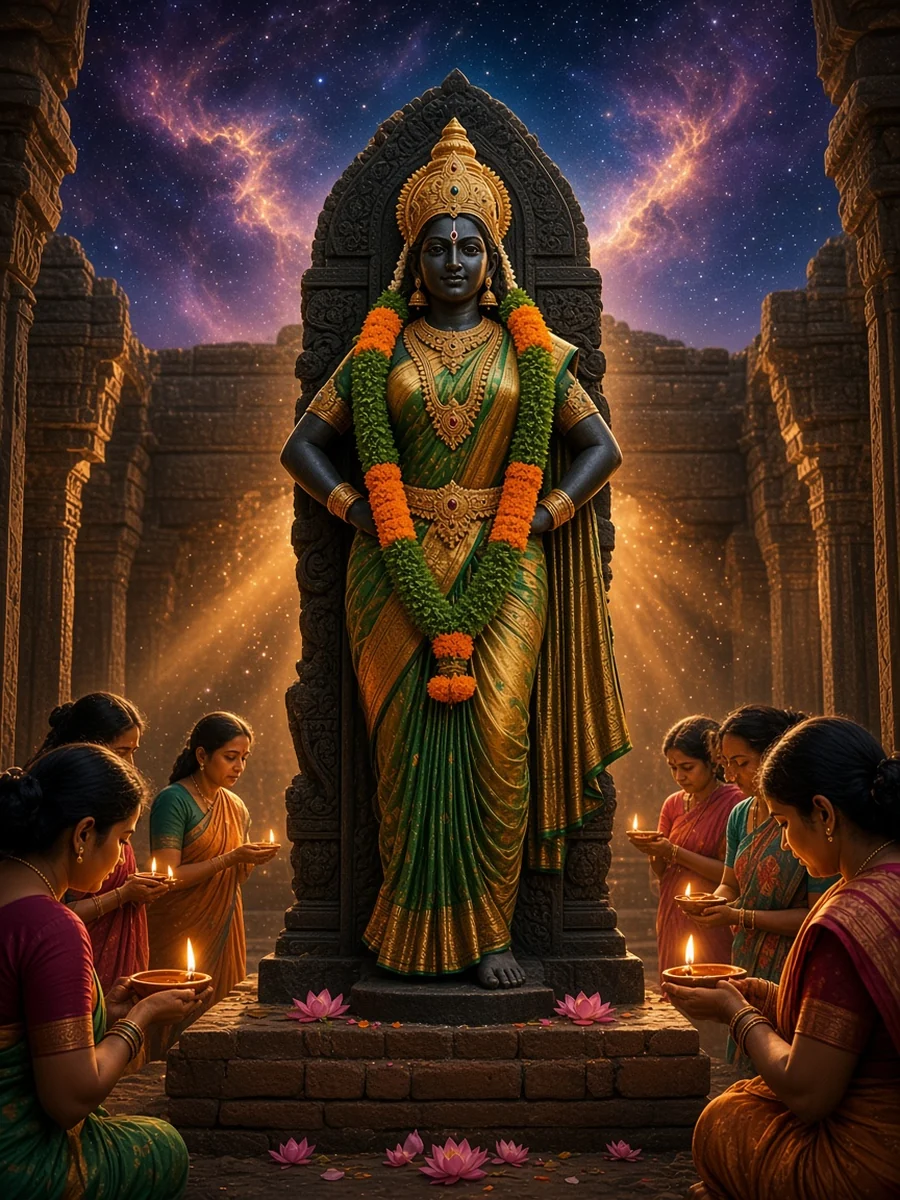
At DwarkaA four-armed marble image with the conch, discus, mace and lotus, in her own temple outside the town

Who Rukmini is

Rukmini is Krishna's chief queen, the princess of Vidarbha who chose him before he had ever seen her. Her name comes from rukma, bright gold. She was the only daughter of King Bhishmaka of Kundina, and she grew up hearing travellers at her father's court talk of Krishna, and made up her mind.

Her brother Rukmi hated Krishna and promised her to Shishupala of Chedi. So she wrote to Krishna herself and sent a Brahmin to Dvaraka with the letter. The Bhagavata Purana gives its first line in her own voice:

Shrutva gunan bhuvana-sundara shrinvatam te nirvishya karna-vivarair harato 'nga-tapam, rupam drisham drishimatam akhilartha-labham tvayy acyutavishati chittam apatrapam me: Beauty of the worlds, I have heard of your virtues, which go in at the ears and take away the pain of all who hear them, and of your form, which is everything the eyes could wish for; and my mind has gone into you, Achyuta, without any shame (Bhagavata Purana 10.52.37).

Krishna came, carried her off from the shrine of the goddess in front of all the kings, and spared her brother because she asked him to. At Dvaraka she was his first wife and the mother of Pradyumna. In the Mahabharata she is the one who sees Shri shining beside Krishna and asks the goddess where she lives, and the Puranas say she was Shri herself, Lakshmi, born again as each descent of Vishnu brings her.

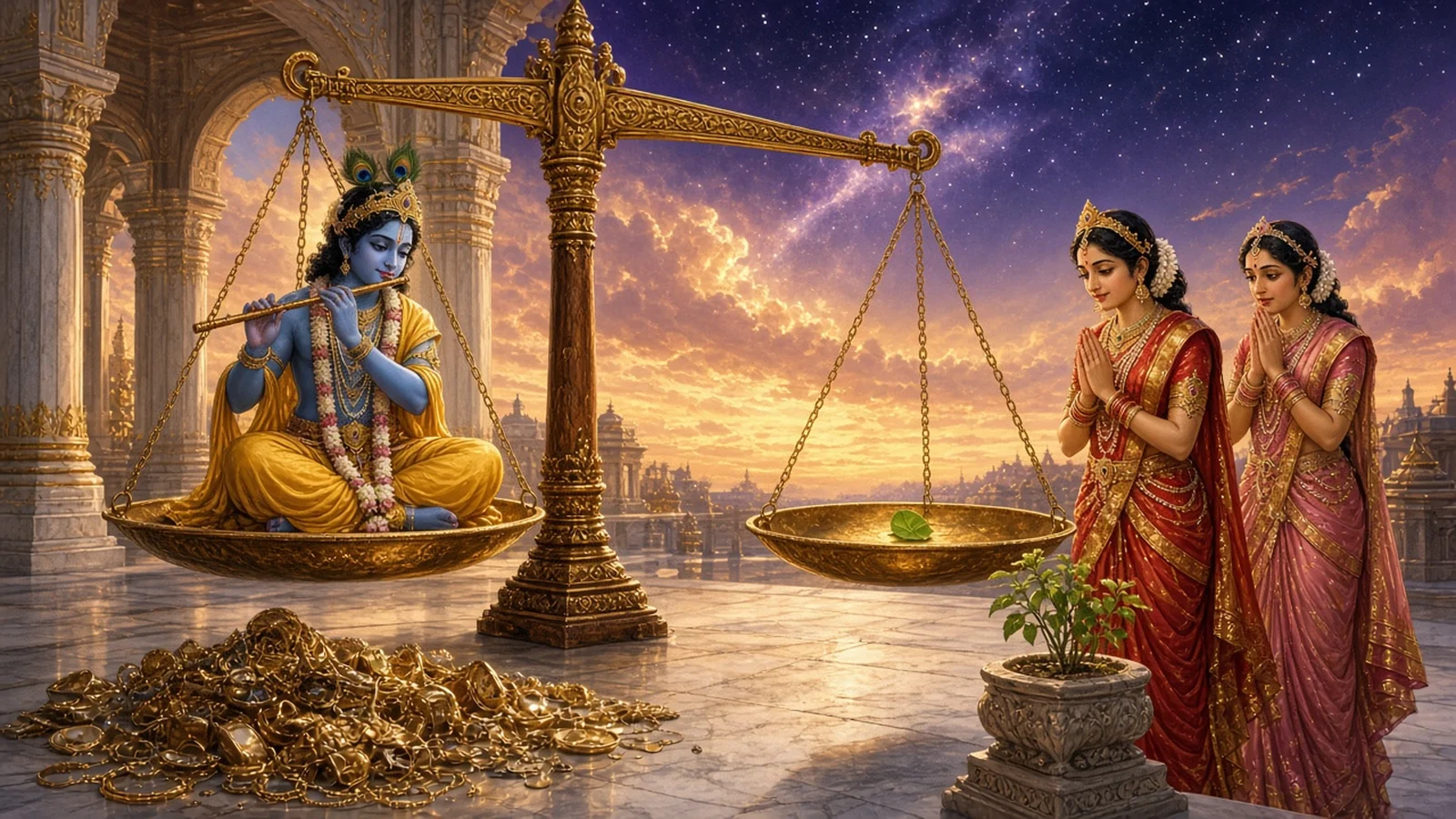
She is a queen of quiet strength. At Dwarka, the stories say, she stopped Krishna's hand when he had already given Sudama enough, and one tulsi leaf from her hand weighed more than all of Satyabhama's gold. Dwarka also remembers her grief: the curse of the sage Durvasa, which is why her temple stands alone outside the town.

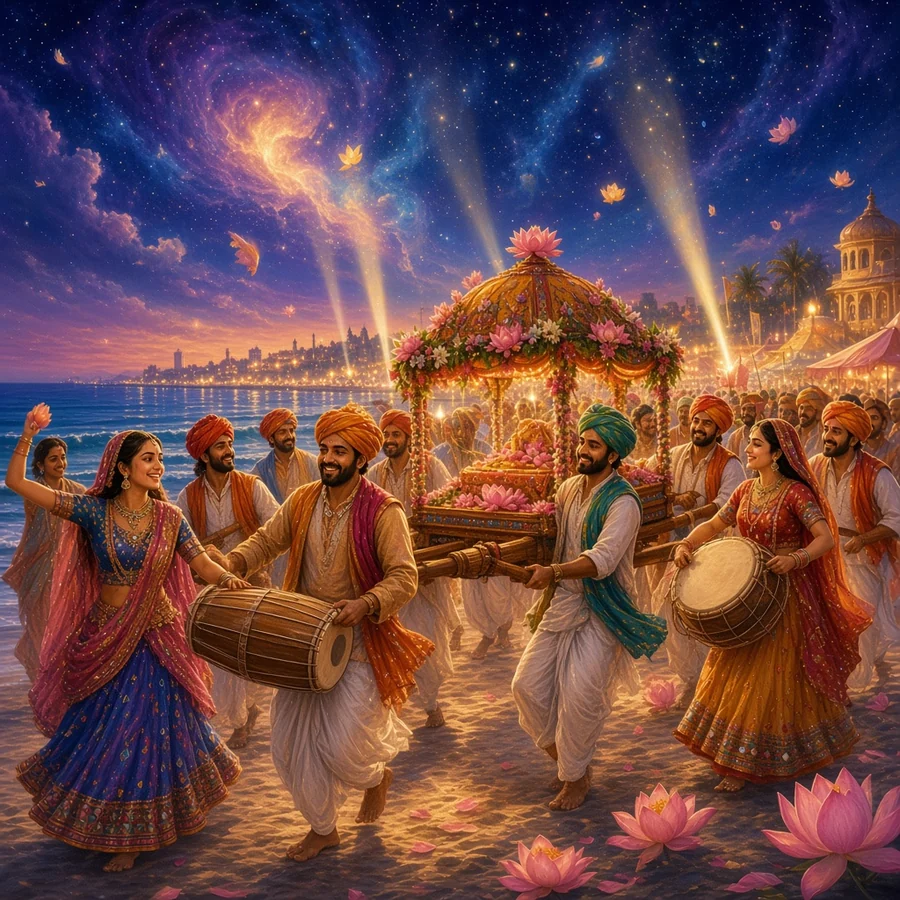
Maharashtra calls her Rakhumai, mother Rukmini, and worships her beside Vithoba at Pandharpur, in a shrine of her own. Gujarat holds her wedding every spring at Madhavpur by the sea.

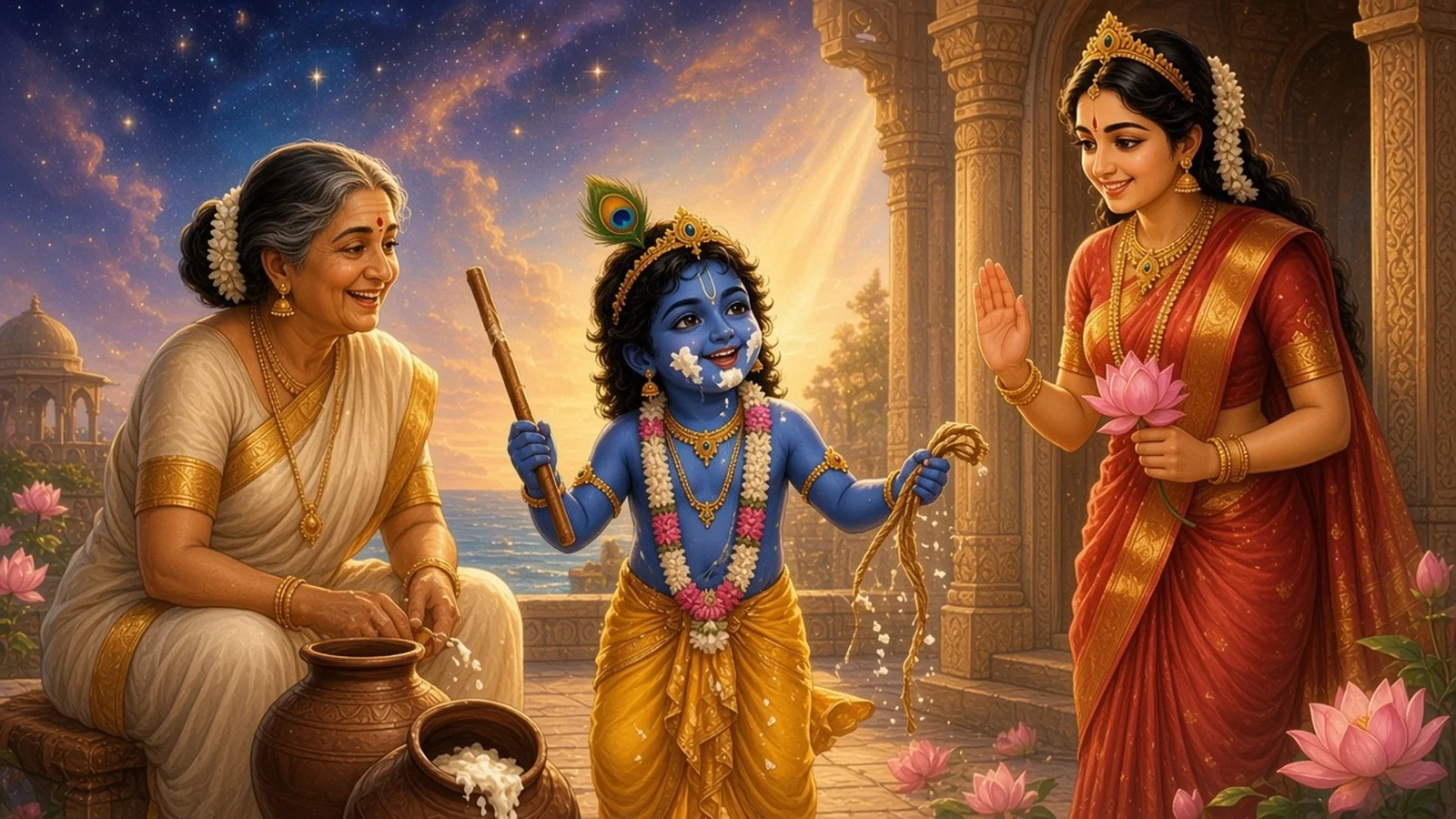
Her other stories on this site are Where Shri Stays, The Rice Tied in a Cloth, and The God Who Waited on a Brick, whose afterword tells how she left Dwarka in a temper and went to the forest at Pandharpur.
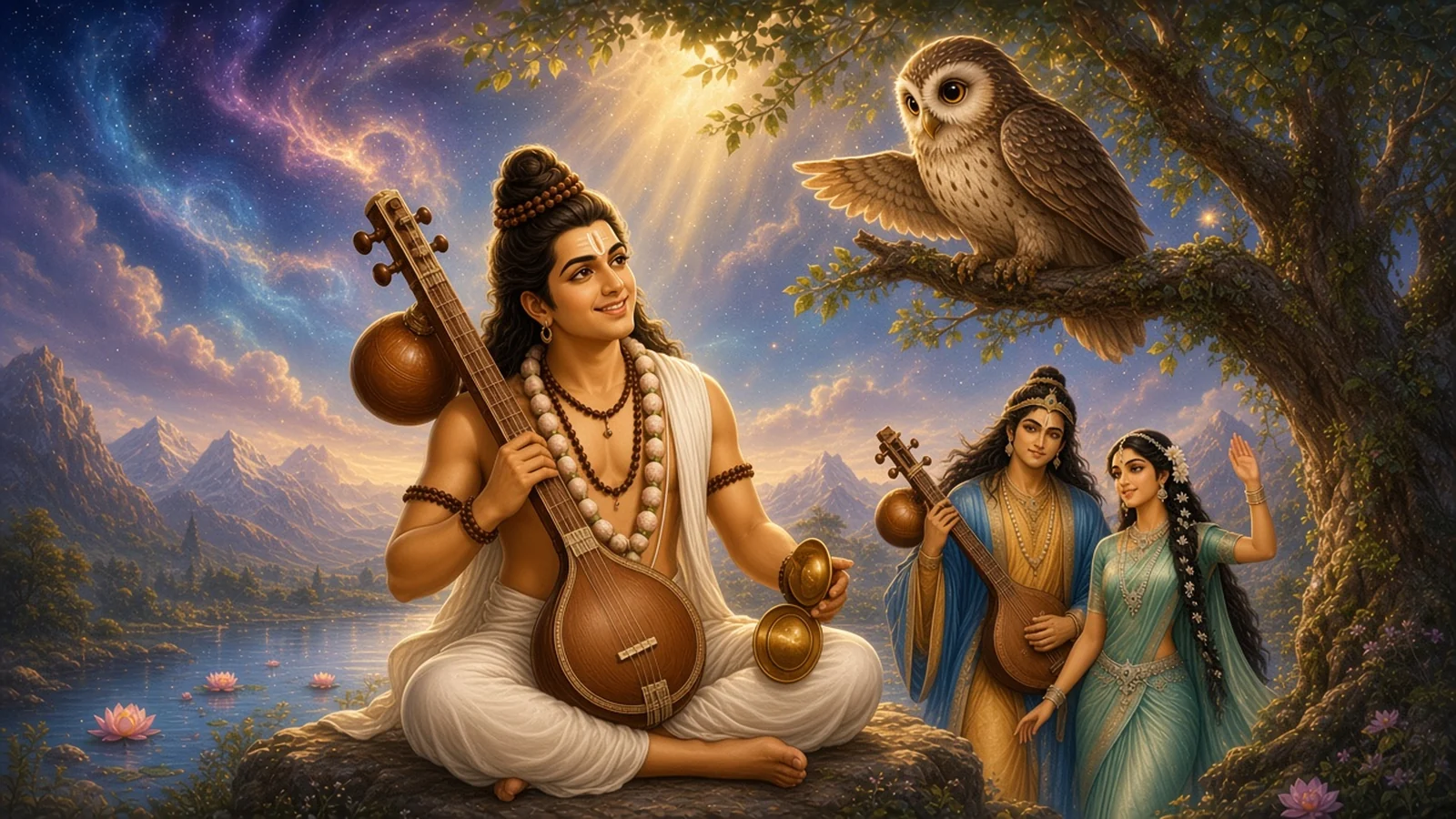
Before the Puranas

The Vedic roots of Rukmini

The Vedas do not know Rukmini. She begins in the epic. The Mahabharata names her as Krishna's wife and Pradyumna's mother, makes her brother Rukmi, son of the Bhoja king Bhishmaka, the archer who swore to kill Krishna after he carried her off and built Bhojakata when he failed, and has Krishna remind Shishupala, before the kings, that he once wanted Rukmini and did not get her. Her story grew from there in the Harivamsha and the Puranas.

The Vishnu Purana tells her marriage briefly: Krishna asks for her, Rukmi refuses, Jarasandha has her promised to Shishupala, and Krishna takes her on the eve of the wedding. The Bhagavata Purana, which most scholars date later, turns it round and gives her the first move, the letter, the plan and the prayer at the shrine of Ambika. The Harivamsha, Wilson noted, puts the shrine under Indrani instead.

The same Puranas make her a goddess. The Vishnu Purana closes its story of Lakshmi's rising from the sea by saying that whenever Vishnu descends she descends with him, and that when he was Krishna she was Rukmini. The Bhagavata and the Padma Purana say the same.

Regional traditions carried her further. The Skanda Purana's chapters on Dvaraka tell of Durvasa's curse and give her a shrine and a lake of her own outside the city. In the fifteenth and sixteenth centuries the Assamese poet Sankaradeva made her marriage a play, Rukmini Harana, and in Maharashtra Eknath sang it in Marathi in his Rukmini Swayamvar. At Pandharpur she became Rakhumai, and the sociologist G. S. Ghurye tied her place there to her birth in Vidarbha, which is Maharashtra's own country. The Mishmi people of Arunachal Pradesh count her father Bhishmaka among their ancestors, and Gujarat's Madhavpur fair now brings dancers from the northeast to her wedding.

See how the Vedic gods became the Puranic ones →

Every story about Rukmini

Related gods