As Raghuvarya Tirtha's commentary is retold
Dwarka, Gujarat · 2 min read
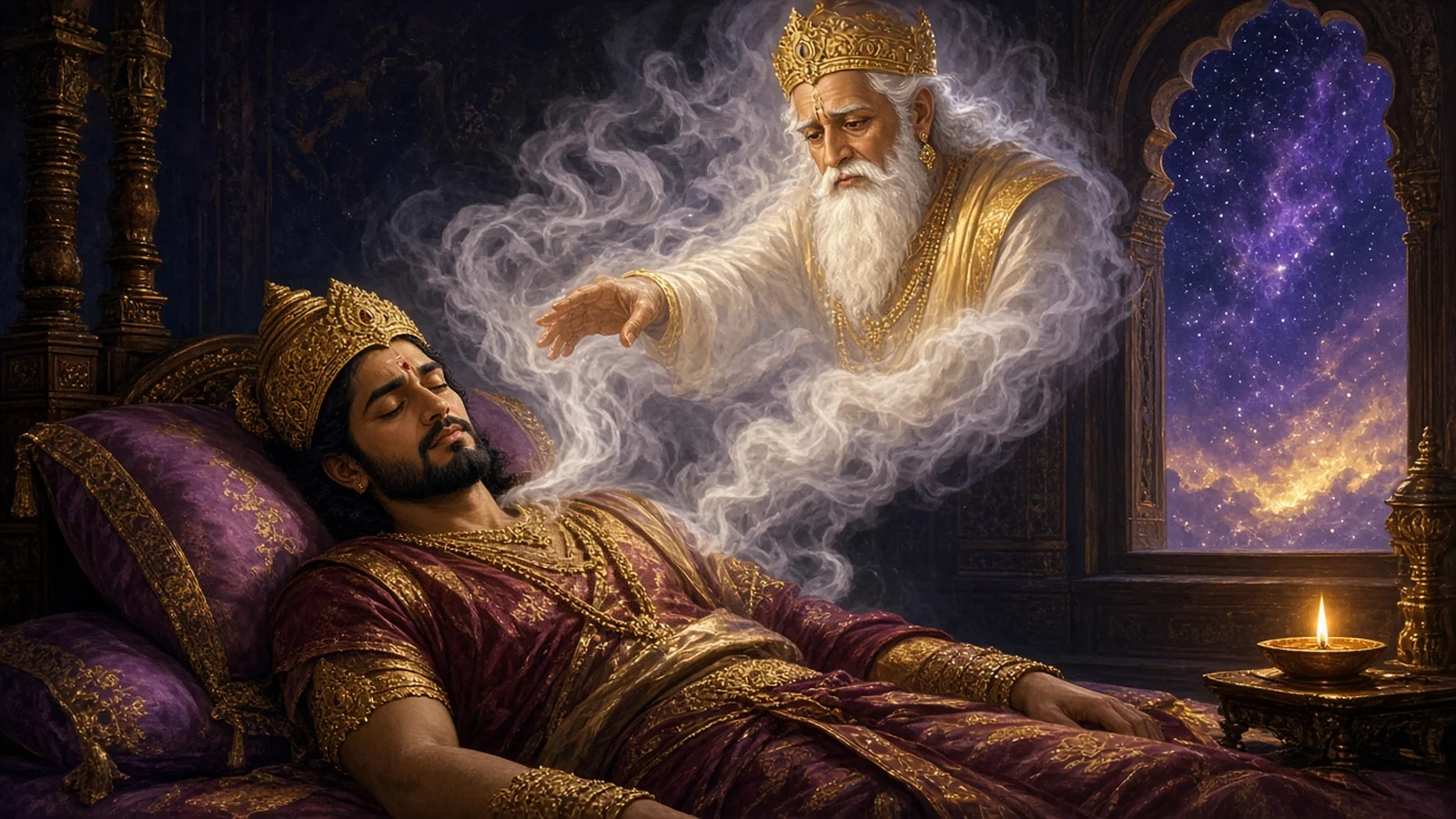
Krishna was born to Devaki in a prison cell at Mathura, and on the same night his father carried him across the river to Gokula, where Yashoda brought him up as a cowherd's son. Devaki had him back only when he was grown.
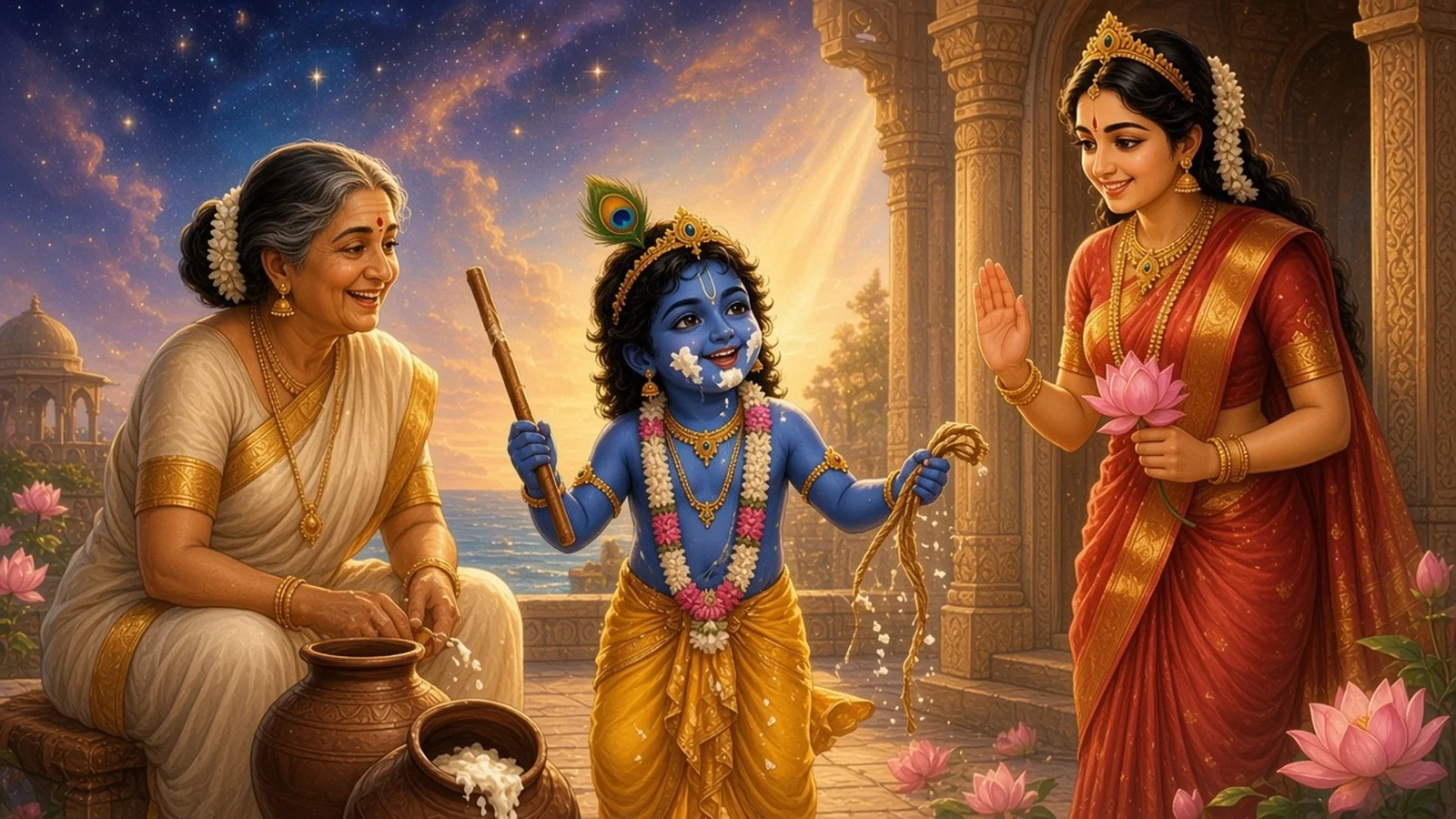
Years later she lived in her son's city of Dwarka by the sea, an old queen now, and she had heard every story of his childhood from other people. How he stole butter. How he broke the pots. How Yashoda once sat churning curd, singing about him as she pulled the rope, and a small hand closed on the churning rod to make her stop.
"Everyone saw you small except me," Devaki said to him one day. "Yashoda had all of it. I had none."
"What would you like?" said Krishna.
"Show me," said Devaki. "Just once, show me what she saw."
And he became a little child again, small enough to sit in her lap.
Devaki sat down to churn the butter, and the child did everything the stories said. He broke the churning pot. He ate the butter with both hands. He took the churning rod and the rope away from her and would not give them back.
Rukmini, Krishna's queen, had seen it all.
"I want to keep him like that," she said. "Just as he is now, with the rod and the rope in his hands."
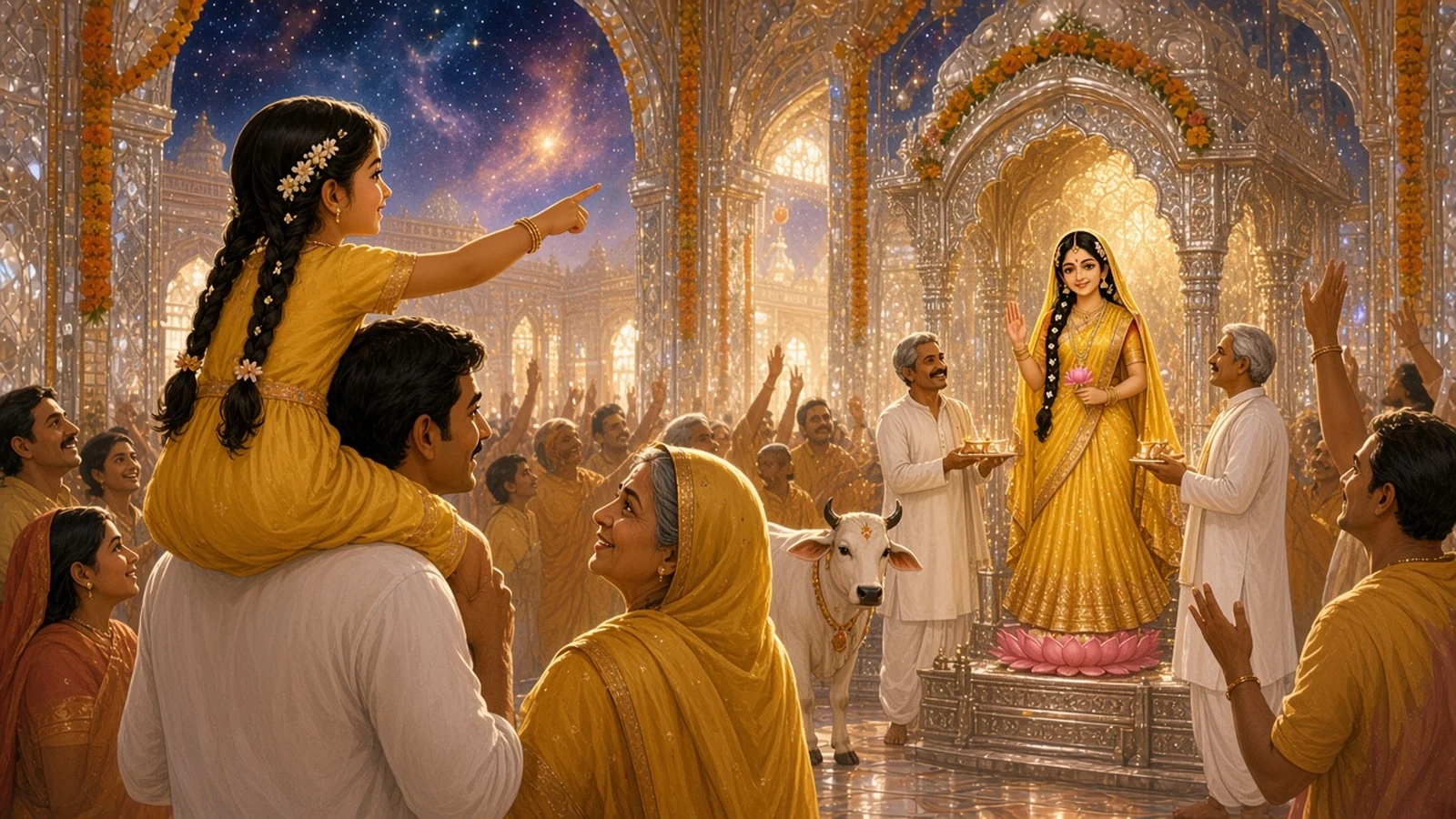
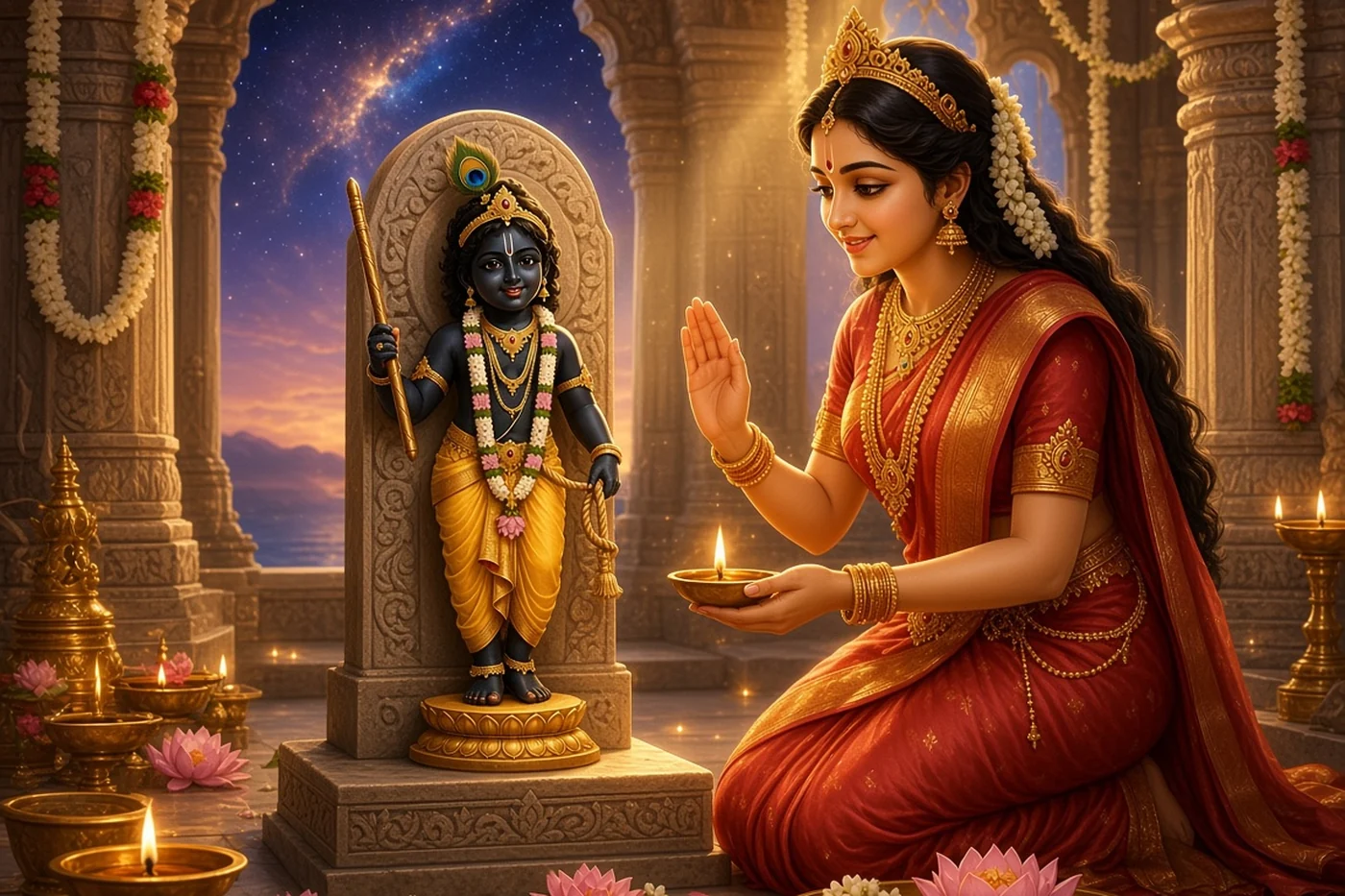
So an image was made for her: the child Krishna standing with a churning rod in one hand and the rope in the other. Rukmini set it up and worshipped it every day.
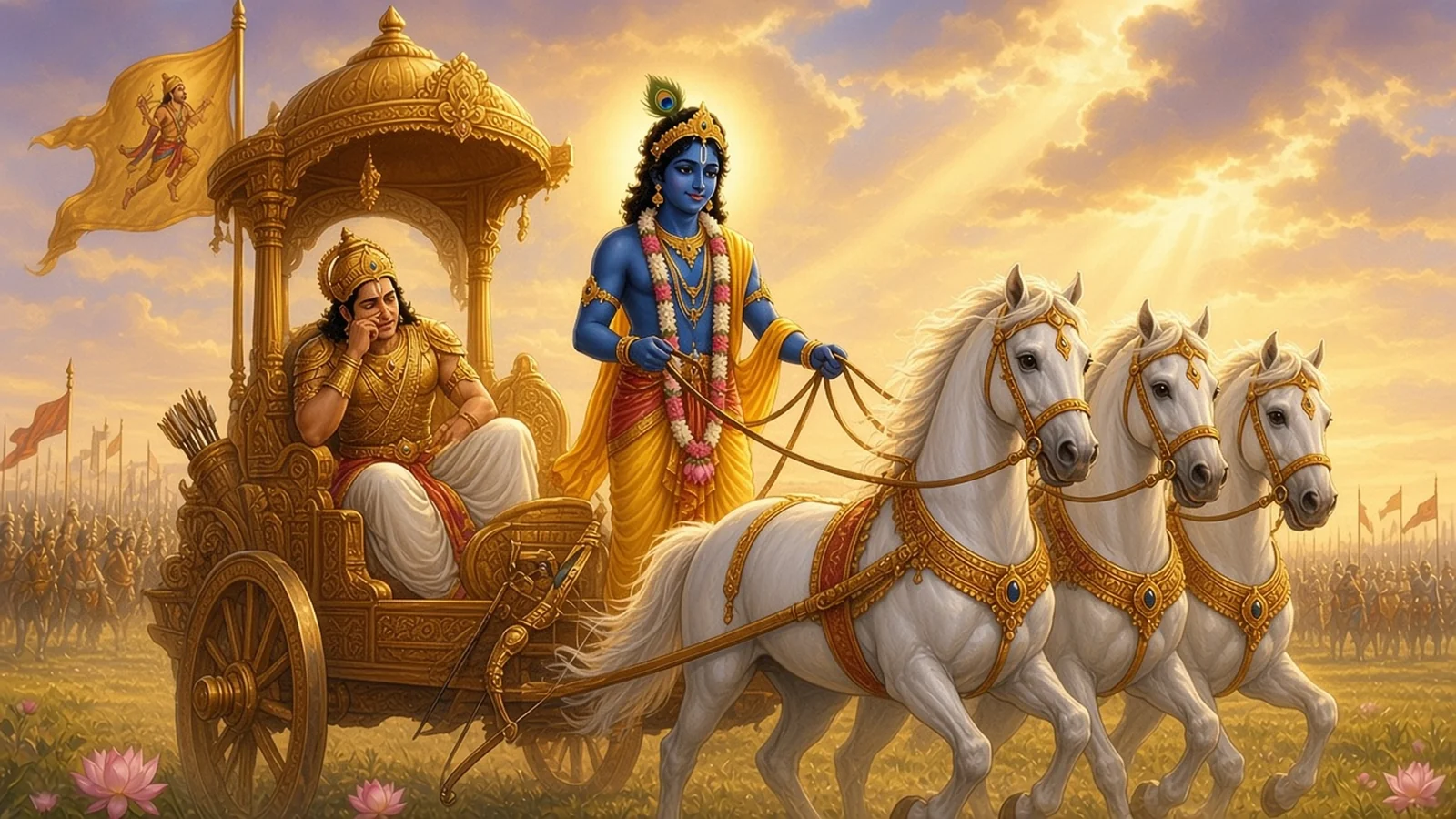
The years of Dwarka came to an end. When Krishna had gone from the world, his friend Arjuna took the child that Rukmini had worshipped and laid it in a place called Rukminivana, Rukmini's grove, near the city.
Nobody came for it. Centuries went over the grove, and the pale clay of that country, the gopichandana that Vaishnavas still use for the marks on their foreheads, crept over the image and closed on it, until there was nothing left to see but a lump of earth, large and very heavy.
And because it was heavy, sailors wanted it. A ship needs weight low in its hold to stay upright in a rough sea, and a lump of clay does as well as a stone. So one day merchant sailors out of Dwarka loaded the lump into their ship as ballast, and none of them knew what was inside.
The ship sailed south along the coast. Somewhere ahead of it, on a beach near Udupi, a monk was walking down to the sea before dawn, making up songs to Krishna as he went.
As pilgrims hear it at Udupi
the Vishvakarma telling · Dwarka to the south-west coast · 1 min read
At Udupi the pilgrims hear the beginning the same way. Devaki had missed her son's childhood and wanted to see him as a baby, and Krishna played his old pranks for her in Dwarka, and Rukmini watched him and wished she could keep him that way.
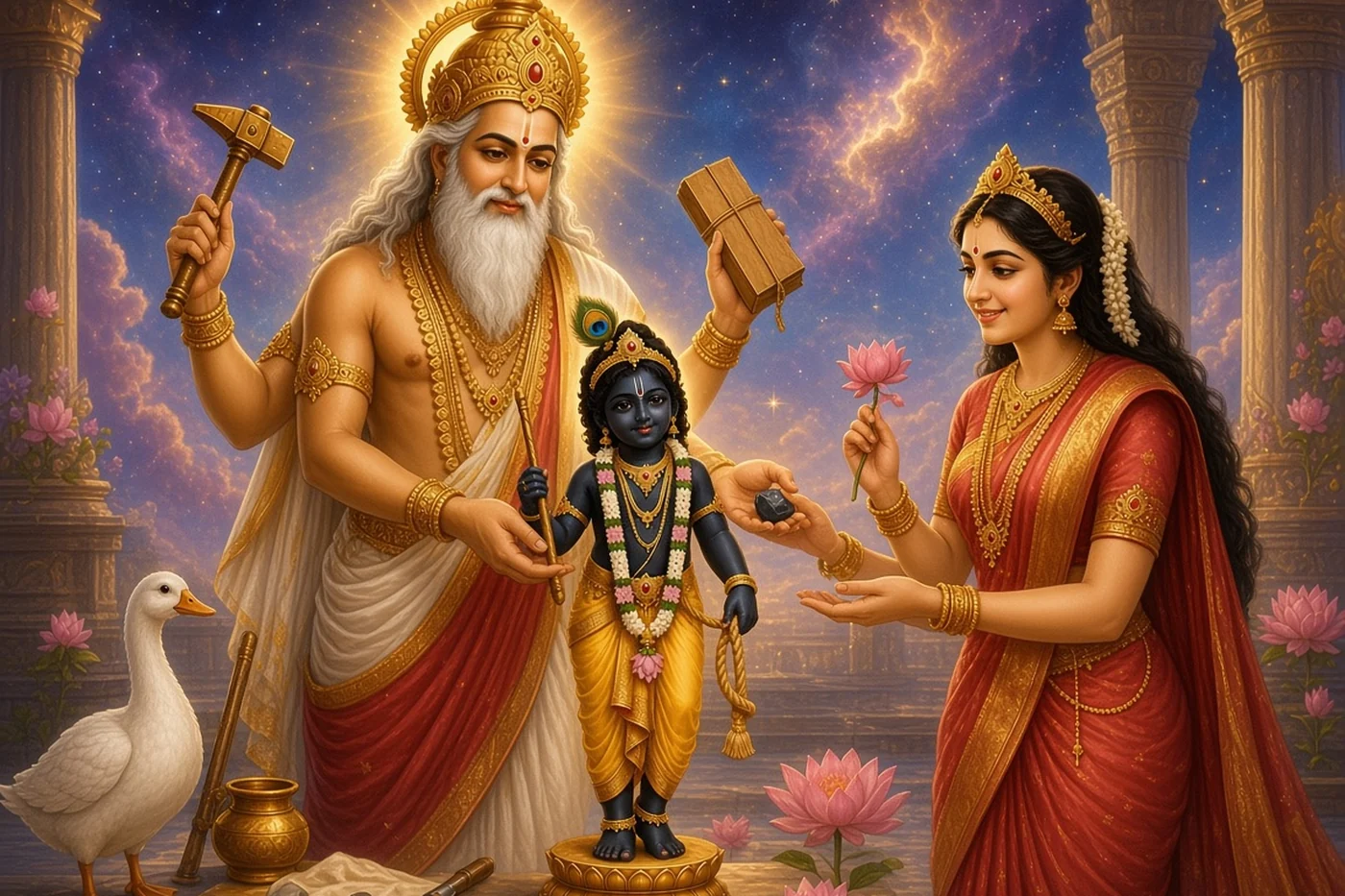
Here, though, Krishna himself saw to it. He called Vishvakarma, the builder of the gods, and told him to make an image of the child Krishna. Vishvakarma carved it out of a saligrama, the black fossil stone that is worshipped as Vishnu himself, and gave it to Rukmini.
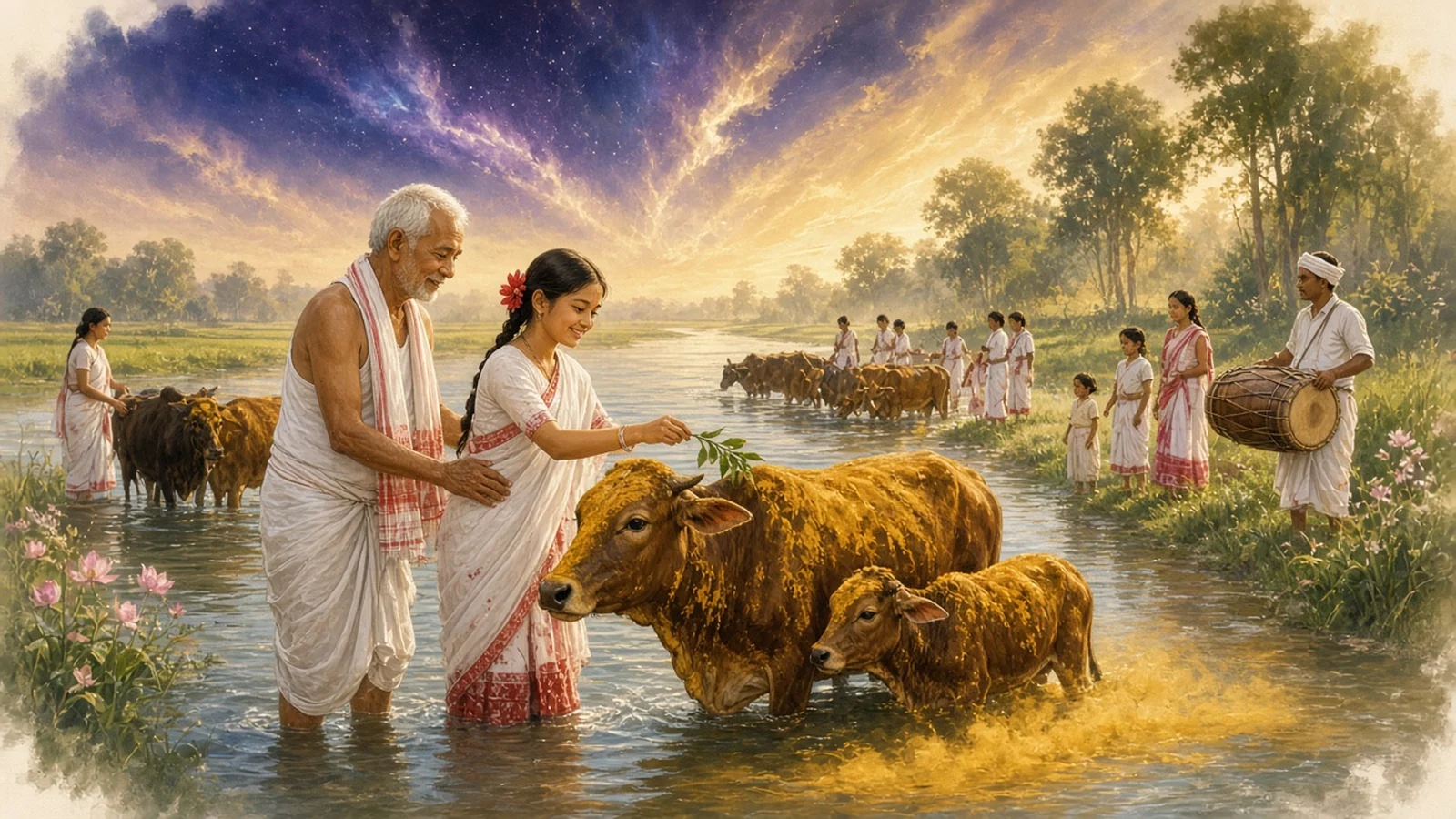
She worshipped it for as long as Krishna lived in Dwarka. In this telling the clay is her own doing. Every day she poured gopichandana over the child, the cool pale paste of the place, as an offering, and over the years so much of it dried on him that his face and hands disappeared under it.
Then Krishna left the world, and the sea came in over Dwarka as he had said it would, and the image was washed away with the city.
Centuries later a sailor found a strange stone on an island off the south-west coast of India, a rounded lump crusted with old sandal paste and as hard as rock. He had no idea what it was. It was heavy, and a heavy stone is useful on a ship, so he put it in the bottom of his boat for ballast and sailed on.
He was sailing towards Udupi, and towards the storm that would bring Madhvacharya down to the shore.