Who Udupi Krishna is
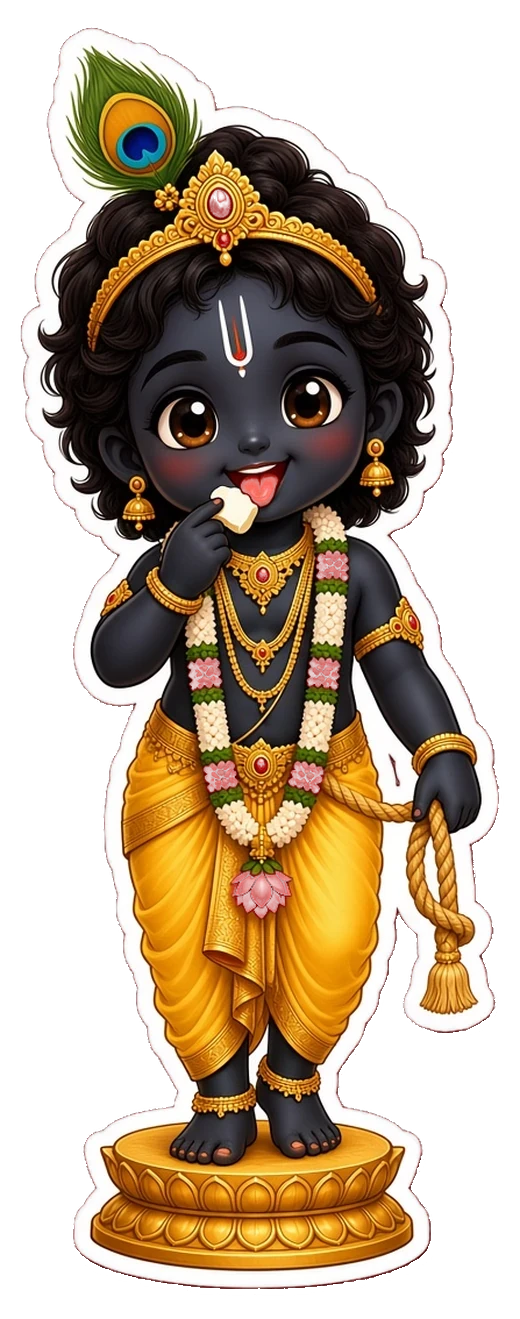
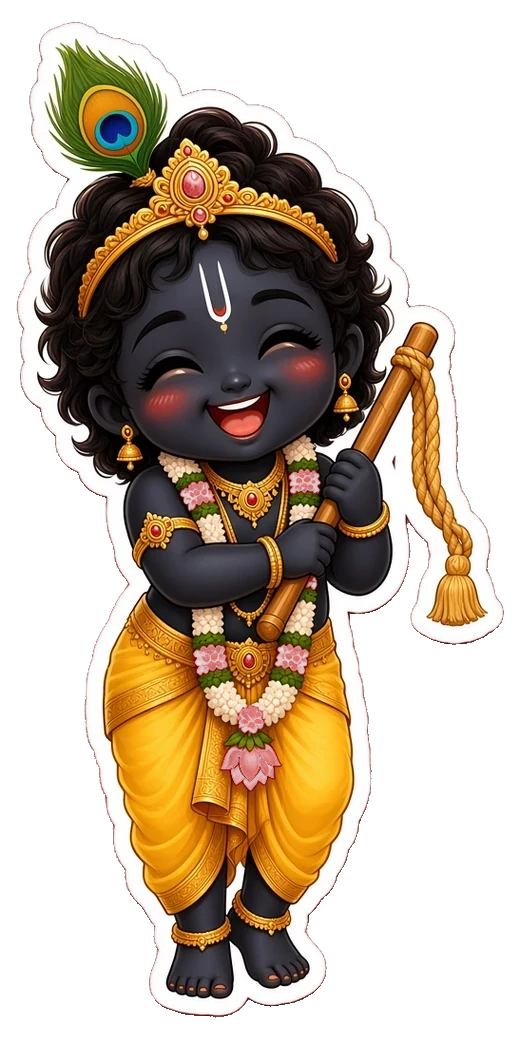
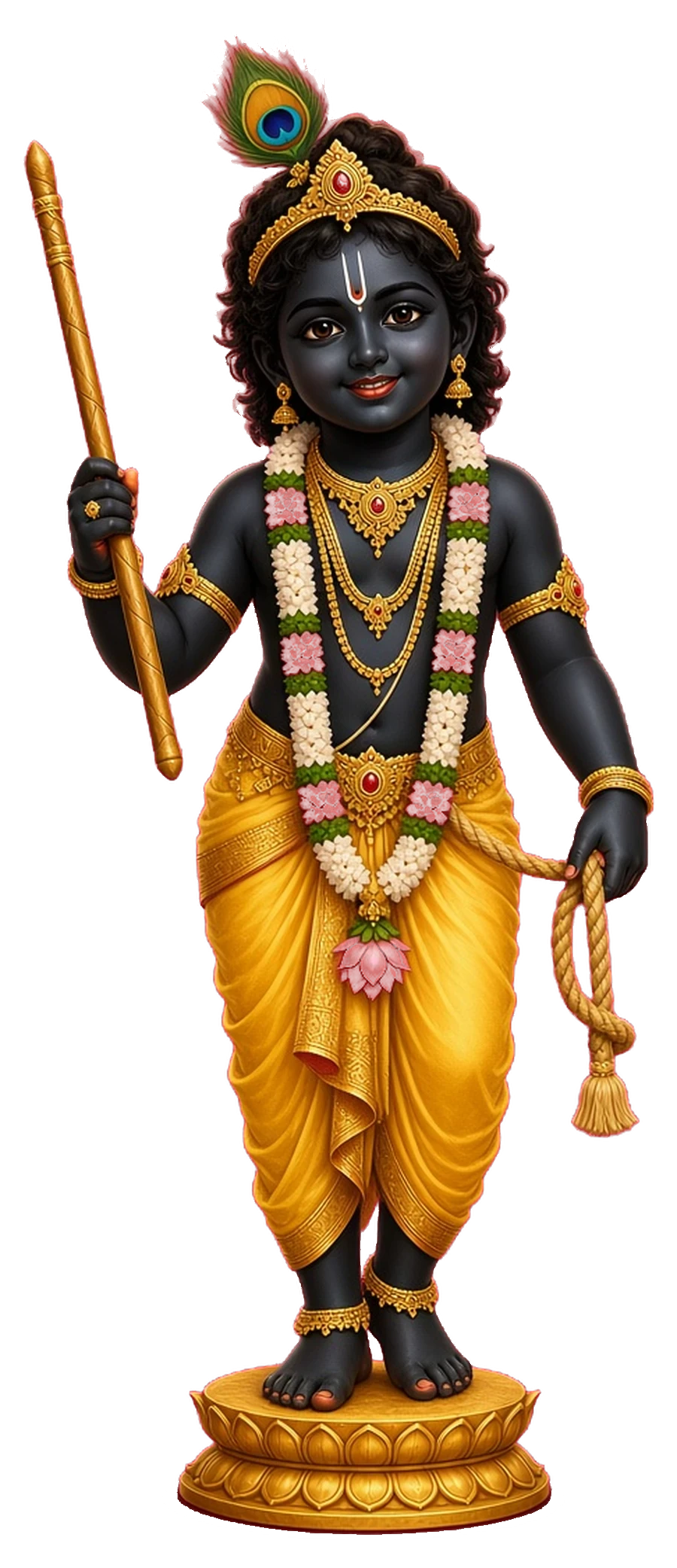
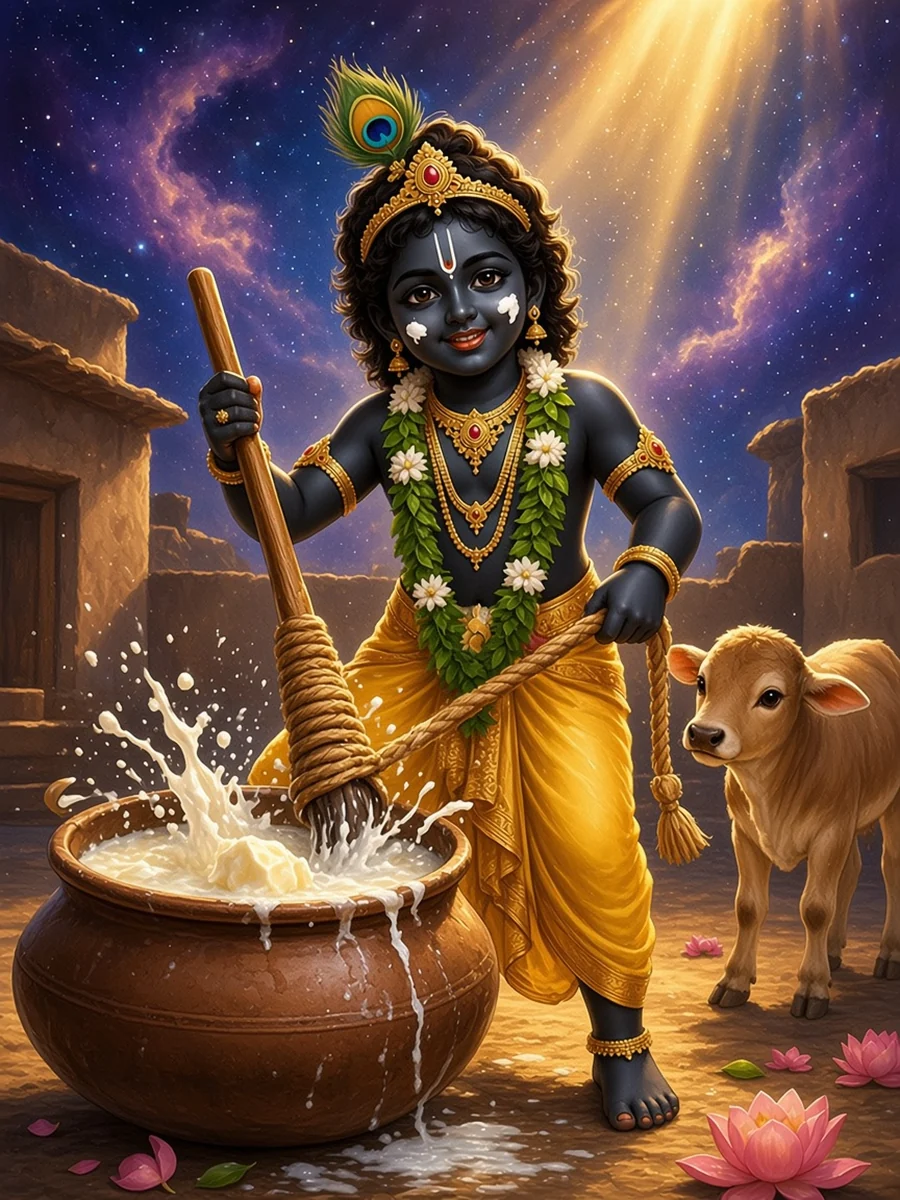
Udupi Krishna is Krishna as a small child, standing in a shrine of the Sri Krishna Matha at Udupi, a temple town on the coast of Karnataka. He holds a churning rod in one hand and its rope in the other, as if he had just been caught at the butter, and his people call him Kadagolu Krishna, Krishna of the churning rod. He is small and black, and the scholar B. N. K. Sharma describes the image as a saligrama.
He came to Udupi in the thirteenth century with Madhvacharya, the founder of the Dvaita school, who held that God and the soul are forever two. The oldest life of Madhva, the Sumadhva Vijaya, says only that Madhva installed the image, and that thirty strong men could not lift it until he lifted it alone. Udupi tells more. Madhva saved a ship from Dwarka in a storm off Malpe, asked its captain for nothing but some lumps of gopichandana clay from the hold, and found the child inside the largest. And the child had been made long before, Udupi says, for Rukmini, Krishna's queen, after she watched him play at the churning in Dwarka.
Vande vandyam sadanandam vasudevam niranjanam: I bow to Vasudeva, who is worthy of every bow, all joy and without stain (Madhvacharya, Dvadasha Stotra 1.1).
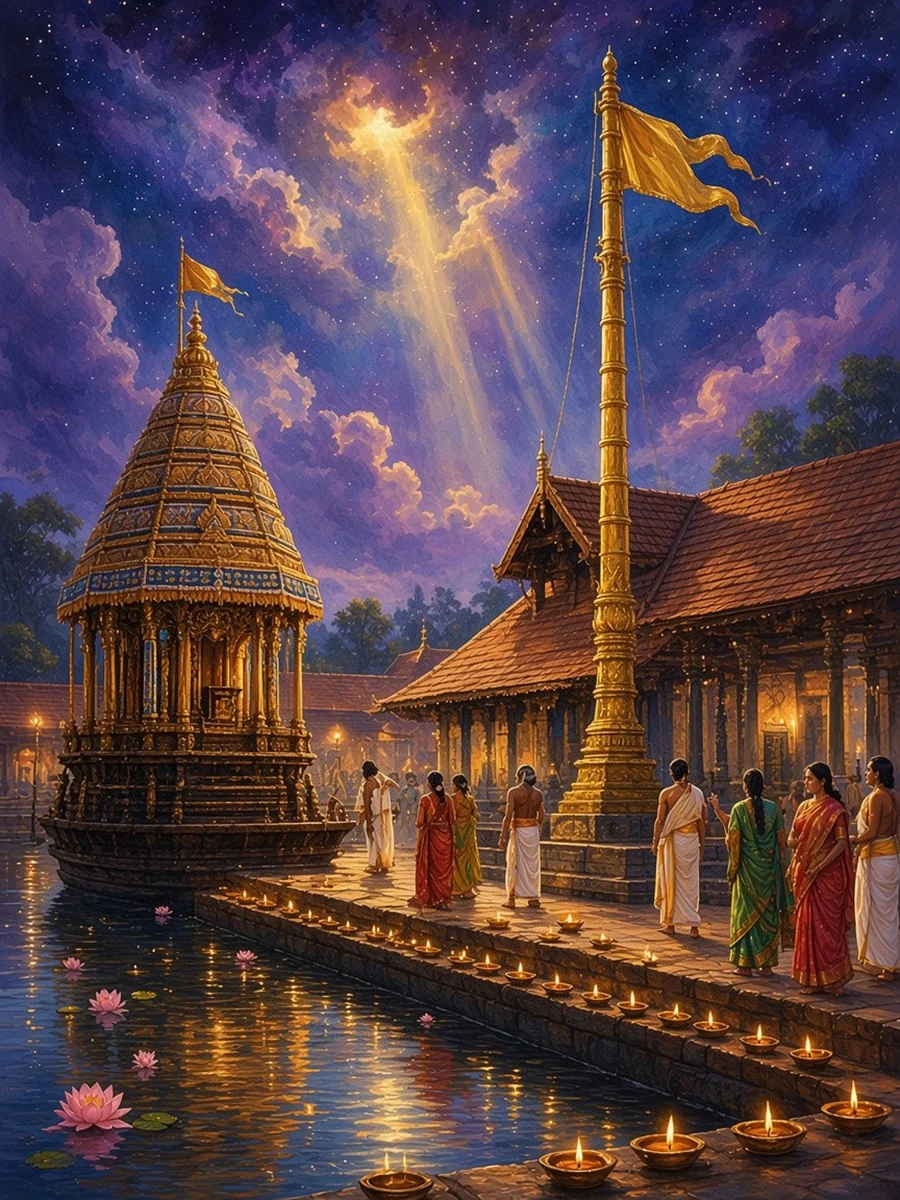
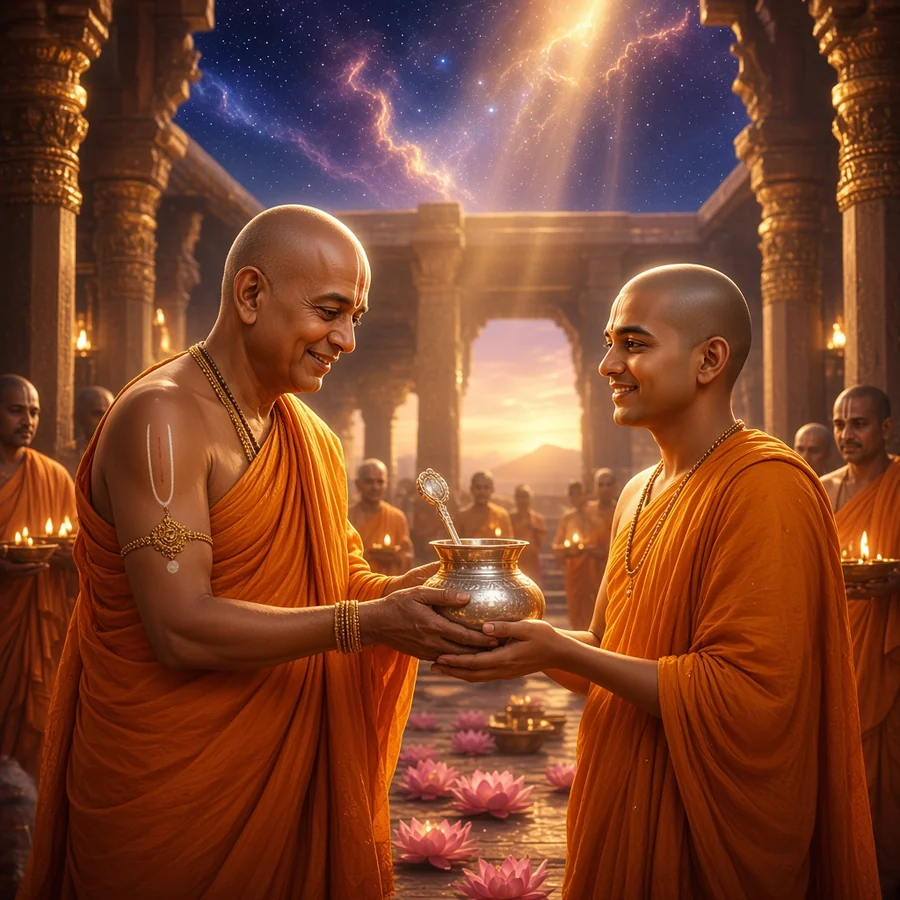
He is served by monks. Madhva gave his worship to eight young disciples, two months each in turn; in the sixteenth century Vadiraja Tirtha of the Sode matha made each turn two years, and the eight mathas around Car Street still keep it. Every other January, before dawn, the outgoing swami gives the incoming one Madhva's seat, a vessel, a ladle and the keys, and Udupi holds its greatest festival, the Paryaya.
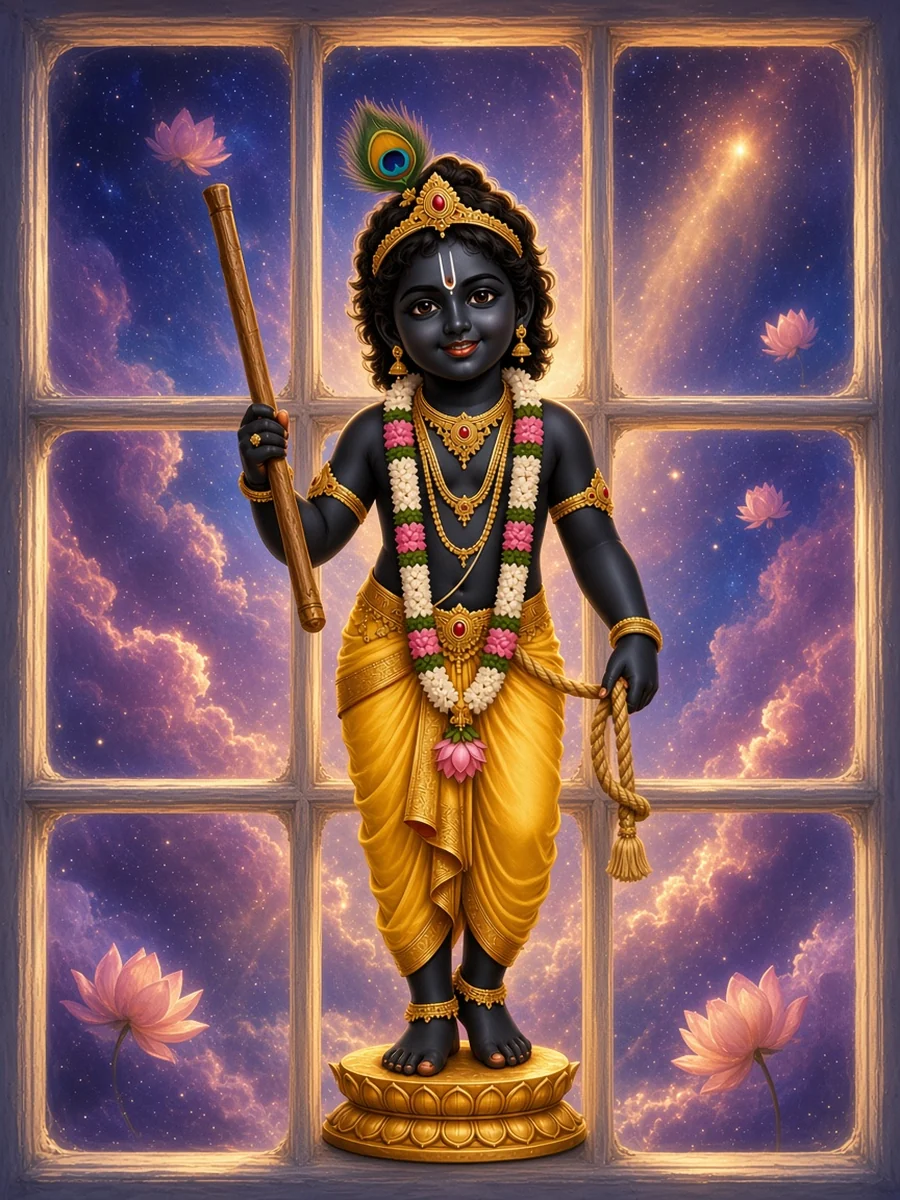
The god faces west, away from his door. Udupi explains this by the shepherd singer Kanakadasa, kept out of the temple, for whom the child turned round and the wall opened. Every pilgrim still looks at him first through that window.
His stories on this site: The Lump of Yellow Clay, how Madhva found him on the shore; The Child in Rukmini's Shrine, where the image came from; and The Bowl Handed On at Dawn, the turn of worship called the Paryaya. How he turned to face Kanakadasa is told in The Window at Udupi.