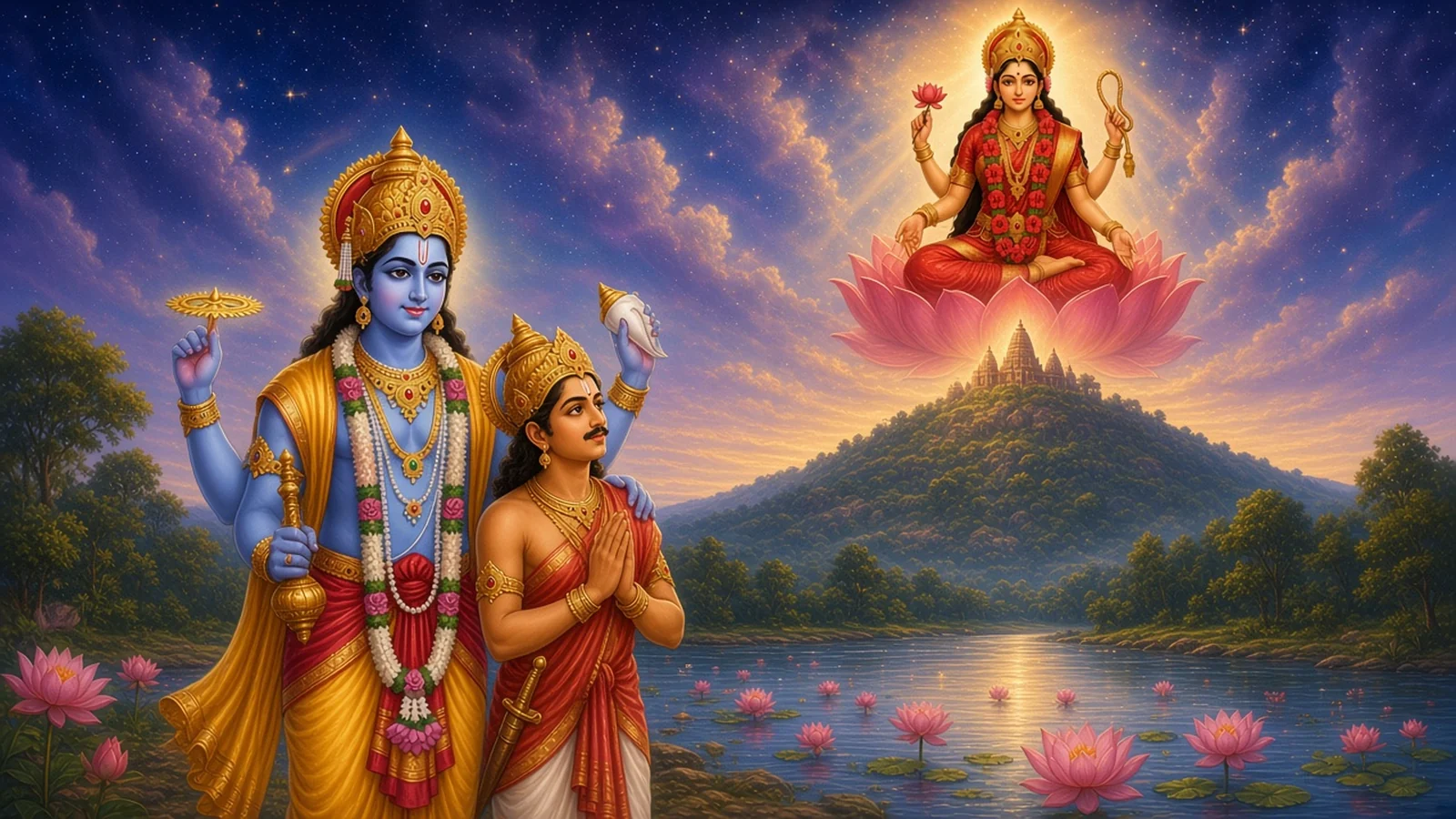
As the Oraon pahan tells it
Ranchi country, Jharkhand, as S. C. Roy recorded it in 1928 · 3 min read
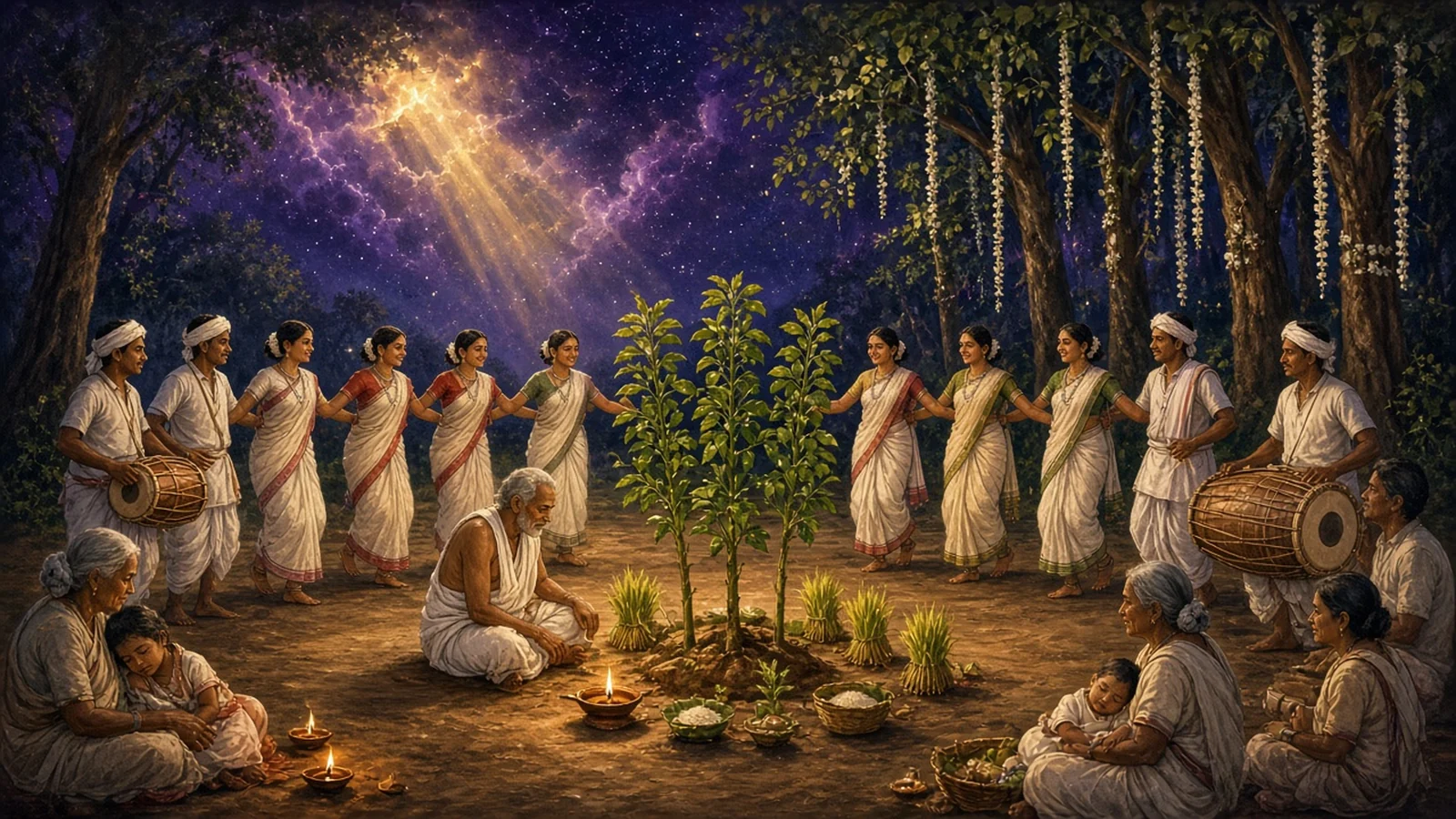
When the Karam night has been danced through and the morning comes, the young men and women of an Oraon village sit down in rings around Karam Raja, the branches standing in the middle of the akhra. Then the Pahan, or some old man who knows the words, tells them this story.
Long, long ago seven brothers lived in one house with their wives and children. One year they loaded their pack-bullocks with grain and drove them far away to trade. They were gone for months. At last they turned the bullocks toward home.
On the day of Karam they came to a village only a few miles from their own, and there the bullocks stopped. The brothers pulled at the ropes and shouted, and the animals would not move a step further.
"We will halt here for the day," said the eldest. He looked at the youngest. "Run home and see how our wives and children are. Then come back and tell us."
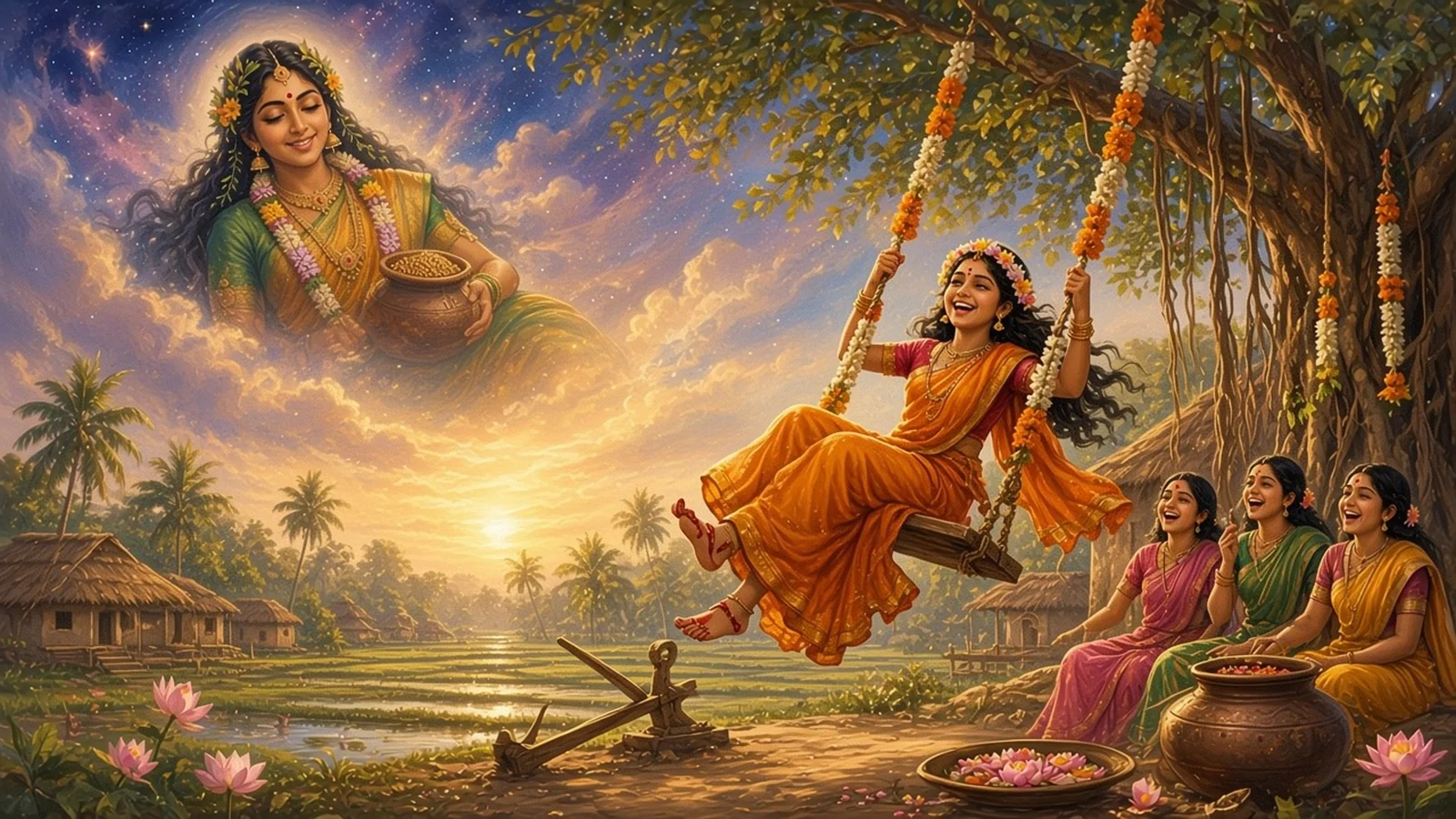
The youngest ran. As he came near his village he heard the drums. Everyone was in the akhra, dancing and singing before Karam Raja: the neighbours, his brothers' wives, and his own wife among them. Somebody put a nagera into his hands. He beat it, and the dancers sang, and he forgot the road and the bullocks and his brothers altogether.
At the halting place the brothers waited. "He has forgotten us," said one of them at last. "I will go."
He went, and he heard the drums, and he joined the dance. Then the next went after him, and the next, and each one, coming to the akhra, took his place in the ring and stayed. The day wore on into night, and only the eldest was left beside the tired bullocks.
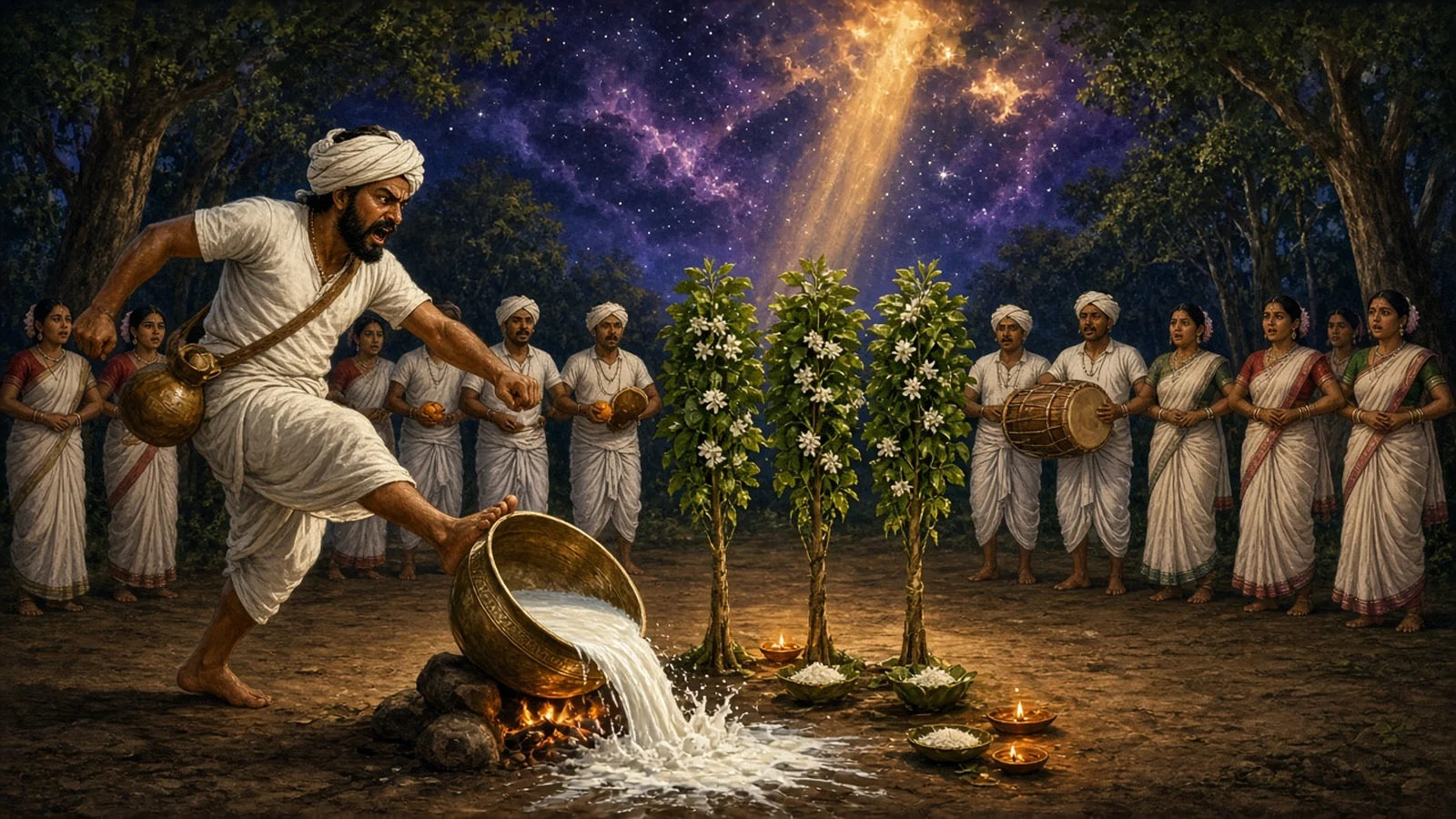
He waited until he could wait no longer. Then he left the bullocks to look after themselves and ran home. In the akhra he found all his brothers dancing with their wives, and his own wife dancing too, and not one of them gave him a thought. Near the branch stood a basin of milk on the fire, boiling, ready to be offered to Karam.
"So this is what keeps you!" he shouted. "The bullocks lie in the road, and you are all here dancing!"
He kicked the basin over. The boiling milk ran across the ground and scalded Karam Raja. Then the eldest brother picked up his pumpkin gourd, turned his back on his house and his wife and his share, and walked out of the village as a mendicant who has had enough of the world.
The drums stopped. Karam Raja was badly scalded, and he was angry. He made ready to leave the village.
The women ran to him. "Do not go," they cried. "Stay with us, Karam Raja!"
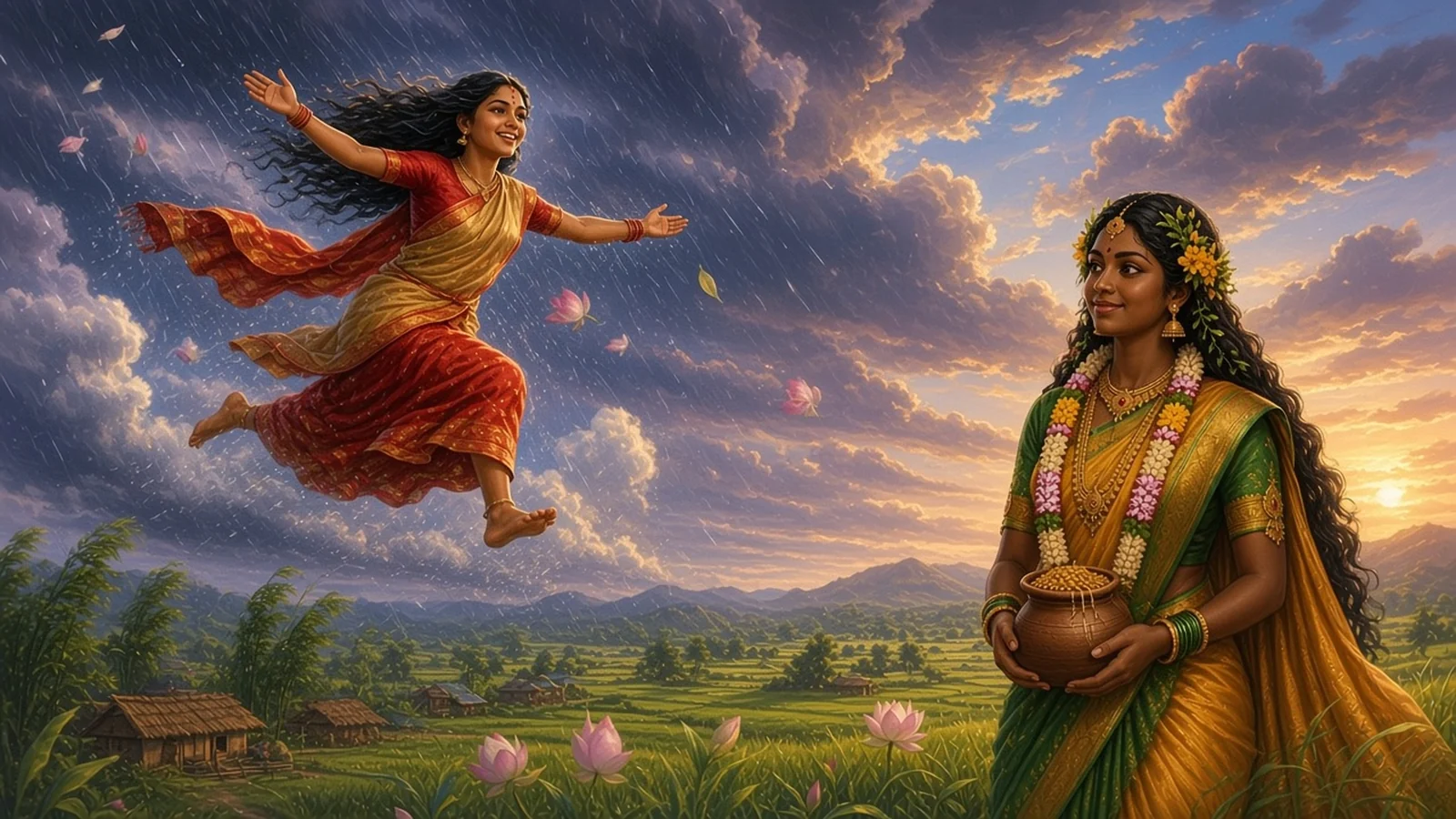
Then the wife of the youngest brother stepped out of the ring. She did not wait to be told. She lifted Karam Raja in her arms, gently, the way one carries something that has been hurt, and she carried him back across the akhra and set him in his place again. And he stayed.
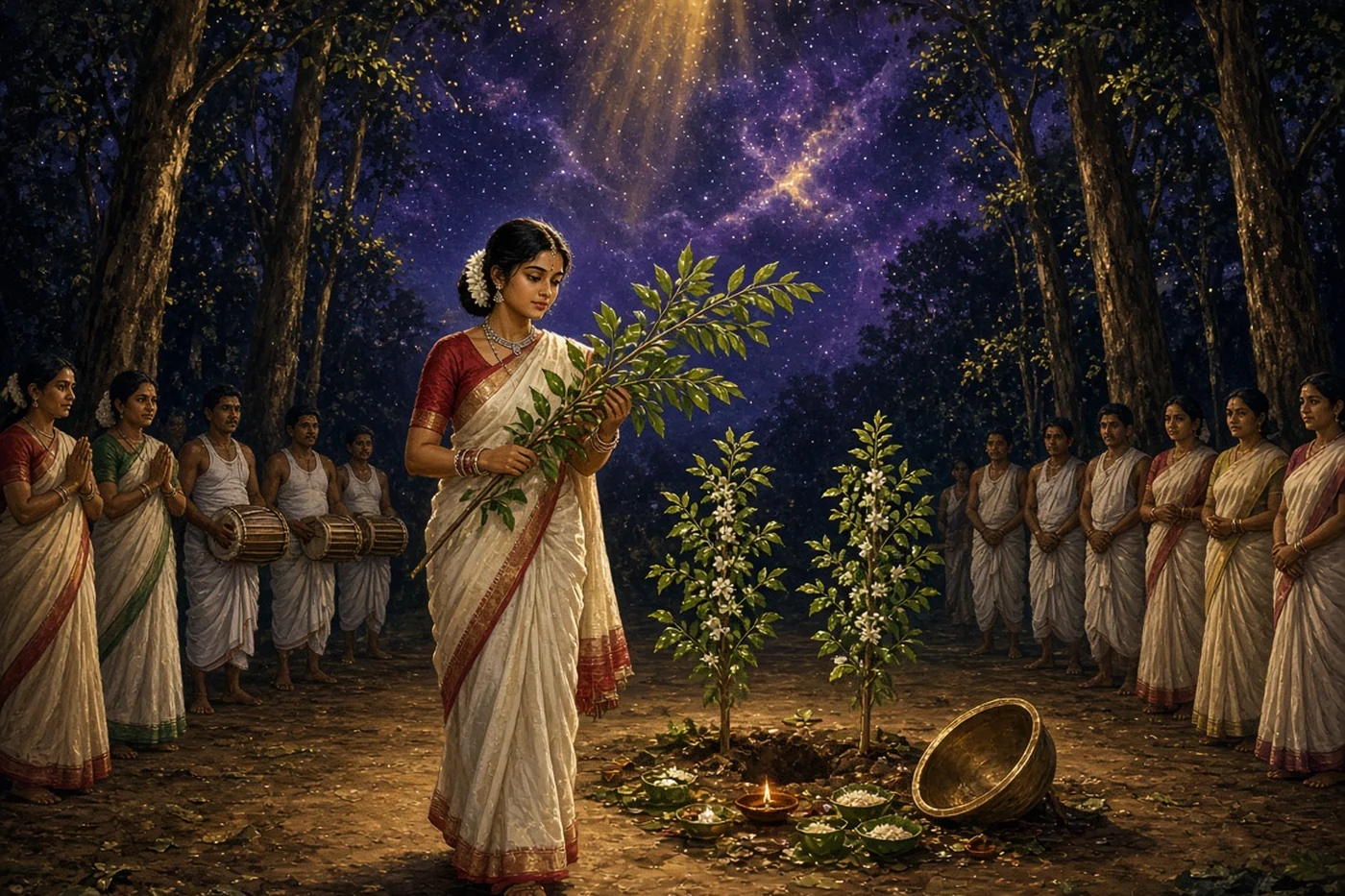
"That is why," the Pahan says when he comes to the end, "we never give Karam hot milk now. Since that day he has been given curds."
Then the young people throw the petals from their Karam baskets at the branch, crying "Polio, polio!", and they offer the curds.
As Surguja tells it
Surguja, Chhattisgarh, as Vijay Singh Damali wrote it down · 2 min read
A merchant had seven sons. Six of them went off trading and came home after a year with carts full of goods. At the edge of the village the eldest sent the others ahead, one at a time, to bring him news. It was the eleventh of bright Bhadrapada, and the village was dancing the Karma. The sisters-in-law danced in a ring and the youngest brother played the mandar, and every brother who arrived joined in.
The eldest grew angry. He took an axe, went home, and cut the Karam branch into seven pieces. At once the goods in his carts turned to stones. When the rains came his rice failed, though his brothers' fields stood green beside it.
One day a stranger was walking on the bund of the brothers' fields. "Whose fields are these?" the eldest asked him.
"I am your brothers' karam," the stranger said. "Yours is beyond seven seas and sixteen streams."
So the eldest set out, crying for his karam as he walked. On the road he met a woman with a stool stuck fast to her hip, and a woman with grass growing on her head. He passed a ber tree whose fruit was full of worms, a river that ran like blood, a cow and a calf that could not get to the same bank, and a horse no one could mount. Each of them asked him to carry a question. At the sea a crocodile with a swollen head took him on its back and carried him across.
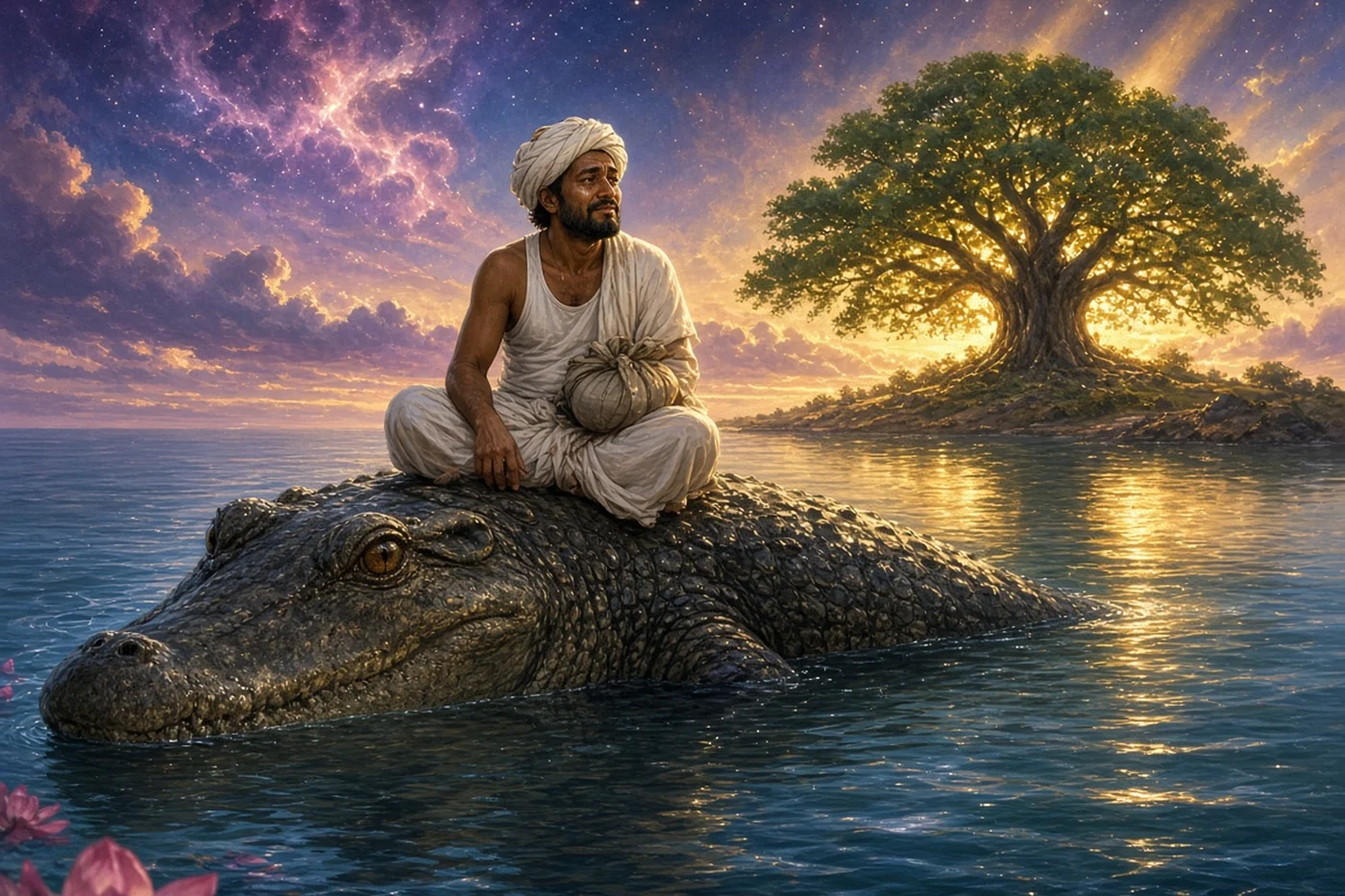
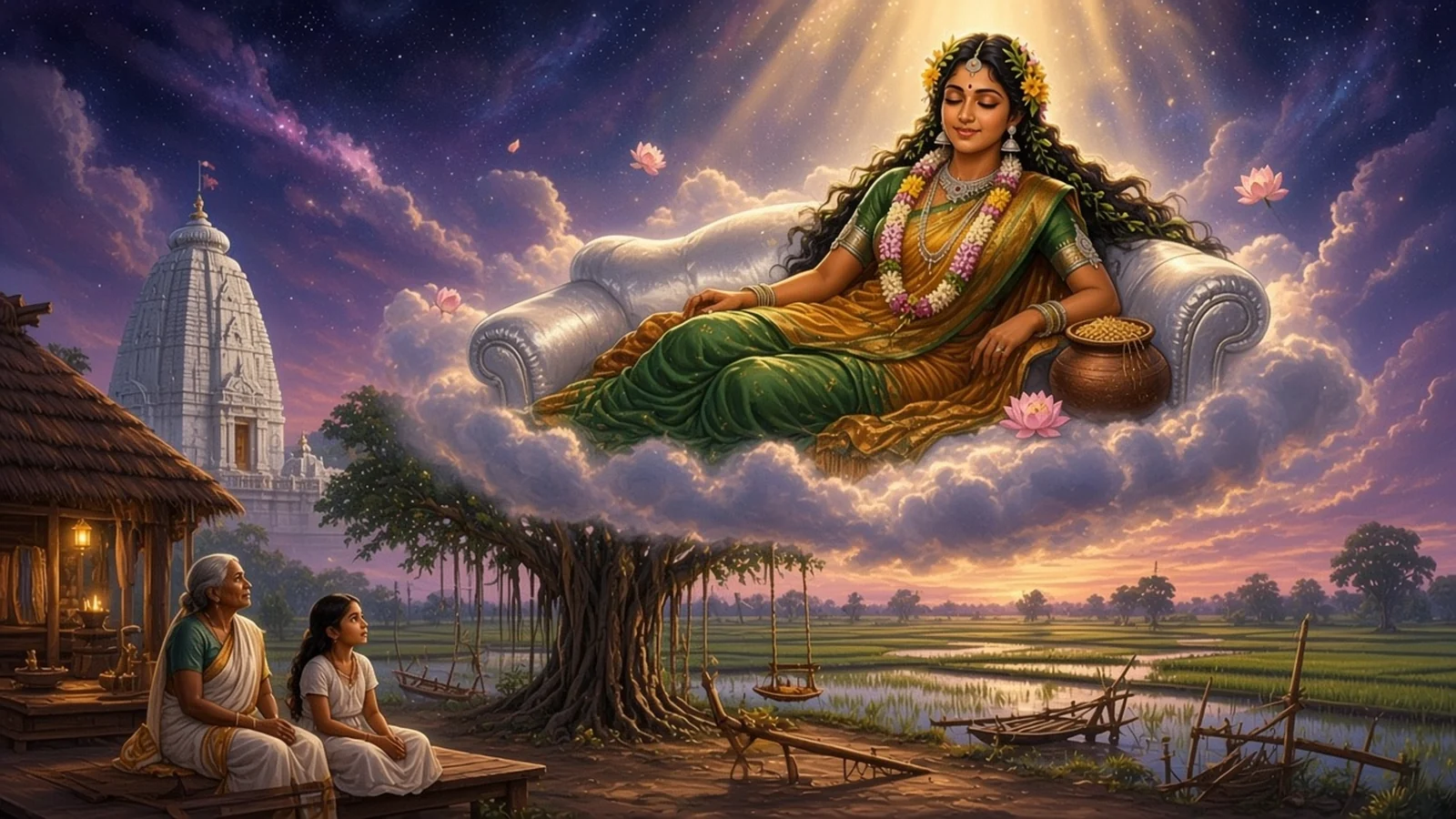
There he found Karam Devta, standing as a great Karam tree in full leaf. The eldest fell at its foot and begged to be forgiven. Karam Devta forgave him, on one condition: every year, on the eleventh of bright Bhadrapada, he must bring the god into his courtyard and worship him there. Then the god answered all his questions. The crocodile had a diamond in its head. The two women had not respected their elders.
On the way home he gave each one its answer, and each was set free. Back in his village he kept the Karma every year, and his good days came back.