As the Assamese villages tell it: the daughter coming home
The Brahmaputra valley · a village on the last day of Chot · 3 min read
On the last day of Chot the sky over the village went the colour of a bruise by the middle of the afternoon. The cattle had been bathed at the river that morning and stood in the shed in their new ropes, lifting their heads at a wind nobody else could feel yet.
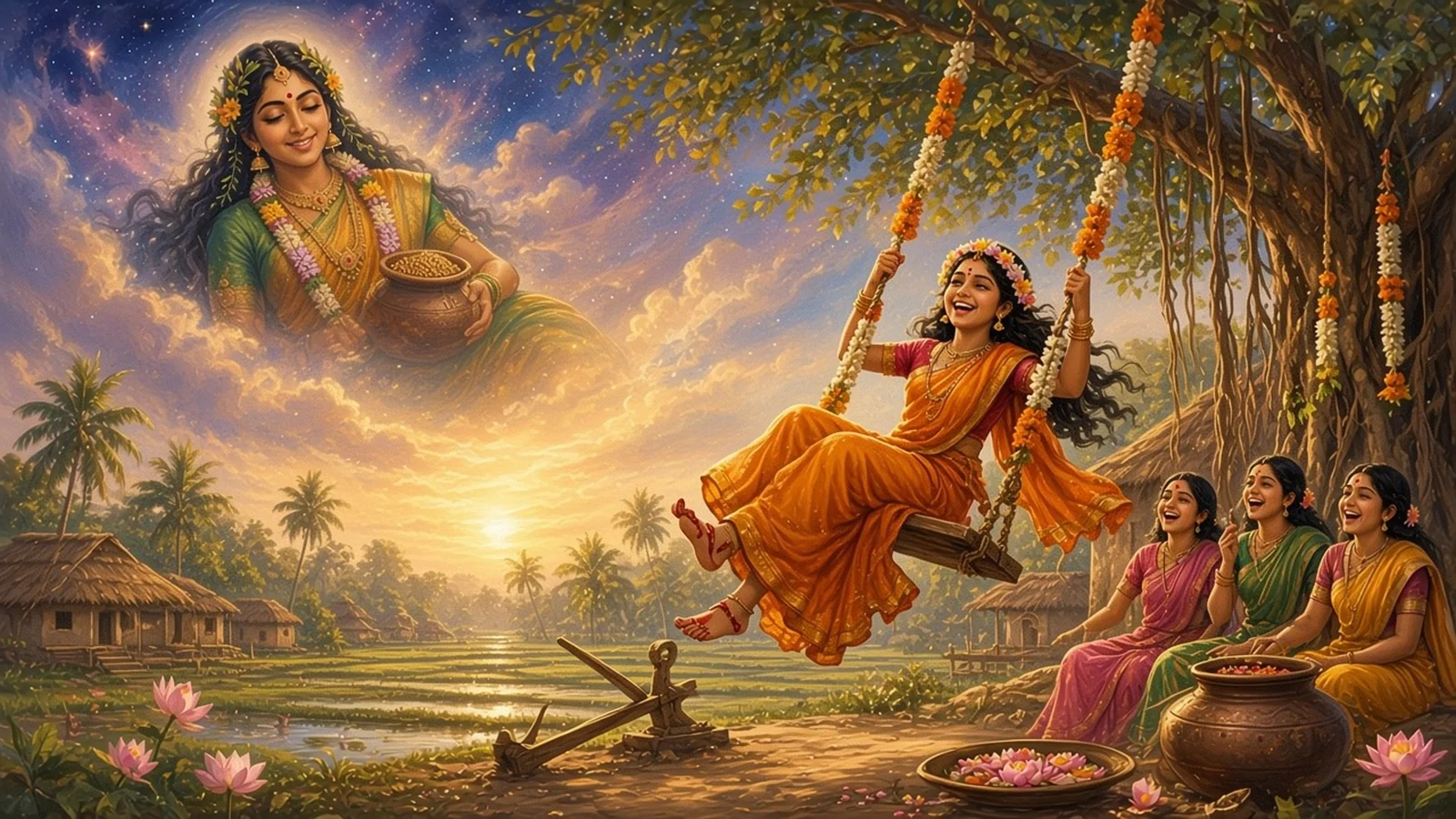
Aita came out onto the porch with a low bamboo stool and set it by the post. Then she went in again and came back with a small round mirror and a wooden comb, and laid them on the stool side by side.
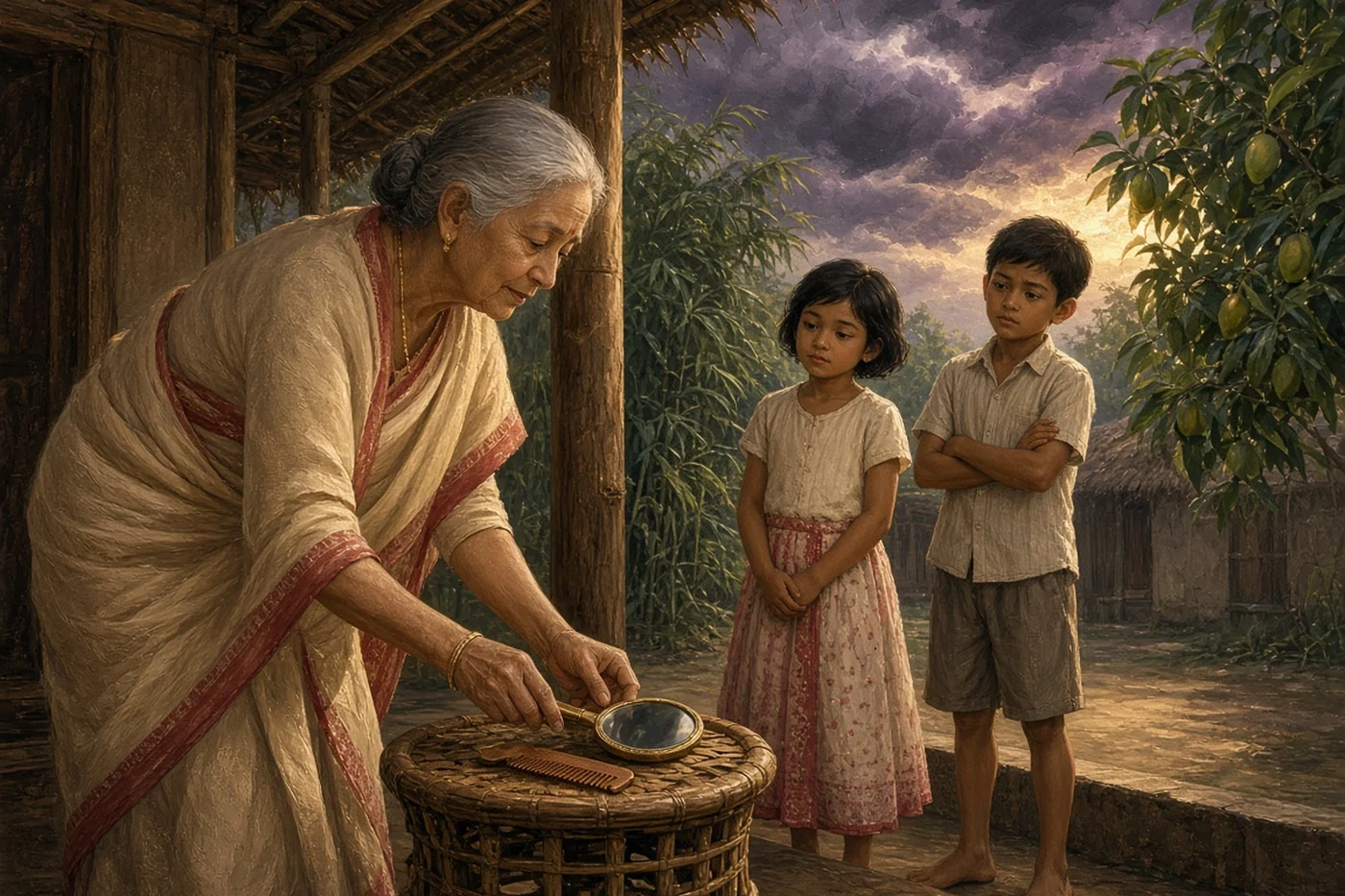
"Who are those for?" asked Junu, who was seven and had not been paying attention last year.
"For Bordoisila," her grandmother said. "She is on the road. She will want to tidy her hair before she reaches her mother."
Her brother Pona, who was ten, made a face, but he did not touch the comb.
"Whose daughter is she?" Junu asked.
"The Earth's own," said Aita. "They married her to a man of a far country, past all the hills, and she lives there the whole year among her husband's people. Once a year, when Bohag comes, she is let go home for a few days. Think how you would run."
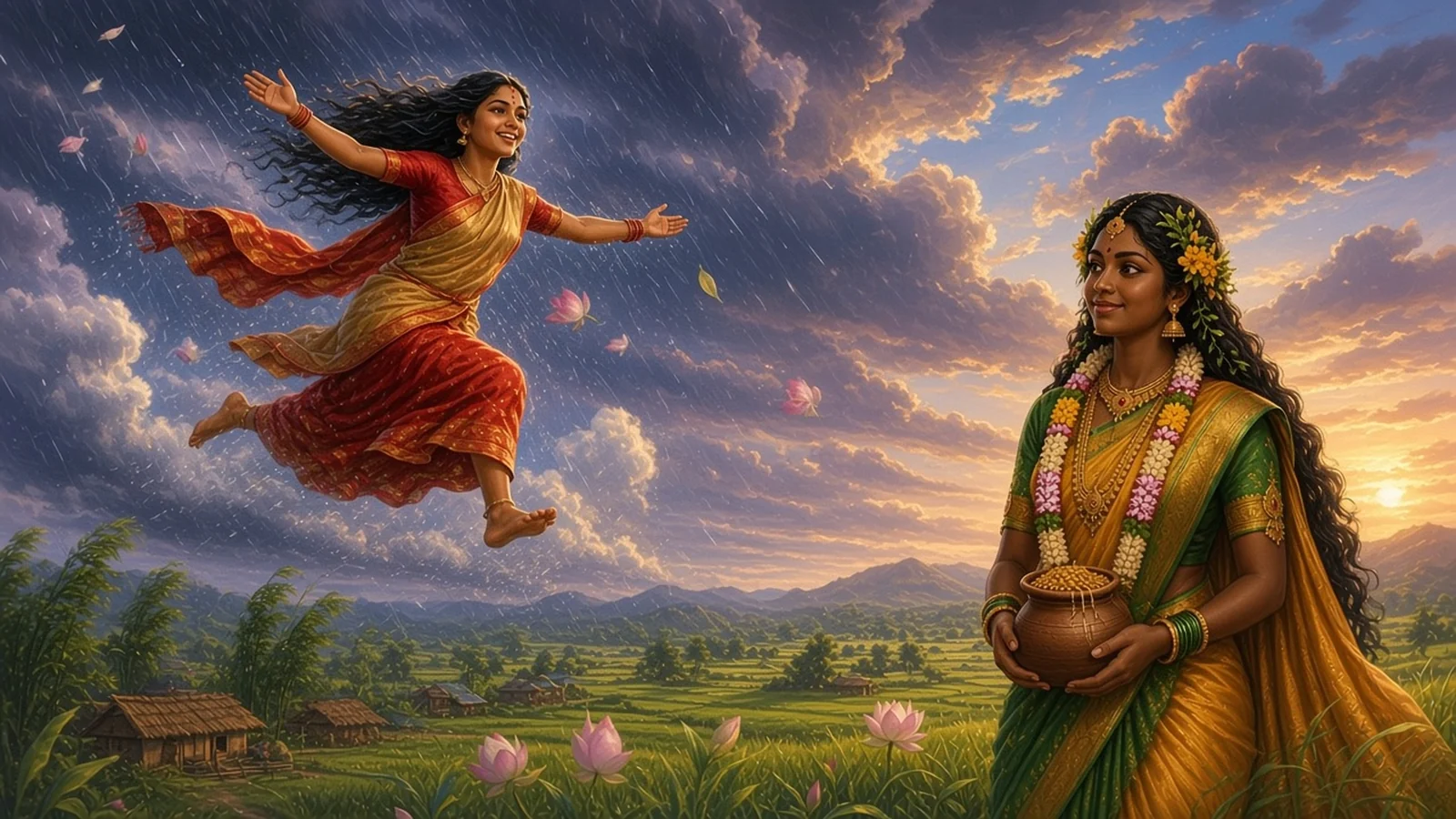
The wind came before Junu could think about it. The bamboo clump at the edge of the courtyard bent to the ground, and the dust of the yard rose in a single sheet. The mango tree threw down its small green fruit like stones. Somewhere a sheet of tin came off a roof and went clattering over the paddy.
Aita herded the children in and pulled the door to. Rain hit the thatch all at once, and then hail, loud as a handful of gravel thrown on a plate.
"She is breaking everything," Pona said, half delighted.
"She does not mean to," said Aita. "She is only in a hurry. She has not seen her mother for a year."
When it passed, the light outside was yellow and the air smelled of wet earth. The stool had gone over. The mirror lay face up in a puddle, not even cracked, and Aita wiped it on her chador and set it back with the comb.
In the morning it was Bohag. The trees stood washed and still, and the first kopou flowers had opened on the old jackfruit trunk.
"There," Aita said. "She has come. Now it is Bihu."
All through the days of Bihu the weather was soft. Aita said the daughter was sitting with her mother, eating her pitha, letting her hair be oiled, telling her about the far country. The children danced in the evenings to the drum, and the wind did no more than turn the leaves.
Then, at the week's end, the second storm came out of the north west at night, and it was worse than the first. It flattened the banana plants behind the house and tore half the thatch off the cowshed. Junu woke and lay listening to it.
"Is she angry now?" she whispered.
"She is crying," said Aita in the dark. "She has to go back. Would you not cry?"
In the morning there were branches across the path and the fields stood in water. Aita picked up the stool, dried the mirror and the comb, and put them away in the trunk for next year.
As the Bodos tell it: Bardwisikhla, the girl of wind and water
The Bodo country north of the Brahmaputra · a village at Bwisagu · 2 min read
In the Bodo villages the same storm has another name, and another girl inside it. She is Bardwisikhla: bar the wind, dwi the water, sikhla the girl.
Nobody marries her off in this telling. She is a girl of the sky with power over wind and water, and when the dry months are done she comes down over the plains with rain and hail and thunder. Where she has passed, the trees put out new leaves and the bare fields begin to green. The old people say the buds themselves are her arrival.
So her coming is the start of Bwisagu, the new year, and the village keeps it for seven days, beginning with the cattle on the last day of Chaitra and the prayers to Bathou on the day after.
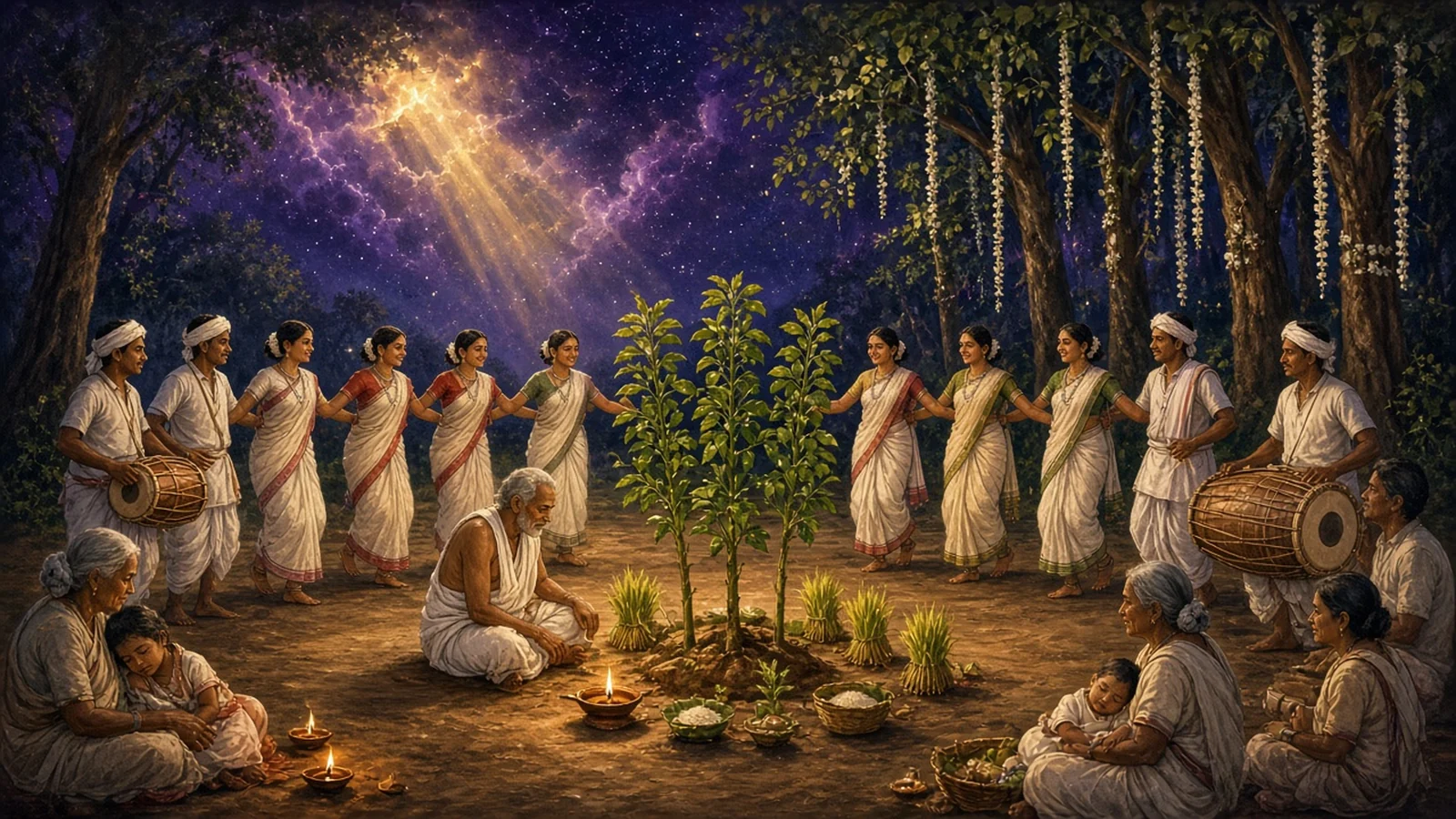
On one of those evenings the girls of the village came into the yard to dance her. The young men took up the siphung, the long bamboo flute, and the kham drum and the bowed serja, and the girls carried their own gongona, the little bamboo harp they twang against the teeth.
"Slower at the start," an old woman told them from the edge of the yard. "She comes from far away. First the wind, then the rain."
The girls moved low and turning at first, their scarves lifting like the air before weather. Then the drum quickened and they spun, arms flung wide, and the flute ran up and down like rain blown sideways across the paddy.

A small boy pressed against his mother's knee. "Is that the storm?"
"That is the girl," his mother said. "Watch. Soon the trees come out."
At the end the dancers sank and rose again slowly, hands opening upward, and the old woman nodded as if something had been put in its proper place for the year.