As the Kalika Purana tells it
Chapters 17 and 18 · from Daksha's hall to Kamagiri in Kamarupa · 3 min read
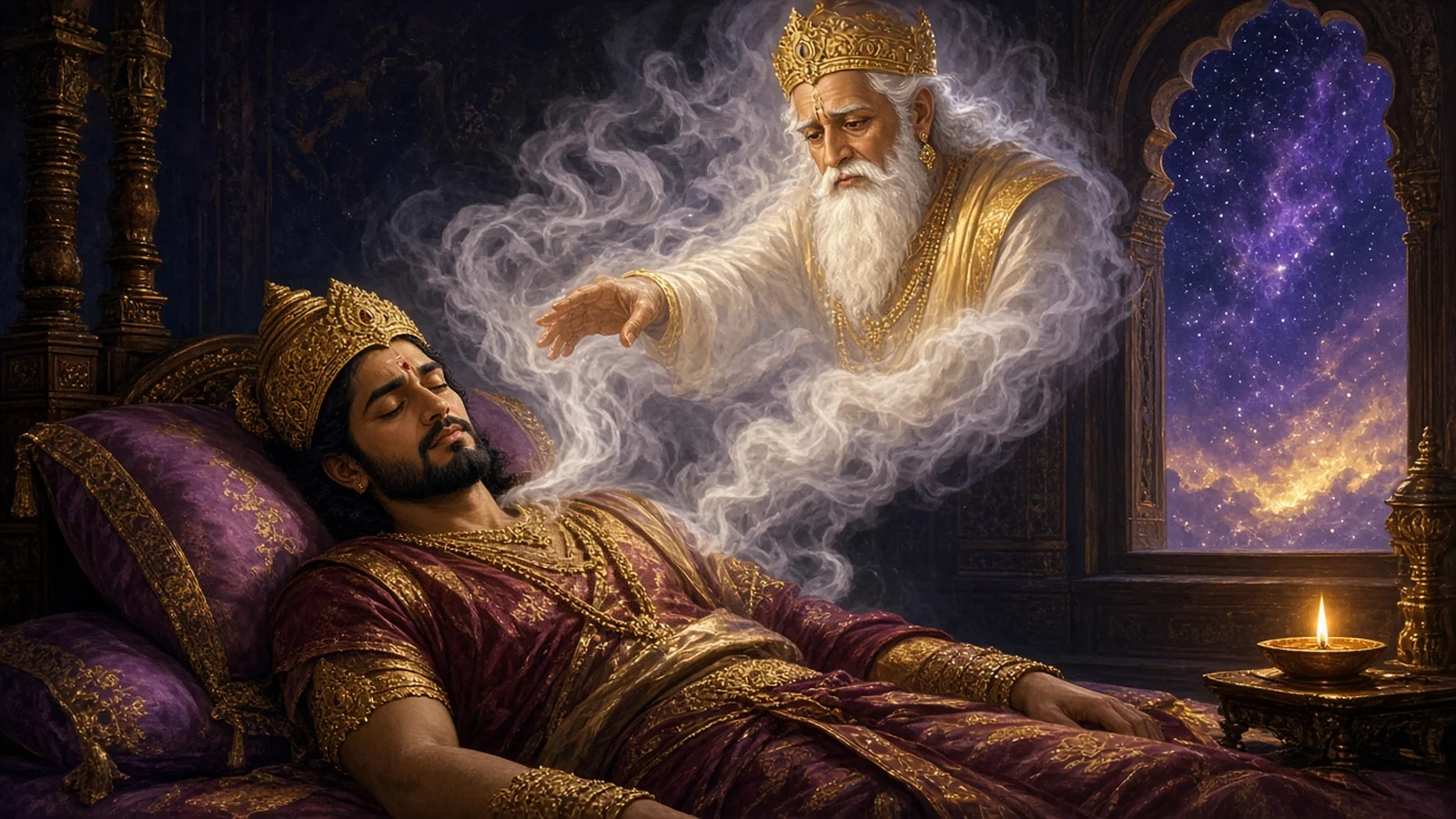
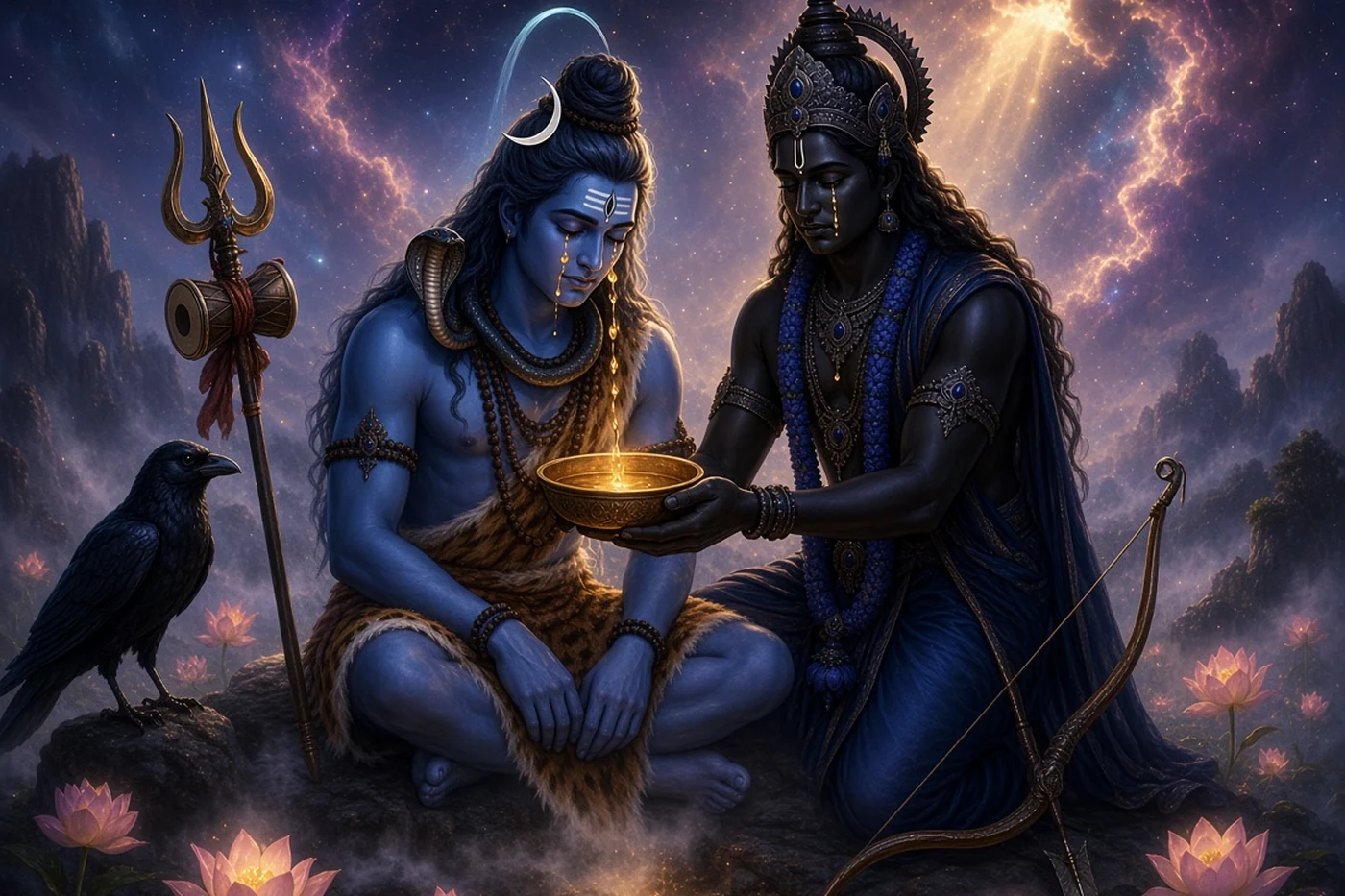
Shiva sat down beside Sati's body in the wreck of her father's sacrifice, and he wept.
He had wrecked her father's sacrifice, and now he forgot it. He said her name over and over, as if she might wake. Then he wept louder, and the gods who watched from a distance began to be afraid.
"Look at his tears," said one of them. "If a single drop touches the ground, it will burn the world."
"Then someone must catch them," said Brahma. "And there is only one who can."
They went to Shani, the dark son of the Sun.
"Once you held back the rain of the clouds for a hundred years," they said. "Hold back these tears now. No one else in the three worlds can do it."
Shani did not like the task. "I will do what I can," he said. "But if Hara sees me at his side, catching the tears of his grief, his anger will burn me where I stand. Keep him from knowing I am there."
So the gods clouded Shiva's mind, and Shani slipped in beside him unseen and gathered the tears as they fell. He held them as long as he could. When he could hold them no longer he flung them far away, onto Jaladhara, a mountain as great as Meru. The mountain split. The tears broke through it into the sea, cut the sea in two, tore open its eastern shore and ran on as a river, the Vaitarani, hot and terrible, which flows to this day round the gate of Yama's city.
Shiva noticed none of it. He lifted Sati onto his shoulder and set off towards the east, walking like a man who no longer knew where he was.
The gods followed, talking among themselves.
"While she lies against him, her body will never decay," said Brahma. "It will never fall from him. And he will never stop."
So Brahma, Vishnu and Shani made themselves invisible by the power of yoga, entered the body, and let it go, a little at a time, along the road.
Her feet fell first, at Devikuta. Her thighs fell at Uddiyana. On a mountain in Kamarupa called Kamagiri, the hill of desire, fell her womb, and her navel fell there with it. Her breasts fell at Jalandhara, her arms and neck at Purnagiri, and her head beyond the eastern edge of Kamarupa.
Wherever a part of her came down, Shiva could not bring himself to leave it, and he stayed there in the form of a linga. The great goddess Yoganidra, whose body Sati's had been, stayed too, under a name for each place. At Uddiyana she is Katyayani. At Purnagiri she is Purneshvari, at Jalandhara Chandi, in the far east Dikkaravasini. And in Kamarupa, on the hill where her womb lay, she is Kamakhya.
Where her head had fallen, Shiva sat down at last and sighed. When he saw the gods coming towards him, he was ashamed of his grief, and he turned into a stone.
The gods stood round the stone and praised it. They called him the dweller in the burning ground, the lord of the mountain, the one without beginning, and they begged him to put his sorrow down. Slowly he took his own shape again.
"What should I do now?" he asked Brahma.
"Remember who you are," said Brahma. "Your tears would have broken the earth if Shani had not held them, and he has turned dark from holding them. Let it go. She will be your wife again, when the next age begins."
Shiva looked at the ground for a long time.
"Then stay with me," he said, "until this grief is gone. Wherever I go, come with me."
Brahma promised, and stayed beside him.
As Shiva tells it on the hill
Kalika Purana 62 and the shrine today · Nilachal, Guwahati · 2 min read
Much later in the same Purana, Shiva himself tells two of his attendants, Vetala and Bhairava, why the hill of Kamakhya stands as it does. His story begins long before Sati.
At the beginning of the world, he says, Vishnu fought the demons Madhu and Kaitabha on a great slab of stone that Brahma had made, half a yojana wide. The gods held the slab up out of the water by turning into mountains, and Shiva stood in its middle as a mountain himself.
Ages afterwards Sati died and her body was scattered. Her womb fell on that very mountain, the one that was Shiva, and the goddess went into it and hid there with him. Then the mountain began to sink. Her weight was more than it could carry, and it went down towards the underworld. Brahma took the form of a mountain to hold it up, and sank with it. Vishnu, as the boar Varaha, became a mountain beside them and began to sink too. The three went down hundreds of yojanas, until only a krosha of them, a couple of miles, still stood above the water.
"Those are the three hills," says Shiva. "Brahma's is white. Varaha's is called Chitrachala, and it is the longest. Mine is in the middle, the blue hill, Nilashaila, shaped like a mortar, and there she lives with me in secret."
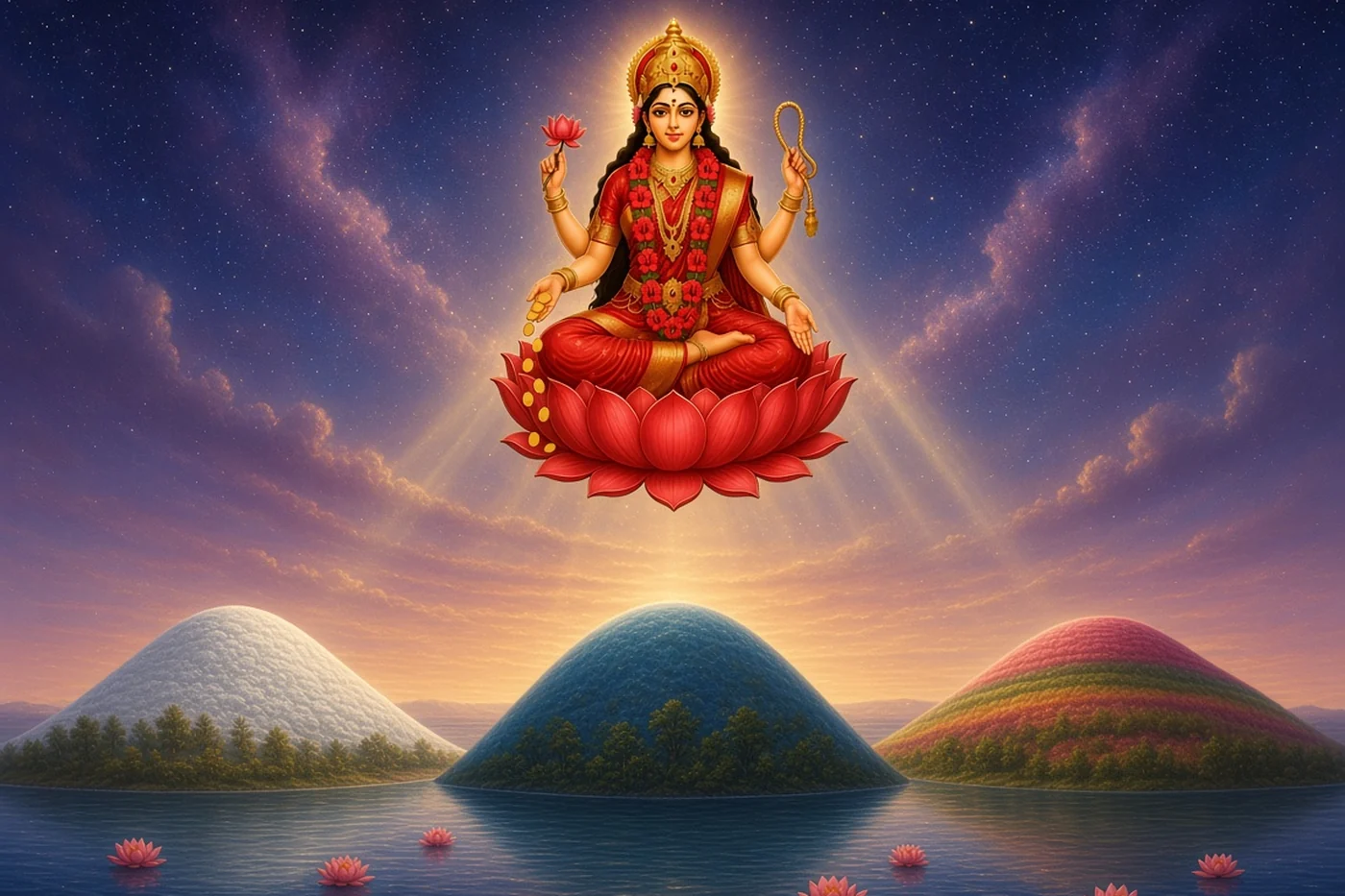
The womb itself, he says, broke and became stone, a stone so full of power that iron laid against it turns to ash. Close by is a cave that Kama made, and the stone lies along a ridge formed of Kama's ashes.
And the name? "She is called Kamakhya," says Shiva, "because she came to this great mountain out of love, to be with me." She is also the one, he adds, who gives the god of love back his limbs, and who takes them away.
The shrine on Nilachal today keeps the plainest part of his account. There is no statue in its inner room, which lies below the ground at the foot of steep stone steps. There is a cleft in the rock, kept wet by a spring that never fails, and the cleft is the goddess.