Devalok ← All gods
Also calledKameshvariKamakhya DeviMahamayaNilachala VasiniKamarupa Kamakhya

In short

Who is Kamakhya?
The goddess of the Nilachal hill above the Brahmaputra at Guwahati in Assam, a form of the great goddess. Her temple is counted the foremost of the Shakti Peethas.
Why is her temple so holy?
The Kalika Purana says that when Shiva carried Sati's body across the world, her womb fell on this hill. There is no statue inside, only a cleft in the rock kept wet by a spring.
What does her name mean?
The goddess of desire, or of love. The Kalika Purana says she is called Kamakhya because she came to the hill out of love for Shiva, and the land around is Kamarupa because Kama, the god of love, got his body back there.
When is her great festival?
The Ambubachi Mela in mid-June, when the temple closes for three days of the goddess's rest and opens again on the fourth.

Artwork ›

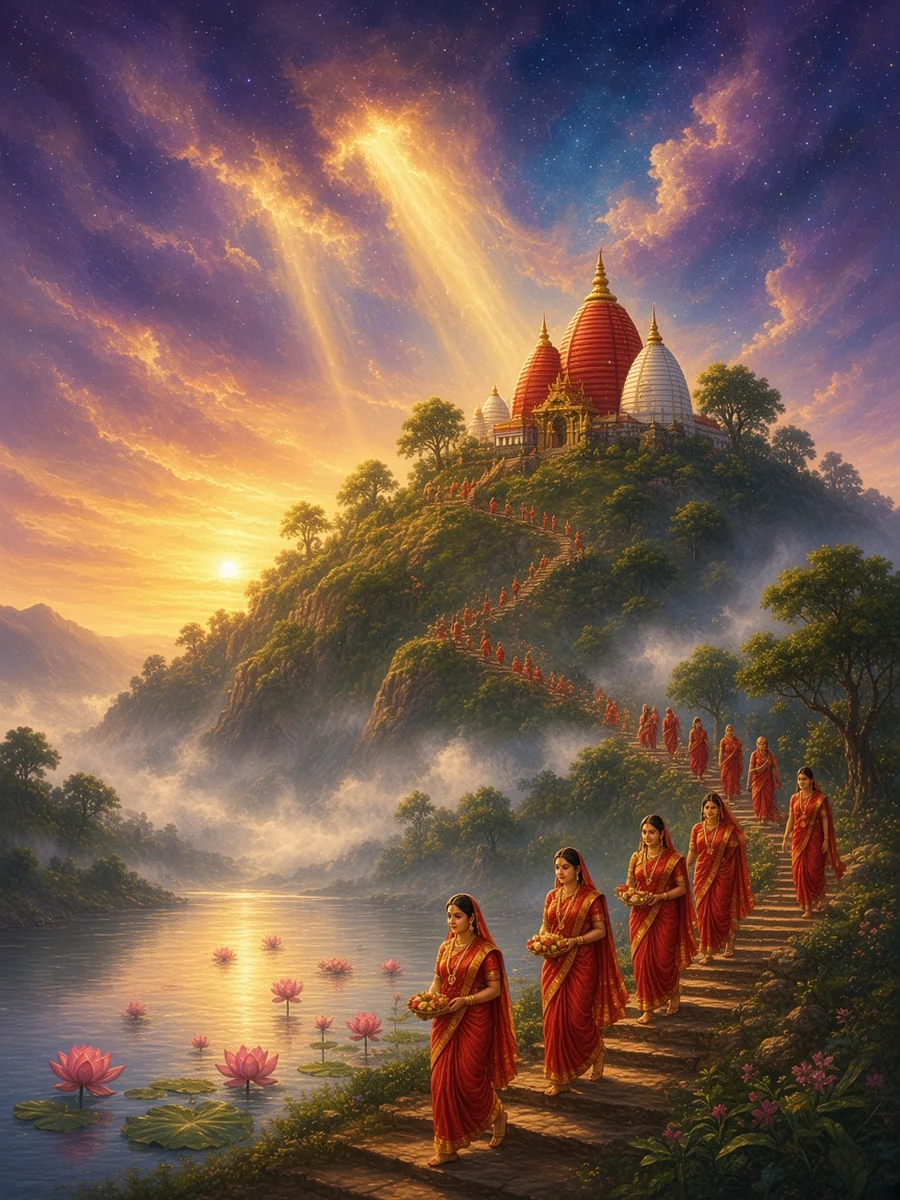
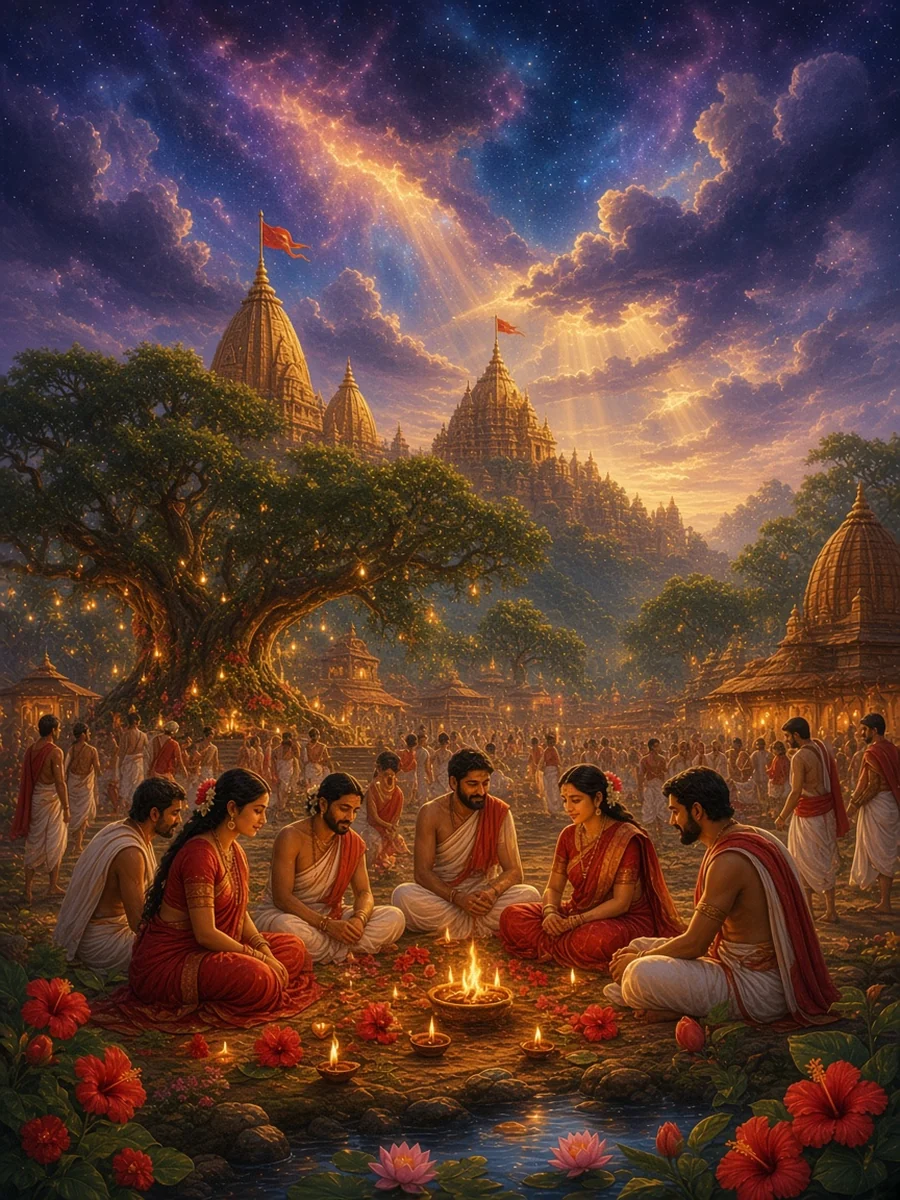
The temple on Nilachal hill The Ambubachi Mela in mid-June

For kids

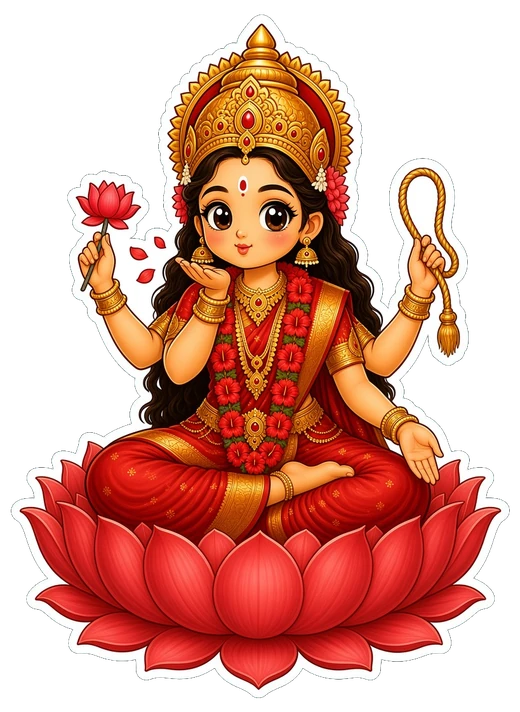
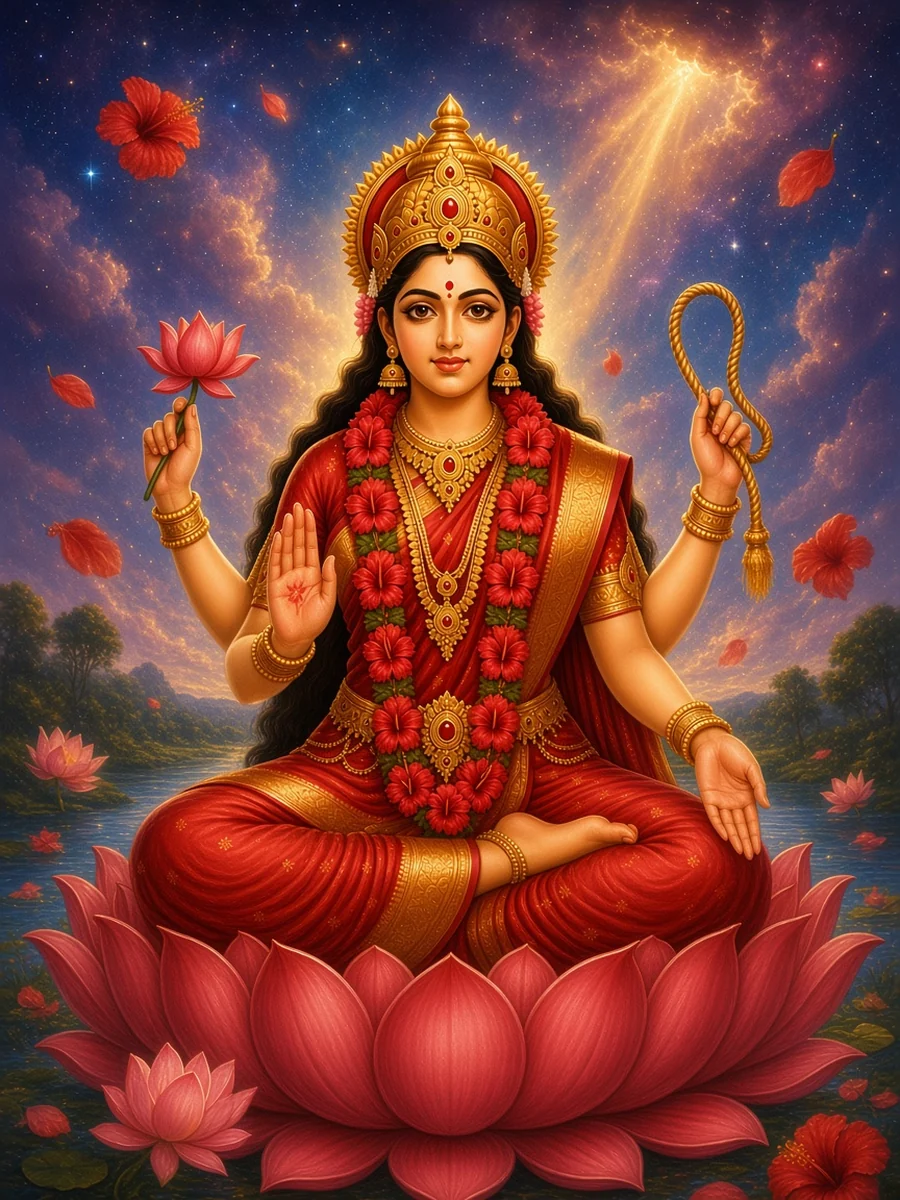
Blessings from the blue hill
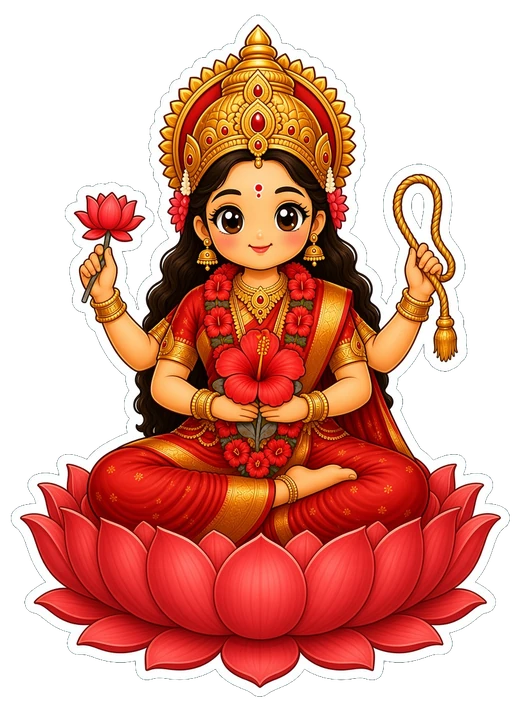
Red is my colour
Red is my colour

At a glance

TraditionShakta
In the templeNo image

a cleft in the rock below the ground, kept wet by a spring, hidden under flowers and cloth

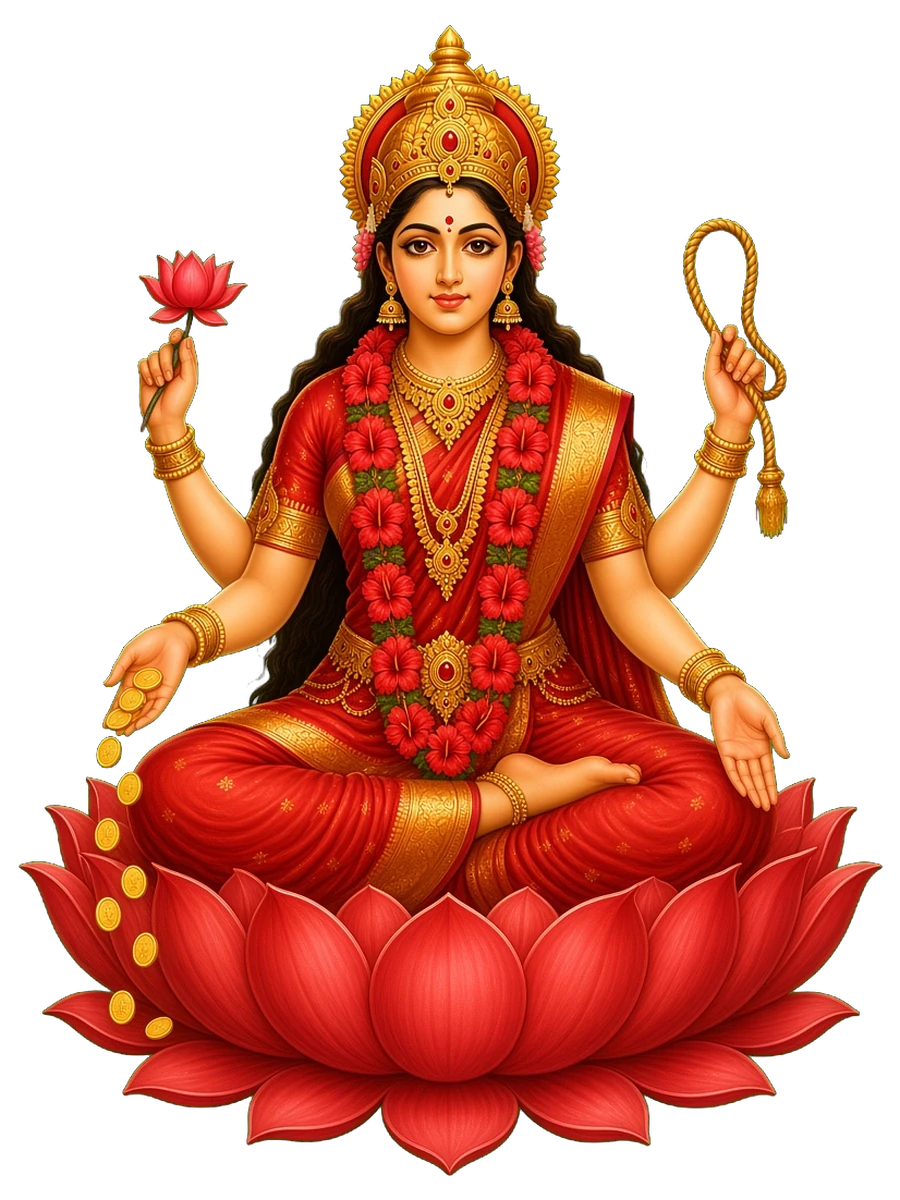
As the Kalika Purana pictures herSix heads and twelve arms

richly jewelled, seated on a lotus that rests on a white corpse on a lion

Who Kamakhya is

Kamakhya is the goddess of Nilachal, the blue hill that rises from the south bank of the Brahmaputra at Guwahati. Her name means the goddess of desire, and the land around her has long been called Kamarupa, the place of Kama, the god of love. Her temple is counted the first of the Shakti Peethas, and people come to it from every part of India.

There is no statue in it. Steep steps lead down into a dark room under the ground, and there the goddess is a yoni stone: a cleft in the rock, kept always wet by a spring. The Kalika Purana, written in Kamarupa, explains why. When Shiva carried Sati's body across the world in his grief, the gods let it fall piece by piece, and her womb came down on this hill. The goddess Yoganidra, the great goddess whose body it had been, stayed there and took the name Kamakhya.

The Tantras that came after the Purana make her Kali, and the hill honours her too as Shodashi, the girl of sixteen. The Kamakhya Tantra says it in one line:

Ya devi kalika mata sarvavidyasvarupini, kamakhya saiva vikhyata: The goddess who is Mother Kali, whose form is every kind of knowledge, she alone is known as Kamakhya (Kamakhya Tantra).

The hill has its kings in its stories. The Kalika Purana makes Naraka, the son of the Earth, the first king of Pragjyotisha, set by Vishnu to worship Kamakhya and no other, who lost her when he turned a sage away from her gate. In Assam they say instead that he asked to marry her and was beaten by a cock that crowed too soon. Much later the Koch kings rebuilt her temple in 1565, and every year at Ambubachi in June its door closes for three days while she rests.

Her stories on this site: Where Her Womb Fell, The King Who Lost His Goddess and The Temple That Love Built. The ten goddesses of her hill are in The Hill of Ten Goddesses, her yearly rest in Three Days of Rest for the Earth, and the death that began it all in Sati and the Sacrifice. She guards Mura's daughter in The Riddle on the Swing, and Naraka meets his end in Aditi's Earrings.
Before the Puranas

The Vedic roots of Kamakhya

The Vedas do not know Kamakhya. No hymn names her, and the Kamarupa country that she gives her name to is not in the Vedic world at all. She belongs to the Puranas and the Tantras of the east, and to an older goddess of the Assam hills, whose worship the Sanskrit texts took in and gave a story.

The record starts with the place. The historian D. C. Sircar noted that Kamarupa is named in Samudragupta's Allahabad pillar in the fourth century, but that Hiuen Tsang, who stayed at the Kamarupa court in the seventh, says nothing of the goddess, so her fame, Sircar thought, came later. The Buddhist Hevajra Tantra, probably of the eighth century, already counts Kamarupa among four seats of the goddess, and the mid ninth century copper plates of King Vanamaladeva, found at Tezpur, are the first inscriptions to name Kamakhya herself. Sircar also records the view of the scholar Banikanta Kakati, who traced her name to words in the Austric languages of the region; the encyclopedia calls her, in origin, a Kirata goddess.

The Kalika Purana, composed in Kamarupa around the tenth or eleventh century, gave her the story that holds her together. It ties her to Sati's body, falling on the hill; to Naraka, the son of the Earth and of Vishnu's boar, as the king who served her; and to Kama, who got his body back in her land. It also lays down her worship in great detail. The Devi Bhagavata Purana, in its list of the goddess's places, calls the Kamakhya seat the best of all, and says the goddess has her monthly course there, the belief that the Ambubachi days keep. The later Yogini Tantra, as Kakati read it, sets the Purana's origin story aside and makes her Kali.

The historian E. A. Gait, writing in 1906, thought the germ of the Sati story lay in a passage of the Gopatha Brahmana, one of the late Vedic books; if so, it is the only Vedic thread that leads to her, and it is his reading, not the Brahmana's word.

See how the Vedic gods became the Puranic ones →

Festivals of Kamakhya

Related gods