As a village household keeps it
Assam · a farming village in Kamrup, across the Brahmaputra from Guwahati · 3 min read
The rain had come at last. The field behind the house lay soft and dark, and the seedbeds at its corner were already green enough to lift. Dilip had meant to begin the transplanting that week.
Instead, on the evening the almanac named, he carried the plough in from the yard and laid it under the eaves. The hoe went beside it, and the spade, and the little trowel his daughter used in the kitchen garden.
"Not even the chillies?" Moni asked. She was eleven, and she had been promised the chilli seedlings.
"Not even the chillies," said her father. "From tonight the Mother is in her days. The earth is not to be cut."
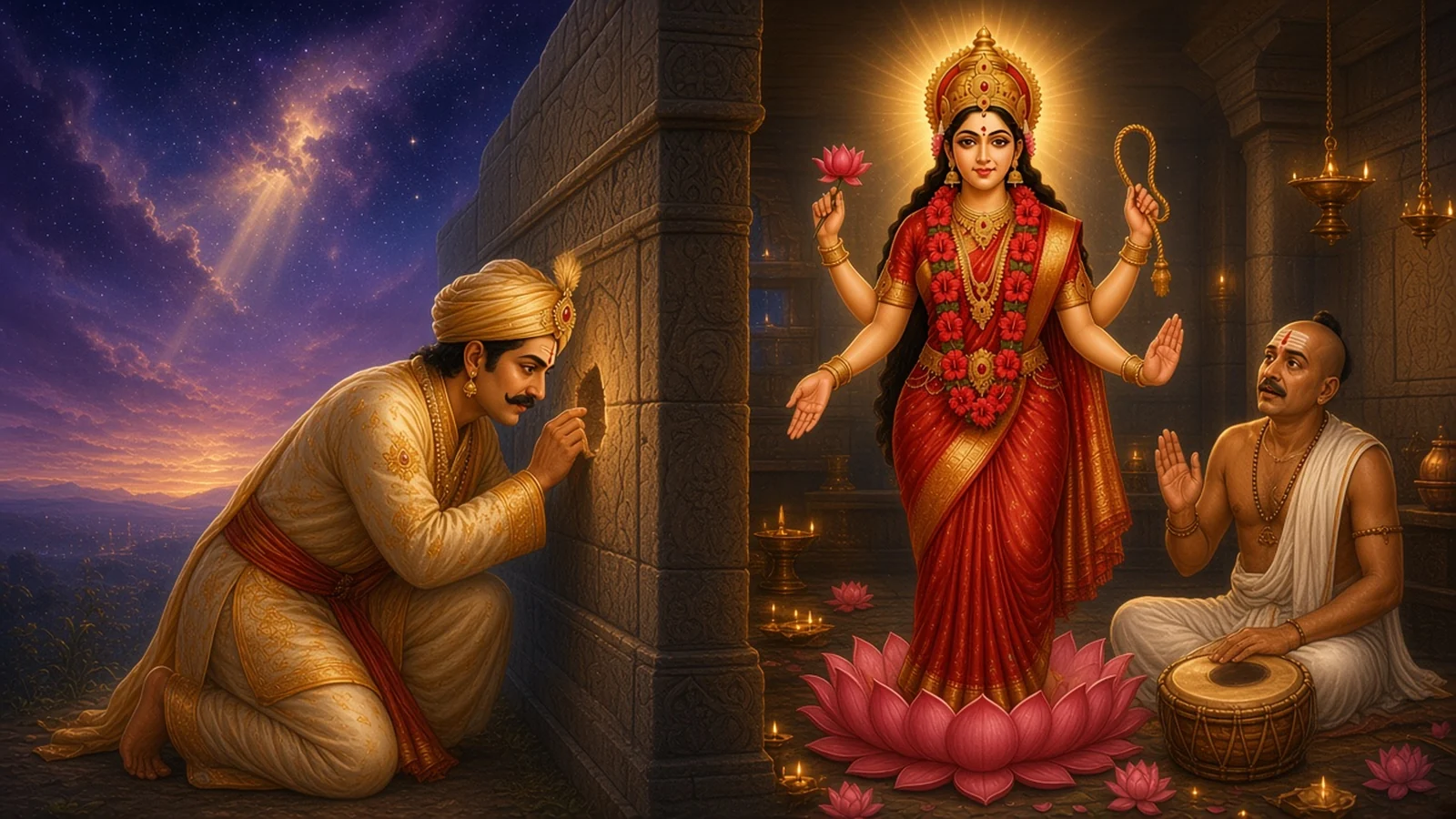
On the porch her grandmother was listening to the radio. Up on Nilachal, the voice said, the Pravritti had begun and the temple door was shut. Lakhs of pilgrims were already on the hill.
"There," said Abu, and switched it off. "Her door is closed. So for three days nothing here is opened either."
Moni had kept Ameti every year of her life, but this was the first year she kept count of it.
Nobody dug. Nobody planted. When she reached for a ripe guava on the low branch, her mother caught her hand, because nothing was to be plucked. Across the paddy the neighbours' fields lay empty too, though the rain kept falling as if it had been invited.
The holy book stayed wrapped in its cloth on the shelf, and no one lit the lamp before the little shrine. There was no fish in the house and no meat.
Abu ate no cooked food at all. She had kept that rule since she was widowed. She had her mangoes and a slice of jackfruit on a brass plate, and she went barefoot, and did not oil her hair.
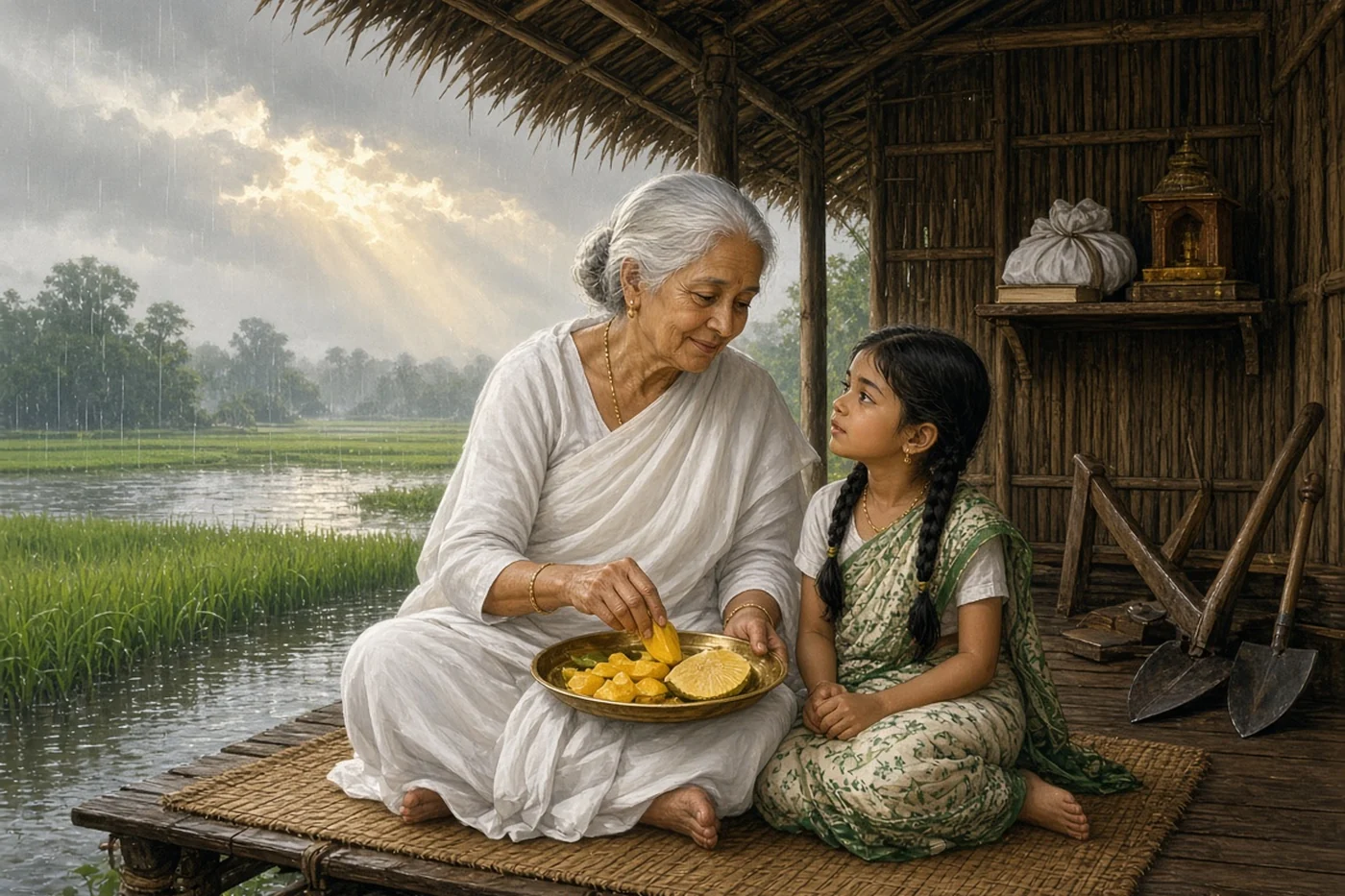
"Are you not hungry?" Moni asked her on the second day.
"A little," Abu admitted. "The Mother rests once a year. I can do without rice for three days."
"Is the earth really bleeding?"
Abu considered the wet field. "The old people say she is like a woman in her month. She rests, and then she is ready to bear. Why do you think the rice grows after?"
On the fourth morning Abu was up before anyone. She drew water, and she went through the house sprinkling it, over the pots and the brass plates, over the clothes folded on the trunk, over the doorstep. Moni's mother washed the cooking things again. The cloth came off the holy book.
"Now," said Abu, and lit the lamp.
Dilip took the plough out from under the eaves and went down to the field, and Moni went after him with the trowel for her chillies.
That afternoon her uncle Hemanta came back from Guwahati, muddy to the knees. He had stood all night in the queue on the hill and gone in when the door opened. He had brought a little bottle of the spring water for Abu, and in his pocket, folded in paper, a strip of red cloth no longer than a finger.
He tied it round Moni's left wrist.
"From the Mother," he said. "She wore that for three days."
As the hill keeps it
Nilachal hill, Guwahati · the closed days and the fourth morning · 2 min read
Hemanta had left his sandals at the camp by Pandu Port, as the notices told everyone to, and walked up by the Nursery road with thousands of others. No vehicle went beyond the Nursery. There were water taps all the way up the climb.
Under the trees the sadhus had made their camps. Some sat in ash and silence under sheets of plastic. A man in black stood on one leg, and had stood there, people said, since the morning. Further up, a knot of Bauls, the wandering singers of Bengal, sang with the rain running off their hair, and a crowd stood round them and did not mind getting wet.
At the top the temple door was shut.
It had been shut since the Pravritti. Inside, beyond it, the stone lay under red cloth, and nobody could go near. Just outside the inner door, Hemanta was told, three lamps were kept burning all through the three days, and a singer sat up the nights singing for the goddess, and was given the uncooked food that should have been her offering.
People prayed to the walls instead. They pressed their palms to the carved stone, to the bells, to the door itself.
He slept in the queue with his head on his bag.
On the fourth morning the athporia went in first, the keeper who cleans the stone each day before the priest. He lifted the red cloth away. The stone was bathed with panchagavya and then with plain water, dressed in a new red sari and given fresh flowers, and the priest did the daily worship. Only then was the door opened.
The cloth went to the temple office. Every panda had given in his name beforehand and the length he wanted, three metres at most, and the pandas cut it into strips for the families who came to them.
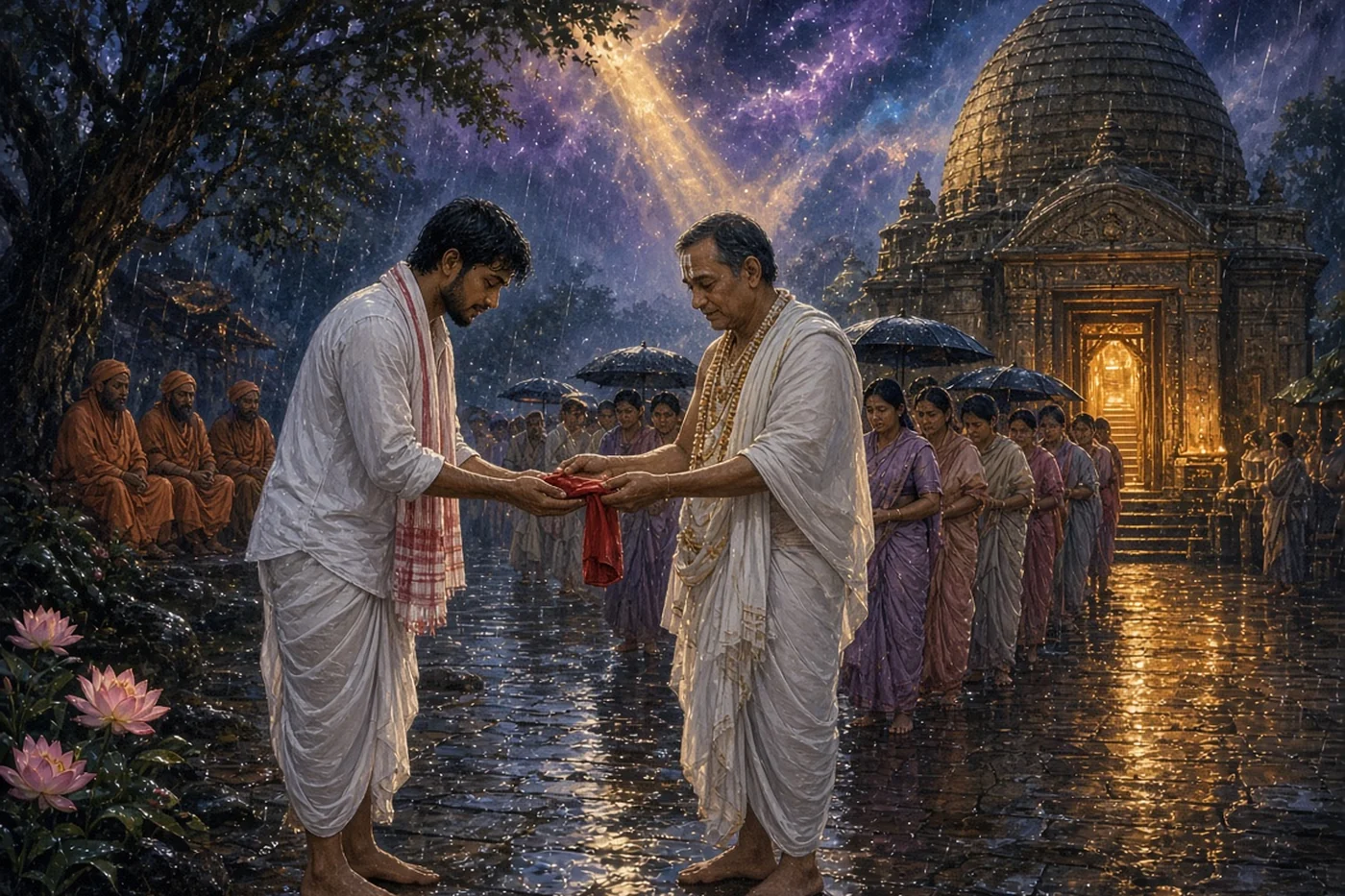
When Hemanta reached the stone at last, he knelt and touched it, and his fingers came away wet.