As the temple tells it
Kamakhya temple tradition · Nilachal hill, Guwahati · 2 min read
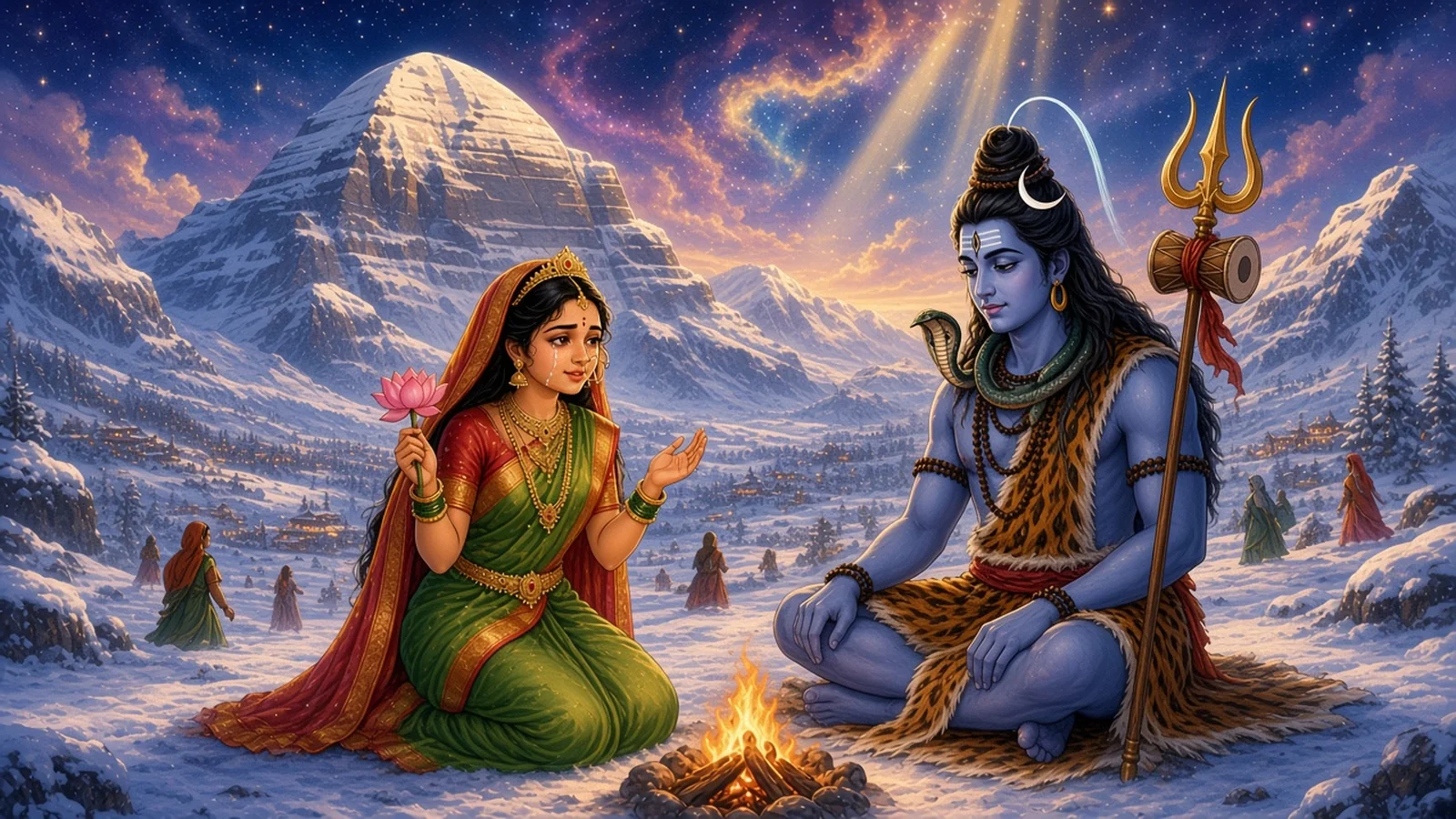
After Sati died, Shiva would not be comforted. He sat alone in grief and in penance, and while he sat the world stood still. Nothing new was made. Nothing was born.
The gods grew afraid, and they went to Kama, the god of love.
"Only you can wake him," they said. "Go and turn his mind back to the world."
Kama took up his bow of flowers and went, and his wife Rati went with him. He found Shiva sunk in meditation, and he let fly.
Shiva opened his third eye. Fire came out of it, and in a moment the god of love was a heap of ash.
Rati fell down beside the ashes. Then she turned to Shiva and pleaded.
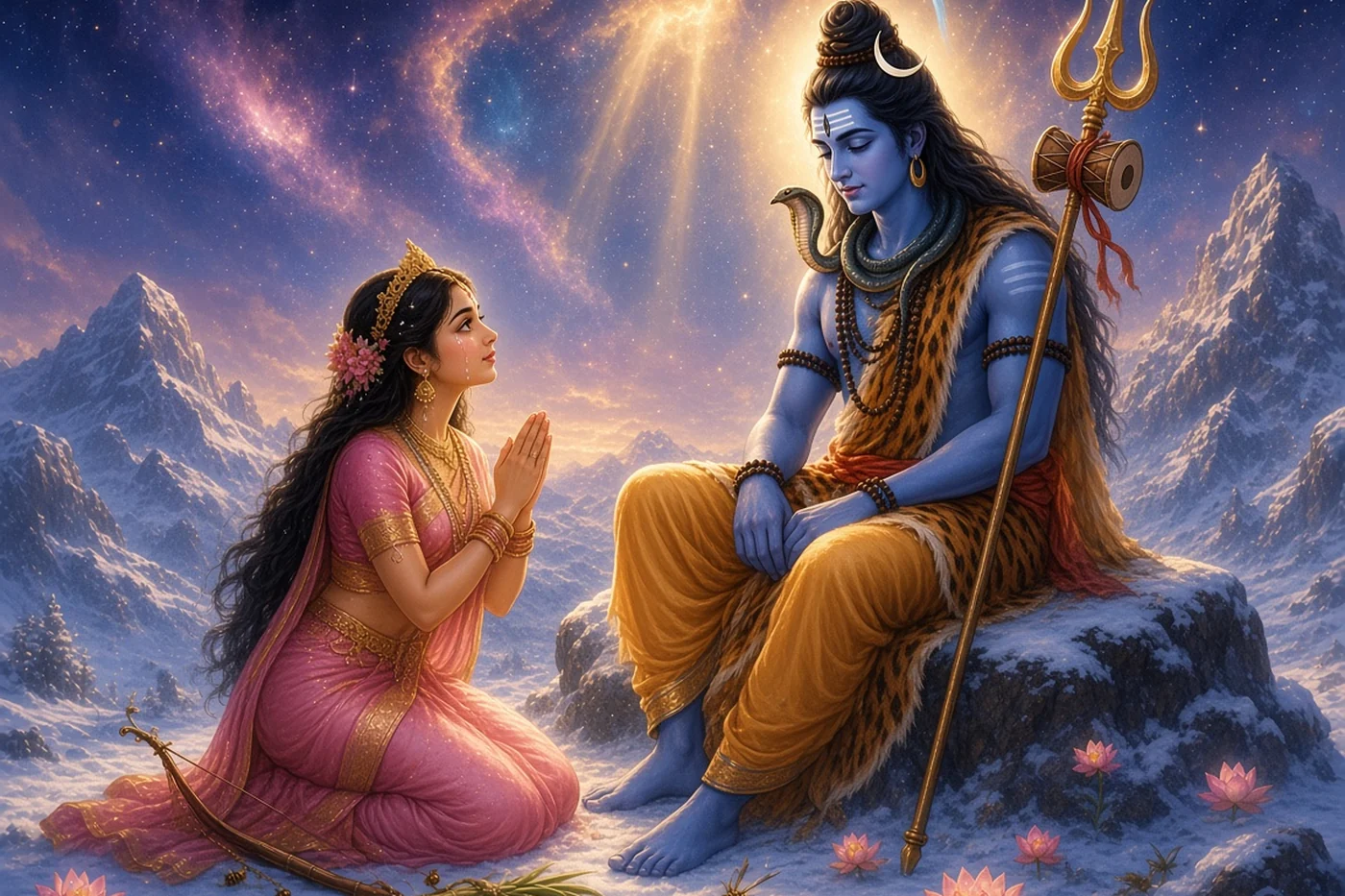
"He did only what the gods asked of him," she said. "Give him back to me."
The fire had gone out of Shiva. He looked at her, and he looked at the ashes.
"He shall have his body again," he said, "with all the grace it ever had. But there is something the two of you must do."
"Anything," said Rati.
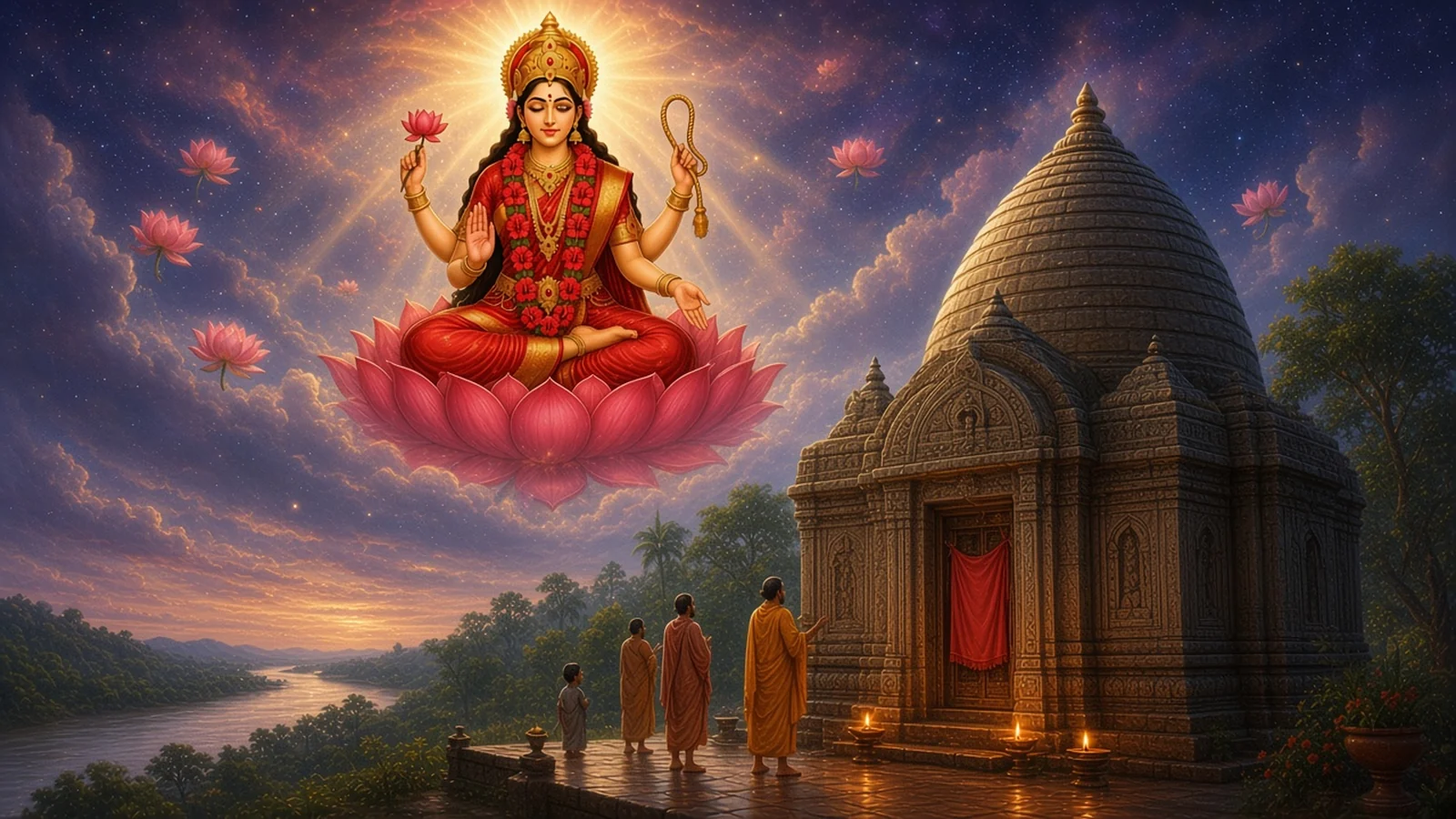
"On the blue hill in Kamarupa," said Shiva, "where Sati's womb came down to earth, build a temple for her."
So Kama stood up whole again. And the land, the histories of Assam say, has been called Kamarupa ever since, the place where Kama got back his form.
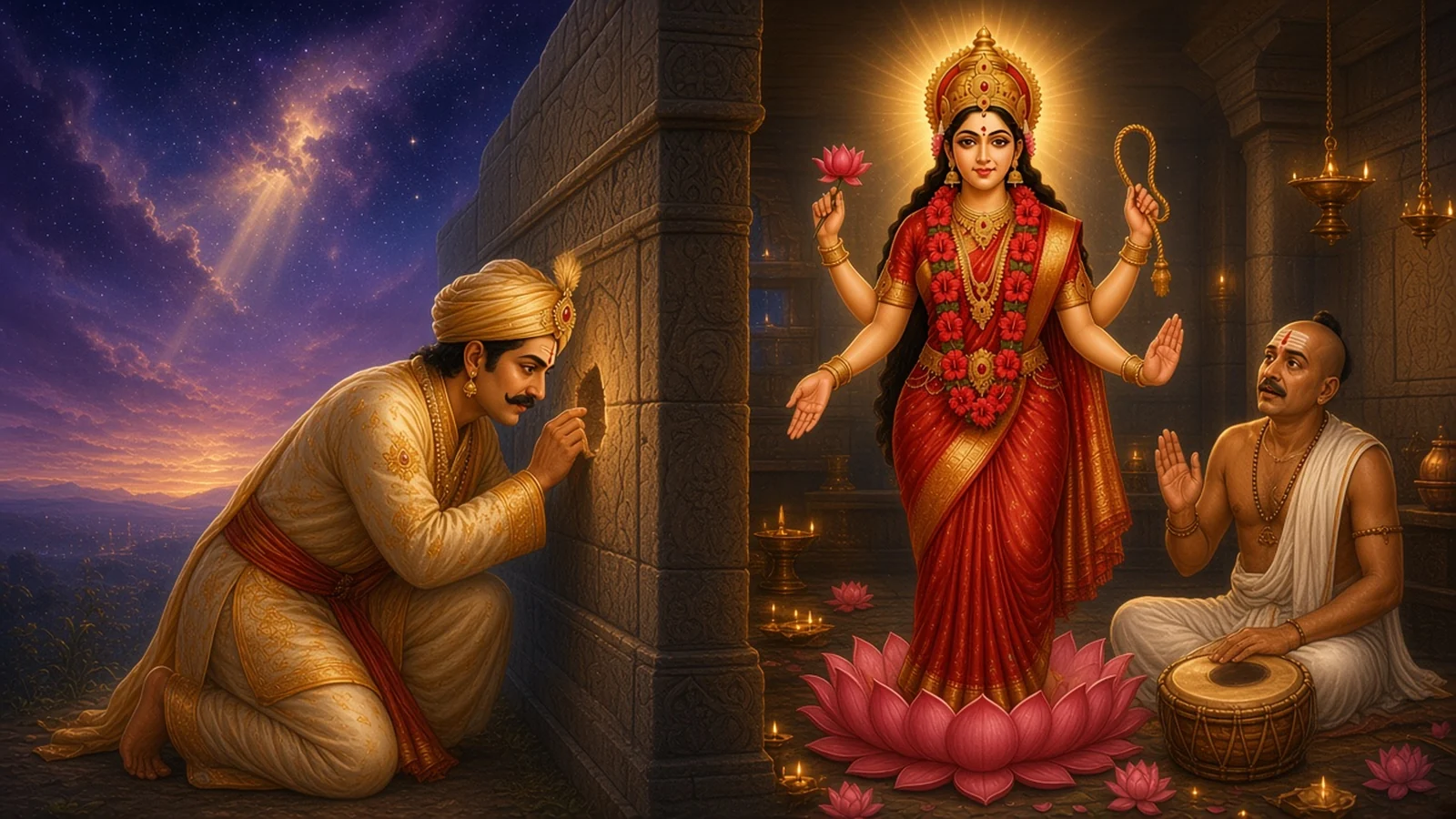
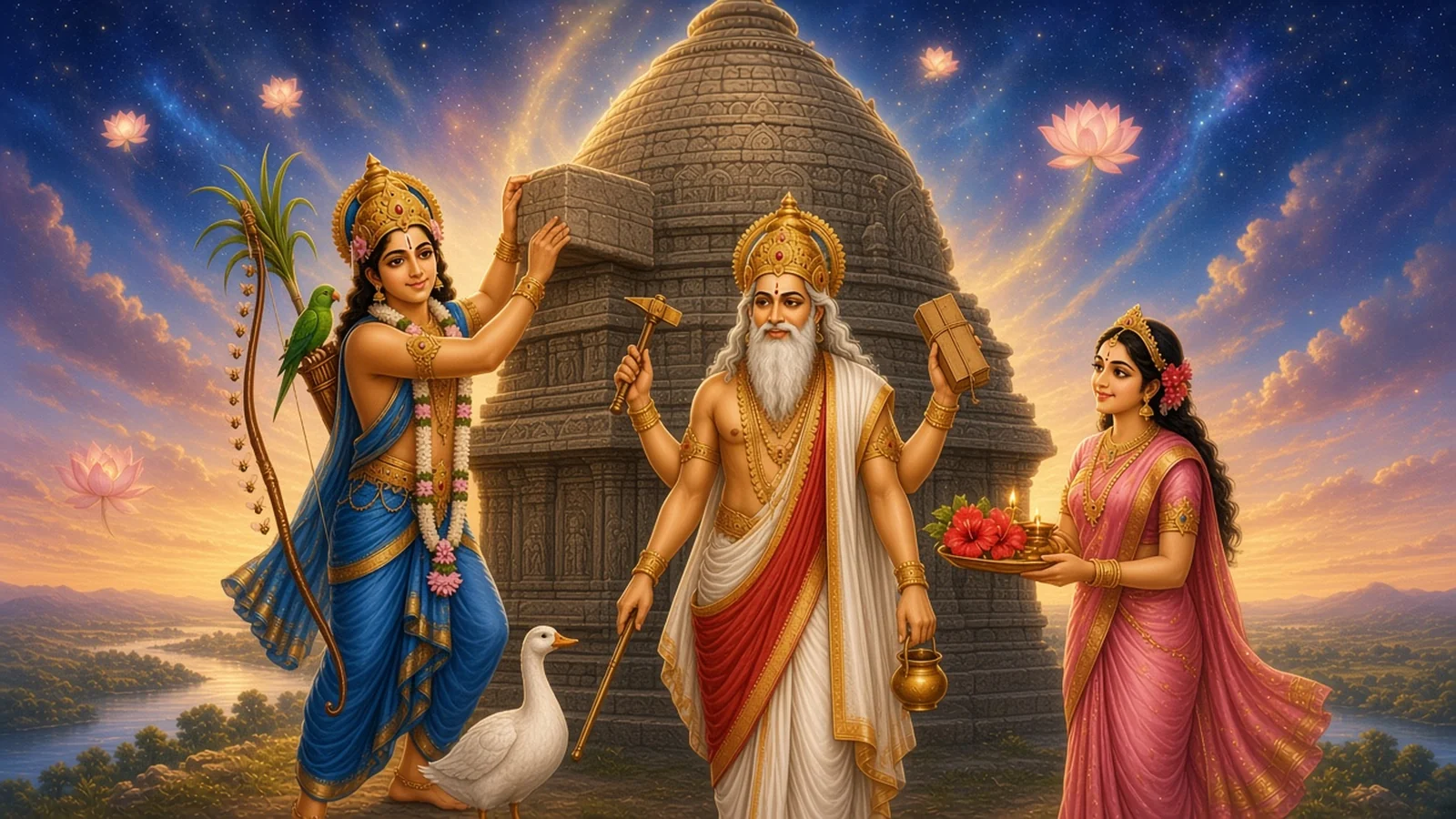
Kama and Rati went to Nilachal, to the place where the goddess lay, and Kama sent for Vishvakarma, the builder of the gods.
"Build it with me," he said. "It is for her."
Vishvakarma came, and together they raised the temple over the place. Its walls, the temple's keepers say, were carved all over with figures: sixty-four yoginis, the goddess's companions, and eighteen Bhairavas, the fierce forms of Shiva.
The temple on the hill today is not that temple. The old one fell into ruin. The Koch kings rebuilt it in 1565, and the Ahom kings after them added to it. The keepers of the hill say themselves that no record proves the first temple was Kama's. But they have not forgotten the builder. Before the northern gate stands a figure of Vishvakarma, and at the southern foot of the hill, near the old stone path, there is a small temple to him.
As the Kalika Purana tells it
Chapters 42, 51, 62 and 79 · the hills of Kamarupa · 2 min read
The Kalika Purana never tells this as one story. It sets it down in pieces, as it walks the reader through the land.
The country of Kamarupa, it says, lies east of the river Karatoya, three-cornered and dark, full of hills and crossed by hundreds of rivers. It has its name because Kama, burnt by the fire of Shiva's eye, got his shape back there, and got it by Shiva's own grace.
Further on, among the hills round Nilachal, it names the very spot. East of the hill called Manikuta rises a mountain called Matsyadhvaja. Kama was burnt there, says the Purana, and there he won his body back, not by anyone's pleading but by his own penance to Shiva. For a time he lived there in the form of a fish, and so the mountain is called Matsyadhvaja, the one with the fish for a banner. A river named Shashvati runs south through its valley, and on the mountain lies a lake called Kamasarovara, the lake of Kama. A pilgrim who bathes in the river and sips from the lake, the Purana promises, is freed from his sins.
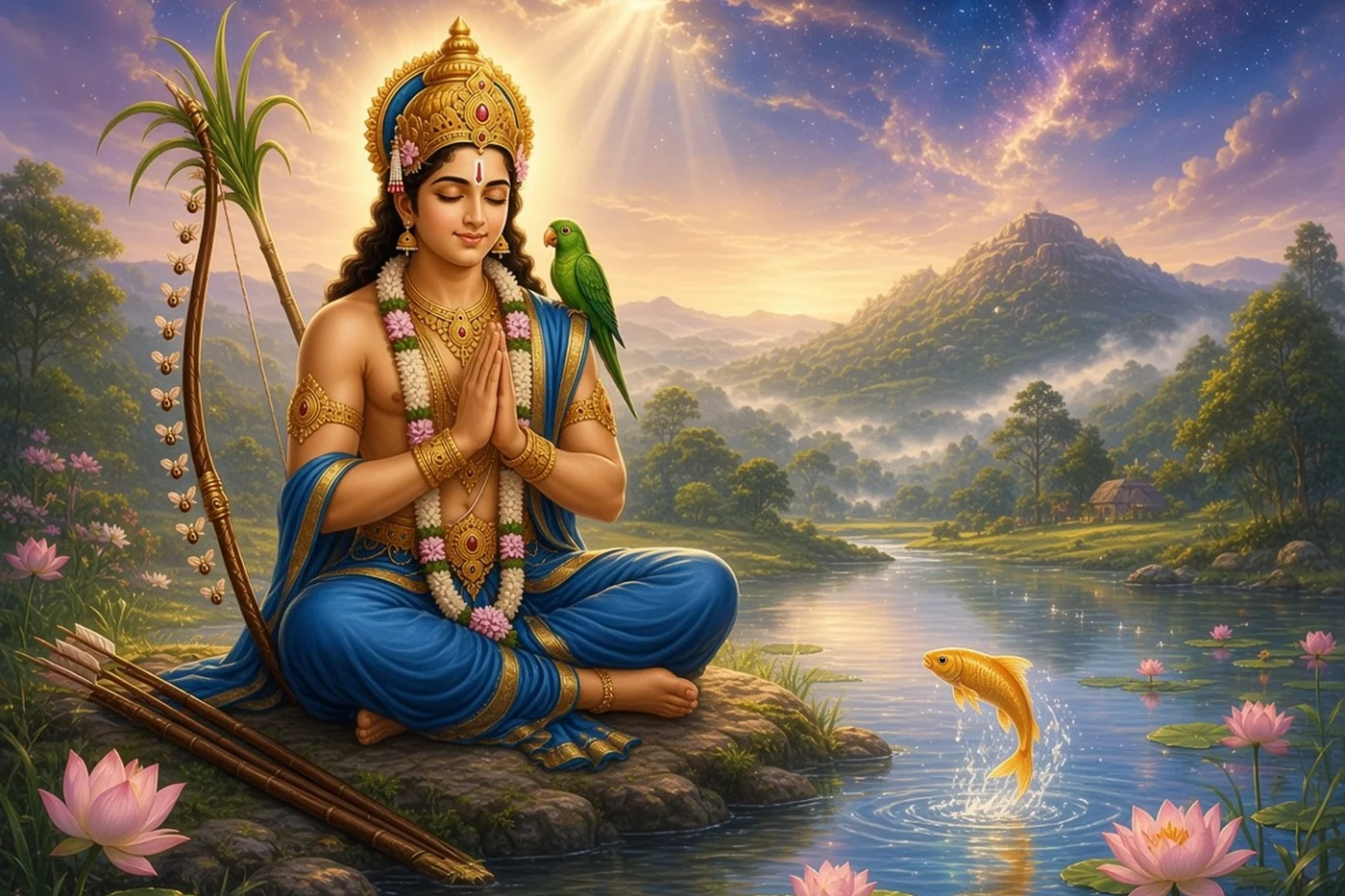
On the blue hill itself, where the goddess's womb lies as a stone, Shiva tells his attendants that there is a cave which Kama made, and that the stone lies along a ridge formed of Kama's ashes. The goddess is named Kamakhya, he says, because she came to that hill out of love. And she is the one who gives Kama back his limbs, as well as the one who takes them away.
When the Purana tells the burning itself, in chapter 42, it is a different occasion: the gods send Kama to Shiva's hermitage in the Himalaya to turn his heart towards Kali, the mountain's daughter, and Shiva smears himself with the ashes. No temple follows, and no carpenter of the gods.