Devalok ← All gods
Also calledKamaManmathaMadanaAnangaMaraPushpadhanva

In short

Who is Kamadeva?
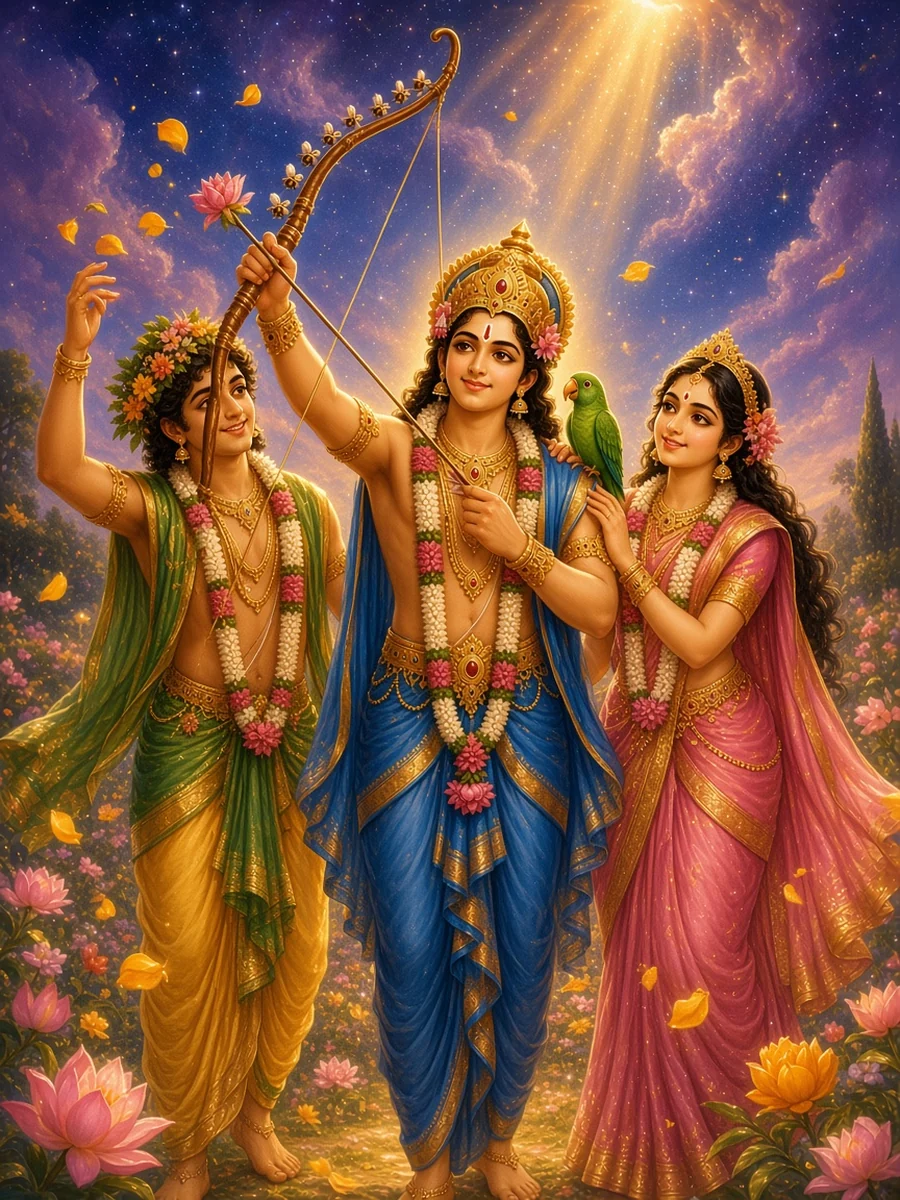
The god of love and desire, who carries a bow and five arrows tipped with flowers. In the Shiva and Kalika Puranas he is born from Brahma's mind; his wife is Rati and his friend is Vasanta, the Spring.
Why did Shiva burn him?
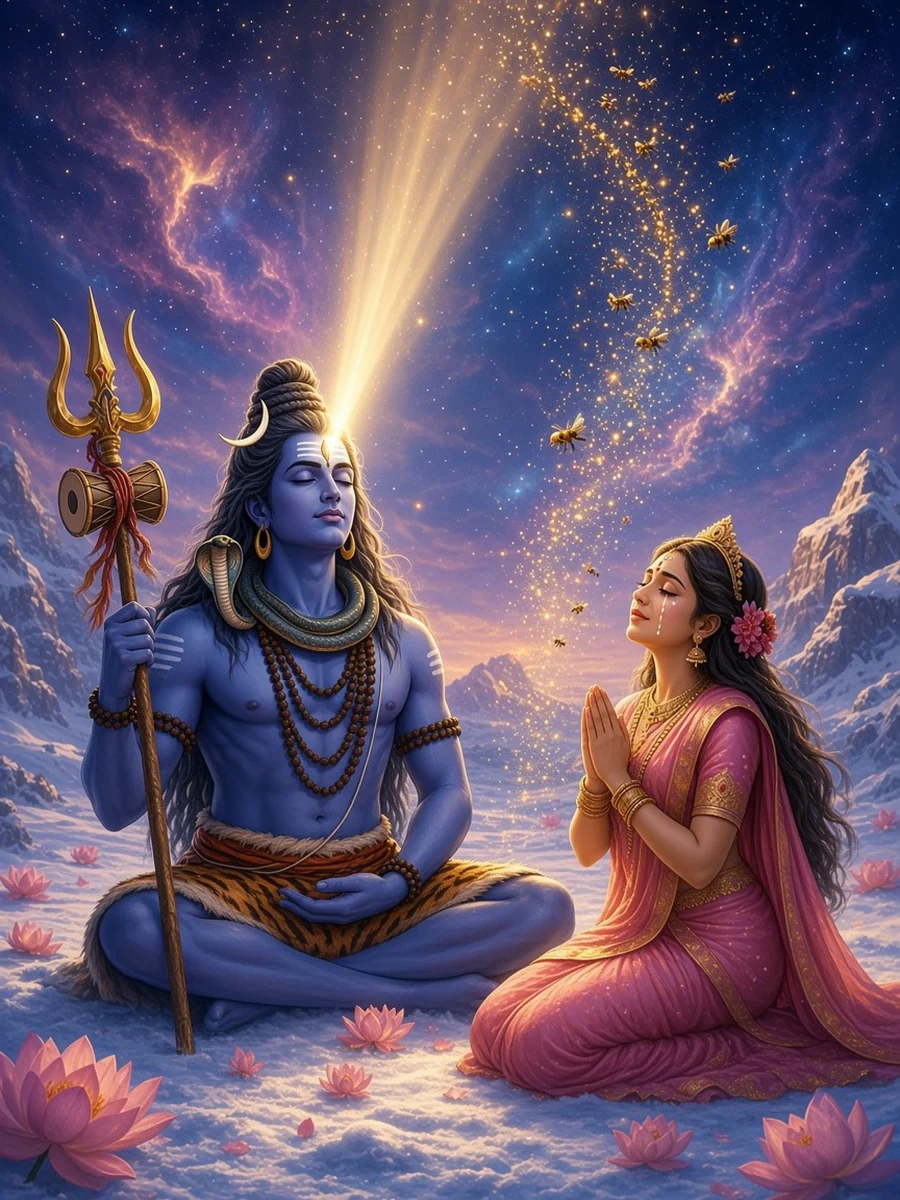
The gods sent him to make Shiva love Parvati, so that a son could be born to kill the demon Taraka. Shiva's third eye opened and burned him to ash, as Brahma had cursed long before.
Why is he called Ananga?
Ananga means the one without a body. After the burning he lived on unseen, until he was born again as Pradyumna, the son of Krishna and Rukmini.
Is Kama in the Vedas?
As desire itself, yes. The Rigveda calls desire the first seed of mind, and the Atharvaveda praises Kama as the first-born who grants wishes, but not yet as a god of love.

Artwork ›

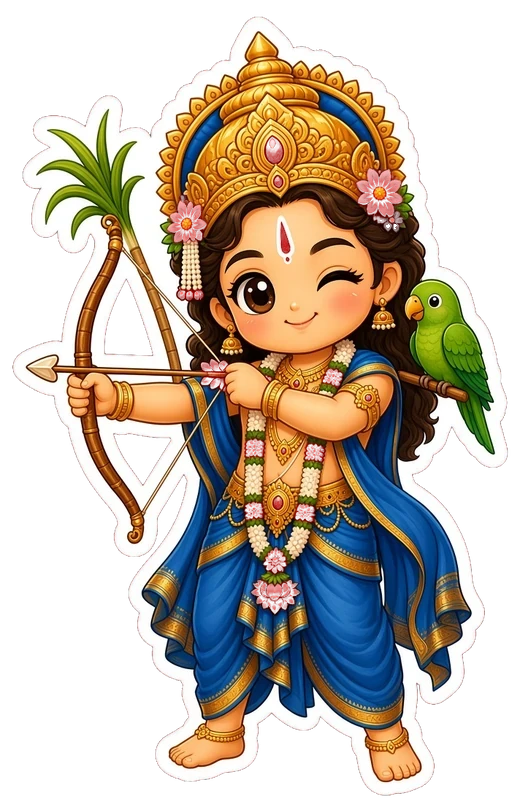
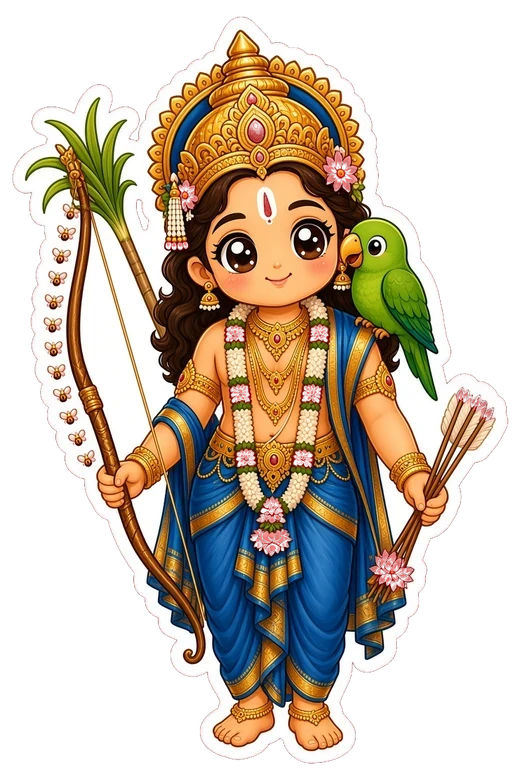
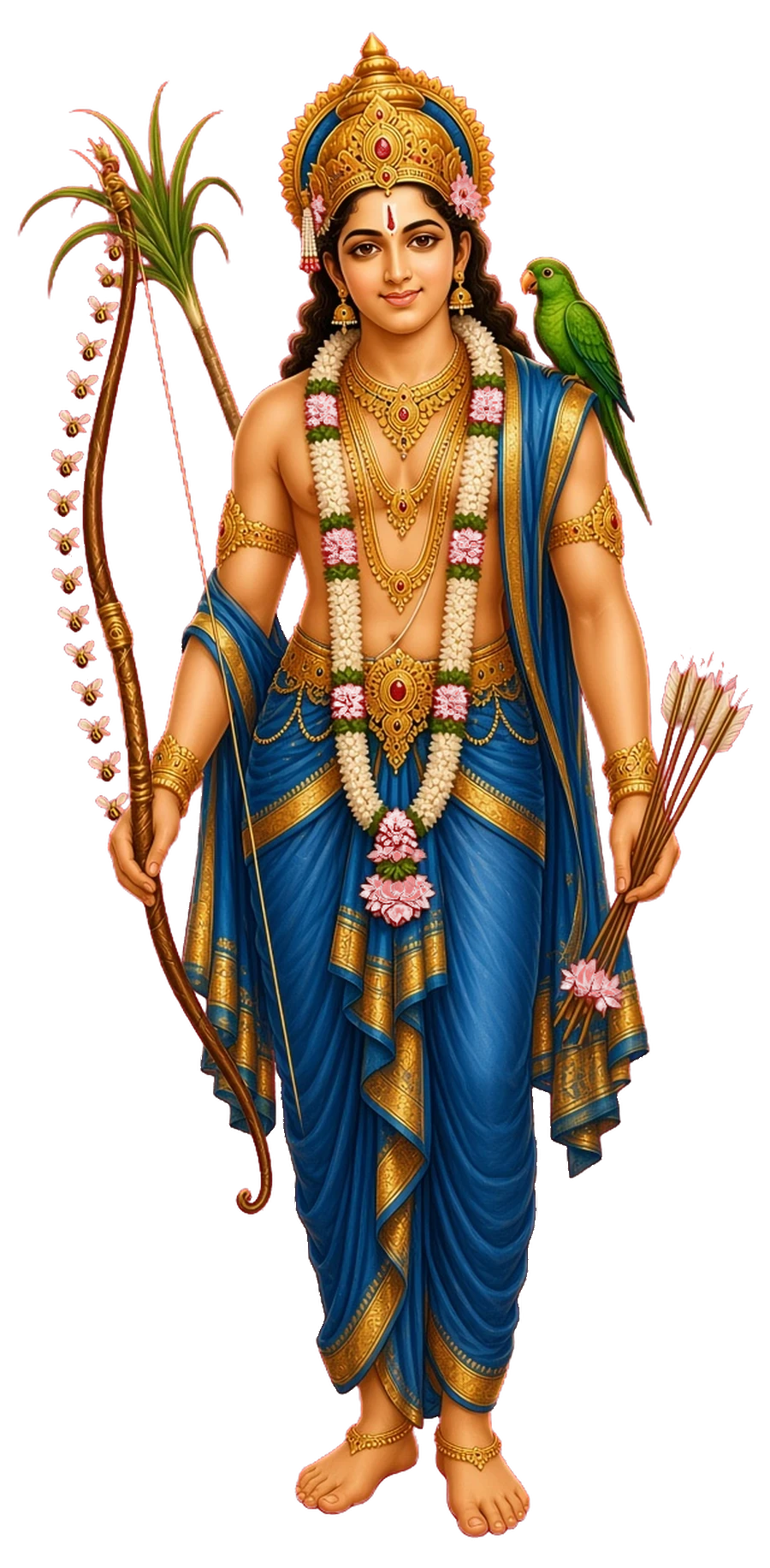
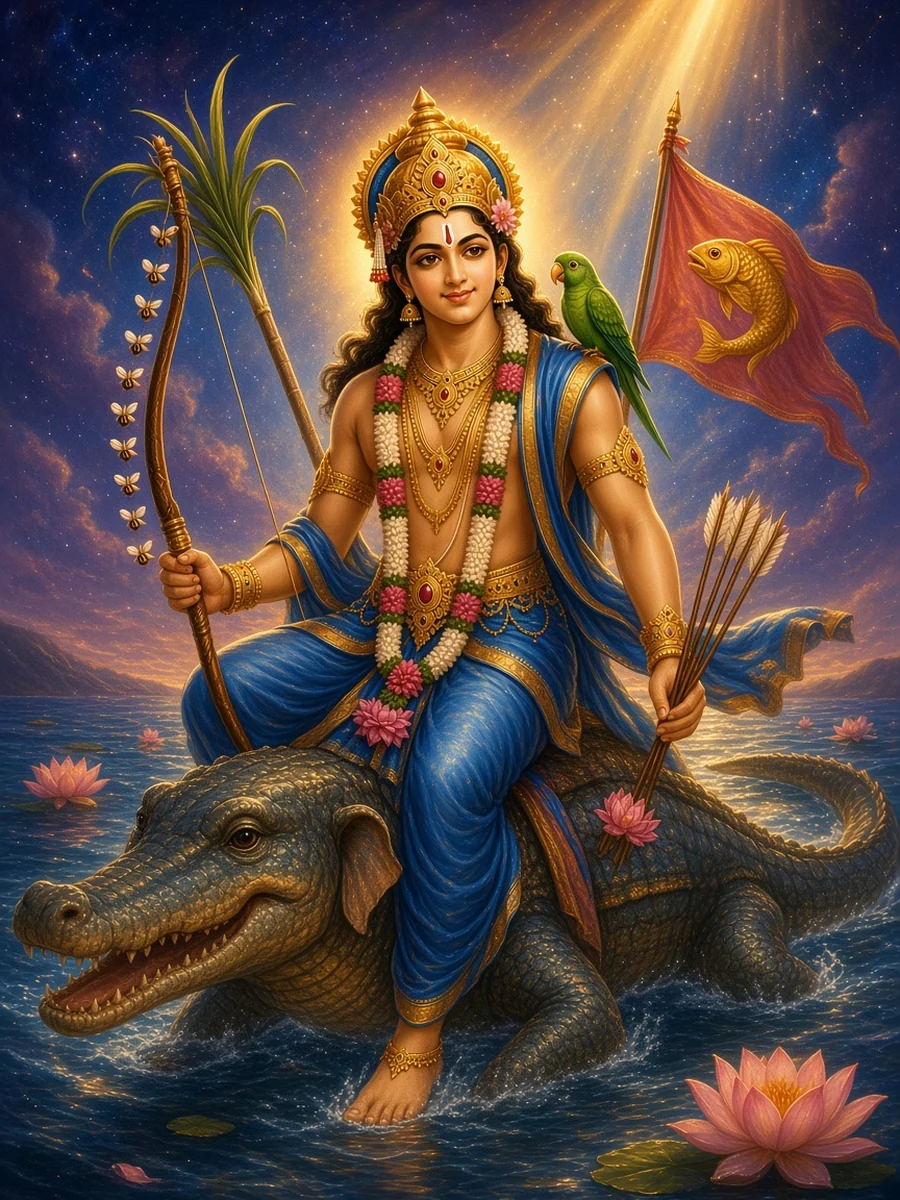
The sugarcane bow and the five flower arrows Riding the makara, the fish on his banner

For kids

Hold still, this won't hurt
The parrot knows everything

At a glance

TraditionShaiva and Vaishnava
FormA young man of golden beauty with lotus eyes, dressed in blue in the Shiva Purana
Bow and arrowsA bow of flowers

made of sugarcane and strung with bees in later images, and five arrows tipped with flowers

Who Kamadeva is

Kamadeva is desire with a bow in its hand. He is the god who turns creatures towards one another, and the Puranas give him the oldest work there is: to keep the world making itself. In the Shiva Purana and the Kalika Purana he steps out of Brahma's mind just after Sandhya, the twilight, young and golden, with a bow of flowers and five flower-tipped arrows, and Brahma tells him that nothing will stand against them, not the gods, not Vishnu or Shiva, not Brahma himself. The sages name him Manmatha, the one who churns the mind, and Madana, the one who makes the heart drunk. Later poets make his bow of sugarcane and string it with bees.

He tried his arrows first on his maker, and Brahma, shamed in front of Shiva, cursed him to burn in the fire of Shiva's eye. Then Brahma needed him. With his wife Rati and his friend Vasanta, the Spring, who was born of a sigh, he followed the meditating Shiva over the mountains and never found an opening. When the gods sent him again, for Parvati's sake, he found one, and the third eye opened. Since then he has been Ananga, the one without a body, felt everywhere and seen nowhere, until he was born again in Dvaraka as Pradyumna, the son of Krishna and Rukmini, and his wife found him in a demon's kitchen.

Kamas tad agre sam avartatadhi manaso retah prathamam yad asit: Thereafter rose Desire in the beginning, Desire, the primal seed and germ of Spirit (Rigveda 10.129.4, Griffith).

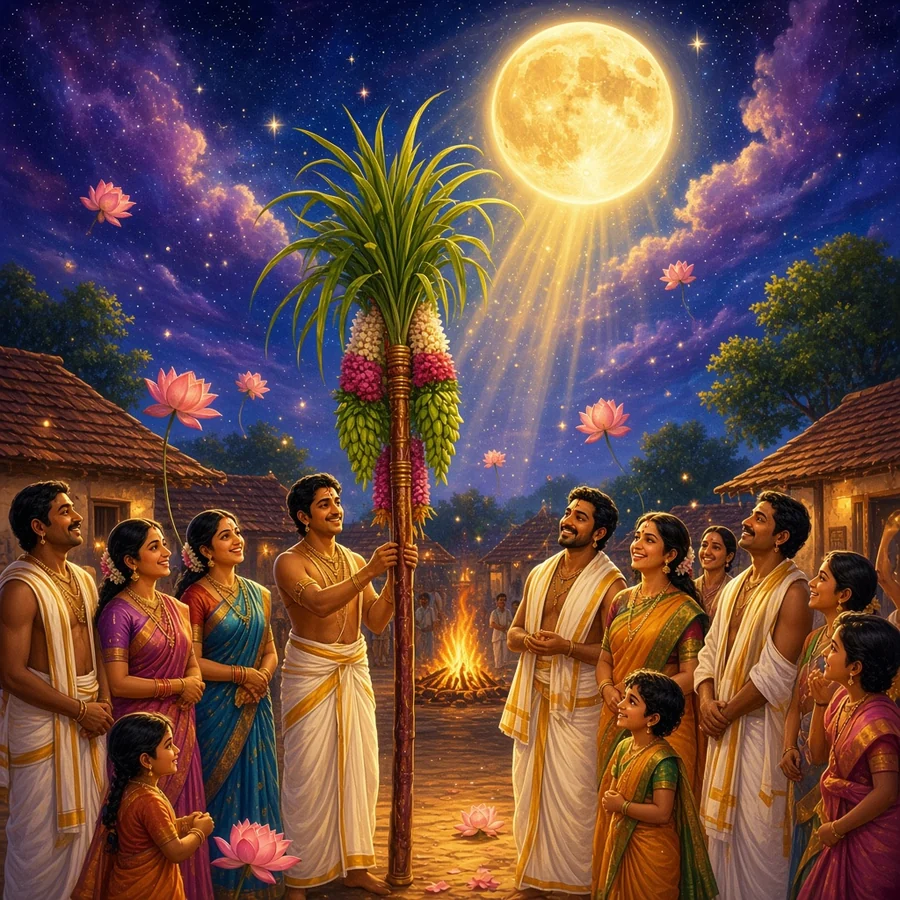
He is seldom given a temple of his own, but his night comes round every spring. In parts of the south the full moon of Phalguna is Kaman Pandigai, the festival of his burning, and old Sanskrit plays call the spring feast Madanotsava, the festival of Madana.

His stories on this site: The Archer Who Aimed at His Maker, Spring Born of a Sigh and The Boy in the Fish, then The Burning of Kama, where the third eye opens, and How Parvati Won Shiva. The Guests Indra Sent finds him at Badari, and in The Goddess Who Rose from the Fire and The Queen's War with Bhanda a demon is made from his ashes and the goddess Lalita gives him his body back.
Before the Puranas

The Vedic roots of Kamadeva

The Vedas know Kama, but not as a god of love. In the Rigveda's hymn of creation (10.129), kama is desire itself, the first thing that stirred in the dark before there were any gods, the first seed of mind. The Atharvaveda makes that desire a god. Its hymns 9.2 and 19.52 praise Kama as the first-born, whom neither gods nor fathers nor men have ever matched, a mighty lord who grants the wish of whoever offers to him and drives that man's enemies away.

A. A. Macdonell, in his Vedic Mythology of 1897, drew the line plainly. The Atharvaveda's Kama, he wrote, is not the love god of later literature but a god who fulfils every desire, and the idea most probably grew out of the desire of the Rigveda's creation hymn. One Atharvaveda love charm (3.25) already speaks of the arrow of Kama that pierces the heart, but it is a spell, not a story. There is no bow of flowers yet, no wife, no Spring and no burning.

The epics give him a family. The Mahabharata makes Kama one of the three sons of Dharma, beside Sama, peace, and Harsha, joy, and names his wife Rati. The Puranas move him to Brahma's mind and fill in his life. The Shiva Purana and the Kalika Purana tell his birth beside Sandhya, his names, his five arrows, Brahma's curse and the birth of Vasanta from Brahma's sigh. The Shiva Purana's book of Parvati tells how Shiva's eye fulfilled the curse. The Bhagavata and the Vishnu Purana tell his rebirth as Pradyumna, Krishna's son, and his wife Rati waiting for him in a demon's house.

The old idea never quite left him. When Brahma gives him his work in the Shiva Purana, the arrows are not for mischief. They are there so that the world can go on being made, which is very close to what the Rigveda's poet meant by the desire that came first.

See how the Vedic gods became the Puranic ones →

Related gods