As the priest in Varanasi tells it
Varanasi · the Dhumavati temple, as David Kinsley heard it · 3 min read
There are not many temples to Dhumavati anywhere. One of them stands in Varanasi, and a scholar from far away, David Kinsley, came to it more than once to ask its priest about her.
The image in the shrine was hidden under cloth. The priest, Panalal Gosvami, told him what was underneath.
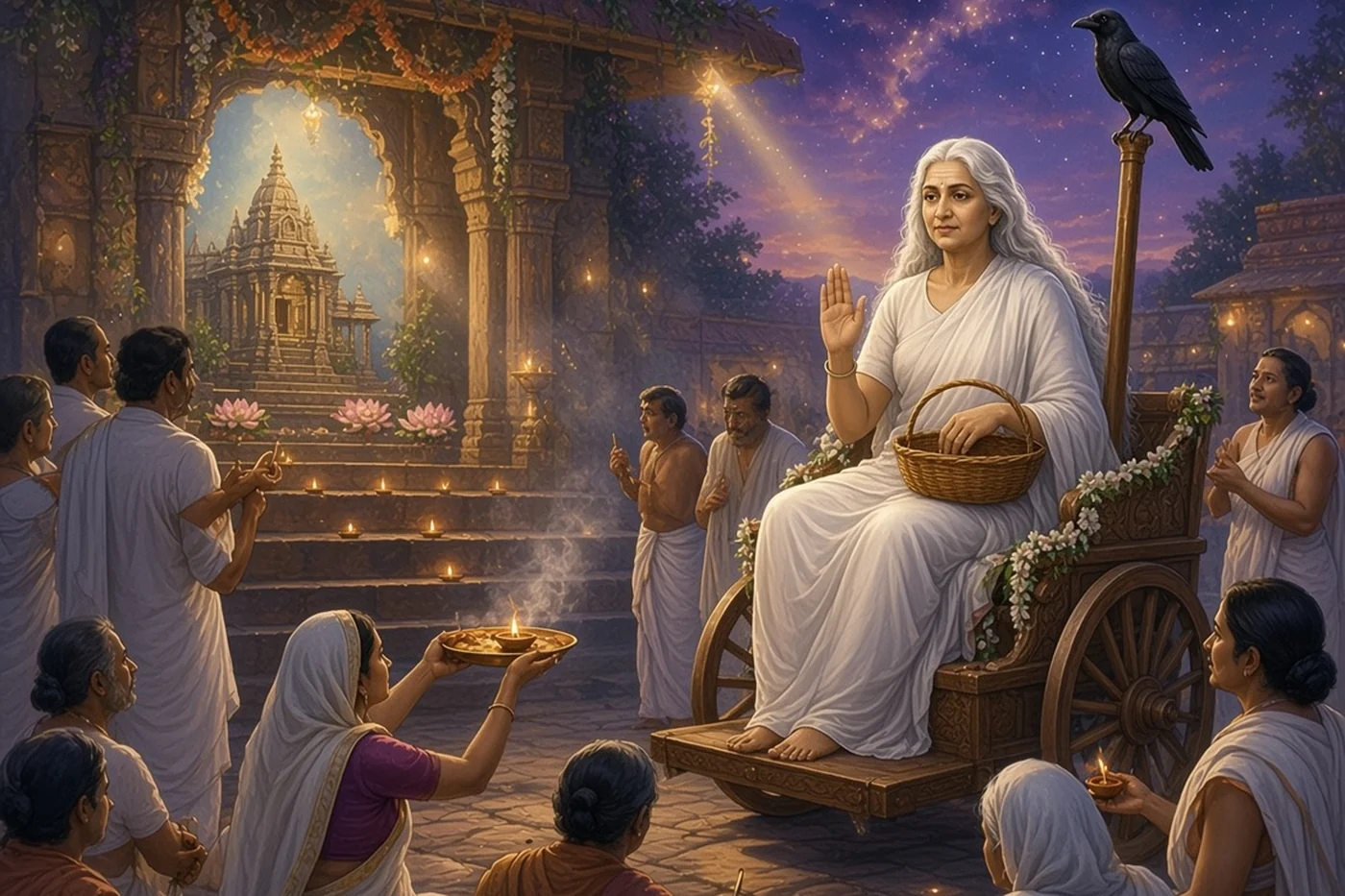
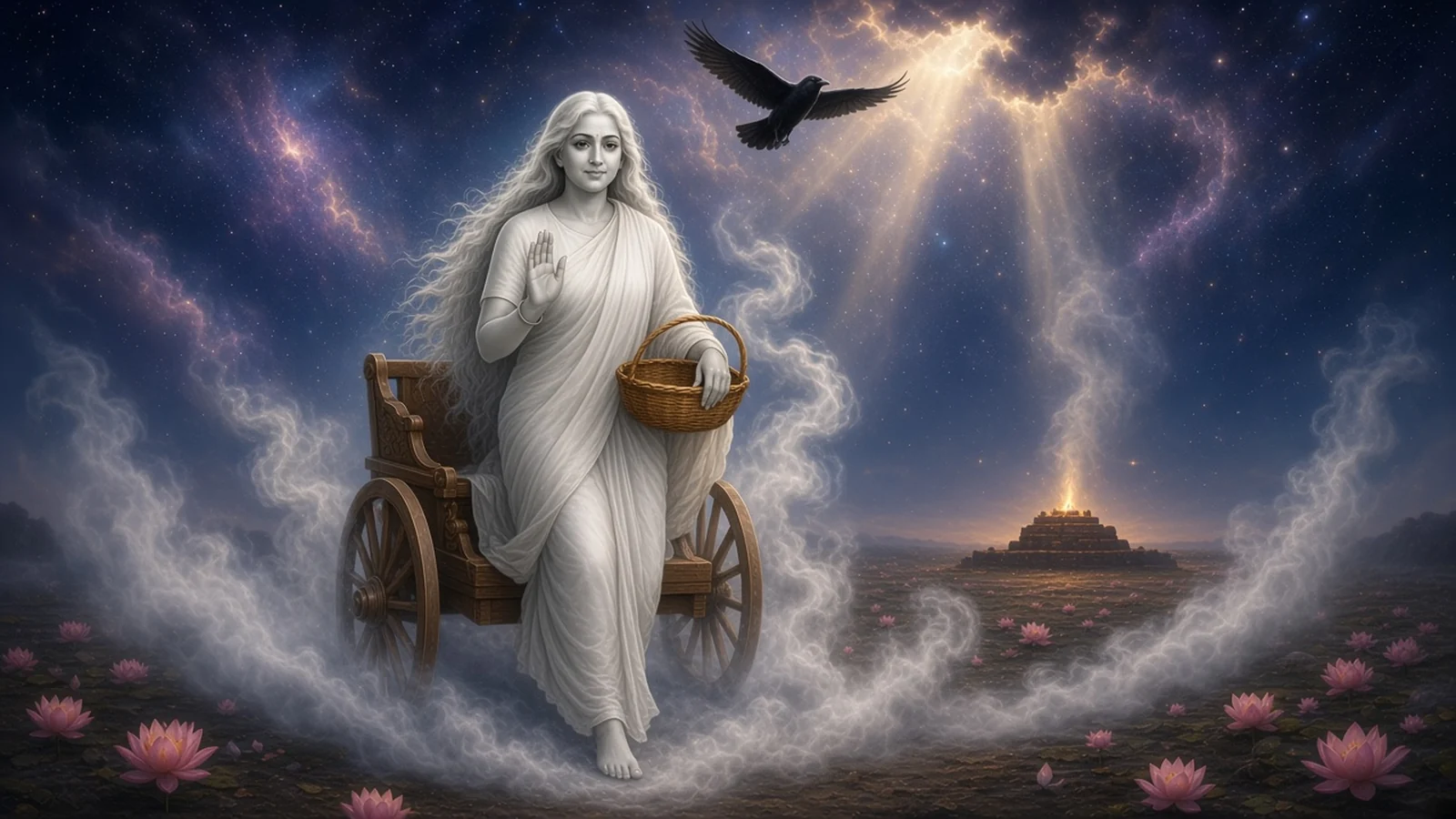
"Black stone," he said, "red lips, big eyes. A widow in a chariot. A broom, a pot and a winnowing fan in three of her hands, and the fourth raised to say, do not be afraid."
"Where does she come from?"
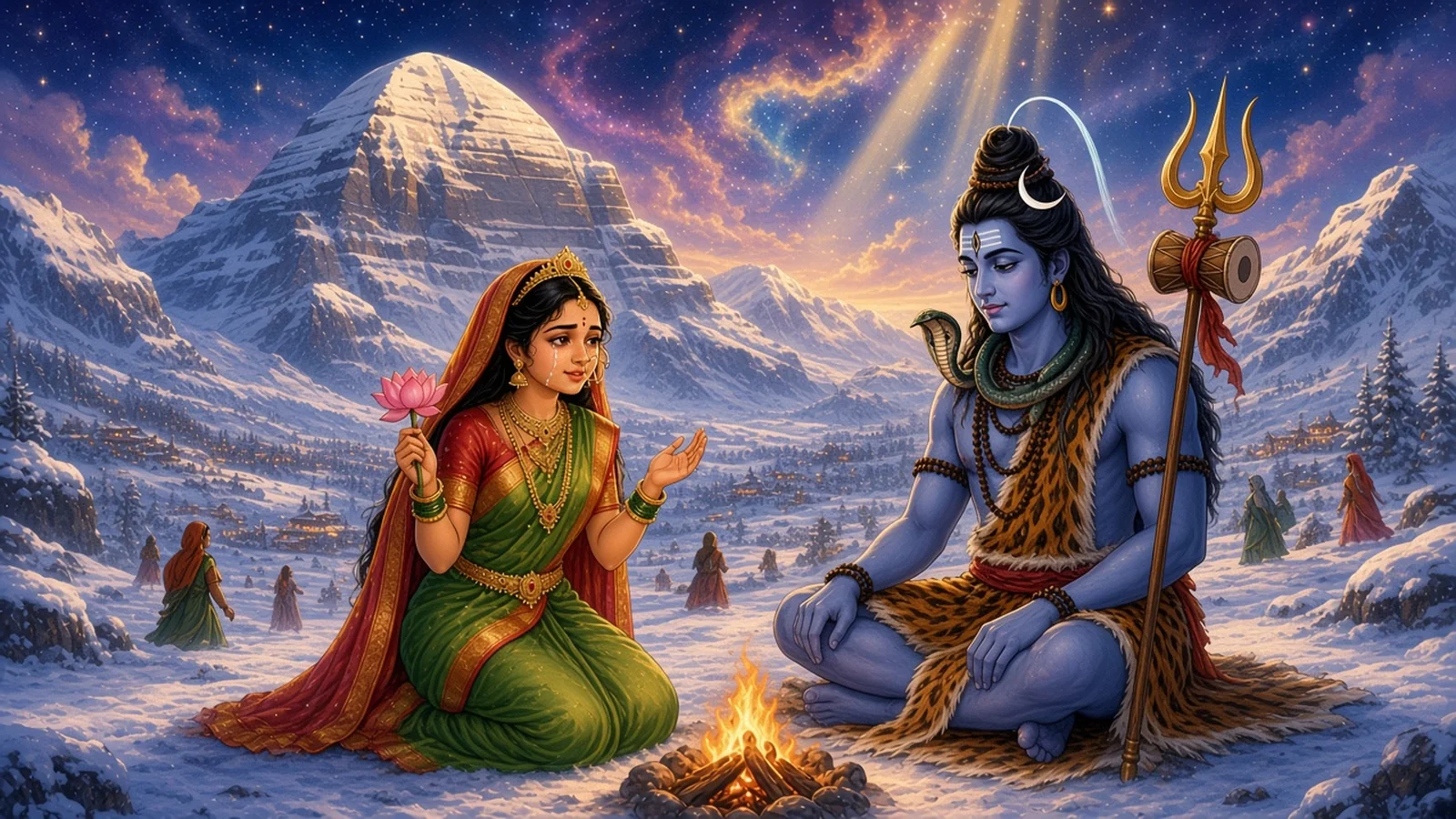
"From Sati," said the priest. "When Sati gave up her life at her father's sacrifice, her body burned in the fire. Smoke went up from it. And out of that smoke came the goddess, with her face blackened. She is what is left of Sati. That is why she is sorrowful by nature."
He showed the visitor how he made her offerings, and it was not the way most fires are tended.
"She does not like a fire that gives no smoke," he said. "So I always make sure there is a great deal of it. She likes the smoke of incense, the smoke of offerings, the smoke of the burning grounds. Smoke is her own form. Like smoke, she drifts wherever she pleases."
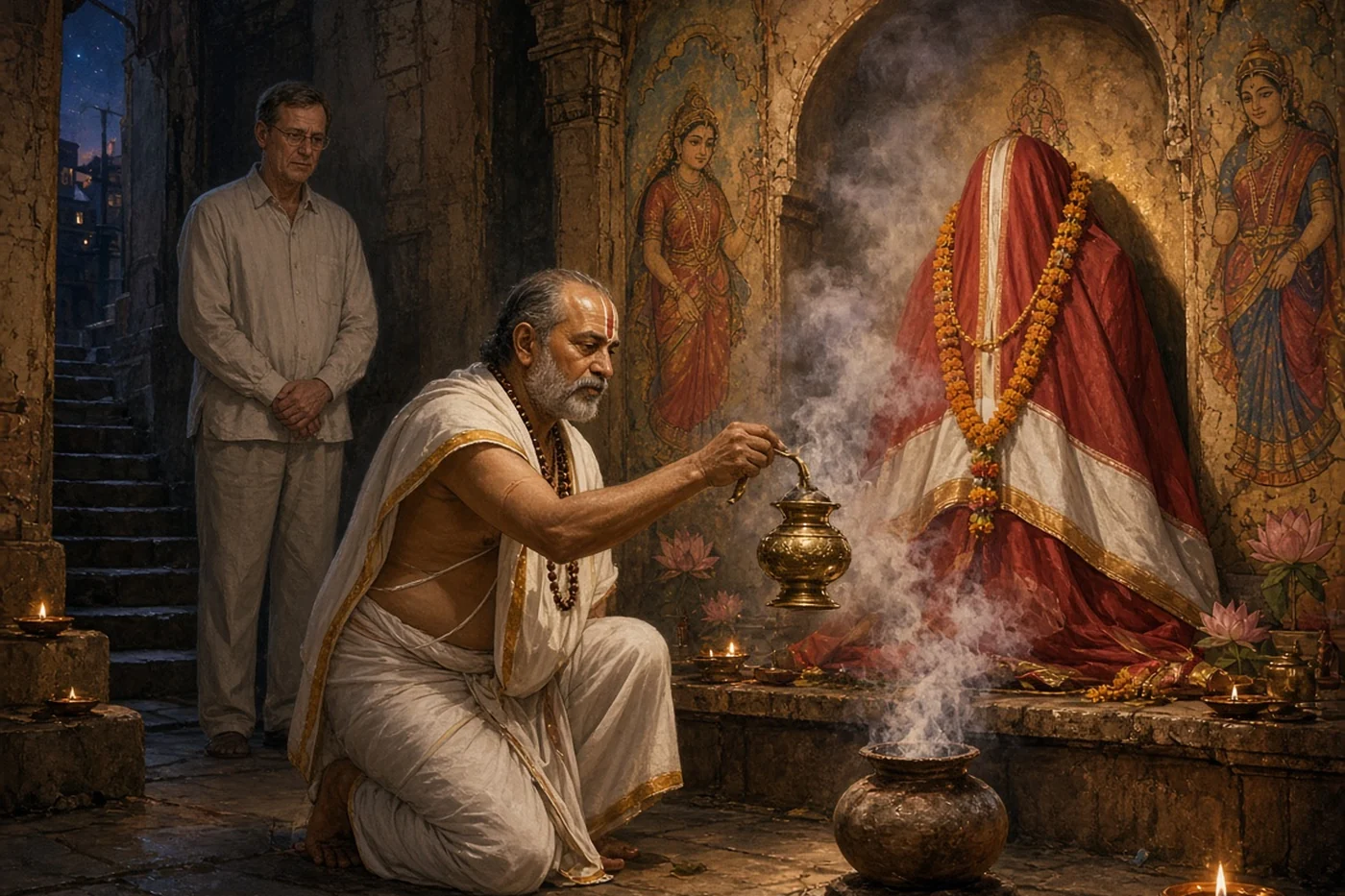
On the inner walls were paintings of the other Mahavidyas. Some had faded away, but Matangi, Chhinnamasta, Shodashi, Bhuvaneshvari and Bagalamukhi could still be seen. The priest called the ten sisters, and said Lakshmi was Dhumavati's elder sister.
"Why is her temple here?"
"Because a piece of Sati's body fell on this spot," he said. "This is one of her seats. The sage Durvasa founded it, long ago." It was a fitting founder. Durvasa's temper is famous in every Purana, and Dhumavati, they say, gives her worshippers a short temper of their own.
Then he gave his visitor a warning.
"You are a married man," he said. "You should not draw close to her. She makes her devotees want to be alone. She loves the unmarried, the widowed, the ones who have left the world. Only an unmarried person could spend a whole night alone in this temple. For a married person it would not be safe."
The priest himself, Kinsley noticed, was married, with five children.
And the people who came through the door while he was there were not renouncers. They were mostly married men and women from the lanes around the temple, and Kinsley guessed they came for the ordinary blessings people ask of a goddess. The priest agreed that most of her regular worshippers were local people, and that stories of her kindness to them were told all through the neighbourhood.
"She is not one thing," he said, and read aloud from her hymns. "In the morning she is a young girl. At noon she is a married woman." Her image, the visitor saw, was often dressed in a red sari. "And in the evening, she is a widow."
Behind her stood a Shiva lingam. The priest was careful about it. It was Shiva, he said, but not her husband; it was a shrine of its own, which had come into being at the same time as hers. And inside the temple and outside it there were lions, the mount of Durga.
As the tantras tell it
Daksha's sacrifice · Shaktisamgama Tantra 6.23 to 26, and the Svatantra Tantra · 1 min read
The Shaktisamgama Tantra gives her birth only a few lines, in a chapter where Shiva tells the Goddess on what day each of her forms first appeared. He has just named the night on which Mahalakshmi was born. Then he goes on.
At Daksha's sacrifice, he says, from the smoke that rose out of the fire pit, the goddess who moves restlessly through the great destruction was born: Dhumavati, born of smoke. From her mouth came another, Kalamukhi, the black-faced one. The knowledge that came out of that smoke destroys every enemy, and Dhumavati was born that way because she wished to show her favour to her devotees. It was Akshaya Tritiya, a Tuesday, at nightfall. And with that, Shiva says, he has told it briefly, and turns to the next.
The book from the Pitambara Peeth at Datia quotes the same verses with one change: the smoke rises from Sati's body, not from the fire pit. It also quotes a second tantra, the Svatantra, which is fiercer. There the goddess, furious at Daksha's sacrifice, throws down her body, and a great smoke goes up. From it is born Dhumavati, who destroys all enemies, Kali, Time itself, the one with Time's face, on a Tuesday, at the start of night, on Akshaya Tritiya.
The calendar her devotees keep today gives her festival a different day. Dhumavati Jayanti falls on the eighth of the bright half of Jyeshtha, in May or June.