As the temple tells it
Kamakhya temple tradition · Nilachal hill, Guwahati · 3 min read
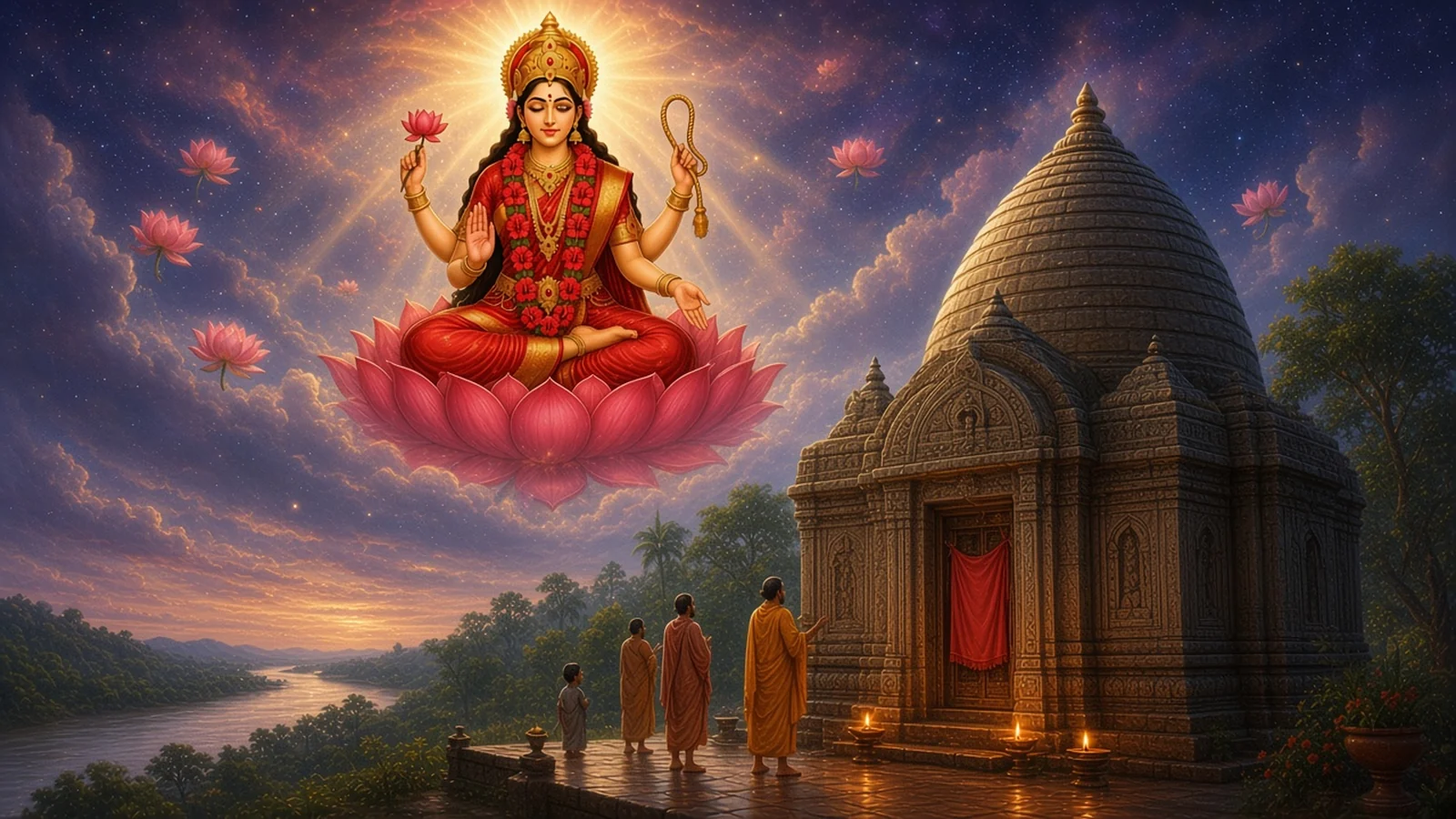
In the years after the Koch king Naranarayana raised the goddess's temple again on Nilachal, her chief priest was a man named Kendukalai.
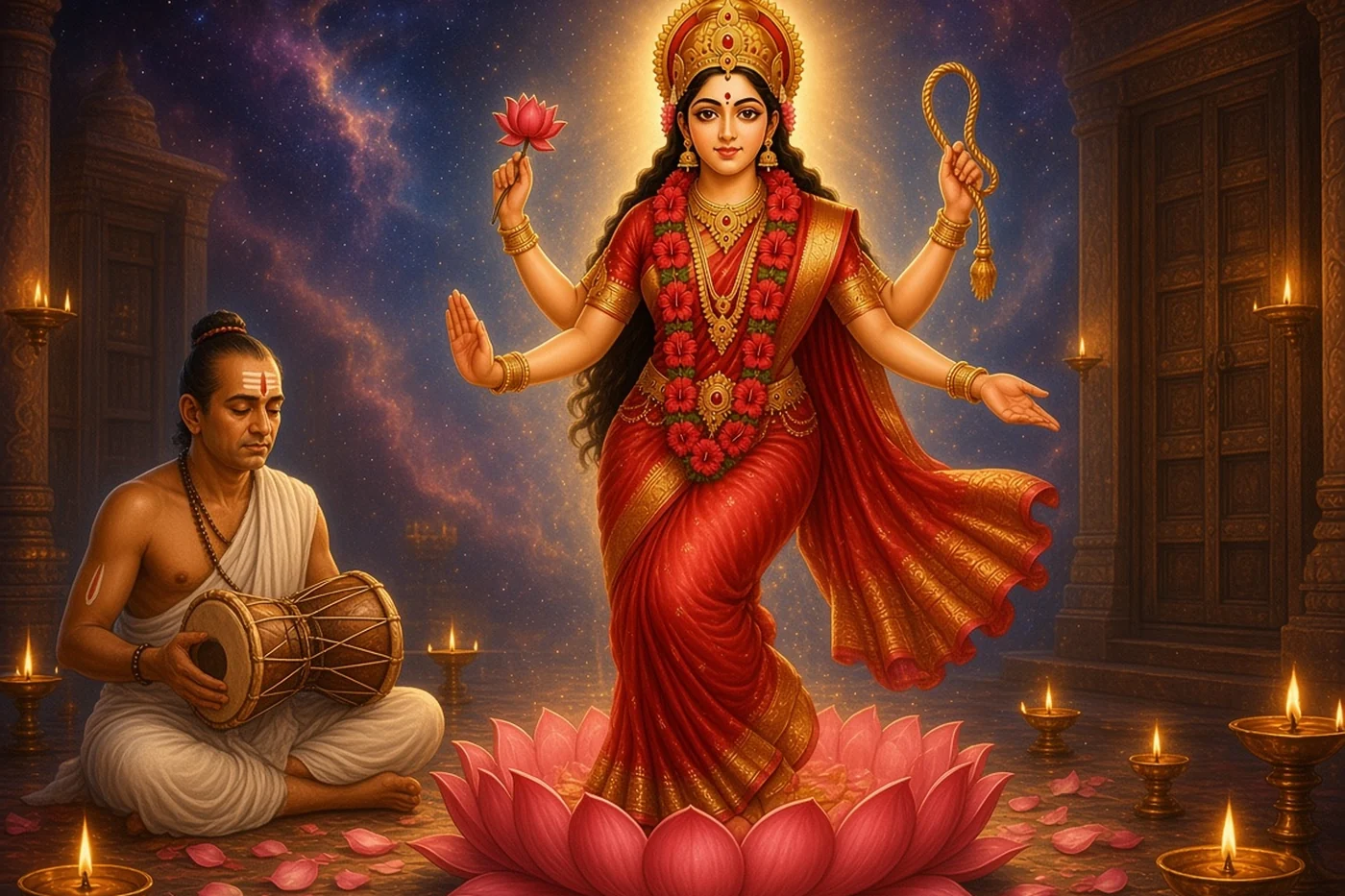
Every evening, when the day's pilgrims had gone down the hill, he went into the dark room under the temple for the aarti. The doors were shut behind him. He lit the lamps before the stone, and he began to play and to sing.
And the goddess came. She took the form of a beautiful woman, the temple's keepers say, and she danced to his music in that closed room while the lamp flames leaned and straightened.
No one else ever saw it. But a thing like that does not stay inside four walls, and in time the story reached the king.
Naranarayana sent for the priest.
"They tell me the Mother dances for you," he said. "Is it true?"
Kendukalai would not lie to him. "It is true, Maharaja. At the evening aarti, when the doors are shut."
"Then I will see it."
"That cannot be." The priest kept his voice steady, but not his hands. "She comes because no one is watching. Ask anything else of me."
The king asked nothing else. He asked the same thing the next day, and the day after that. He had rebuilt her temple. He had brought priests to serve it. Was he to be the one man in his kingdom shut out from her?
"You keep your place here because I allow it," he said at last. "Remember that."
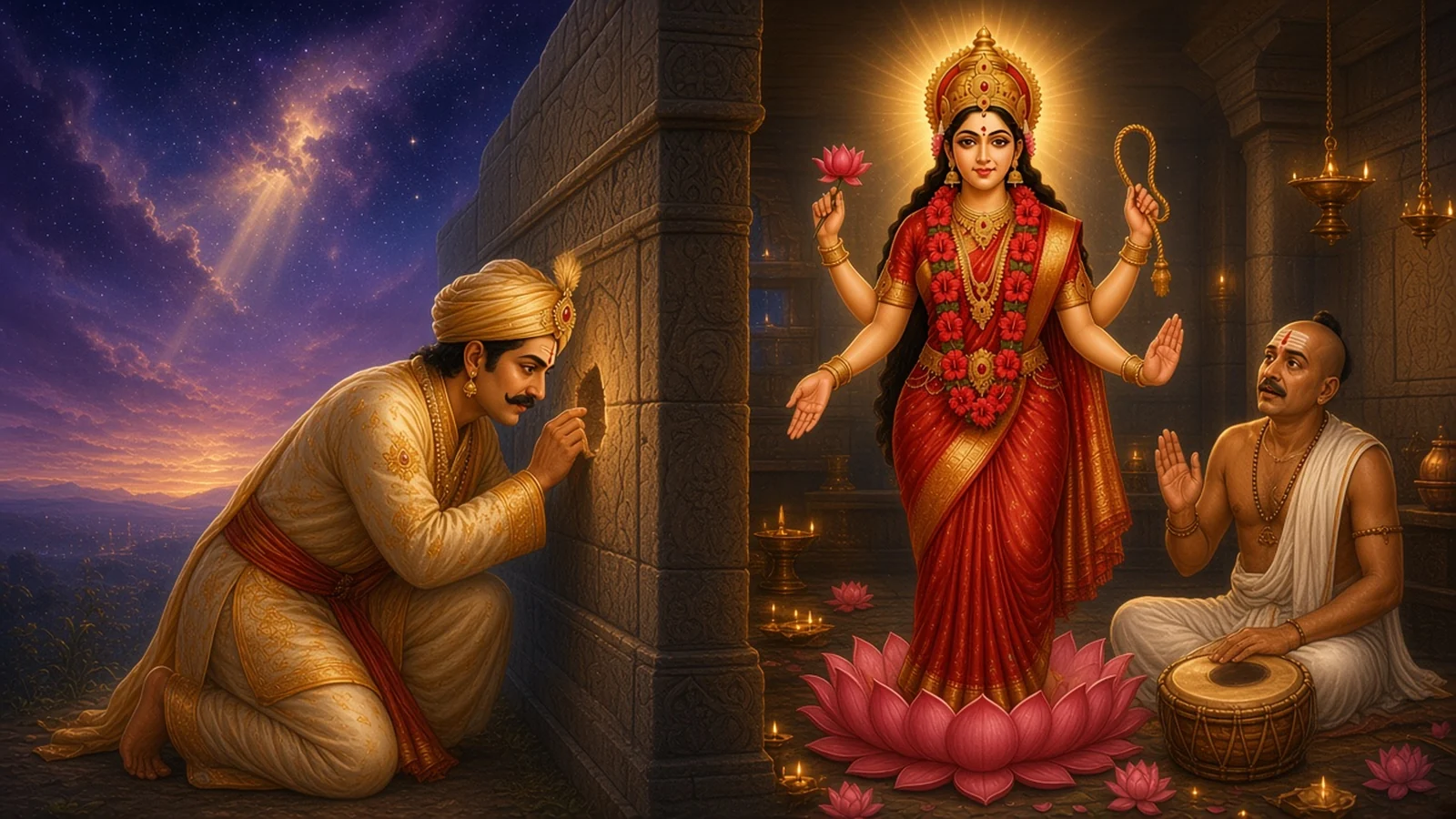
Kendukalai remembered it for many nights. Then, one day when the temple was empty, he worked a small hole through the wall of the inner room, low down, where a man kneeling outside could bring his eye to it.
"Come at the hour of the aarti," he told the king. "Kneel by the wall and say nothing. Whatever you see, say nothing at all."
That evening the doors were shut as always. Kendukalai lit the lamps and took up the music, and the goddess came and began to dance.
Outside, in the dusk, the king knelt by the wall.
He had not yet put his eye to the hole when she stopped.
The music stopped with her. She turned towards the wall as though there were no stone in it, and then towards her priest, and he understood that she knew all of it: the king's asking, his own giving way, the hole.
"You opened my room to him," she said.
Kendukalai had no answer to give. In her anger she struck off his head, there on the floor where he had played for her every evening of his life.
Then her voice came through the wall to the man kneeling outside it.
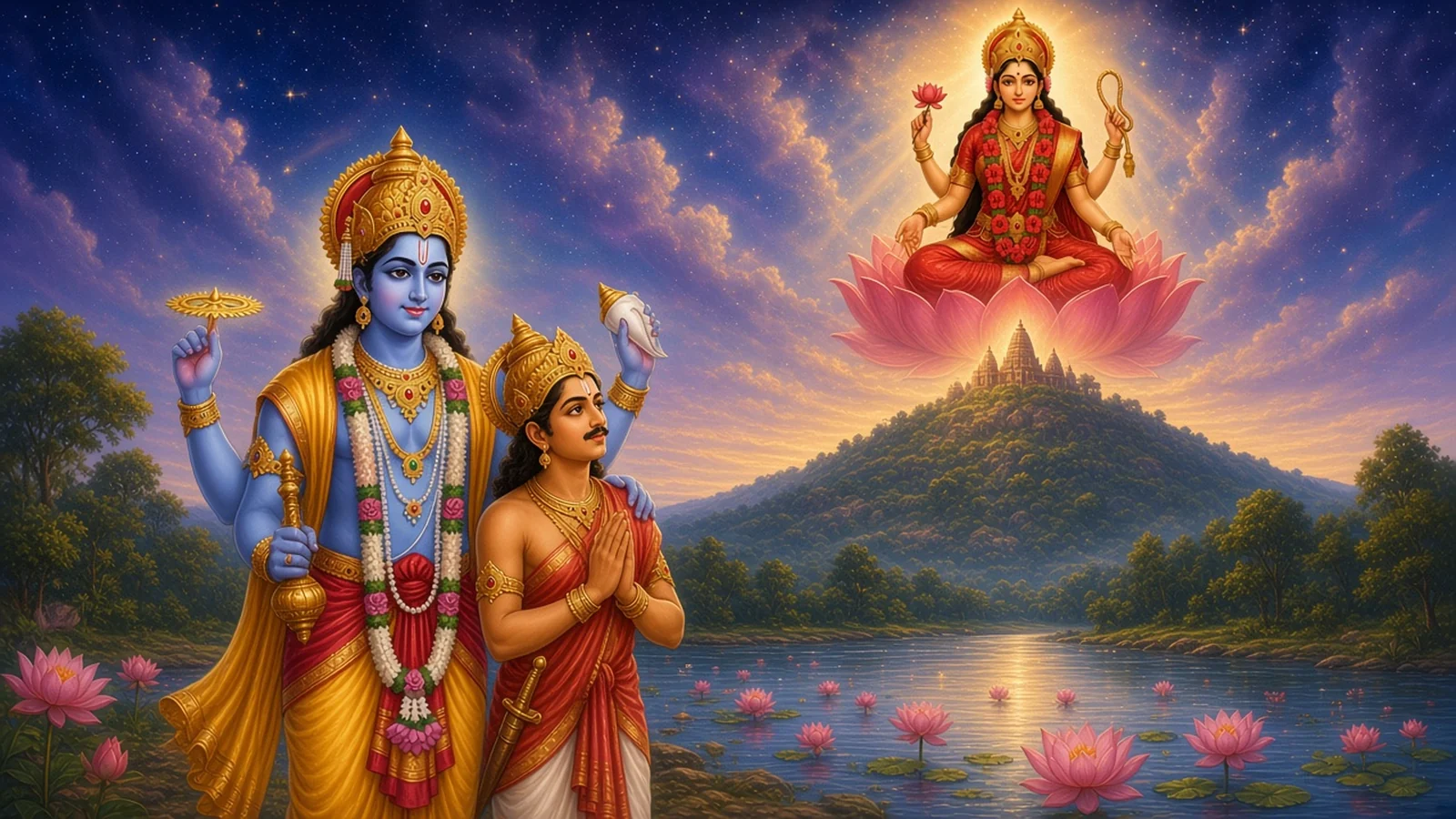
"You wanted to see me. You will not see me again. Never come to my temple, not you, nor your kin, nor anyone of your line in all the years to come. If they do, your house will vanish from the earth and leave no trace behind it."
So the king who had raised her temple never climbed her hill again.
The temple's keepers say that no descendant of the Koch kings has entered it since. When one of them has to pass below Nilachal, an umbrella is held over his head, so that his eyes cannot stray up to the hill.
As the Koch families remember it
Cooch Behar, Darrang and Guwahati · from the sixteenth century to ours · 2 min read
The Koch families tell it with two brothers in it. Naranarayana was the king, and Chilarai, the general who had carried his wars to every border, was the brother whose name is cut beside his in the temple's stone. In this telling the two wanted to see her together.
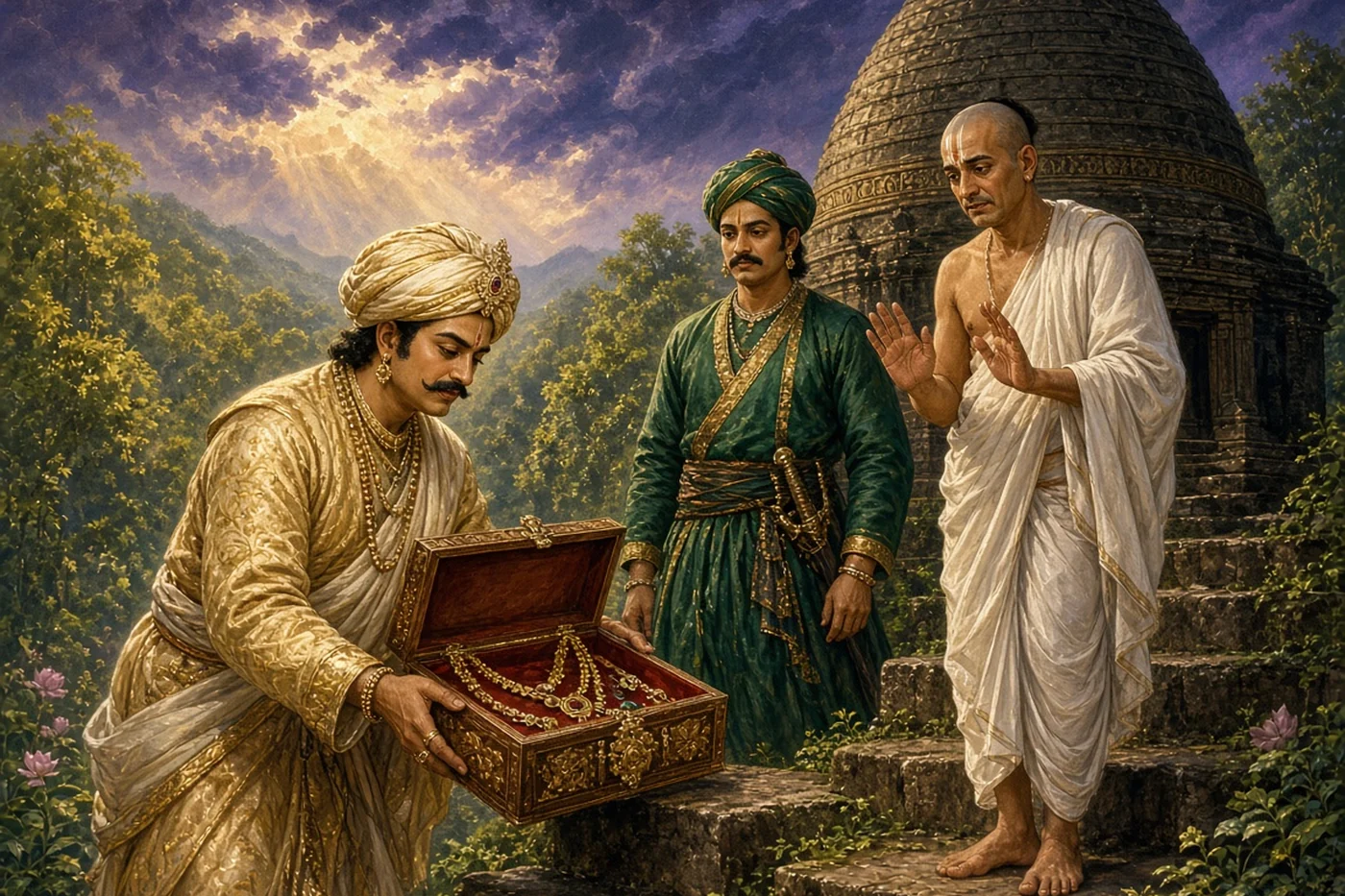
Kendukalai, they say, was one of the learned Brahmins the king had invited from Gauda in Bengal and settled near the temple with grants of land. He did the aarti every day, and when he sang with his eyes closed, lost in the worship, the goddess herself appeared before him.
The brothers asked him to let them see her. The priest hesitated, and the king laid jewels in front of him, and after a little while he agreed.
The goddess learnt of it before they saw anything. In this telling she did not strike the priest. She turned him to stone.
Then she spoke to the king. If he or anyone of his family set foot inside her temple again, she said, they would all perish; and it would be the same if they so much as looked upon her hill.
After Naranarayana the kingdom divided. His son kept Koch Behar in the west, now Cooch Behar in Bengal, and Chilarai's son kept Koch Hajo in Assam, and the warning passed down both lines.
A story is told of Gayatri Devi, a daughter of the Cooch Behar house who became Maharani of Jaipur and sat in the Lok Sabha. When a visit took her to Guwahati, someone mentioned that the Kamakhya temple can be seen from a plane as it comes down to land. She flew to Silchar instead and went on to Guwahati by road.
In 2017, while the June mela filled the hill, a man of the sixteenth generation of the Darrang Koch house told a reporter that he still could not visit the temple his forefathers had rebuilt. The head priest of Kamakhya agreed that the belief is kept to this day.