As the Mahabharata tells it
Anushasana Parva, section 14 · a hermitage on the Himalaya · 3 min read
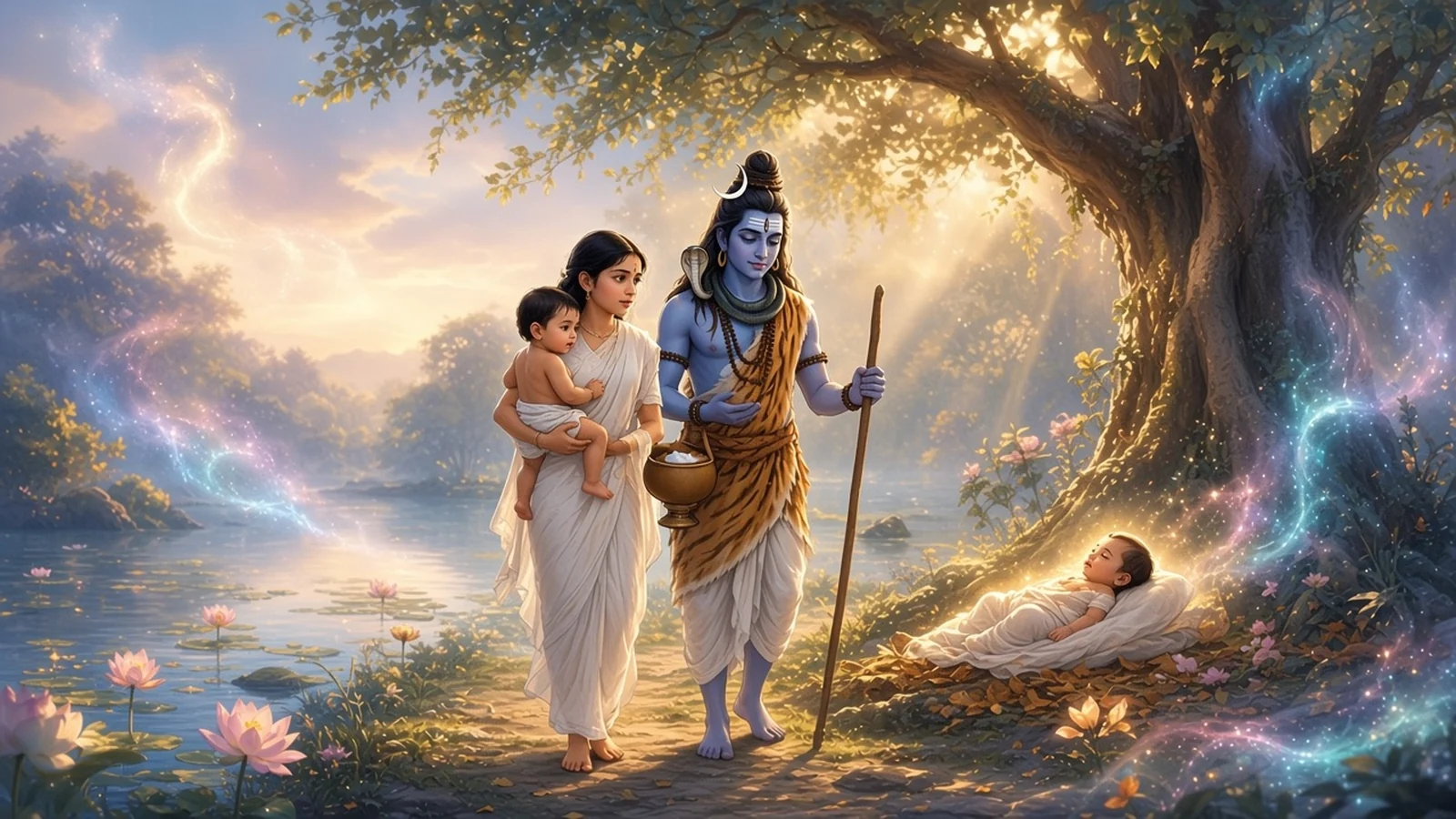
The sage Upamanyu told this story about himself, long afterwards, to a visitor who had come to his hermitage on the Himalaya looking for a son.
"When I was a boy," he said, "my father Vyaghrapada lived as the forest sages live, and my little brother Dhaumya and I lived with him. One day we passed another hermitage and I saw a cow being milked. I had tasted milk once before, at a kinsman's sacrifice, from a cow of the gods. I knew what it was. I ran home."
"Mother, give me something made with milk."
There was no milk in the house. His mother took a little cake of rice, boiled it in water until the water clouded white, and set it in front of the two boys.
"Here is your milk," she said.
The boy drank, and put the cup down.
"Mother, this is not milk."
She did not scold him. She pulled him to her and smelled his hair, and her eyes filled.
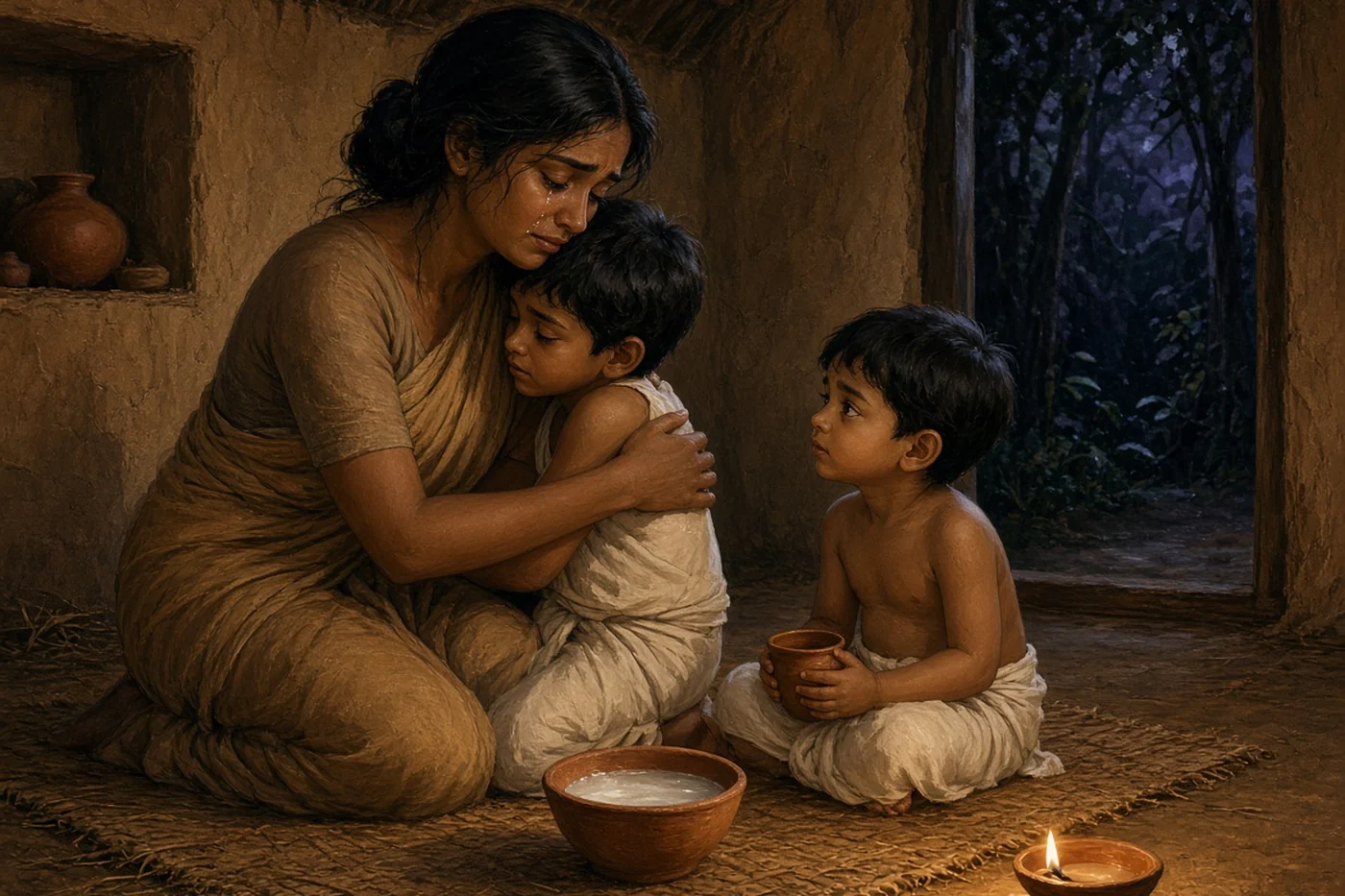
"Where would people like us get milk, child? We live in the forest. We eat roots and fruit, and some days only water. There are no cows here. Nothing comes to anyone unless Shiva is pleased with him. Give yourself to him, and he will give you everything you want."
"Who is he?" the boy asked. "Where does he live? How do I find him?"
She told him what she had heard from the sages: that the great god takes every form there is, the forms of gods and animals and birds, the forms of men and of women, that he dances and laughs and weeps, that he lives in every heart and is seen only by those he chooses to show himself to.
From that day the boy wanted nothing but Shiva.
He went up into the mountains and began. For a thousand years, the epic says, he stood on the toe of his left foot. For a thousand more he ate fruit, then fallen leaves, then nothing but water, and for seven hundred years he lived on air.
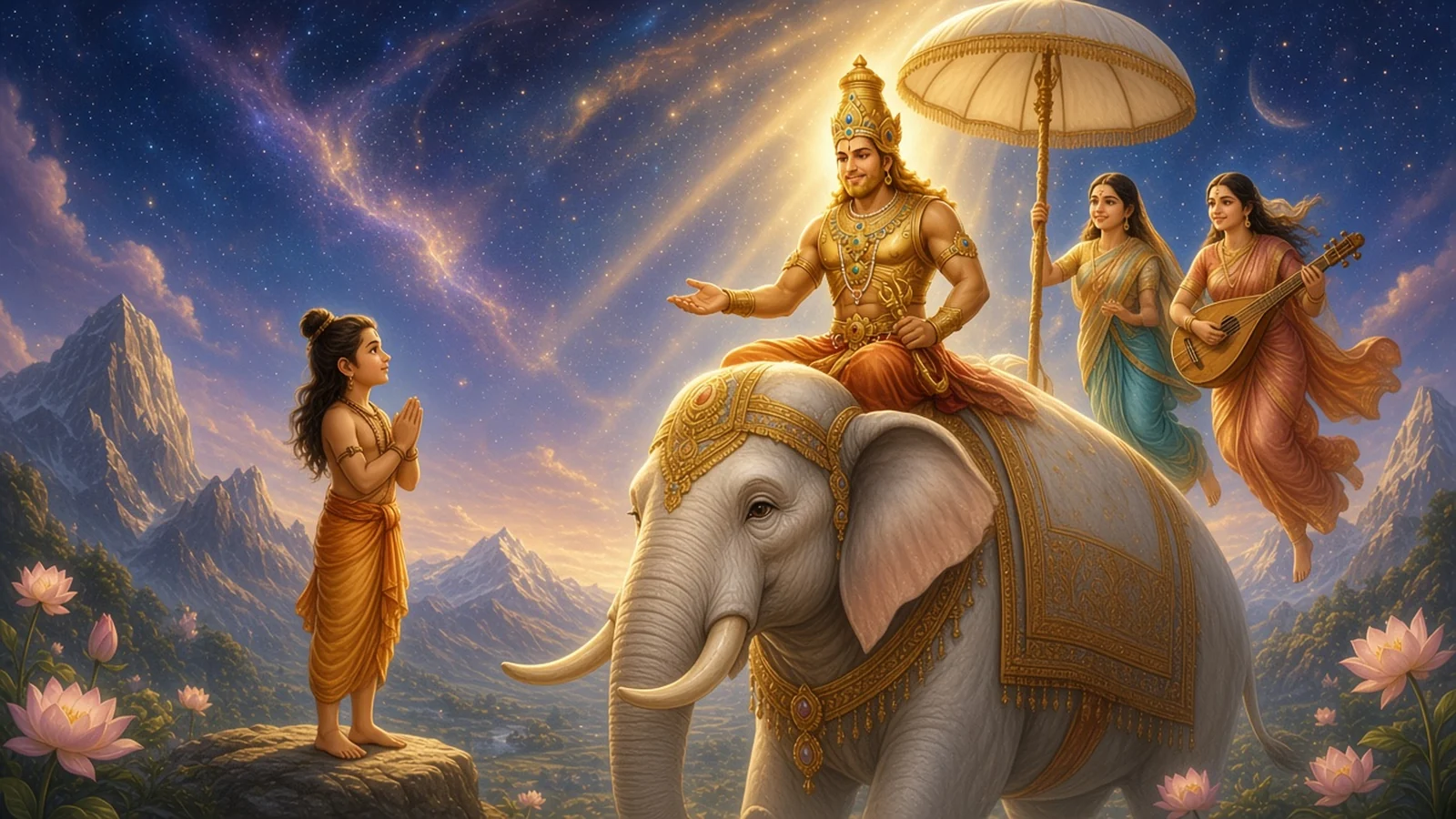
Then one day there was a sound of music, and Indra rode into the clearing on a white elephant with four tusks, a white umbrella over his head, the Apsaras around him and the Gandharvas singing.
"I am pleased with you," said the king of the gods. "Ask for any boon."
"I want no boon from you," said the boy, "or from any god but Mahadeva."
"You would turn down the king of heaven?"
"Look at the world," the boy said. "Brahma's sign is the lotus, Vishnu's the discus, yours the thunderbolt. No creature is born carrying any of those. But every creature is born carrying the sign of Shiva or the sign of Uma. Everything male is his, everything female is hers. The whole world is the two of them. I will take boons from Mahadeva, or curses from Mahadeva, and from no one else."
Then his heart sank, because after all those years the god had still not come.
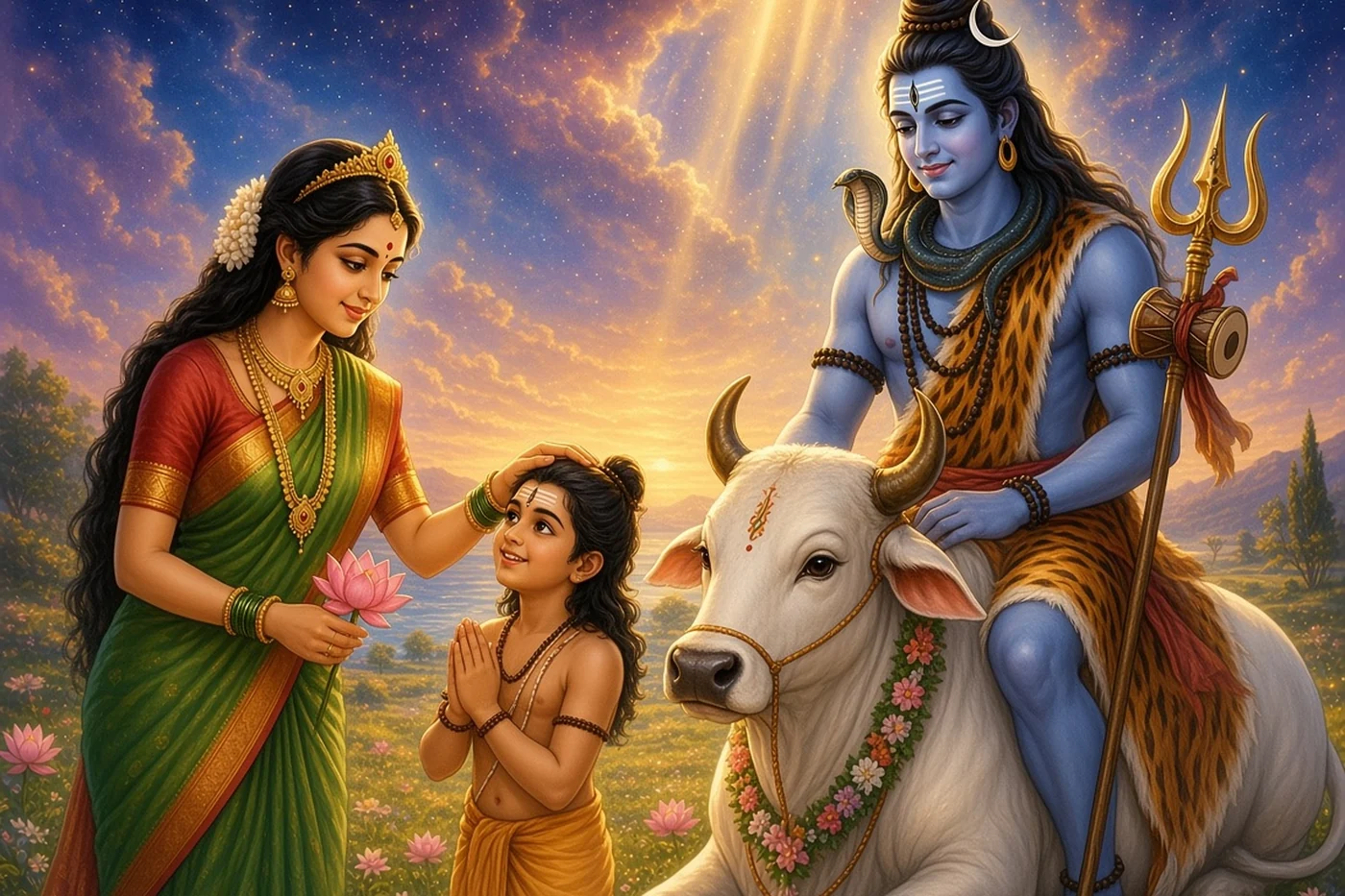
And as he looked, the elephant was no longer an elephant. It was a bull as white as a swan, its horns golden, and on its back sat Mahadeva, with Uma beside him.
The light was so great that for a while he saw nothing at all. When he could see again, the gods were gathered round, Brahma on his swan, Vishnu on Garuda, Skanda near the goddess, Nandi in front with his trident, and the boy began to praise. Among the hundreds of names he sang, he saluted the god whose body was half male and half female, both man and woman at once.
"Let my love for you never change," he asked, "and let me and my people always have food made with milk."
"Wherever you want the ocean of milk," said Shiva, "it will be there."
As the Shiva Purana tells it
Vayaviya Samhita, part 1, chapters 34 and 35 · the Himalaya · 2 min read
In the Shiva Purana the trouble starts at an uncle's house, where Upamanyu's cousin drank all the milk he liked and Upamanyu was given only a taste. At home he asked for hot cow's milk, and his mother ground a handful of gleaned grain into a paste with water.
"Mother, this is no milk."
She told him nothing comes without Shiva. He told her not to grieve: if there was a Shiva anywhere, he would have an ocean of milk. Glad, she gave him the five syllables, Namah Shivaya, and a little sacred ash she had kept from his father.
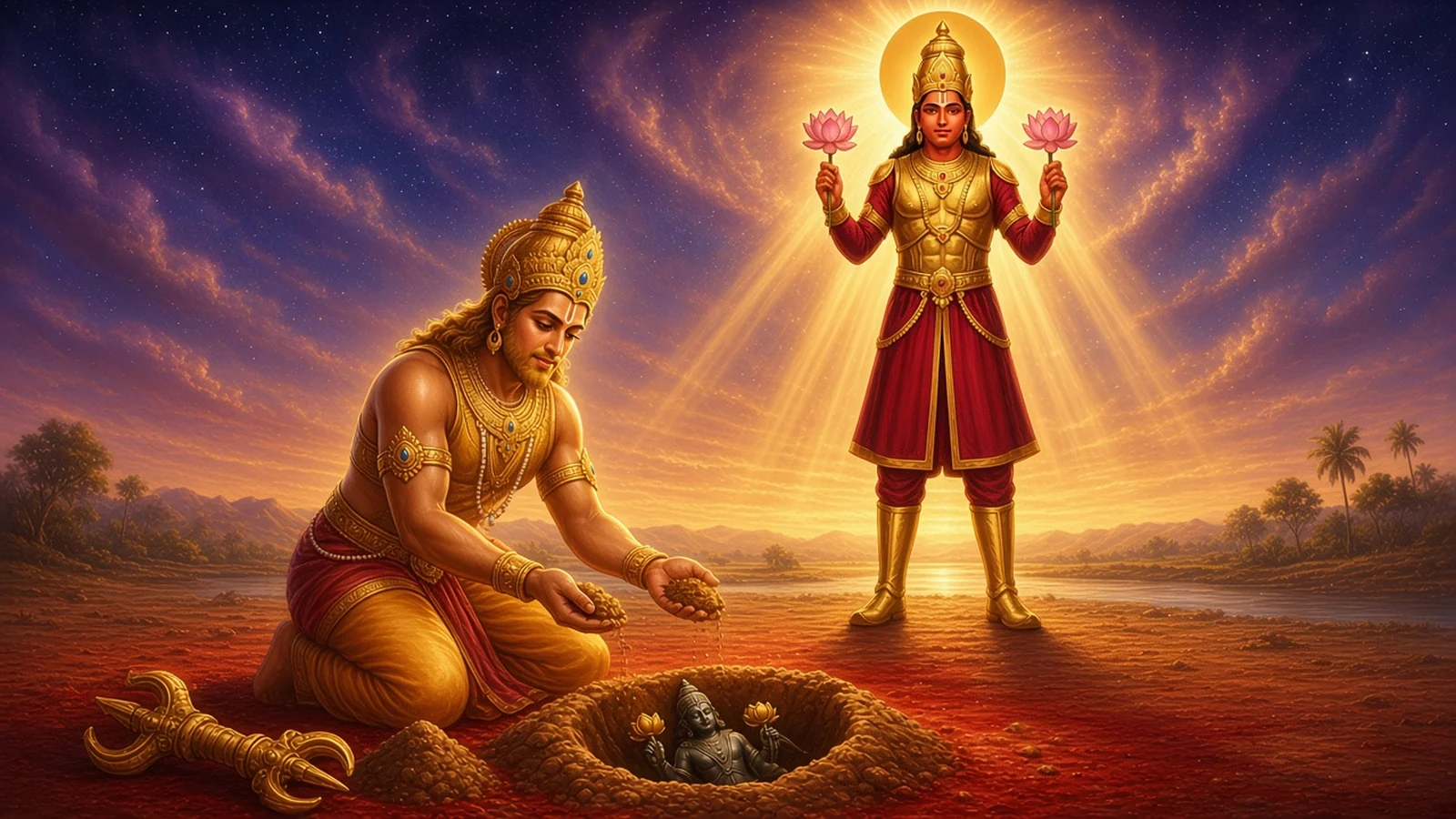
On the mountain he built an altar of eight bricks and a linga of clay, and lived on air. Ghosts of cursed sages came to frighten him; he cried out the five syllables, and they stayed to serve him. His penance grew so hot that the worlds began to burn, and the gods ran to Vishnu, and Vishnu went to Shiva.
"I will stop the boy," said Shiva.
He came as Indra on the white elephant, with the goddess beside him as Indra's queen.
"Worship me," said this Indra. "Leave Rudra. What has he ever been but a ghost the other gods keep away from?"
Upamanyu had heard enough. He told the god he did not know Rudra at all, then charged a pinch of ash with the fiercest mantra he knew, aimed it at the god who had spoken against Shiva, and got ready to burn his own body after it. Nandi caught the missile in the air. Indra was gone, and Shiva sat on the bull with the goddess, and round them lay oceans of milk and curds and honey and mountains of sweets.
"I was testing you," said Shiva. Then he put the boy in the goddess's hands. "This is your son."
She laid her hand on his head as she would on Skanda's, and the ocean of milk came walking up in a body of its own and gave the child its milk.