Devalok ← All gods
Also calledArdhanariArdhanareeswararAmmaiyappanHaragauriGaurishvaraNaranarithe Lord Who Is Half Woman

In short

Who is Ardhanarishvara?
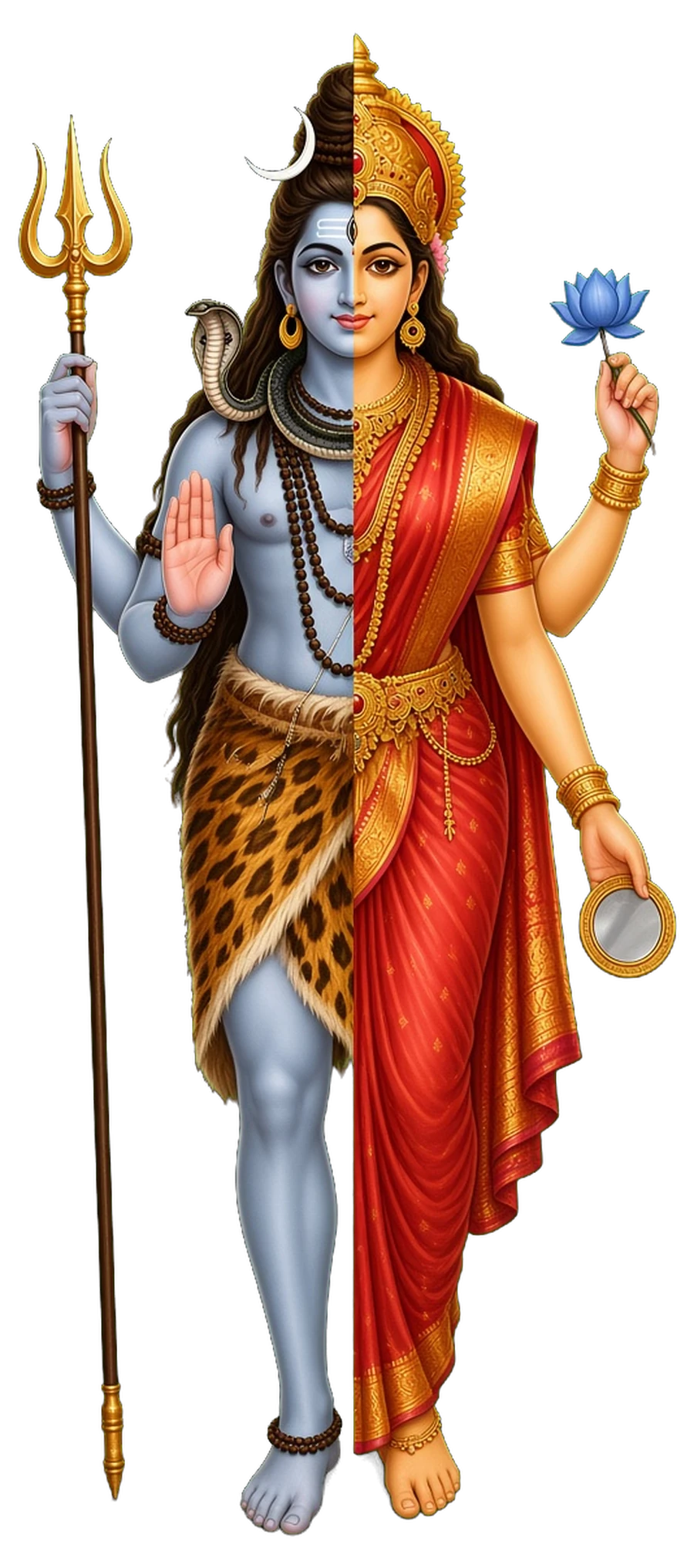
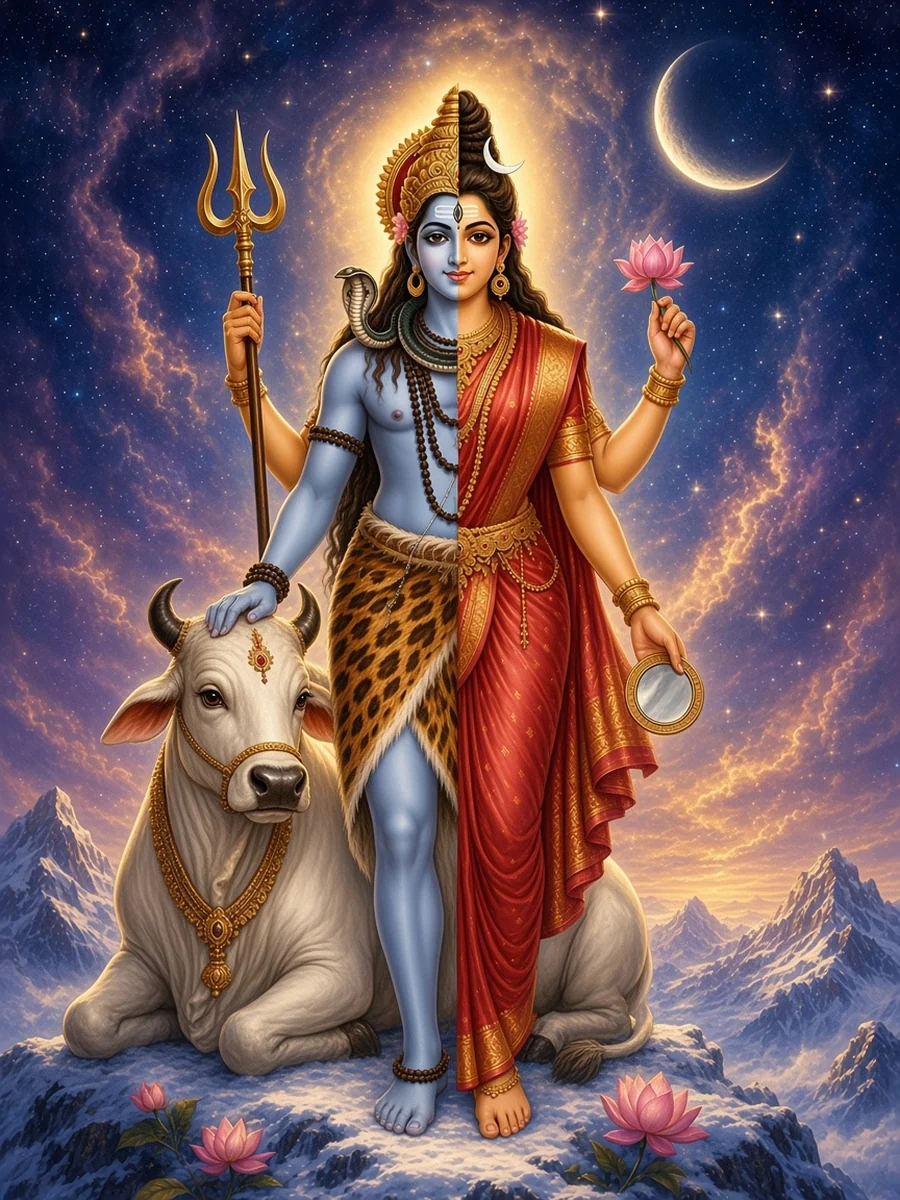
Shiva as the lord who is half woman. The right half of the body is Shiva and the left half is Parvati, one figure split down the middle.
Why is Shiva shown as half woman?
The tellings give many reasons. Brahma's creatures could not multiply until the female kind came out of Shiva's body; Parvati won her place in it by penance; in the Vishnu Purana Rudra is simply born that way, out of Brahma's anger.
Which half is Parvati?
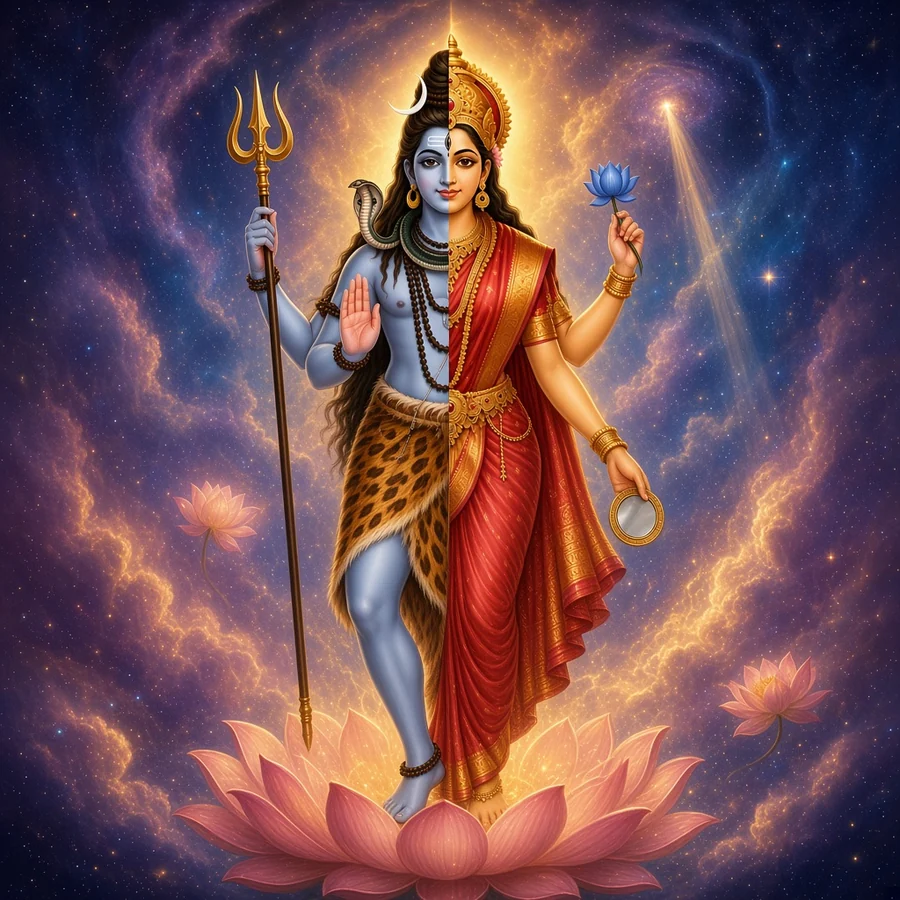
Almost always the left. The right side has Shiva's matted hair, the crescent and the trident; the left has a woman's crown, an earring, kohl on the eye and a mirror or a blue lotus.
Where is Ardhanarishvara worshipped?
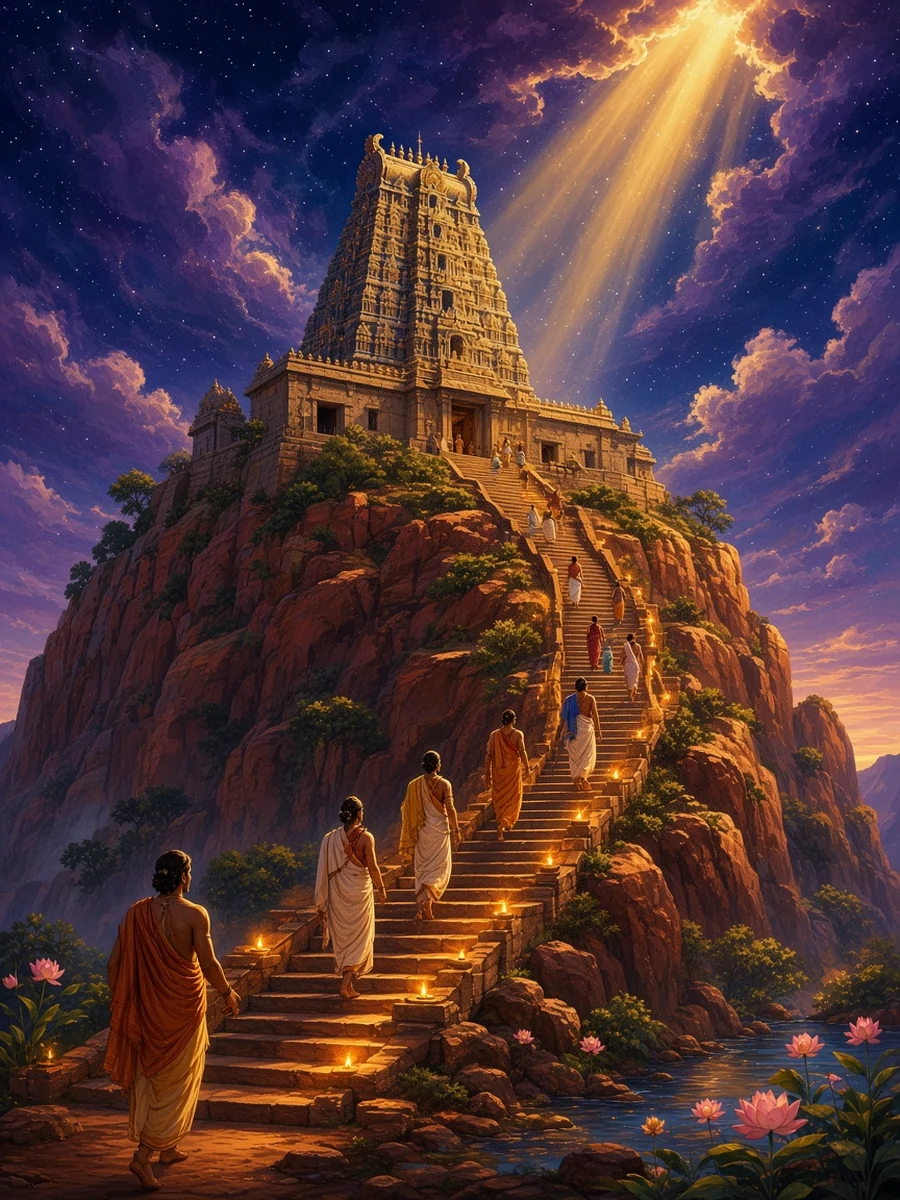
The form is carved in Shiva temples all over India, but very few temples are built for it. The best known is the hill temple at Tiruchengode in Tamil Nadu.

Artwork ›

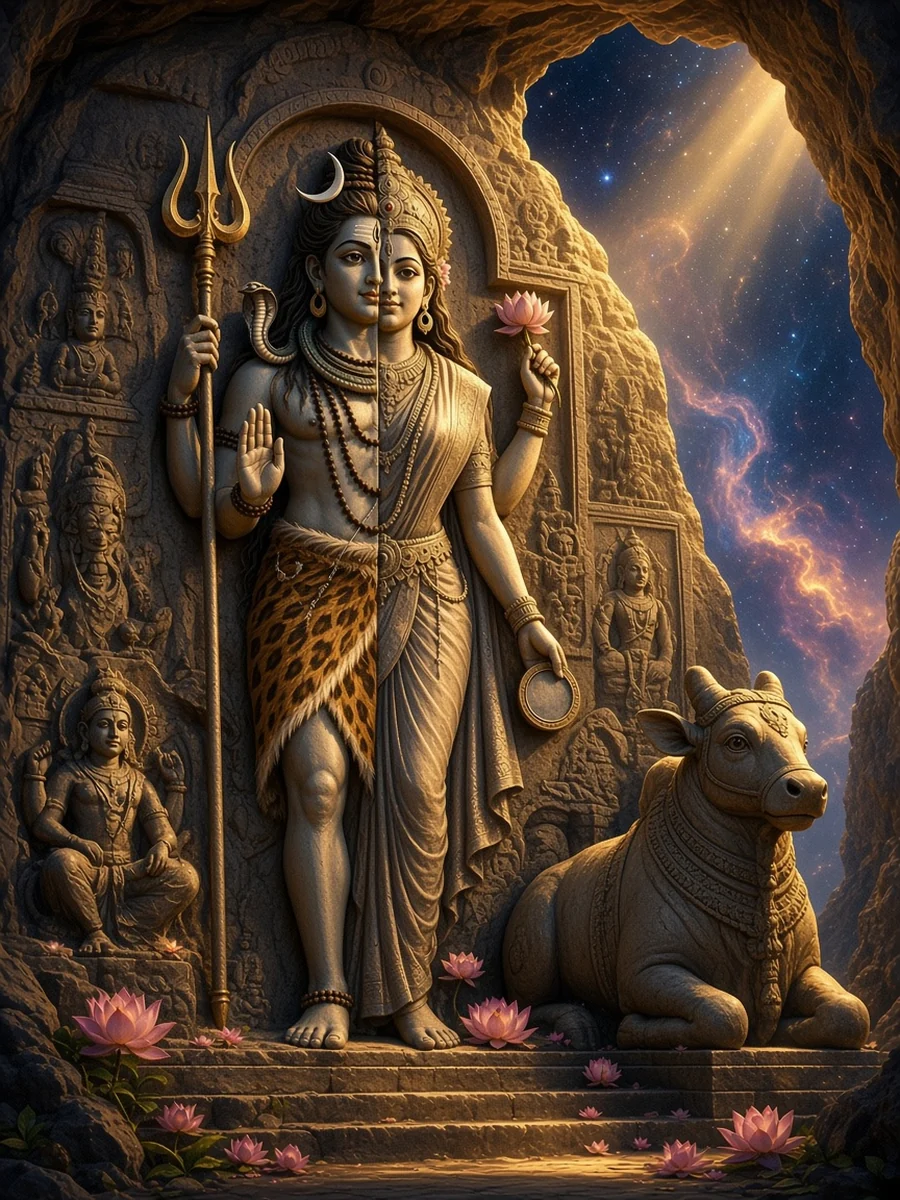
Half Shiva, half Parvati, on Kailash The great carving in the Elephanta caves

For kids

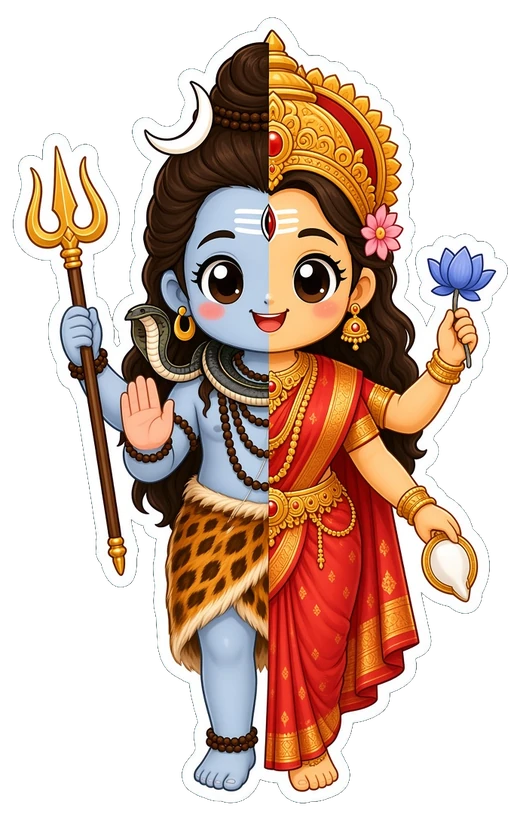
Better together
Better together
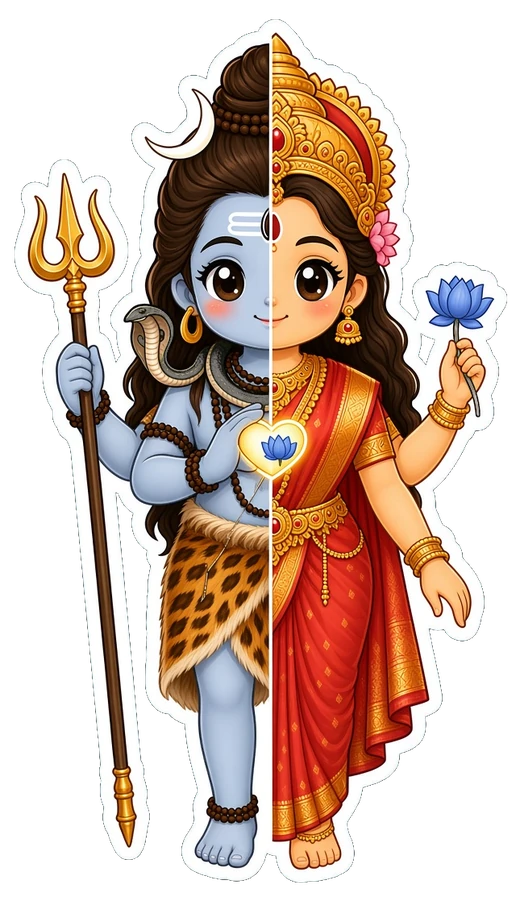
Two halves, one heart

At a glance

TraditionShaiva and Shakta
FormOne standing figure split down the middle, Shiva on the right and Parvati on the left, often leaning gently in three bends
Right halfMatted hair piled high with the crescent moon, half a third eye, a serpent earring, the sacred thread, a trident, an axe or a rosary

Who Ardhanarishvara is

Ardhanarishvara is Shiva seen as two in one body: the god on the right side and the goddess on the left, a single figure drawn down the middle. The matted hair, the crescent and the trident are his; the woman's crown, the earring, the mirror and the curve of the hip are hers. Tamil devotees call the form Ammaiyappan, Mother and Father, and that is what it shows: the power that makes the world is not one parent but both.

The stories that explain it do not agree, and the Puranas keep several side by side. In one, Brahma's creatures would not multiply until Shiva showed him the goddess inside his own body, and she gave the world its women. In another, Rudra is born out of Brahma's frown already half woman and is told to divide himself. In the south, Parvati wins the left half of his body by penance, at Tiruchengode after a sage refused to walk round her, at Arunachala after she covered his eyes in play.

The Mahabharata has no story of how the form began, only the form itself. The sage Upamanyu, praising Shiva, hails the god whose body is half male and half female, and argues that every male creature carries Shiva's mark and every female one Uma's.

The poets say it more simply. Kalidasa opens his Raghuvamsha with a bow to the two of them:

Vagarthaviva samprktau vagarthapratipattaye, jagatah pitarau vande parvatiparameshvarau: To grasp both word and meaning, I bow to the parents of the world, Parvati and Parameshvara, who are joined as a word is joined to its meaning (Kalidasa, Raghuvamsha 1.1).

The form is old in stone, older than most of its stories. A carving from Mathura in the first century already shows it, and by the Gupta age it had its settled look. Images stand in almost every Shiva temple, but temples built for Ardhanarishvara alone are few; the hill shrine at Tiruchengode is the best known.

Stories on this site: The Water That Was Not Milk, A Son Named for Both and Born of a Frown, then Half of Him, where Brahma and the sage Bhringi each learn what the left half means. Parvati's penance for her half is in The Hill of Fire, and the lamp on that hill in The Lamp on the Hill.
Before the Puranas

The Vedic roots of Ardhanarishvara

The Vedas do not know Ardhanarishvara. The Rigveda's Rudra is a fierce archer and the father of the Maruts, a god of storm and healing, and no hymn gives him a wife inside his body or a woman's half. The form belongs to the epic and the Puranas, and to the sculptors, who seem to have carved it before anyone wrote down a story to explain it.

Scholars point to two passages in the Upanishads as its seed, and the reading is theirs, not the texts'. The Brihadaranyaka Upanishad (1.4.3) tells of the Self alone at the beginning, finding no delight in being alone: it was as large as a man and a woman together, and it made itself fall in two, and so there were husband and wife. Each, says the sage Yajnavalkya there, is like half a shell. The Shvetashvatara Upanishad, which calls the one god Rudra, says to him, "Thou art woman, thou art man; thou art youth, thou art maiden" (4.3). Neither passage describes a body split down the middle, and neither names Shiva's wife.

The Mahabharata has the form without its myth. In the Anushasana Parva the sage Upamanyu hails the god whose body is half male and half female, and its translator K. M. Ganguli notes that this form is known as Haragauri. The same hymn makes the theology plain: every male creature bears Shiva's mark and every female one Uma's, so the whole world is the two of them.

The Puranas then tell how it came to be, more than once. The Vishnu and Kurma Puranas have Rudra born half woman from Brahma, out of his anger or his penance, and told to divide himself; the Shiva Purana has Shiva appear as Ardhanarishvara to the creator and the goddess give him the female kind; the Kurma calls her the one who shares half of Shankara's body. The temple traditions of the Tamil country add Parvati's own penance and the sage Bhringi, and the poet Kalidasa, in the Gupta age, turns the form into the image of a word and its meaning.

See how the Vedic gods became the Puranic ones →

Related gods