As a Kathmandu valley house keeps it: the grandmother's reasons
Nepal, the five days of Tihar · 3 min read
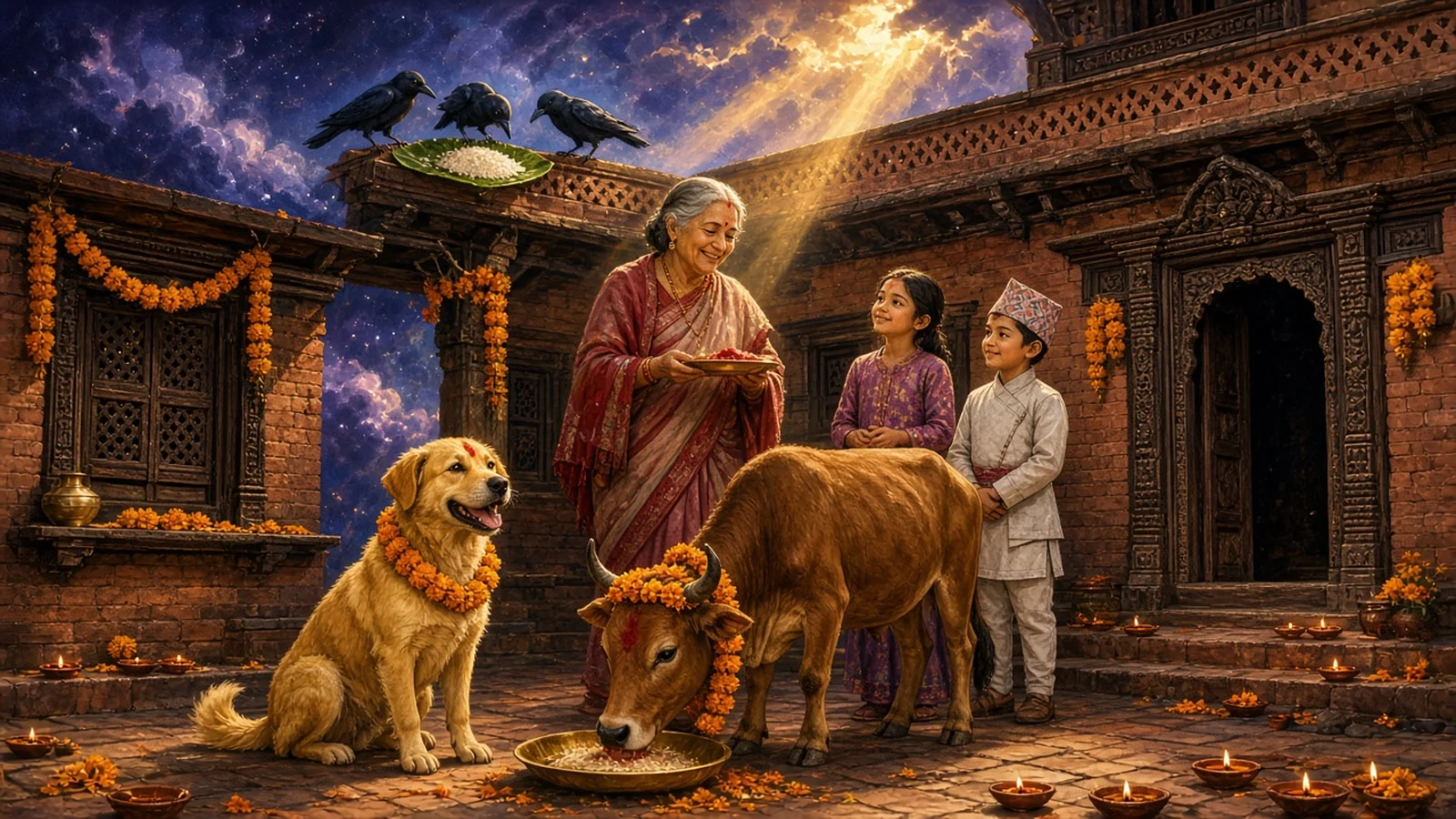
On the morning of the thirteenth, before anyone had eaten, Anju's grandmother sent her up to the roof with a leaf plate of rice, curd and a spoonful of curry.
"Put it on the parapet and come down. Do not stand there watching, or they will not come."
"Who will not come?"
"The crows. Today is their day."
Anju came down and watched from the window instead. Two crows landed, then five. Her grandmother nodded as if a letter had arrived.
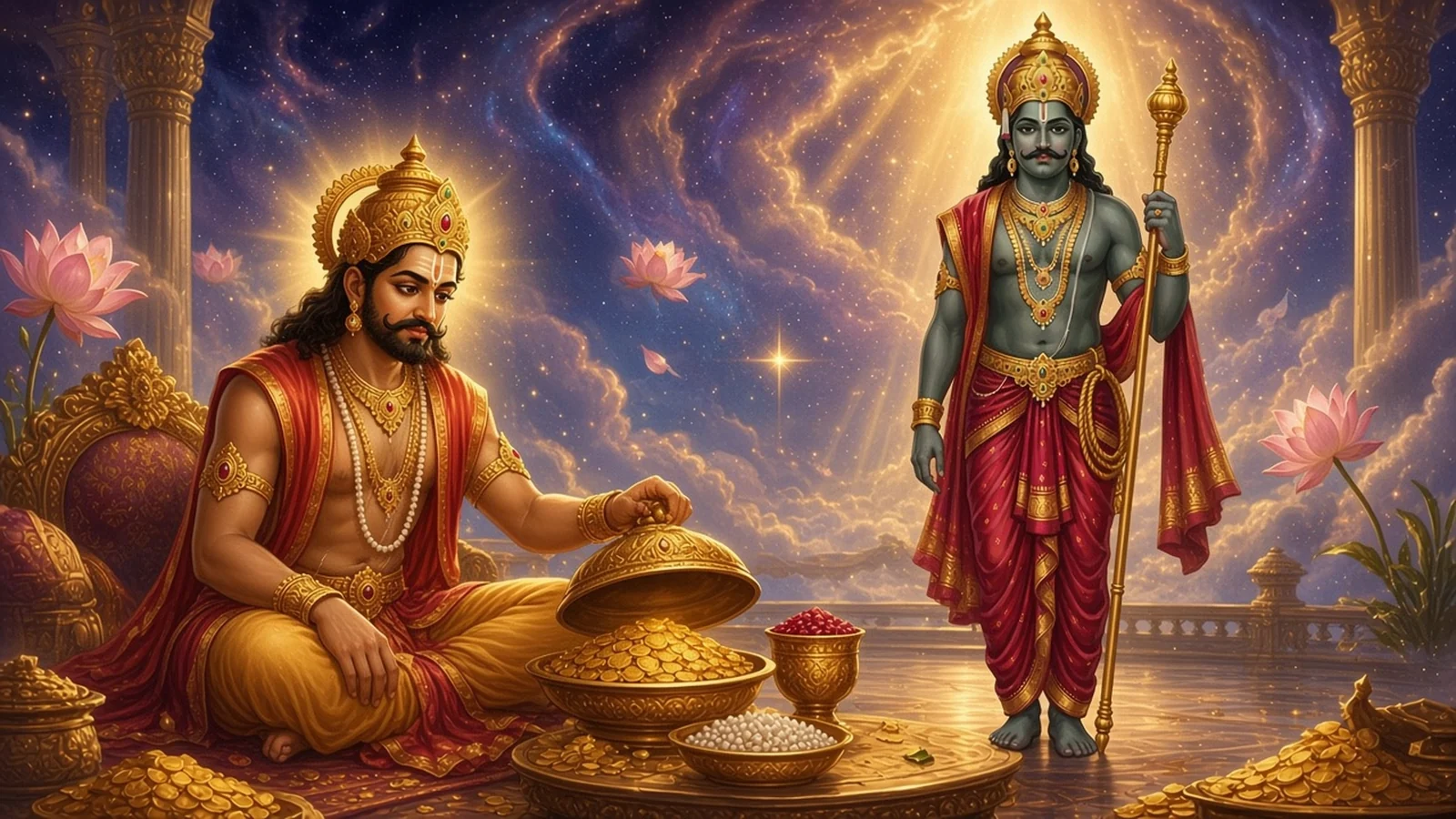
"The crow is Yama's messenger," she said. "Yama is the king of the dead, and he cannot see everything himself, so the crows fly about and tell him what people are doing. When a crow calls from the roof it has news. Feed it well today and the news it carries about this house will be good news."
"And if we do not feed it?"
"Then it carries what it likes." A crow called from the parapet, and the old woman called back the words everyone in the valley says to a crow: speak well, speak well.
The next day the house dog, a yellow mongrel called Kale who slept under the stairs, was washed, which he hated, garlanded with marigolds, which he put up with, and given a red tika between the eyes and a plate of sel roti and meat, which made up for the rest.
"Why the dog?" asked Anju's small brother.
"Because the dog is Yama's too," said the grandmother. "At the gate of his kingdom two dogs keep watch. The old books give them four eyes each, and nothing gets past them. A dog that is honoured today will remember us on the road when we come to it, and walk beside us. Kale guards this door. Those two guard the other one." She added that Bhairava of the Durbar Square rides on a dog, and that kicking a dog on Kukur Tihar is a sin.
That evening was also the night of lamps, because this year the two days fell together. Before dusk Anju washed the path from the street door to the puja room, and her grandmother walked backwards along it with rice flour and vermilion, printing small feet on the floor, all pointing inward.
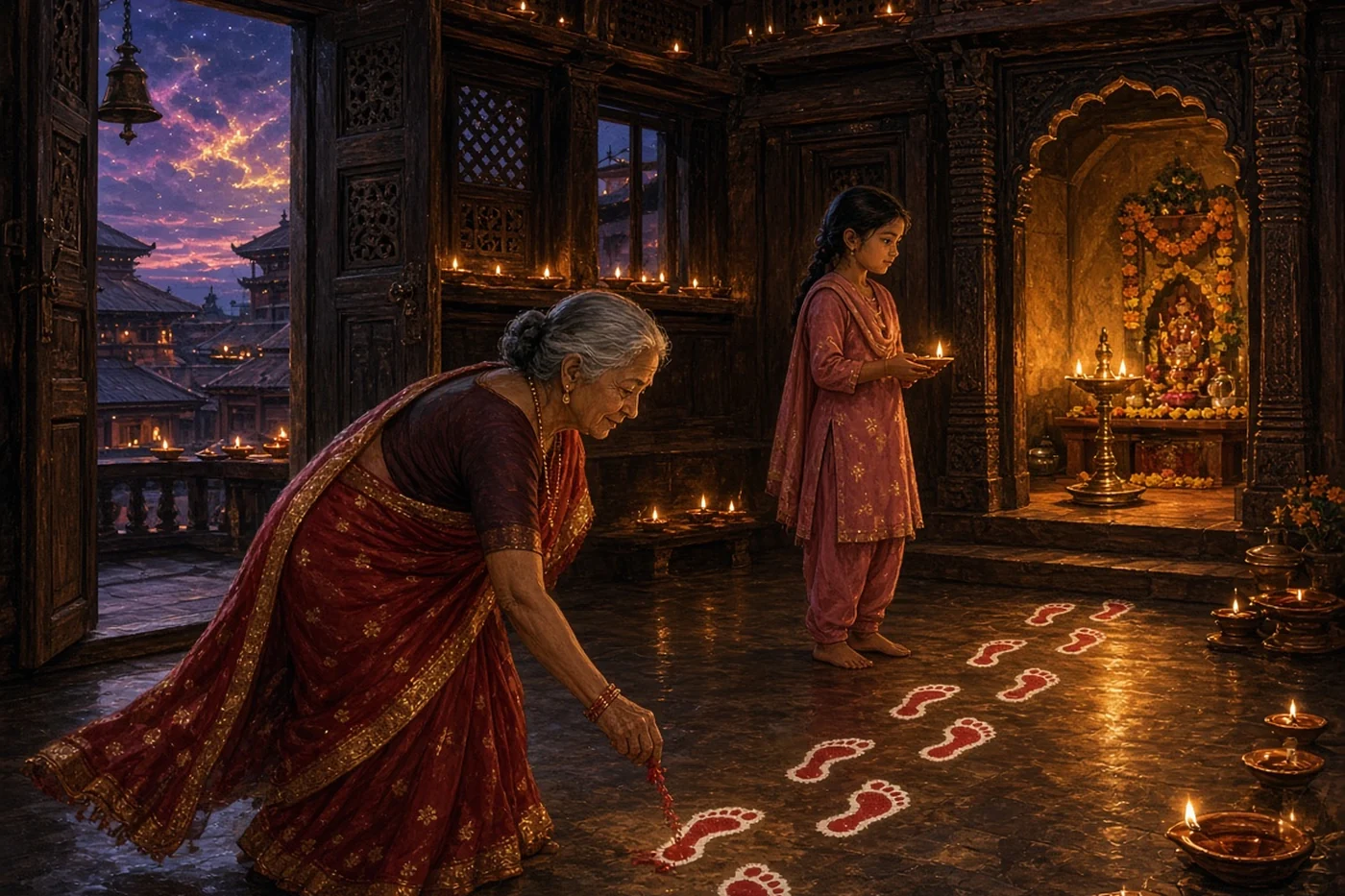
"Whose feet?"
"Lakshmi's. She comes tonight, and she comes to the house where she can see the way. Light every window. A dark house she walks past."
Later the girls of the lane sang Bhailo at the door, took their rice, coins and sel roti, and left a blessing on the house.
The cow came the morning after, led in from the shed, had her forehead marked and her horns garlanded, and ate the best of the breakfast.
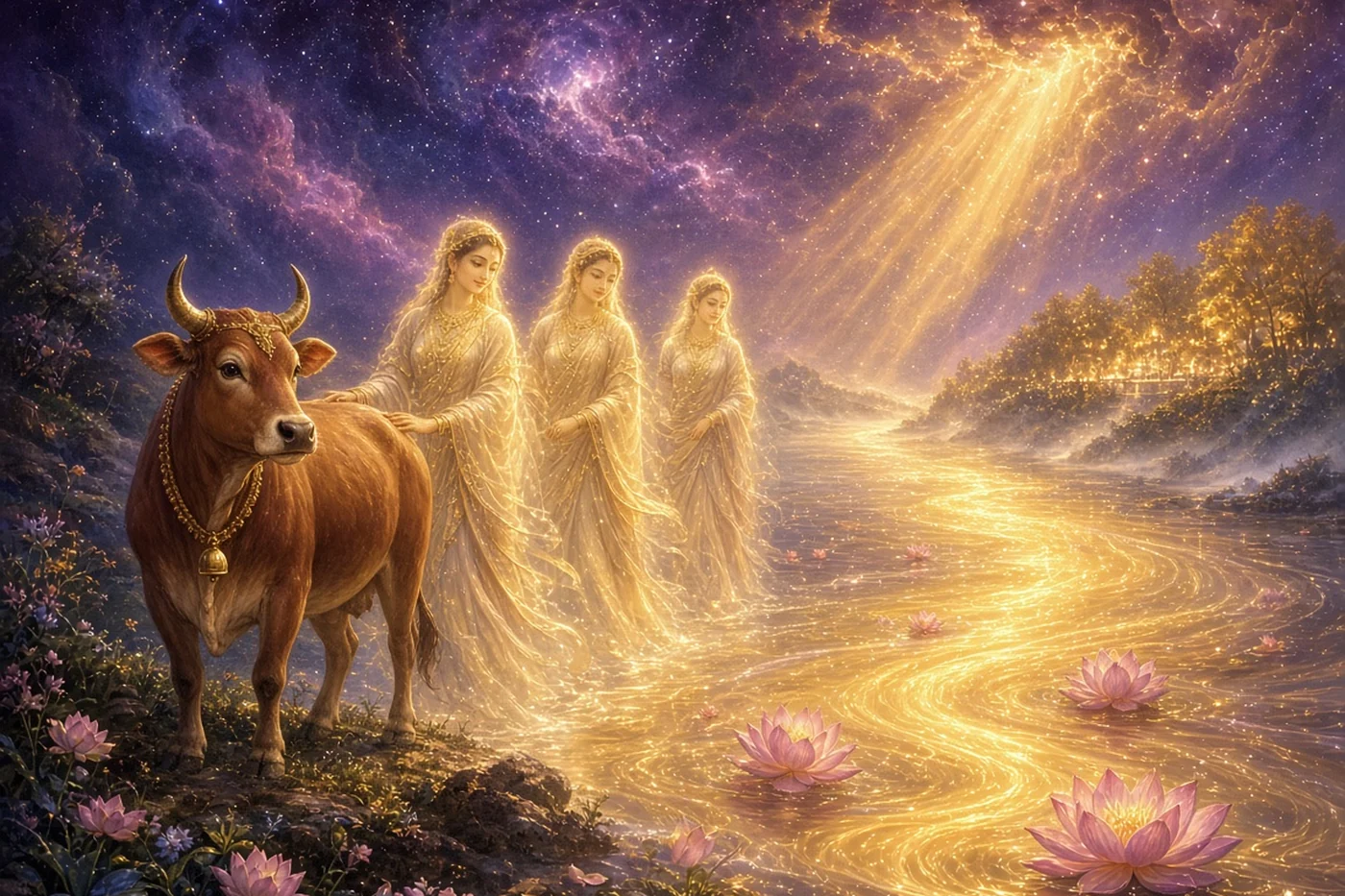
"The cow is Lakshmi herself," the grandmother said. "That is the first reason. The second is for later. When a person dies there is a river to cross on Yama's road, and the one who leads him over is a cow. So we are polite to her now."
On the fourth day it was the ox's turn, and a hill of cow dung with marigolds in it stood in the courtyard for Govardhan. Across the lane the Newar neighbours' door was open, and Anju could see a row of mandalas on the floor, one for each person in the family, and two more at the end.
"Those two are for Yama's messengers," said the grandmother. "They worship themselves tonight, and they do not forget who is listening."
"Hajurama, why is everything Yama's this week?"
The old woman sat down.
"Because these five days are his holiday. Long ago his sister asked him to her house, and he stayed five days and was so happy there that he made her a promise. Those who tell it say that in these five days nobody who dies goes in at his gate. Some say nobody dies at all. So we feed his crow and his dog and his cow, and light his lamp at the door. Tomorrow, when I put the tika on your brother, I will tell you what the sister did. That is a story of its own."
As the old texts have it: four-eyed dogs, a river and a cow
Rigveda 10.14, Skanda Purana and Garuda Purana · 2 min read
The oldest of Yama's animals are the dogs. The Rigveda's hymn to Yama, the fourteenth of the tenth book, speaks to a man who has just died. Yama, it says, was the first to find the way to the other world, and the fathers who went after him sit there feasting with him. The dead man is told to hurry past two dogs, the offspring of Sarama, brindled and four-eyed, and go on to the fathers.
Then the living turn to Yama and ask him to put the man in the keeping of those same two dogs, the watchers who look on men and guard the pathway. The last verse about them says they roam among the people as Yama's envoys, dark, never satisfied, with wide nostrils, and asks them to let the singers see the sun a while longer.
The hymn gives the dogs no names. Later books call them Shyama and Shabala, the dark one and the spotted one, and the Skanda Purana knows which night is theirs. In its chapter on the month of Karttika, the fourteenth of the dark fortnight, the day Nepal keeps as Kukur Tihar, is the night a bather still in wet clothes offers a lamp to the two dog brothers, the sons of Death, Yama's attendants. Scholars have read the pair as the sun and the moon, or set them beside Kerberos, the hound at the Greek door of the dead; Macdonell notes that the comparison is disputed.
The crow is a different case. No Vedic hymn makes him Yama's messenger. He belongs to the rites for the dead in another way: when a family feeds its ancestors, a share of the rice is set out for the crows, the kaka bali, and a crow that comes down to it is taken as a sign that the ancestors have eaten. On the Garuda Purana's road to Yama's city there are crows too, with beaks of iron, pecking at those the messengers drag along, and savage dogs beside the lions and tigers. The gentler crow of Nepal, who can be won with curd into carrying good news, is the valley's own.
The cow at the river is the Garuda Purana's. In its second chapter the dead come to the Vaitarani, a hundred leagues of blood and pus with crocodiles and leeches in it and bones heaped on its banks. Boatmen appear, but the boat comes only for the one who gave a cow.
The eighth chapter describes the gift. A dying man has a black or reddish cow brought, her horns tipped with gold and a bell at her neck; he takes hold of her tail, puts one foot in a little raft of sugarcane, and greets the river by name. Then, the text promises, the river does not appear on his road at all. The Newars put it more simply: the cow is honoured on the third day because she guides the dead to the land of the dead.