As a Bengal house keeps it: choddo prodip
Bengal · the dusk before Kali Puja · 3 min read
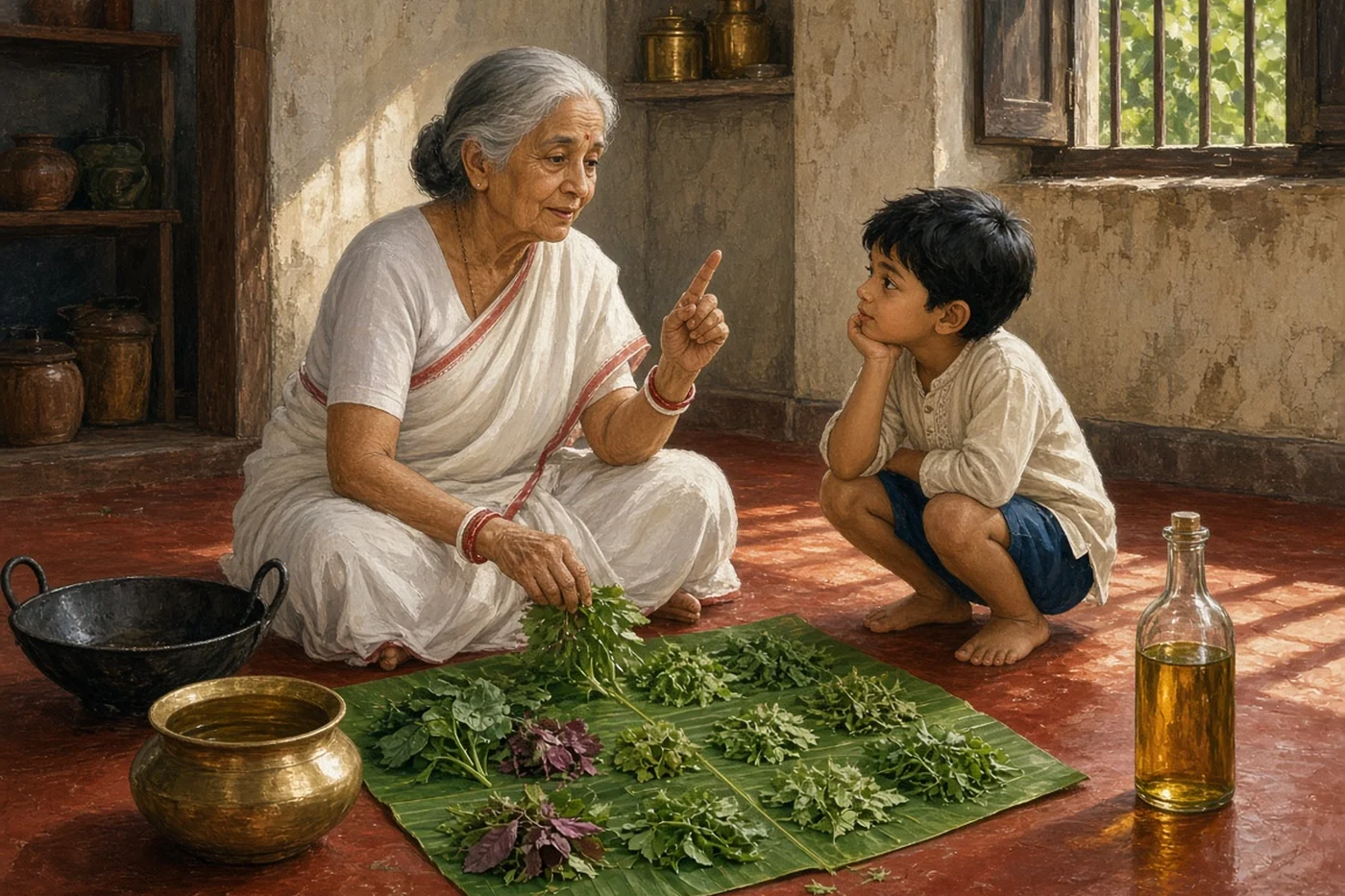
The greens came home from the market in one wet bundle, fourteen kinds tied with a strip of banana fibre, and Thamma untied them on the kitchen floor and counted them out loud, as she did every year, so that the children would learn the names. Pui and palong and note. Mulo leaves, hinche, shushni, kalkasunde. Neem, which nobody wanted. She lost count at eleven and began again.
"Why fourteen?" asked Tuku, who was eight and asked everything.
"Because it is the fourteenth," said Thamma. "Wash them."
The water they were washed in was not thrown away. Thamma carried the bowl through the house and flicked it with her fingers into the corners of every room, behind the almirah, under the stairs, at the back of the store room where the light never reached. Then the greens went into the mustard oil with a little nigella and a dried chilli, and at midday the family ate them with rice, bitter and green and tasting of iron, before anything else was served.
"Eat all of it," Thamma told Tuku. "Nothing that walks tonight can get into a body that has choddo shaak in it."
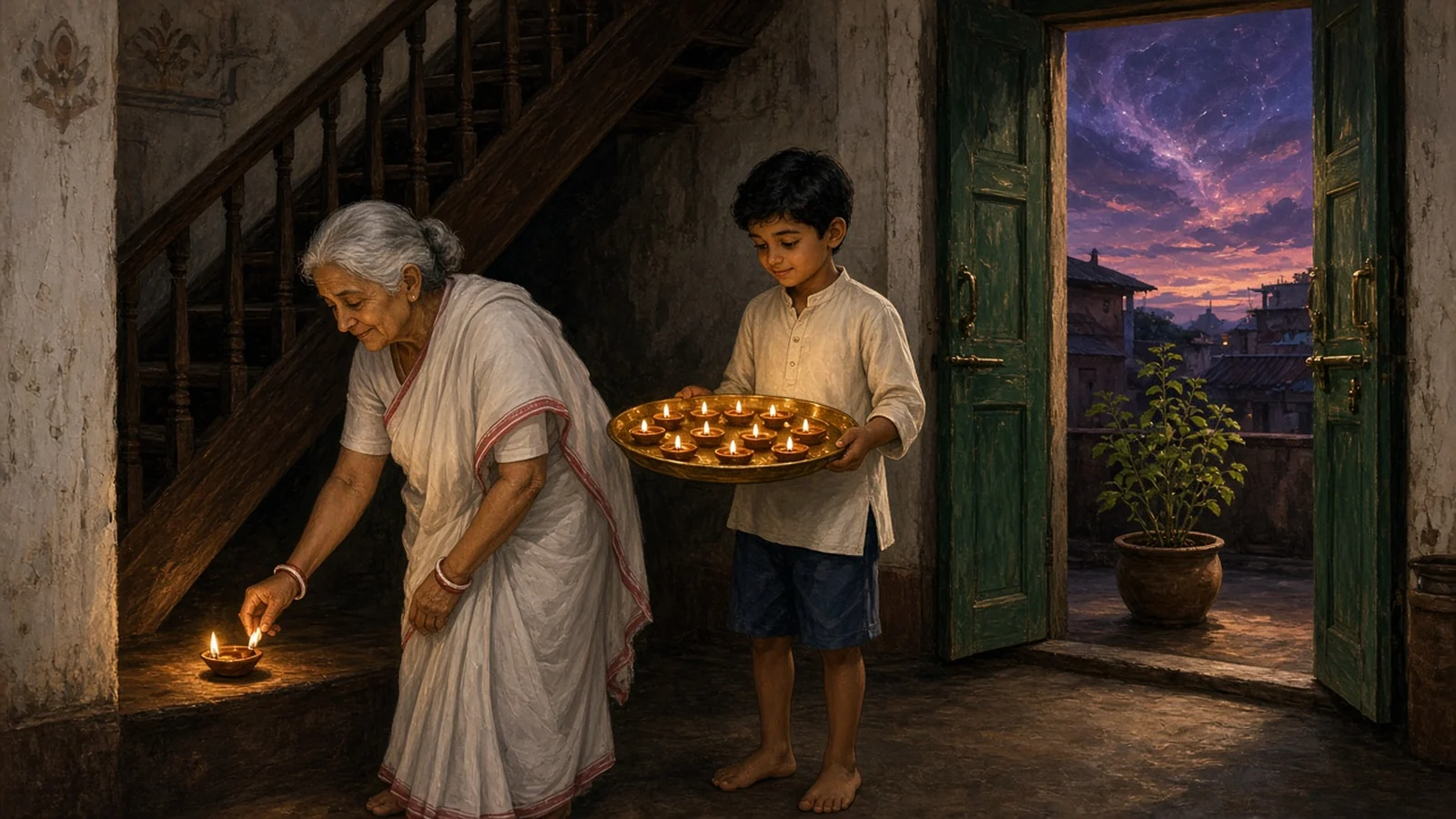
The lamps were counted out in the afternoon. Fourteen small clay saucers, fourteen cotton wicks rolled on the thigh, a bottle of mustard oil. When the light began to go Thamma filled them, and Tuku carried the tray behind her, and they went round the house together setting them down: one at the street door, one at the back door, one on the stair, one under the tulsi, one in each of the dark corners she had sprinkled at noon. The last went on the ledge of the puja room, for Yama, she said, so that nobody in this house would see his country before their time.
"Who are they for?" Tuku asked, when all fourteen were burning and the house looked like a different house.
Thamma sat down on the step. "Your father," she said, "and his father, who was my husband, whom you never saw. And his father, who built this house. And his father, who came from the other side of the river. Count back like that fourteen times, fourteen fathers and fourteen mothers, and you have the people this house belongs to. Tonight they come home. Tomorrow night is Ma Kali's night and the whole town will be awake, but tonight is theirs, and the lamps are so that they can find the door."
"Do they come in?"
"They come and look at us and go. That is all they want."
"And the dark corners?"
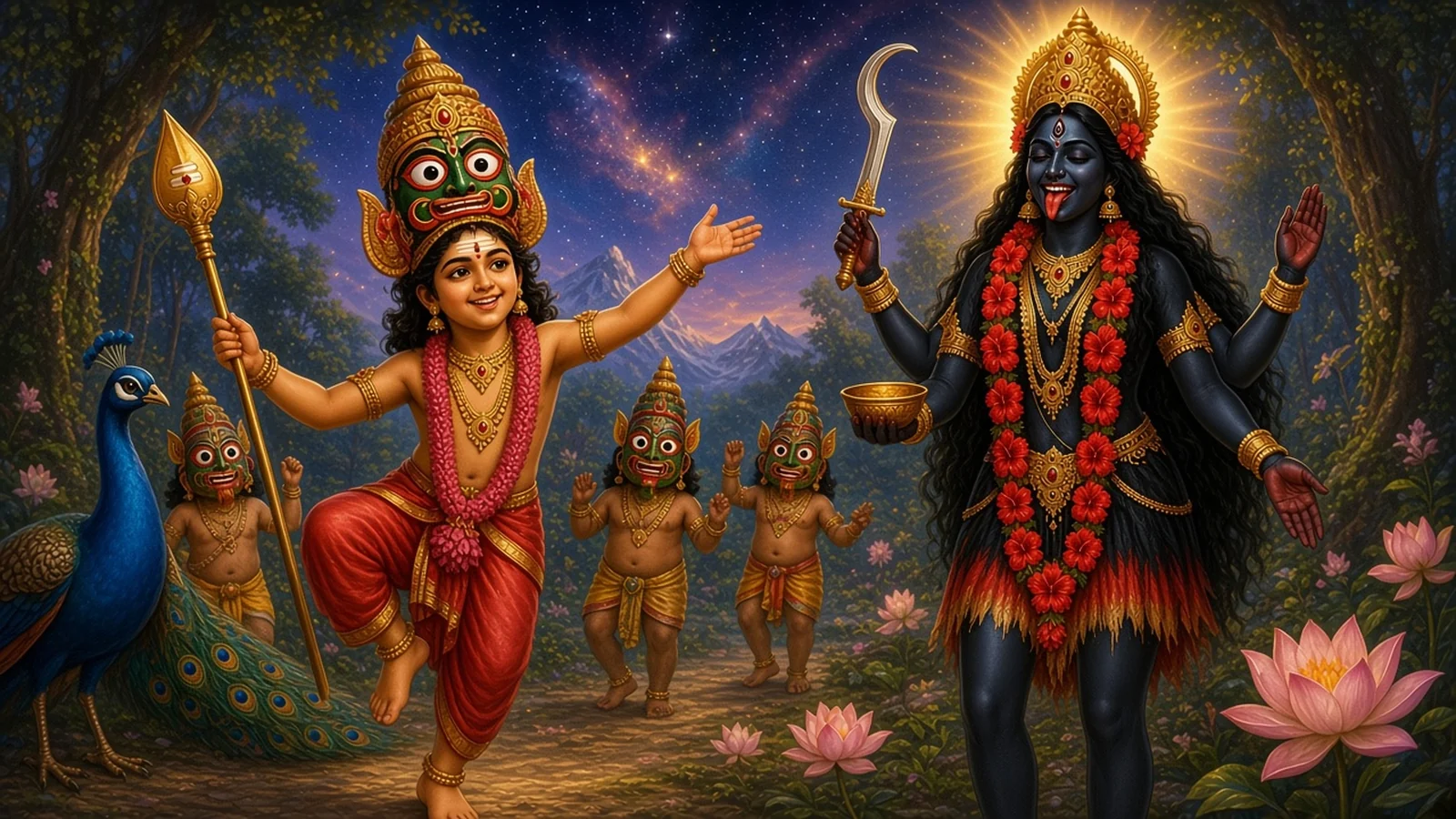
"Ah." Thamma lowered her voice, which was what Tuku had been waiting for. "When the dead come home they do not come alone. All sorts of things walk on this night, the night before the new moon, the darkest of the year. A lamp in every corner leaves them nowhere to sit. And there is a story that Ma Chamunda herself goes round the houses tonight with fourteen companions, the kind of companions you would not want to meet, and chases out whatever has crept in. So you will stay inside after dark, and you will not answer if you hear your name called from the lane."
"Why not?"
"Because it will not be me calling."
Tuku looked at the lamp under the stairs for a long time. "Is the fish ghost real?" he asked at last. "The one that steals the hilsa off your plate?"
"Ask your grandfather," said Thamma. "He is here tonight. He would know."
Later, when the neighbours' lamps were all lit too and the lane was a row of small fires, Tuku's father came home from the office and stood at the door before he came in, as he did every year, and looked at the fourteen flames one by one. Somewhere in the next lane a dhak was being tried out for tomorrow's pandal. The conch blew from the house across the lane. Thamma put the pot of greens away for the morning.
"Fourteen," said Tuku's father, and came in.
As Gujarat tells it: Kali Chaudas
Gujarat · Ahmedabad and the villages · 2 min read
The almanac had been clear about it. The fourteenth of the dark half would hold at midnight on Saturday, and so Saturday night was Kali Chaudas, whatever the rest of the country did on Sunday morning. Dadaji had read it out at breakfast, and by sunset the house was ready: the floor washed, a rangoli at the door, diyas along the step, and in the kitchen a heap of vada frying for a purpose that was not supper.
"Take the bottle," Dadaji told his grandson Jay, "and come."
The bottle was oil, and in Jay's other hand was a packet of sindoor and a coconut. They walked to the Hanuman temple through a town that was walking the same way. Inside, the orange god was already shining with the evening's offerings; Dadaji poured his oil over the feet, pressed a thumb of sindoor on the chest, set down the coconut, and took back a twist of paper with sesame and jaggery and poha in it, which Jay ate on the way home.
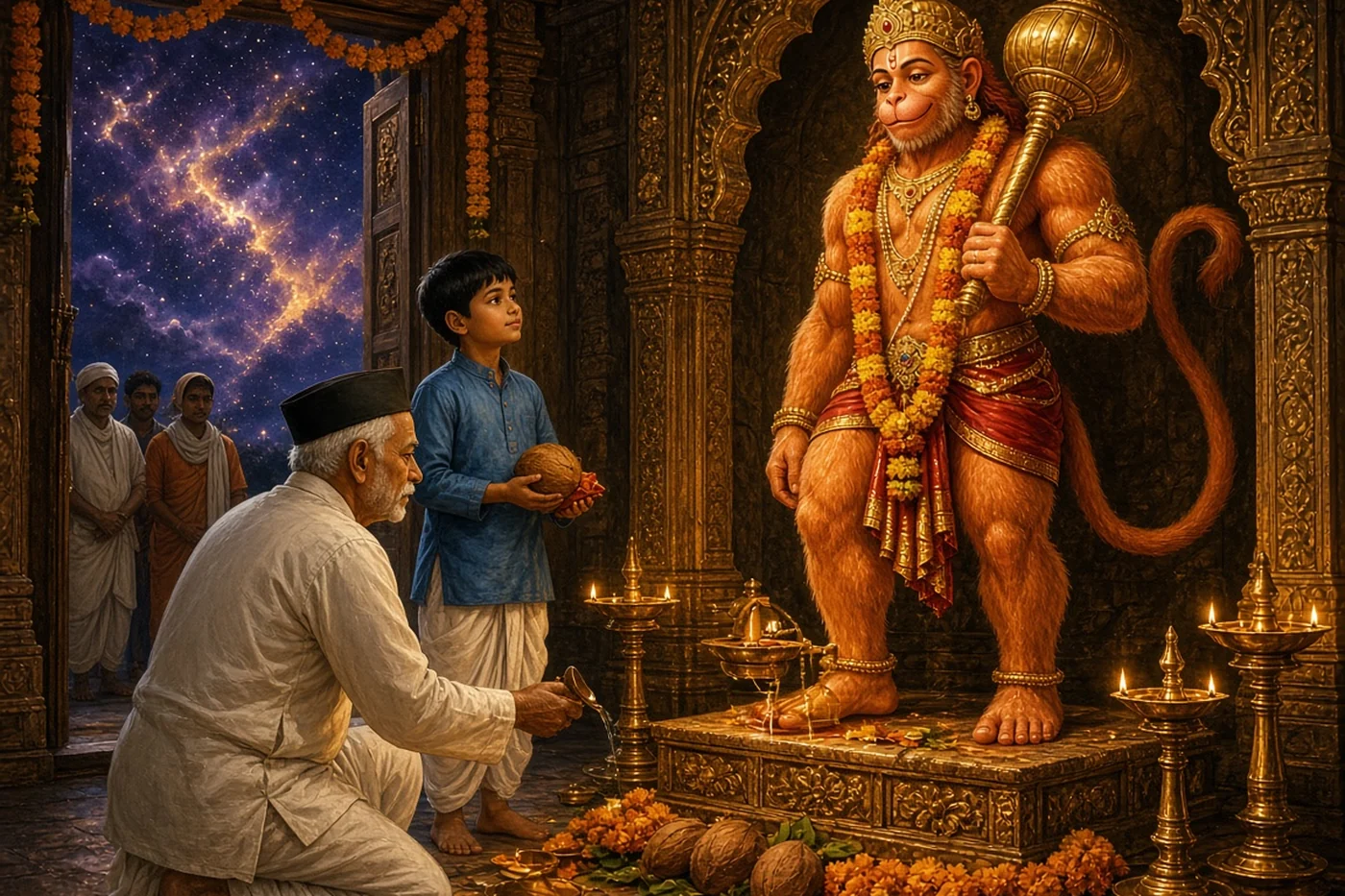
"Why Hanuman tonight?" Jay asked. "I thought tonight was Kali's."
"It is Kali's. It is also the night the bad things are strongest. The dead who are not at rest, the ones the tantriks go to the cremation ground to talk to, the Vetal and the rest. A night like that, you want the strongest friend you have standing at your door. That is Hanuman. Nothing that walks tonight will walk past him."
"And the vada?"
"You will see."
At home the women had lit a lamp of mustard oil before the picture of Mahakali, with red flowers and kumkum, and a line of kajal had been drawn on the goddess's forehead and then on everyone else's. Dadaji's daughter-in-law dipped her finger in the lamp-black and put a smear in the corner of Jay's eyes.
"Kali nazar," she said. "The evil eye. It will not find you now."
Near midnight, when the tithi was at its strongest, Dadaji took the plate of vada and went out to where the lane met the main road. He did not go to the cremation ground; that was for the tantriks, who would be there tonight calling on Bhairava and feeding the black dogs. He stood at the crossroads, said something under his breath, and set the plate down on the ground, and walked home without looking back.
"For whom?" Jay asked at the door.
"For whoever is hungry out there tonight, so that they eat that and leave us alone. Now go to sleep. Tomorrow is Diwali, and tonight is done."