As Secunderabad tells it
Telangana · from Ujjain to the Regimental Bazaar of Secunderabad, 1813 to 1815 · 3 min read
The letters from home came slowly that year, and each one was worse than the one before.
The battalion had marched north from Secunderabad, the camp the city called the Lashkar, the army, to be posted at Ujjain, weeks of road away. The soldiers went, and with them went the men who carried the officers' palanquins, the doli bearers. One of them was a man named Suriti Appaiah.
"Cholera," said the clerk who read the letter out to them under a tree. "In Hyderabad and in the camp both. They are dying in the bazaars faster than they can be carried out."
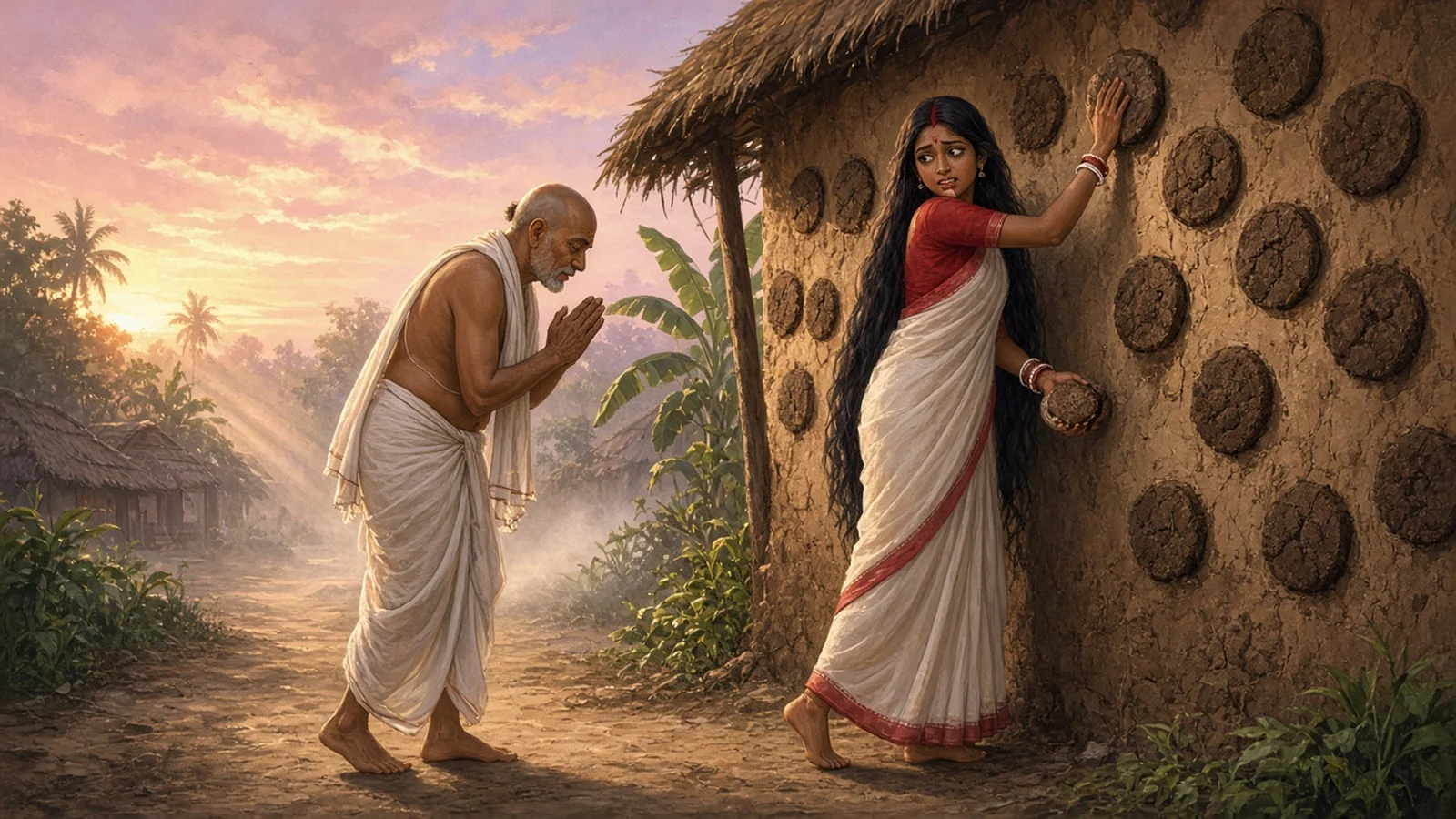
Nobody spoke. Appaiah thought of his own lane, and of the doors in it, and of who would still be behind them.
"We are too far away," one of the bearers said at last. "What can men like us do from here? We carry palanquins."
"There is a goddess in this town," said Appaiah. "Mahakali. People walk from everywhere to stand in front of her. We do not have to walk. We are already here."
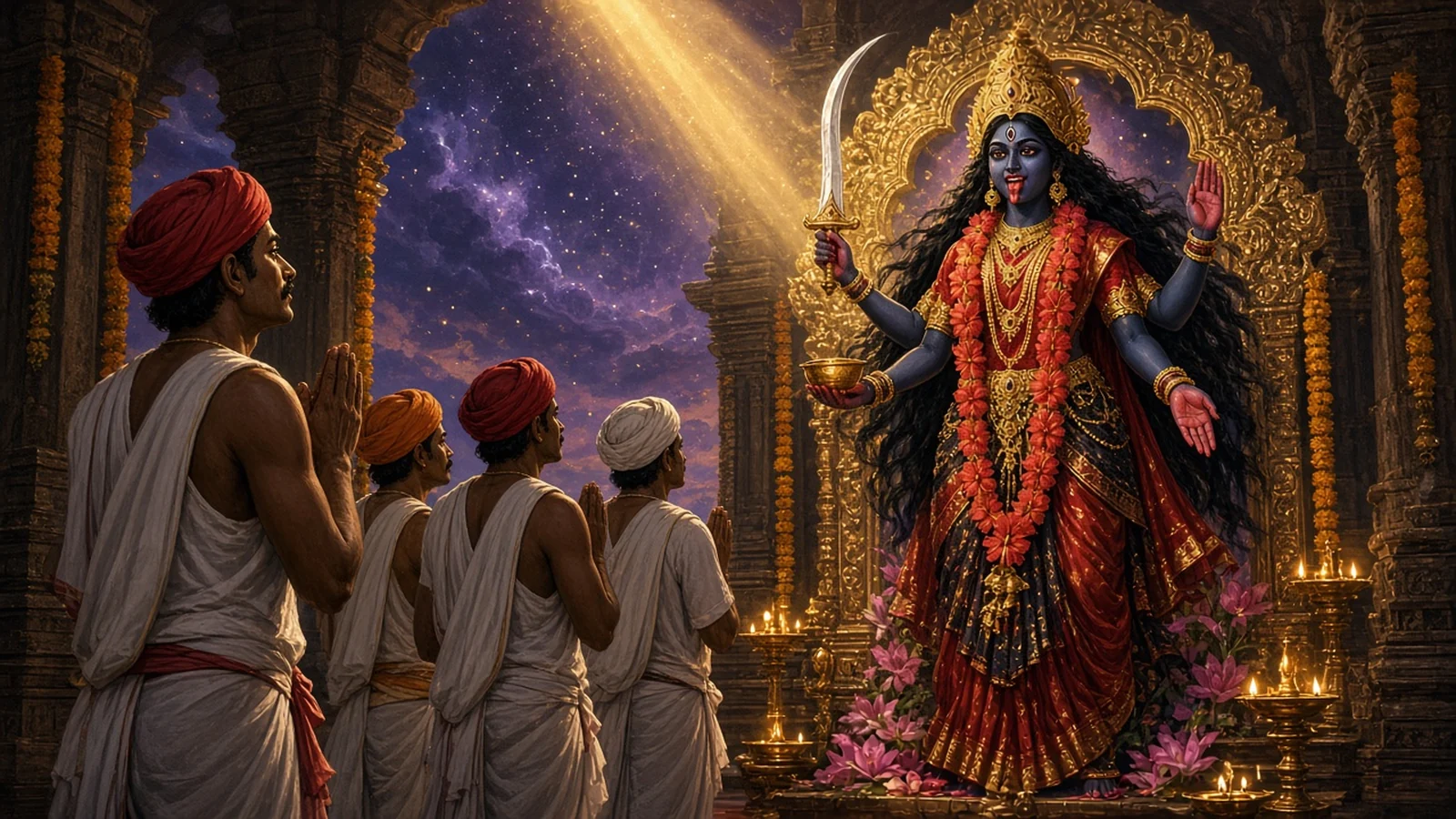
So that evening, when the palanquins were set down, Appaiah and a few of the others went together to the temple of Mahakali at Ujjain. They had carried other men to temples all their lives. Now they stood in the crowd on their own feet and looked at her.
Appaiah spoke for all of them.
"Mother," he said, "we cannot be with our people. You can. Stop this sickness in Secunderabad. Keep them alive. And if you do, we will bring you there. We will set you up in our own camp, among our own houses, and you will never be far from us again."
The others said it after him, each in his own words, and then they went back to their work.
The next letters were different. Fewer had died that week, and fewer the week after, and then the clerk read out a letter in which nobody had died at all.
When the battalion came home, the camp was still standing and the bazaars were full again. Appaiah went round the lanes counting who was left, and then he went to his companions.
"We made a promise," he said.
"We made it to a goddess in a stone temple," said one of them. "We have no temple. We have no money and no priest."
"We said we would bring her home," said Appaiah. "We did not say we would build a palace. A wooden image. A wall of mud round her. A roof over her head. That is enough to begin."
In July 1815, the temple's history says, they set up a wooden image of Mahakali in the Regimental Bazaar of Secunderabad, with mud walls round it, a small shrine among the houses of the camp. She was called Ujjaini, the one from Ujjain.
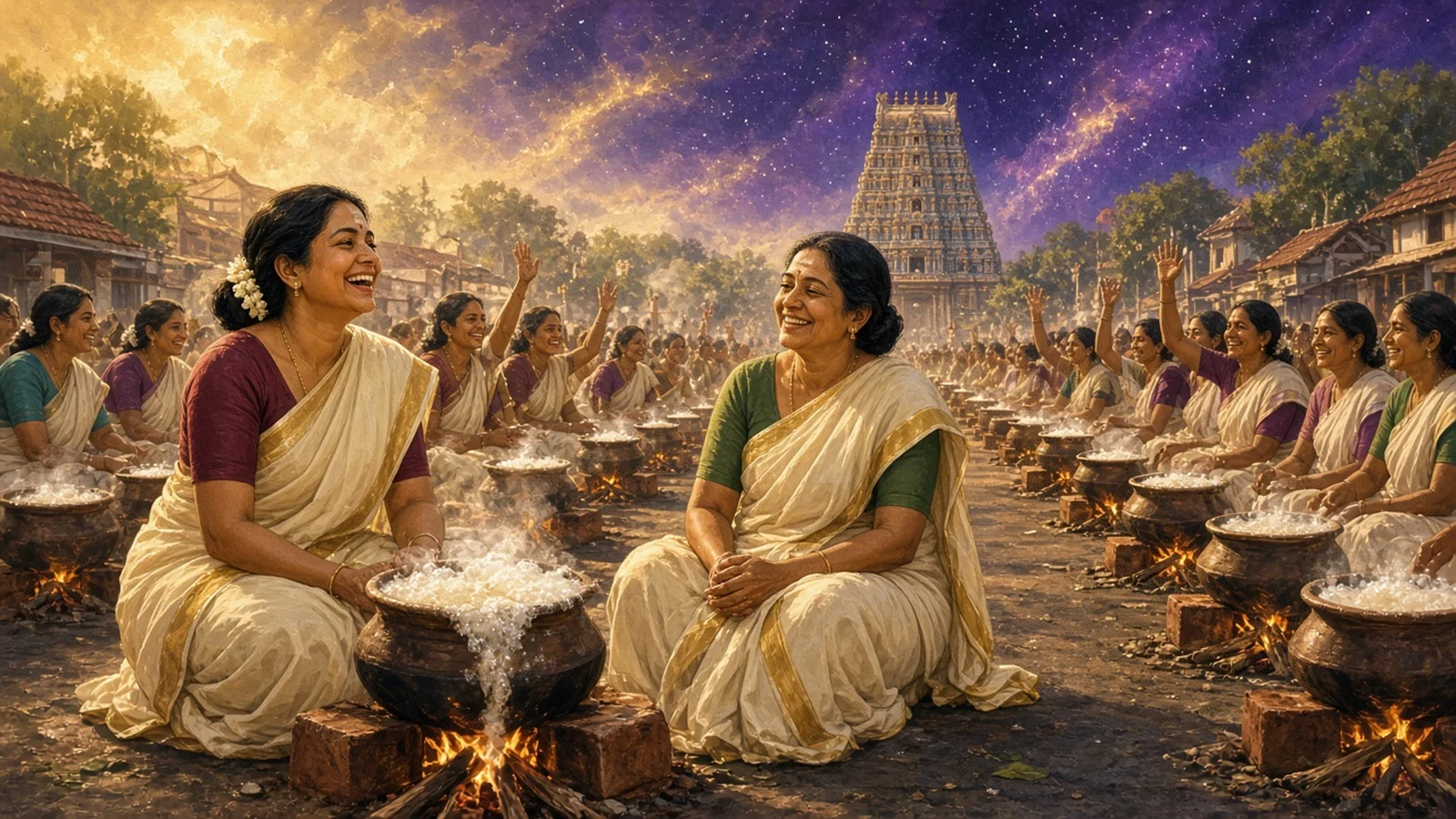
The women of the bazaar came first. They cooked rice in milk and jaggery in new pots, put the pots on their heads, and carried them to her, to thank her for the people who were still alive. The pot was called a bonam, a meal, and it was what any household would cook for someone it loved who had come home.
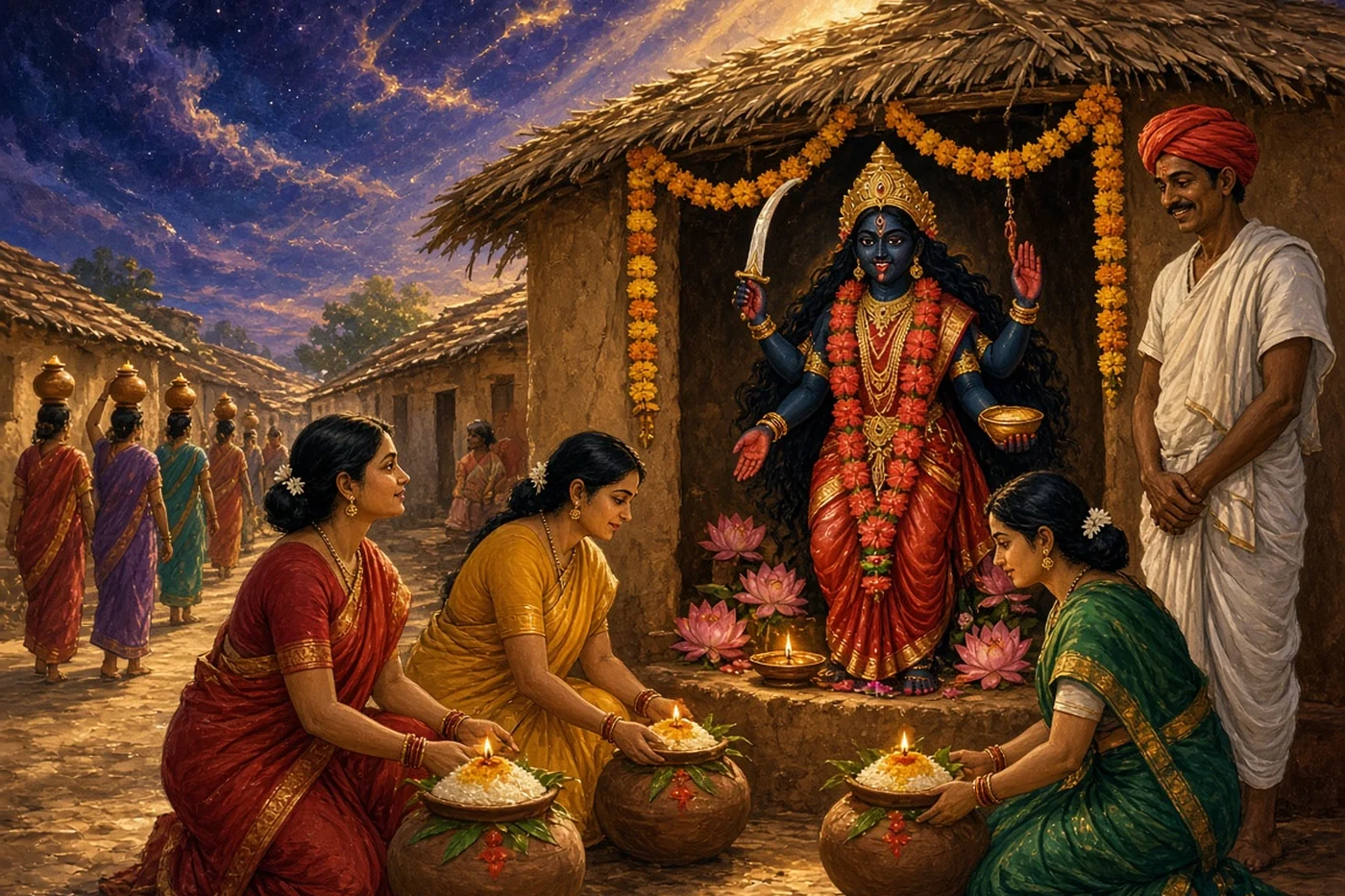
"Is that enough?" one of the women asked Appaiah, setting hers down before the wooden goddess.
"It is what we have," he said. "It is what she came for."
They came again the next year, in the month of Ashadha, and the year after that. The army's camp gave the day its name. It is Lashkar Bonalu still.
As the temple keeps it now
Secunderabad · General Bazaar, the third Sunday of Ashadha, 2026 · 2 min read
The shrine did not stay small. The temple's own history, as its Executive Officer gave it to the press in 2026, says that in 1864 a black stone image took the wooden one's place and a larger sanctum was built, and that a second goddess, Manikyalamma, was found in the ground during the work; she stands at Mahakali's right. Appaiah's son Sanjivaiah built a hall in 1900, a grandson built shops at the gate to give it an income, and in 1914 a great-grandson formed a committee and brought in a Brahmin priest for the daily worship. The state's Endowments Department took the temple over after Independence. A descendant of the founder still has a say in it.
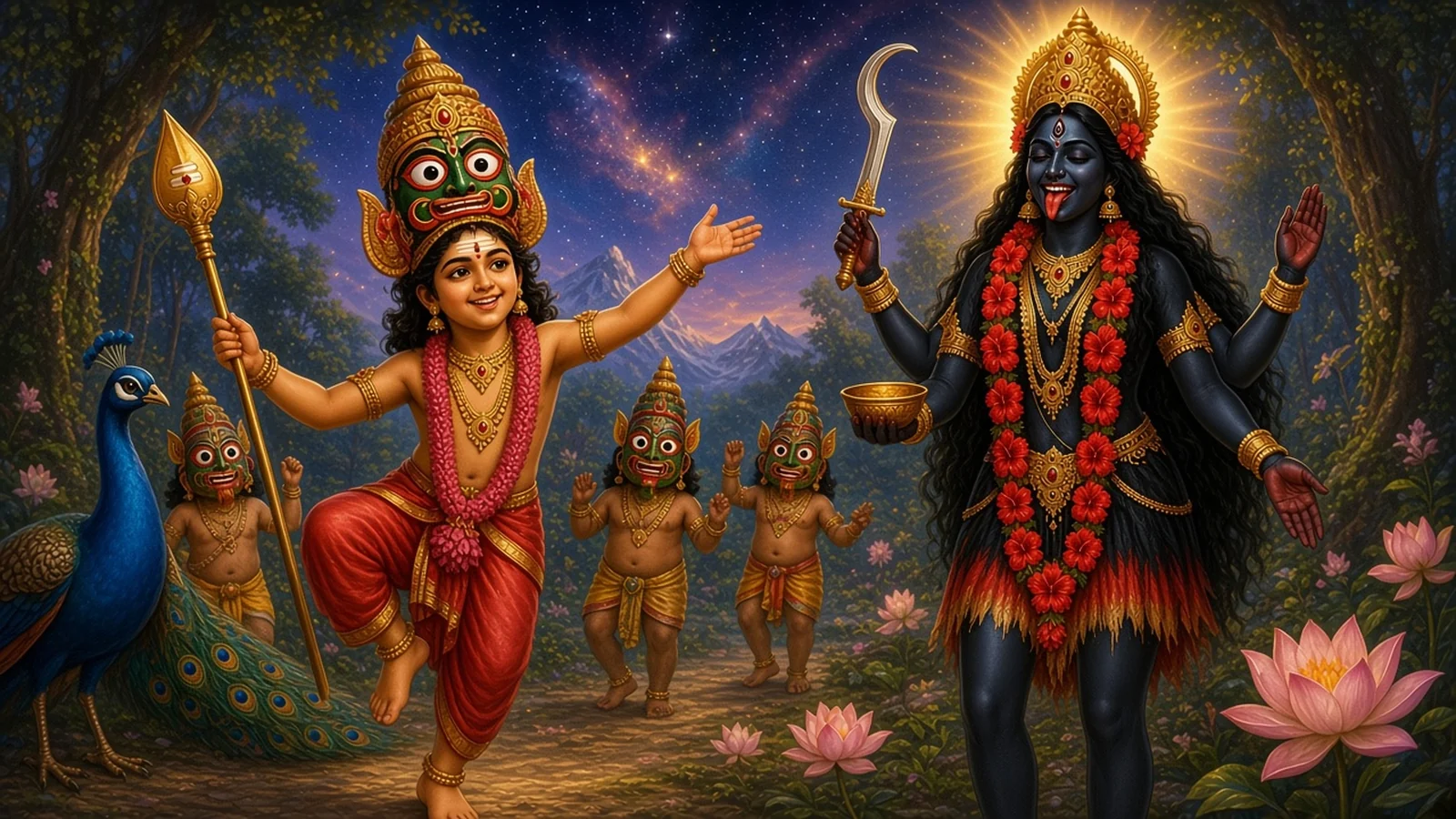
Mahakali sits there cross-legged on her lion under a silver shield, four-handed, with a sword, a spear, a drum and a pot of nectar.
2026 was counted as the temple's 211th year. Her ghatam, the copper pot dressed as the goddess, came out on 19 July for the welcome the temple calls Edurukolu.
On Sunday 2 August the doors opened at four in the morning, and lakhs of people stood in six queues, two of them only for women with bonams on their heads. A minister and his wife carried in the first bonam on behalf of the state. In the afternoon the Chief Minister brought silk robes for the goddess, as the government does each year now that Bonalu is Telangana's state festival. From one to three the sanctum was kept for the Shivashaktis and the Joginis, the women and men on whom the goddess comes, and one of their leaders fainted on the way in with her pot. Two and a half thousand police kept the streets.
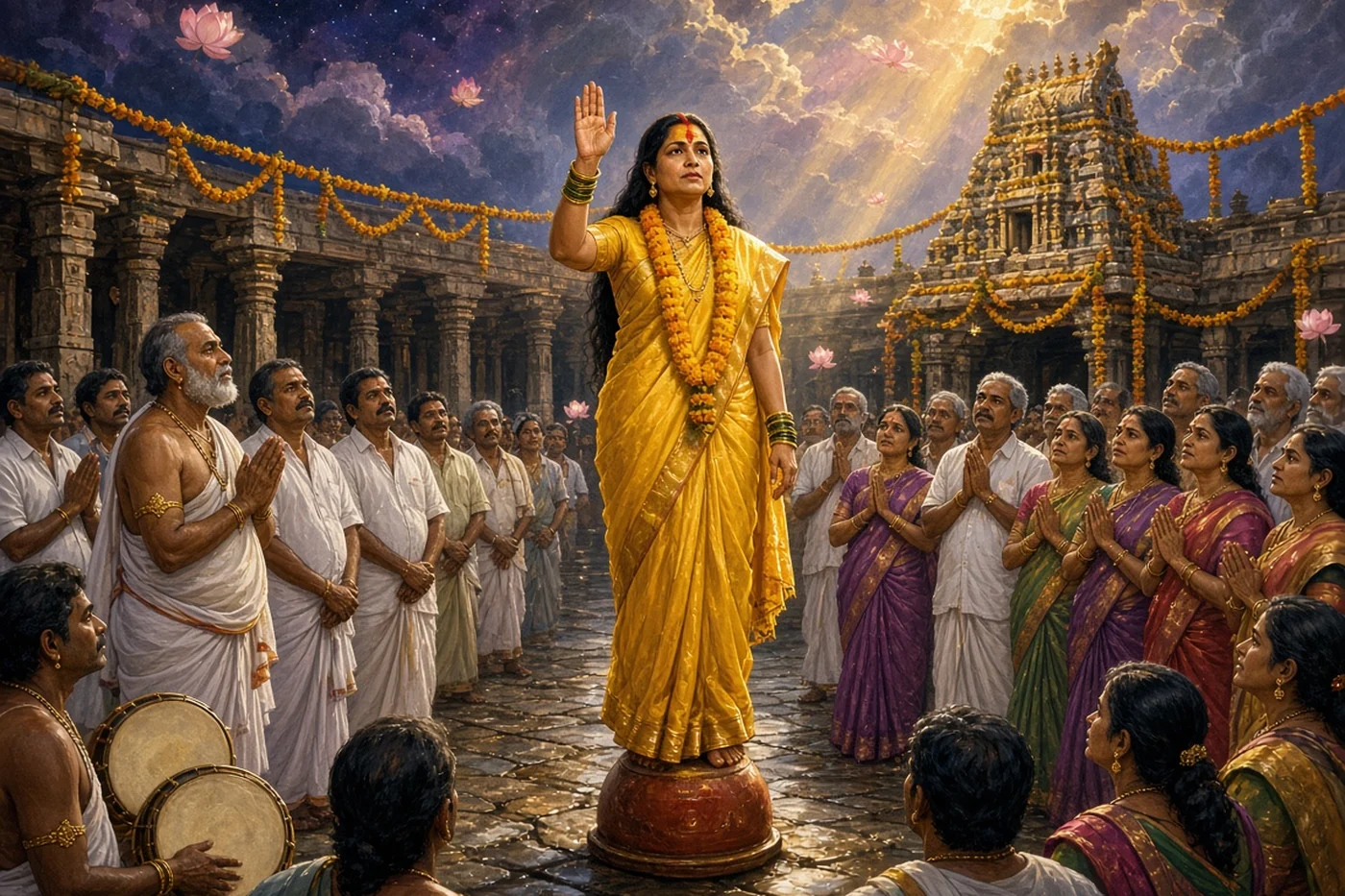
On Monday morning came the Rangam. The oracle Matangi Swarnalatha, of a family that has spoken for this goddess for seven generations, stood on an earthen pot in the temple and spoke as Mahakali. She promised heavy rain, warned of floods and fires and many deaths, scolded the priest for his pride, and asked again for an image she had been promised; the temple said it would be done within the year. Then the elephant carried the goddess out through the streets, and the season moved on to the old city, a week later.