As the women of Golconda tell it
Telangana · Langar Houz to the Jagadamba temple on Golconda fort, the first day of Ashadha Bonalu · 3 min read
Saroja was up before the light, and so the whole house was up before the light.
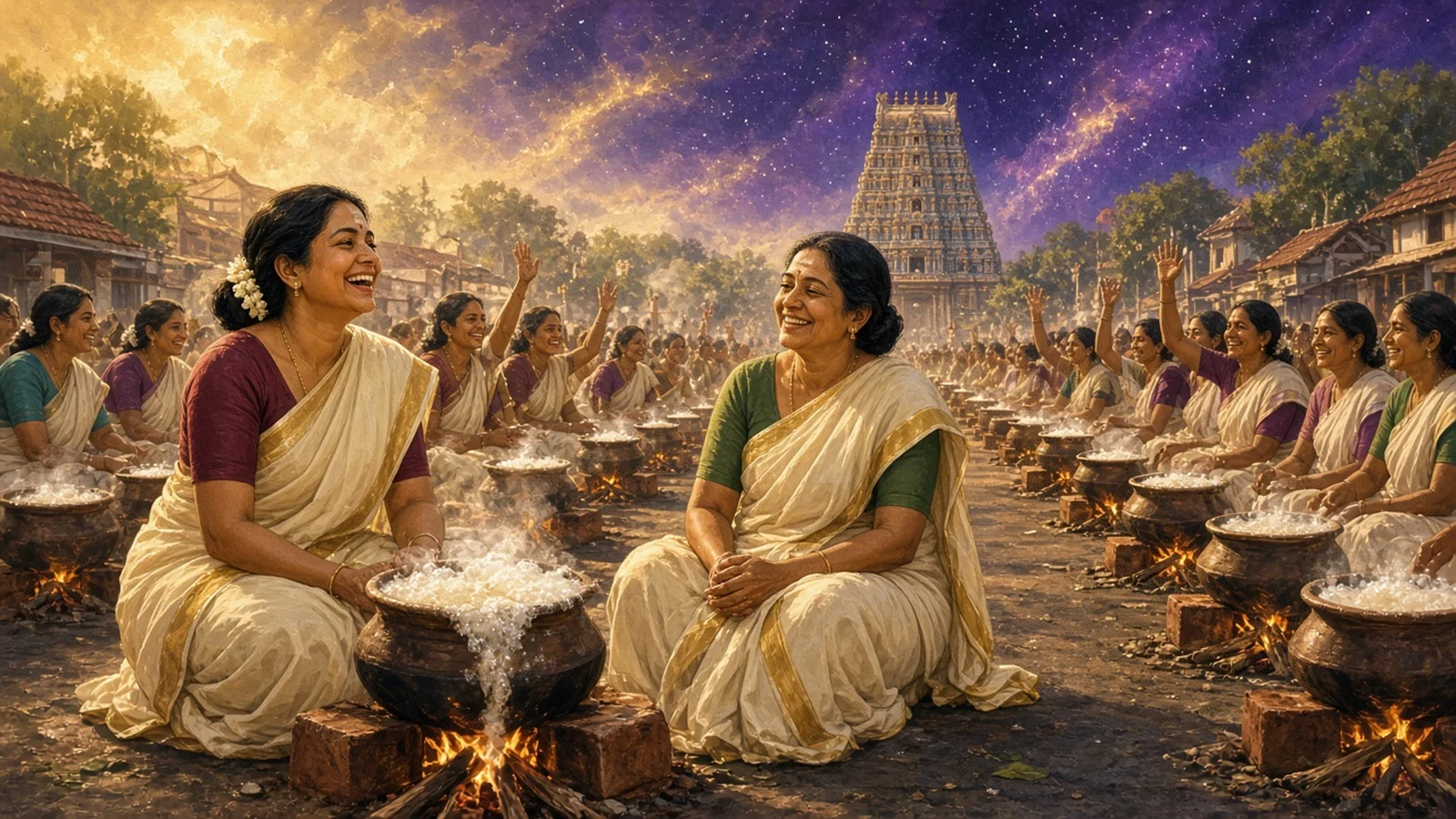
Her granddaughter Anitha, who was nine, sat on the step and watched her wash a new clay pot, pour in milk, put in the rice, and break the jaggery into it. When it had cooked she smeared the belly of the pot with turmeric, dotted it with vermilion, tied twigs of neem round its neck, and set a lid on it with a small clay lamp on the lid.
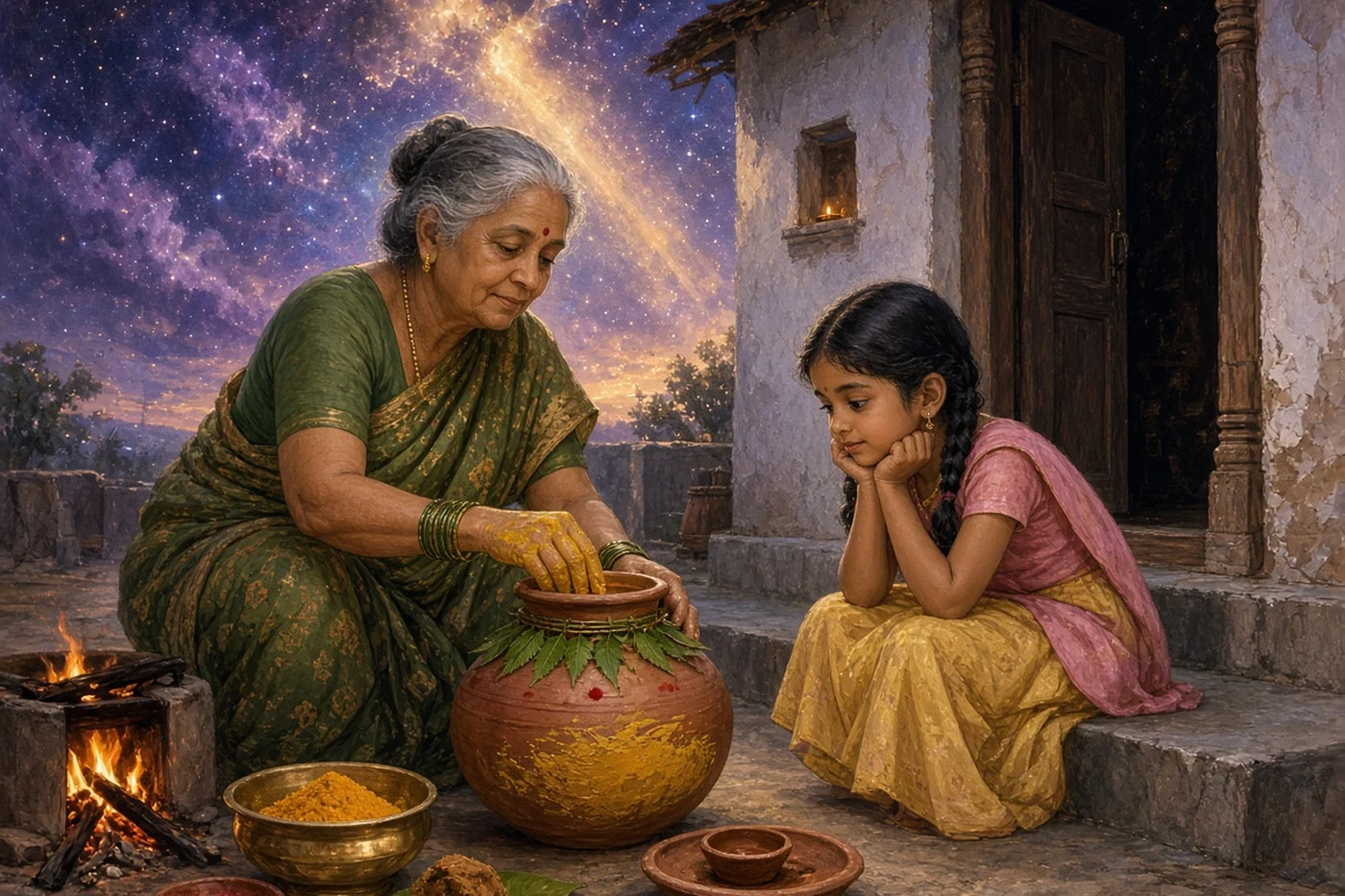
"Who is it for?" Anitha asked.
"For Amma. The goddess. She is coming home today."
"Her home is the temple on the fort. You told me."
"It is, the way your aunt's home is in Karimnagar now. But in Ashadha a married daughter comes back to her mother's house. Your aunt came last year. What did we do?"
"We cooked everything she likes."
"So." Saroja lifted the pot onto her head and settled it. "This is what she likes."
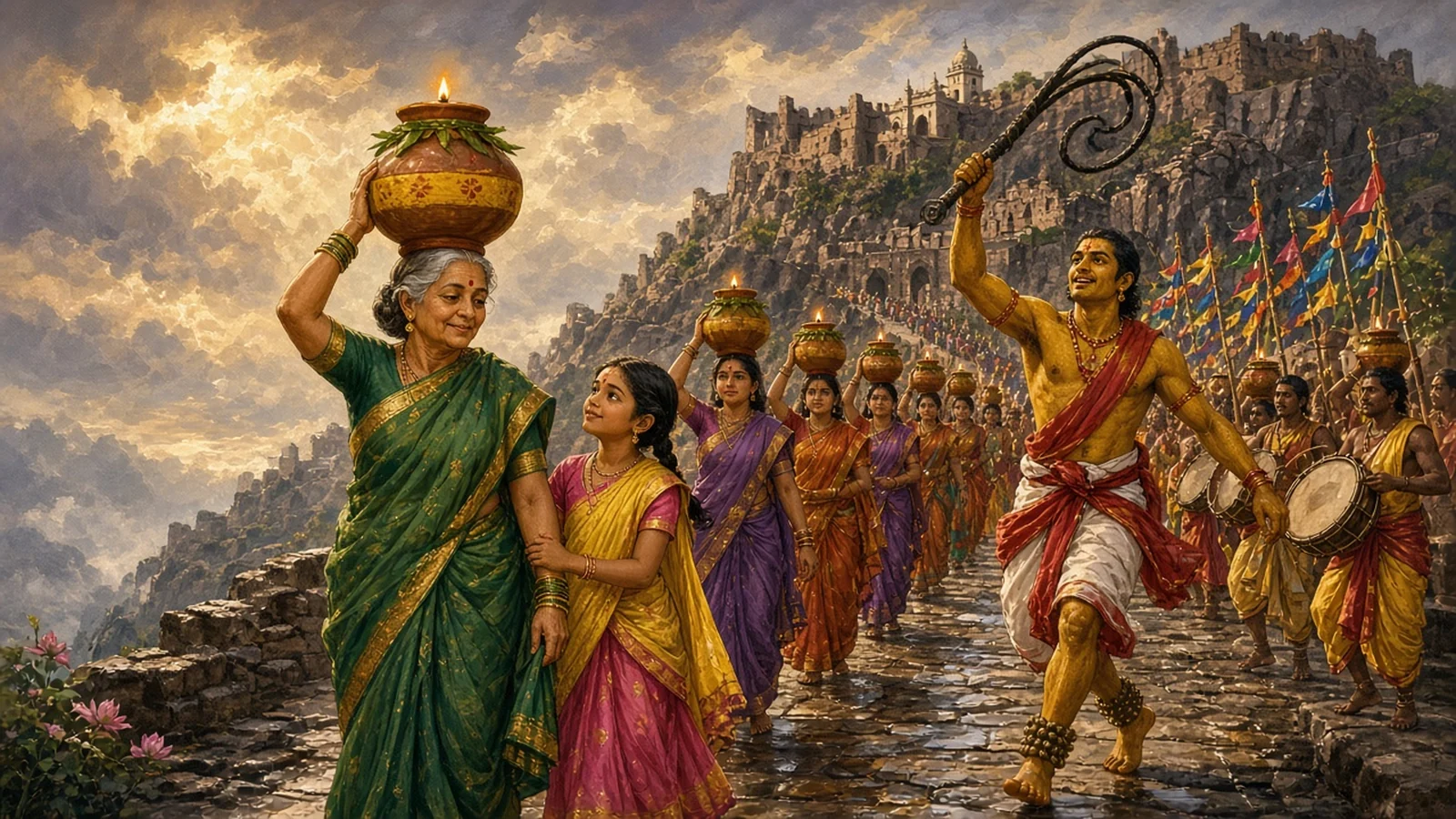
They walked to the Langar Houz crossroads, where the procession was gathering under the drums. Men carried tall towers of bamboo and bright paper, the Thottelu, swaying over the crowd. Two ministers set down the government's first bonam before the goddess, and the season had begun.
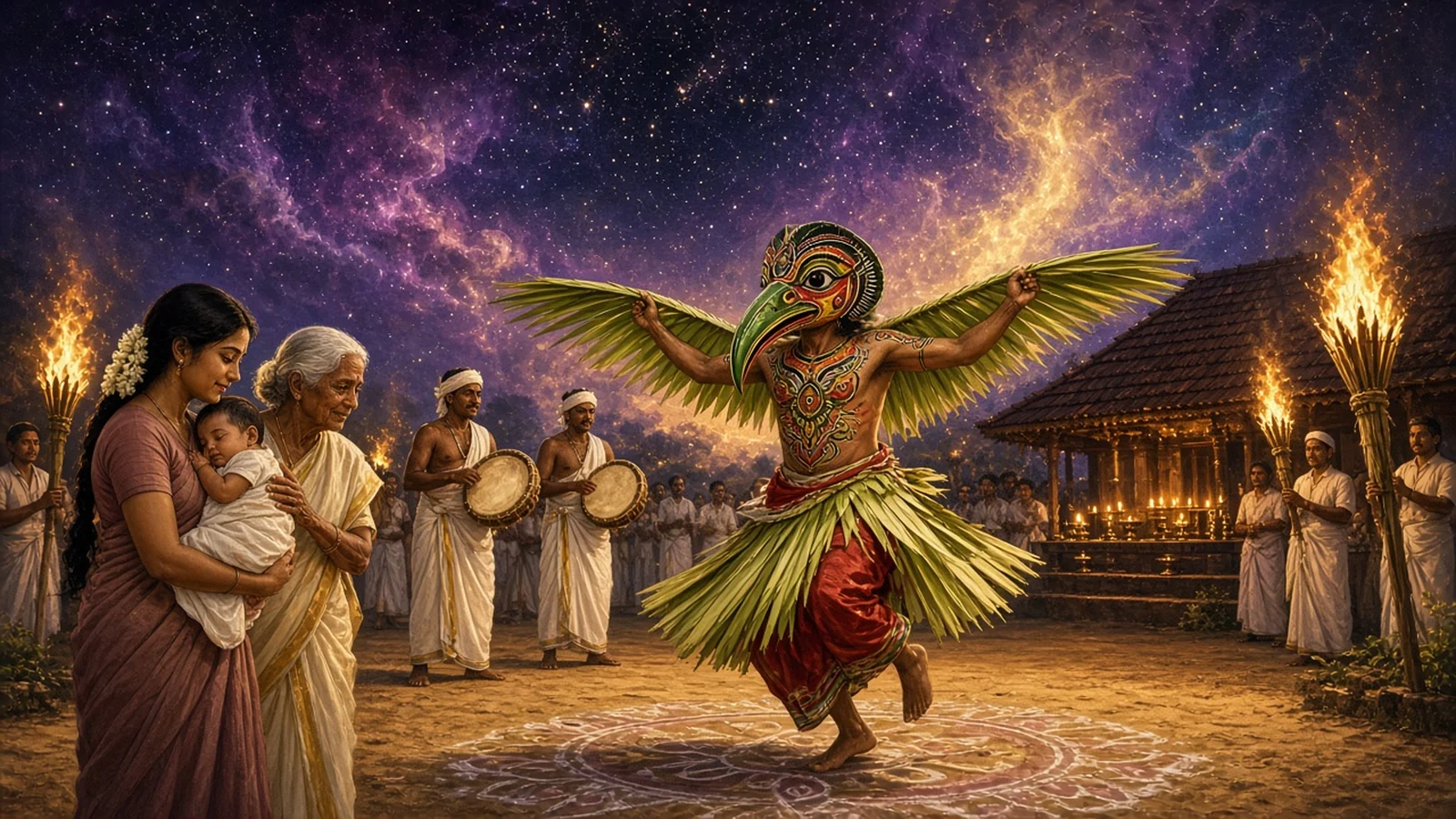
Then the drums changed, and a man came through the crowd bare to the waist, his whole body yellow with turmeric, vermilion on his forehead, a red cloth at his hips and bells on his ankles, cracking a long whip over the road.
Anitha took hold of her grandmother's sari.
"That is Potharaju," said Saroja. "Her brother. He goes in front to clear the road for his sister, and to see that nothing touches her."
"He is frightening."
"Brothers are, when they are guarding someone."
At Chotta Bazar the procession stopped at the priest's house, and the goddess's small image was carried out and taken in among them. At Banjara Darwaza the women from the other lanes joined, a river of pots, and then the whole of it climbed in through the old walls of Golconda to the temple of Jagadamba, which stands beside a mosque of the old kings.
On the steps a woman just ahead of them began to shake. Her pot tilted; others caught it. Her eyes went far away, and a woman beside her poured water over her feet, and then another, and another.
"The goddess is on her," Saroja said quietly. "The water cools her."
Potharaju came dancing back down the steps, circled the woman with his whip, and led her up.
Anitha watched them go. "If she is our daughter," she said, "why is everyone afraid of her?"
"Because she is the mother too. In Ashadha the rain comes and the fevers come with it. Pochamma keeps the pox away, Maisamma keeps the tanks, Mahankali keeps all of us. A daughter who is fed well is happy in her mother's house. A goddess who is fed stays kind."
They set the pot down before Jagadamba with turmeric, bangles and a piece of cloth, and came home to a rooster in the curry, as every house in the lane had that evening.
Three weeks and more went by in Bonalu, a Sunday for every quarter of the city. On the last Monday Saroja took Anitha to Lal Darwaza in the old city, and they stood in the lanes near Charminar while the ghatams went past, copper pots dressed as the goddess, high on the heads of men yellow with turmeric, one of them on an elephant, all going down to the river.
"Where is she going?"
"Back to her husband's house," said Saroja. "Ashadha is over. We will cook for her again next year."
As the folklorists and the temples tell it
Telangana and the Telugu country · the sisters and their brother · 2 min read
The goddess who comes home has many names. Bonalu's temples call her Mahankali, Jagadamba, Yellamma, Pochamma, Maisamma, Peddamma, Dokkalamma, Ankalamma, Poleramma and Mutyalamma, and the people who keep her say she is one woman and many sisters at once. Vivek Joseph, writing for Sarmaya, found the count given as seven, eight, a hundred and one, or a crore.
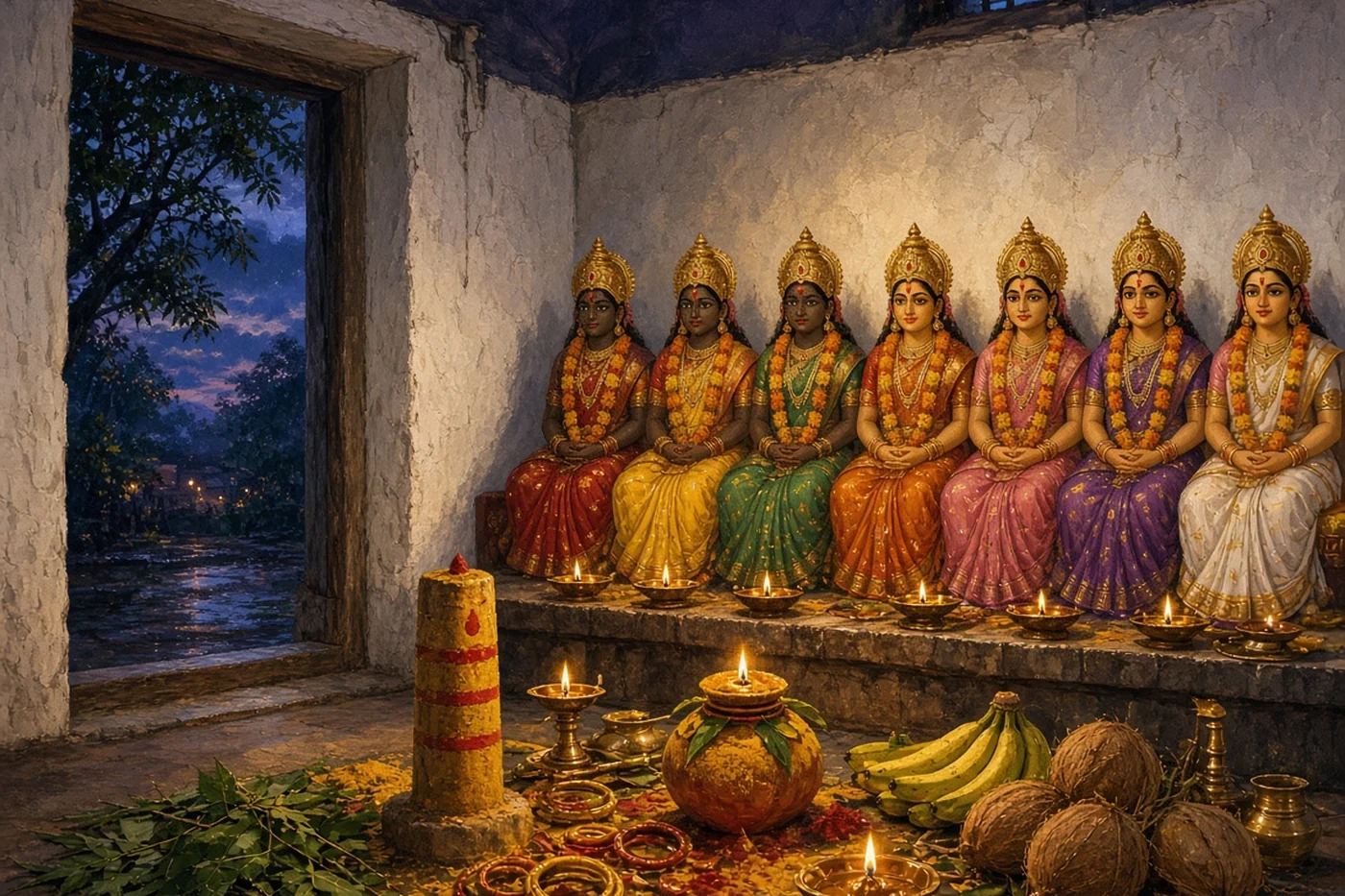
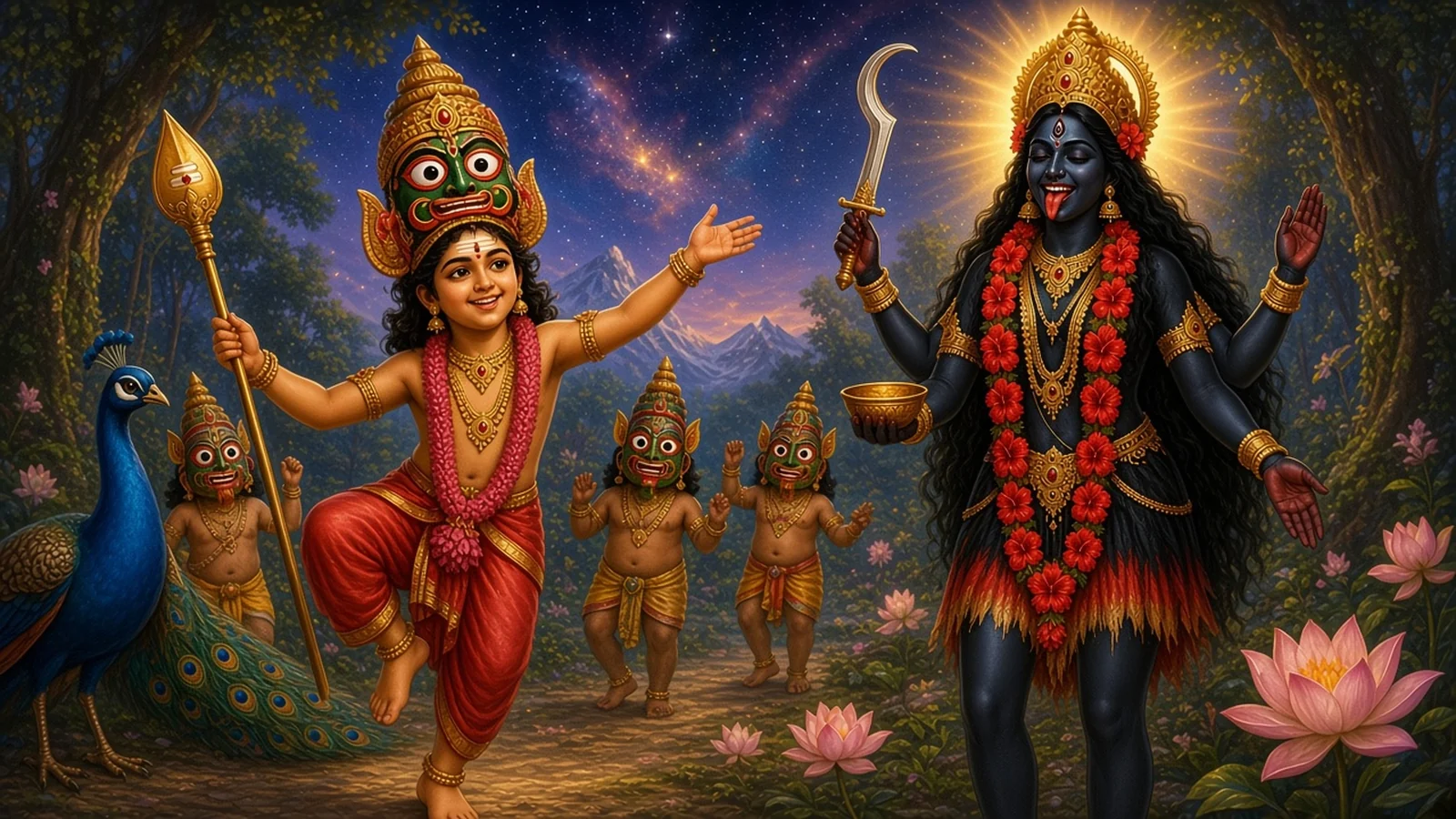
The missionary Henry Whitehead, who toured the Telugu districts before 1916, was told the same thing in other words: they are only different names for the same goddess. He found Poleramma guarding a village's boundary and Ankamma sent against cholera, and in villages of Cuddapah and Kurnool the village deities were Potu-Razu and his seven sisters. Potu-Razu was sometimes the goddess's brother, sometimes her husband, sometimes only her servant, and was never given a sacrifice of his own, only with his sisters. He was a stone, or a thin wooden stake called the spear; in one village he was a painted wooden warrior holding a lime and nine glass bangles that belonged to his sister Ellamma.
A myth told for him, as Wikipedia gives it, begins with Lakshmi's power laid in a pool. Parvati swallowed it in seven gulps and seven sisters were born, Poleramma, Ankamma, Mutyalamma, Pochamma, Bangaramma, Maramma and Yellamma. Nobody could agree who should raise them, so Potharaju was born to guard them. Another telling makes him the one who drank the blood of the demons his sister killed.
Yellamma, the most loved of them, is linked to Renuka, the mother of Parashurama, whose story is The Axe and the Mother; Dalit and Bahujan tellings root her in their own communities instead, and around Hyderabad she is also served as Mahankali's attendant. Pochamma, almost Telangana's alone, keeps the edge of the settlement and the pox and measles, and one myth says the bonam itself began as her meal. Maisamma sits on the bunds of the tanks.
The folklorist Y. A. Sudhakar Reddy calls the vow of 1813 a part of the city's oral memory, and looks for Bonalu's roots further back, in the Jamba Puranam and the Garuda Purana, which know Yellamma.