As Garhwal tells it: the locked door
Himalaya · Badrinath, and the way over to Kedarnath · 3 min read
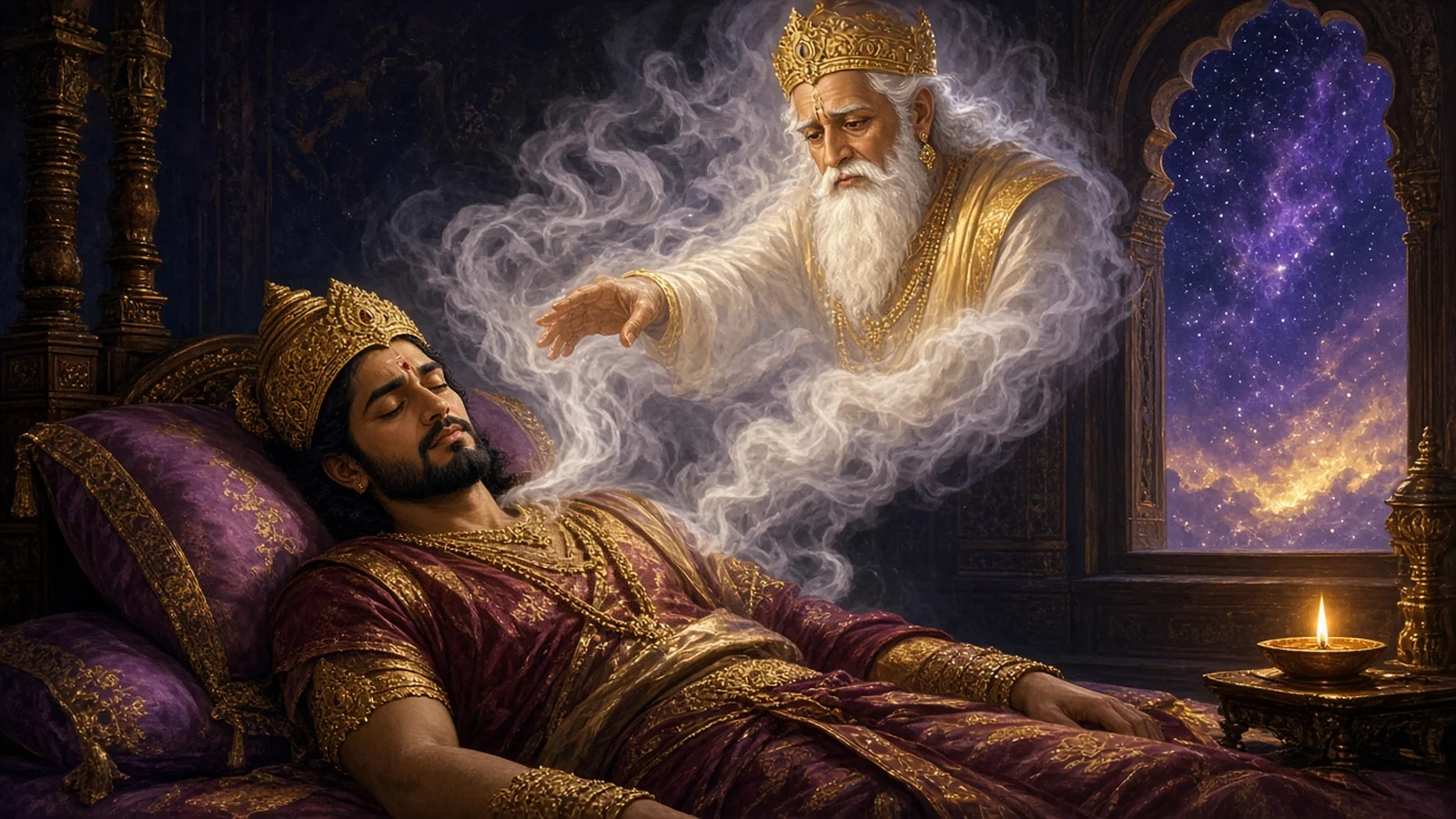
Vishnu had been resting on his serpent for a long time when Narada came to tell him what the world was saying.
"Down there," said the sage, "when they want a word for idleness, they point at you."
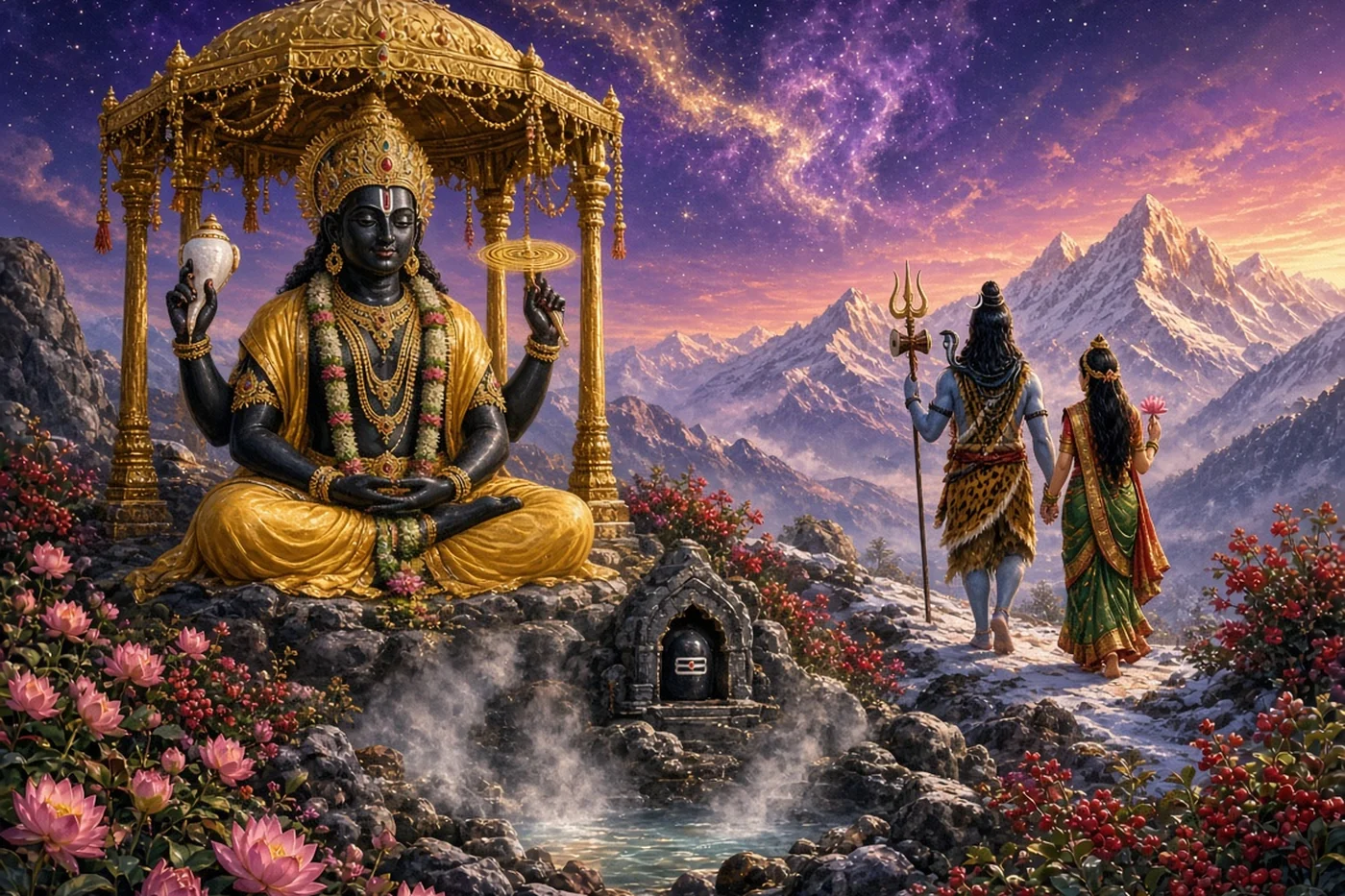
Where that rebuke led Lakshmi is told in The Badri Tree. This is the other story the valley tells about it. Vishnu got up and went north to find a place where he could sit still and turn inward, and high up the Alaknanda, among the snows, he found it: a narrow valley full of wild berry bushes, the badri, cold air, the river loud in its stones, and a spring of hot water coming out of the rock.
It was perfect, and it was taken. A little smoke rose from a hut among the bushes. Shiva lived there with Parvati.
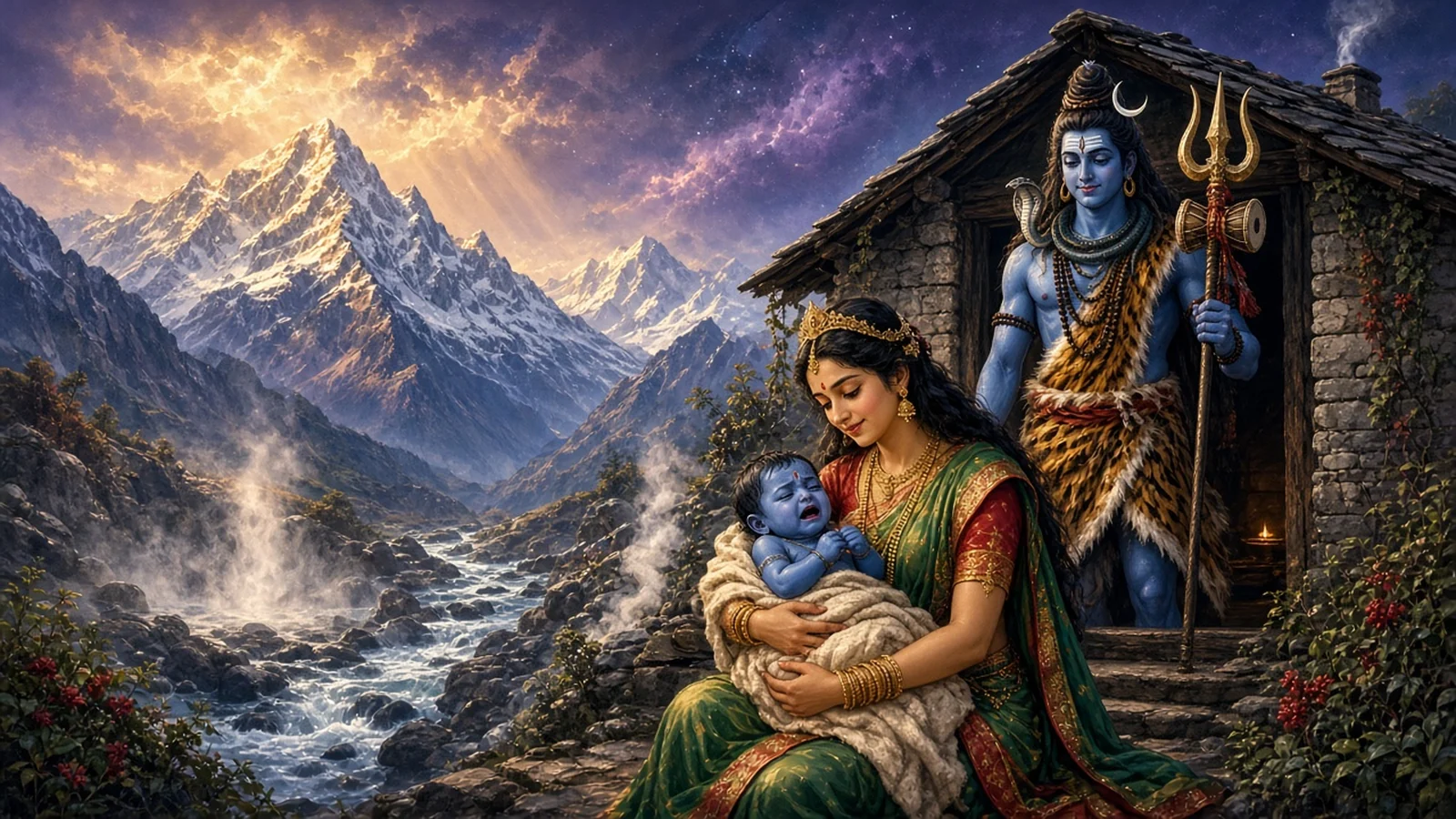
Vishnu knew Shiva. Nobody who knows Shiva wants to make him angry. So he did not knock, and he did not ask. He made himself small, a baby no bigger than a bundle of cloth, and he lay down at the door of the hut and cried.
Parvati heard it first. She came out and found the child wailing on the cold ground, and she picked him up.
"Whose are you?" she said. "Where is your mother? How did you get up here?"
The child gave no answer. He only cried harder.
Shiva came to the door behind her and looked at the baby for a long moment.
"Put him down," he said. "That is no child. That is Vishnu, at one of his games. Leave him outside. He will cry for a while, and then he will go away."
Parvati held the baby closer. "How can you be so hard?" she said. "He is tiny, and he is alone, and it is freezing. I am not leaving a crying child on a doorstep for anyone."
So the baby came inside. Parvati warmed him and fed him and rocked him until he stopped crying, and at last he fell asleep, and she laid him down in the hut and covered him up. Then the two of them went out together to bathe in a pool of water nearby, and left him sleeping.
When they came back, the door was shut. It was fastened from the inside.
Parvati knocked. "Little one," she called, "open the door. It is only us."
Nothing. She called again, and tried to wake him, and still the door did not open. Then a voice came through it, and it was not the voice of a baby.
"I like this place very much," said Vishnu. "I have decided to stay. Go over the mountains to Kedar. You will like it there."
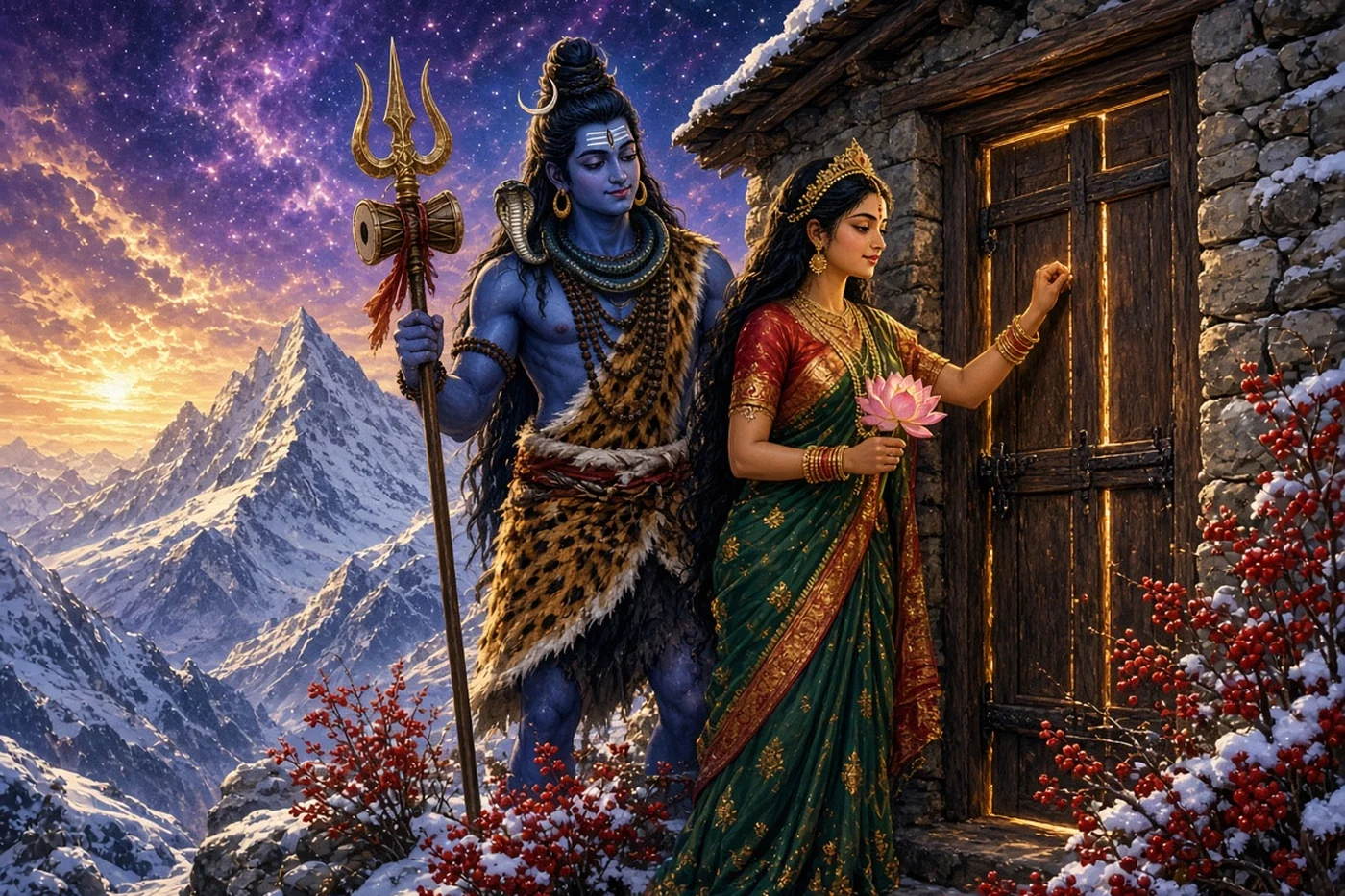
Shiva stood in front of the closed door, and it is said that he thought about it carefully. There were two things he could do. He could burn the hut and everything in it to ash. Or he could go.
"I could burn it," he said to Parvati. "But you love that child. I will not burn what you love. Come. We will find somewhere else."
So Shiva and Parvati turned away from the valley of berries. They walked over the ridges to Kedarnath, and there Shiva made his home, and there he has stayed.
Behind the locked door Vishnu sat down to meditate in the place he had wanted, and he has not got up since. That is why, Garhwal says, the god of one valley is Vishnu and the god of the next is Shiva, and why the pilgrims who climb to the one so often climb to the other.
As the shrine of Adi Kedareshwar tells it
Himalaya · Govind Shila, above the Tapt Kund at Badrinath · 1 min read
On the path that climbs from the hot spring to the temple of Badrinarayan there is a small shrine of Shiva, standing on a rock called Govind Shila above the Tapt Kund. It is called Adi Kedareshwar, the first lord of Kedar, and the story told of it is the same story with the trick taken out.
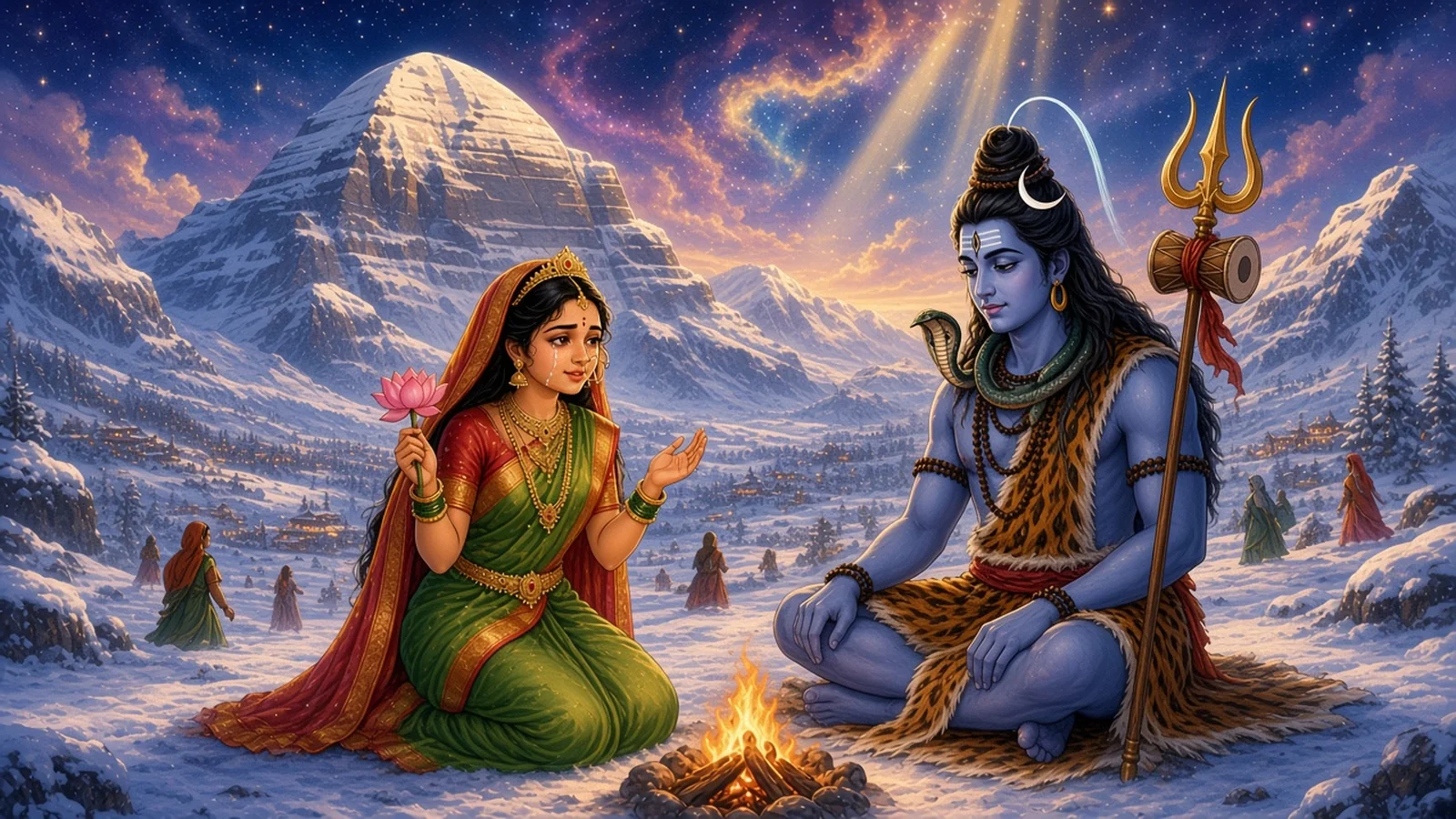
In their telling Shiva and Parvati were not keeping house at Badri. They were doing penance there, as gods do in the Himalaya, sitting still in the cold. A small boy came crying so loudly that neither of them could go on.
Parvati opened her eyes. "Why are you crying?" she asked him.
"I want this place," the boy said. "I want to sit here and meditate."
The two of them looked at the child properly then, and they knew him. It was Narayana. In this telling he does not lock any door. He asks them for the valley, the way a guest asks for a room, and they give it to him.
So Shiva and Parvati rose and went away to Kedarnath, and Vishnu sat down at Badri and began the meditation the temple still shows him in. But the spot where Shiva had lived was not forgotten. The rock above the hot spring kept his name, and Adi Kedareshwar was set up on it.
Pilgrims coming up from the Tapt Kund pass it on their way to Badrinarayan. A popular account says the Skanda Purana praises the shrine, and the people of the place say more: that anyone who cannot make the long road to Kedarnath may worship Shiva here instead, and it counts as if they had gone.