Who Badrinarayan is
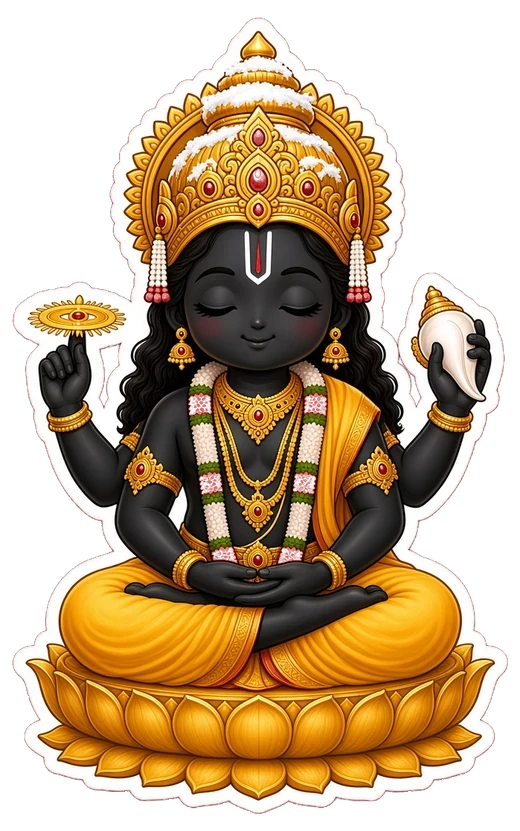
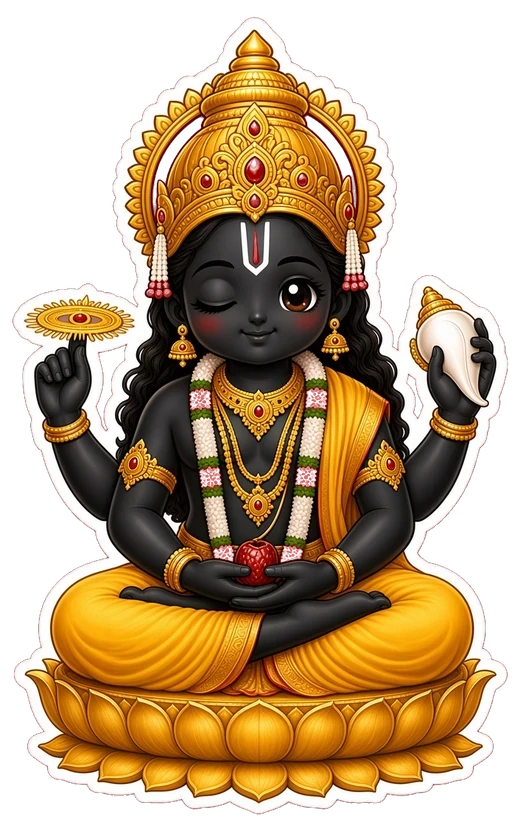
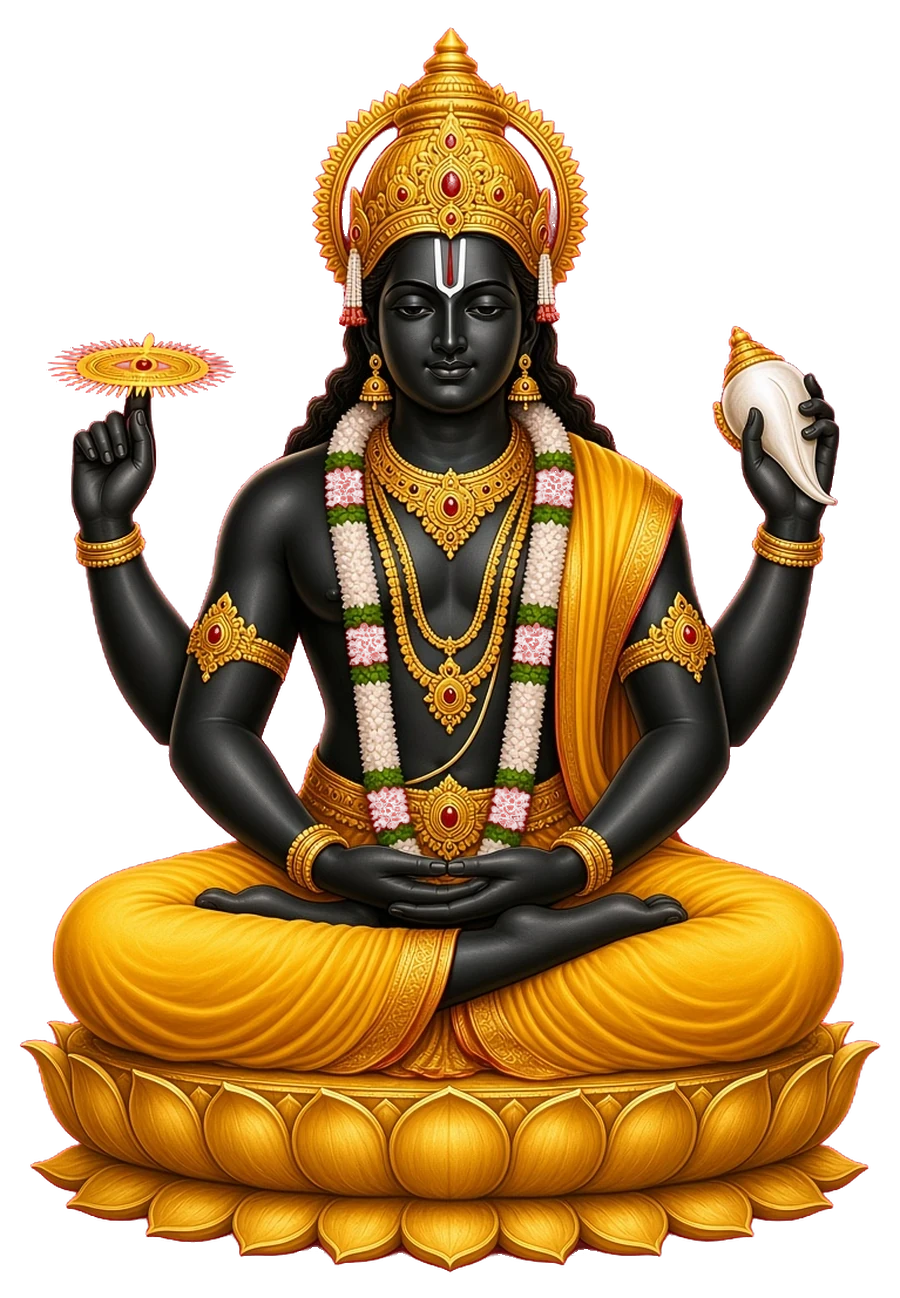
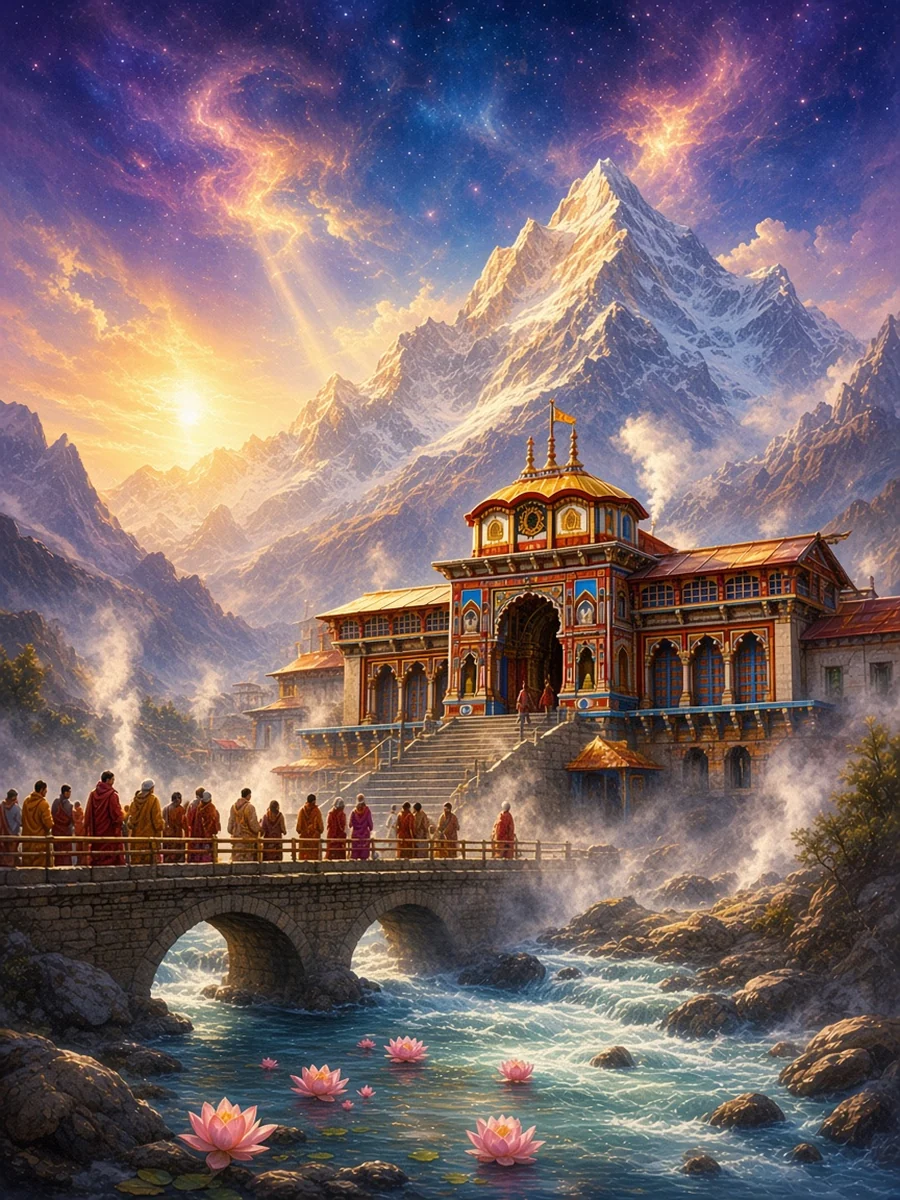
Badrinarayan is Vishnu seated in meditation at Badrinath, high in the Garhwal Himalaya on the Alaknanda, between the two ranges called Nara and Narayana. His name joins the god and the place: Narayana of the badri, the jujube tree after which the valley is called Badari, the hermitage of the jujube. Pilgrims also call him Badri Vishal, Badri the great, and Badrinath, the lord of Badri.
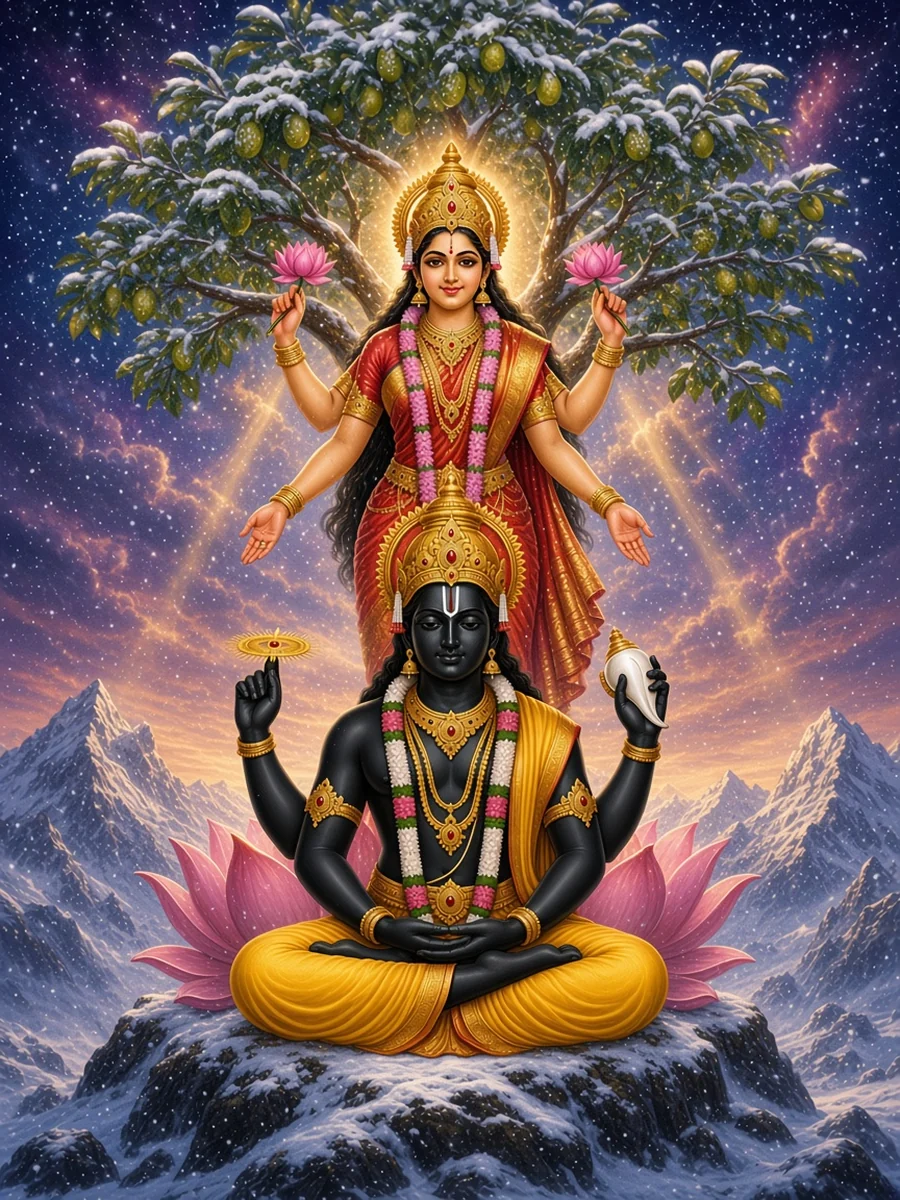
He is a small black shaligram stone under a gold canopy beneath a badri tree: legs folded, two hands resting in his lap in meditation and two raised with the conch and the discus. Around him in the sanctum stand the sages Nara and Narayana, Narada, Uddhava and Kubera, and Garuda sits facing him.
Om namo bhagavate upashama-shilayoparatanatmyaya: Om, salutation to the Lord whose nature is peace, who has let go of all that is not the self (Bhagavata Purana 5.19.11, the prayer Narada sings to Nara-Narayana at Badari).
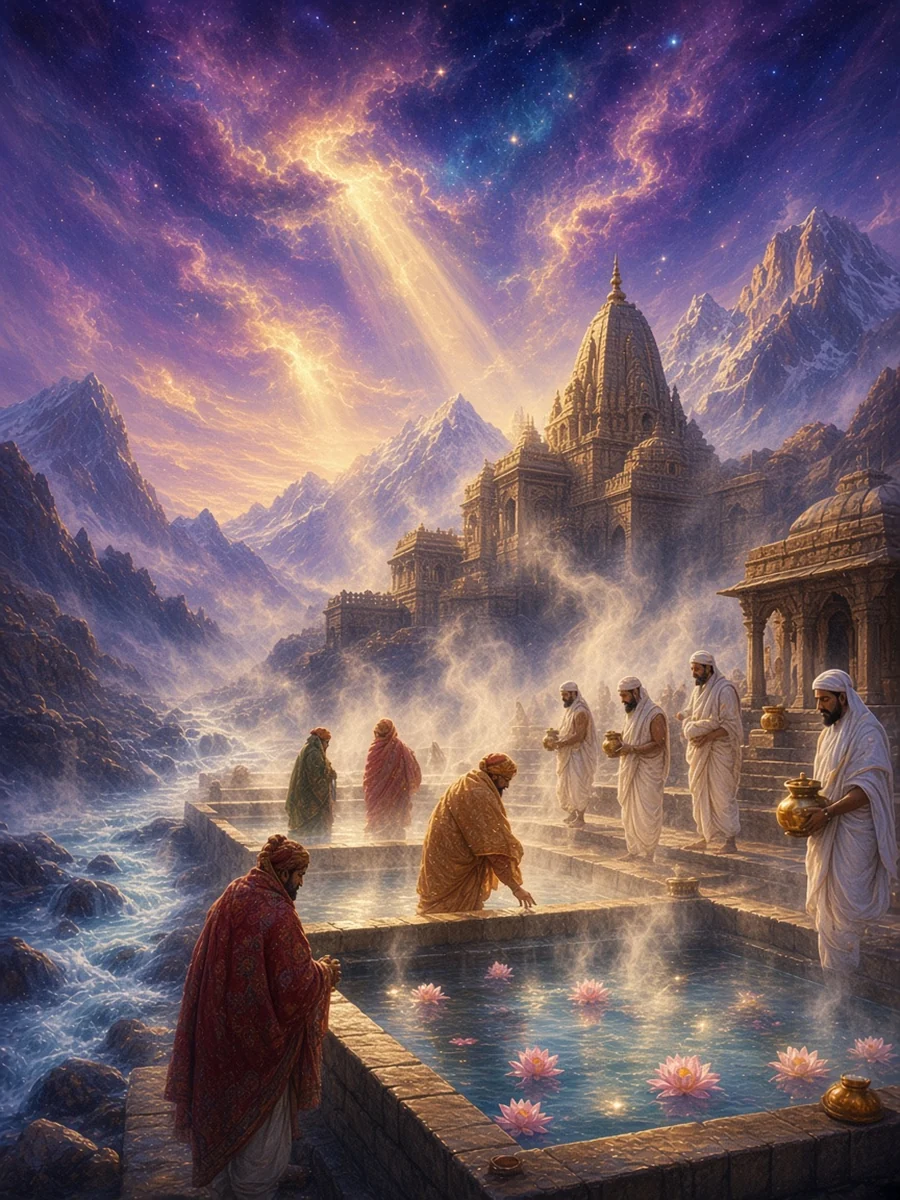
Badrinath is the northern one of the four Char Dham at the corners of India, and one of the 108 Divya Desams of the Tamil Alvars, praised in eleven hymns of Periyalvar and thirteen of Tirumangai Alvar. It is the first of the Panch Badri, the five Badris of the valley. Below the temple the Tapt Kund hot springs steam, and pilgrims bathe there before they go up.
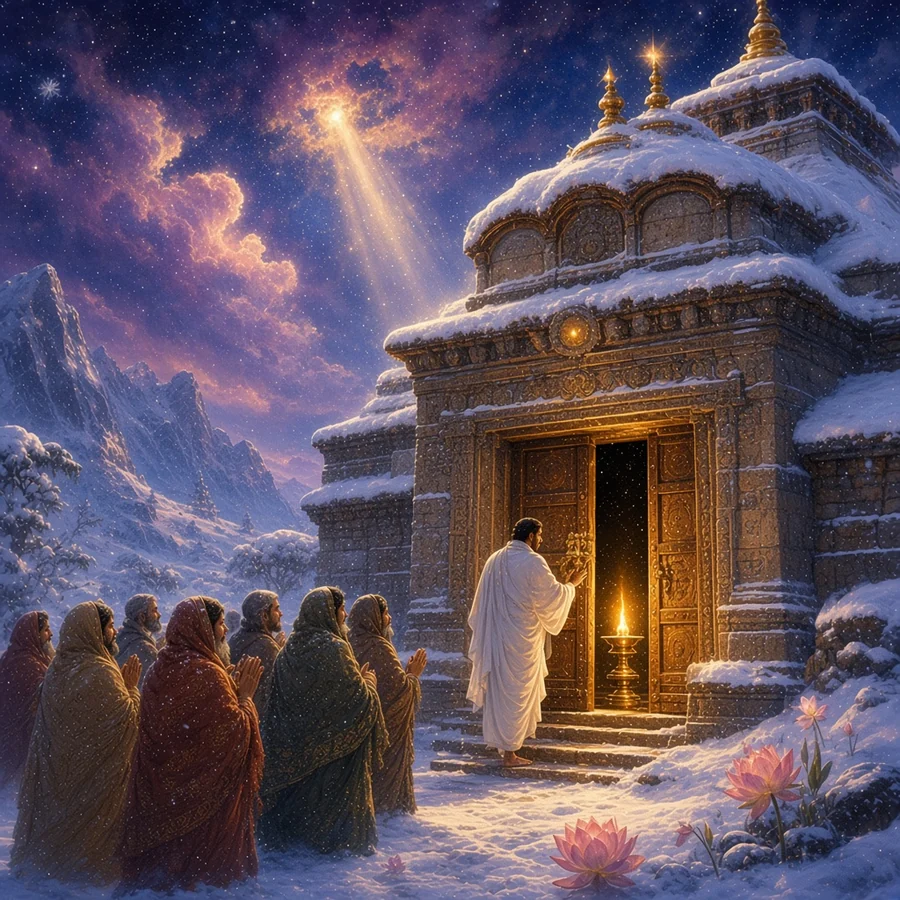
The god keeps a mountain's year. His doors open in spring, around Akshaya Tritiya, and close in October or November when the snow comes. On the closing day a lamp of ghee, the akhand jyoti, is lit to burn through the winter, and the first pilgrims of spring come to see it still alight. The temple committee says Narada worships the god through those six months; an older report calls the closed half the gods' turn. The festival images of Uddhava and Kubera go down to Pandukeshwar for the winter, and Shankara's seat to the Narsingh temple at Jyotirmath. His chief priest, the Rawal, is a Nambudiri Brahmin from Kerala.
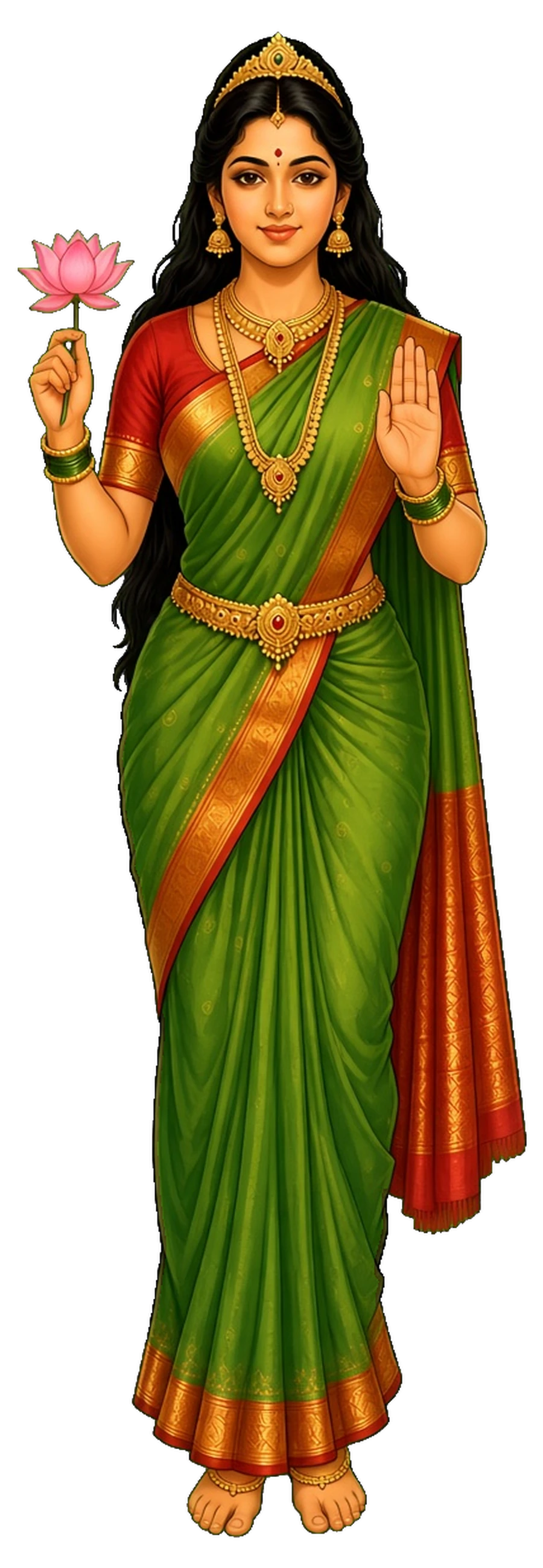
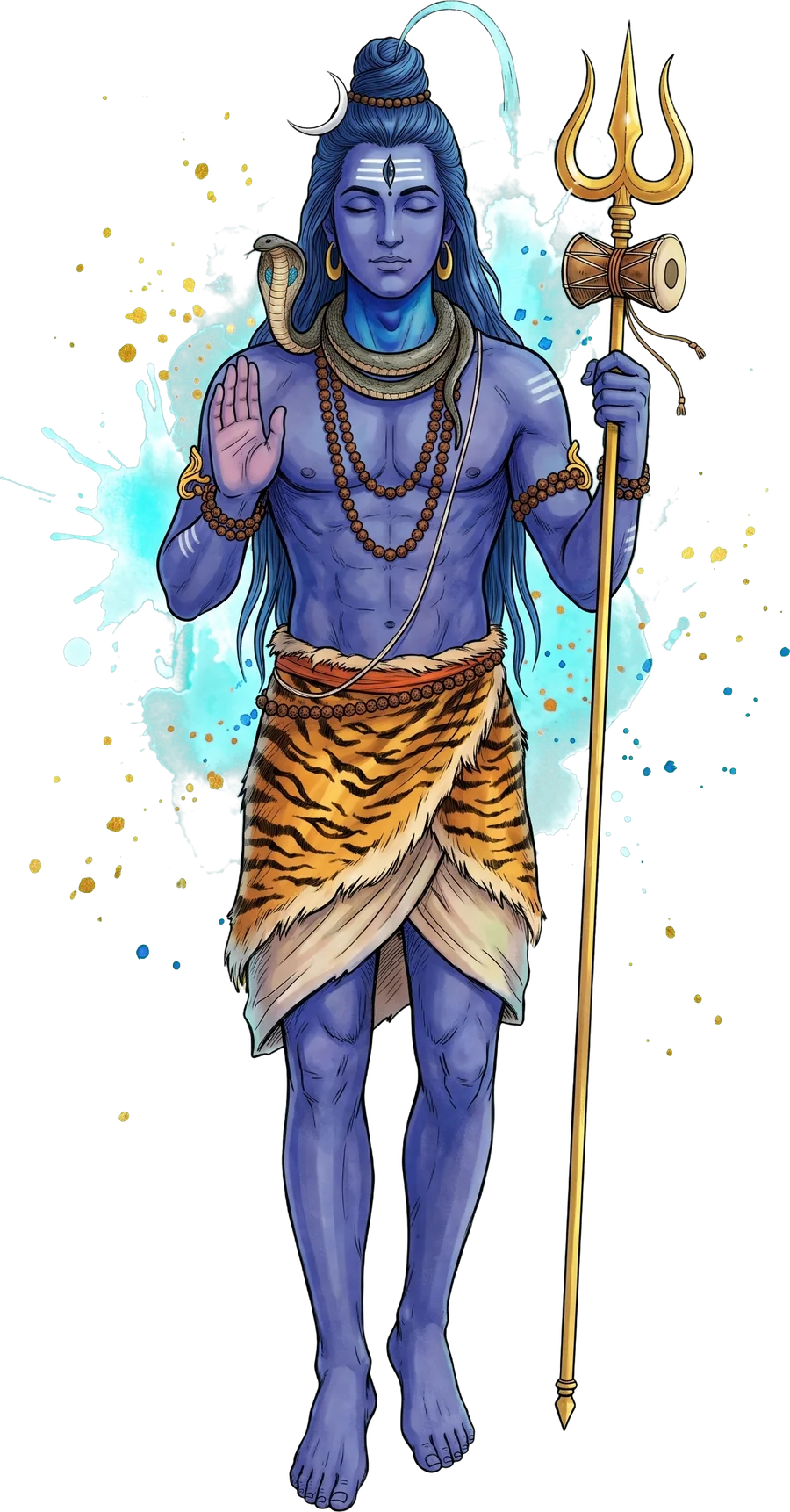
Three stories here are his own: how he took the valley from Shiva by crying at the door in The Boy Who Cried at Badri, how Shankara raised him out of the river in The Image in Narad Kund, and how, as the sages Nara and Narayana, he welcomed the party that came to break his penance in The Guests Indra Sent. The tree that names the place is Lakshmi's story, The Badri Tree; Tulasi's penance at Badari opens The Stone from the Gandaki; and the serpent Shesha keeps his penance there in The Serpent Who Holds the Earth.