As the temple and the Skanda Purana tell it
Himalaya · the Narad Kund and the Tapt Kund, Badrinath · 3 min read
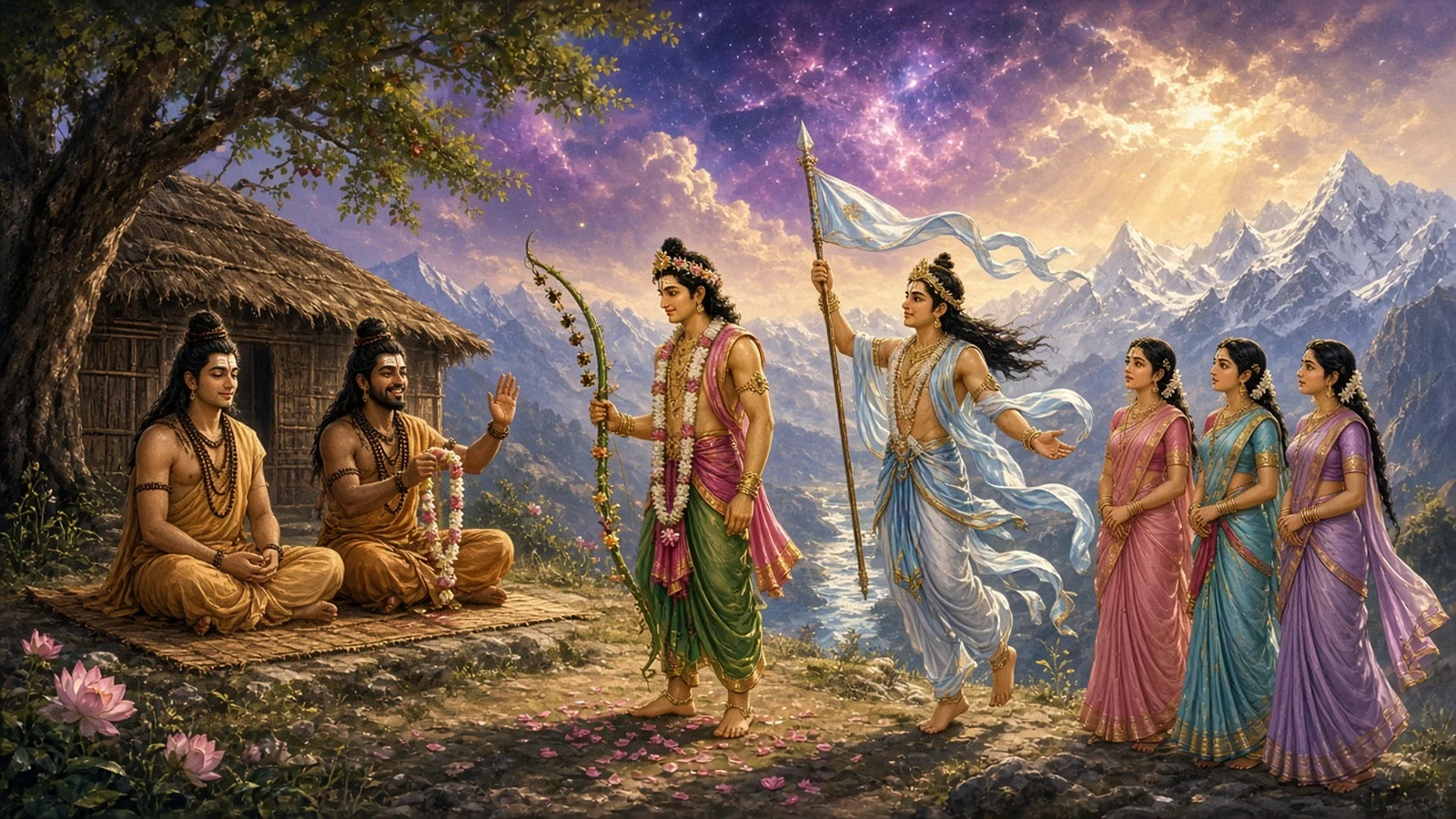
Near the end of the third age of the world the gods found they could no longer reach Vishnu. Sages who had once seen him by penance saw nothing. The gods went to Brahma, and Brahma did not know the reason either, so he took them all to the shore of the ocean of milk, and there they praised the Lord until he rose from the water.
He spoke to Brahma alone. The others did not hear a word.
"He has drawn back," Brahma told them afterwards. "The minds of men are growing crooked, and he will not stand in every holy place as he did. When the dark age comes, go to Badari. He will be seen there."
The temple at Badrinath says that before he went he left something behind: an image of himself, small and black, seated with his legs folded and his hands in his lap, laid in the Alaknanda under the rock of Narada. It was Narada who had stood on that rock for sixty thousand years, living on air, to see him, and had asked that the Lord's presence there should never end. It was Narada, the temple says, who served the image first.
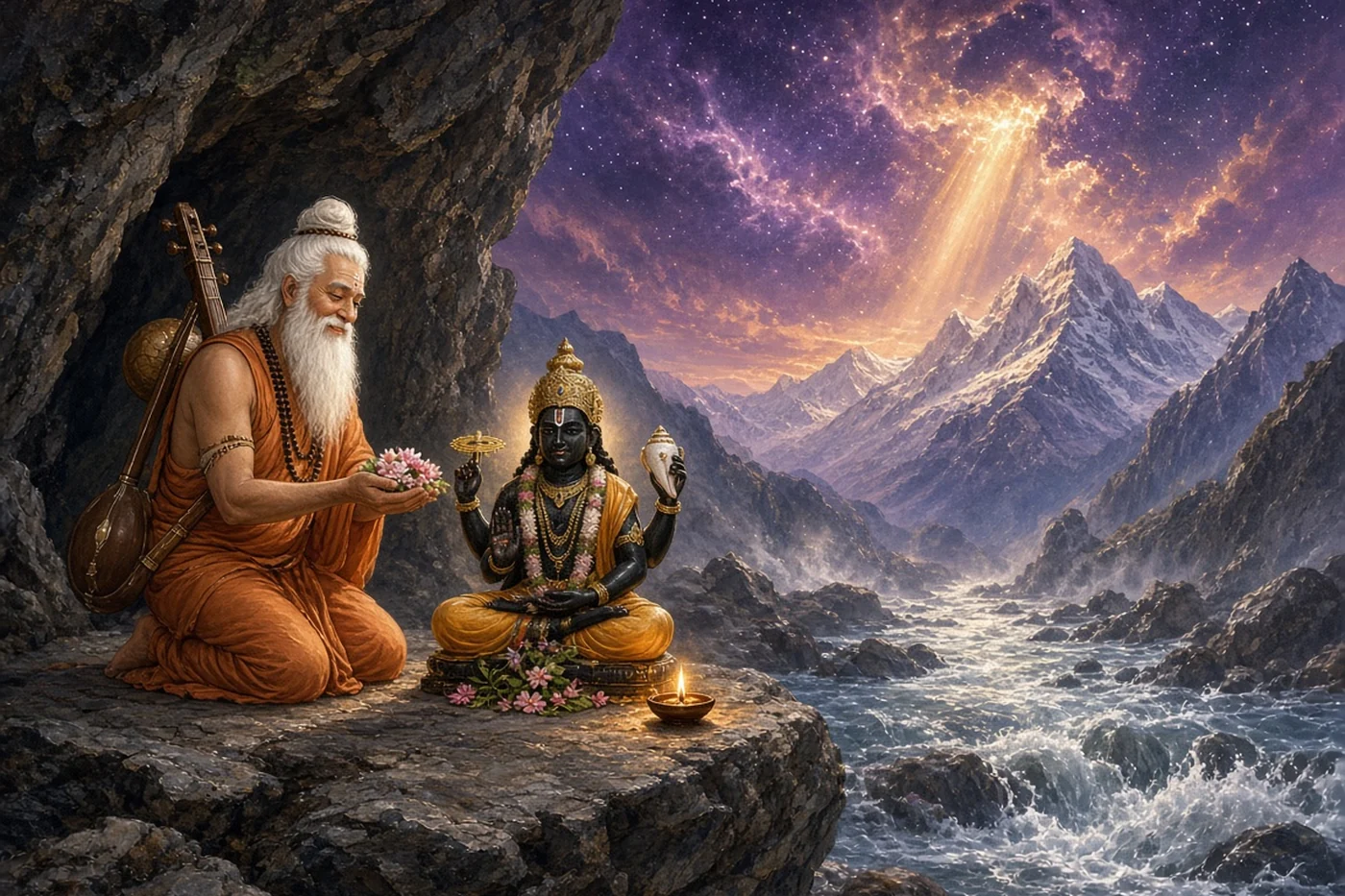
Ages went by, and hard times came to the mountains. The shrine emptied, and the image went into the water. Some say it was thrown there, some that it was hidden to keep it safe. Either way it lay among the river stones in the Narad Kund, a bay of the Alaknanda closed in by rock, where the water runs grey and freezing off the glaciers, and Badari had no god for the pilgrims to see.
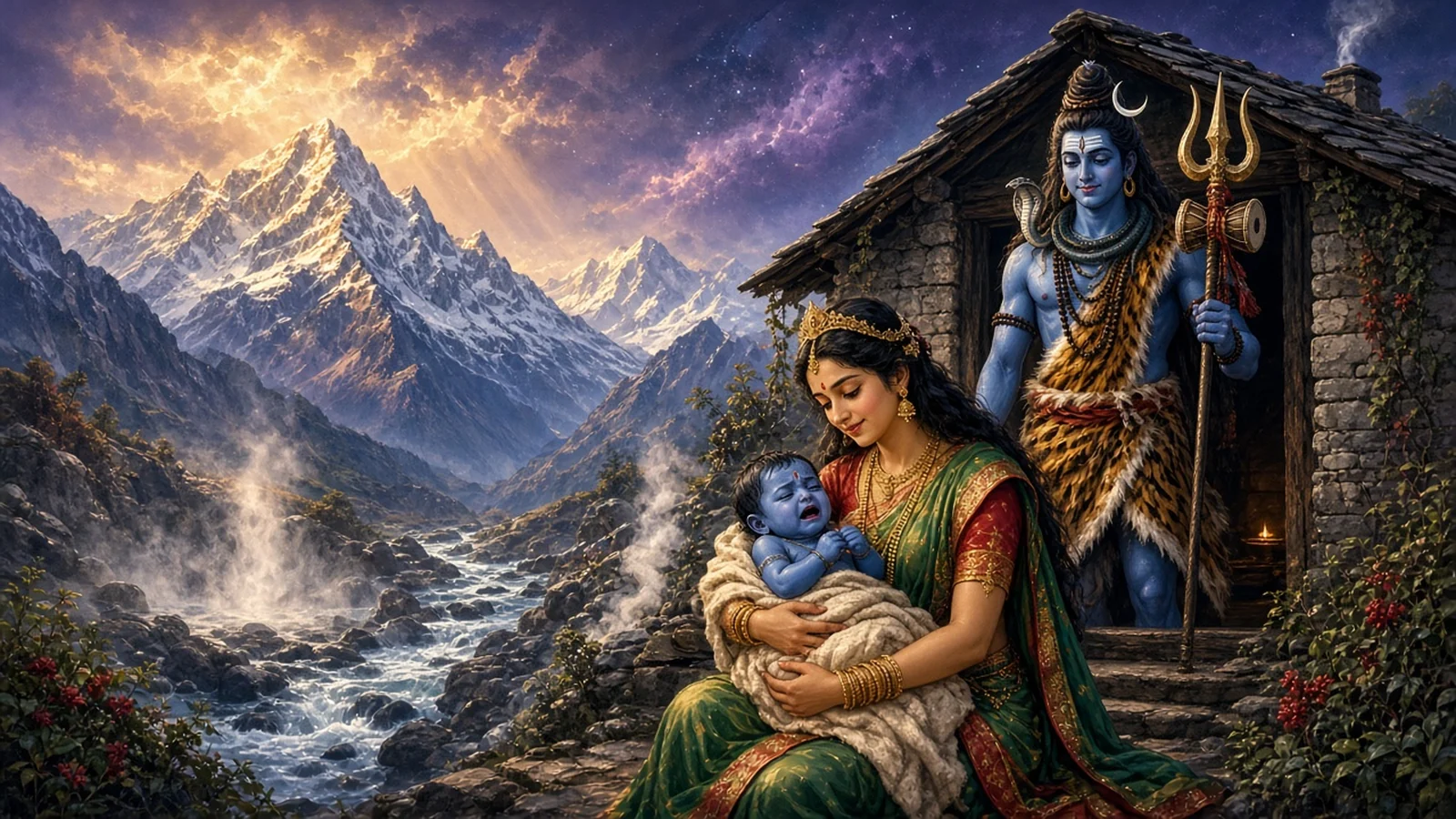
It had been foretold. In the Skanda Purana Shiva, sitting on Kailasa with his son Skanda, speaks of this place and this time.
"A recluse will come," he says, "and raise Hari out of the pool that is named for Narada, and set him up again for the good of the worlds."
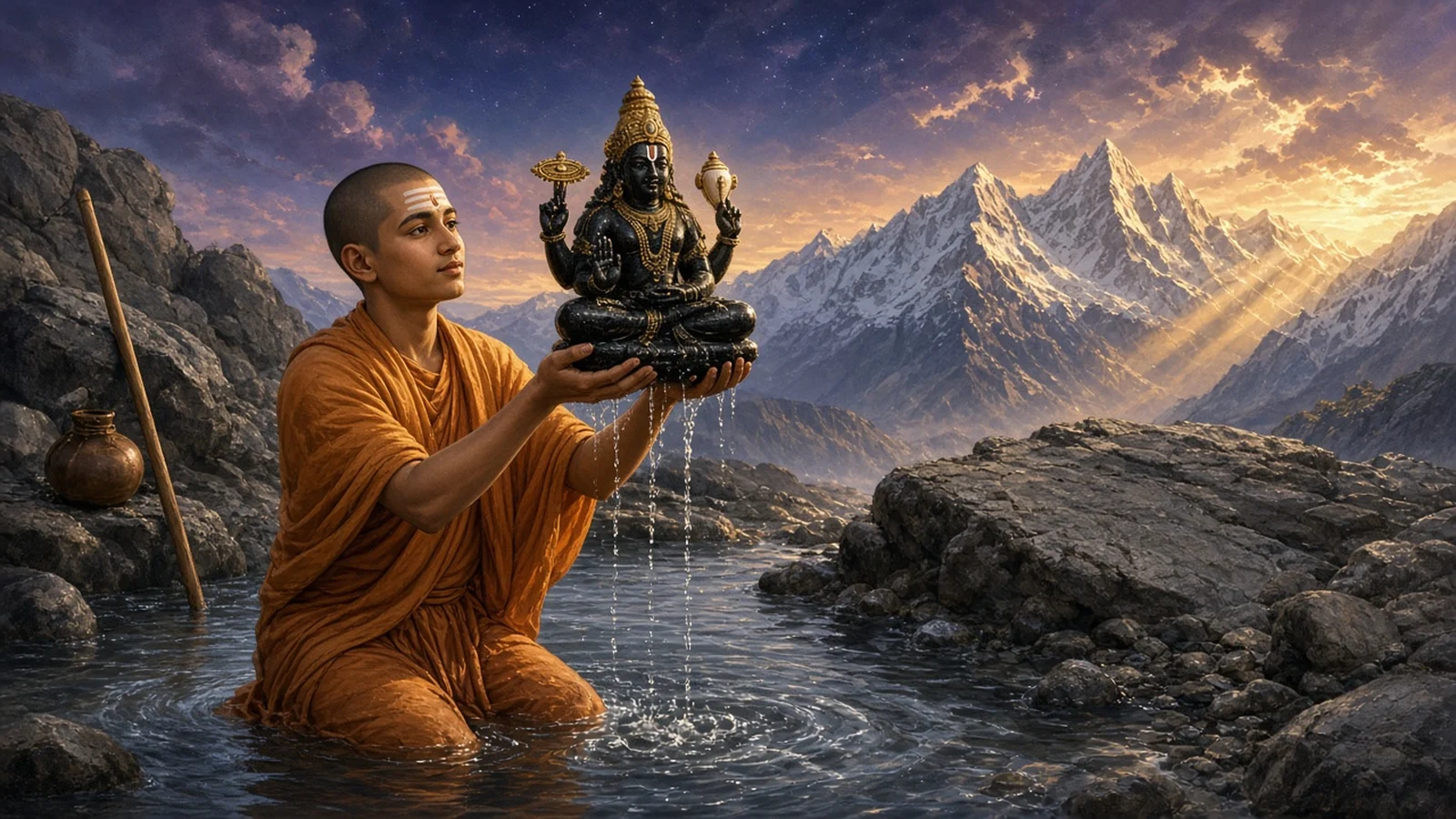
The temple knows who the recluse was. He came up the Alaknanda in the eighth century: Shankara, a young renouncer from Kerala, at the far other end of India, walking north to the holy places. At Badari there was no god to see, and he went to look for him where the old words said he would be, in Narada's water.
So Shankara went down into the Narad Kund. The temple says only that he found the image there and brought it out. It was a black stone, a shaligram, no bigger than a child could carry, and when the water ran off it they saw the god seated in meditation, two hands resting in his lap and two raised with the conch and the discus.
"Let him be worshipped here as he was," said Shankara.
He set the image first in a cave near the Tapt Kund, the hot spring that steams below the temple. The local tradition adds that a king helped him, Kanak Pal of the Parmar line.
"Tell me what the god needs," the king said, "and he shall have it."
Between them the shrine was set up again.
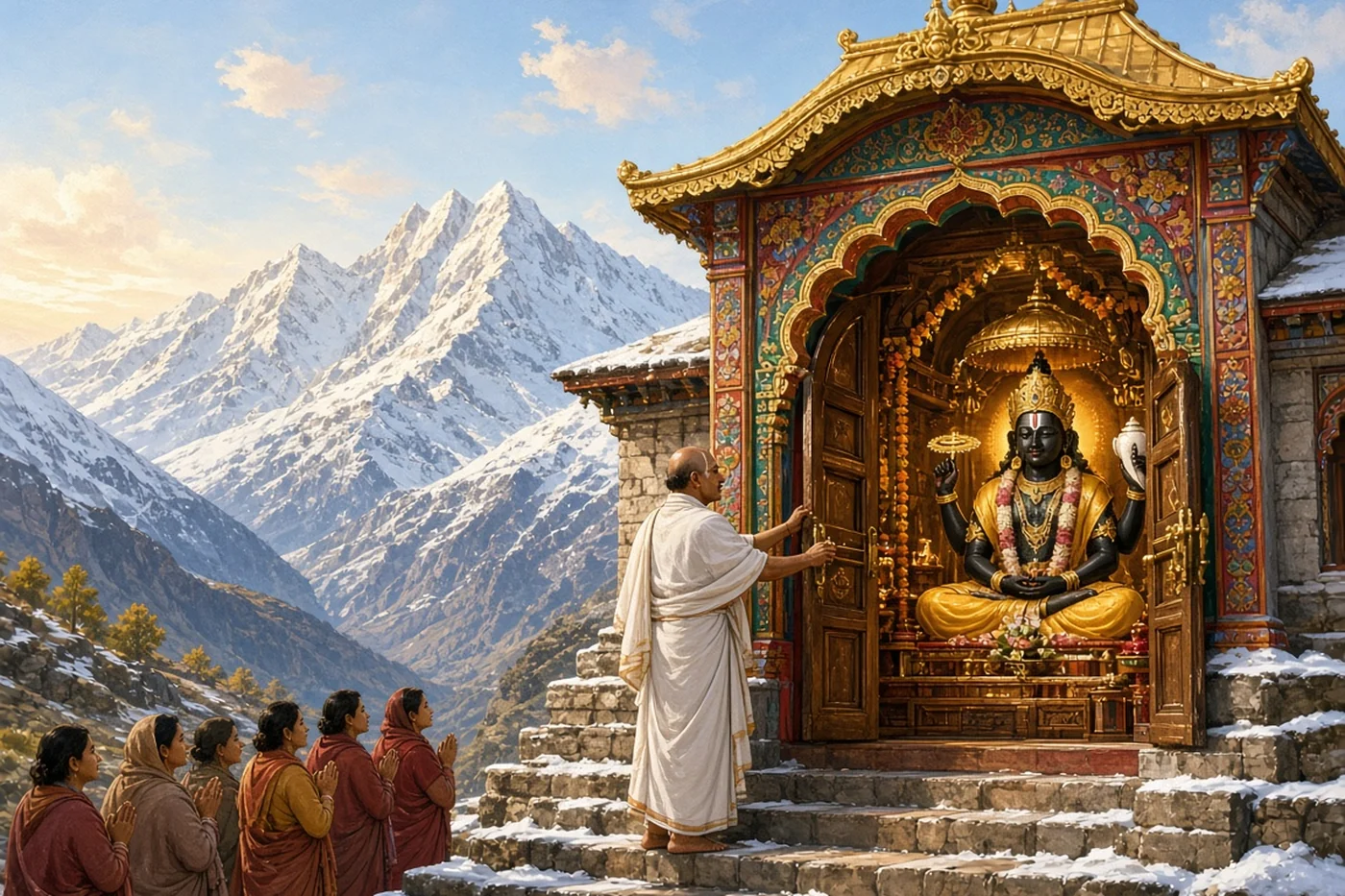
That is why pilgrims still go down to the Narad Kund and bathe in it before they climb to Badrinarayan. And it is why, they say at Badrinath, the god's chief priest still comes from Shankara's own country: every year the Rawal, a Nambudiri Brahmin of Kerala, opens the doors in the spring and serves the god until the snow shuts them again.
As the histories remember it
Himalaya · Pandukeshwar, Badrinath and Kerala · 1 min read
The temple's history is longer than one rescue. A second tradition of the valley tells how the image went into the water and came out again, and this one has no enemy in it. There was a time, it says, when no pilgrims came. The priest of Badari had no offerings and no income, and could not keep the temple open. Before he shut the doors he hid the image in the hot water of the Tapt Kund, where at least it would be safe.
The one who brought it out in this telling is Ramanuja, the great Vaishnava teacher of the south, who was staying down the valley at Pandukeshwar. It was Ghanta Karna, a god of Garhwal, who prompted him.
"The lord of Badari is lying in the hot spring," the story has him say. "Go up and raise him."
Ramanuja went up, and the image was set up again.
Then the record begins, and it is plainer. In the sixteenth century a king of Garhwal moved the image into the present temple, and his successors enlarged it in the seventeenth. The earthquake of 1803 broke it, and the King of Jaipur largely built it again. The first priests had been Dandi Sanyasis, ascetics of Shiva's order. In 1776 the last of them died with no disciple to follow him, and the king of Garhwal sent to Kerala for Nambudiri Brahmins.
They have come ever since. The Rawal must be unmarried, a Vaishnava, and a master of Sanskrit; Kerala proposes the man and the Garhwal ruler approves him. He serves from the opening of the doors in April or May until their closing in November, and when the snow comes he goes down to Jyotirmath, or home to Kerala.