As the Bhagavata tells it
Bhagavata Purana 11.4 and 5.19 · Badarikashrama · 3 min read
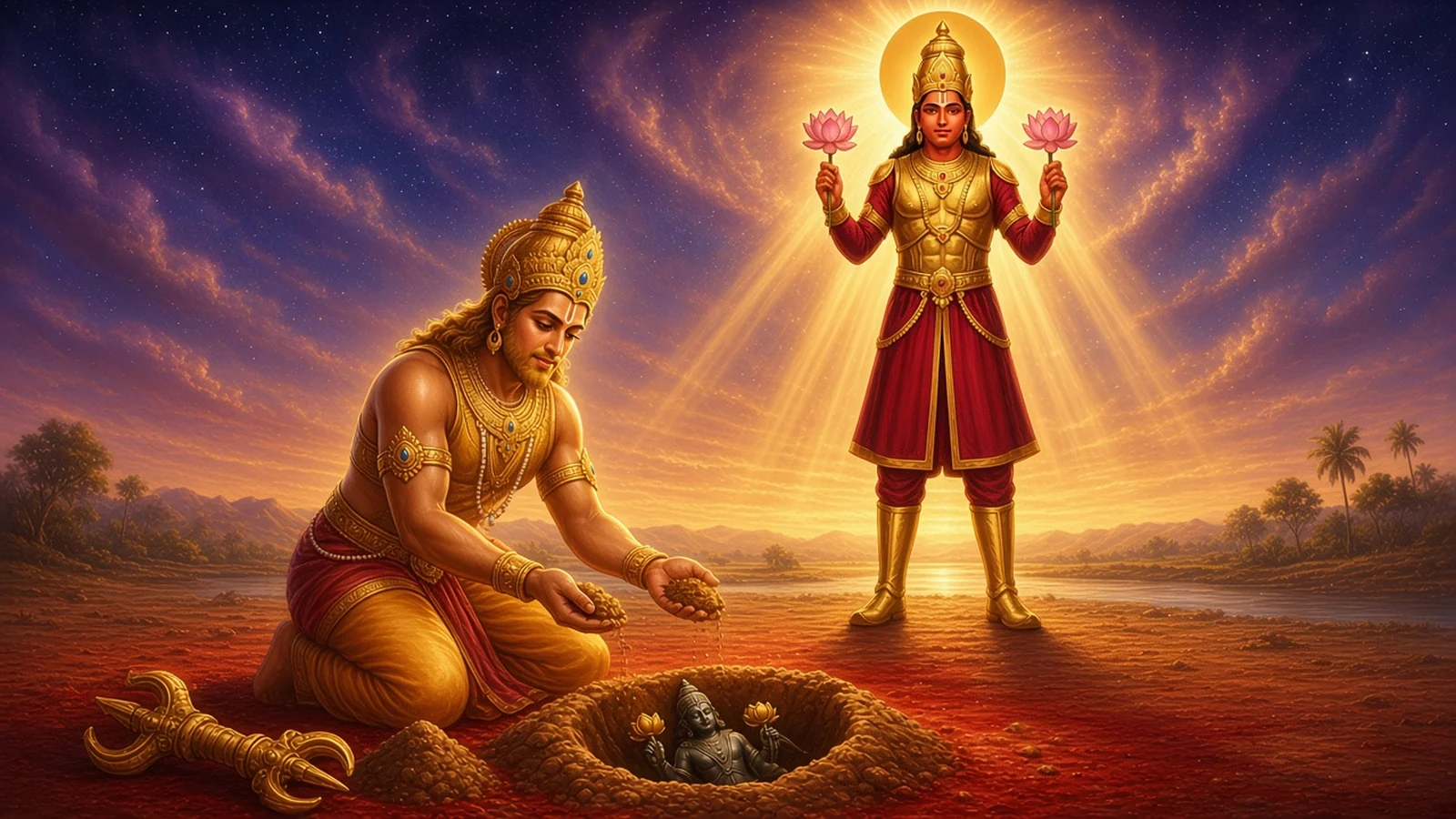
Dharma, the lord of right order, had a wife named Murti, one of the daughters of Daksha, and the Lord was born to them as a sage. The world knows him as Nara and Narayana, two ascetics with one purpose, and the place he chose for that purpose was Badari, the hermitage of the jujube, high in the Himalaya above the river.
There he sat in penance. He taught the way by which a person's work stops binding him, and he lived it himself, which is harder.
In heaven Indra watched, and grew uneasy.
"Penance like that wins worlds," he said. "He is not doing it for nothing. He wants my kingdom."
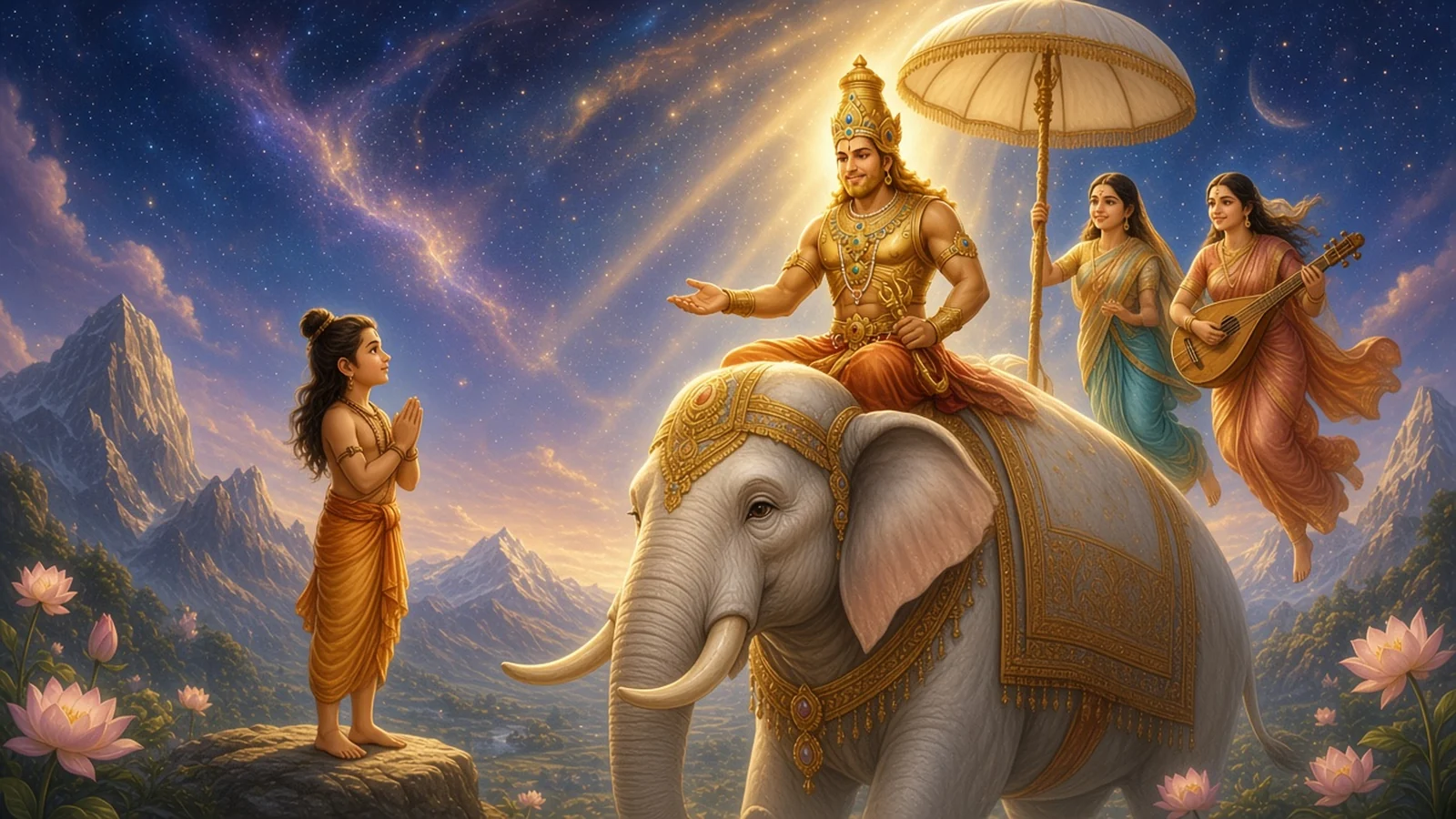
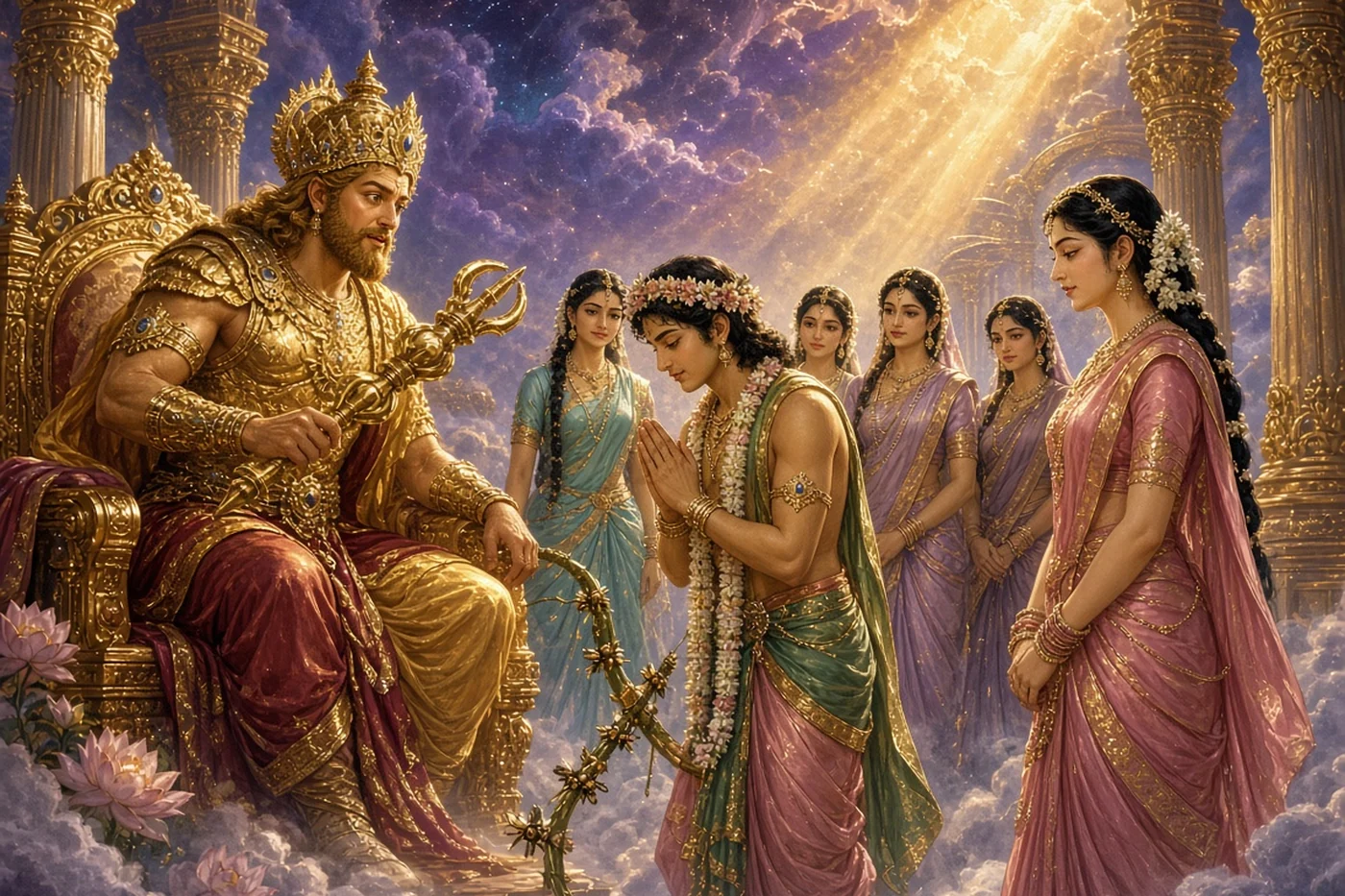
He called Kama, the god of desire, whose other name is Madana. "Go to Badari," he told him. "Take your friends. Take the soft wind, and the women of heaven. Break that sage."
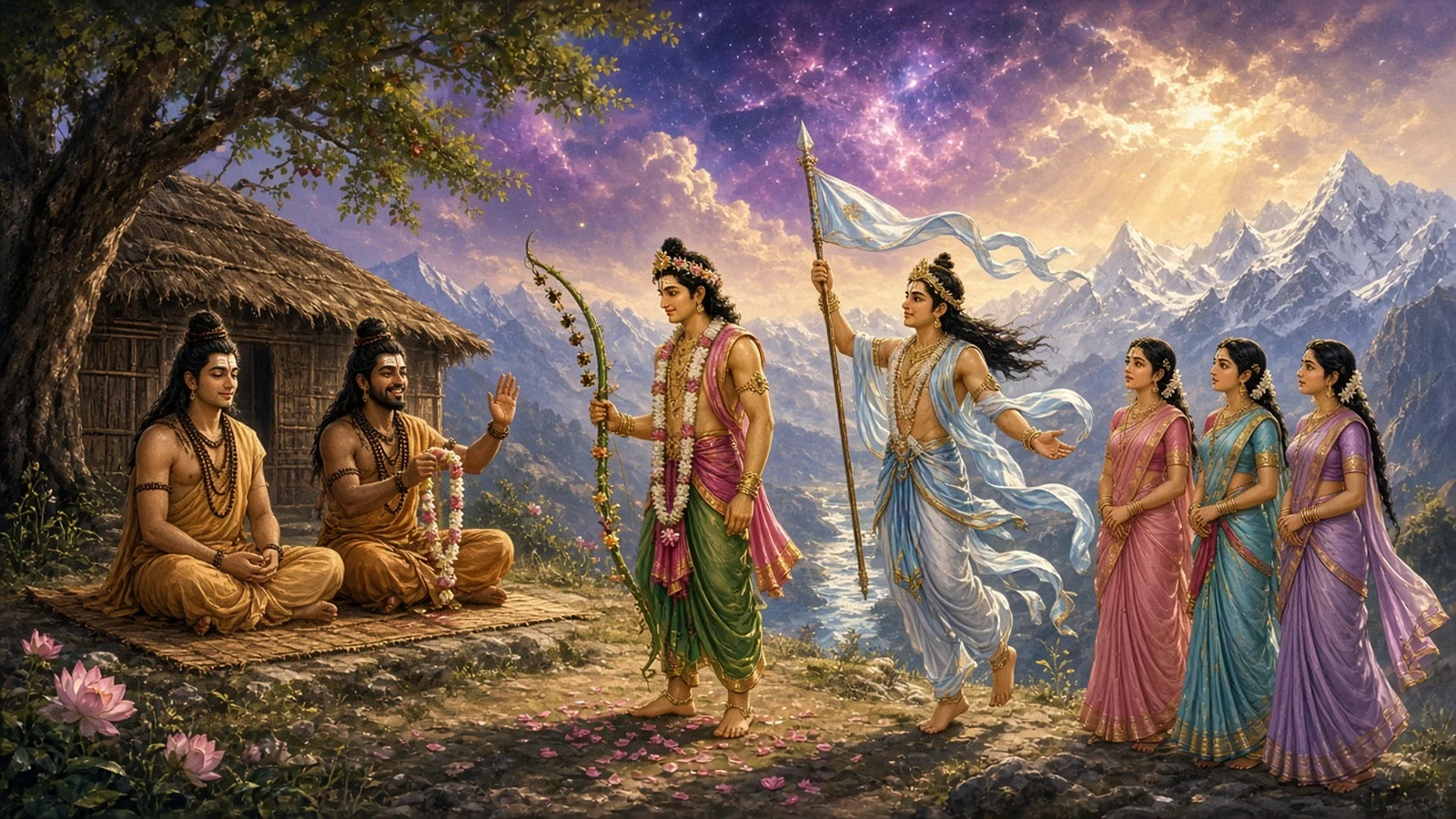
So they came up into the snows together: desire with his flowered bow, the wind, and the wives of the gods. They gathered round the hermitage and Kama loosed his arrows, which were glances, every one of them aimed.
Narayana looked up. He was not angry, and he was not proud. He laughed.
The visitors were trembling. They had expected a curse.
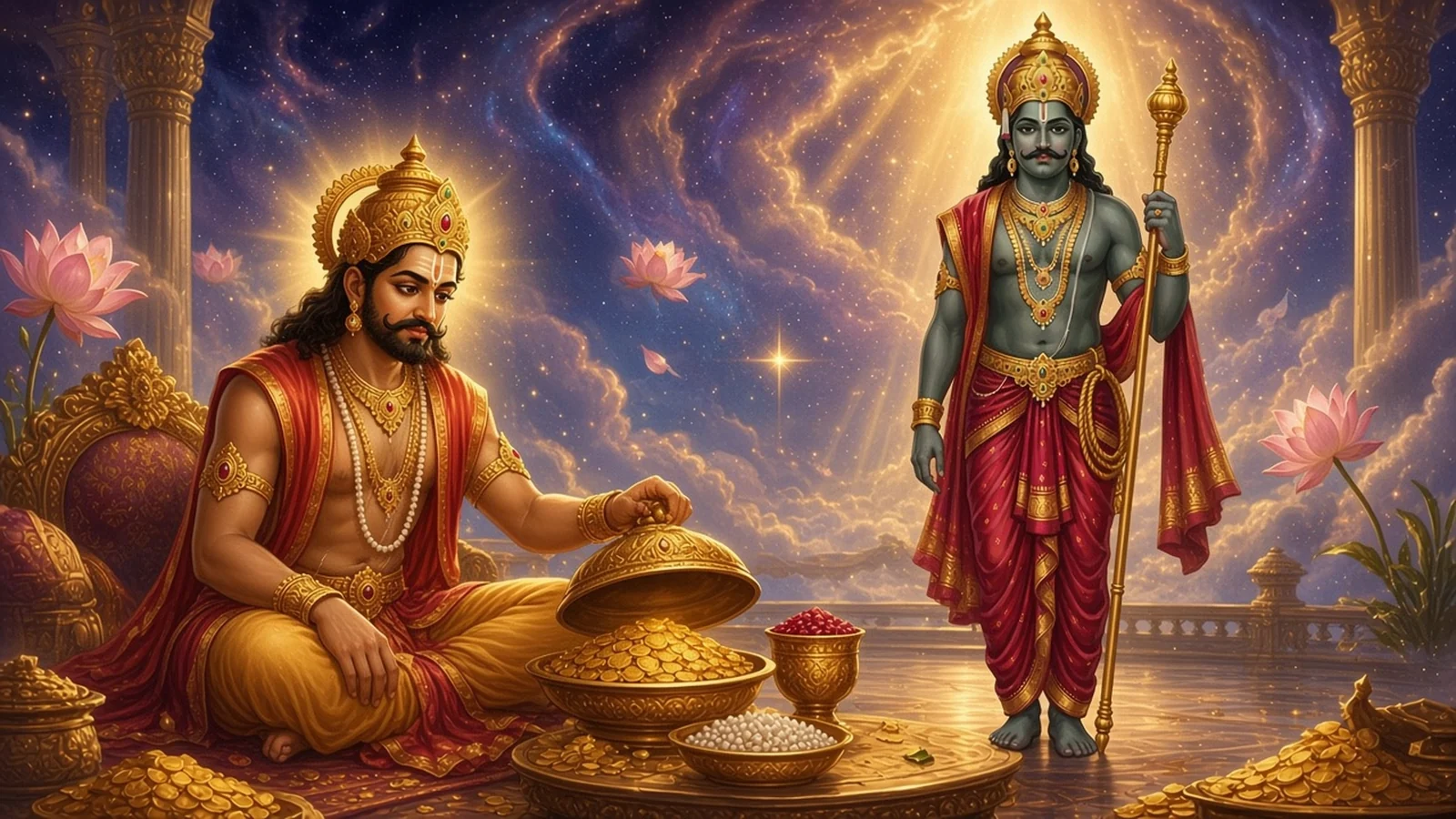
"Do not be afraid, Madana," Narayana said. "You either, wind. And you, ladies of heaven, there is nothing to fear here. You are my guests. Take these gifts from me. Stay a while. A hermitage is the holier for having guests in it."
That undid them more than any curse. They bowed their heads, ashamed.
"This is like you," they said. "We came to spoil your penance and you give us presents. Others who sit as you sit beat desire, and then lose to anger. They cross the whole sea of wanting and drown in a cow's hoofprint of rage, and everything they won is gone. You did not even get angry."
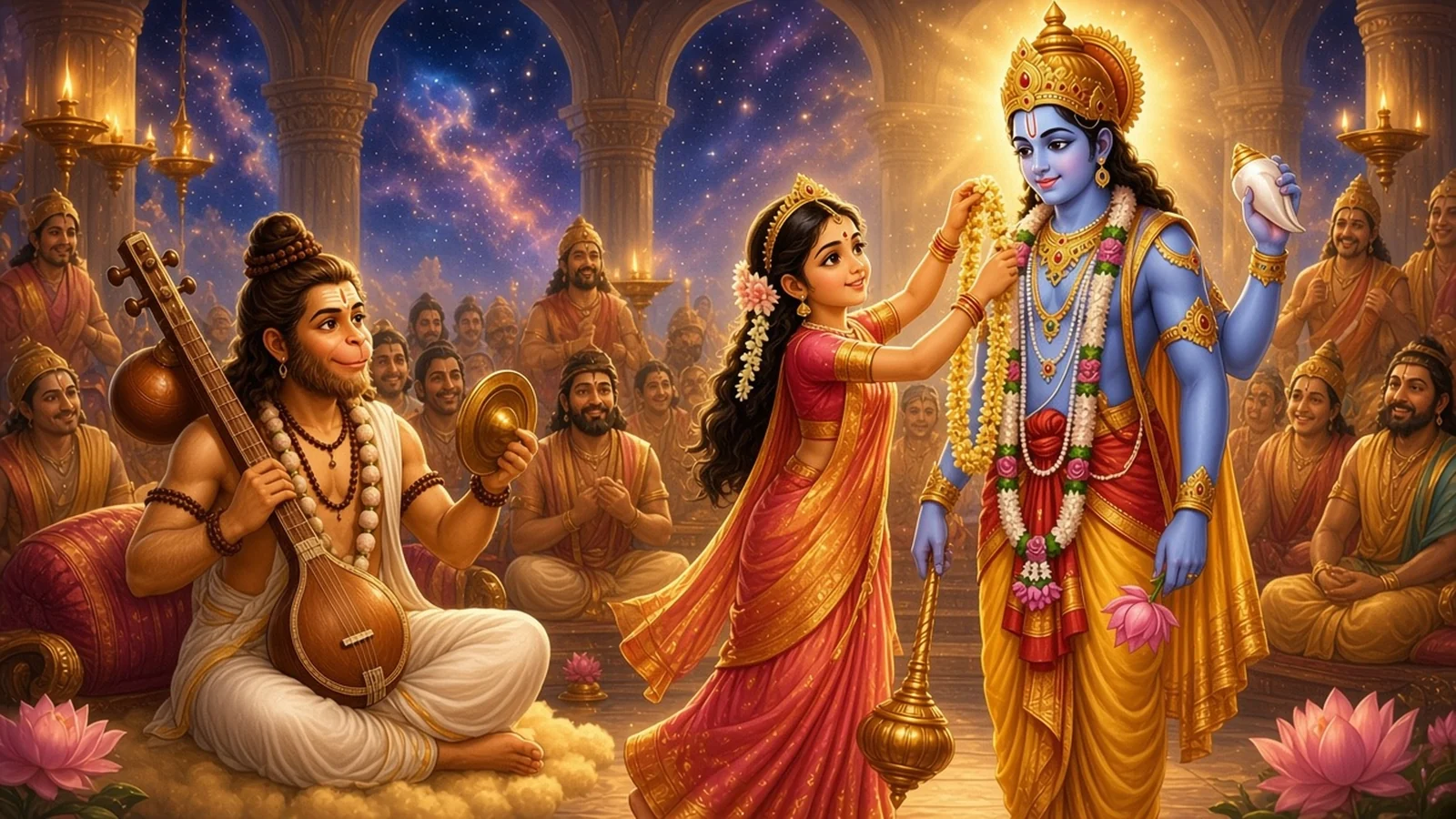
While they were still praising him he showed them something. All about the hermitage there appeared women, a great many of them, beautifully dressed and adorned, waiting on him. They were so lovely, and the air was so full of their fragrance, that the women of heaven felt suddenly plain, and the wind and the god of desire did not know where to look.
Narayana smiled a little.
"Choose one of them," he said, "whichever you like best. Take her with you. She will be an ornament for heaven."
They chose the loveliest, Urvashi, the best of the apsaras, and went back to Indra's city with her, saying the sacred syllable as they went; what became of her among men is told in Urvashi and Pururavas.
In the assembly of the gods they told Indra everything that had happened at Badari. He listened, and when he understood who the sage was, and what he himself had tried to do, he was frightened, and astonished.
The sage did not come down from the mountain. The Bhagavata says the Lord stays at Badari in the form of Nara and Narayana, keeping his penance until the end of this age, for the good of everyone who lives. And Narada comes there, with the people of the land, to sit before him and sing to the Lord whose nature is peace, the wealth of those who own nothing.
As the Mahabharata tells it
Mahabharata, Shanti Parva 335 and 336 · Vadari on the Himalaya · 2 min read
Yudhishthira once asked Bhishma who was the god of the gods and the ancestor of the ancestors, and the old man answered him with a story he had heard from his own father: a talk between Narada and the sage Narayana.
In the first age, he said, the eternal Narayana was born as four sons of Dharma: Nara, Narayana, Hari and Krishna. Two of them, Nara and Narayana, went up to the retreat in the Himalaya called Vadari. There they kept a penance so severe that their bodies wasted to nothing, and a light came from them so fierce that the gods could not bear to look at them.
Narada, who wanders all the worlds, came down one day from the top of Meru to the mountain Gandhamadana, and from there he found his way to Vadari. He arrived at the hour of their daily rites, and he stood and watched them. They were making offerings to the gods and to the ancestors, the way any householder does.
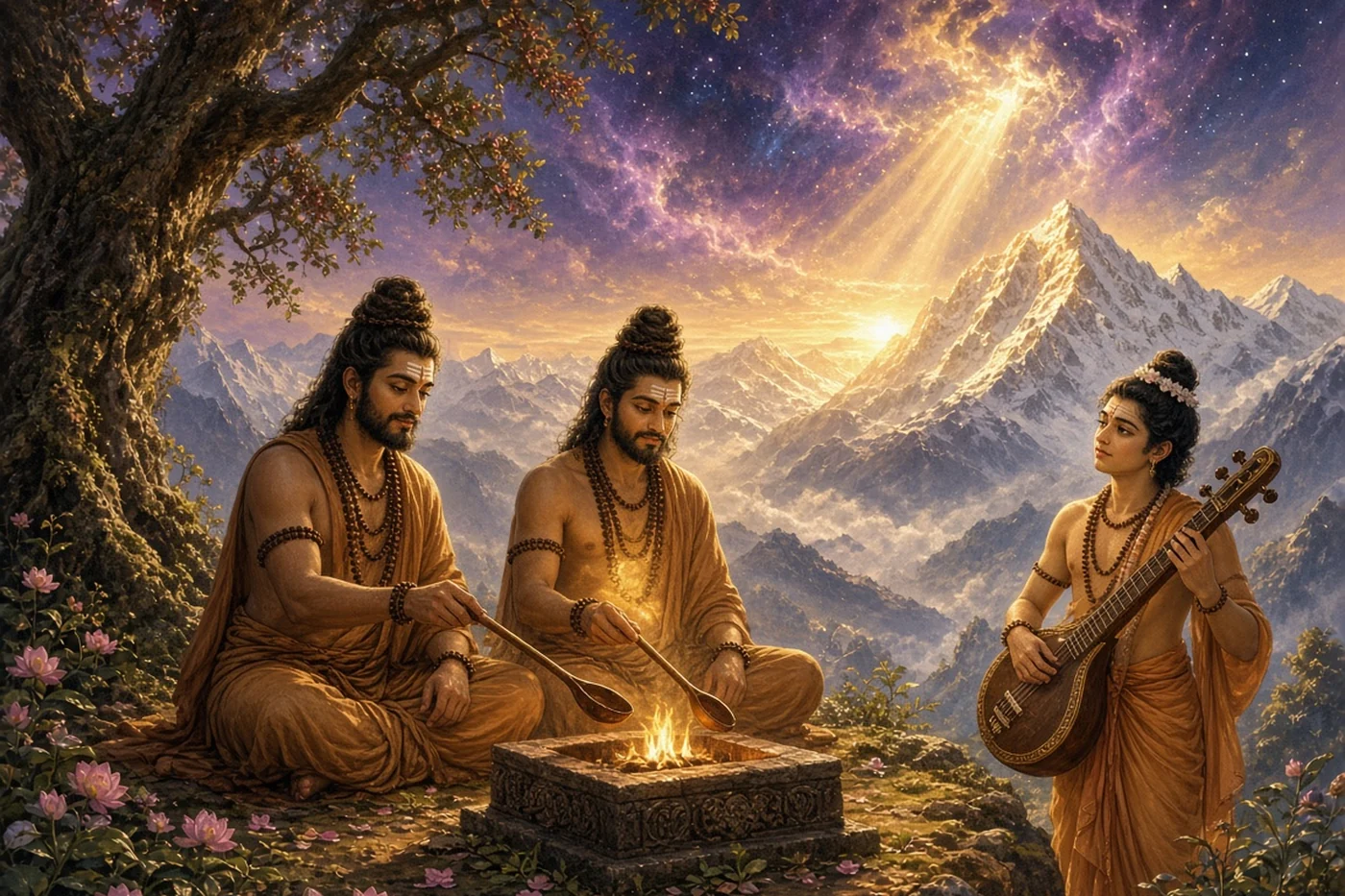
That puzzled him. These two, he thought, are the refuge of the whole universe. Every world rests in them. So whom are they worshipping?
When their rites were done they welcomed him with all honour, and he sat down with them and bowed, and he asked.
Narayana did not brush the question away. He said it touched an old mystery, but that he would answer it, because Narada loved him. They worshipped, he said, the Self within everything, the knower of every field, the being beyond all qualities, from whom both he and his brother had come. That was the god of the gods. All their rites went to him.
Narada heard him out. Then he rose into the sky by the power of his yoga, came to rest again on the peak of Meru, and turned north-west, towards the White Island in the ocean of milk, to see that being for himself.