As the Mahabharata tells it
Adi Parva, sections 71 and 72 · Kanva's hermitage on the Malini · 3 min read
King Dushyanta, out hunting, came to the hermitage of the sage Kanva and found it empty except for a girl in a hermit's bark dress, who welcomed him with water and a seat. She said she was Kanva's daughter.
"Kanva has never broken his vow," said the king. "How can he have a daughter?"
"A sage once asked my father that," she said, "and I heard his answer. This is what he told him."
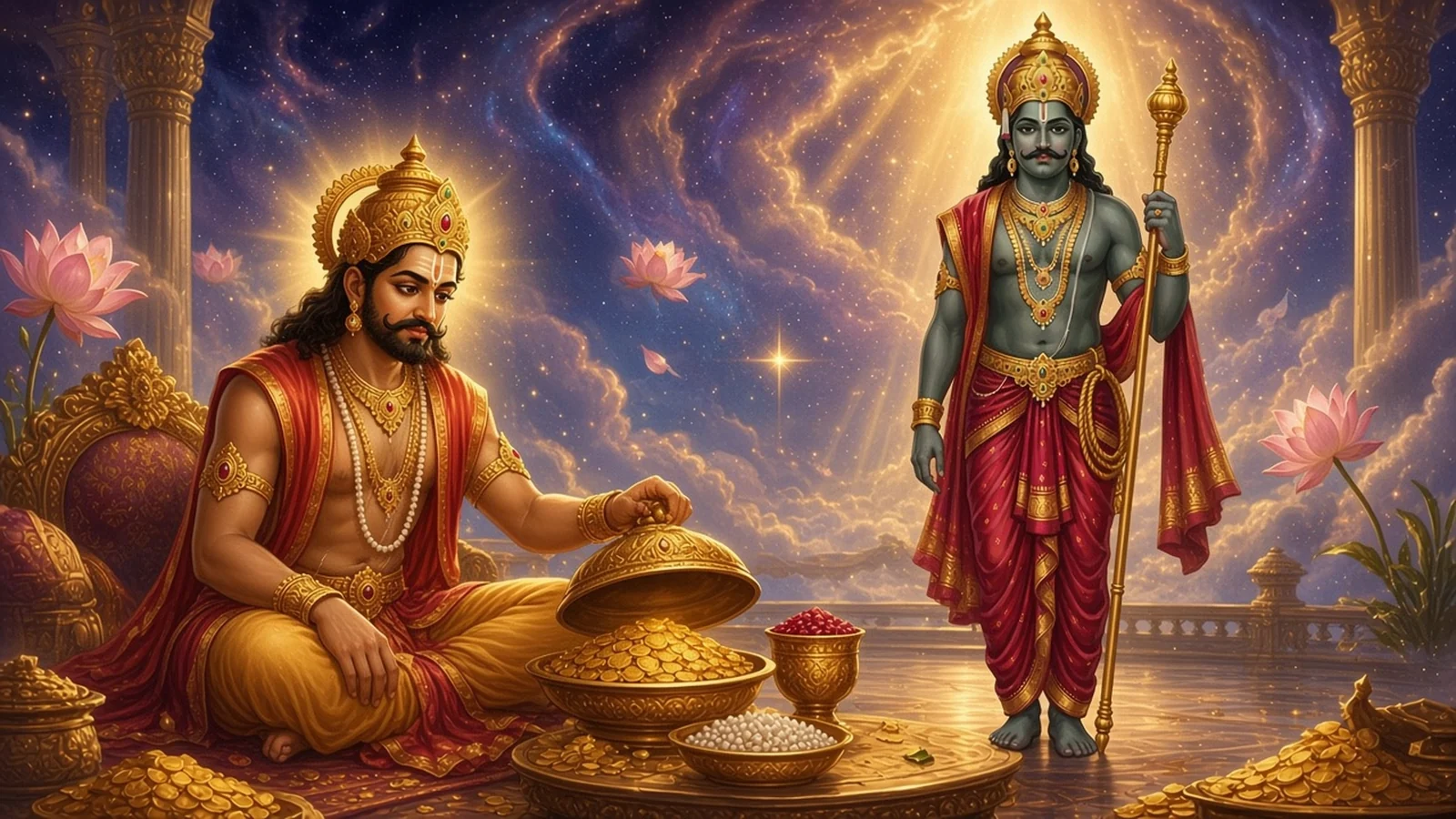
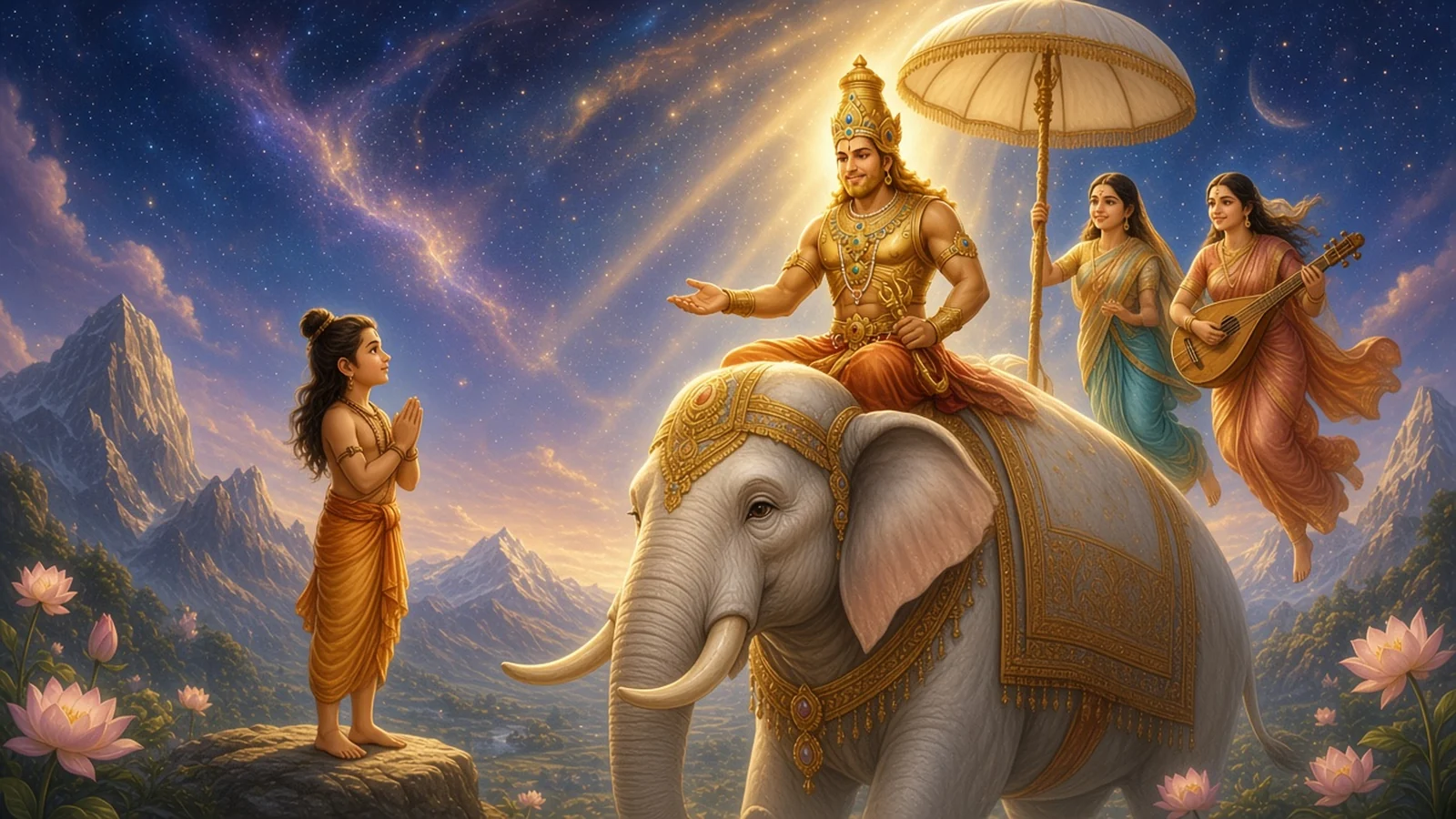
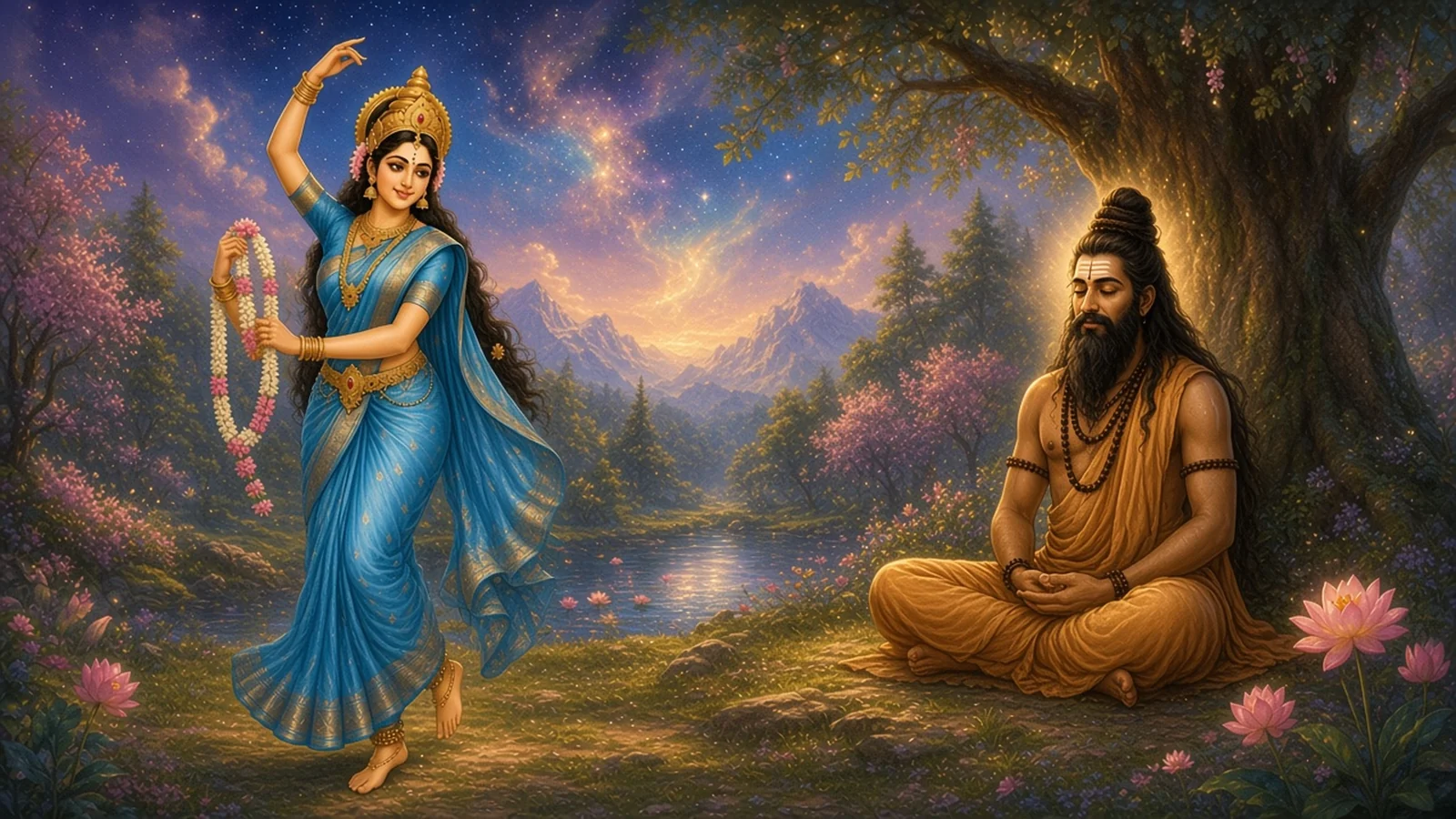
Long ago the sage Vishvamitra sat in a penance so fierce that Indra, king of the gods, began to fear for his throne. He called Menaka.
"You are the first of the Apsarases," he said. "Do me this service. That sage burns like the sun, and my heart shakes when I think of him. Go and draw him out of his penance with your beauty and your smiles and your talk."
Menaka did not want to go.
"You are afraid of him yourself," she said, "so why should I not be? He made the great Vasishtha watch his sons die. He was born a warrior and made himself a Brahmin by penance. He made a river, the Kaushiki, to bathe in. When he was angry he made a second world, with stars of his own. He can shake the earth with his foot. His mouth is a fire and his eyes are the sun and the moon. How is a woman like me even to come near him?"
She thought about it, and then she made her terms.
"If I must go, keep me safe. When I begin to dance before him, let the Wind come and snatch at my dress, and let the god of love be there to help me, and let the Wind bring him the scent of the forest flowers."
Indra agreed, and told the Wind to go with her.
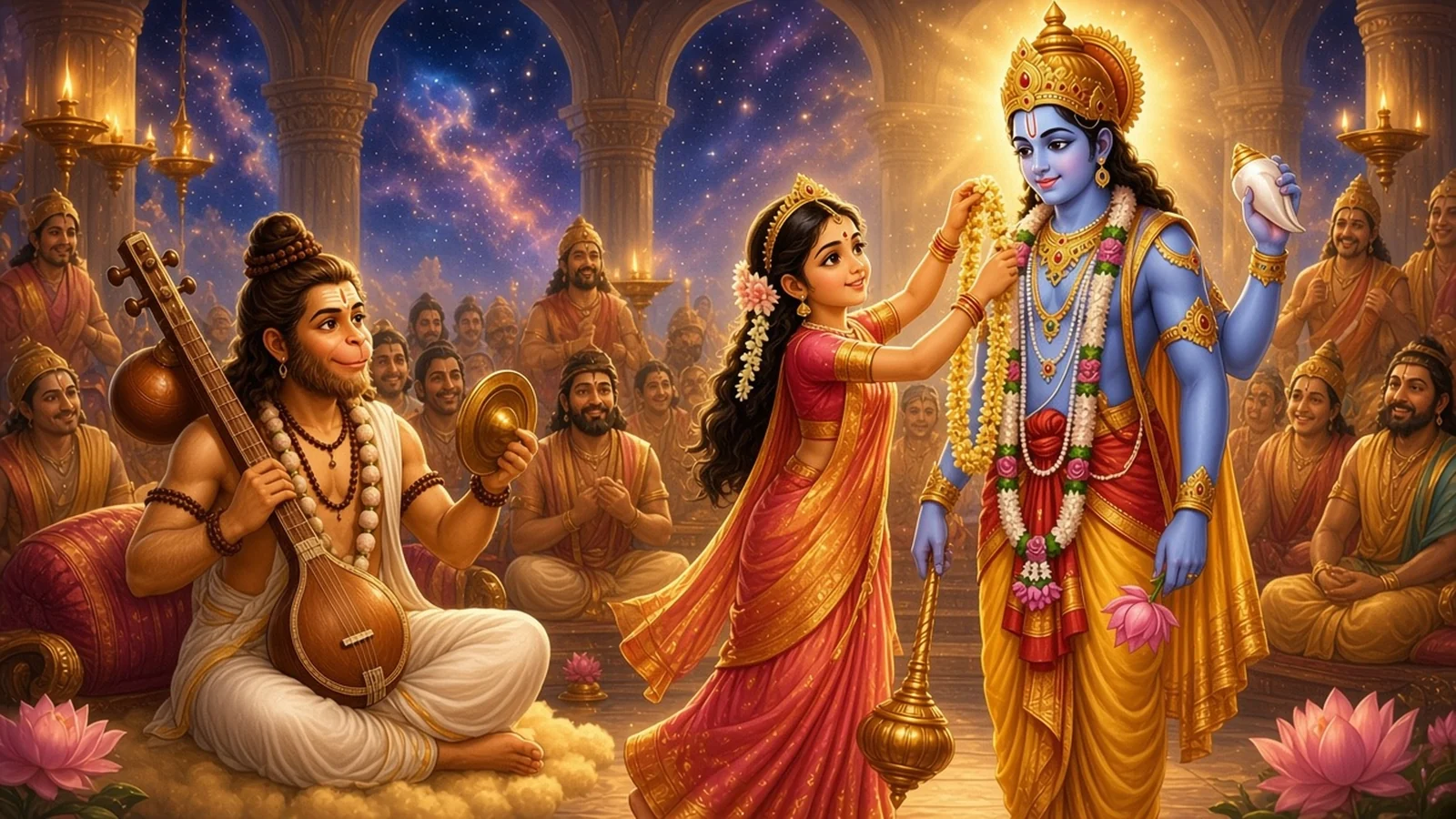
So Menaka came, timid and lovely, to the hermitage where Vishvamitra had burned away every fault and was burning still. She bowed to him and began to play and dance in front of him. The Wind, as they had planned, carried off her moon-white wrap, and she ran after it as if she were embarrassed and very cross with the Wind, right before the sage's eyes.
Vishvamitra looked, and saw how lovely she was, and his long penance gave way. He asked her to stay with him, and she stayed.
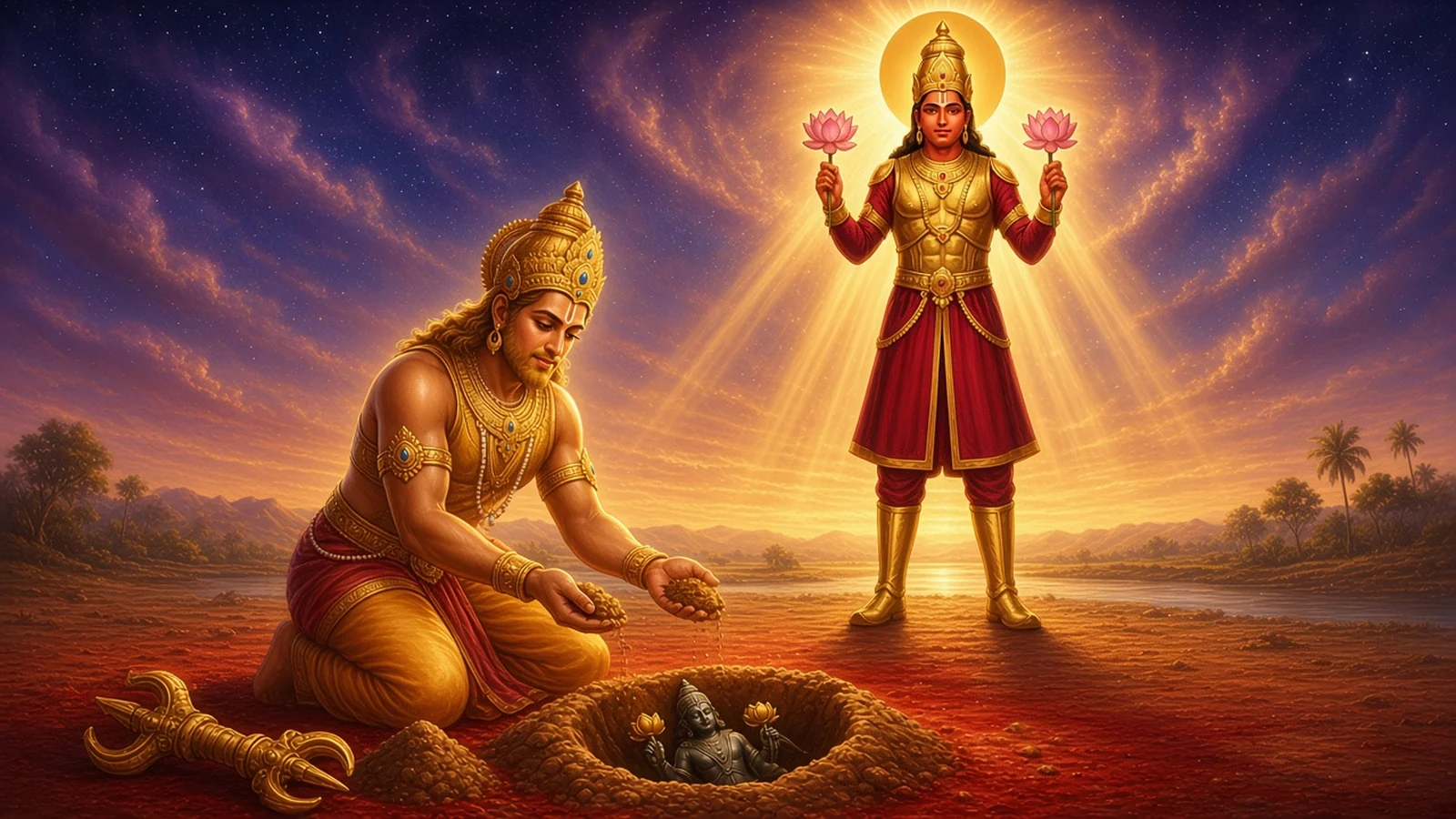
They lived together a long time, and it seemed to them a single day. A daughter came of it. When her time was near, Menaka went to the river Malini, which runs through a valley of the Himalaya, and there she gave birth. She left the baby on the bank and went away.
The river valley was empty of people and full of lions and tigers. But a flock of great birds came and sat in a ring around the child, and no animal and no demon touched her.
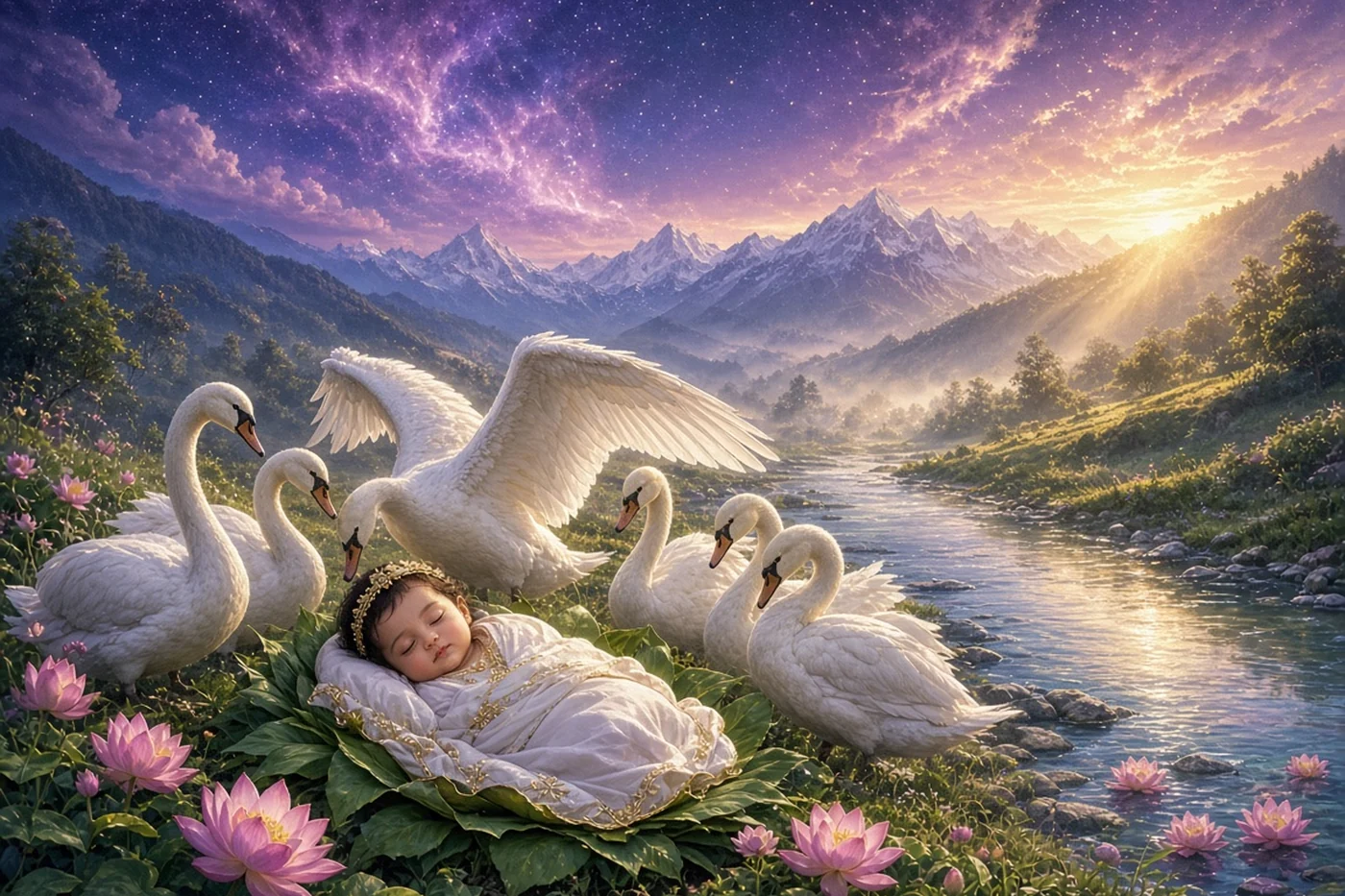
"I came down to bathe," Kanva told the sage who asked, "and found her there in the wilderness with the birds keeping guard. I brought her home and made her my daughter. Scripture names three fathers: the one who gives the body, the one who saves the life, the one who gives the food. Because birds, shakunta, guarded her, I named her Shakuntala."
"So I count Kanva my father," the girl told the king, "for I never knew the other."
As the Ramayana tells it
Valmiki Ramayana, Bala Kanda 63 · the lakes of Pushkara · 2 min read
In the Ramayana it is Shatananda, priest of Mithila, who tells the young Rama about the life of Vishvamitra, and he tells it as the life of a man climbing.
Vishvamitra had done penance for a thousand years. Brahma came with the gods and told him he had become a rishi, a seer, by his own deeds, and went away again. The sage was not content. He went on with his penance at Pushkara.
After a long time Menaka, the finest of the Apsarases, came down to bathe in the lakes of Pushkara. Vishvamitra saw her in the water, as bright as lightning in a black cloud, and lost his heart.
"Apsaras, you are welcome," he said. "Stay with me here in my hermitage."
She stayed, and ten years went by in comfort and ease.
Then one day the sage woke out of it and was ashamed.
"This is the gods' doing," he said. "They wanted to steal the fruit of my penance. Ten years have gone by as if they were one day and one night, and I let them go."
He sighed long and hard. Menaka stood before him, shaking, with her palms joined, waiting for the curse that a sage like him might speak.
He did not curse her. He spoke kindly to her and let her go. Then he went north into the Himalaya, to the bank of the river Kaushiki, and resolved to master desire. For a thousand years he did penance there, until the gods themselves were afraid.
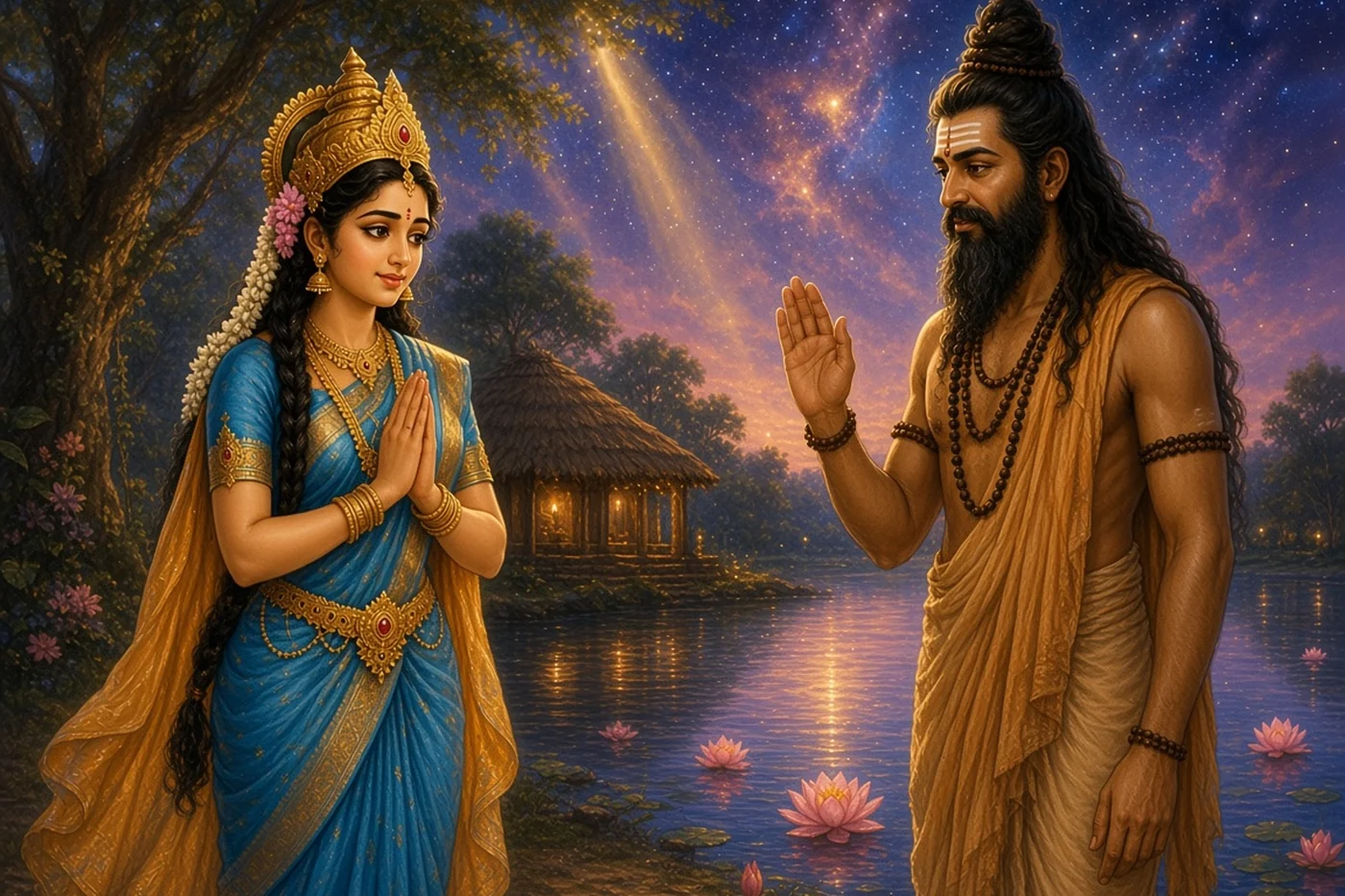
They went to Brahma, and Brahma came to the river.
"You are a great seer now," he told Vishvamitra, "a maharshi."
"If you had called me a Brahmarshi, a seer of the highest kind," the sage said, "I would know I had mastered myself."
"Your senses are not yet your own," said Brahma. "Keep trying." And he left him to it.