As the Vana Parva tells it
Mahabharata, Vana Parva 44 to 46 · Indra's heaven · 3 min read
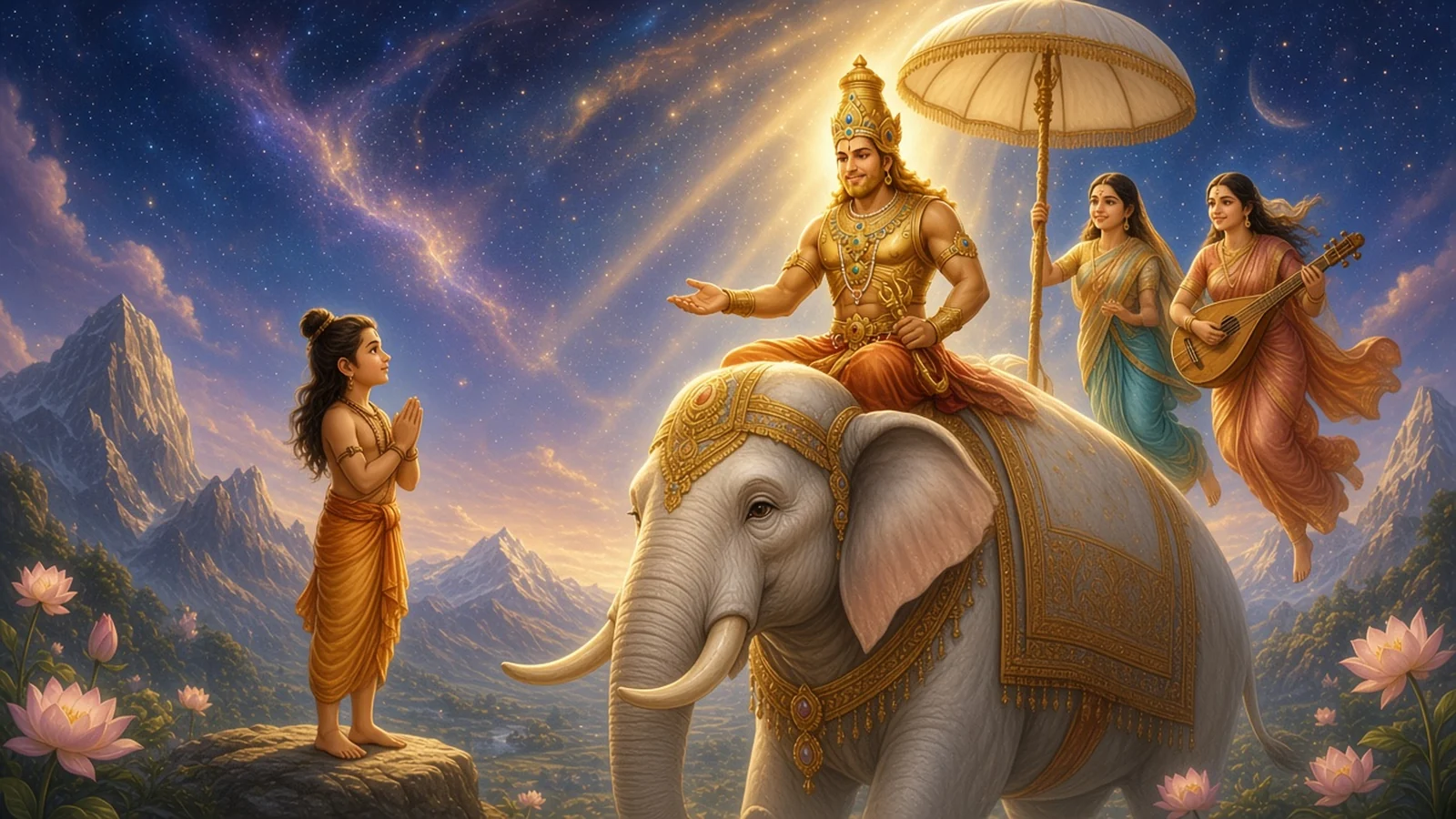
In the years of the Pandavas' exile in the forest, Arjuna went up to heaven to win weapons from Indra, who was his father. He stayed five years. When he had every weapon, Indra gave him a teacher of another kind.
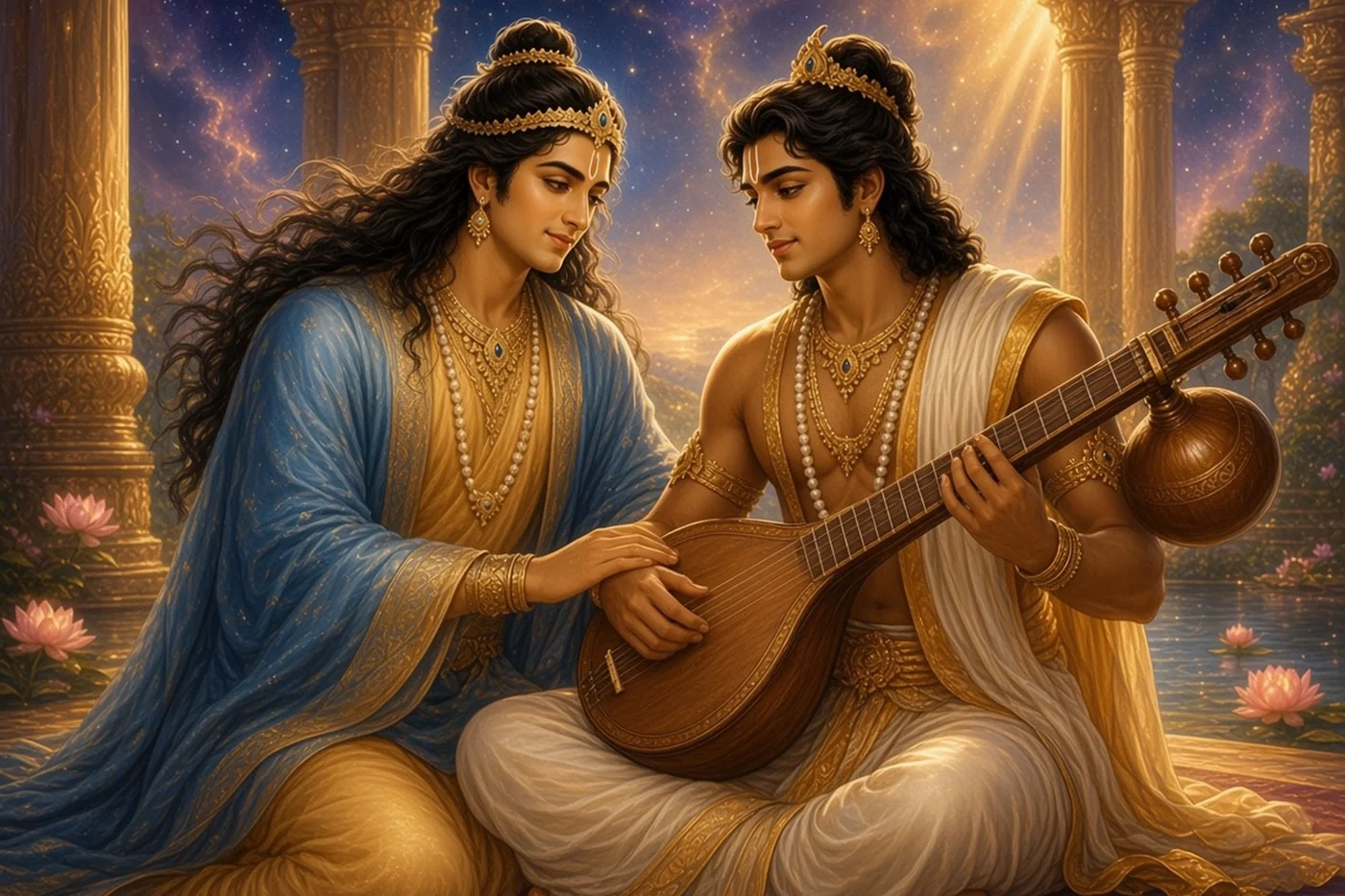
"Learn music and dance from Chitrasena the Gandharva," he said. "The music of heaven is not known among men. It will be of use to you."
So Arjuna learned to sing and play and dance, though he could not be at peace for thinking of his brothers and his mother on the earth.
In Indra's hall the Gandharvas played and the Apsarases danced, and Indra noticed that Arjuna's eyes kept going to one of the dancers, Urvashi. He called Chitrasena aside.
"Go to Urvashi as my messenger," he said, "and ask her to wait on Arjuna."
Chitrasena went to her house and praised Arjuna to her: his learning, his self-command, his courage, his kindness. Urvashi smiled.
"With a man like that," she said, "why not? I am glad to go."
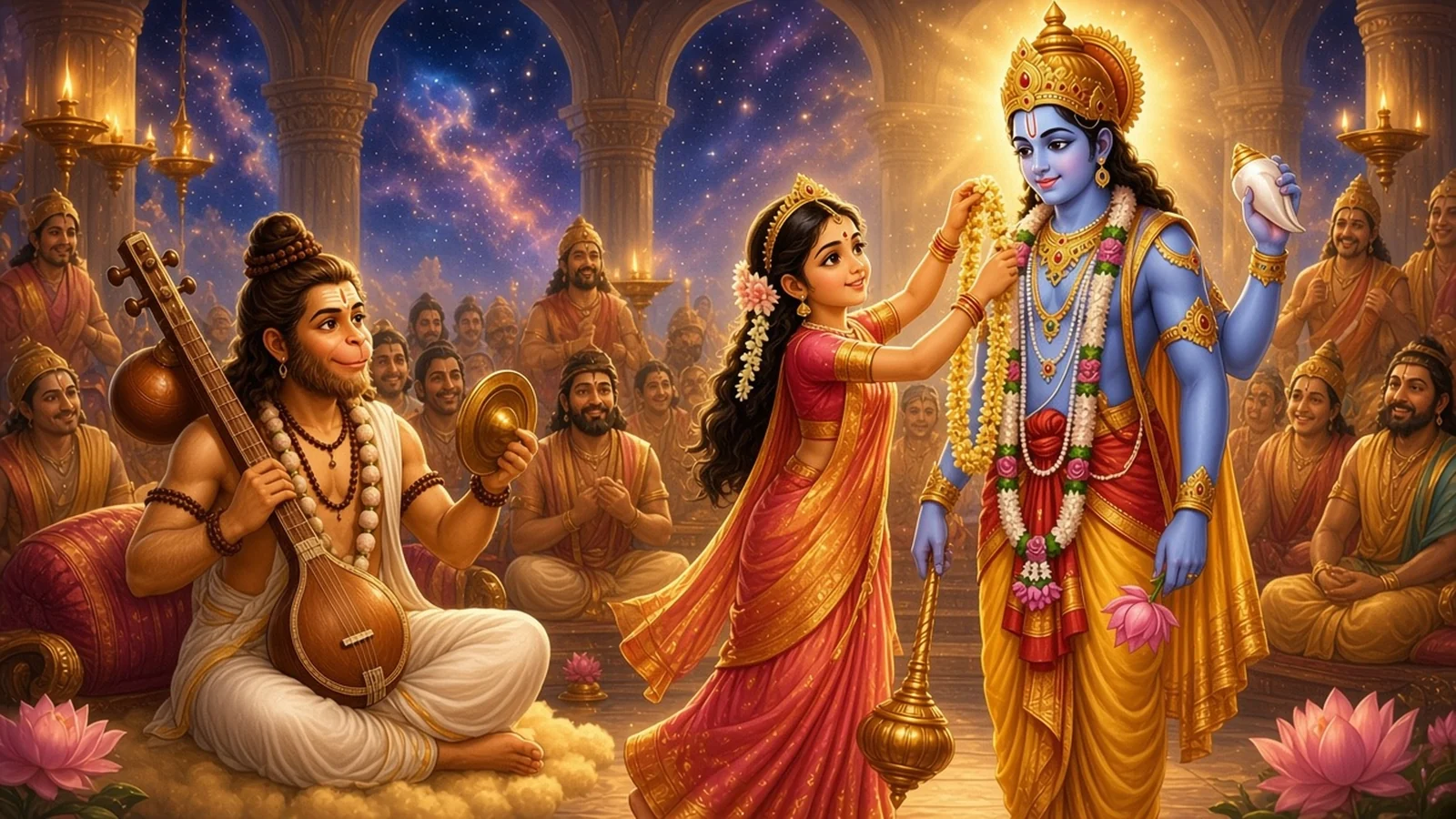
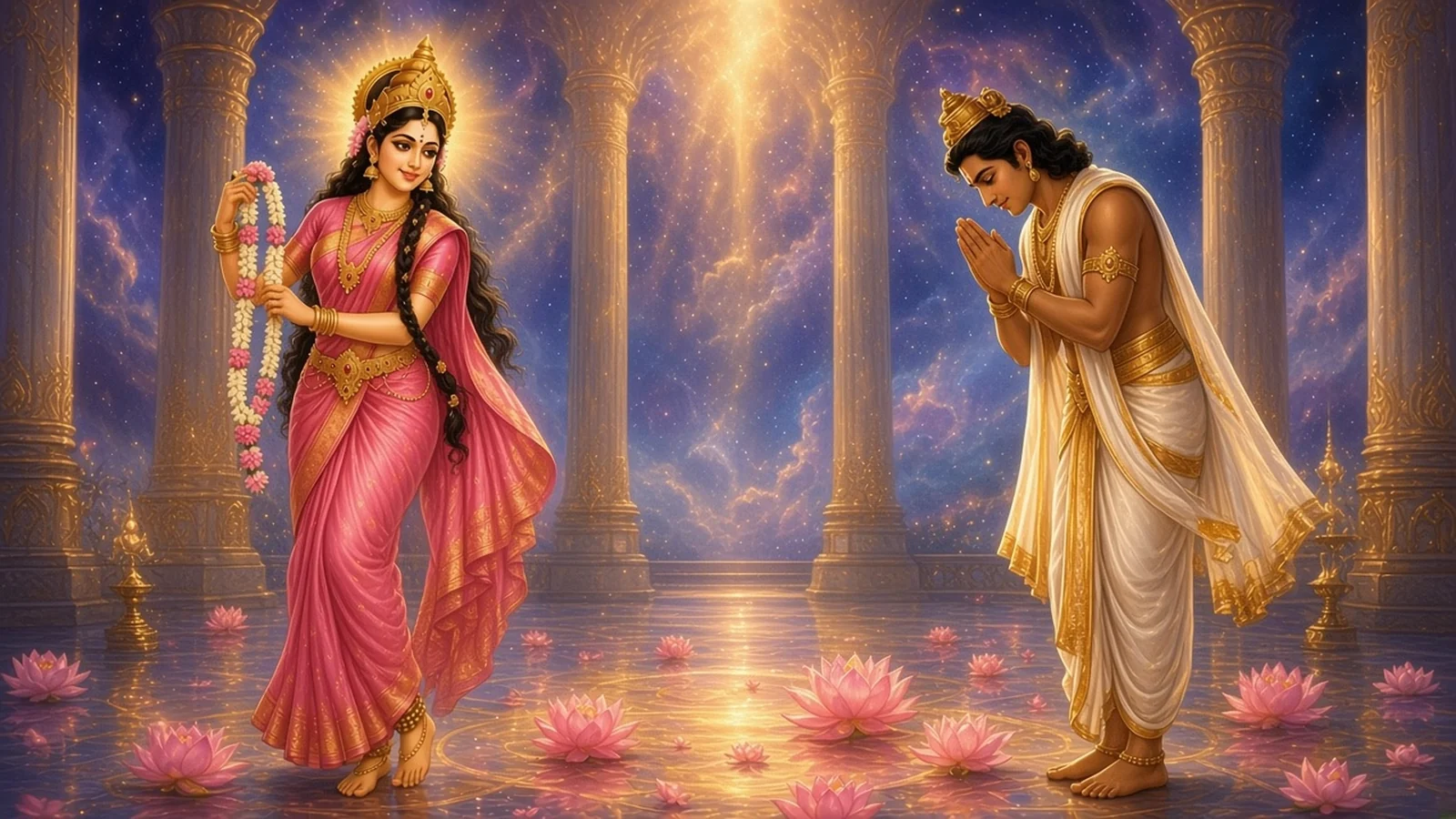
She bathed and put on her jewels and garlands of heavenly flowers, braided her hair with blossoms, and when the moon was up she went to Arjuna's house. The singers and dancers of heaven turned to watch her pass.
Arjuna saw her at his door at night and was afraid. He closed his eyes for modesty, then bowed to her as one bows to an elder.
"First of the Apsarases, I bow my head to you," he said. "Tell me what you wish. I am your servant."
She told him of Indra's message, and that she had loved him since the day of the great festival in his honour, when he had looked at no one but her.
Arjuna put his hands over his ears.
"Do not say it," he said. "You are to me what my mother Kunti is, and Madri, and Indra's queen Shachi. It is true that I gazed at you in the hall, but this was why. I thought, this shining one is the mother of the Kuru line. You stand above my elders."
"We Apsarases are free," said Urvashi. "We are bound to no one. The sons of Puru's house who come here by their merit share our company, and it is no wrong. Do not send me away."
"Let the four quarters hear me, and the gods," said Arjuna. "You are a mother of my house, as Kunti is. I bow to your feet. Go back, and look on me as a son."
Urvashi shook with anger.
"I came to you at your father's word and my own wish, and you turn me away," she said. "Then live among women, unregarded, as a dancer, not counted a man."
She went home, her lips still trembling.
Arjuna told Chitrasena everything, and Chitrasena told Indra. Indra called his son to him and smiled.
"Your mother is blessed in you," he said. "You have outdone the sages in self-command. And this curse will serve you. In the thirteenth year of your exile you must live unknown. That is the year you will bear it. For one year you will be a dancer, and then you will be yourself again."
Arjuna was glad, and thought no more about the curse.
As the Virata Parva tells it
Mahabharata, Virata Parva 2, 11, 45 and 72 · the city of the Matsyas · 2 min read
In time the thirteenth year of the exile came, the year the Pandavas had to live among people without being known. Yudhishthira asked his brothers how each of them would hide, and Arjuna knew his answer.
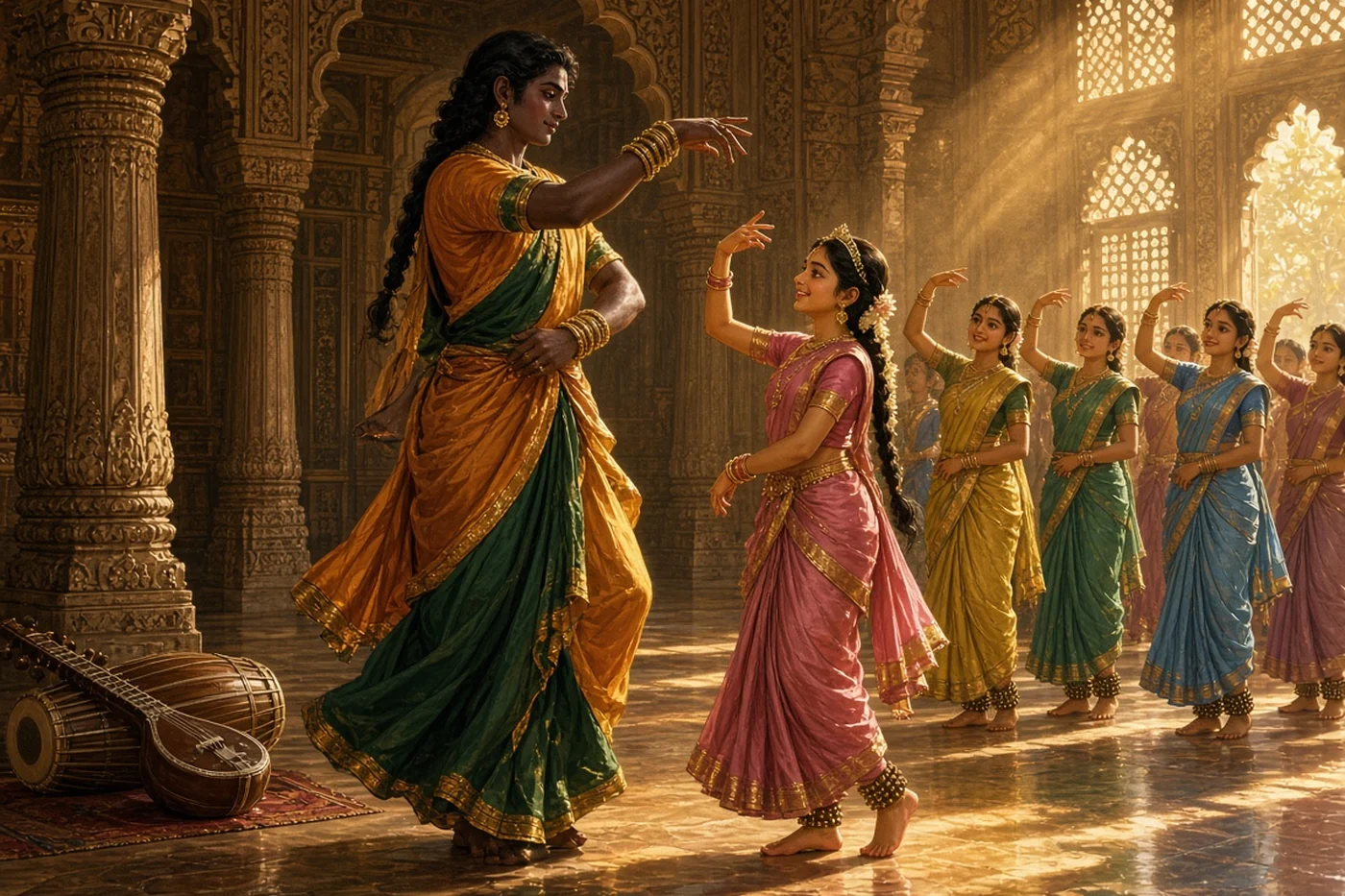
"I will say I am of the third sex," he said. "I will cover the bowstring scars on my arms with bangles, wear rings in my ears and a braid down my back, and call myself Brihannala. I will tell stories to the women of the king's household and teach them to sing and dance."
So a tall stranger with the walk of an elephant came to King Virata's hall, in women's jewels, his long hair falling to his neck. The king stared.
"You look like a warrior in a chariot," he said. "You could rule the Matsyas after me."
"I sing and I dance and I play," said Brihannala. "Let me teach your daughter Uttara. How I came to be like this, do not ask. The telling would only add to my pain. Think of me as a son or a daughter, with no father and no mother."
The king had him tested in dance and music and sent him to the maidens' rooms, where he taught the princess and her friends, and they grew fond of him. He was never found out.
At the end of the year, when he had to fight for the king's herds, he told Virata's son who he was. "I am not truly as I seem," he said. "I kept this as a vow for one year, at my elder brother's word, and now it is done."
Then the Pandavas were known, and the king offered Arjuna his daughter's hand. Arjuna refused.
"For a year I lived in her rooms," he said. "She trusted me as a father, and I was a teacher to her. Give her to my son Abhimanyu. A son's wife and a daughter are the same."