As the Shaktisamgama Tantra tells it
Saurashtra · the Haridra lake, as Shiva tells it to the Goddess · 3 min read
The Goddess sat with Shiva and asked him a question.
"Lord of the gods," she said, "I want to hear how Bagala came to be. Tell me where she was born."
Shiva told her.
"Long ago," he said, "in the Krita Yuga, the first and best of the ages, a wind began to blow. It was not a wind of one country or one sea. It shook the whole world. Everything that moved and everything that stood still was being torn apart, and the egg of the universe, from its floor to its roof, filled up with water."
Vishnu saw it. He is the one who keeps the worlds, and he could not keep these. The wind did not listen to him. The water did not go down. He sat a long while with the trouble heavy on him, and then he made up his mind.
"There is a pool on the earth called Haridra," he said, "a pool where prayers are answered. I will go there and pray."
He went to the pool of Haridra. And there he did a strange thing for the lord of the worlds. He made himself all yellow. His clothes were yellow, and everything he had was yellow, and he became the Yellow Lord, Pitesvara, sitting by the water with his beads, saying the Goddess's name and keeping her in his mind.
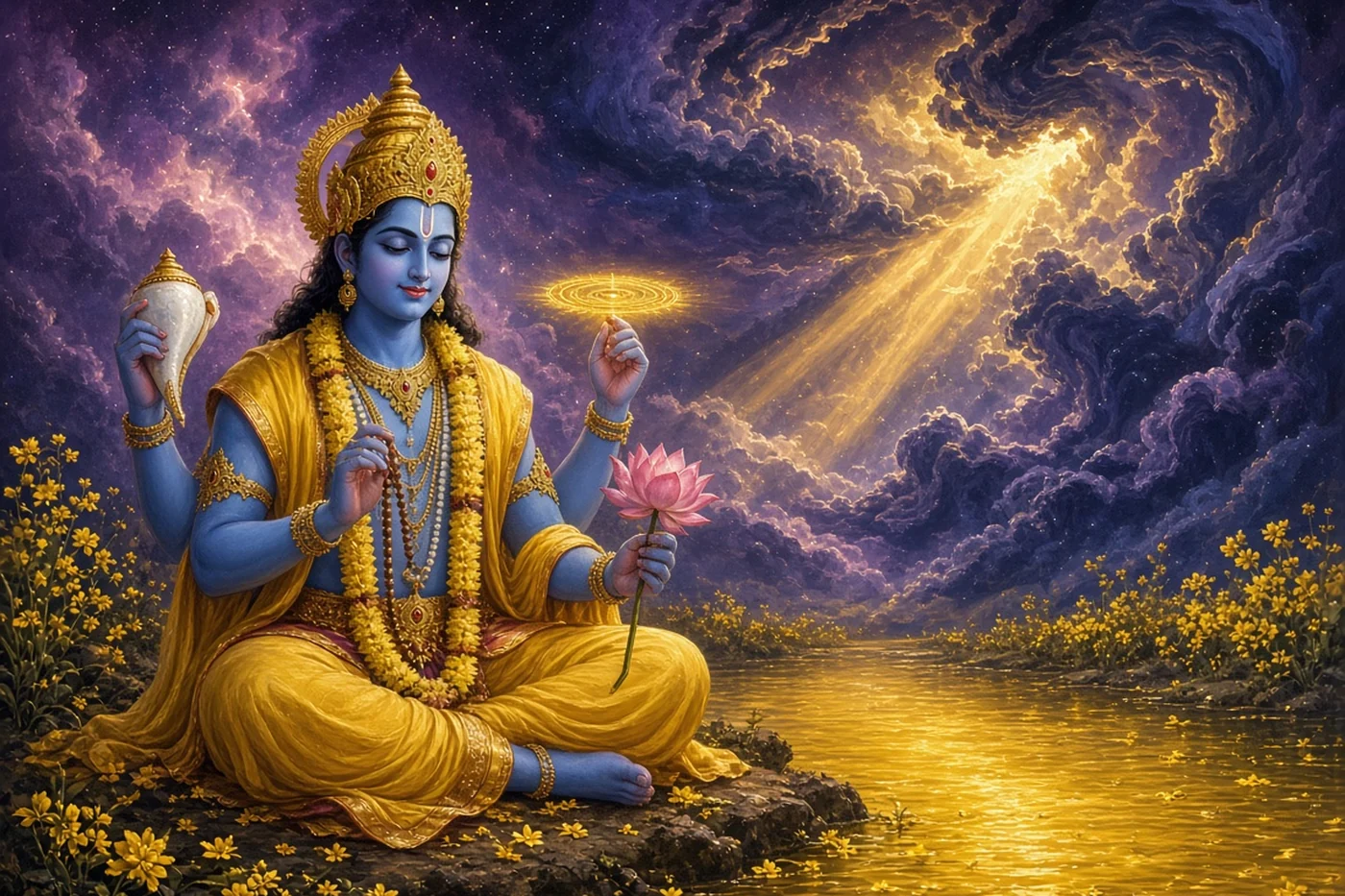
He did not stop. The ages went over him, seven arbudas of them, the tantra says, a number too large to picture. All that time he worshipped one goddess only, Shri, the Mother in her highest form.
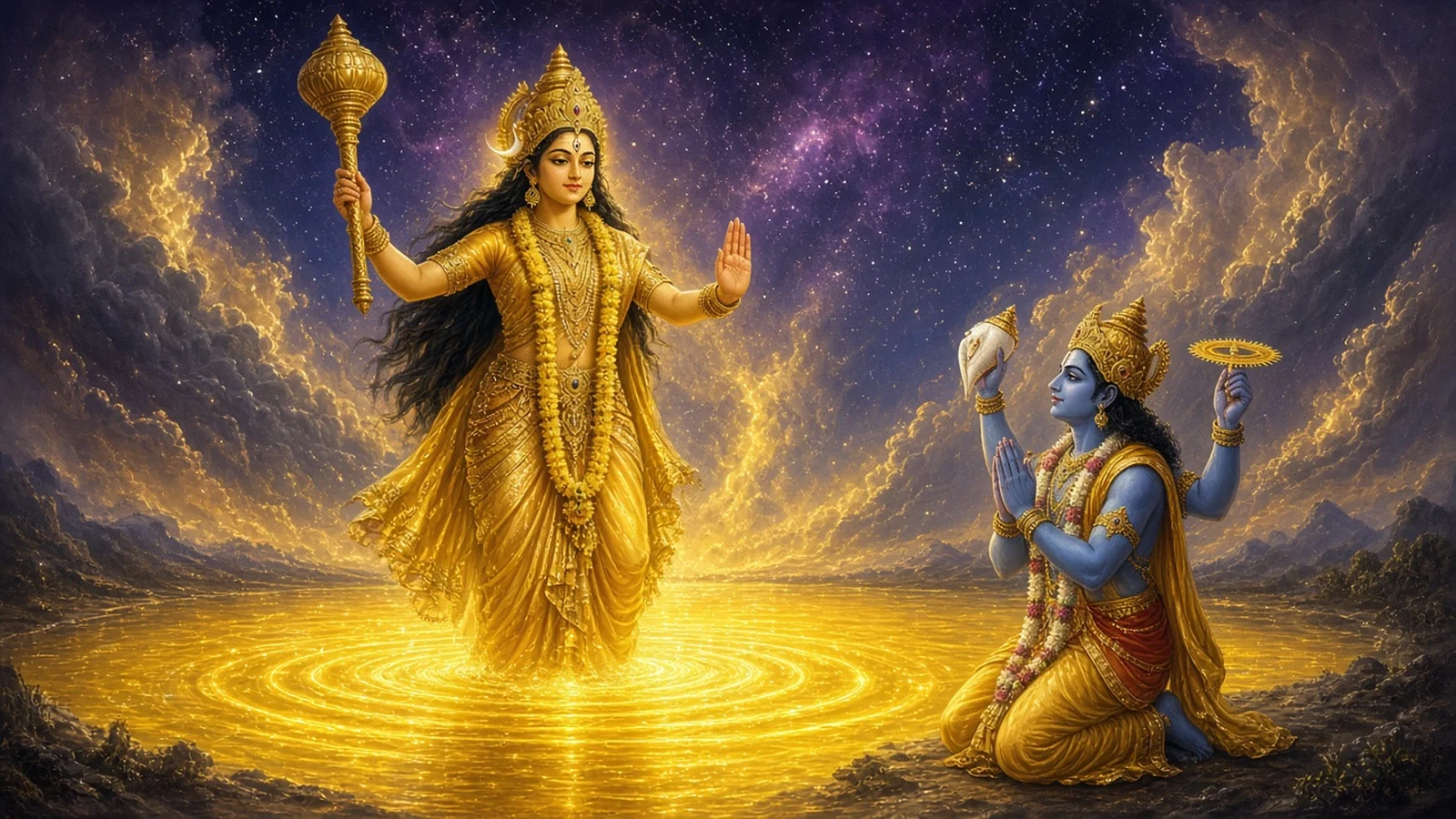
"And she was pleased with him," said Shiva. "Mahatripura Sundari, the great Mother of the three cities, was pleased with his long prayer. She came to that place. She saw the lake named Haridra lying yellow under the sky, and she went down into it and began to play in the water."
"Only to play?" the Goddess asked.
"Only to play," said Shiva. "Where she plays, things wake. The great yellow lake woke up on the earth. And there, in the land of Saurashtra, Bagala woke in it. The light that belongs to Shri Vidya began to spread out from the lake, this way and that, over the water."
Shiva told her the night, because the night matters.
"It was the fourteenth day of the moon," he said, "and it fell on a Tuesday, with the stars in their right places for it. That night is called Viraratri, the night of heroes. At midnight on that night she was born, the one who lives in the yellow lake. She is the Brahmastra Vidya, the weapon of Brahma made into a goddess. She is the highest power that holds the three worlds still."
The Goddess was quiet for a moment. "And the storm?" she asked.
"She stills the three worlds," said Shiva. "What wind can blow where she has said, be still?"
Then he told her one thing more. Vishnu's light and the yellow goddess's light met, the way a face meets its own reflection in water, and from the two of them a great arrow came into being. Its name is Stambhana, the arrow that makes things stand still.
Her people still dress her in yellow, and offer her yellow flowers and turmeric. It was the colour Vishnu wore when he sat by the water and waited for her.
As the Bagalamukhi-rahasyam and the shrines tell it
North and Central India · a Varanasi book of 1951, as Kinsley records it; Datia and Bankhandi · 2 min read
In the telling David Kinsley found in a Hindi book on the goddess, printed in Varanasi in 1951, there is no conversation on Kailasa. The story begins with the storm.
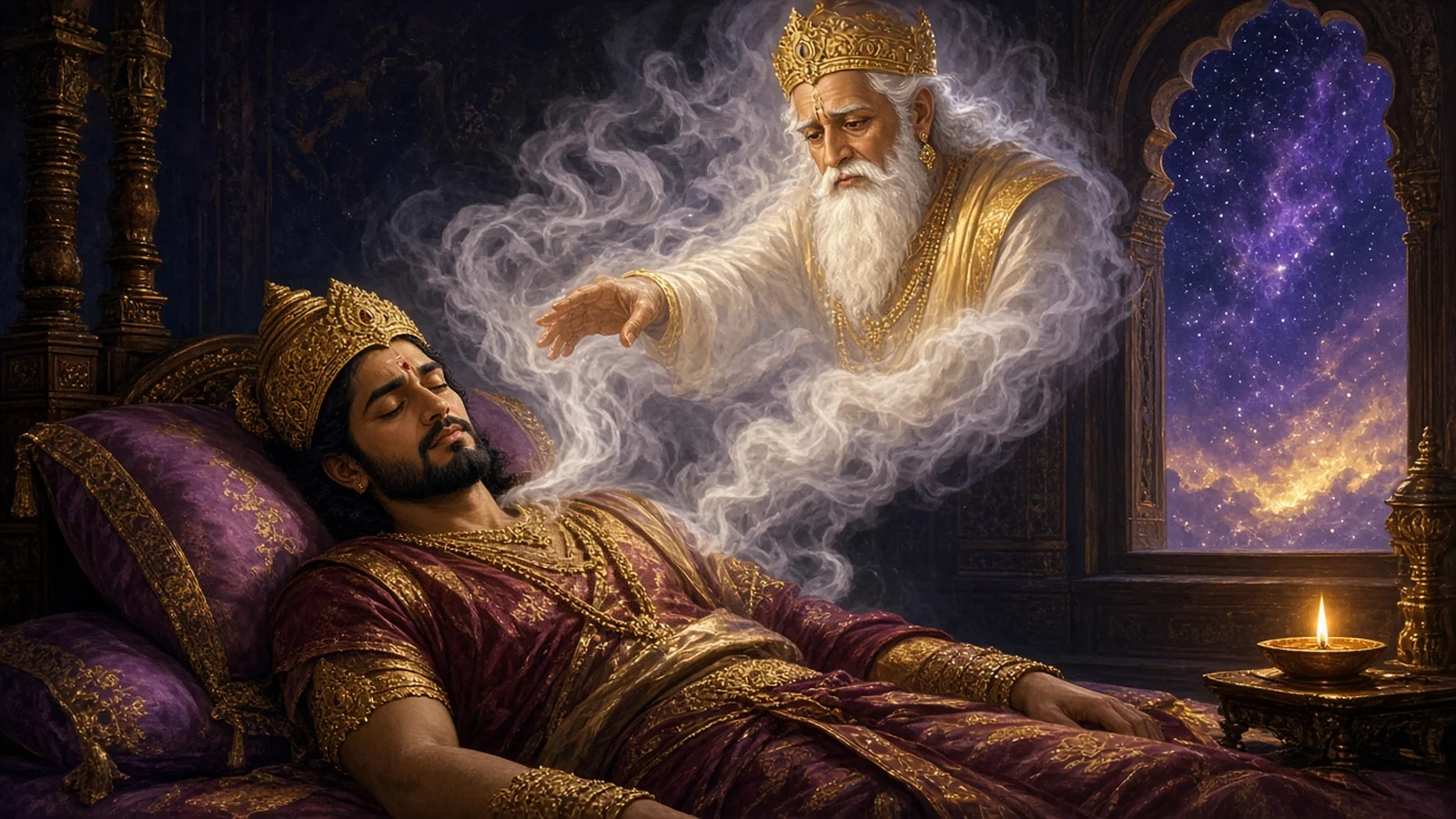
It came in the Krita Yuga, and it was a storm of the whole cosmos. It threatened to wreck the universe, and many creatures died in it. Even Vishnu, lying on the coils of the serpent Shesha on the waters, was shaken out of his rest.
He rose and went to a holy pond named Haridra, which means turmeric, and he sat down beside it to do austerities until he found an answer. His answer was the Goddess. He prayed to Tripura Sundari, and she came, and when she came the whole world was lit by her.
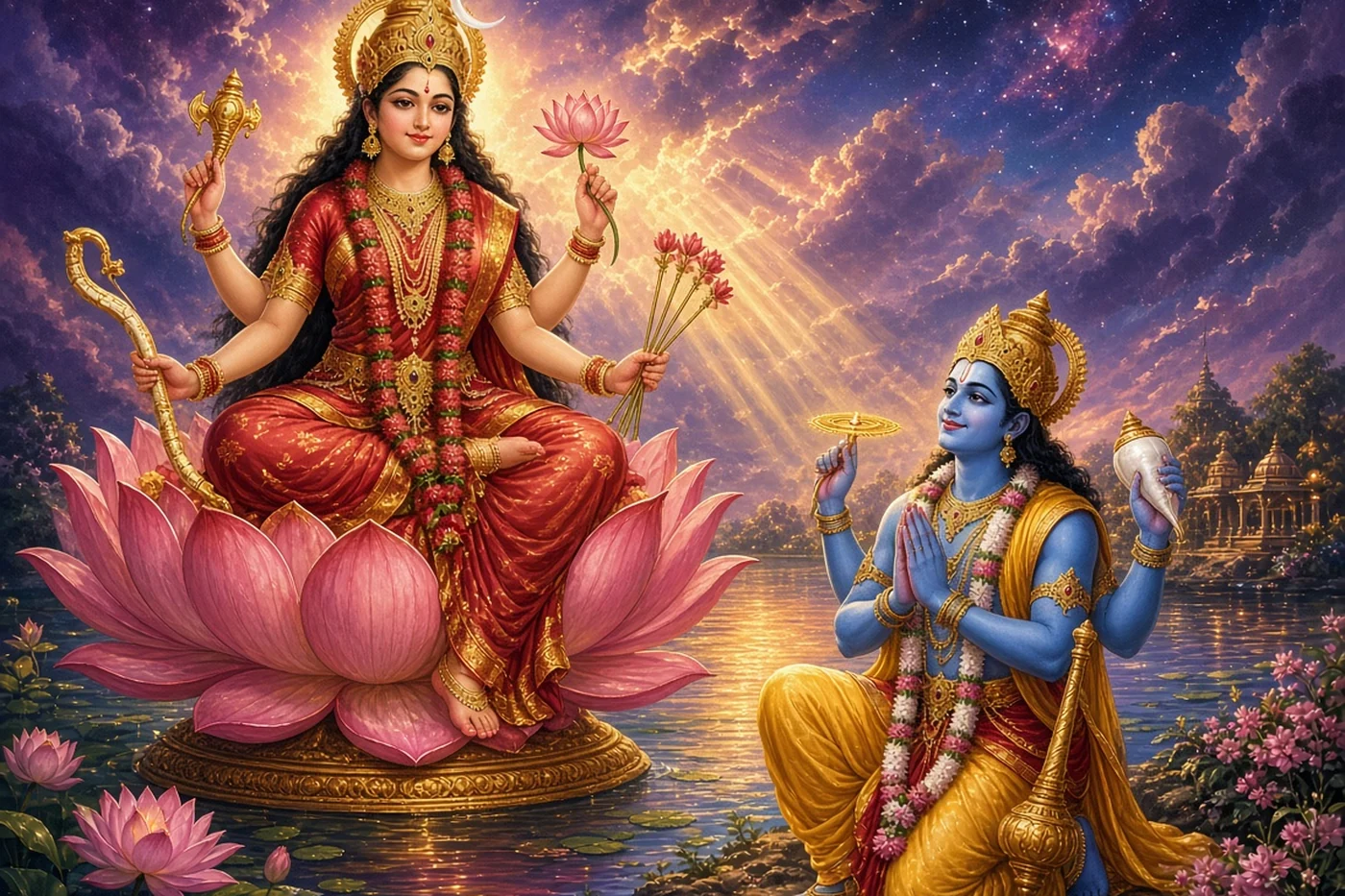
She did not go out to fight the wind herself. She brought another goddess out of her own being: Bagalamukhi.
The new goddess went down into the turmeric water and played in it, and she came up yellow. Then she turned to the storm, and with her great power she calmed it. The wind dropped. The universe was saved.
So she is called Pitambara Devi, the goddess in yellow, because she came out of a lake of turmeric. Kinsley points out that the god who prayed for her is often called by the same name. Vishnu is Pitambara too, the one who wears yellow.
The shrines keep the story close. At the Pitambara Peeth in Datia a pond in front of the main temple is called the Haridra Sarovar, and her yantra stands in the middle of it. At Bankhandi in the Kangra hills the legend of the temple is shorter still: she rose from a lake of turmeric to calm a storm that would have ended the world, because Vishnu asked her to.