Devalok ← All gods
Also calledBaglamukhiBagalaBagalambikaPitambaraPitambara DeviPitambariBrahmastra VidyaBrahmastra-rupiniValgamukhiPita Saraswatithe goddess in yellow

In short

Who is Bagalamukhi?
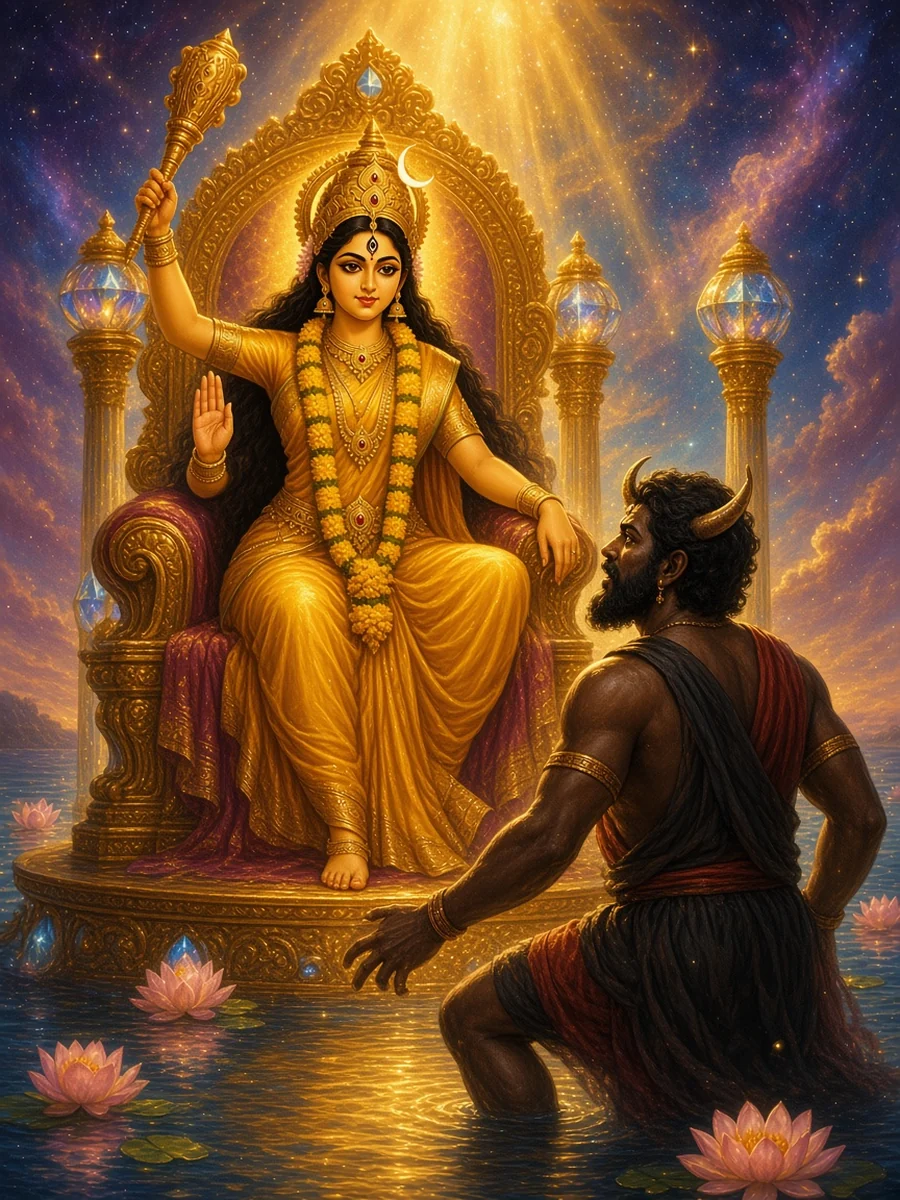
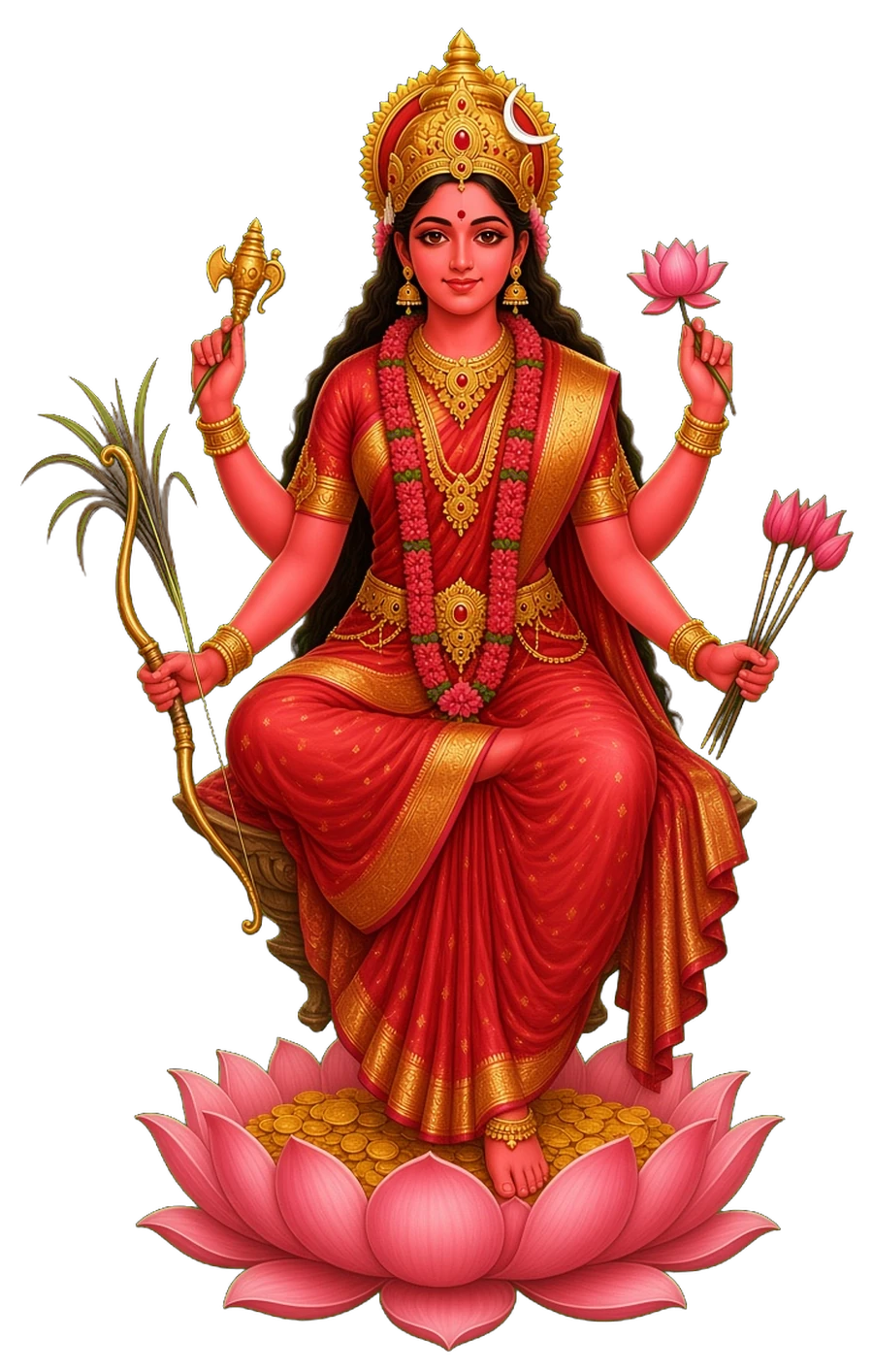
One of the ten Mahavidyas, the forms of the one Goddess. She is dressed all in yellow and holds a demon by the tongue with a club raised, and her power is stambhana, stilling whatever moves.
Why is she dressed in yellow?
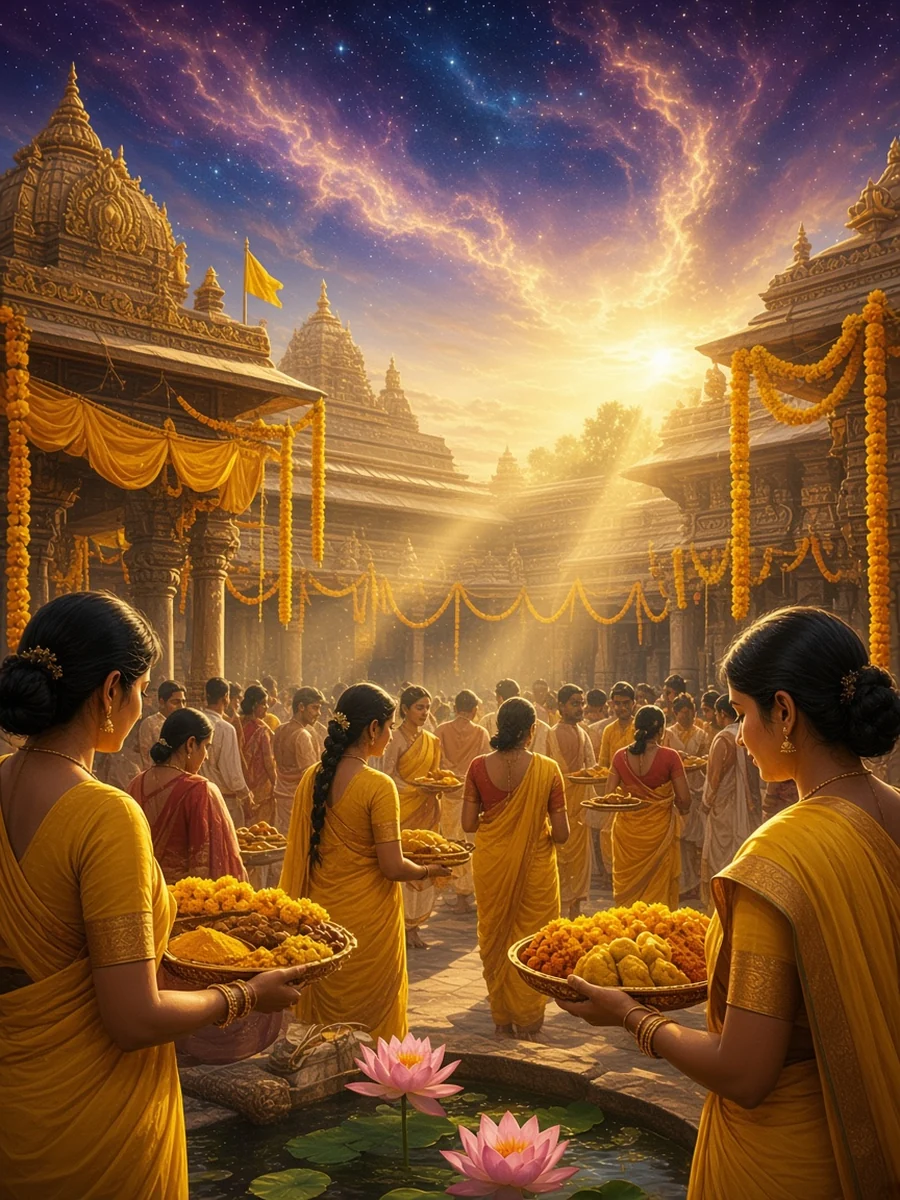
The Shaktisamgama Tantra says she woke in a lake called Haridra, turmeric, after Vishnu prayed beside it dressed in yellow. So she is called Pitambara, the goddess in yellow, and her temples and offerings are yellow.
Where is she worshipped?
At the Pitambara Peeth in Datia, Madhya Pradesh, at Bankhandi in the Kangra district of Himachal Pradesh, and at Nalkheda in Malwa, besides a shrine on Kamakhya's hill in Assam.

Artwork ›

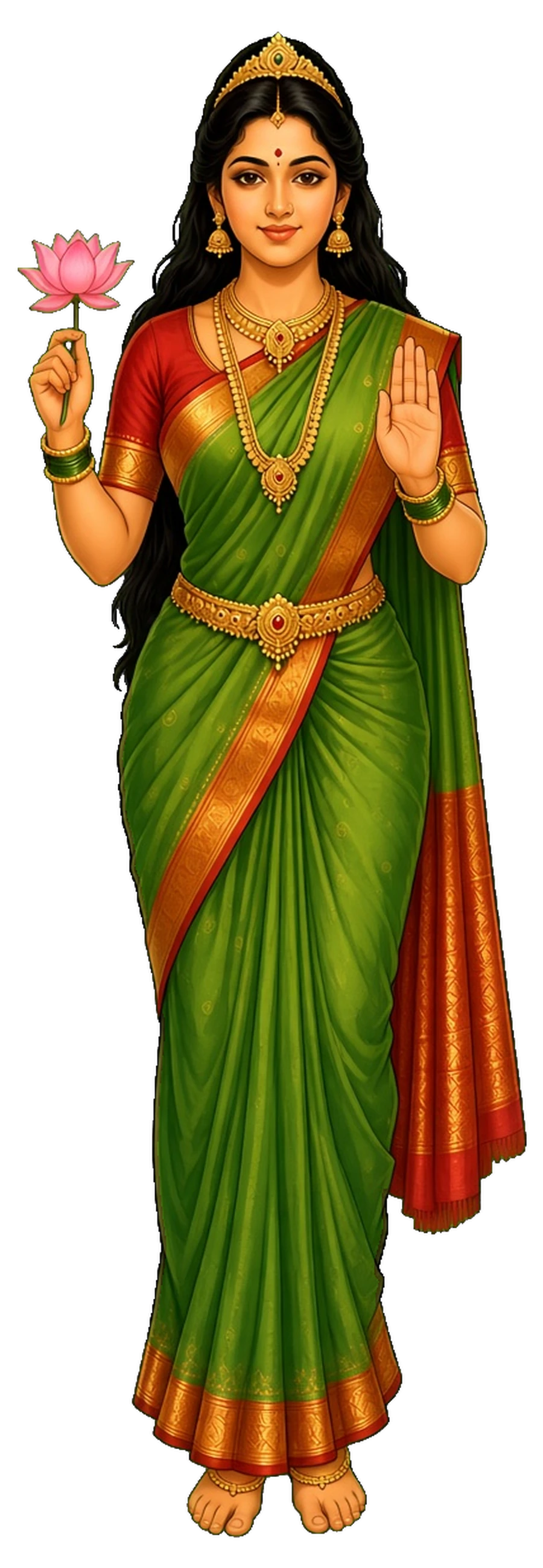
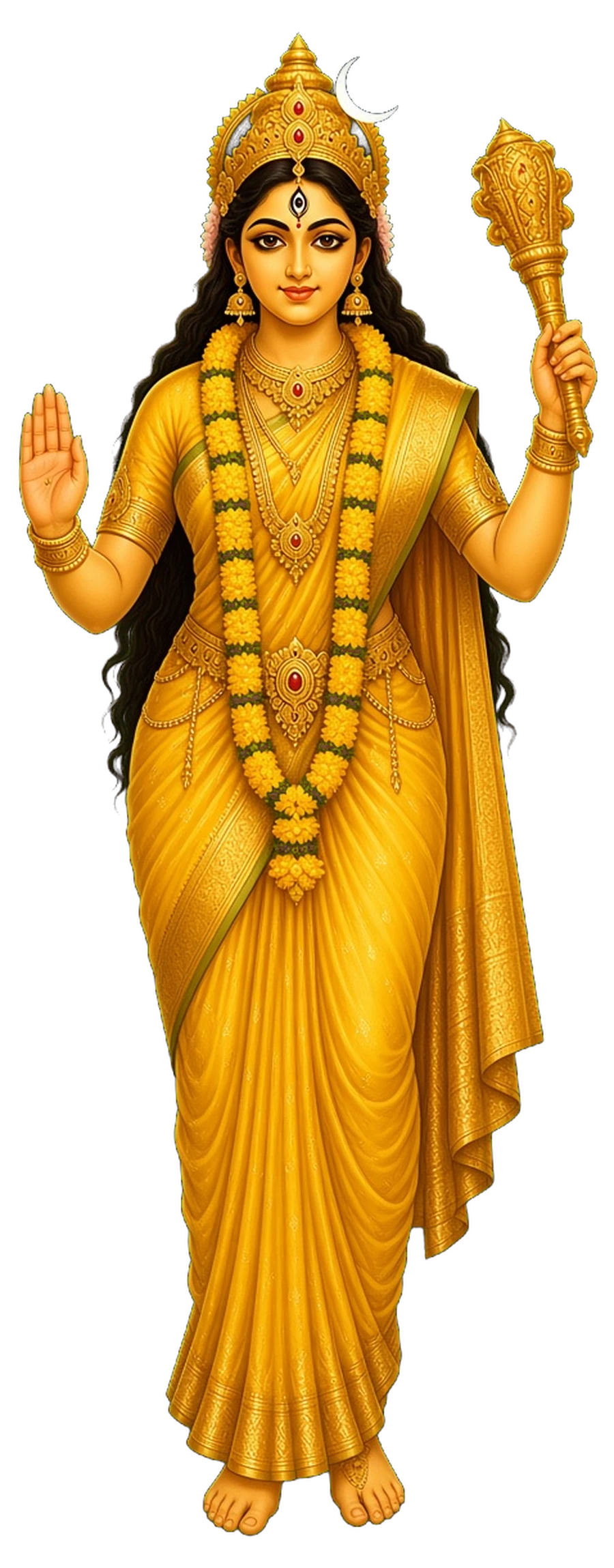
With one raised hand she stills the demon Madan The Pitambara Peeth at Datia, dressed in yellow

For kids

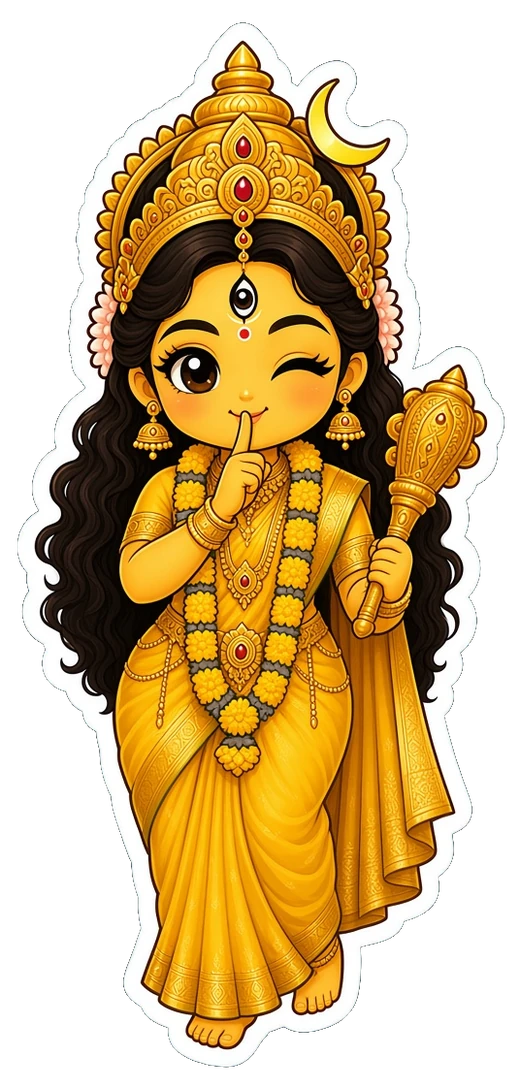
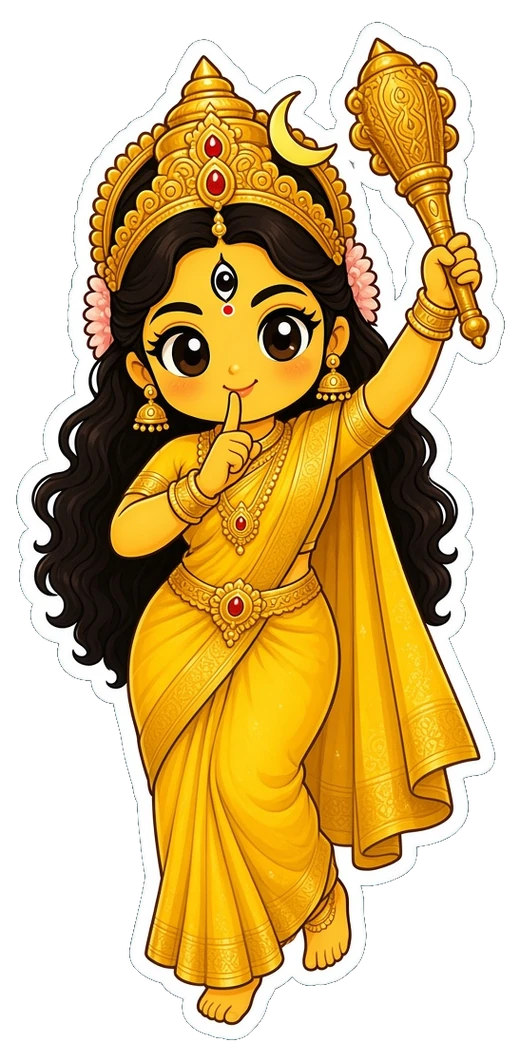
Shh. Not one more word
Stopped right in his tracks

At a glance

TraditionShakta
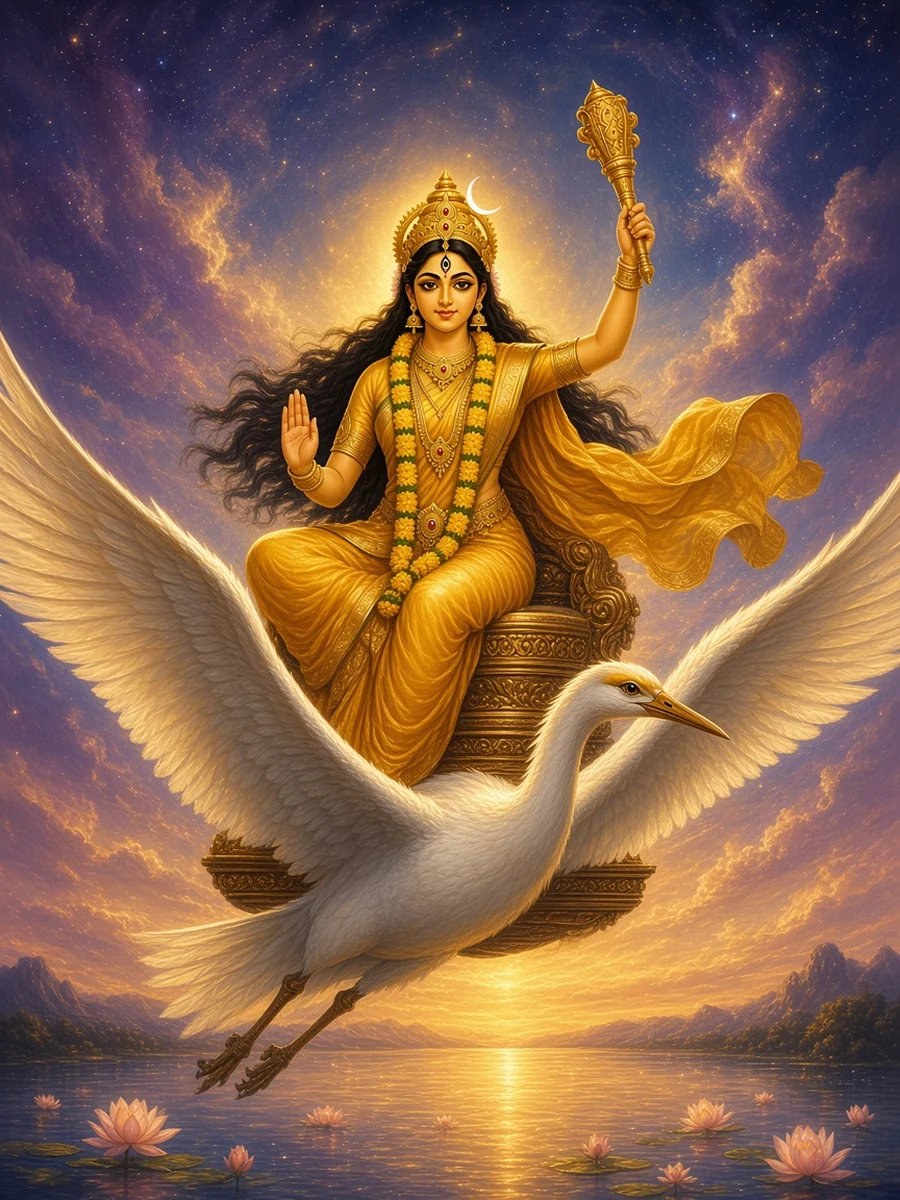
FormA goddess golden yellow from head to foot, two-armed; some verses give her four arms, three eyes and a yellow crescent
In her handsA demon's tongue held fast in her left; a club raised in her right

Who Bagalamukhi is

Bagalamukhi is the goddess who makes things stand still. She is one of the ten Mahavidyas, the ten forms of the one Goddess, and she is yellow all over: her skin, her clothes, her jewels, her garland. She sits on a lion throne in the middle of an ocean of nectar. With her left hand she holds a demon by the tongue, and with her right she raises a club over him. Her power is stambhana, stilling: she stops a storm, a quarrel, a tongue.

Pitambarabharana malya vibhushitangim, devim smarami dhrita mudgara vairi jihvam: Adorned with yellow clothes, jewels and garlands, I call to mind the goddess who holds the club and the enemy's tongue (the meditation verse on Bagalamukhi).

Her name is a puzzle. It may mean "the crane-faced one", from baka, a crane, though she is almost never shown with a bird's head; David Kinsley notes that the crane stands perfectly still while it hunts. A priest of the Kashi Vishvanath temple told him the name was really Valgamukhi, from valga, a bridle, because she reins in an enemy's mouth as a bridle does a horse's. She is also Pitambara, the goddess in yellow, and Brahmastra-rupini, whose form is Brahma's own weapon. Her devotees call her the yellow Saraswati, the goddess who can stop speech.

How she was born is told on the site as The Lake of Turmeric, the Haridra lake where she woke for Vishnu. Why she holds a tongue is The Demon Whose Words Came True. In Sati's ring round Shiva she stood behind him, in The Goddess in Every Direction, and she has a shrine on Kamakhya's hill, in The Hill of Ten Goddesses. A booklet from Datia gives one more birth, shared with Dhumavati, when Parvati swallowed Shiva; that story belongs to Dhumavati.

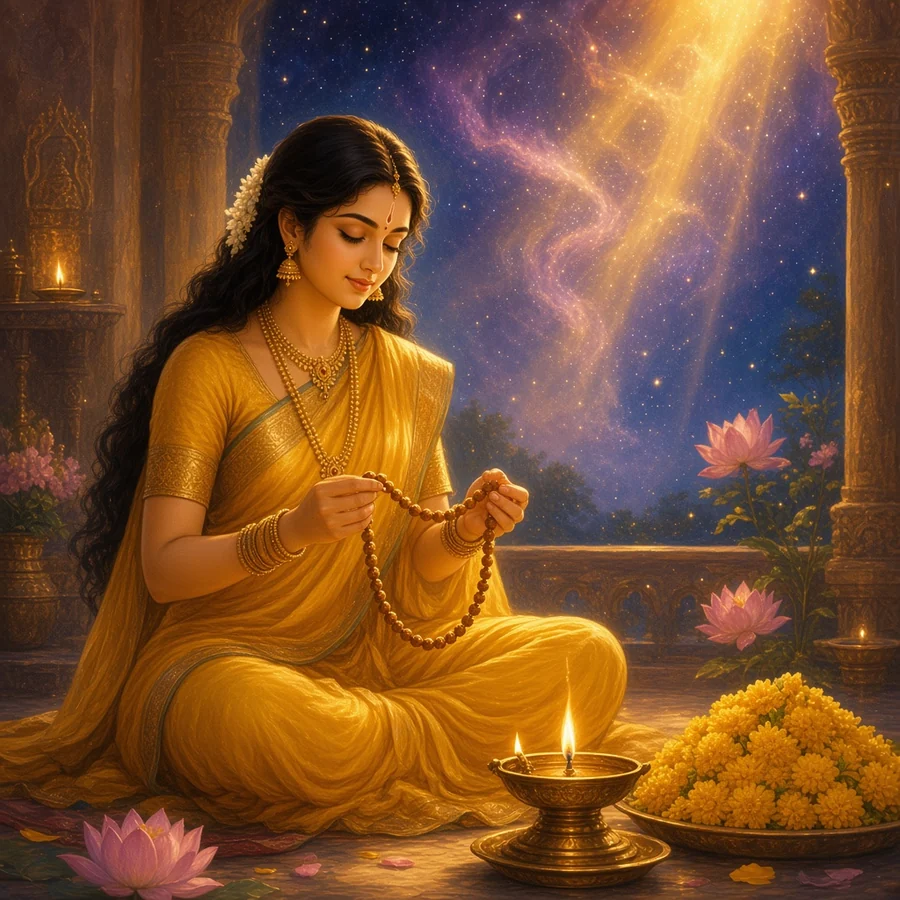
People come to her to be stilled and to still what troubles them: a dispute, a court case, an opponent in debate, a fear. S. Shankaranarayanan recalls that scholars once called on her to win arguments in learned assemblies. A monk of the Ramakrishna order told Kinsley that holding the tongue means mastering greed and speech.

Her best known shrine is the Pitambara Peeth at Datia, founded by a swami who never gave his name, told in The Swami with No Name. At Bankhandi in the Kangra hills her temple is yellow inside and out, and its legend says the Pandavas built it in one night and that Rama, guided by Hanuman, prayed there for the Brahmastra. At Nalkheda on the Lakhundar she has three faces, with Lakshmi and Saraswati, and the temple believes Yudhishthira prayed there on Krishna's advice.
Before the Puranas

The Vedic roots of Bagalamukhi

Bagalamukhi is not in the Vedas. No hymn names her, and the ten Mahavidyas are found as a group only after the tenth century, as David Kinsley shows. Her rule over speech recalls the Vedic goddess Vac, and S. Shankaranarayanan explains her stilling power with a Vedic line that the Word gave birth to all the worlds. That is his reading of her, not an ancestry.

She first appears as Bagala, a name in the lists of the ten. The Mahakala Samhita, which Kinsley thinks may hold the earliest list, already has her. In the Mahabhagavata and the Brihaddharma Puranas she stands behind Shiva when Sati surrounds him, and the Mahabhagavata calls her the destroyer of enemies. In the seventh book of the Devi Bhagavata, Bagala is one of the powers that come out of the Goddess to fight the demon Durgama.

Her own story comes later, in the Shaktisamgama Tantra, which its editors date between the late sixteenth and the middle of the seventeenth century. There Shiva tells how Vishnu prayed in yellow beside the Haridra lake in Saurashtra and how she woke there at midnight as the Brahmastra Vidya, the power that stills the three worlds. The Tantrasara of the Bengali scholar Krishnananda, of about the same time, gives the meditation verse that her worshippers still use. A hymn to her is placed in the Rudrayamala, and the Sankhyayana Tantra compares her to the Brahmastra.

Vishnu is never far from her. He is Pitambara, the one in yellow, before she is, and the tantra makes him the god who called her up. The tantras that pair the Mahavidyas with the avatars give her to Kurma, the tortoise, in the Mundamala Tantra, while a Varanasi teacher told Kinsley she was Vamana. Shankaranarayanan ties her to the Shri Vidya tradition of Tripura Sundari, as the commander of the queen's army.

Her temples are few, because most of her worship is a private discipline. Three are famous. Bankhandi's priest called his temple four or five hundred years old; Nalkheda's priest says his was restored in 1815; and the Pitambara Peeth at Datia was founded in 1935.

See how the Vedic gods became the Puranic ones →

Related gods